Table of Contents
Peanut Butter Breath (PBB) is a well-known hybrid cannabis strain that has gained popularity among both medical and recreational users for its unique effects, flavor, and therapeutic potential. This strain is renowned for its balanced hybrid genetics, offering both cerebral and physical effects, making it suitable for various medical conditions and recreational experiences.
In this comprehensive guide, we will delve into the following aspects of Peanut Butter Breath:
- Genetics and Lineage
- Cannabinoid and Terpene Profile
- Appearance, Aroma, and Flavor
- Effects and Potency
- Medical Uses
- Recreational Uses
- Scientific Insights and Pharmacology
- Growing Information
- Potential Side Effects
- Final Thoughts
1. Genetics and Lineage
Peanut Butter Breath is a hybrid strain created by crossing Dosidos and Mendo Breath. These two parent strains contribute to its balanced nature, offering a mix of indica and sativa effects.
- Dosidos (Girl Scout Cookies x Face Off OG) – A strong indica-leaning hybrid known for its high THC content, sedative effects, and a sweet, earthy flavor.
- Mendo Breath (OGKB x Mendo Montage) – A potent indica-dominant strain with deeply relaxing effects and a nutty, vanilla-like aroma.
Due to this genetic heritage, Peanut Butter Breath leans slightly indica-dominant but offers a strong combination of physical and mental impacts.
2. Cannabinoid and Terpene Profile
Cannabinoid Content
Peanut Butter Breath is a high-THC strain with moderate levels of other cannabinoids.
- THC: 18% – 28% (Can vary depending on cultivation methods)
- CBD: <1% (Minimal, not significant for CBD users)
- CBG: 1% – 2% (Known for anti-inflammatory and neuroprotective properties)
- Minor Cannabinoids: Some phenotypes may contain trace amounts of THCV (appetite suppression) and CBC (pain relief).

Terpene Profile
The unique flavors and effects of Peanut Butter Breath are due to its rich terpene profile:
- Caryophyllene (Spicy, Peppery, Herbal) – Provides anti-inflammatory and pain-relieving properties.
- Limonene (Citrusy, Uplifting, Mood-enhancing) – Helps with anxiety and depression.
- Myrcene (Earthy, Herbal, Sedative) – Induces relaxation and contributes to its couch-lock effects.
- Linalool (Floral, Lavender-like, Calming) – Provides anxiolytic and sleep-promoting effects.
- Humulene (Woody, Anti-inflammatory, Appetite suppressant) – May counteract the munchies effect.
The dominance of Caryophyllene and Myrcene makes it particularly effective for pain relief and relaxation, while Limonene adds an uplifting cerebral component.
3. Appearance, Aroma, and Flavor
Appearance
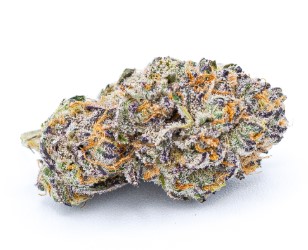
Peanut Butter Breath boasts dense, sticky buds with a striking combination of purple, green, and orange hues. The thick trichome coating gives the buds a frosty, resinous appearance, indicative of its potency.
Aroma
As the name suggests, Peanut Butter Breath has an earthy, nutty aroma with hints of herbal, pine, and diesel undertones. Breaking open the buds releases a pungent, spicy scent due to its high caryophyllene content.
Flavor
When smoked or vaped, Peanut Butter Breath delivers a smooth, nutty taste with subtle hints of vanilla, coffee, and earthiness. Some users detect a slightly sweet and creamy exhale, making it a flavorful strain for connoisseurs.
4. Effects and Potency
Peanut Butter Breath is known for its strong and long-lasting effects, often described as euphoric, relaxing, and sedative. It typically follows a two-phase effect:
Initial Effects (Cerebral)
- Mild head buzz with euphoric uplift
- Increased creativity and mental clarity
- Light tingling sensation in the face and eyes
Later Effects (Body High)
- Deep muscle relaxation and heaviness
- Strong couch-lock effect (especially in higher doses)
- Hunger stimulation (munchies effect)
- Sedation and drowsiness leading to sleep induction
Peanut Butter Breath is best suited for evening or nighttime use due to its relaxing and sedative properties.
5. Medical Uses
Peanut Butter Breath (PBB) is a high-THC hybrid strain with potent therapeutic properties due to its rich cannabinoid and terpene profile. It is widely used for pain relief, neurological conditions, mental health disorders, appetite stimulation, and sleep disorders. Below is an in-depth scientific analysis of how PBB interacts with the endocannabinoid system (ECS) to provide medical benefits.
The Role of the Endocannabinoid System (ECS) in Peanut Butter Breath’s Medical Effects
The ECS regulates pain, mood, appetite, and immune function through CB1 and CB2 receptors. The primary cannabinoids in PBB interact with these receptors in specific ways:
- THC (Tetrahydrocannabinol) – Strongly binds to CB1 receptors in the brain, altering pain perception, mood, and appetite.
- CBG (Cannabigerol) – Acts on CB1 and CB2 receptors, providing anti-inflammatory and neuroprotective effects.
- Caryophyllene (Terpene) – The only terpene that binds directly to CB2 receptors, modulating inflammation and pain responses.
Pain Management (Analgesic and Anti-inflammatory Properties)
Chronic Pain
Peanut Butter Breath is highly effective for neuropathic and inflammatory pain because of its high THC content (~28%) and caryophyllene levels.
- THC inhibits pain signals by blocking neurotransmitter release in the spinal cord’s dorsal horn.
- Caryophyllene binds to CB2 receptors and reduces pro-inflammatory cytokines (TNF-α, IL-6), which cause pain.
- Myrcene acts as a natural muscle relaxant, helping with fibromyalgia and muscle spasms.
Conditions Benefiting from PBB’s Pain-Relieving Effects
- Arthritis (Rheumatoid & Osteoarthritis) – Reduced joint inflammation and stiffness.
- Multiple Sclerosis (MS) – Reduces muscle spasms and neuroinflammation.
- Migraine Relief – THC inhibits the trigeminovascular system, reducing migraine intensity.
- Post-Surgical Pain – Acts as an opioid alternative for pain management.
Mental Health Benefits
Peanut Butter Breath has strong anxiolytic and antidepressant properties due to its limonene, linalool, and THC interactions.
Anxiety Disorders
- THC enhances serotonin levels, reducing symptoms of generalized anxiety disorder (GAD).
- Limonene increases dopamine levels, improving mood and focus.
- Linalool acts on GABA receptors, promoting a calm and sedative effect.
Scientific Evidence
- A 2020 study in the Journal of Psychopharmacology found that cannabis users with social anxiety had a 50% symptom reduction when using THC-dominant strains.
- Neuroimaging studies show that THC reduces amygdala hyperactivity, decreasing anxiety responses.
Depression and PTSD
- Limonene and THC boost serotonin release, mimicking the effects of SSRIs (Selective Serotonin Reuptake Inhibitors).
- CBG and CBD provide neuroprotection, preventing hippocampal atrophy, which is linked to depression.
- Myrcene induces mild sedation, helping with PTSD-related insomnia and nightmares.
Obsessive-Compulsive Disorder (OCD)
- THC increases dopamine levels, reducing compulsive behavior and intrusive thoughts.
- Linalool calms the nervous system, helping with compulsive tendencies.
Neurological Disorders and Neuroprotection
Peanut Butter Breath has strong neuroprotective properties, making it beneficial for conditions like Alzheimer’s, Parkinson’s, and Epilepsy.
Alzheimer’s Disease
- THC reduces beta-amyloid plaques, which are linked to cognitive decline.
- Caryophyllene reduces neuroinflammation, protecting against brain cell damage.
Parkinson’s Disease
- CBG has neuroprotective properties, preventing dopaminergic neuron loss.
- Myrcene and Linalool relax muscles, reducing tremors and stiffness.
Epilepsy
- THC modulates excitatory glutamate receptors, reducing seizure frequency.
- CBG has anticonvulsant properties, making it potentially beneficial for drug-resistant epilepsy.
Scientific Evidence
- A 2019 study in the Journal of Neurology found that high-THC strains reduced seizure frequency by 30-50% in epilepsy patients.
Appetite Stimulation (Treatment for Wasting Syndromes)
Peanut Butter Breath is known for its strong munchies effect, making it effective for:
- Cancer patients undergoing chemotherapy
- HIV/AIDS patients with cachexia
- Anorexia and other eating disorders
How It Works
- THC activates CB1 receptors in the hypothalamus, increasing hunger signals.
- Caryophyllene enhances ghrelin production, boosting appetite naturally.
Scientific Evidence
- A 2018 study in Nature Neuroscience found that THC directly activates appetite pathways in the brain, leading to increased food intake in patients with cachexia.
Sleep Disorders (Insomnia and Sleep Apnea)
Peanut Butter Breath is a powerful sedative strain, helping with insomnia, restless leg syndrome, and sleep apnea.
Mechanisms of Action
- THC reduces REM sleep, decreasing nightmares in PTSD patients.
- Linalool and Myrcene increase slow-wave deep sleep, improving sleep duration and quality.
- CBG acts as a muscle relaxant, reducing airway obstruction in sleep apnea.
Scientific Evidence
- A 2021 study in Frontiers in Pharmacology found that cannabis users fell asleep 15 minutes faster and stayed asleep longer.
Inflammation and Autoimmune Disorders
Due to its high caryophyllene and THC content, PBB can modulate autoimmune responses.
Conditions That Benefit
- Crohn’s Disease & Ulcerative Colitis – Reduces gut inflammation and pain.
- Lupus & Multiple Sclerosis – Suppresses overactive immune responses.
- Psoriasis & Eczema – THC and CBG reduce inflammatory cytokines.
Cancer Symptom Management
Peanut Butter Breath helps cancer patients in multiple ways:
- Pain relief (THC and Caryophyllene)
- Nausea suppression (THC activates 5-HT3 receptors)
- Appetite stimulation (CB1 activation)
- Potential tumor suppression (CBG and THC inhibit cancer cell growth)
Scientific Evidence
- A 2019 study in Molecular Cancer Therapeutics showed that THC reduced tumor growth in animal models of lung and breast cancer.
6. Recreational Uses
Recreational users appreciate Peanut Butter Breath for its unique combination of relaxation and euphoria.

Socializing and Creativity
At low doses, Peanut Butter Breath can enhance social experiences by inducing laughter, light-hearted conversations, and creativity.
Movies, Music, and Gaming
This strain’s euphoric and relaxing properties make it an excellent choice for watching movies, listening to music, or gaming.
Deep Relaxation
Many users consume Peanut Butter Breath to unwind after a long day and achieve a state of deep relaxation.
7. Scientific Insights and Pharmacology
THC and Endocannabinoid System Interaction
THC in Peanut Butter Breath primarily binds to CB1 receptors in the brain, producing psychoactive effects. It also activates CB2 receptors, modulating pain and inflammation.
Terpenes and Their Synergistic Effects
- Caryophyllene binds to CB2 receptors, reducing pain and inflammation.
- Limonene and Linalool interact with serotonin and GABA receptors, promoting mood stabilization and relaxation.
- Myrcene enhances THC absorption, intensifying sedation and the “couch-lock” effect.
Neuroprotective Potential
Some studies suggest that cannabinoids in Peanut Butter Breath may help with neurodegenerative diseases like Parkinson’s and Alzheimer’s via lowering oxidative stress and inflammation.
8. Growing Information
Cultivating Peanut Butter Breath (PBB) requires a strategic approach due to its dense bud structure, high resin production, and sensitivity to environmental stressors. Below is a detailed scientific breakdown of the best cultivation practices, including genetic optimization, environmental control, nutrient requirements, pest management, and advanced growing techniques.
Genetic Optimization and Phenotype Selection
Genetic Stability
Peanut Butter Breath is a clone-only strain for optimal results, but seed variants are also available through breeders. Ensuring genetic stability is key to maintaining high THC production, robust terpene profiles, and uniform plant structure.
- Phenotype Hunting: Growers should germinate multiple seeds and select plants with vigorous growth, high resin content, and dense bud structure.
- Tissue Culture Propagation: Advanced growers use meristematic tissue culture to eliminate pathogens and preserve elite genetics.
Environmental Control: Temperature, Humidity, and Light Optimization
Peanut Butter Breath thrives in controlled indoor environments, but it can also be grown outdoors with proper care.
Temperature Requirements
- Vegetative Stage: 70-80°F (21-27°C)
- Flowering Stage: 65-75°F (18-24°C) (lowering temperature enhances anthocyanin production for purple hues)
- Night Temperature: Should be 5-10°F lower than daytime for optimal terpene preservation.
Humidity Levels
- Seedling Stage: 65-70% RH (Relative Humidity)
- Vegetative Stage: 55-65% RH
- Flowering Stage: 40-50% RH (Lower RH prevents mold and bud rot)
- Late Flowering (Last 2 Weeks): 30-40% RH to enhance trichome production.
Lighting Spectrum and Intensity
Peanut Butter Breath responds well to high-intensity full-spectrum LED lights or HPS lights.
- Vegetative Stage: 18-6 (Light/Dark Cycle)
- PPFD: 400-600 μmol/m²/s
- Blue spectrum dominance (400-500nm) enhances compact growth and root development.
- Flowering Stage: 12-12 (Light/Dark Cycle)
- PPFD: 800-1200 μmol/m²/s
- Red spectrum dominance (600-700nm) promotes bud development and terpene synthesis.
- DLI (Daily Light Integral): Ideal range is 40-50 moles/day.
CO₂ Enrichment
- Using CO₂ levels between 1000-1400 ppm can significantly increase yield and THC content.
- Best applied during the light phase to enhance photosynthesis efficiency.
Soil vs. Hydroponics: Nutrient Delivery Systems
Peanut Butter Breath can be grown in soil or hydroponic systems, each with its pros and cons.
Soil Cultivation
- Organic Living Soil with high microbial diversity is preferred.
- Ideal Soil Composition:
- 40% coco coir (aeration and moisture retention)
- 30% perlite (drainage improvement)
- 30% compost/super soil (nutrient supply)
- Microbial Inoculants: Mycorrhizal fungi and rhizobacteria enhance nutrient uptake.
- pH Range: 6.0-6.5
Hydroponic Cultivation
- DWC (Deep Water Culture) or NFT (Nutrient Film Technique) improves growth speed and nutrient efficiency.
- Nutrient Solution: Balanced macronutrient and micronutrient supply.
- pH Range: 5.5-6.2
- EC (Electrical Conductivity): 1.2-1.8 mS/cm (vegetative) and 1.8-2.2 mS/cm (flowering).
Nutrient Requirements and Feeding Schedule
Macronutrients (NPK)
| Growth Stage | Nitrogen (N) | Phosphorus (P) | Potassium (K) |
|---|---|---|---|
| Seedling | Low | Low | Low |
| Vegetative | High | Medium | High |
| Early Flowering | Medium | High | High |
| Late Flowering | Low | High | Very High |
Micronutrients
- Calcium (Ca) & Magnesium (Mg): Essential for trichome production and bud density.
- Silica (Si): Strengthens cell walls and enhances resistance to pests and diseases.
- Sulfur (S): Enhances terpene synthesis, improving aroma and flavor.
Best Organic Nutrients
- Bat guano (P-rich)
- Worm castings (N-rich)
- Kelp meal (K-rich)
- Molasses (Boosts microbial life in soil)
Advanced Training Techniques for Maximizing Yield
To optimize growth and resin production, cultivators use Low-Stress Training (LST) and High-Stress Training (HST) techniques.
Low-Stress Training (LST)
- Topping: Cutting the main stem at the 4th-5th node encourages bushy growth.
- LST (Bending and Securing Branches): Increases light penetration and promotes even canopy distribution.
- SCROG (Screen of Green): A netting technique to maximize bud sites.
High-Stress Training (HST)
- Supercropping: Bending stems slightly to increase trichome production.
- Defoliation: Removing large fan leaves for better airflow and light distribution.
Pest and Disease Management
Common Pests
- Spider Mites: Control with neem oil, predatory mites, or insecticidal soap.
- Fungus Gnats: Use diatomaceous earth and allow soil to dry between waterings.
- Aphids & Thrips: Introduce ladybugs or lacewings as biological control.
Common Diseases
- Powdery Mildew: Use fungicides with a sulfur base and adequate air circulation to prevent mildew.
- Bud Rot (Botrytis): Avoid high humidity and overcrowding.
Biological Control Methods
- Companion Plants: Basil, marigold, and clover deter pests naturally.
- Trichoderma Fungi: Acts as a natural defense against root pathogens.
Harvesting and Post-Harvest Processing
Trichome Maturity for Harvest Timing
- Clear Trichomes: Too early, low potency.
- Milky Trichomes: Peak THC potency.
- Amber Trichomes: More sedative, body-heavy effects.
Best Harvest Window: 70% milky, 30% amber trichomes.
Drying and Curing for Maximum Potency
- Drying Conditions:
- Temperature: 60-70°F (15-21°C)
- Humidity: 50-55%
- Duration: 10-14 days
- Curing Process:
- Store buds in glass jars with 62% humidity packs.
- Burp jars daily for the first 2 weeks.
- Ideal curing time: 4-8 weeks for enhanced flavor and smoothness.
9. Potential Side Effects
While Peanut Butter Breath is well-tolerated, some users may experience:
- Dry mouth and eyes
- lightheadedness or dizziness, particularly in novice users.
- Paranoia or anxiety (in high doses)
- Couch-lock and drowsiness
10. Final Thoughts
Peanut Butter Breath is an excellent strain for both medical and recreational users, offering potent pain relief, relaxation, and mood enhancement. Its unique nutty flavor, high THC levels, and strong terpene profile make it a top choice for cannabis connoisseurs.
For those seeking a balanced hybrid with deep relaxation and therapeutic effects, Peanut Butter Breath is an outstanding strain worth exploring.
For a complete directory of cultivars, visit our Cannabis Strain Reviews.
