Table of Contents
Pandora’s Box is a sativa-dominant hybrid known for its high THC content, uplifting effects, and distinct citrusy aroma. Developed by TGA Subcool Seeds, this strain is favored for its cerebral stimulation and therapeutic properties.
This document provides an in-depth look at Pandora’s Box, including its genetic lineage, cannabinoid and terpene profiles, medical and recreational benefits, potential side effects, and scientific insights regarding its effects on the human body.
Genetics and Background
Pandora’s Box is a cross between Jack the Ripper and Space Queen, combining the energizing and uplifting effects of its parent strains. This hybrid is approximately 70% sativa and 30% indica, making it suitable for users seeking mental stimulation with a slight relaxing undertone.
Cannabinoid Profile
This strain typically contains:
- THC: 18-24%
- CBD: <1%
- CBG: 0.5-1.5%
- CBC, CBN: Trace amounts
With its high THC concentration, Pandora’s Box is well-suited for those looking for strong psychoactive effects and symptom relief.
Terpene Profile and Aroma
The primary terpenes in Pandora’s Box contribute to its unique aroma, flavor, and therapeutic benefits:
- Limonene – Provides a citrusy aroma in Pandora’s Box and supports mood enhancement and stress relief.
- Myrcene – Adds earthy notes and promotes relaxation.
- Pinene – Offers a pine-like scent and aids in mental clarity and respiratory function.
- Caryophyllene – Has a spicy undertone and interacts with CB2 receptors, contributing to anti-inflammatory effects.
- Terpinolene – Enhances mental alertness and provides a slightly floral aroma.
Together, these terpenes create a sweet citrus and earthy fragrance with hints of spice and pine in Pandora’s Box.
Flavor Profile
Pandora’s Box delivers a complex flavor experience, including:
- Citrus and lemon zest
- Earthy and woody notes
- Subtle spice and sweetness
Effects and Experience
Immediate Effects
Pandora’s Box is known for its fast-acting and long-lasting effects, including:

- Euphoria and elevated mood
- Mental clarity and improved focus
- Creativity enhancement
- Energy boost
- Mild body relaxation
Duration
- Onset: 5-15 minutes
- Peak Effects: 45-90 minutes
- Total Duration: 3-4 hours
Potential Side Effects
- Dry mouth and dry eyes
- Mild paranoia or anxiety (at high doses)
- Dizziness
- Increased heart rate
Medical Uses
Pandora’s Box is a sativa-dominant hybrid with high THC levels (18-24%) and a unique terpene profile, making it highly effective for several medical applications. Below is an in-depth scientific analysis of how its cannabinoids and terpenes interact with the human body to provide medicinal results.

1. Neuropsychiatric Applications
1.1 Depression
- Mechanism of Action:
- THC (Tetrahydrocannabinol) binds to CB1 receptors in the brain, leading to an increase in dopamine and serotonin, neurotransmitters responsible for mood regulation.
- Limonene, a dominant terpene in Pandora’s Box, has been shown to exhibit antidepressant-like effects by modulating serotonin transmission in the prefrontal cortex.
- Studies suggest cannabinoids may promote neurogenesis in the hippocampus, which is often reduced in depression.
- Clinical Relevance:
- Ideal for depression that is mild to moderate.
- Avoid high doses in patients prone to anxiety, as excessive THC can exacerbate symptoms.
1.2 Anxiety and PTSD
- Mechanism of Action:
- Low-dose THC has been shown to reduce fear responses and amygdala hyperactivity, which is heightened in PTSD and generalized anxiety disorder.
- Limonene and myrcene work synergistically to promote anxiolytic effects by modulating GABA and serotonin receptors.
- CBD content (<1%) plays a minor role but still offers partial anxiolytic properties by interacting with 5-HT1A receptors.
- Clinical Relevance:
- Recommended for daytime anxiety relief, social anxiety, and PTSD management.
- High doses may induce paranoia, so careful dose titration is necessary.
1.3 ADHD/ADD
- Mechanism of Action:
- THC increases dopamine release, which helps improve focus and attention in ADHD patients with dopaminergic deficits.
- Pinene, present in Pandora’s Box, enhances acetylcholine activity, leading to improved memory retention and cognitive performance.
- Preclinical studies indicate cannabinoids can regulate impulsivity and hyperactivity, which are common ADHD symptoms.
- Clinical Relevance:
- Best for individuals with ADHD symptoms who struggle with pharmaceutical stimulants.
- Works as an alternative or adjunct to methylphenidate (Ritalin) or amphetamines (Adderall).
2. Pain Management & Anti-Inflammatory Effects
2.1 Chronic Pain and Neuropathic Pain
- Mechanism of Action:
- THC activates CB1 and CB2 receptors, reducing pain perception and inflammation.
- Caryophyllene (β-caryophyllene) is a known CB2 receptor agonist, providing non-psychoactive pain relief.
- THC and CBG work synergistically to modulate nociceptive pathways, reducing neuropathic pain sensitivity.
- Clinical Relevance:
- Useful for fibromyalgia, multiple sclerosis (MS), and post-surgical pain.
- Reduces opioid dependency when used as an alternative pain management therapy.
2.2 Migraine and Headache Relief
- Mechanism of Action:
- THC reduces CGRP (calcitonin gene-related peptide) release, a key factor in migraine pathophysiology.
- Pinene aids cerebral vasodilation, improving blood flow to the brain and reducing migraine intensity.
- Clinical Relevance:
- Effective for patients with chronic migraines unresponsive to triptans or NSAIDs.
- Works as a preventive measure when used regularly in low doses.
2.3 Menstrual Pain & Endometriosis
- Mechanism of Action:
- THC and caryophyllene interact with CB1 and CB2 receptors in the uterus, reducing cramping and pain sensitivity.
- Anti-inflammatory properties of limonene and myrcene contribute to relief from bloating and discomfort.
- Clinical Relevance:
- Ideal for menstrual cramps, endometriosis, and PMS-related mood swings.
- Provides a non-opioid pain relief option.
3. Gastrointestinal Disorders
3.1 Nausea and Appetite Stimulation
- Mechanism of Action:
- THC activates CB1 receptors in the brainstem, reducing nausea signals.
- Myrcene and limonene enhance the anti-nausea effects, making it useful for chemotherapy-induced nausea.
- Clinical Relevance:
- Beneficial for cancer patients undergoing chemotherapy.
- Helps with appetite stimulation in cachexia (wasting syndrome).
3.2 IBS, Crohn’s Disease, and Ulcerative Colitis
- Mechanism of Action:
- CB2 receptor activation in Pandora’s Box reduces gut inflammation and improves intestinal barrier function.
- Caryophyllene’s anti-inflammatory effects help regulate immune responses in the gut.
- Clinical Relevance:
- Useful for individuals with IBS, Crohn’s disease, and colitis-related symptoms.
- Can reduce abdominal cramping and diarrhea.
4. Neuroprotection & Cognitive Benefits
4.1 Alzheimer’s Disease and Neurodegenerative Disorders
- Mechanism of Action:
- THC and CBG reduce beta-amyloid plaque formation, which is linked to Alzheimer’s disease progression.
- Pinene helps improve memory recall by inhibiting acetylcholinesterase, an enzyme that breaks down acetylcholine.
- Antioxidant effects of cannabinoids protect neurons from oxidative stress and neuroinflammation.
- Clinical Relevance:
- May slow cognitive decline in early-stage dementia.
- Enhances short-term memory recall in controlled doses.
5. Sleep Disorders & Insomnia
- Mechanism of Action:
- THC shortens sleep onset latency, helping individuals fall asleep faster.
- Myrcene promotes sedative effects, increasing deep sleep stages
- Clinical Relevance:
- Beneficial for individuals with insomnia related to anxiety or pain.
- May be less effective for long-term sleep maintenance due to THC’s biphasic effects.
Recreational Uses
- Social Situations: Enhances talkativeness and mood.
- Creativity: Inspires artistic expression and problem-solving.
- Physical Activity: Suitable for light exercise and outdoor adventures.
- Entertainment: Heightens sensory perception for music, gaming, and movies.
Scientific Insights: How Pandora’s Box Affects the Brain and Body
Mechanism of Action
- THC activates CB1 receptors in the brain, leading to dopamine release.
- CBG interacts with CB2 receptors, playing a role in reducing inflammation.
- Terpenes enhance neurotransmitter function, affecting mood and cognitive balance.
Pharmacokinetics
- Absorption: Inhalation of Pandora’s Box provides effects within minutes; edibles take 30-90 minutes.
- Metabolism: THC converts to 11-hydroxy-THC in the liver, enhancing potency.
- Elimination: THC and metabolites are excreted through urine and feces.
Neurochemical Impact
- Dopamine Release: Pandora’s Box enhances pleasure and motivation.
- Serotonin Modulation: Contributes to mood stability.
- Endocannabinoid System Activation: Regulates pain, appetite, and stress responses.
Cultivation Information
1. Optimal Environmental Conditions
1.1 Temperature and Humidity Requirements
- Seedling Stage:
- Temperature: 72-78°F (22-26°C)
- Humidity: 65-75%
- Light cycle: 18-24 hours of light
- Vegetative Stage:
- Temperature: 70-85°F (21-29°C)
- Humidity: 50-65%
- Light cycle: 18/6 (18 hours light, 6 hours darkness)
- Air circulation: Strong airflow needed to prevent mold
- Flowering Stage:
- Temperature: 65-80°F (18-27°C)
- Humidity: 40-50% (Lower humidity prevents bud rot)
- Light cycle: 12/12 (12 hours light, 12 hours darkness)
- Late Flowering/Pre-Harvest:
- Temperature: 65-75°F (18-24°C)
- Humidity: 30-40%
- Gradual reduction in humidity enhances trichome production and resin quality

2. Growth Medium and Nutrient Requirements
2.1 Soil vs. Hydroponics
- Soil-Based Cultivation:
- Best suited for terpene development due to natural microbial activity.
- Requires organic matter-rich soil with a pH of 6.0-6.5.
- Best soil mix:
- 30% coco coir (for aeration)
- 30% organic compost (nutrient-rich)
- 20% perlite (drainage)
- 10% worm castings (slow-release nitrogen)
- Hydroponic Cultivation:
- Faster growth and higher yield potential.
- Nutrient solution pH: 5.5-6.0.
- Requires careful monitoring of electrical conductivity (EC) to prevent overfeeding.
- Recommended hydroponic systems: Deep Water Culture (DWC) or Ebb and Flow.
2.2 Essential Macronutrients and Micronutrients
- Macronutrients:
- Nitrogen (N): Crucial for Pandora’s Box vegetative growth, promotes leaf and stem development.
- Phosphorus (P): Essential during flowering to support bud formation.
- Potassium (K): Strengthens stems, enhances disease resistance, and improves terpene synthesis.
- Micronutrients:
- Calcium (Ca): Supports strong cell walls, preventing bud rot.
- Magnesium (Mg): Necessary for chlorophyll production.
- Sulfur (S): Aids in terpene synthesis, enhancing aroma and flavor.
Nutrient Schedule:
- Seedling stage: Low nitrogen, balanced phosphorus, potassium.
- Vegetative stage: High nitrogen, moderate phosphorus, potassium.
- Early flowering: Moderate nitrogen, high phosphorus, potassium.
- Late flowering: Low nitrogen, high phosphorus, high potassium.
3. Cultivation Techniques for Maximizing Yield
3.1 Training Methods
- Topping: Cutting the main cola early in vegetative growth to promote bushier plants with multiple colas.
- Low-Stress Training (LST): Bending branches outward to increase light penetration.
- Screen of Green (ScrOG): Using a mesh screen to train plants horizontally for even canopy development.
- Defoliation: Removing lower fan leaves to improve airflow and bud exposure.
3.2 CO₂ Supplementation
- Optimal CO₂ concentration: 1000-1500 ppm during vegetative and early flowering stages.
- Method: CO₂ tanks or natural CO₂ generators for Pandora’s Box (fermentation, mushroom bags).
- Benefit: Accelerates growth, improves photosynthesis efficiency.
4. Flowering Phase Optimization
4.1 Light Spectrum and Intensity
- Vegetative Stage: Blue spectrum (400-500 nm) enhances leaf and root development.
- Flowering Stage: Red spectrum (620-700 nm) promotes larger, denser buds.
- Recommended Lights:
- LED Grow Lights (Full Spectrum)
- High-Pressure Sodium (HPS) for flowering phase
4.2 Flushing Before Harvest
- Timing: Flush with pH-balanced water (6.0-6.5) 1-2 weeks before harvest.
- Purpose: Removes excess nutrients, improving flavor and smoothness of smoke.
5. Harvesting and Curing for Maximum Potency
5.1 Harvest Timing
- Trichome Maturity Check:
- Clear Trichomes: Too early.
- Milky Trichomes: Peak THC levels (best for energetic effects).
- Amber Trichomes: More CBN (best for relaxation).
- Harvest Window: 8-10 weeks of flowering.
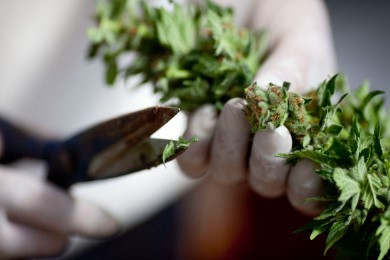
5.2 Drying and Curing Process
- Drying Conditions:
- Temperature: 60-70°F (15-21°C).
- Humidity: 50-60%.
- Duration: 7-10 days.
- Method: Hang buds upside down in a dark, well-ventilated space.
- Curing Conditions:
- Store in glass jars at 65% humidity, burping daily for 2-4 weeks.
- Enhances terpene profile, smoothness, and potency.
6. Common Cultivation Challenges and Solutions
6.1 Mold and Mildew Prevention
- Problem: Bud rot due to high humidity.
- Solution: Maintain humidity below 50% in flowering, increase airflow.
6.2 Nutrient Burn
- Problem: Leaf tips turning yellow or brown.
- Solution: Flush with pH-balanced water, reduce feeding strength.
6.3 Pest Control
- Common Pests: Spider mites, fungus gnats, aphids.
- Organic Prevention:
- Neem oil spray (vegetative stage only).
- Beneficial insects (ladybugs, predatory mites).
- Companion planting (basil, marigold).
7. Advanced Cultivation Techniques
7.1 Tissue Culture Propagation
- Purpose: Preserves genetics, disease-free clones.
- Method: Explant culture in sterile medium with plant hormones.
7.2 LED Spectrum Manipulation
- UV-B Light Exposure:
- Introduced in the last 2-3 weeks of flowering to enhance trichome production.
7.3 Mycorrhizal Inoculation
- Purpose: Increases nutrient uptake and root health.
- Method: Adding mycorrhizal fungi to soil or hydroponic medium.
Conclusion
Pandora’s Box is a potent sativa-dominant hybrid offering a unique blend of mental stimulation and mild relaxation. Its high THC content, diverse terpene profile, and mood-enhancing properties make Pandora’s Box ideal for both medical and recreational use. With its citrusy aroma, focus-enhancing effects, and pain-relieving potential, this strain remains a top choice for those seeking an energizing experience.
Best Suited For:
- Individuals needing mental clarity and motivation
- Those seeking chronic pain relief
- Creative professionals and artists
- Social cannabis users looking for an uplifting high
While novice users should start with low doses, experienced consumers will appreciate Pandora’s Box for its versatile benefits.
For a complete directory of cultivars, visit our Cannabis Strain Reviews.
