Table of Contents
The indica-dominant hybrid strain P-51 is well-known for its strong effects, distinct genetic heritage, and wide range of uses in both recreational and medical contexts. Because of its strong sedative effects, ability to relieve pain, and prolonged cerebral high, this strain is highly acclaimed. P-51, a cultivar that appeals to both new and seasoned cannabis users, has its roots in strong and hardy genetics.
Every facet of the P-51 strain will be covered in this book, including its genetics, looks, terpene profile, cannabinoid composition, effects, medical applications, and scientific insights.
Genetics and Lineage
P-51 is a hybrid of two popular cannabis strains:
- Tina (a heavy indica-dominant strain with strong couch-lock effects and potent resin production)
- Starfighter (a hybrid renowned for its euphoric effects and great trichome density)
P-51’s well-balanced profile, which tends toward profound body relaxation and mental stimulation, is provided by this lineage and strong pain-relieving properties.
Strain Characteristics
Appearance
P-51 has a visually striking bud structure characterized by:
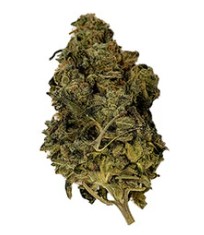
- Compact, dense buds covered in a sticky resin
- In cooler growing conditions, deep green foliage with purple undertones
- Via the surface coated in trichomes, bright orange pistils
- A thick layer of crystal-like trichomes, indicating its high THC content
Aroma and Flavor Profile
The terpene profile of P-51 gives it a unique earthy, piney, and diesel-like aroma, with subtle hints of citrus and spice. Upon inhalation, users experience:
- Initially bright and lemony, like the zest of a lemon or orange
- A dominant pine and diesel undertone, giving it a rich and pungent scent
- Earthy and skunky notes accompany the smooth exhale.
Terpene Composition
P-51 is rich in three primary terpenes:
- Myrcene – P-51’s deep relaxation, anti-inflammatory, and analgesic effects are attributed to myrcene, which is prevalent in sedative indica strains.
- Caryophyllene – This terpene, which has a spicy, peppery scent, has anti-inflammatory and pain-relieving properties.
- Limonene – Adds a citrus-like aroma and contributes to elevated mood, stress relief, and mild anxiolytic effects.
Cannabinoid Profile
With a high THC level that often ranges from 20% to 28%, P-51 is a powerful strain for both recreational and medicinal users. The strain also contains trace amounts of CBD (<1%), contributing mildly to its medical applications.
| Cannabinoid | Percentage |
|---|---|
| THC | 20-28% |
| CBD | <1% |
| CBG | ~1% |
| CBC | Trace |
Effects and Uses
Recreational Effects
P-51 provides a multi-phase high that starts with mental clarity and exhilaration and ends with a profound, full-body relaxation.
- Euphoria and Mood Enhancement – The cerebral effects bring happiness, creativity, and enhanced focus, making it useful for relaxation without causing immediate sedation.
- Body Relaxation and Couch-Lock – After the initial mental uplift, a strong wave of physical sedation sets in, leading to potential couch-lock effects.
- Sensory Enhancement – Many users claim to have enhanced sensory experience, which includes a greater appreciation for flavors, music, and textures.
- Sleep Induction – Due to its strong sedative effects, P-51 is highly effective in promoting deep sleep and combating insomnia.
Potential Side Effects
- Dry mouth (cottonmouth)
- Dry/red eyes
- Dizziness in novice users
- Paranoia at high doses
- Heavy sedation leading to drowsiness
Medical Applications
An indica-dominant hybrid, the P-51 cannabis strain is known for its medicinal qualities, especially in the areas of neurological illnesses, pain management, anxiety reduction, and sleep control. Its biochemical composition, including a high THC content, moderate CBD presence, and complex terpene profile, makes it a candidate for various medical applications. A detailed explanation of its physiological effects, mechanisms of action, and prospective applications is provided below.
1. Pain Management and Anti-Inflammatory Effects
Neuropathic and Chronic Pain Relief
- THC changes how pain is perceived and lessens hyperalgesia via binding to CB1 receptors in the central nervous system. (heightened pain sensitivity).
- Caryophyllene interacts with CB2 receptors, modulating immune response and decreasing inflammation, making it effective for autoimmune-related pain disorders.
- Myrcene acts as a natural analgesic, enhancing the permeability of cell membranes, allowing for faster absorption of cannabinoids.
Medical Applications
- Fibromyalgia (Decreases nerve hypersensitivity)
- Chronic Migraines (Reduces neurovascular inflammation)
- Arthritis (Suppresses cytokine production in joint inflammation)
- Multiple Sclerosis (MS) (Alleviates muscle spasms and nerve pain)
Scientific Basis
- Studies on CB1 receptor activation show significant pain relief, as THC suppresses nociceptive (pain-sensing) neuron excitability.
- CB2 receptor activation through caryophyllene decreases inflammation-related pain, showing potential to reduce opioid dependency.
2. Anxiety, PTSD, and Mood Regulation
Neurotransmitter Modulation
- By increasing dopamine release, THC combats depression’s anhedonia, or absence of pleasure.
- Limonene increases serotonin and GABA levels, reducing symptoms of generalized anxiety disorder (GAD) and PTSD.
- Pinene acts as a cognitive enhancer, preventing short-term memory loss caused by high THC exposure.
Medical Applications
- Generalized Anxiety Disorder (GAD) (Regulates amygdala overactivity)
- Hyperarousal and intrusive memories are suppressed by post-traumatic stress disorder (PTSD).
- Major Depressive Disorder (MDD) (Dopamine activation improves mood and motivation)
Scientific Basis
- THC’s modulation of the endocannabinoid system (ECS) balances HPA-axis dysfunction, reducing cortisol levels associated with stress disorders.
- In patients with PTSD and social anxiety, terpene synergy improves emotional regulation and amplifies anxiolytic effects.
3. Insomnia and Sleep Disorders
Sedative and Sleep-Regulating Properties
- Myrcene enhances GABAergic signaling, inducing a calm, muscle-relaxing effect, beneficial for chronic insomnia.
- THC reduces sleep onset latency, helping individuals fall asleep faster.
- Linalool has a neuroprotective effect on sleep architecture, promoting deep, uninterrupted sleep cycles.
Medical Applications
- Chronic Insomnia (Reduces sleep latency)
- Restless Leg Syndrome (RLS) (Decreases nighttime muscle spasms)
- Sleep apnea (prevents airway collapse by controlling serotonin levels)
Scientific Basis
- According to clinical research, THC shortens the duration of REM sleep, which makes P-51 especially useful for treating nightmares associated with PTSD.
- CB1 receptor activation suppresses overactive neural firing, inducing sedation and prolonged sleep duration.
4. Neuroprotection and Cognitive Disorders
Cannabinoid Neuroprotective Mechanisms
- THC exhibits antioxidant properties, reducing oxidative stress and mitochondrial dysfunction in neurons.
- Caryophyllene’s anti-inflammatory action protects neurons from degeneration in conditions like Alzheimer’s and Parkinson’s disease.
- Pinene improves focus and memory recall by counteracting the cognitive impairment caused by THC.
Medical Applications
- Alzheimer’s Disease (Reduces β-amyloid plaque formation)
- Parkinson’s illness (Decreases tremors and increases dopamine production.)
- Multiple Sclerosis (MS) (Prevents nerve demyelination and spasticity)
Scientific Basis
- In neurodegenerative diseases, THC helps with memory retention by activating CB1 receptors, which encourages synaptic plasticity.
- CB2 receptor stimulation decreases neuroinflammation, slowing disease progression in MS and Parkinson’s.
5. Gastrointestinal Health and Appetite Stimulation
Regulation of Digestive Function
- THC stimulates CB1 receptors in the gut, increasing gastric motility and reducing nausea.
- Caryophyllene prevents inflammatory bowel disorders (IBD) via having gastroprotective properties.
- By balancing the gut bacteria, limonene enhances nutritional absorption and digestive health.
Medical Applications
- Chemotherapy-Induced Nausea and Vomiting (CINV) (Reduces nausea response)
- Irritable Bowel Syndrome (IBS) (Alleviates cramping and gut hypersensitivity)
- Crohn’s Disease & Ulcerative Colitis (Anti-inflammatory effects protect gut lining)
Scientific Basis
- CB1 receptor activation leads to increased ghrelin production, stimulating appetite and counteracting cachexia and anorexia.
- Limonene’s anti-inflammatory properties aid in intestinal permeability reduction, preventing leaky gut syndrome.
6. Anti-Inflammatory and Autoimmune Benefits
Immune System Modulation
- THC suppresses overactive immune responses, reducing inflammatory cytokine release.
- The activation of the CB2 receptor by caryophyllene reduces inflammation caused by autoimmune diseases, which is advantageous for lupus and rheumatoid arthritis.
- Myrcene inhibits prostaglandin production, preventing chronic inflammatory pain.
Medical Applications
- Rheumatoid Arthritis (RA) (Reduces joint inflammation and pain)
- Lupus (SLE) (Suppresses hyperactive immune response)
- Psoriasis & Eczema (Reduces skin inflammation and irritation)
Scientific Basis
- By suppressing the COX-2 enzyme, THC lowers inflammatory indicators in a manner similar to that of NSAIDs without causing gastrointestinal side effects.
- Modulation of the CB2 receptor slows the course of lupus and multiple sclerosis by preventing autoimmune overactivation.
Scientific Insights into P-51’s Effects
The Role of THC and Myrcene in Pain Relief
Studies have shown that high-THC strains rich in myrcene provide powerful pain-relieving effects by interacting with the body’s endocannabinoid system’s (ECS) CB1 and CB2 receptors. This makes P-51 an effective alternative to opioid-based painkillers.
Caryophyllene as a Unique Anti-Inflammatory Agent
Caryophyllene, in contrast to most terpenes, directly interacts with CB2 receptors, which makes it an efficient anti-inflammatory and pain-relieving compound without producing a psychoactive high.
Limonene and Mood Elevation
Limonene’s anxiolytic qualities are supported by scientific studies since it raises serotonin and dopamine levels, which helps people with anxiety, sadness, and stress.
Synergistic Effects of the Entourage Effect
The entourage effect describes how the terpenes and cannabinoids in P-51 cooperate to enhance one another’s therapeutic effects.
Cultivation Information
Cultivating P-51 cannabis strain requires an advanced understanding of plant physiology, environmental controls, and biochemical processes. This strain, known for its Indica dominance, dense bud structure, and high resin production, thrives best under precise environmental conditions. Below is an in-depth analysis of the scientific methodologies used to cultivate P-51 optimally.

1. Environmental Requirements for P-51 Growth
Climate Control and Growing Conditions
- Temperature Management:
- Vegetative Stage: 72-78°F (22-25°C) to promote robust root and leaf development.
- Flowering Stage: 68-75°F (20-24°C) for optimal bud formation.
- Terpene Optimization: Terpene output is increased when temperatures are lowered to 64–70°F (18–21°C) during the last several weeks of flowering, improving aroma and potency.
- Humidity Control:
- Seedling Stage: 60–70% RH to promote robust root development.
- Vegetative Stage: 50–60% relative humidity to avoid fungal diseases.
- Flowering Stage: 40-50% RH to reduce mold and mildew risks.
- Late Flowering: 30-40% RH to preserve resin and trichome density.
- Air Circulation:
- Because of its dense foliage and compact structure, P-51 needs adequate ventilation to avoid pest infestations, mold, and mildew.
- Oscillating fans and negative air pressure systems improve airflow and CO₂ exchange, enhancing photosynthetic efficiency.
2. Light Spectrum and Photoperiod Control
Indoor Cultivation
- Vegetative Growth:
- Light cycle: 18/6 (18 hours light, 6 hours dark) to promote strong vegetative expansion.
- Spectrum: Compact growth is promoted by blue-dominant light (400–500 nm) from Metal Halide (MH) or Full-Spectrum LED.
- 300–600 µmol/m²/s is the photosynthetic photon flux density, or PPFD.
- Flowering Stage:
- Light cycle: To start flowering, use 12/12 (12 hours of light and 12 hours of dark).
- Spectrum: To improve bud production, use red-dominant light (600–700 nm) from LEDs or High-Pressure Sodium (HPS).
- PPFD: 600-900 µmol/m²/s.
- Far-Red Light Supplementation:
- Utilizing 730 nm light at the end of the photoperiod helps induce faster flowering responses by mimicking natural sunset conditions.
Outdoor Cultivation
- Best suited for climates with consistent sunlight exposure of 10-12 hours/day.
- Greenhouse supplementation with LED lighting extends growing seasons in northern latitudes.
- Protecting plants from excess rainfall prevents bud rot and fungal infections.
3. Soil Composition and Nutrient Profile
Soil Requirements
- Optimal pH: 6.0 – 6.5 to maximize nutrient uptake and root development.
- Soil Type: Loamy soil with aeration amendments (perlite, coco coir, biochar) to maintain oxygenation and moisture retention.
- Organic Matter: Compost, worm castings, and bat guano enrich microbial life and increase nutrient availability.
Macronutrient Requirements
- Nitrogen (N):
- High requirement for foliar expansion and chlorophyll production during vegetative growth.
- A switch to a phosphorus-rich feeding schedule is necessary because too much nitrogen during flowering hinders the formation of resin.
- Phosphorus (P):
- Promotes the growth of roots and starts the creation of buds.
- Need to promote the manufacturing of trichomes and cannabinoids during peak flowering.
- Potassium (K):
- Vital for terpene production, enzyme activation, and water control.
- Deficiencies lead to weak stems and poor bud formation.
Micronutrient Considerations
- Magnesium (Mg): Vital for terpene production, enzyme activation, and water control.
- Calcium (Ca): Prevents blossom end rot and leaf curling by fortifying cell walls.
- Sulfur (S): Enhances terpene synthesis, improving flavor profiles.
Feeding Schedule
- Vegetative Growth: N-P-K ratio of 4-3-3 for lush foliage.
- Early Flowering: Transition to 2-6-4 to support bud set.
- Peak Flowering: 1-4-6 for optimal resin and THC production.
- Flush Period: Water with a pH of 6.2 to eliminate any remaining nutrients and avoid acrid smoke.
4. Watering and Irrigation Strategy
Watering Techniques
- Avoid Overwatering:
- To avoid root rot, let the top inch of soil dry between waterings.
- Implement moisture sensors for precise hydration levels.
- pH-Adjusted Water:
- Maintain 6.0-6.5 pH for soil grows and 5.5-6.0 pH for hydroponic systems.
- Filtered or dechlorinated water improves microbial activity.
- EC (Electrical Conductivity) and PPM Monitoring:
- Vegetative: EC 1.2-1.5 mS/cm, PPM 600-800.
- Flowering: EC 1.6-2.0 mS/cm, PPM 900-1200.
5. Growth Training and Canopy Management
Low-Stress Training (LST)
- Main stem bending maximizes light exposure by gently rerouting development horizontally.
- Encourages multiple cola formation, increasing yield potential.
High-Stress Training (HST)
- Topping: Cutting the apical stem encourages bushier growth and multiple colas.
- Supercropping: Controlled bending to enhance resin production.
Defoliation
- Strategic leaf removal improves airflow and reduces humidity buildup.
- By increasing light penetration, pre-flower defoliation maximizes bud size.
6. Harvesting, Drying, and Curing
Optimal Harvest Timing
- Trichome Development Indicator:
- Clear trichomes: Premature (low potency).
- Cloudy trichomes: Peak THC content.
- Amber trichomes: Increased CBN, more sedative effects.
Drying Process
- Temperature: 60-70°F (16-21°C).
- Humidity: 45-55% RH to prevent mold.
- Airflow: Slow, even drying is ensured by indirect air circulation.
Curing for Terpene Retention
- Store buds in glass jars, burping daily for two weeks.
- Extended curing (4-8 weeks) maximizes terpene preservation and smooth smoke quality.
7. Pest and Disease Prevention
Common Pests
- Spider Mites, Thrips, Fungus Gnats
- Natural Control:
- Predatory mites such as Phytoseiulus persimilis, neem oil, or helpful nematodes.
Disease Resistance Strategies
Bud Rot Mitigation: Proper airflow and pruning prevent excess moisture accumulation.
Powdery Mildew Prevention: Maintain low humidity and introduce sulfur sprays.
Conclusion
P-51 is a potent indica-dominant strain with strong recreational and medicinal properties. Its high THC content, well-rounded terpene profile, and deeply relaxing effects make it an outstanding option for managing anxiety, treating sleep issues, relieving pain, and used recreationally. With a robust genetic lineage and high resin production, P-51 is an outstanding strain for medical patients as well as cannabis enthusiasts.
For a complete directory of cultivars, visit our Cannabis Strain Reviews.
