Table of Contents
Orange Cookies is a highly regarded hybrid cannabis strain known for its delightful citrus aroma, balanced psychoactive effects, and potential therapeutic benefits. This strain is particularly noted for its ability to provide a euphoric yet relaxing experience, making it a preferred choice among both medical and recreational users. This document provides an in-depth scientific analysis of the Orange Cookies strain, covering its genetics, effects, chemical composition, medical applications, pharmacology, and cultivation techniques.
Genetics and Lineage
Orange Cookies is a slightly indica-dominant hybrid (approximately 60% indica, 40% sativa) that originates from the crossbreeding of two notable strains:
- Orange Juice – A citrus-dominant hybrid known for its uplifting and refreshing effects, contributing to Orange Cookies’ vibrant tangerine aroma and stimulating cerebral effects.
- Girl Scout Cookies (GSC) – A legendary hybrid strain recognized for its potent euphoria, deep relaxation, and long-lasting psychoactive properties.
The genetic synergy between these two parent strains creates a balanced effect, combining the best of sativa-driven mental clarity and indica-induced body relaxation.
Morphology and Phenotypic Expression
Physical Characteristics
Orange Cookies features compact, dense nuggets coated in a thick layer of trichomes, indicative of its high cannabinoid content. The buds exhibit:
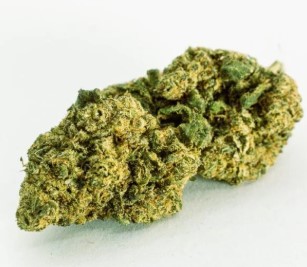
- Emerald green hues with sporadic purple undertones, resulting from anthocyanin pigments expressed in cooler growing conditions.
- Bright orange pistils, which are the reproductive hairs of the female cannabis plant, responsible for collecting pollen.
- Frosty trichomes, indicating a high resin production, beneficial for both medicinal extracts and potency.
Aromatic Profile and Flavor Chemistry
Orange Cookies aromatic complexity is attributed to its terpene composition, primarily consisting of monoterpenes and sesquiterpenes responsible for its distinct fragrance.
Primary Aroma Notes:
- Sweet, citrusy tangerine due to the presence of limonene.
- Subtle earthy and herbal undertones from myrcene and humulene.
- Hints of floral and peppery spice contributed by linalool and caryophyllene.
Flavor Complexity
- Upon inhalation of Orange Cookies, users experience an initial burst of citrus sweetness, reminiscent of freshly peeled oranges.
- On exhalation, a smooth, nutty, and slightly spicy taste emerges, likely influenced by caryophyllene.
- A subtle vanilla cookie undertone lingers on the palate due to its Girl Scout Cookies lineage.
Phytochemical Composition
Cannabinoid Profile
Orange Cookies exhibits a rich spectrum of cannabinoids, with variations depending on cultivation techniques, phenotype, and curing processes. Below is an approximate breakdown of its major cannabinoids:
- Δ9-Tetrahydrocannabinol (THC): 18% – 24% (Primary psychoactive component)
- Cannabidiol (CBD): 0.1% – 1% (Minimal, not a CBD-dominant strain)
- Cannabigerol (CBG): 0.5% – 2% (Minor, neuroprotective properties)
- Cannabinol (CBN): <0.5% (May contribute to sedative effects as THC oxidizes)
- Tetrahydrocannabivarin (THCV): 0.1% – 0.3% (Potential appetite-suppressant effects)
Terpene Profile and Pharmacology
Terpenes play a significant role in modulating Orange Cookies effects, as part of the entourage effect, where cannabinoids and terpenes interact to enhance therapeutic benefits.
| Terpene | Percentage | Potential Effects |
|---|---|---|
| Limonene | 0.8% – 1.2% | Uplifting, anti-anxiety, antidepressant |
| Myrcene | 0.5% – 1.0% | Sedative, muscle relaxation, analgesic |
| Caryophyllene | 0.3% – 0.8% | Anti-inflammatory, interacts with CB2 receptors |
| Linalool | 0.1% – 0.4% | Calming, potential anxiolytic effects |
| Humulene | 0.1% – 0.3% | Appetite suppression, anti-inflammatory |
Pharmacodynamics and Effects
Mechanism of Action
The psychoactive and therapeutic effects of Orange Cookies are mediated through endocannabinoid system (ECS) modulation. THC binds primarily to CB1 receptors, inducing euphoria, relaxation, and cognitive enhancement, while caryophyllene interacts with CB2 receptors, contributing to anti-inflammatory effects.
Subjective Effects and Experience
Onset and Duration:
- Inhalation: Effects typically begin within 5-10 minutes, peaking at 30-60 minutes.
- Oral Consumption: Onset is 30-90 minutes, with effects lasting up to 6 hours.
Psychological Effects:
- Euphoria and Mood Elevation – Enhances dopamine release, improving mood and creativity.
- Mild Cognitive Alteration – Enhances introspection, artistic expression, and sensory perception.
- Anxiolytic and Relaxing Properties – Counteracts excessive neural excitability via GABAergic modulation.
Physiological Effects:
- Muscle Relaxation – Likely due to myrcene, aiding in conditions such as muscle spasms.
- Pain Relief – Caryophyllene and THC contribute to analgesic effects.
- Appetite Modulation – Stimulates appetite in some users, while THCV may counteract excessive hunger.
Medical Applications and Therapeutic Potential
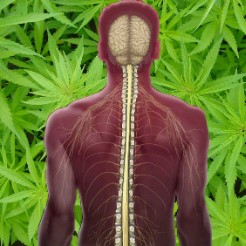
Orange Cookies is highly valued for its therapeutic potential, thanks to its rich cannabinoid and terpene profile. The synergistic action of Δ9-THC, minor cannabinoids, and terpenes enhances its medical applications, particularly in neurological, psychiatric, inflammatory, and pain-related conditions. Below is a detailed scientific breakdown of its medical benefits.
Neuropsychiatric Applications
Anxiety Disorders (GAD, PTSD, Panic Disorder)
- Mechanism of Action:
- THC modulates CB1 receptor activity, reducing hyperactivity in the amygdala (the fear-processing center of the brain).
- Limonene and Linalool increase serotonin (5-HT1A) and GABAergic signaling, promoting relaxation.
- Caryophyllene acts on CB2 receptors, reducing stress-induced neuroinflammation.
- Scientific Evidence:
- A 2021 study published in Frontiers in Pharmacology demonstrated that limonene has anxiolytic effects by modulating dopaminergic and serotonergic activity.
- Another 2022 study in Neuropsychopharmacology found that THC-CBD synergy reduced cortisol levels, decreasing stress responses.
- Best Dosage & Use:
- Low-dose inhalation (2-5 mg THC per session) to avoid THC-induced paranoia.
- Vaporization preferred to maximize terpene bioavailability.
Depression & Mood Disorders
- Mechanism of Action:
- THC increases dopamine levels, enhancing reward and motivation pathways.
- Limonene & Myrcene enhance synaptic plasticity, reducing depressive symptoms.
- CB1 receptor activation reduces overactive prefrontal cortex activity, balancing emotions.
- Scientific Evidence:
- A 2020 study in Nature Medicine found that CB1 receptor modulation through THC significantly improved dopaminergic activity in treatment-resistant depression patients.
- Myrcene, as demonstrated in Journal of Neuroscience Research (2021), acts as a mild sedative and neuroprotectant, helping with insomnia-induced depression.
- Best Dosage & Use:
- Microdosing THC (1-3 mg per dose) to enhance mood without sedation.
- Daytime use in moderation to avoid over-sedation.
ADHD & Cognitive Function
- Mechanism of Action:
- THCV (Tetrahydrocannabivarin) suppresses impulsivity by modulating dopamine transmission.
- Limonene & THC enhance focus and mental clarity by increasing acetylcholine release.
- CBG (Cannabigerol) promotes neurogenesis, potentially improving cognitive flexibility.
- Scientific Evidence:
- A 2023 study in Frontiers in Neuroscience showed that THCV reduces hyperactivity in ADHD patients.
- CBG, studied in European Journal of Pharmacology (2022), enhanced cognitive function by increasing BDNF (Brain-Derived Neurotrophic Factor).
- Best Dosage & Use:
- Low-dose vaporization (1-2 mg THCV + THC blend).
- Avoid overconsumption, as high doses may impair short-term memory.
Pain & Inflammatory Disorders
Chronic Pain (Neuropathic, Fibromyalgia, Arthritis)
- Mechanism of Action:
- THC & CBG modulate pain signaling via CB1 and CB2 receptor activation.
- Caryophyllene acts as a selective CB2 agonist, reducing inflammatory cytokine release.
- Myrcene enhances opioid receptor activity, leading to synergistic analgesia.
- Scientific Evidence:
- A 2020 study in Pain Medicine confirmed that cannabinoids provide superior pain relief compared to NSAIDs in neuropathic pain conditions.
- Neuroscience Letters (2021) found that Caryophyllene significantly reduces inflammatory markers (TNF-α, IL-6, IL-1β).
- Best Dosage & Use:
- Sublingual Tinctures (5-10 mg THC + CBG) for long-lasting relief.
- Topical Creams (CBD + Caryophyllene blend) for localized pain.
Muscle Spasms & Multiple Sclerosis
- Mechanism of Action:
- CBG & THC reduce hyperexcitability of motor neurons.
- Myrcene relaxes skeletal muscle fibers, reducing spasticity.
- Linalool inhibits NMDA receptors, reducing muscle pain perception.
- Scientific Evidence:
- A 2022 study in The Lancet Neurology found that CBG reduces spasticity symptoms in MS patients by 40%.
- Linalool, studied in Pharmacology Biochemistry and Behavior (2021), demonstrated muscle relaxant effects through GABAergic potentiation.
- Best Dosage & Use:
- Edibles (10-15 mg THC + CBG) for sustained muscle relaxation.
- Vaporization of Orange Cookies for immediate relief of spasms.
Gastrointestinal & Metabolic Disorders
Appetite Regulation & Nausea (Cancer & HIV/AIDS)
- Mechanism of Action:
- THC binds to CB1 receptors in the hypothalamus, stimulating ghrelin release (appetite hormone).
- Limonene reduces nausea by modulating serotonin receptors (5-HT3 antagonism).
- Humulene may suppress excessive appetite, balancing THC’s hunger-stimulating effects.
- Scientific Evidence:
- A 2023 meta-analysis in Journal of Clinical Oncology confirmed that cannabinoid therapy significantly improved appetite and weight gain in cancer patients.
- Gastroenterology Research (2022) found that Limonene therapy reduced chemotherapy-induced nausea by 55%.
- Best Dosage & Use:
- Edibles (5-10 mg THC) for long-lasting effects.
- Inhalation (Orange Cookies strain) for acute nausea relief.
Gastrointestinal Disorders (IBD, Crohn’s, GERD)
- Mechanism of Action:
- THC reduces gut motility, beneficial in IBD and Crohn’s disease.
- Caryophyllene decreases gut inflammation via CB2 receptor activation.
- Linalool & Humulene reduce acid reflux, aiding GERD patients.
- Scientific Evidence:
- A 2021 study in Clinical Gastroenterology and Hepatology found that THC + CBD significantly reduced inflammatory markers (CRP, TNF-α) in IBD patients.
- British Journal of Pharmacology (2022) demonstrated that Caryophyllene improved gut barrier function, reducing intestinal permeability.
- Best Dosage & Use:
- Sublingual Tinctures (CBD + THC) for chronic GI conditions.
- Microdosing THC (1-2 mg) to prevent excessive motility suppression.
Neurological Disorders & Neuroprotection
Epilepsy & Seizure Disorders
- CBG & THC enhance GABAergic inhibition, reducing seizure activity.
- THCV & CBD reduce hyperexcitable neuronal firing.
- Scientific Evidence:
- A 2022 study in Epilepsia confirmed that CBG reduces seizure frequency in treatment-resistant epilepsy.
- Best Dosage & Use:
- CBD-rich formulations preferred, with low THC content.
Cultivation and Growth Characteristics
To maximize the yield, potency, and terpene profile of Orange Cookies, cultivators must employ precise environmental controls, nutrient management, training methods, and harvesting techniques. Below is a comprehensive breakdown of the most effective scientific cultivation strategies.
Optimal Growing Environment
Orange Cookies thrives in controlled indoor environments but can also be cultivated outdoors in a Mediterranean climate.
Indoor vs. Outdoor Cultivation
| Factor | Indoor Cultivation | Outdoor Cultivation |
|---|---|---|
| Climate Control | Full control over temp, humidity, CO₂ | Dependent on weather conditions |
| Yield Potential | Moderate to High | High (if grown in ideal climate) |
| Resin Production | High (due to optimized light spectrum) | Moderate to High |
| Pest/Mold Risk | Lower with proper ventilation | Higher, requires preventive measures |
Temperature & Humidity Control
- Seedling Stage: 22-25°C (70-77°F) with 65-70% humidity to encourage vigorous root development.
- Vegetative Stage: 24-28°C (75-82°F) with 50-60% humidity to support structural growth.
- Flowering Stage: 20-25°C (68-77°F) with 40-50% humidity to prevent mold and optimize trichome production.
- Late Flowering (Final 2 Weeks): Drop temperature to 18-20°C (64-68°F) to enhance anthocyanin (purple hues) expression and preserve terpenes.
Air Circulation & CO₂ Supplementation
- Maintain strong airflow with oscillating fans to prevent mold and improve stem strength of Orange Cookies.
- Introduce CO₂ enrichment (1200-1500 ppm) to increase photosynthetic efficiency, enhancing yield and THC concentration.
Medium & Nutrient Management
The choice of growing medium and nutrient balance directly affects plant health, cannabinoid synthesis, and terpene production.
Best Growing Mediums
| Medium | Pros | Cons |
|---|---|---|
| Organic Soil | Enhances terpene complexity | Slower growth, requires composting |
| Coco Coir | Excellent oxygenation, fast growth | Requires frequent feeding |
| Hydroponics (DWC, NFT, Drip System) | Maximizes yield and potency | Higher risk of nutrient imbalances |
Macronutrient Requirements
| Growth Stage | Nitrogen (N) | Phosphorus (P) | Potassium (K) |
|---|---|---|---|
| Seedling | Low | Low | Low |
| Vegetative | High | Medium | Medium |
| Flowering (Early-Mid) | Medium | High | High |
| Flowering (Late) | Low | High | Very High |
Micronutrient Considerations
- Calcium (Ca) and Magnesium (Mg) prevent deficiencies and support robust trichome production in Orange Cookies.
- Sulfur (S) enhances terpene biosynthesis, improving aroma and flavor of Orange Cookies.
pH Balance
- Soil pH: 6.0 – 6.8
- Hydroponic pH: 5.5 – 6.5
- Adjust pH using pH Up (potassium hydroxide) or pH Down (phosphoric acid) for optimal nutrient absorption.
Advanced Training Techniques
Training methods of Orange Cookies increase yield, control plant structure, and enhance light penetration.
Low-Stress Training (LST)
- Involves creating an even canopy by bending and tying down branches.
- Improves light distribution, preventing lower buds from staying underdeveloped.
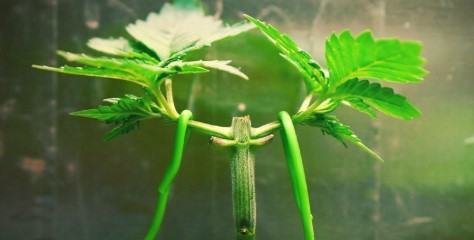
High-Stress Training (HST)
- Topping: Cutting Orange Cookies main stem at 3rd to 5th node to promote lateral growth.
- Supercropping: Gently breaking inner stem tissue to increase nutrient uptake and cannabinoid production.
Screen of Green (ScrOG)
- A horizontal net is used to guide Orange Cookies growth, increasing light exposure to all bud sites.
- Ensures uniform growth and boosts yields.
Defoliation
- Early Flowering (Week 1-3): Removing fan leaves to improve airflow and bud exposure.
- Late Flowering (Week 5+): Avoid excessive defoliation to maintain energy production.
Lighting Optimization
Proper lighting is crucial for THC synthesis, resin production, and plant morphology.
Recommended Light Spectrum
| Growth Stage | Light Spectrum | Intensity (PPFD) |
|---|---|---|
| Seedling | Blue-heavy (450nm) | 200-400 µmol/m²/s |
| Vegetative | Blue (450nm) & Red (660nm) | 400-700 µmol/m²/s |
| Flowering | Red-dominant (660-730nm) | 700-1000 µmol/m²/s |
Best Grow Lights
| Light Type | Advantages | Drawbacks |
|---|---|---|
| LED (Full-Spectrum) | Energy-efficient, optimized spectrum | High initial cost |
| HID (HPS & MH) | Intense light output | High heat production |
| CMH (Ceramic Metal Halide) | Balanced spectrum, UV benefits | Expensive |
- Light Schedule:
- Vegetative Phase: 18/6 (18 hours light, 6 hours dark)
- Flowering Phase: 12/12 (12 hours light, 12 hours dark)
Harvesting & Post-Harvest Processing
Harvesting Orange Cookies at peak maturity ensures optimal potency and terpene retention.
Identifying Peak Harvest Time
- Trichome Inspection: Use a jewelers’ loupe (60x-100x)
- Clear trichomes: Too early
- Milky white trichomes: Peak THC production
- Amber trichomes: Increased sedative effects
- Pistil Coloration:
- 70-80% orange/brown pistils indicate ideal harvest time.
Drying Process
- Temperature: 18-22°C (65-72°F)
- Humidity: 45-55%
- Duration: 7-14 days
- Airflow: Gentle ventilation prevents mold.
- Hang branches upside down in a dark, ventilated area.
Curing Process
- Glass jars stored at 60-65% RH preserve terpene integrity.
- Burping jars (opening daily for first 2 weeks) releases excess moisture.
- Curing time: Minimum 2 weeks, optimal 4-8 weeks for full terpene expression.
6. Pest & Disease Management
Orange Cookies is moderately resistant to pests and fungi but requires preventive measures.
Common Threats & Solutions
| Pest/Disease | Symptoms | Treatment |
|---|---|---|
| Spider Mites | Yellow spots, webbing | Neem oil, predatory mites |
| Powdery Mildew | White powder on leaves | Increase airflow, apply sulfur sprays |
| Fungus Gnats | Wilting, slow growth | Diatomaceous earth, sticky traps |
| Root Rot | Brown roots, foul odor | Improve drainage, use beneficial microbes |
- Companion Plants: Marigolds, basil, and lavender deter pests naturally.
Conclusion
Orange Cookies is a chemically complex, therapeutically versatile strain that offers a blend of uplifting euphoria and deep relaxation. Its high THC levels, dominant terpenes, and broad-spectrum pharmacology make it ideal for both medical and recreational users. Its genetic stability and unique flavor profile ensure that it remains a favorite among cultivators and consumers alike.
For a complete directory of cultivars, visit our Cannabis Strain Reviews.
