Table of Contents
Orange Bud is a legendary Sativa-dominant hybrid strain known for its vibrant citrus aroma, dense buds, and energetic effects. Developed in the 1980s by Dutch Passion, Orange Bud has remained a staple in cannabis culture due to its potency, resilience, and pleasant high. This strain is highly regarded in both medical and recreational cannabis communities for its well-balanced effects and therapeutic potential.
This document explores scientific details, chemical composition, medical benefits, recreational effects, and cultivation information regarding Orange Bud.
Genetic Lineage and Background
Orange Bud originates from a selective breeding of Skunk #1, a famous hybrid that has contributed to many modern strains. By isolating phenotypes with distinct citrus terpenes and a high cannabinoid profile, breeders created a strain that has become a favorite among users looking for a well-rounded experience.
- Genetics: Skunk #1 (Sativa-dominant phenotype)
- Strain Type: Sativa-dominant Hybrid (~65% Sativa, 35% Indica)
- THC Content: 16–24%
- CBD Content: 0.2–1%
- CBG Content: ~1%
Aroma, Flavor, and Appearance
Orange Bud lives up to its name with a strong citrus aroma complemented by sweet, skunky, and earthy undertones.
Aroma Profile:
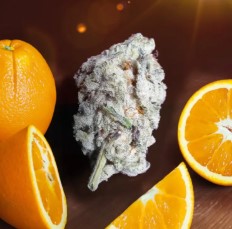
- Primary: Orange, Tangerine, Citrus
- Secondary: Skunk, Earth, Spice
Flavor Profile:
- Inhale: Sweet orange zest, tangy citrus
- Exhale: Mild herbal and spicy aftertaste
- Smoke/Vapor: Smooth with minimal harshness
Appearance:
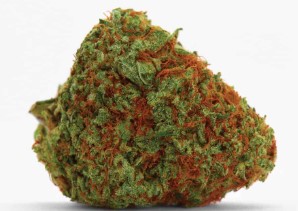
- Bud Structure: Dense and compact, covered in bright orange pistils
- Trichomes: Thick coating of crystalline trichomes, indicating high potency
- Coloration: Deep green with orange hues
Cannabinoid and Terpene Profile
Cannabinoid Content:
- THC: 16-24% (psychoactive effects)
- CBD: 0.2-1% (minor medicinal benefits)
- CBG: ~1% (potential anti-inflammatory and neuroprotective effects)
Terpene Profile:
- Myrcene (Herbal, Earthy): Sedative, pain-relieving, anti-inflammatory
- Limonene (Citrus, Lemon): Mood-enhancing, stress relief, anti-anxiety
- Caryophyllene (Peppery, Spicy): Anti-inflammatory, pain relief, interacts with CB2 receptors
- Pinene (Pine, Fresh): Bronchodilator, cognitive enhancement
- Humulene (Woody, Earthy): Appetite suppressant, anti-inflammatory
These terpenes work synergistically (entourage effect) with cannabinoids, enhancing the overall therapeutic and recreational experience.
Methods of Ingestion & Their Pharmacokinetics
A. Inhalation (Smoking & Vaping)
- Bioavailability: ~20-56% (High)
- Onset Time: Seconds to 5 minutes
- Peak Effects: 15-45 minutes
- Total Duration: 2-4 hours
- Metabolism: Absorbed through pulmonary circulation → Rapid entry into bloodstream
- Ideal For: Fast relief, recreational use, social settings
Smoking (Joints, Pipes, Bongs)
- Combustion Temperature: ~600-900°C (high heat destroys some terpenes)
- Pros: Immediate effects, easy to dose, full-spectrum entourage effect
- Cons: Carcinogens from combustion, lung irritation, loss of cannabinoids due to high temperatures
Vaporization (Dry Herb or Concentrate Vaping)
- Temperature Range: 160-220°C (320-428°F)
- Pros: Higher THC bioavailability (up to 56%), preserves terpenes, reduced lung irritation
- Cons: Requires vaporizer device, slower than smoking but still fast-acting
Scientific Note: Studies indicate vaporization reduces harmful combustion byproducts while retaining 95% of active cannabinoids and terpenes.
B. Oral Consumption (Edibles, Tinctures, Capsules)
- Bioavailability: 4-20% (Lower than inhalation due to first-pass metabolism)
- Onset Time: 30-120 minutes
- Peak Effects: 2-4 hours
- Total Duration: 6-12 hours
- Metabolism: THC → 11-Hydroxy-THC (11-OH-THC) in the liver → More potent and longer-lasting
Edibles (Brownies, Gummies, Chocolates, Beverages)
- Pros: Long-lasting effects, discreet, no lung damage
- Cons: Slow onset, difficult to dose, risk of overconsumption
- Best Use Case: Medical patients needing extended relief from pain, insomnia, anxiety
Scientific Note: 11-OH-THC, a metabolite of THC from oral ingestion, has 2-3 times more potency than THC from inhalation, contributing to its stronger psychoactive effects.
Sublingual (Tinctures, Sprays, Lozenges)
- Bioavailability: 10-35% (Moderate)
- Onset Time: 15-45 minutes
- Peak Effects: 1-2 hours
- Total Duration: 4-6 hours
- Metabolism: Direct absorption into bloodstream via mucosal membranes, bypassing liver metabolism
- Pros: Faster onset than edibles, easier dosing, no lung irritation
- Cons: Shorter effects than edibles, taste may be unpleasant
C. Topical Application (Creams, Patches, Transdermal Gels)
- Bioavailability: Varies by formulation
- Onset Time: 15-60 minutes
- Total Duration: Up to 12 hours
- Metabolism: Local absorption through CB2 receptors in the skin, minimal systemic effects unless transdermal
Topical Creams & Lotions
- Best For: Localized pain relief, inflammation, skin conditions
- No Psychoactive Effects: Cannabinoids do not enter bloodstream
- Cons: Effects are limited to the applied area only
Transdermal Patches (Cannabis-infused Patches)
- Bioavailability: Up to 50% (high due to slow, steady absorption)
- Effects: Provides consistent and prolonged cannabinoid release
- Best For: Chronic pain, long-lasting symptom management
Onset & Duration by Method of Ingestion
| Method | Onset Time | Peak Effects | Total Duration | Bioavailability |
|---|---|---|---|---|
| Smoking (Joint, Pipe, Bong) | Seconds – 5 min | 15-45 min | 2-4 hours | 20-30% |
| Vaporizing (Dry Herb, Concentrate) | Seconds – 5 min | 15-45 min | 2-4 hours | 40-56% |
| Edibles (Brownies, Gummies, etc.) | 30-120 min | 2-4 hours | 6-12 hours | 4-20% |
| Tinctures (Sublingual, Sprays, Lozenges) | 15-45 min | 1-2 hours | 4-6 hours | 10-35% |
| Topicals (Creams, Lotions, Balms) | 15-60 min | N/A | Up to 12 hours | Minimal (localized only) |
| Transdermal Patches | 20-60 min | Slow release | Up to 12 hours | Up to 50% |
Factors Influencing Onset, Duration & Effects
Several biological and environmental factors influence how Orange Bud affects an individual.
A. Individual Biological Factors
- Metabolism Rate: Faster metabolism leads to shorter durations.
- Body Fat Percentage: THC is fat-soluble, meaning higher fat storage may lead to prolonged effects.
- Tolerance Levels: Frequent users have reduced receptor sensitivity, affecting onset and potency.
- Hydration & Nutrition: Dehydration may cause stronger effects and dry mouth.
B. Interaction with Other Substances
- Food Consumption:
- Edibles on an empty stomach → Faster onset, more intense effects.
- Edibles with fatty foods → Enhanced absorption & potency.
- Alcohol: Enhances THC absorption but may cause dizziness or nausea.
- Caffeine: May increase focus and energy while reducing sedation.
Scientific Conclusion
Orange Bud’s effects vary significantly based on ingestion method, metabolism, and tolerance levels. Each method has distinct pharmacokinetics, influencing onset, bioavailability, and duration:
- For Fast Effects: Smoking or vaping provides near-instant relief.
- For Long-lasting Relief: Edibles or transdermal patches are ideal.
- For Precise Dosing & Reduced Lung Irritation: Sublingual tinctures are best.
- For Targeted Relief: Topicals are effective for pain & inflammation.
Effects and Experience
Orange Bud offers a well-balanced high with a strong cerebral uplift and mild body relaxation.
Onset and Duration:
- Onset: 5-10 minutes (smoking/vaporizing), 30-60 minutes (edibles)
- Peak Effects: 30-60 minutes
- Duration: 2-4 hours (varies by consumption method and dosage)
Primary Effects:
- Euphoria & Happiness: Immediate uplift in mood, making it excellent for stress relief.
- Energy & Creativity: Provides a stimulating effect that boosts productivity and focus.
- Relaxation & Comfort: Though uplifting, it has a gentle body relaxation.
- Social Enhancement: Encourages talkativeness and laughter, making it ideal for social settings.
Potential Negative Effects:
- Dry Mouth (Cottonmouth): Common, mitigated by hydration.
- Dry Eyes: Can be relieved with eye drops.
- Paranoia & Anxiety: At high doses, may trigger anxiety in sensitive individuals.
- Dizziness: Mild dizziness can occur in those with lower tolerance.
Medical Uses of Orange Bud
Due to Orange Bud’s balanced cannabinoid-terpene profile, Orange Bud is effective for treating various medical conditions.
Mental Health Benefits:
- Depression: Its mood-enhancing effects combat symptoms of depression and low energy.
- Anxiety & Stress: Limonene and myrcene help reduce stress and promote relaxation.
- ADHD/ADD: Enhances focus and mental clarity, making it suitable for individuals with attention disorders.
Physical Health Benefits:
- Pain Relief: Caryophyllene’s anti-inflammatory properties help with chronic pain, muscle soreness, and migraines.
- Appetite Stimulation: Beneficial for individuals experiencing appetite loss or nausea.
- Fatigue & Chronic Fatigue Syndrome: Increases energy levels and reduces exhaustion.
Neurological and Other Medical Uses:
- Mild Insomnia Relief: Not overly sedative but can promote relaxation before sleep.
- Neuroprotective Properties: CBG and THC may contribute to neuroprotection in neurodegenerative disorders.
- Anti-Inflammatory Benefits: Useful for conditions like arthritis and inflammatory bowel disease (IBD).
Recreational Uses
Orange Bud is a highly versatile recreational strain appreciated for its smooth smoking experience and uplifting effects.
Best Activities for Orange Bud:
- Daytime Use: Energizing effects make it perfect for morning or afternoon use.
- Social Gatherings: Encourages laughter, conversation, and creativity.
- Outdoor Activities: Enhances hiking, beach trips, and sports.
- Music and Art: Stimulates creativity and appreciation for music, painting, and writing.
- Gaming & Movies: Enhances immersion in video games and films.
Cultivation and Growing Information
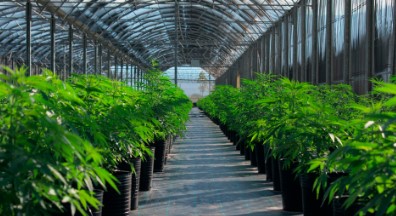
Orange Bud is a resilient strain, making it ideal for beginner and experienced growers.
Optimal Growing Conditions
Environmental Factors:
- Temperature Range:
- Daytime: 20-26°C (68-78°F)
- Nighttime: 16-20°C (60-68°F)
- Excessive heat above 30°C (86°F) can reduce THC content and cause stress-related hermaphroditism.
- Humidity Levels:
- Vegetative Stage: 55-70% RH (Relative Humidity)
- Flowering Stage: 40-50% RH
- Late Flowering (Last 2 Weeks): 30-40% RH (to prevent bud rot/mold)
- Light Cycle & Intensity:
- Indoor: 18/6 (Vegetative), 12/12 (Flowering)
- Outdoor: Requires full sun exposure
- PPFD (Photosynthetic Photon Flux Density): 600-900 μmol/m²/s for optimal photosynthesis
- PAR Spectrum: Best growth under Full-Spectrum LED (3500K-4000K) or HPS (High-Pressure Sodium) bulbs
- CO₂ Supplementation:
- Optimal Level: 1000-1500 PPM in indoor setups
- Effect: Increases biomass production by up to 30%
Soil vs. Hydroponics: Scientific Approach
Organic Soil Cultivation:
- pH Range: 6.0-6.5
- Soil Composition: Loamy soil with a mix of compost, perlite (30%), and coco coir (20%).
- Microbial Life: Mycorrhizal fungi enhance nutrient absorption and protect roots.
Hydroponic Cultivation (Advanced Growers):
- pH Range: 5.5-6.2
- Nutrient Delivery System: Deep Water Culture (DWC), Nutrient Film Technique (NFT), or Aeroponics
- PPM Levels:
- Vegetative Stage: 400-700 PPM
- Flowering Stage: 1000-1600 PPM
- Oxygenation: Air stones and dissolved oxygen (DO) above 5 PPM prevent root rot.
Nutrient Management and Feeding Schedule
Orange Bud thrives on a well-balanced macronutrient and micronutrient regimen.
Essential Macronutrients:
- Nitrogen (N): Critical for vegetative growth (High in Veg, Medium in Flowering)
- Phosphorus (P): Increases the growth of roots and the production of flowers
- Potassium (K): Enhances terpene synthesis and disease resistance
Nutrient Schedule:
| Growth Stage | N-P-K Ratio | Key Supplements |
|---|---|---|
| Seedling | 2-1-2 | Mycorrhizae, Humic Acid |
| Vegetative | 3-1-2 | Silica, Cal-Mag |
| Early Flower | 1-3-2 | Bloom Booster, Amino Acids |
| Late Flower | 0-3-3 | Molasses (Enhances terpene profile) |
- Microbial Supplements: Trichoderma, Bacillus spp., and beneficial nematodes help suppress root pathogens of Orange Bud.
Advanced Cultivation Techniques
Low-Stress Training (LST) & High-Stress Training (HST) of Orange Bud:
- LST: Gently bending branches improves light penetration and yield by 30-40%.
- Topping (HST): Cutting the main stem at 4th-6th node increases lateral growth.
- Supercropping: Strengthens branches to support heavier buds.
Screen of Green (ScrOG) Method:
- Uses a horizontal screen to maximize light exposure and control canopy growth.
- Ideal for maximizing Orange Bud’s Sativa-like stretch.
Flowering and Harvesting: Timing & Optimization
Flowering Phase Breakdown:
- Week 1-3: Stretching phase, increase Phosphorus intake.
- Week 4-6: Bud stacking, maintain stable RH and light intensity.
- Week 7-9: Trichome development, reduce humidity and nutrients.
- Week 10: Flushing with pure water for 7-10 days to remove excess salts.
Harvesting Indicators:
- Trichomes: Use a Jeweler’s Loupe (60x-100x magnification)
- Clear: Immature, wait longer
- Milky White: Peak THC levels (Best for balanced effects)
- Amber: More sedative, for a relaxing effect
- Pistils: 70-90% orange/brown before harvest.
Post-Harvest Processing: Drying & Curing
Drying Process (First 7-14 Days):
- Temperature: 18-22°C (65-72°F)
- Humidity: 45-55% (slow drying prevents terpene loss)
- Method: Hang buds upside-down in a dark, well-ventilated room.
Curing Process (2-6 Weeks):
- Store in glass jars at 60-65% RH.
- Burp jars daily for the first 10-14 days to release moisture.
- Effects: Enhances flavor, smoothness, and terpene retention.
Common Cultivation Problems & Solutions
1. Nutrient Deficiencies:
- Nitrogen Deficiency: Yellowing of lower leaves → Increase N in vegetative stage
- Calcium Deficiency: Brown spots on leaves → Supplement with Cal-Mag
- Magnesium Deficiency: Purple stems, interveinal chlorosis → Add Epsom salt
2. Pest Control:
- Spider Mites: Neem oil + Predatory mites (Phytoseiulus persimilis)
- Powdery Mildew: Maintain RH below 50% + Apply Potassium Bicarbonate
- Fungus Gnats: Let soil dry between watering, use BTI (Bacillus thuringiensis israelensis)
3. Light & Heat Stress:
- Signs: Leaves curling upwards, foxtailing buds
- Solution: Increase air circulation, use light at correct distance (50cm for LEDs)
Final Thoughts: Maximizing Yield & Potency
- Use Full-Spectrum LED or HPS for optimal light absorption.
- Maintain a balanced nutrient regimen with microbial inoculants.
- Apply LST & ScrOG to improve canopy control and yield.
- To prevent nutrient lockout, keep an eye on the pH and EC levels.
- Slow cure buds for the best flavor and potency preservation.
Scientific Research and Studies
Several scientific studies have explored the effects of the cannabinoids and terpenes found in Orange Bud:
- THC & Mood Regulation: Research suggests THC interacts with CB1 receptors, affecting dopamine release and elevating mood.
- CBD & Anxiety Relief: Even at low levels, CBD may mitigate anxiety and paranoia associated with high THC strains.
- Myrcene & Sedation: Myrcene is known to increase the permeability of the blood-brain barrier, enhancing THC absorption.
- Limonene & Stress Reduction: Studies suggest limonene can reduce stress and increase serotonin and dopamine levels.
- CBG & Neuroprotection: Early research indicates CBG may have neuroprotective and anti-inflammatory effects.
Conclusion
Orange Bud remains a classic cannabis strain that delivers a perfect blend of uplifting and relaxing effects. Whether used for medical relief, recreational enjoyment, or cultivation, it is an outstanding choice due to its delicious flavor, potent effects, and easy-growing nature. With its rich cannabinoid-terpene profile, it continues to be a top pick for cannabis enthusiasts worldwide.
For a complete directory of cultivars, visit our Cannabis Strain Reviews.
