Table of Contents
Ogre Berry is an indica-dominant hybrid cannabis strain known for its potent effects, unique terpene profile, and diverse medical applications. This strain is a cross between Ogre (a phenotype of Sensi Star) and an undisclosed berry-flavored strain, which contributes to its rich aroma, relaxing effects, and therapeutic benefits.
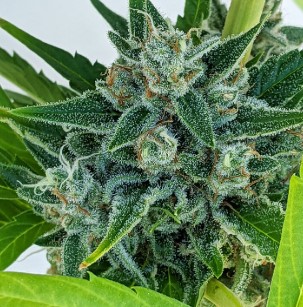
With a high THC content ranging between 18-26% and moderate levels of CBD, Ogre Berry is favored by both recreational and medical users seeking relief from various conditions.
Genetic Lineage and Origins
- Parent Strains: Ogre (Sensi Star phenotype) × Unspecified Berry Strain
- Genetic Type: Indica-dominant Hybrid (approximately 70% Indica / 30% Sativa)
- Breeder: Uncertain, but popular in underground breeding circles
Cannabinoid Profile
- THC: 18-26%
- CBD: 0.1-1%
- CBG: ~1%
- CBN: <0.5%
- Other Minor Cannabinoids: THCV, CBC, trace amounts of CBDV
Terpene Profile
Terpenes play a vital role in the effects and aroma of Ogre Berry. Its dominant terpenes include:
- Myrcene – Sedative, relaxing, anti-inflammatory
- Limonene – Uplifting, anti-stress, mood-enhancing
- Caryophyllene – Anti-inflammatory, pain relief, stress reduction
- Pinene – Bronchodilator, improves airflow, mental clarity
- Linalool – Anti-anxiety, sedative properties
This combination results in an earthy, berry-like aroma with hints of citrus and spice, making Ogre Berry highly appealing to cannabis connoisseurs.
Recreational Uses
Ogre Berry provides a complex and multi-layered recreational experience, with effects evolving over time. The high is initially uplifting, followed by deep relaxation.

Effects:
- Euphoria and Happiness – The initial cerebral rush enhances mood, reduces stress, and creates a light, carefree experience.
- Mild Mental Stimulation – Though indica-dominant, Ogre Berry offers mild focus and creativity in the early stages.
- Deep Relaxation and Couch-lock – As the high progresses, full-body relaxation sets in, leading to heavy sedation and possible couch-lock.
- Increased Appetite – Commonly induces the munchies, making it suitable for those looking to enhance their appetite.
Best for:
- Evening or nighttime use (due to its sedative properties)
- Unwinding after a stressful day
- Watching movies, listening to music, or creative brainstorming (initial phase)
- Socializing in small, intimate settings
Medical Applications
Ogre Berry’s balanced cannabinoid and terpene profile make it a highly versatile strain for medical use.
1. Pain Relief
- The high myrcene and caryophyllene content provides potent analgesic and anti-inflammatory effects, making it effective for chronic pain, arthritis, and muscle spasms.
- Works well for neuropathic pain conditions, including fibromyalgia and multiple sclerosis (MS).
2. Insomnia and Sleep Disorders
- The strong sedative effects of this strain make it an excellent choice for people suffering from insomnia.
- The synergistic action of myrcene, linalool, and high THC levels promotes deep, restorative sleep.
3. Anxiety, Depression, and PTSD
- Limonene and linalool work together to stabilize mood and relieve anxiety.
- The initial uplifting effects help combat depression, while the relaxing body high reduces stress and anxiety-related symptoms.
- May help individuals with PTSD by alleviating hyperarousal and intrusive thoughts.
4. Appetite Stimulation
- THC-dominant strains like Ogre Berry are effective at reducing nausea and boosting appetite.
- Useful for patients undergoing chemotherapy, those with HIV/AIDS-related appetite loss, or those with eating disorders like anorexia.
5. Muscle Spasms and Seizures
- Some anecdotal reports suggest that CBG and CBD levels, along with the strain’s high THC content, help with muscle relaxation and seizure control.
- Potentially beneficial for conditions such as epilepsy and multiple sclerosis.
Cultivation Information
Genetic Stability & Seed Selection
- Clone Propagation: Since Ogre Berry’s genetics are not always stable in seed form, cloning from a healthy mother plant ensures genetic uniformity, stable THC/CBD ratios, and predictable yields.
- Tissue Culture Propagation: Advanced micropropagation techniques allow for disease-free plant production, eliminating genetic drift over multiple generations.
- Feminized Seeds: If growing Ogre Berry from seeds, selecting feminized, stable genetics reduces the chances of male plants pollinating females and lowering overall cannabinoid yield.

Optimal Growing Environment
Ogre Berry thrives under controlled environmental conditions that replicate its natural Mediterranean-like habitat.
Temperature & Humidity Control
- Vegetative Stage:
- Temperature: 22-28°C (72-82°F)
- Relative Humidity (RH): 55-65%
- Flowering Stage:
- Temperature: 20-26°C (68-78°F)
- RH: 45-55% (to prevent mold growth)
- Late Flowering/Pre-Harvest:
- Temperature: 18-24°C (64-75°F)
- RH: 35-45% (enhances resin production)
Light Requirements
- Indoor Cultivation:
- LED or HPS lights (Full Spectrum)
- 18/6 light cycle for vegetative growth
- 12/12 light cycle to trigger flowering
- Outdoor Cultivation:
- Requires 8+ hours of direct sunlight daily.
- Grown best in USDA hardiness zones 9-11.
Soil Science & Nutrient Management
Best Soil Composition
- Loamy, well-aerated soil with high organic content.
- Ideal pH: 6.0-6.8 (to optimize nutrient uptake).
- Additives: Perlite (for aeration), Coco Coir (water retention), Mycorrhizal fungi (root health).
Nutrient Schedule
Veg Stage (Weeks 1-6)
- Nitrogen (N) dominant (High N, moderate P and K)
- Use Cal-Mag supplements for strong stems.
Flowering Stage (Weeks 7-12)
- Increase Phosphorus (P) & Potassium (K)
- Reduce nitrogen to encourage bud development.
- Introduce silica-based supplements to enhance trichome production.
Late Flowering (Weeks 13-14)
- Flush with pure water or light molasses to remove nutrient buildup and enhance flavor.
Advanced Cultivation Techniques
High-Performance Training Methods
- SCROG (Screen of Green) – Maximizes light penetration and bud sites by training branches along a net.
- LST (Low-Stress Training) – Bending stems without cutting enhances lateral growth.
- Supercropping – Strategic stem pinching to stress the plant and boost cannabinoid production.
- Defoliation – Removing unnecessary leaves to improve airflow and light exposure.
Pest & Disease Prevention
- Biological Control: Introduce beneficial insects (e.g., ladybugs, predatory mites) to control pests.
- Companion Planting: Basil, marigold, and garlic repel common cannabis pests like aphids and spider mites.
- Organic Fungicides: Use neem oil and hydrogen peroxide sprays for mold and mildew prevention.
Harvesting & Post-Harvest Science
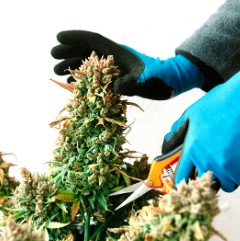
Best Time to Harvest
- Trichome color method: Harvest when 60-70% of trichomes turn amber for maximum potency.
- Pistil method: When 80% of pistils darken and curl inwards.
Drying & Curing
- Slow drying at 18-22°C (65-72°F) & 50% RH for 7-14 days.
- Curing in airtight glass jars (with daily burping) enhances terpene preservation.
Scientific Insights: Mechanisms of Action
The medical efficacy of Ogre Berry is attributed to the entourage effect, where cannabinoids and terpenes work synergistically to enhance therapeutic benefits.
1. THC Interaction with CB1 and CB2 Receptors
- CB1 Receptors (Brain and Nervous System): Responsible for euphoria, pain relief, and appetite stimulation.
- CB2 Receptors (Immune System and Peripheral Nervous System): Plays a role in anti-inflammatory and pain-reducing effects.
2. Synergistic Effects of Terpenes
- Myrcene (Sedation and Relaxation): Enhances THC’s psychoactive effects and induces sleep.
- Limonene (Mood Enhancement): Works as an antidepressant and anti-anxiety agent.
- Caryophyllene (Anti-inflammatory and Pain Relief): The only terpene known to directly activate CB2 receptors.
- Linalool (Calming and Anxiety Reduction): Works in combination with THC to provide anxiolytic (anti-anxiety) effects.
Methods of Ingestion and Their Pharmacokinetics
A. Inhalation (Smoking or Vaping)
Mechanism:
- THC is rapidly absorbed into the bloodstream via the lungs.
- Bioavailability ranges from 15-50 percent, depending on the efficiency of inhalation.
- THC reaches peak plasma concentrations within 3-10 minutes.
Onset: 1-5 minutes
Peak Effects: 15-30 minutes
Duration: 2-4 hours
Metabolism: THC is converted into 11-hydroxy-THC (11-OH-THC) in the liver, but at lower levels than oral ingestion.
Advantages:
- Fast onset, making Ogre Berry ideal for acute symptom relief such as pain and anxiety.
- Easy to dose due to immediate feedback.
Disadvantages:
- Can irritate the lungs, especially when smoked.
- Shorter duration compared to edibles.
B. Oral Ingestion (Edibles, Capsules, Tinctures)
Mechanism:
- THC is metabolized through the gastrointestinal tract and absorbed via the liver.
- In the liver, THC is converted into 11-OH-THC, a more potent and longer-lasting psychoactive metabolite.
Onset: 30-120 minutes (depends on metabolism, fat content in food, and individual digestion rate).
Peak Effects: 2-4 hours
Duration: 4-8 hours, up to 12 hours in some users.
Metabolism: First-pass metabolism in the liver enhances potency compared to inhalation.
Advantages:
- Longer duration, beneficial for chronic pain and insomnia.
- More potent due to conversion to 11-OH-THC.
Disadvantages:
- Delayed onset makes in Ogre Berry it harder to gauge proper dosage, increasing the risk of overconsumption.
- First-pass metabolism can make effects unpredictable based on individual digestive efficiency.
C. Sublingual Administration (Tinctures, Sprays, Dissolvable Strips)
Mechanism:
- Absorbed directly into the bloodstream via mucous membranes under the tongue, bypassing first-pass metabolism.
- Bioavailability is higher than edibles but lower than inhalation.
Onset: 15-45 minutes
Peak Effects: 1-2 hours
Duration: 4-6 hours
Metabolism: Some THC is swallowed and processed through the liver, creating a mix of both fast and prolonged effects.
Advantages:
- Faster onset than edibles but longer-lasting than smoking.
- More predictable dosing compared to edibles.
Disadvantages:
- Some THC still undergoes first-pass metabolism, reducing efficiency.
- Requires proper dosing technique to maximize absorption.
D. Topical and Transdermal Application
Mechanism:
- THC and other cannabinoids in Ogre Berry are absorbed through the skin, providing localized relief without significant psychoactive effects.
- Transdermal patches can allow cannabinoids to enter the bloodstream for systemic effects.
Onset: 15-60 minutes
Peak Effects: 1-2 hours
Duration: 6-12 hours for transdermal patches, 2-4 hours for topical creams and balms
Metabolism: Bypasses first-pass metabolism unless delivered via transdermal patch.
Advantages:
- Provides localized relief for pain and inflammation without intoxication.
- Transdermal patches offer long-lasting systemic effects.
Disadvantages:
- Limited to specific applications such as pain relief and muscle relaxation.
- Slow absorption compared to other methods.
Onset, Peak, and Duration of Effects
Comparison of Onset and Duration by Method
| Ingestion Method | Onset | Peak Effects | Total Duration |
|---|---|---|---|
| Smoking/Vaping | 1-5 minutes | 15-30 minutes | 2-4 hours |
| Edibles | 30-120 minutes | 2-4 hours | 4-8 hours (up to 12) |
| Sublingual | 15-45 minutes | 1-2 hours | 4-6 hours |
| Topical | 15-60 minutes | 1-2 hours | 2-12 hours |
Factors Affecting Onset and Duration
Several physiological and external factors influence how long the effects of Ogre Berry last and how quickly they begin.
A. Metabolism
- Individuals with faster metabolic rates may experience shorter duration but faster onset, especially with edibles.
- Slower metabolism leads to prolonged effects, especially in those with high body fat percentages.
B. Tolerance and Frequency of Use
- Regular users tend to develop tolerance, leading to shorter and less intense effects over time.
- New users or those with low tolerance will experience prolonged and stronger effects.
C. Interaction with Food Intake
- Consuming edibles on an empty stomach results in a faster onset but stronger effects.
- High-fat meals enhance THC absorption and increase its potency.
D. Cannabinoid and Terpene Profile
- High myrcene content in Ogre Berry can accelerate THC absorption, making effects stronger and longer-lasting.
- The presence of caryophyllene may contribute to increased bioavailability.
Possible Side Effects
Although generally well-tolerated, Ogre Berry may cause:
- Dry mouth and dry eyes – Common with most THC-rich strains.
- Dizziness and paranoia – More likely at higher doses, particularly in novice users.
- Couch-lock and extreme sedation – Due to high myrcene levels, higher doses may induce strong lethargy.
- Mild anxiety – Some individuals may experience transient anxiety if they are sensitive to high THC levels.
Final Verdict: Who Should Use Ogre Berry?
Ideal for:
- Medical patients looking for pain relief, relaxation, and sleep aid.
- Recreational users who enjoy a potent relaxing and euphoric high.
- Cultivators seeking a high-yielding, moderately easy strain with resistance to pests and mold.
- Indica lovers who appreciate berry-flavored strains with deep relaxation effects.
Not ideal for:
- Daytime users who need a strain that keeps them energized.
- Low-THC tolerance users, unless taken in small amounts.
- Beginners who are not used to strong indica effects.
Conclusion
Ogre Berry is a powerful indica-dominant hybrid with remarkable therapeutic potential and a relaxing recreational high. With its complex terpene profile, potent THC levels, and deeply sedative effects, it is a top choice for medical cannabis users and those seeking relaxation and stress relief. Whether for pain management, sleep aid, or simply unwinding, Ogre Berry remains a highly sought-after strain in the cannabis community.
For a complete directory of cultivars, visit our Cannabis Strain Reviews.
