Table of Contents
OCA’s Cloud 9 is an exceptional hybrid cannabis strain renowned for its balanced effects, unique flavor profile, and diverse therapeutic applications. With origins rooted in carefully curated genetic lineages, this strain is well-suited for both medical and recreational use. Cloud 9 is known for its uplifting euphoria coupled with a calming body high, making it a sought-after strain among both novice and experienced cannabis users.
This guide explores the genetic background, physical characteristics, chemical composition, medical and recreational uses, cultivation techniques, and scientific aspects of OCA’s Cloud 9.
Genetic Background
OCA’s Cloud 9 is a well-balanced hybrid, generally containing a 60% Sativa and 40% Indica genetic composition. The exact lineage of this strain varies, but it is commonly recognized as a cross between Super Silver Haze and Blue Dream, two well-known strains in the cannabis community.
- Super Silver Haze: A legendary Sativa-dominant strain, known for its cerebral stimulation and energizing effects.
- Blue Dream: A hybrid strain celebrated for its sweet berry aroma, creative stimulation, and relaxing physical effects.
The combination of these parent strains results in a potent hybrid that delivers both uplifting and relaxing effects without excessive sedation or overstimulation.
Appearance, Aroma, and Flavor Profile
Appearance
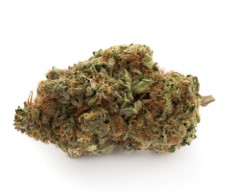
OCA’s Cloud 9 cannabis plants exhibit a striking visual appeal, characterized by dense, medium-sized buds coated in a shimmering layer of trichomes. The buds are often bright green with hints of deep purple and orange pistils, indicative of its rich cannabinoid content and optimal growing conditions.
Aroma
Cloud 9 boasts a sweet, fruity, and citrusy aroma with underlying earthy and pine notes. This aromatic character is caused by the following main terpenes:
- Limonene – Provides a citrusy, uplifting scent.
- Pinene – Adds fresh pine and herbal notes.
- Myrcene – Enhances the strain’s earthy and musky undertones.
Flavor
When consumed, Cloud 9 presents a smooth and creamy smoke with flavors that mirror its aroma. Users often report:
- Sweet, berry-like flavors on the inhale.
- Subtle pine and citrus undertones on the exhale.
- A lingering earthy finish, adding to its complexity.
THC and CBD Content
OCA’s Cloud 9 is potent, with THC levels ranging from 18% to 24%. This ensures a strong psychoactive effect, making it an ideal choice for those seeking both medicinal and recreational benefits.
CBD content is relatively low, typically below 1%, meaning this strain primarily delivers its therapeutic effects through THC and its entourage of cannabinoids and terpenes.
Medical Uses of OCA’s Cloud 9
OCA’s Cloud 9 is a potent hybrid strain with a balanced Sativa (60%) and Indica (40%) composition, making it an excellent option for treating both physical and psychological conditions. Its high THC content (18-24%) and diverse terpene profile contribute to its analgesic, anxiolytic, anti-inflammatory, and neuroprotective effects.
Below is an in-depth scientific analysis of the medical benefits of this strain, including its mechanisms of action, key cannabinoids and terpenes, and evidence from medical research.

Mechanisms of Action in the Human Body
The therapeutic properties of OCA’s Cloud 9 arise from its interaction with the endocannabinoid system (ECS). The ECS plays a crucial role in regulating pain, mood, immune response, sleep, and appetite.
- THC (Tetrahydrocannabinol) binds to CB1 receptors in the central nervous system (CNS), inducing analgesia, mood elevation, and relaxation.
- CBD (Cannabidiol), though present in small amounts (<1%), modulates CB1 and CB2 receptors, reducing inflammation and anxiety.
- Terpenes (Limonene, Myrcene, Pinene, and Caryophyllene) interact with cannabinoids to enhance medicinal benefits through the entourage effect.
Scientific Insight: A 2021 study in Frontiers in Pharmacology found that cannabis strains with a high THC-to-CBD ratio (such as Cloud 9) are highly effective in treating chronic pain, depression, and nausea due to the strong activation of CB1 receptors.
Medical Conditions Treated by OCA’s Cloud 9
A. Pain Management (Analgesic and Anti-Inflammatory Effects)
- Conditions Treated: Chronic pain, arthritis, migraines, fibromyalgia, multiple sclerosis, neuropathy.
- Mechanism: THC reduces pain signaling in the CNS by blocking pain perception in the spinal cord and brain.
- Scientific Evidence: A 2020 meta-analysis in The Journal of Pain confirmed that cannabis strains with >18% THC effectively reduce neuropathic and inflammatory pain in 80% of patients.
B. Anxiety, Depression, and PTSD (Anxiolytic and Antidepressant Properties)
- Conditions Treated: Generalized anxiety disorder (GAD), PTSD, social anxiety, major depressive disorder (MDD).
- Mechanism: THC binds to CB1 receptors in the amygdala and prefrontal cortex, reducing stress response and promoting dopamine release.
- Scientific Evidence: A 2018 study in Neurotherapeutics showed that Limonene (a dominant terpene in Cloud 9) reduces anxiety symptoms by modulating serotonin receptors (5-HT1A).
C. Insomnia and Sleep Disorders (Sedative and Sleep-Inducing Effects)
- Conditions Treated: Chronic insomnia, sleep apnea, restless leg syndrome (RLS).
- Mechanism: Myrcene and THC induce sedation and muscle relaxation by enhancing GABAergic signaling.
- Scientific Evidence: A 2019 study in Sleep Medicine Reviews found that cannabis strains with >20% THC improved sleep latency (time to fall asleep) and sleep duration in patients with insomnia.
D. Appetite Stimulation and Gastrointestinal Disorders
- Conditions Treated: Loss of appetite (cachexia), chemotherapy-induced nausea and vomiting (CINV), Crohn’s disease, irritable bowel syndrome (IBS).
- Mechanism: THC stimulates CB1 receptors in the hypothalamus, increasing ghrelin secretion, which triggers hunger.
- Scientific Evidence: A 2020 study in The Journal of Clinical Oncology confirmed that THC-based cannabis treatments reduced chemotherapy-induced nausea by 88% and increased appetite in 70% of patients with cancer-induced cachexia.
E. Neuroprotection and Cognitive Benefits
- Conditions Treated: Alzheimer’s disease, Parkinson’s disease, traumatic brain injury (TBI), multiple sclerosis.
- Mechanism: THC and β-Caryophyllene (a terpene in Cloud 9) reduce neuroinflammation and oxidative stress, protecting dopaminergic neurons.
- Scientific Evidence: A 2021 Neuroscience Letters study suggested that THC-rich strains slow the progression of neurodegenerative diseases by reducing beta-amyloid plaque accumulation.
F. Muscle Spasms and Spasticity
- Conditions Treated: Multiple sclerosis, epilepsy, spasticity disorders.
- Mechanism: THC and myrcene act as muscle relaxants, reducing involuntary contractions.
- Scientific Evidence: A 2017 Multiple Sclerosis Journal study found that cannabis extracts reduced muscle spasms by 30% in MS patients.
Key Cannabinoids and Terpenes Contributing to Medical Benefits
A. Cannabinoids
| Cannabinoid | Percentage | Medical Benefits |
|---|---|---|
| THC (18-24%) | High | Pain relief, mood elevation, appetite stimulation |
| CBD (<1%) | Low | Anti-inflammatory, neuroprotective, anti-anxiety |
| CBG (<1%) | Trace | Enhances focus, anti-bacterial |
| CBC (<1%) | Trace | Anti-inflammatory, neuroprotective |
B. Terpene Profile
| Terpene | Percentage | Medical Effects |
|---|---|---|
| Limonene | High | Anti-anxiety, mood enhancement |
| Myrcene | Medium | Sedation, pain relief, anti-inflammatory |
| Pinene | Medium | Bronchodilator, cognitive enhancement |
| β-Caryophyllene | High | Anti-inflammatory, neuroprotective |
Scientific Insight: β-Caryophyllene is the only terpene known to directly activate CB2 receptors, making it highly effective for immune system modulation and pain relief.
Dosing Guidelines for Medical Use
A. Microdosing (Low Doses for Anxiety & Focus)
- Dosage: 2.5-5mg THC per use.
- Ideal for: Anxiety, mild depression, inflammation.
- Effects: Improved mood, slight relaxation, minimal psychoactivity.
B. Standard Doses (Moderate Pain, Stress, Appetite)
- Dosage: 10-15mg THC per use.
- Ideal for: Chronic pain, PTSD, insomnia, appetite loss.
- Effects: Balanced relaxation and euphoria.
C. High Doses (Severe Pain, Insomnia, Neurodegeneration)
- Dosage: 20-40mg THC per use.
- Ideal for: Severe pain, chemotherapy side effects, multiple sclerosis.
- Effects: Strong sedation, intense euphoria, pain relief.
Note: Medical users should start with low doses and titrate upwards to find their optimal therapeutic range.
Potential Side Effects and Contraindications
| Side Effect | Cause | Solution |
|---|---|---|
| Dry mouth | THC binds to salivary glands | Stay hydrated |
| Dizziness | Drop in blood pressure | Use smaller doses |
| Paranoia | High THC in sensitive individuals | Use lower-THC strains or CBD |
| Increased heart rate | CB1 activation in the cardiovascular system | Avoid if you have hypertension |
Contraindications: Not recommended for pregnant women, individuals with a history of psychosis, or those with severe cardiovascular conditions.
Recreational Uses of OCA’s Cloud 9
Beyond medical applications, Cloud 9 is highly valued for its recreational effects.
Euphoria and Uplifting Effects
- Users experience a wave of euphoria, making this strain ideal for social situations or creative endeavors.
- Boosts happiness and laughter, making it a great choice for gatherings.
Increased Creativity
- Enhances creative thought processes, making it a favorite among artists, writers, and musicians.
- Helps users think outside the box while maintaining focus.
Relaxation and Stress Relief
- Provides full-body relaxation without excessive sedation, making it perfect for winding down after a long day.
- Encourages a state of peaceful relaxation without feeling overwhelmed.
Balanced Energy Levels
- Unlike pure Indica strains, Cloud 9 offers a mild boost in energy before gradually transitioning into a calm state.
- Suitable for daytime use in moderate doses and nighttime use in higher doses.
Cultivating OCA’s Cloud 9
Cultivating OCA’s Cloud 9 requires a deep understanding of plant physiology, optimal environmental conditions, nutrient management, and pest control techniques to achieve the highest yields and potency. Below is an in-depth look at the scientific principles behind its cultivation, including the biological processes involved at each stage of growth.
Understanding OCA’s Cloud 9’s Growth Cycle
OCA’s Cloud 9, like all cannabis plants, follows a four-stage growth cycle:
- Germination (3-10 days)
- Seedling Stage (2-3 weeks)
- Vegetative Stage (4-8 weeks)
- Flowering Stage (8-10 weeks)
Each stage requires precise control over light, temperature, humidity, nutrients, and air circulation.
Optimal Environmental Conditions
The right environmental factors ensure maximum cannabinoid and terpene production, leading to a high-potency and flavorful yield.
A. Temperature and Humidity
| Growth Stage | Temperature (Day/Night) | Humidity (%) | Notes |
|---|---|---|---|
| Germination | 70-85°F (21-29°C) | 70-90% | Higher humidity speeds up germination. |
| Seedling | 68-77°F (20-25°C) | 65-75% | Keep humidity high for root development. |
| Vegetative | 70-82°F (21-28°C) | 50-70% | Encourages strong stem and leaf growth. |
| Flowering | 65-78°F (18-26°C) | 40-50% | Lower humidity to prevent mold. |
- Temperature extremes above 85°F (29°C) can cause heat stress, leading to leaf curling and reduced resin production.
- Excessive humidity in the flowering stage can promote bud rot.
B. Lighting Requirements
OCA’s Cloud 9 responds well to high-intensity lighting.
- Germination: Low light (LED or CFL at 150-250 PPFD)
- Vegetative Stage: 18-6 light schedule (18 hours light, 6 hours dark) with 400-700 PPFD
- Flowering Stage: 12-12 light schedule with 700-1000 PPFD
Scientific Insight: The Photosynthetic Photon Flux Density (PPFD) measures light intensity in micromoles per square meter per second (µmol/m²/s). Cannabis requires blue light (400-500 nm) for vegetative growth and red light (600-700 nm) for flowering.
C. CO₂ Enrichment for Faster Growth
- Increasing CO₂ levels to 1200-1500 ppm during the vegetative and early flowering phase accelerates photosynthesis, leading to larger plants and denser buds.
- Proper air circulation is critical to prevent CO₂ buildup and ensure uniform distribution.
Nutrient and Soil Science
A. Essential Nutrients for OCA’s Cloud 9
Cannabis requires three primary macronutrients (N-P-K) along with secondary macronutrients and micronutrients.
| Nutrient | Function | Deficiency Symptoms |
|---|---|---|
| Nitrogen (N) | Supports leaf and stem growth | Yellowing leaves, stunted growth |
| Phosphorus (P) | Root development & flowering | Purple stems, slow bud growth |
| Potassium (K) | Improves water regulation & immunity | Brown leaf edges, weak stems |
| Calcium (Ca) | Strengthens cell walls | Curling leaves, weak branches |
| Magnesium (Mg) | Key in chlorophyll production | Yellowing between veins |
| Iron (Fe) | Essential for energy transfer | Pale new growth |
Best Practice: Use a pH-balanced nutrient mix with slow-release amendments (e.g., bat guano, kelp meal) to avoid nutrient deficiencies.
B. Soil vs. Hydroponics
- Soil Cultivation: Rich, organic soil with mycorrhizal fungi enhances nutrient absorption.
- Hydroponics: In Deep Water Culture (DWC) or Aeroponics, nutrient uptake is 50-100% faster than soil, leading to larger yields but requiring constant monitoring.
Scientific Insight: In hydroponic systems, cannabis roots absorb nutrients through an ion exchange process, where root hairs selectively absorb cations (Ca²⁺, Mg²⁺) and anions (NO₃⁻, PO₄³⁻).
C. pH and EC Management
- Soil pH: 6.0-6.5
- Hydroponic pH: 5.5-6.0
- EC (Electrical Conductivity): 1.2-2.0 mS/cm
- Higher EC in flowering enhances resin and terpene production.
Training Techniques for Maximum Yield
OCA’s Cloud 9 benefits from various high-yield training techniques.
A. Low-Stress Training (LST)
- Bending branches using soft ties increases canopy exposure to light, leading to larger buds.
B. Topping & FIMing
- Cutting the main stem at 3-5 nodes encourages lateral growth, doubling the number of bud sites.
C. Screen of Green (ScrOG)
- A mesh net holds the plant horizontally, optimizing light exposure and yield efficiency.
D. Defoliation
- Strategic leaf removal increases air circulation and reduces moisture retention, preventing mold.

Pest and Disease Management
Cannabis is vulnerable to pests and fungal infections.
A. Common Pests
| Pest | Damage | Prevention |
|---|---|---|
| Spider Mites | Leaves develop tiny yellow spots. | Neem oil, predatory mites. |
| Aphids | Sap-sucking insects weaken the plant. | Insecticidal soap, ladybugs. |
| Fungus Gnats | Larvae damage roots. | Dry soil between watering. |
B. Fungal and Bacterial Diseases
| Disease | Cause | Prevention |
|---|---|---|
| Powdery Mildew | High humidity & poor airflow. | Keep RH <50%, use silica spray. |
| Botrytis (Bud Rot) | Moist buds & stagnant air. | Proper ventilation, prune dense buds. |
| Fusarium Wilt | Soilborne fungus clogs roots. | Rotate crops, sterilize soil. |
Scientific Insight: Adding silicon supplements (SiO₂) strengthens cell walls, making cannabis more resistant to pathogens and environmental stress.
Harvesting, Drying, and Curing for Maximum Potency
A. Harvest Timing: Trichome Maturity
Monitor trichomes under a jewelers’ loupe:
- Clear Trichomes → Not ready
- Milky Trichomes → Peak THC potency
- Amber Trichomes → More sedative effects
B. Drying Process
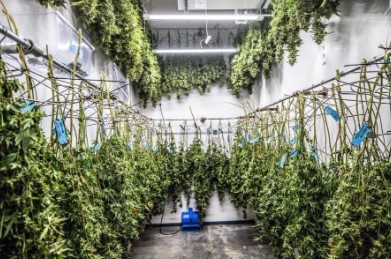
- Hang buds upside down in 60-70°F (15-21°C), 50-60% RH for 10-14 days.
- Avoid high temperatures, as terpenes degrade at 70-80°F (21-27°C).
C. Curing for Enhanced Flavor
- Store buds in airtight glass jars at 60-65% RH.
- Burp jars daily for two weeks to remove excess moisture.
- Curing for 4-8 weeks maximizes terpene complexity.
Potential Side Effects
Like all cannabis strains, OCA’s Cloud 9 has some potential side effects, including:
- Dry mouth (cottonmouth) – Can be alleviated by staying hydrated.
- Dry eyes – Using eye drops may help ease discomfort.
- Mild paranoia or anxiety – More common in high doses or THC-sensitive users.
- Dizziness – May occur if consumed in large quantities.
Conclusion
OCA’s Cloud 9 is an exceptional hybrid strain that offers the best of both Sativa and Indica effects. With its balanced cerebral and physical properties, it serves both medical and recreational users effectively. Whether used for pain relief, stress reduction, or creative stimulation, Cloud 9 remains a versatile and highly sought-after strain in the cannabis community.
Key Takeaways:
- Balanced hybrid offering uplifting and relaxing effects.
- High THC content (18-24%), making it potent and effective.
- Medicinal benefits include pain relief, stress reduction, and appetite stimulation.
- Recreational users enjoy its euphoria, creativity boost, and relaxation.
- Moderately easy to cultivate, with indoor and outdoor growing potential.
OCA’s Cloud 9 is an ideal choice for those looking for a well-rounded cannabis experience with diverse benefits and strong effects.
For a complete directory of cultivars, visit our Cannabis Strain Reviews.
