Table of Contents
New Glue, often referred to as GG5, is a hybrid cannabis strain derived from the famous Gorilla Glue lineage. As a descendant of the original GG4 (Gorilla Glue #4), New Glue inherits its signature potency and resin-coated buds while offering a more refined experience. With THC levels ranging from 25% to 30%, New Glue is considered a powerhouse strain that can be used medicinally or recreationally.
Genetics and Lineage
New Glue is a result of crossing Gorilla Glue #4 with itself, creating an inbred backcross (IBL) that enhances the potency, consistency, and resin production of the original strain. The strain is an Indica-dominant hybrid, known for its deeply relaxing effects and cerebral stimulation.
- Parent Strain 1: Gorilla Glue #4
- Parent Strain 2: Gorilla Glue #4 (self-cross)
- Strain Type: Indica-dominant hybrid
- THC Content: 25-30%
- CBD Content: Less than 1%
Cannabinoid Profile and Terpene Composition
New Glue exhibits a rich cannabinoid and terpene profile, contributing to its strong effects and medical benefits.
Primary Cannabinoids
- THC (Tetrahydrocannabinol) 25-30%: Responsible for the psychoactive effects, pain relief, and euphoria.
- CBD (Cannabidiol) <1%: Minor amounts of CBD contribute to a slight balancing effect, but New Glue is primarily THC-dominant.
- CBG (Cannabigerol) 1-2%: Known for its anti-inflammatory and neuroprotective properties.
- CBN (Cannabinol) <1%: Plays a role in sedation and relaxation.
Terpene Profile and Aromatic Qualities
New Glue has a pungent aroma, often described as earthy, piney, and diesel-like, similar to its Gorilla Glue parent. The dominant terpenes include:
- Caryophyllene – Anti-inflammatory, pain-relieving, and stress-reducing.
- Limonene – Mood-boosting, stress relief, citrus aroma.
- Myrcene – Sedative properties, enhances couch-lock effects.
- Humulene – Appetite suppressant, anti-inflammatory.
- Pinene – Bronchodilator, anti-inflammatory, cognitive enhancer.
Recreational Effects and User Experience
New Glue is a highly potent hybrid that delivers a well-balanced experience, making it a favorite among cannabis connoisseurs seeking relaxation, euphoria, and creativity.
Effects and Onset
- Euphoria (Initial phase): The high begins with an uplifting cerebral rush, inducing happiness and a light, airy feeling.
- Relaxation (Mid-phase): Full-body relaxation takes over, creating a sense of ease and calm.
- Sedation (Late phase): In higher doses, New Glue can induce couch-lock, making it ideal for evening use.
- Creativity & Focus: Some users report enhanced creativity before the sedative effects kick in.
Ideal Recreational Uses
- Evening or Nighttime Use: Due to its relaxing and sedative effects, New Glue is best suited for unwinding after a long day.
- Watching Movies or Listening to Music: The euphoric onset makes activities like watching movies or listening to music more immersive.
- Socializing: In moderate doses, it can enhance sociability before sedation sets in.
- Gaming: Some users report enhanced focus and engagement in video games.
Potential Side Effects
- Dry mouth and dry eyes (common cannabis effects)
- Dizziness or mild paranoia in high doses
- Couch-lock (excessive sedation in higher doses)
Medical Applications of New Glue
Thanks to its high THC content and terpene synergy, New Glue is highly effective for treating a range of medical conditions.

Pain Management
- Chronic Pain: New Glue is widely used by individuals suffering from chronic pain conditions, including arthritis, fibromyalgia, and migraines.
- Neuropathic Pain: Its high THC levels interact with CB1 and CB2 receptors, providing relief for conditions such as sciatica and multiple sclerosis.
Mental Health Benefits
- Anxiety and Stress: The presence of limonene and caryophyllene offers stress relief and reduces anxiety symptoms.
- Depression: The uplifting effects of THC provide a temporary mood boost, making it beneficial for those with mild depression.
- PTSD (Post-Traumatic Stress Disorder): The strain’s ability to induce relaxation and reduce intrusive thoughts makes it a suitable option for PTSD patients.
Insomnia and Sleep Disorders
- Sedative properties: Due to its high myrcene and CBN content, New Glue helps combat insomnia by promoting deep, restorative sleep.
- Sleep Onset and Maintenance: It aids individuals who struggle to fall asleep and those who wake up frequently at night.
Appetite Stimulation and Gastrointestinal Issues
- Increases appetite: Beneficial for individuals undergoing chemotherapy or those with appetite loss due to medical conditions.
- Nausea Relief: The anti-nausea properties make it helpful for patients with gastrointestinal disorders.
Scientific Research and Pharmacology
The effects of New Glue can be explained by its interaction with the endocannabinoid system (ECS):
- CB1 Receptors (Central Nervous System):
- THC binds to CB1 receptors, producing euphoria, relaxation, and analgesic effects.
- Activation leads to the suppression of pain signals and enhancement of mood.
- CB2 Receptors (Peripheral System and Immune Cells):
- THC and CBG modulate CB2 activity, leading to anti-inflammatory effects.
- This is particularly beneficial for arthritis, autoimmune disorders, and chronic inflammation.
Terpene and Cannabinoid Synergy (Entourage Effect)
- The combination of caryophyllene, limonene, and myrcene enhances the strain’s anti-anxiety, pain-relieving, and sedative effects.
- Caryophyllene uniquely binds to CB2 receptors, acting as a natural anti-inflammatory agent.
Methods of Ingestion and Their Pharmacokinetics
A. Inhalation (Smoking/Vaping)
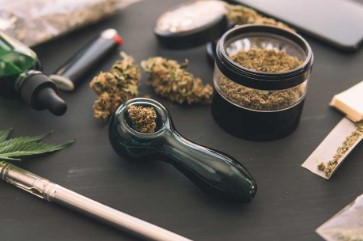
Mechanism of Absorption:
- When cannabis is inhaled, cannabinoids enter the lungs and diffuse into the alveolar capillaries.
- They pass directly into the bloodstream, avoiding the first-pass metabolism in the liver.
- THC binds to CB1 receptors in the brain, triggering its psychoactive effects.
Onset & Duration:
| Factor | Smoking (Combustion) | Vaping (Convection) |
|---|---|---|
| Onset | 1–5 minutes | 1–3 minutes |
| Peak Effects | 15–30 minutes | 10–20 minutes |
| Total Duration | 2–4 hours | 2–3 hours |
| Bioavailability | 25–30% | 40–60% |
- Smoking vs. Vaping:
- Vaporization is more efficient than smoking because it preserves cannabinoids and terpenes while reducing toxic combustion byproducts.
- Smoking destroys up to 30% of THC due to pyrolysis.
- Vaping heats cannabinoids (160–220°C), allowing controlled release of THC, CBD, and terpenes.
Scientific Insights:
- Lipid Solubility of THC: After inhalation, THC rapidly crosses the blood-brain barrier, causing fast psychoactive effects.
- Neurotransmitter Release: THC stimulates dopamine release, leading to euphoria and relaxation.
- Lung Retention: About 30% of inhaled cannabinoids reach the bloodstream, while the rest is exhaled.
B. Oral Consumption (Edibles)
Mechanism of Absorption:
- THC is ingested, passes through the digestive system, and is metabolized by the liver before entering the bloodstream.
- The liver converts Δ9-THC into 11-hydroxy-THC, which is 2–3 times more potent and has a longer half-life than inhaled THC.
- This metabolic process significantly delays onset but results in prolonged effects.
Onset & Duration:
| Factor | Edibles |
|---|---|
| Onset | 30–90 minutes |
| Peak Effects | 2–3 hours |
| Total Duration | 6–12 hours |
| Bioavailability | 4–20% |
- Bioavailability is lower (compared to smoking/vaping) due to first-pass metabolism, where a significant portion of THC is degraded before reaching systemic circulation.
Scientific Insights:
- Delayed Onset: Gastrointestinal absorption is slow, leading to a gradual and prolonged high.
- 11-Hydroxy-THC:
- This metabolite penetrates the blood-brain barrier more effectively, producing intensified psychoactive effects.
- It binds to CB1 receptors for a longer duration, leading to stronger sedation.
C. Sublingual Administration (Tinctures, Oils, Sprays)
Mechanism of Absorption:
- Cannabinoids absorb directly through the mucous membranes under the tongue and enter systemic circulation.
- Increases bioavailability and has a quicker onset by avoiding first-pass metabolism.
Onset & Duration:
| Factor | Sublingual (Tinctures) |
|---|---|
| Onset | 15–45 minutes |
| Peak Effects | 1–2 hours |
| Total Duration | 4–6 hours |
| Bioavailability | 40–50% |
- Sublingual absorption is more efficient than edibles and less harsh than inhalation.
Scientific Insights:
- THC and CBD bind with oral mucosa before entering capillary blood flow.
- Limonene & Myrcene terpenes enhance absorption, increasing bioavailability.
- Temperature-sensitive terpenes degrade in high-heat methods but remain intact in tinctures.
D. Topical and Transdermal Delivery
Mechanism of Absorption:
- Cannabinoids penetrate the skin via lipophilic diffusion.
- They interact with CB2 receptors in localized areas, reducing inflammation and pain.
- Transdermal patches contain permeation enhancers (e.g., ethanol, fatty acids) to increase systemic absorption.
Onset & Duration:
| Factor | Topical Creams | Transdermal Patches |
|---|---|---|
| Onset | 20–40 minutes | 30–90 minutes |
| Peak Effects | 1–2 hours | 3–6 hours |
| Total Duration | 4–8 hours | 8–12 hours |
| Bioavailability | Minimal (Topical) | High (Transdermal) |
- Topical creams are non-psychoactive, ideal for localized pain relief.
- Transdermal patches deliver cannabinoids systemically, providing slow, consistent dosing.
Scientific Insights:
- Endocannabinoid System (ECS) Activation:
- CB2 receptors in skin, muscles, and joints help reduce inflammation, arthritis pain, and muscle soreness.
- THC does not reach the brain via topical creams, meaning no psychoactive effects.
- Transdermal patches allow controlled-release THC absorption, maintaining steady blood levels.
Comparative Analysis of Ingestion Methods
| Method | Onset | Peak Effects | Duration | Bioavailability | Best For |
|---|---|---|---|---|---|
| Smoking | 1–5 min | 15–30 min | 2–4 hrs | 25–30% | Quick relief, recreational use |
| Vaping | 1–3 min | 10–20 min | 2–3 hrs | 40–60% | Stronger, cleaner effects |
| Edibles | 30–90 min | 2–3 hrs | 6–12 hrs | 4–20% | Long-lasting pain relief, sleep |
| Sublingual | 15–45 min | 1–2 hrs | 4–6 hrs | 40–50% | Fast but long-lasting |
| Topical | 20–40 min | 1–2 hrs | 4–8 hrs | Minimal | Localized pain, inflammation |
| Transdermal | 30–90 min | 3–6 hrs | 8–12 hrs | High | Controlled, steady dosing |
Final Thoughts
- Fastest Relief: Smoking/Vaping
- Longest Effects: Edibles & Transdermal Patches
- Most Efficient: Sublingual
- Best for Localized Pain: Topical Creams
- Best for Consistent Dosing: Transdermal Patches
Cultivation and Growing Information
New Glue is a moderately difficult strain to cultivate, requiring attention to humidity levels and proper nutrient balance.
Genetic Considerations and Strain Stability

New Glue is an Indica-dominant hybrid, resulting from self-crossing Gorilla Glue #4. Since it is an inbred backcross (IBL), stability is higher, but genetic variations still exist. When cultivating, growers should consider:
- Cloning Over Seed Propagation: Cloning from a healthy, stable mother plant ensures genetic consistency.
- Phenotype Selection: Identify plants with higher resin content, vigorous growth, and optimal cannabinoid and terpene profiles.
Optimal Growing Conditions
New Glue thrives in a controlled environment, where variables such as light, temperature, humidity, and CO₂ levels can be precisely managed.
A. Light Requirements
- Indoor Cultivation: High-Intensity Discharge (HID) or Light-Emitting Diode (LED) lights with full-spectrum capabilities.
- Vegetative Stage: 18–24 hours of light per day (400–600 µmol/m²/s PAR).
- Flowering Stage: 12 hours light / 12 hours dark cycle (700–1000 µmol/m²/s PAR).
- Light Spectrum Consideration:
- Vegetative Growth: Higher
- blue light (400–500 nm) promotes compact structure.
- Flowering Stage: Higher
- red light (600–700 nm) increases bud density and trichome production.
B. Temperature & Humidity
- Vegetative Stage:
- Temperature: 22–26°C (72–78°F)
- Humidity: 55–65%
- CO₂ Enrichment: 1000–1200 ppm to promote faster photosynthesis.
- Flowering Stage:
- Temperature: 20–24°C (68–75°F)
- Humidity: 40–50% to prevent mold/mildew.
- CO₂ Enrichment: 800–1000 ppm enhances bud density.
- Late Flowering (Last 2 weeks):
- Temperature: 18–22°C (65–72°F) to enhance trichome production.
- Humidity: 35–40% for maximum resin yield.
3. Hydroponic vs. Soil Cultivation
A. Hydroponic Growth (Soilless Medium)
- System Types: Deep Water Culture (DWC), Aeroponics, or Nutrient Film Technique (NFT).
- Advantages:
- Faster Growth (30% more compared to soil)
- Higher Nutrient Uptake
- Reduced Pest Issues
- Nutrient Concentration:
- pH: 5.8–6.2
- EC (Electrical Conductivity): 1.2–2.2 mS/cm (varies by growth stage).
B. Soil Cultivation
- Preferred Soil Mix: Loamy, well-draining soil with high organic matter.
- Ideal pH: 6.0–6.5.
- Nutrient-Rich Additives:
- Bat Guano (Phosphorus)
- Worm Castings (Nitrogen)
- Mycorrhizal Fungi (Root Growth)
- Dolomite Lime (pH Stability)
Nutrient Requirements (Macronutrients & Micronutrients)
New Glue requires a precise nutrient regimen for optimal growth:
| Growth Stage | N (Nitrogen) | P (Phosphorus) | K (Potassium) | Other Nutrients |
|---|---|---|---|---|
| Seedling | Low (100 ppm) | Medium (50 ppm) | Low (100 ppm) | Calcium (Ca), Magnesium (Mg) |
| Vegetative | High (250–300 ppm) | Medium (100–150 ppm) | Medium (200 ppm) | Silica (Si) for stronger stems |
| Flowering (Early) | Medium (150 ppm) | High (250 ppm) | High (300 ppm) | Sulfur (S) for terpene production |
| Flowering (Late) | Low (50 ppm) | Very High (350 ppm) | Very High (400 ppm) | Iron (Fe) for enzyme activity |
Pest & Disease Management (Integrated Pest Management – IPM)
New Glue is resilient but susceptible to powdery mildew, spider mites, and root rot. Scientific methods to prevent and control these include:
- Biological Control: Introduce predatory mites (Phytoseiulus persimilis) to control spider mites.
- Organic Fungicides: Use neem oil or bacillus subtilis to combat mildew.
- Hydrogen Peroxide Drench (1-2% Solution): Prevents root rot and fungus gnats.
Training Techniques to Maximize Yield
To optimize yield and resin production, growers apply Low-Stress Training (LST) and High-Stress Training (HST) techniques.
A. Low-Stress Training (LST)
- Topping: Cut the main stem at the 4th-5th node to promote multiple colas.
- Screen of Green (ScrOG): Uses netting to spread out canopy for better light penetration.
B. High-Stress Training (HST)
- Super Cropping: Gently bend branches to create stress response, boosting trichome production.
- Defoliation: Removes excess fan leaves to increase airflow and prevent mold.
7. Harvesting & Post-Harvest Optimization
A. Harvest Timing (Trichome Maturity)
- Optimal Harvest Window: When 70% milky trichomes, 20% amber, 10% clear are visible.
- Early Harvest: Provides energetic effects (more clear trichomes).
- Late Harvest: Provides sedative effects (more amber trichomes).
B. Drying & Curing for Terpene Preservation
- Drying Phase:
- Environment: 60°F (15°C), 55% RH.
- Duration: 10–14 days in total darkness.
- Curing Phase:
- Mason jars burped daily for 2–4 weeks.
- Boveda humidity packs (58-62%) maintain ideal conditions.
- Terpene Enhancement: Extended cure (2+ months) results in fuller flavor and aroma.
Scientific Innovations in Cultivation
- Tissue Culture Propagation: Used for genetic preservation and pathogen-free clones.
- UV-B Exposure in Late Flowering: Increases THC potency by stimulating trichome production.
- Living Soil Techniques: Utilizing cover crops (e.g., clover) to naturally fix nitrogen.
Conclusion
New Glue is a potent Indica-dominant hybrid that offers a powerful blend of relaxation, euphoria, and pain relief. Its high THC content (25-30%), combined with a rich terpene profile, makes it ideal for both recreational users looking for a sedating experience and medical patients seeking relief from chronic pain, insomnia, anxiety, and PTSD.
Whether used for relaxation, creativity, or medical relief, New Glue remains a top-tier cannabis strain known for its resinous buds, potency, and therapeutic benefits. Growers appreciate its high yield and resin production, while users enjoy its deeply relaxing and uplifting effects.
If you’re looking for a powerful, hard-hitting strain with an impeccable lineage, New Glue is an excellent choice.
For a complete directory of cultivars, visit our Cannabis Strain Reviews.
