Neuromuscular Disorders and Conditions: A Grower’s Practical Guide To Living, Adapting, And Growing
I run my garden around one simple reality: my body does not always cooperate. Over the years, neuromuscular disorders and conditions have changed the way I move, lift, and even how long I can stand in front of my plants. Instead of giving up the garden, I rebuilt it around what my body can do.
This article is not medical advice. I am not a doctor; I am a cultivator who happens to live alongside neuromuscular conditions. Everything here is about practical adjustments, gardening strategy, and communication with your medical team.
For questions about diagnosis, treatment, or whether medical cannabis and neuromuscular disorders are a safe combination in your case, your neurologist or specialist clinic is the right first stop, not an online article.
Understanding Neuromuscular Disorders And Conditions
What are neuromuscular disorders and conditions?
Clinically, neuromuscular disorders and conditions are a broad group of problems that affect the nerves, the neuromuscular junction (where the nerve talks to the muscle), or the muscles themselves. The end result is often muscle weakness, trouble with movement, and sometimes changes in sensation like numbness or tingling.
Many neuromuscular disorders are genetic, while others are autoimmune, degenerative, or caused by injuries, infections, or metabolic issues. You will see terms like neuromuscular disorders and neuromuscular conditions used almost interchangeably in clinic notes; both point back to this same family of issues.
Common neuromuscular disorders
Some of the better-known neuromuscular disorders include:
- Muscular dystrophies (like Duchenne and Becker)
- Motor neuron diseases such as ALS
- Myasthenia gravis, which affects the neuromuscular junction
- Peripheral neuropathies, including Charcot–Marie–Tooth
- Spinal muscular atrophy
- Inflammatory myopathies (myositis)
Each of these neuromuscular conditions has its own causes and treatment approaches, but they all share the potential to make everyday tasks harder than they used to be.
How Neuromuscular Disorders Show Up In Daily Life
Muscle weakness and fatigue in the grow room
For most people I talk to, the first signs of neuromuscular disorders are muscle weakness and fatigue. You realize the tent poles feel heavier, or carrying a full five-gallon pot suddenly wipes you out.
In my own garden, muscle weakness and fatigue forced me to stop pretending I could work like I did ten years ago. Instead of marathon trimming sessions, I break work into short sprints. Instead of hauling big containers, I use smaller pots on rolling plant stands. When you respect muscle weakness and fatigue instead of fighting it, you can still get the job done—just differently.
Spasticity and muscle stiffness
Some neuromuscular disorders and conditions bring spasticity and muscle stiffness, where muscles tighten or cramp without your permission. For growers, spasticity and muscle stiffness can show up as:
- Locked knees after standing in one spot too long
- Hands that cramp halfway through tying a trellis
- Back and neck tightness when you bend over low tables
If spasticity and muscle stiffness are part of your story, it becomes even more important to design your workflow so you are not stuck in one posture. Your garden layout can either help or hurt here, and we will get into that in the accessible grow room section.
Working With Your Care Team First

Before we talk about marijuana, weed, or growing cannabis for personal use, it is worth saying clearly: neuromuscular conditions are medical issues. Good neurologists, physiatrists, and therapists see the full picture.
Typical management may include medications, physical therapy, occupational therapy, assistive devices, or sometimes surgery, depending on the specific neuromuscular disorders involved.
If you are curious about medical cannabis and neuromuscular disorders, bring it up with your care team. They can help you understand:
- Whether cannabis is legal where you live
- Possible interactions with your current medications
- Specific risks for your heart, lungs, or cognition
Articles can give you context, but only your own clinicians can look at your full chart and say what makes sense for you.
Where Medical Cannabis Fits (And Where It Doesn’t)
Evidence and limits
There is ongoing research into medical cannabis and neuromuscular disorders, especially around multiple sclerosis (MS), neuropathic pain, and spasticity. Systematic reviews suggest that certain cannabinoid medicines may help some people with MS-related spasticity and pain, but results are mixed and side effects are common.
Professional groups note that the strongest current evidence for cannabis in neurology is pharmaceutical cannabinoid products for MS spasticity, not general weed or unregulated extracts. Even then, medical cannabis and neuromuscular disorders are usually treated as an add-on option after standard therapies, not a first-line solution.
So while many patients report personal benefit from medical cannabis and neuromuscular disorders symptoms like pain or sleep trouble, the science is still catching up. Any decision to use marijuana this way belongs inside a real clinical conversation.
Legal and safety considerations
Depending on where you live, growing cannabis for personal use may be legal, limited to medical patients, or completely prohibited. Regional grow laws can change, so always check current rules before buying seeds, building an accessible grow room, or applying for any medical cannabis program.
Even in legal areas, I encourage friends with neuromuscular disorders and conditions to approach weed slowly:
- Avoid driving or using heavy equipment after dosing.
- Start with low doses; THC sensitivity can change if you are on other meds.
- Pay attention to how cannabis affects balance and coordination, since falls are already a risk with many neuromuscular conditions.
Designing An Accessible Grow Room
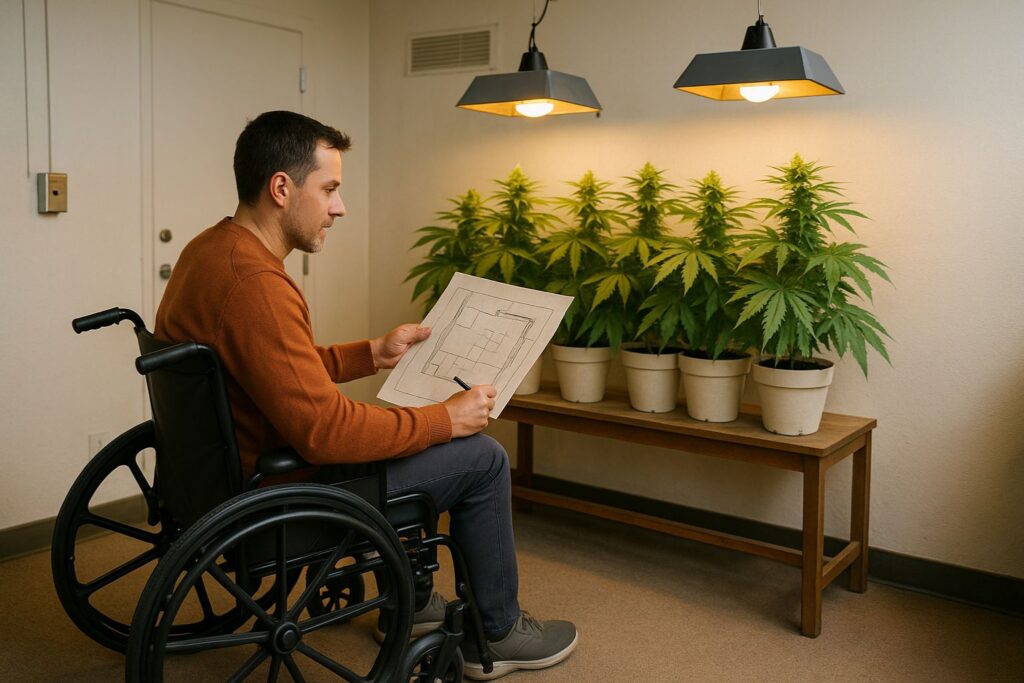
For me, the turning point was accepting that I needed an accessible grow room if I wanted to keep gardening long term. The goal is to protect your body while still giving your plants what they need.
Layout and ergonomics
An accessible grow room starts with layout:
- Raise pots so the canopy sits between mid-thigh and chest height, reducing bending.
- Use tables, benches, or sturdy shelving instead of plants on the floor.
- Leave wide paths for mobility aids and for days when spasticity and muscle stiffness make your gait unstable.
- Keep frequently used tools at arm height, not on the ground.
This kind of accessible grow room design lets you work in shorter bursts and varied postures, which helps manage muscle weakness and fatigue.
Automation and lighter work
Growing cannabis for personal use does not have to mean hauling 20-liter pots every week. Automation is your friend:
- Drip irrigation or blumats so you are not lifting heavy watering cans.
- Environmental controllers to stabilize temperature and humidity without constant manual tweaks.
- Lightweight fabric pots on rolling trays so you can move plants without deadlifting.
All of this reduces the physical stress neuromuscular disorders might add to your sessions.
Choosing Seeds With Limited Energy In Mind
Your choice of genetics can make or break the workload. When muscle weakness and fatigue are part of life, I think about seeds differently than I did when my body cooperated with any schedule.
Photoperiod vs autoflowering cannabis seeds
Photoperiod strains give you more control: you decide when to flip to flower, how big plants get, and how heavily to train them. Autoflowering cannabis seeds start blooming on their own after a few weeks and usually finish faster with smaller plants.
If your energy is unpredictable:
- Photoperiod plants let you extend veg when you need a break, but they often demand more training.
- Autoflowering cannabis seeds give you shorter cycles and less staking and trellising, but they offer a smaller window to fix mistakes.
I like running a mix: a few photoperiods in a main tent and one or two autoflowering cannabis seeds in a side space. That way I always have something finishing soon without overwhelming myself.
Feminized cannabis seeds and workload
For most home growers dealing with neuromuscular disorders and conditions, feminized cannabis seeds make life easier. Feminized cannabis seeds save time by removing the need to sex plants and cull males. Less bending, less checking, fewer decisions on bad days.
In my own planning, feminized cannabis seeds are the backbone of each run; autoflowering cannabis seeds fill in the gaps when I want something quick and compact.
Finding the best seed bank for patients
People often ask me what the best seed bank for patients looks like. I do not think there is one single “best,” but I look for:
- Reliable germination rates and clear return policies
- Honest descriptions of plant height, flowering time, and difficulty
- Options for both feminized cannabis seeds and autoflowering cannabis seeds
- Discreet packaging and shipping that respect local laws
For someone living with neuromuscular conditions, the best seed bank for patients is the one that saves you from bad surprises and wasted effort. Companies like Royal King Seeds focus on clear strain descriptions, indica/sativa/hybrid breakdowns, and strong germination guarantees, which is exactly what I want before I commit my limited energy to a run.
Managing Workload Throughout The Grow
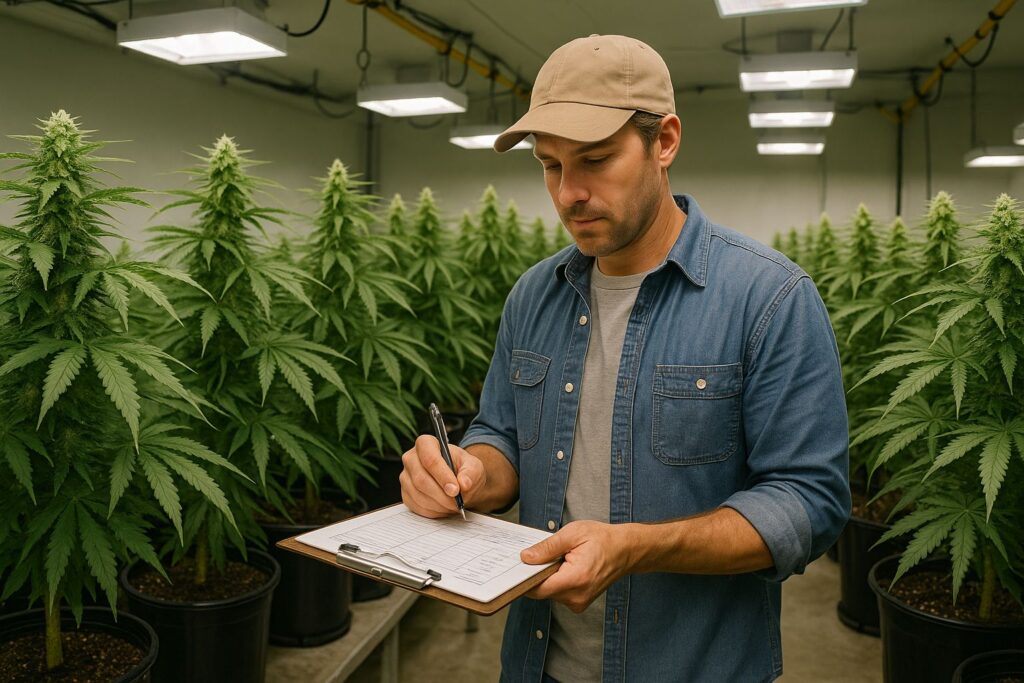
Veg stage: gentle training only
During veg, I keep training simple:
- Light topping and low-stress training instead of aggressive super-cropping
- A limited number of plants so I can reach each one easily
- Short daily check-ins rather than long weekend marathons
Remember that neuromuscular disorders often flare with overuse. Spreading tasks out helps prevent a bad day of muscle weakness and fatigue from turning into a bad week.
Flower stage: focus on environment
Once buds start stacking, the game shifts from shaping plants to managing environment:
- Stable temperature and humidity to prevent mold
- Gentle air movement so you are not constantly defoliating
- A nutrient schedule that you can automate or prepare in batches
The less reactive work in flower, the easier it is to maintain an accessible grow room that does not punish your body.
Harvest, trimming, and curing with limitations
Harvest is where many growers overdo it, even without neuromuscular disorders and conditions.
Here is how I split it up:
- Chop day: Cut and hang plants only, no trimming.
- Trimming days: Work in 30–45 minute chunks with long breaks.
- Use trim bins, padded chairs, and good scissors to reduce spasticity and muscle stiffness in the hands.
If friends or family offer to help, say yes. Saving your hands and back now pays off when you are able to enjoy your stash rather than recover from harvest injuries.
FAQ: Neuromuscular Disorders And Conditions For Growers
What are neuromuscular disorders and conditions in simple terms?
Neuromuscular disorders and conditions are problems with the nerves, muscles, or the connection between them. They often cause muscle weakness and fatigue, trouble with coordination, and sometimes numbness or tingling. These neuromuscular disorders can be genetic, autoimmune, degenerative, or related to injuries or other illnesses.
Can cannabis help with spasticity and muscle stiffness?
Some clinical trials and reviews suggest that certain regulated cannabinoid medicines can reduce spasticity and muscle stiffness in people with multiple sclerosis, but results are mixed and side effects such as dizziness, fatigue, and cognitive changes are common. This research does not mean that all weed products will work the same way. Decisions about medical cannabis and neuromuscular disorders should always be made with your neurologist or specialist, taking into account your full medical history and local laws.
Is growing cannabis for personal use safe if I have mobility issues?
Growing cannabis for personal use can be compatible with neuromuscular conditions if it is legal where you live and if you build an accessible grow room that respects your limits. That means raising plants to a reachable height, using lightweight containers, automating watering, and breaking tasks into short sessions. If balance or falls are a concern, talk with your care team about what is realistic before you set up equipment.
How many plants should I run if I have muscle weakness and fatigue?
I usually recommend starting smaller than you think you can handle. For many people living with neuromuscular disorders, four to six plants in moderate-size pots is plenty. This allows meaningful harvests without overloading your schedule. As you learn how your body responds, you can gradually adjust plant counts, but it is better to be pleasantly surprised than burned out.
Should I choose feminized cannabis seeds or autoflowering cannabis seeds?
Both can work. Feminized cannabis seeds remove the need to sex plants and are great when you want maximum control over veg time and training. Autoflowering cannabis seeds finish faster and stay smaller, which can be helpful if standing, bending, or long projects worsen your symptoms. Many growers dealing with neuromuscular conditions run a mix of both so they always have something finishing soon without overwhelming themselves.
Final Thoughts From The Garden
Neuromuscular disorders and conditions changed my pace, but they did not end my time in the grow room. I had to rethink everything—from which genetics I choose, to how I move pots, to how long I trim—but the work is still deeply rewarding.
If you are dealing with neuromuscular disorders or neuromuscular conditions yourself, remember:
- Your health team comes first for anything medical.
- Weed and medical cannabis and neuromuscular disorders belong in the same conversation as your other treatments, not outside of it.
- A carefully designed, accessible grow room can turn growing cannabis for personal use into a sustainable, body-friendly hobby rather than another source of stress.
Honor your limits, choose feminized cannabis seeds and autoflowering cannabis seeds that fit your schedule, look for the best seed bank for patients with honest information, and give yourself permission to do things differently. The garden can still be yours—even if the way you move through it has changed.
