Table of Contents
Neptune Kush is a powerful 100% indica cannabis strain known for its potent relaxing and sedative effects. It has gained popularity among recreational users seeking deep relaxation and medical patients looking for alleviation of anxiety, sleeplessness, and chronic pain. The strain is believed to have roots in the OG Kush family, though its exact genetic lineage is not definitively established. Some reports suggest it could be a cross between Bubble Gum and OG Kush, giving it a unique flavor profile and a balance of effects suited for nighttime use.
Appearance, Aroma, and Flavor
Appearance
Neptune Kush features dense, oversized buds that take on a spade-like shape. The nugs have a minty green hue, often accompanied by rich golden undertones and vibrant orange hairs. A generous coating of frosty white trichomes covers the buds, giving them a sticky and resinous texture. The strain’s high trichome density suggests a potent THC content.
Aroma
The strain has a complex and pungent scent profile, with dominant earthy, piney, and citrus notes. Upon breaking apart the buds, one may detect subtle hints of sweet vanilla, honey, and apple, making for a rich and multi-layered olfactory experience.
Flavor
Neptune Kush’s flavor profile mirrors its aroma. Users commonly report a sweet and smooth inhale, marked by notes of honey and vanilla, followed by an earthy and slightly spicy exhale. A lingering citrus zest remains on the palate, making the overall smoking or vaping experience pleasant and well-balanced.
Chemical Composition and Cannabinoid Profile
THC and CBD Content
- THC Levels: Typically 17-19%, though some batches have tested over 20%.
- CBD Content: Low, usually under 1%, making this strain more suited for THC-driven effects.
- CBN and Other Cannabinoids: Small amounts of CBN and CBG may be present, contributing to its sedative and pain-relieving properties.
Terpene Profile
Neptune Kush’s effects and aroma are heavily influenced by its dominant terpenes:
- Humulene: Provides anti-inflammatory properties and a subtle woody aroma.
- Camphene: Adds a musky, herbal quality and has potential antioxidant effects.
- Caryophyllene: A spicy, peppery terpene known for its role in reducing pain and inflammation.
- Limonene: A citrus-scented terpene that uplifts mood and relieves stress.
- Myrcene: Contributes to the strain’s sedative, full-body relaxation effects.
Effects and Experience
Recreational Effects
Neptune Kush is best suited for nighttime or relaxation use due to its heavily sedating effects. Users typically experience:
- Euphoric Onset: The high starts with a slow-building wave of relaxation, beginning with a mild exhilaration that relieves tension and stress.
- Deep Body High: A numbing sensation spreads throughout the body, leading to complete muscle relaxation.
- Couch-Lock and Sedation: As the high deepens, users report a heavy feeling that often results in couch-lock or an overwhelming urge to sleep.
- Mind Calmness: While primarily a body-heavy strain, it also quiets racing thoughts, making it useful for individuals with anxiety or insomnia.
- Hunger Induction: Many users experience an increase in appetite, commonly referred to as the “munchies.”
Medical Applications
Due to its potent therapeutic effects, Neptune Kush is widely used by medical marijuana patients for conditions such as:
1. Chronic Pain Relief
- The high THC content and caryophyllene terpene work together to provide powerful analgesic effects.
- Helps with arthritis, migraines, muscle spasms, and fibromyalgia.
2. Anxiety and Stress Reduction
- The combination of limonene and myrcene creates a calming effect on the mind, helping individuals struggling with chronic stress, PTSD, and generalized anxiety disorder.
- Unlike some high-THC strains that may trigger paranoia, Neptune Kush generally induces calmness without excessive cerebral stimulation.
3. Insomnia Treatment
- One of the best aspects of Neptune Kush is its ability to combat insomnia.
- CBN and myrcene contribute to full-body sedation, making it easy to drift into a deep sleep.
- Ideal for those struggling with restlessness, nightmares, or sleep disorders.
4. Appetite Stimulation
- Helpful for individuals with appetite loss due to chemotherapy, eating disorders, or gastrointestinal issues.
- Induces cravings and makes eating more enjoyable.
5. Muscle Relaxation and Spasms
- The strong indica properties make it beneficial for those with muscle tension, multiple sclerosis, and post-exercise soreness.
Potential Side Effects
While Neptune Kush provides powerful therapeutic and recreational benefits, it may also cause some adverse effects, especially for novice users or those sensitive to THC.
Common Side Effects
- Dry Mouth (“Cottonmouth”) – Staying hydrated can help alleviate this issue.
- Dry Eyes – Using eye drops can prevent irritation.
- Dizziness or Lightheadedness – More common in individuals with lower THC tolerance.
- Mild Paranoia or Anxiety – Rare but possible in sensitive users.
- Couch-Lock and Extreme Sedation – Best consumed when no major activities are planned.
Growing Information
Environmental Conditions and Growth Requirements
a. Climate & Temperature Control
- Neptune Kush thrives in a Mediterranean climate (similar to Southern California).
- Ideal Temperature Range:
- Seedling Stage: 70-75°F (21-24°C)
- Vegetative Stage: 72-78°F (22-26°C)
- Flowering Stage: 68-75°F (20-24°C) to enhance resin production.
- Nighttime Temps: Should be 10°F lower than daytime to prevent stress.
- Relative Humidity (RH):
- Seedling: 65-70%
- Vegetative: 50-60%
- Flowering: 40-50% (Lowering humidity prevents mold)
- Late Flowering: 30-40% to maximize resin/trichome production.
b. Light Requirements (Photoperiod & DLI)
- Neptune Kush follows a photoperiodic growth cycle:
- Vegetative Stage: Light for 18–24 hours a day
- Flowering Stage: 12 hours light / 12 hours darkness
- Ideal Light Spectrum:
- Blue (400-500nm) during vegetative stage to promote healthy leaf growth.
- Red (620-700nm) during flowering stage to enhance bud development.
- Daily Light Integral (DLI) Recommendations:
- Vegetative Stage: 25-40 mol/m²/day
- Flowering Stage: 40-55 mol/m²/day
- Use LED grow lights with adjustable spectrums for optimal growth.
2. Propagation Methods (Germination & Cloning)
a. Germination Process
For optimal germination rates of Neptune Kush (~95%), scientific methods should be applied:
- Soaking in Water: Place seeds in distilled water (pH 6.0-6.5) for 12-24 hours.
- Paper Towel Method: Transfer seeds to a moist paper towel in a dark, warm area (75-80°F).
- Direct-to-Soil: Once taproots emerge (~1 cm), plant in light, airy soil with 30% perlite.
b. Cloning (Asexual Propagation)
- Ideal for preserving genetic consistency in Neptune Kush.
- Steps:
- Cut a 4-6 inch branch from a healthy mother plant.
- Dip in rooting hormone (IBA – Indole-3-butyric acid).
- Place in a humidity dome with 90% RH until roots develop (7-14 days).
- Transplant into soil or hydroponic medium.
3. Soil vs. Hydroponic Cultivation
Neptune Kush can be grown in soil, hydroponics, or aeroponics, but each method has scientific advantages.
a. Soil-Based Cultivation
- Best for organic growing and rich terpene profiles.
- Optimal Soil Composition:
- 40% Coco Coir
- 30% Perlite
- 20% Organic Compost
- 10% Vermiculite (for water retention)
- pH Range: 6.0 – 6.8 (Adjust using dolomite lime or sulfur).
- Beneficial Microbes: Mycorrhizal fungi and Trichoderma improve root health.
b. Hydroponic Cultivation (DWC, NFT, or Drip Systems)
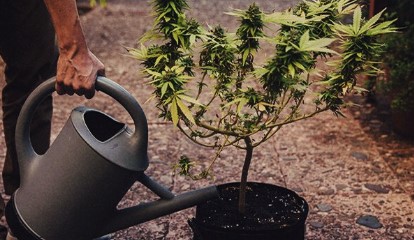
- Increases growth rate by 30-50% compared to soil.
- Nutrient Solution pH: 5.5 – 6.0
- EC Levels:
- Vegetative: 1.0 – 1.5 mS/cm
- Flowering: 1.5 – 2.0 mS/cm
- Aeration: Use air stones to prevent root rot.
- Common Nutrients Used:
- Nitrogen (N) → Veg Growth
- Phosphorus (P) → Bud Development
- Potassium (K) → Trichome & Resin Production
- Calcium & Magnesium → Prevents deficiencies common in hydroponics
c. Aeroponic Cultivation (High-Tech Option)
- Roots are suspended in air and misted with nutrient solution.
- Results in faster growth rates, but requires precise monitoring.
- Ideal EC: 1.5-2.0 mS/cm with oxygen-enriched water.
4. Pruning, Training & Yield Optimization
a. High-Stress Training (HST)
- Topping – Encourages multiple colas, improves yield.
- Super Cropping – Bends branches to increase light penetration.
b. Low-Stress Training (LST)
- Screen of Green (ScrOG) – Maximizes light exposure.
- LST Bending – Creates an even canopy, increases bud sites.
c. Defoliation
- Remove fan leaves in early flowering to improve airflow and light penetration.

5. Flowering Stage & Harvesting
a. Flowering Time
- Neptune Kush flowers in 8-9 weeks.
- Trichome development should be monitored for peak potency.
b. Harvest Timing (Trichome Science)
- Use a jeweler’s loupe (60x magnification):
- Clear Trichomes → Too early
- Milky White Trichomes → Peak THC levels (best for recreational use)
- Amber Trichomes → Increased CBN, stronger sedative effects (ideal for medical use)
6. Drying & Curing for Maximum Potency
a. Drying Process
- Temperature: 60-70°F
- Humidity: 50-55%
- Time: 7-10 days
- Air Circulation: Use fans but avoid direct airflow on buds.
b. Curing Process
- Glass Jars (Burping Method)
- Store dried buds of Neptune Kush in mason jars at 60-65% RH.
- Open (burp) jars once per day for 10-14 days to remove excess moisture.
- Improves terpene retention and smoothness of smoke.
7. Pest & Disease Management (Organic & Chemical Solutions)
Neptune Kush is resistant to mold but is vulnerable to spider mites, powdery mildew, and fungus gnats.
a. Preventative Measures
- Neem Oil: Acts as a natural pesticide.
- Beneficial Insects: Ladybugs and predatory mites help control pests.
- Air Circulation: Prevents mold buildup.
b. Common Diseases & Solutions
- Powdery Mildew – Use sulfur-based organic fungicides.
- Root Rot (Hydroponics Issue) – Ensure proper aeration & oxygenation.
- Bud Rot (Botrytis) – Maintain 30-40% RH in late flowering.
Consumption Methods
Neptune Kush can be consumed via inhalation, oral ingestion, sublingual absorption, or topical application. Each method affects how THC and other cannabinoids interact with the body, primarily through the endocannabinoid system (ECS).
A. Inhalation (Smoking & Vaping)
Mechanism:
- When Neptune Kush is smoked or vaped, THC and other cannabinoids are aerosolized and inhaled into the lungs, where they rapidly enter the bloodstream via alveolar absorption.
- The high bioavailability (up to 56%) of Neptune Kush allows for rapid onset.
Subtypes:
- Smoking (Joints, Bongs, Pipes)
- Involves combustion, which destroys up to 30% of THC.
- Releases carcinogenic byproducts but provides a fast and intense effect.
- Vaporization (Dry Herb Vaporizers, Concentrate Pens)
- THC is heated (not burned), avoiding toxic combustion byproducts.
- Retains more terpenes, enhancing the entourage effect.
Onset: 1-5 minutes
Peak Effects: 15-30 minutes
Duration: 2-4 hours
Bioavailability: 34-56%
Pros: Fast onset, potent effects, high bioavailability.
Cons: Shorter duration, possible lung irritation (smoking).
B. Oral Ingestion (Edibles & Capsules)
Mechanism:
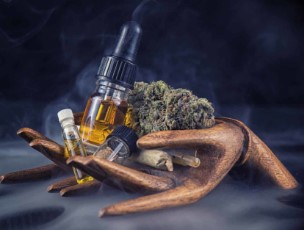
- THC is first-pass metabolized in the liver after ingestion.
- The liver converts Δ9-THC into 11-Hydroxy-THC, a metabolite that is 5x more potent and longer-lasting.
- This results in a delayed onset but extended duration.
Subtypes:
- Edibles (Gummies, Brownies, Beverages)
- Requires digestive breakdown and liver metabolism.
- Effects are intensified due to 11-Hydroxy-THC conversion.
- Capsules/Pills
- Offers precise dosing but follows the same metabolic pathway as edibles.
Onset: 30-90 minutes
Peak Effects: 2-4 hours
Duration: 6-8 hours (up to 12 hours in high doses)
Bioavailability: 4-20% (lower due to first-pass metabolism)
Pros: Long-lasting effects, no lung irritation.
Cons: Delayed onset, harder to control dosing.
C. Sublingual & Buccal Absorption (Tinctures, Oils, Sprays)
Mechanism:
- Cannabinoids in Neptune Kush are absorbed directly into the bloodstream through mucous membranes under the tongue (sublingual) or inner cheeks (buccal absorption).
- Bypasses first-pass metabolism, leading to faster onset and higher bioavailability than edibles.
Subtypes:
- Sublingual Tinctures/Oils
- Absorbed within 30-60 seconds before swallowing.
- Delivers faster onset compared to edibles but slightly slower than inhalation.
- Oral Sprays
- Similar to tinctures but designed for even faster mucosal absorption.
Onset: 15-45 minutes
Peak Effects: 1-2 hours
Duration: 4-6 hours
Bioavailability: 30-40%
Pros: Faster onset than edibles, discreet, precise dosing.
Cons: Effects are weaker than inhalation, taste may be unpleasant.
D. Topical & Transdermal Applications
Mechanism:
- THC and other cannabinoids are absorbed through the skin into local tissues.
- Topicals (creams, balms) interact only with CB2 receptors (no psychoactive effects).
- Transdermal patches allow THC to enter the bloodstream, providing systemic effects.
Subtypes:
- Topical Creams, Lotions, Balms
- Localized relief without psychoactive effects.
- Best for pain, inflammation, arthritis.
- Transdermal Patches
- Slow systemic absorption over time.
- Provides consistent low-dose effects for 12-24 hours.
Onset: 10-30 minutes (topicals), 1-2 hours (transdermal)
Peak Effects: Varies Duration: 6-12 hours (topical), 12-24 hours (transdermal)
Bioavailability: Topical (low), Transdermal (high)
Pros: Long-lasting effects, non-psychoactive options available.
Cons: Not ideal for recreational users seeking a “high.”
2. Onset, Duration, and Factors Affecting Absorption
The speed and intensity of Neptune Kush’s effects depend on several physiological factors, including:
A. Individual Metabolism & Enzymes
- The enzyme CYP2C9 metabolizes THC in the liver.
- Fast metabolizers experience shorter, less intense highs.
- Slow metabolizers experience longer, more potent effects.
B. Body Fat Percentage
- THC is lipophilic (fat-soluble), meaning higher body fat stores THC longer.
- Frequent users with high fat stores may experience prolonged effects due to THC release over time.
C. Food Intake
- Edibles take longer to kick in on a full stomach.
- Fatty foods increase THC absorption, intensifying effects.
D. Tolerance Levels
- Chronic users have downregulated CB1 receptors, requiring higher doses.
- New users should start with low doses to avoid adverse reactions.
3. Comparisons of Ingestion Methods
| Method | Onset Time | Peak Effects | Duration | Bioavailability | Best For |
|---|---|---|---|---|---|
| Smoking | 1-5 min | 15-30 min | 2-4 hours | 34-56% | Fast-acting effects |
| Vaping | 1-5 min | 15-30 min | 2-4 hours | 45-60% | Healthier inhalation |
| Edibles | 30-90 min | 2-4 hours | 6-8 hours | 4-20% | Long-lasting effects |
| Sublingual | 15-45 min | 1-2 hours | 4-6 hours | 30-40% | Discreet, faster than edibles |
| Topical | 10-30 min | Varies | 6-12 hours | Low (localized) | Pain relief (no high) |
| Transdermal | 1-2 hours | Varies | 12-24 hours | High (systemic) | Continuous THC release |
Comparison with Similar Strains
Neptune Kush is often compared to other heavy indica strains, such as:
- Granddaddy Purple (GDP): Similar sedative effects but with a grape and berry flavor.
- Northern Lights: Equally relaxing, but slightly less sedative.
- Bubba Kush: More potent couch-lock effect and stronger earthy flavor.
Final Thoughts
Neptune Kush is a powerhouse indica strain that stands out due to its deep body relaxation, stress relief, and sedative properties. Whether used for medical purposes or recreational enjoyment, it delivers a calming and euphoric experience that makes Neptune Kush an excellent choice for evening or nighttime use.
Its sweet honey-vanilla flavor, dense trichome coverage, and potent cannabinoid profile make it a top-tier strain for those seeking relief from pain, anxiety, and sleep disorders. However, due to its heavy sedative effects, new users should start with a low dose to avoid overwhelming drowsiness.
Neptune Kush is truly a stellar choice for indica lovers, offering a deeply soothing high and a flavorful experience that makes it a favorite among seasoned cannabis consumers.
For a complete directory of cultivars, visit our Cannabis Strain Reviews.
