Table of Contents
Motorbreath #15 is a potent indica-dominant hybrid resulting from the cross between two legendary strains: Chem D (Chem Dawg) and SFV OG Kush (San Fernando Valley OG). It is a phenotype of the original Motorbreath line selected for its superior resin production, gas-heavy terpene profile, and exceptionally high THC content, often exceeding 28% in well-grown batches.
Genetic Summary:
- Strain Type: Indica-dominant hybrid
- Parents: Chem D × SFV OG Kush
- Phenotype: #15 (noted for terpene strength and yield)
- THC Range: 25–32%
- CBD Content: <1%
- Typical Effects: Sedative, euphoric, physically heavy, mentally numbing
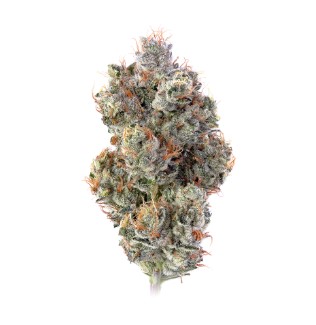
Motorbreath #15 is noted for its fuel-forward aroma — a sharp, pungent blend of diesel fumes, earthy musk, and garlic, sometimes underpinned by citrus or spice. The dense, trichome-rich buds exhibit dark green hues with deep orange pistils and often appear frosted from resin production, making it popular among extractors and medical users alike.
Cannabinoid and Terpene Profile
Primary Cannabinoids
| Cannabinoid | Avg. Content | Medical Role |
|---|---|---|
| THC | 25–32% | Analgesic, antiemetic, appetite stimulant, euphoric |
| CBD | <1% | (minimal in most phenotypes) |
| CBG | ~1–2% | Anti-inflammatory, neuroprotective, anxiolytic |
| CBC | <0.5% | Analgesic, mood-enhancing |
| THCV | Trace | Appetite modulating, potential anticonvulsant |
High THC concentration makes this strain suitable for severe medical symptoms but necessitates caution in THC-sensitive individuals.
Terpene Profile
| Terpene | Function & Medical Relevance |
|---|---|
| Myrcene | Sedative, analgesic, muscle relaxant |
| Limonene | Mood enhancer, anti-anxiety |
| Caryophyllene | CB2 agonist, anti-inflammatory, GI support |
| Linalool | Anxiolytic, antidepressant, anticonvulsant |
| Humulene | Anti-inflammatory, appetite suppressant |
| Pinene | Bronchodilator, memory support |
The dominance of myrcene, caryophyllene, and limonene contributes to strong body sedation, mood modulation, and pain relief — characteristics that define Motorbreath’s signature effects.
Mechanisms of Action in the Human Body
A. Endocannabinoid System (ECS) Interactions
- THC mosdulates central nervous system CB1 receptors by acting as a partial agonist neurotransmitter release (notably GABA, glutamate, and dopamine). This action reduces pain perception, increases appetite, and alters mood and cognition.
- CB2 receptor activation, largely mediated by caryophyllene and minor cannabinoids like CBG, results in immune suppression, anti-inflammatory responses, and reduced tissue damage in chronic inflammation.
- THC also modulates the hypothalamic-pituitary-adrenal (HPA) axis, influencing stress, appetite, and endocrine function.
B. TRP Channels and Neuromodulation
- CBD, CBG, and CBC, where present, influence TRPV1, TRPA1, and TRPM8 channels. These pathways are involved in:
- Nociception (pain signaling)
- Neuroinflammation
- Seizure modulation
- Linalool and limonene engage serotonin and GABA systems, which affect mood, anxiety, and cognition.
The result is a multi-modal pharmacological effect: direct neural inhibition via CB1, immune dampening via CB2, and symptom-specific support through TRP and serotonergic pathways.
Medical Applications of Motorbreath #15

I. Pharmacological Foundation of Motorbreath #15
Motorbreath #15 is a high-THC, indica-dominant hybrid with a notable terpene profile (myrcene, caryophyllene, limonene, linalool) and minor cannabinoids like CBG and CBC. This chemical complexity gives it broad-spectrum therapeutic properties by modulating multiple biological systems:
- Endocannabinoid system (ECS)
- Serotonergic (5-HT) and dopaminergic pathways
- GABAergic and glutamatergic tone
- TRP ion channels (TRPV1, TRPA1)
- Pro-inflammatory cytokine signaling
Each system contributes to its medical applications, making it effective in managing pain, inflammation, anxiety, mood disorders, sleep disturbances, neurodegenerative conditions, and appetite dysregulation.
II. Key Cannabinoids and Their Medical Roles
1. THC (Δ⁹-Tetrahydrocannabinol)
- Binds CB1 receptors in the brain and spinal cord, inhibiting excitatory neurotransmitters like glutamate.
- Reduces pain signaling, induces euphoria, increases appetite, and alters sensory perception.
- Modulates dopaminergic tone, which is relevant in depression, PTSD, and neurodegenerative diseases.
2. CBG (Cannabigerol)
- Interacts with CB1, CB2, α2-adrenergic, TRPV1, and 5-HT1A receptors.
- Provides neuroprotection, anxiolytic effects, and anti-inflammatory action.
- Enhances cognitive clarity and is being studied for IBD, glaucoma, and Huntington’s disease.
3. CBC (Cannabichromene)
- Modulates TRP channels and may contribute to analgesia, mood regulation, and neurogenesis.
III. Key Terpenes and Therapeutic Contributions
| Terpene | Medical Action |
|---|---|
| Myrcene | Muscle relaxant, analgesic, sedative; enhances cannabinoid absorption |
| Caryophyllene | CB2 receptor agonist; anti-inflammatory, GI protective |
| Limonene | Antidepressant, anxiolytic, antioxidant |
| Linalool | Sedative, anxiolytic, anticonvulsant, mood-stabilizing |
| Humulene | Anti-inflammatory, anti-bacterial, appetite-modulating |
The terpene-cannabinoid synergy in Motorbreath #15 plays a central role in its multi-system therapeutic activity, especially where mood, pain, and inflammation intersect.
IV. Condition-Specific Medical Applications
A. Chronic and Neuropathic Pain
Motorbreath #15’s high THC concentration makes it particularly effective for moderate to severe pain, including:
- Neuropathic pain (e.g., diabetic neuropathy, MS)
- Inflammatory pain (arthritis, fibromyalgia)
- Cancer-related pain
Mechanisms involved:
- CB1 receptor activation inhibits pain transmission in the CNS.
- CB2 activation (via caryophyllene, CBG) reduces peripheral inflammation.
- TRPV1 desensitization (CBD, CBG, linalool) dulls nociceptor sensitivity.
- Myrcene and linalool enhance GABAergic tone, easing muscular tension and spasms.
B. Inflammatory Disorders and Autoimmunity
Motorbreath #15 exerts immunomodulatory and anti-inflammatory effects, making it potentially beneficial for:
- Rheumatoid arthritis
- Crohn’s disease / ulcerative colitis
- Lupus and other systemic inflammatory conditions
- Chronic inflammatory pain syndromes
Key actions:
- CB2 agonism (caryophyllene, CBG) reduces cytokines like IL-1β, TNF-α.
- PPAR activation (via cannabinoids) influences transcription of anti-inflammatory genes.
- Linalool and limonene mitigate oxidative stress and tissue inflammation.
C. Anxiety and PTSD
Motorbreath #15 is generally sedating, ideal for individuals with stress-related anxiety, night terrors, or hyperarousal, particularly in the context of PTSD.

Mechanisms:
- Low-dose THC stimulates CB1 in the amygdala and hippocampus, reducing fear memory retrieval.
- CBD (if present) and CBG modulate 5-HT1A receptors, promoting calm without sedation.
- Linalool and limonene influence serotonergic signaling and reduce cortisol release.
- Myrcene acts as a natural sedative, reducing excitability and tension.
Caution: High doses of THC can increase anxiety in sensitive individuals. Titration is essential.
D. Depression and Mood Regulation
Motorbreath #15 supports short-term mood elevation, particularly in depressive episodes tied to chronic pain, inflammation, or insomnia.
Relevant mechanisms:
- THC increases dopamine in the mesolimbic pathway.
- Limonene enhances serotonin and dopamine transmission in the hippocampus.
- Neuroinflammation reduction (via CB2 and TRPV1) restores synaptic plasticity and emotional resilience.
While not a primary antidepressant, it may serve as adjunctive therapy, especially when depression coexists with physical symptoms.
E. Sleep Disorders and Insomnia
Motorbreath #15’s sedative profile is driven by myrcene, linalool, and high THC, ideal for:
- Sleep-onset insomnia
- PTSD-related nightmares
- Sleep disrupted by chronic pain
Mechanisms:
- CB1 activation reduces REM density and promotes deep sleep.
- Myrcene decreases locomotor activity and reduces wakefulness.
- Linalool enhances GABAergic tone, acting like a mild benzodiazepine.
Patients report improved sleep quality, latency, and continuity — especially when used 30–60 minutes before bed.
F. Appetite Stimulation and Nausea
Motorbreath #15 is highly effective in stimulating appetite and reducing nausea, especially for patients undergoing:
- Chemotherapy
- HIV/AIDS treatment
- Eating disorders (e.g., anorexia nervosa)
Mechanisms:
- THC activates CB1 receptors in the lateral hypothalamus, increasing hunger signals.
- Modulation of ghrelin and orexin release promotes food-seeking behavior.
- CB1 in the GI tract suppresses nausea and improves gastric motility.
Limonene may also counteract gastrointestinal distress, improving food tolerance.
G. Neurodegenerative Disorders
Motorbreath #15 shows theoretical and anecdotal benefits for:
- Multiple sclerosis (MS)
- Parkinson’s disease (PD)
- Alzheimer’s disease
- Neuropathies
Mechanisms:
- THC and CBG provide neuroprotection via CB1/CB2 and antioxidant action.
- CB2 agonism (via caryophyllene) reduces microglial activation in neuroinflammation.
- Linalool and CBC may support neurogenesis and oxidative defense.
Caution is advised in patients with cognitive vulnerability due to THC’s psychoactive nature — dose titration and caregiver supervision are critical.
V. Clinical Considerations, Dosing, and Safety
Dosing Guidelines (Medical Context)
| Condition | Starting Dose (THC) | Form |
|---|---|---|
| Chronic pain | 2.5–5 mg | Inhaled or edible |
| Insomnia | 5–10 mg | Edible or tincture |
| PTSD/anxiety (low dose) | 1–2.5 mg | Vapor or sublingual |
| Appetite stimulation | 2.5–7.5 mg | Inhaled |
| Inflammatory disease | 2–4 mg THC + 10 mg CBD | Oral daily |
Titration Approach
- Begin with low-dose THC (1–3 mg), especially in THC-sensitive populations.
- Increase every 2–3 days until therapeutic effect is achieved.
- Consider CBD supplementation to buffer THC side effects.
Safety and Contraindications
Common Side Effects:
- Dry mouth
- Dizziness
- Temporary short-term memory impairment
- Drowsiness or grogginess
- Anxiety at high doses
Serious Risks (rare, dose-dependent):
- Psychosis in predisposed individuals
- Cardiovascular stress (in hypertensive or arrhythmic patients)
- Cannabinoid hyperemesis syndrome (CHS) with chronic overuse
Avoid or Use with Caution If:
Concurrent use of CNS depressants or medications metabolized by CYP450 enzymespsychosis-prone individuals.
Personal or family history of psychosis or schizophrenia
Severe cardiovascular disease
Recreational Effects and User Experience
Motorbreath #15 delivers a powerful recreational experience, characterized by deep body sedation, mental detachment, and a heavy, long-lasting euphoria. These effects are primarily driven by the high THC content and its indica-leaning terpene profile, particularly myrcene, caryophyllene, and linalool.
Subjective Effects Timeline
| Time Frame | Effect |
|---|---|
| 0–15 minutes | Rapid cerebral “headband” sensation; slight uplift |
| 15–30 minutes | Intense body heaviness and mental fog |
| 30–120 minutes | Deep relaxation, couch-lock, sensory intensification |
| 2–4 hours | Sedation, appetite increase, calm mood |
Commonly Reported Effects
- Full-body euphoria and muscle relaxation
- Dissociation from stress, worry, and pain
- Heightened sensory perception (taste, sound)
- Increased appetite and sleepiness
- Heavy “come down” followed by deep sleep
Potential Adverse Effects (Dose-Dependent)
- Dry mouth and eyes
- Short-term memory suppression
- Anxiety or paranoia (high doses)
- Lethargy, grogginess next morning
Ideal Recreational Use Cases
- Evening use
- Watching movies or listening to music
- Creative thinking (at low doses)
- Solo relaxation or small-group settings
- Enhancing the experience of food, warmth, and calm environments
Cultivation Science and Optimization
I. Genetic and Morphological Characteristics
Motorbreath #15 is an indica-dominant hybrid, bred from Chem D × SFV OG Kush, both of which are resin-rich, heavy-feeding, and gas-heavy strains. This phenotype (#15) was selected for:
- Dense flower structure
- High trichome production
- Diesel-forward terpene profile
- Exceptional THC content (~25–32%)
Growth habit is bushy, medium height, and strong apical dominance unless trained. Plants form tight internodes and broad leaves, with susceptibility to humidity-related issues due to thick colas.
II. Growth Cycle Overview
| Stage | Duration (indoors) | Key Objectives |
|---|---|---|
| Seedling/Cloning | 7–14 days | Root development, photomorphogenesis |
| Vegetative | 3–5 weeks | Biomass and canopy formation |
| Flowering | 8–10 weeks | Bud development, resin and terpene synthesis |
| Ripening | Last 10–14 days | Maximize trichome maturity, terpene conservation |
| Curing | 4–6 weeks post-harvest | Moisture normalization, chlorophyll degradation |
III. Environmental Control Parameters
Motorbreath #15 is sensitive to humidity and heat stress, especially in late flower. Precise control of VPD (Vapor Pressure Deficit), temperature, and lighting is essential.
Temperature & Humidity Targets
| Phase | Day Temp | Night Temp | RH (%) | VPD (kPa) |
|---|---|---|---|---|
| Veg | 24–28°C | 20–22°C | 60–70 | 0.8–1.0 |
| Early Flower | 22–26°C | 18–20°C | 50–60 | 1.0–1.2 |
| Mid Flower | 21–25°C | 17–19°C | 45–55 | 1.2–1.4 |
| Late Flower | 19–23°C | 16–18°C | 35–45 | 1.3–1.6 |
VPD control ensures optimal transpiration, calcium uptake, and trichome development.
Lighting Parameters
| Stage | PPFD (µmol/m²/s) | DLI | Photoperiod | Light Type |
|---|---|---|---|---|
| Veg | 400–600 | 20–30 | 18/6 | Full-spectrum LED or MH |
| Flower | 700–1000 | 35–45 | 12/12 | HPS, LED (red-biased) |
| Ripening | 900–1100 + UV-B | 45+ | 12/12 | LED + supplemental UV |
- UV-B (280–315 nm) in late flower boosts THC expression via trichome stress induction (DNA repair response).
- Blue light (400–500 nm) in veg promotes compact internodes.
- Far-red supplementation at end-of-day (EOD-FR) can enhance flowering signals and shorten flowering onset.
IV. Nutrient Uptake and Soil Chemistry
Motorbreath #15 is heavy-feeding, particularly in phosphorus (P), potassium (K), and micronutrients like Mg, S, Ca, Fe.
Optimal Medium
- Coco coir + perlite or well-aerated living soil rich in microbial life.
- Soil pH: 6.2–6.5 (soil) | 5.8–6.2 (coco/hydroponic)
- EC: Start at 1.2 in veg, push to 2.2–2.4 in flower
Macronutrient Strategy
| Stage | N | P | K | Ratio Target |
|---|---|---|---|---|
| Veg | High | Moderate | High | 3-1-2 |
| Early Flower | Moderate | High | High | 1-2-2 |
| Peak Flower | Low | High | Very High | 1-3-3 |
| Ripening | Minimal | Very High | High | 0-3-2 |
Micronutrients
- Magnesium (Mg) – essential for chlorophyll, trichome density
- Calcium (Ca) – vital for cell wall development and bud structure
- Sulfur (S) – enhances terpene biosynthesis
- Chelated forms (e.g., EDTA) improve uptake in soilless systems
V. Training and Yield Optimization
Due to Motorbreath #15’s dense internodal stacking and apical dominance, careful training is necessary to avoid mold and maximize light penetration.
Recommended Canopy Management
- Topping (twice in veg) to promote lateral growth
- LST (Low-Stress Training) to widen canopy and expose lower colas
- SCROG (Screen of Green) for indoor grows — keeps uniform bud height
- Defoliation at weeks 3 and 6 of flower to:
- Improve airflow
- Prevent botrytis
- Redirect energy to top colas
Spacing
| Grow Style | Plant Spacing |
|---|---|
| Indoor (Soil) | 2–4 plants per m² |
| Hydroponic | 4–6 plants per m² |
| Outdoor | 1–2 meters apart |
VI. Terpene and Cannabinoid Expression Strategies
Motorbreath #15’s terpene expression is what defines its signature “gassy” profile. Specific strategies can enhance these secondary metabolites:
1. Soil Biology
- Use mycorrhizal fungi, Bacillus spp., and Trichoderma to boost root efficiency and terpene pathways.
- Kelp, humic acids, and molasses feed soil microbes and increase terpene-rich metabolite production.
2. Light Stress & UV-B
- Introduce UV-B light during weeks 6–9 to upregulate THCA and CBGA synthase expression.
- This stimulates resin gland density, which houses most terpenes and cannabinoids.
3. Sulfur and Magnesium
- Sulfur is a precursor in terpenoid biosynthesis.
- Maintain Mg at >70 ppm in hydroponics to support photosynthesis and cannabinoid synthesis.
VII. Harvest, Drying, and Curing for Resin Retention
Motorbreath #15 is resin-heavy, so handling during post-harvest is critical.
Harvest Timing
- Harvest when 90% pistils darkened, and trichomes are mostly cloudy with 10–15% amber.
- Use a digital microscope to monitor trichome head shape and clarity.
Drying Conditions
| Parameter | Optimal Range |
|---|---|
| Temperature | 60–65°F (15.5–18°C) |
| Humidity | 50–55% RH |
| Duration | 10–14 days |
| Airflow | Gentle, indirect |
Curing
- Cure in glass jars or stainless steel bins.
- Maintain 58–62% RH using humidity packs.
- Burp jars daily for 2 weeks, then weekly.
- Ideal cure time: 4–6 weeks for terpene stabilization.
VIII. Common Cultivation Challenges
| Issue | Mitigation Strategy |
|---|---|
| Bud rot (Botrytis) | Defoliate, control RH, good air movement |
| Powdery mildew | Maintain VPD, apply probiotic foliar sprays |
| Nutrient burn | Gradual EC increase; flush mid-flower if needed |
| Weak branching (in coco) | Use silica supplements to strengthen stems |
IX. Breeding and Genetic Stability
Motorbreath #15 has become a parent strain for many crosses due to its resin yield and gassy terpene expression. For breeding:
- Select stable phenotypes with consistent flower time, internodal spacing, and trichome coverage.
- Monitor for hermaphroditism under stress — typically low in #15 if stress-managed properly.
Pharmacokinetics and Dosing Considerations
Absorption and Onset
| Method | Onset Time | Duration | Bioavailability |
|---|---|---|---|
| Inhalation (vapor/smoke) | 2–10 minutes | 2–4 hours | ~30% |
| Oral (edibles/tincture) | 30–90 minutes | 4–8 hours | ~6–10% |
Motorbreath’s rapid onset via inhalation makes it effective for breakthrough pain, anxiety attacks, or sleep onset. Oral forms are longer-lasting but must be carefully dosed due to the high THC content.
Dosing Guidelines (Medical Use)
| Condition | Recommended Starting Dose | Route |
|---|---|---|
| Chronic pain | 2.5–5 mg THC | Inhalation or edible |
| Severe insomnia | 5–10 mg THC | Edible/tincture |
| Appetite stimulation | 2–7.5 mg THC | Inhalation |
| PTSD or anxiety | 1–2.5 mg THC (low dose) | Vapor or sublingual |
| Inflammatory conditions | 2–4 mg THC + 5–10 mg CBD | Daily microdosing |
Caution: Due to its potency, start low and titrate slowly to find the minimum effective dose. Avoid concurrent use with sedatives unless supervised.
Safety Profile and Contraindications
Adverse Effects
- Cognitive impairment
- Transient anxiety or paranoia
- Dizziness or orthostatic hypotension
- Impaired reaction time and motor coordination
Contraindications
- History of psychosis or schizophrenia
- Severe cardiovascular disease
- Pregnancy or breastfeeding (lack of safety data)
Potential Drug Interactions
- SSRIs, antipsychotics: Metabolic interaction via CYP450 enzymes
- CNS depressants (e.g., benzos, opioids): Additive sedation
- Anticoagulants (e.g., warfarin): Possible elevated INR due to CBD/THC enzyme inhibition
Conclusion: Clinical and Therapeutic Relevance of Motorbreath #15
Motorbreath #15 is a high-THC, indica-dominant strain known for its exceptional potency, dense resin production, and therapeutic versatility. Its robust cannabinoid and terpene profile delivers potent relief for chronic pain, inflammation, insomnia, appetite loss, and mood disorders. Due to its strength, it is best suited for experienced users or patients with high symptom burdens, especially where multiple symptoms overlap (e.g., pain, insomnia, and anxiety).
From a scientific perspective, Motorbreath #15 is an excellent model for studying cannabinoid synergy and terpene-driven modulation of therapeutic effects. Its cultivation, while moderately challenging, offers high reward for careful growers prioritizing potency and resin content.
For patients and clinicians, Motorbreath #15 represents a potent botanical option in the cannabis pharmacopeia, best used with precision dosing, clear therapeutic goals, and awareness of its psychoactive intensity.
