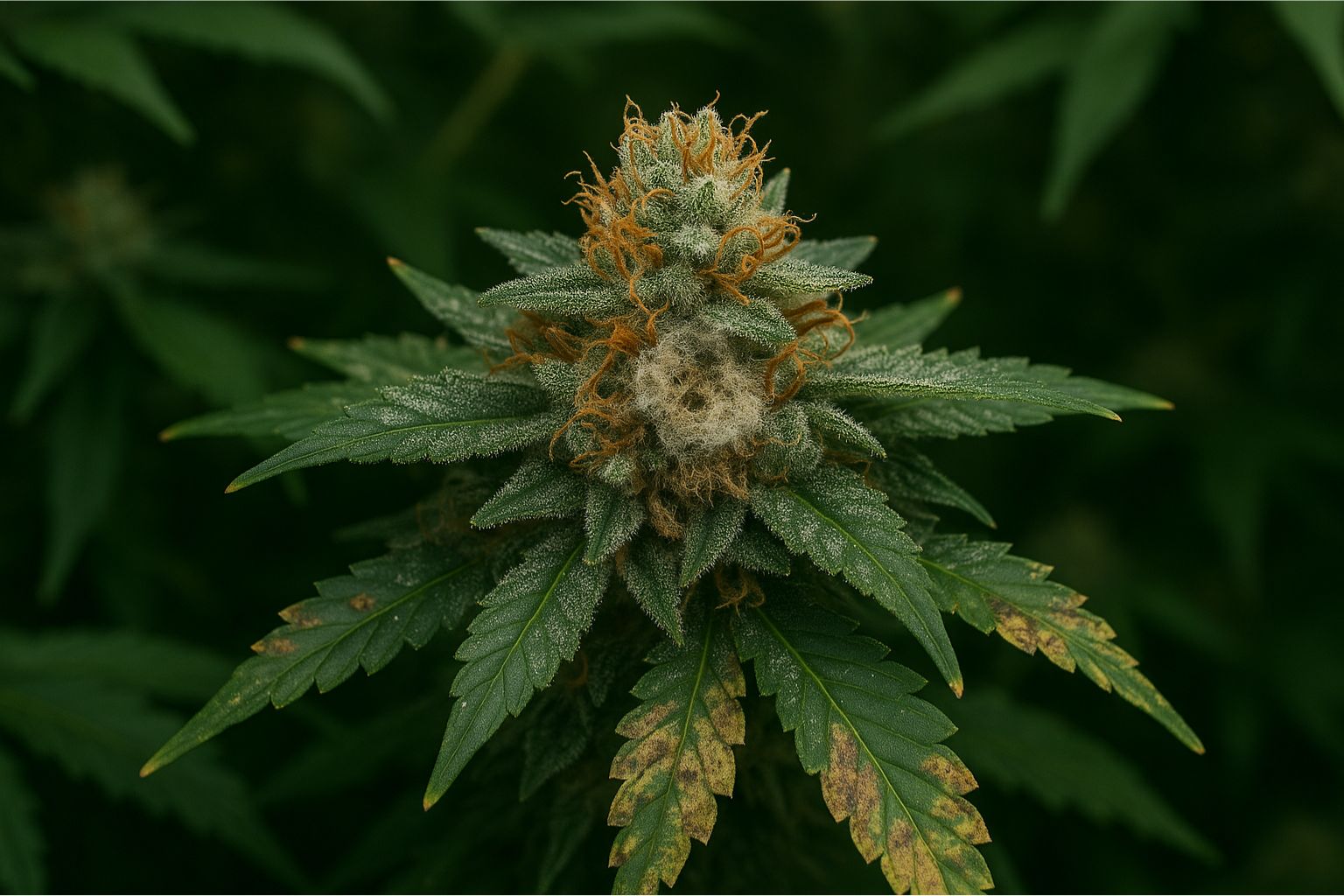
The first time I lost a crop to mold, it felt like a punch to the gut. I had beautiful, resinous tops one week and gray, crumbling buds the next. That harvest taught me a lesson I never forgot: mold in cannabis prevention is not a single product or trick, but a system you build into every part of your grow.
Over the last decade of growing cannabis, marijuana, and what most of my friends simply call weed, I have worked through almost every mistake you can make with moisture, airflow, and sanitation. I have battled bud rot in weed, watched powdery mildew on cannabis appear almost overnight, and dealt with root issues that opened the door to other cannabis plant diseases. What finally turned things around for me was treating mold in cannabis prevention as a core design principle, not an afterthought.
In this guide, I will walk through how I now structure my grows from seed to jar to reduce mold in cannabis and other cannabis plant diseases as much as reasonably possible. I will cover grow-room design, cannabis humidity control, airflow for indoor cannabis, genetics and resistant cannabis strains, organic fungicides for marijuana, and drying and curing cannabis buds without issues. None of this is theory—I use these exact approaches right now in both my home grow and small caregiver setups.
What Mold And Disease Really Mean In A Cannabis Grow
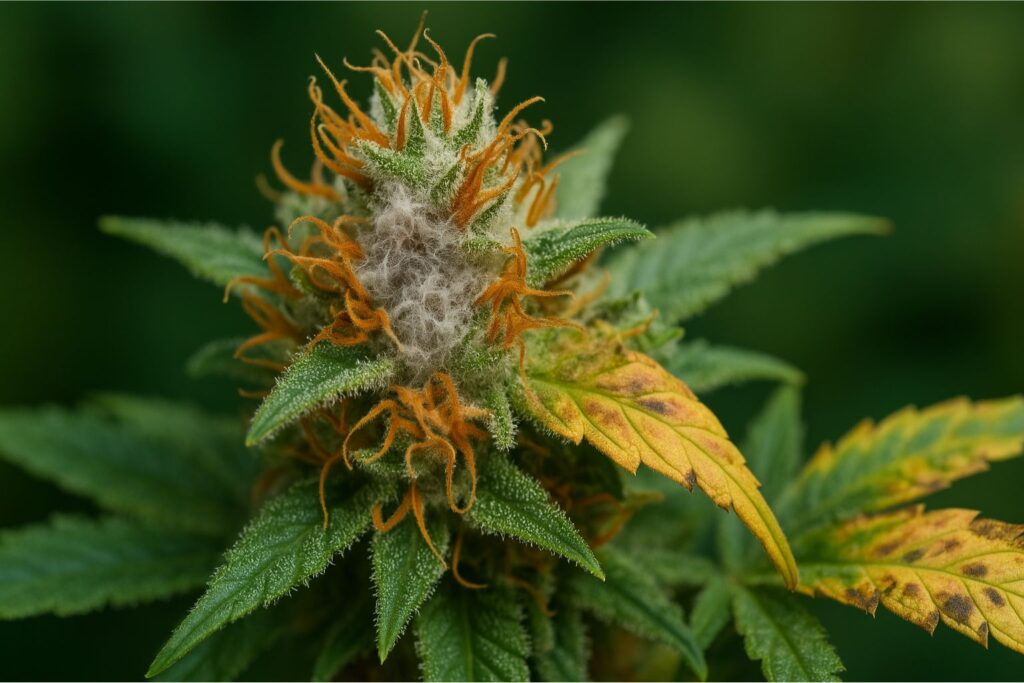
Before you can build a solid mold in cannabis prevention plan, it helps to understand what you are actually fighting. “Mold” is a general term growers use for several fungi that thrive in warm, moist, low-airflow environments. Mold in cannabis, the big two you will hear about constantly are botrytis (often called bud rot in weed) and powdery mildew on cannabis.
Botrytis usually shows up deep inside dense flowers. You will notice a brown or gray, dead-looking patch that crumbles when touched. Left alone, it will spread through the cola and then to nearby tops. Powdery mildew on cannabis looks very different: white, flour-like spots on leaves and sometimes on stems and buds. If you ignore it, those spots will merge until the plant looks dusted in chalk.
Beyond these obvious molds, there are other cannabis plant diseases that matter for long-term health. Root pathogens like pythium and fusarium, leaf spot fungi, and some bacterial problems all become more likely when your environment is off and your sanitation is sloppy. You will never eliminate all risk, but you can drastically reduce it with the right cannabis mold prevention strategy.
Environmental sweet spot for healthy plants
Most mold in cannabis problems start with an environment that is too wet, too warm, too still, or all three at once. In my indoor rooms, I aim for a temperature of 24–27°C (75–81°F) during lights on and 20–23°C (68–73°F) during lights off. Relative humidity in veg stays around 60 percent, and I gradually bring it down to 45–50 percent in mid to late flower. Good cannabis humidity control keeps you in a safe Vapor Pressure Deficit (VPD) range where plants transpire well without inviting mold.
I match environment to lighting intensity. When I push higher PPFD in late flower, I make sure the plants can transpire properly by keeping VPD in the ideal zone and avoiding cold, damp nights. That balance between light, temperature, and humidity is at the heart of cannabis mold prevention.
When I first started, I did not even own a hygrometer. Now I run multiple sensors and a controller to automate dehumidifiers and exhaust fans. That shift alone took me from constant mold scares to almost zero issues. Once you really commit to cannabis humidity control, everything else gets easier.
Designing Your Space For Cannabis Mold Prevention
My most mold-resistant grows are the ones where I planned for airflow, humidity, and cleanliness before I ever popped a seed. Prevention is much cheaper than trying to save a crop late in flower.
Airflow for indoor cannabis: moving air without stressing plants
Good airflow for indoor cannabis is non-negotiable. I use three layers of air movement:
- Intake and exhaust to exchange room air and control temperature and humidity.
- Oscillating fans to keep a gentle breeze over the canopy.
- Small fans under the canopy to prevent stagnant pockets around pots and lower branches.
When I was new, I pointed fans directly at the plants and ended up with windburn. Now I aim fans to bounce off walls so the movement is more like a steady, shifting breeze. This type of airflow for indoor cannabis not only strengthens stems but also makes life much harder for powdery mildew on cannabis and other spores that like stagnant air.
If you are in a confined setup, preventing mold in grow tent environments takes extra attention. I always slightly oversize my exhaust fan and run a fan speed controller so I can dial things in. Clip-on fans at different heights help create that constant, gentle swirl. In my experience, this kind of setup for preventing mold in grow tent grows is one of the best investments you can make.
Cannabis humidity control and ventilation strategy
In small rooms and tents, the biggest environmental battle is moisture. After lights go off, the temperature drops, and humidity spikes. If you are serious about cannabis mold prevention, you cannot ignore those dark hours.
Here is the basic approach I use for cannabis humidity control:
- Run the exhaust fan on a timer or controller even during lights off.
- Place a dehumidifier outside the tent but in the same lung room so you are feeding drier air in.
- Use saucers and avoid standing water under pots.
- Water plants at the start of the light cycle so most transpiration happens while the lights and fans are running.
This simple strategy has nearly eliminated bud rot in weed in my small flowering tents. When I work with new growers, the first upgrade we talk about is usually dehumidification and better cannabis humidity control, not more watts of light.
Genetics, Seeds, And Resistant Cannabis Strains
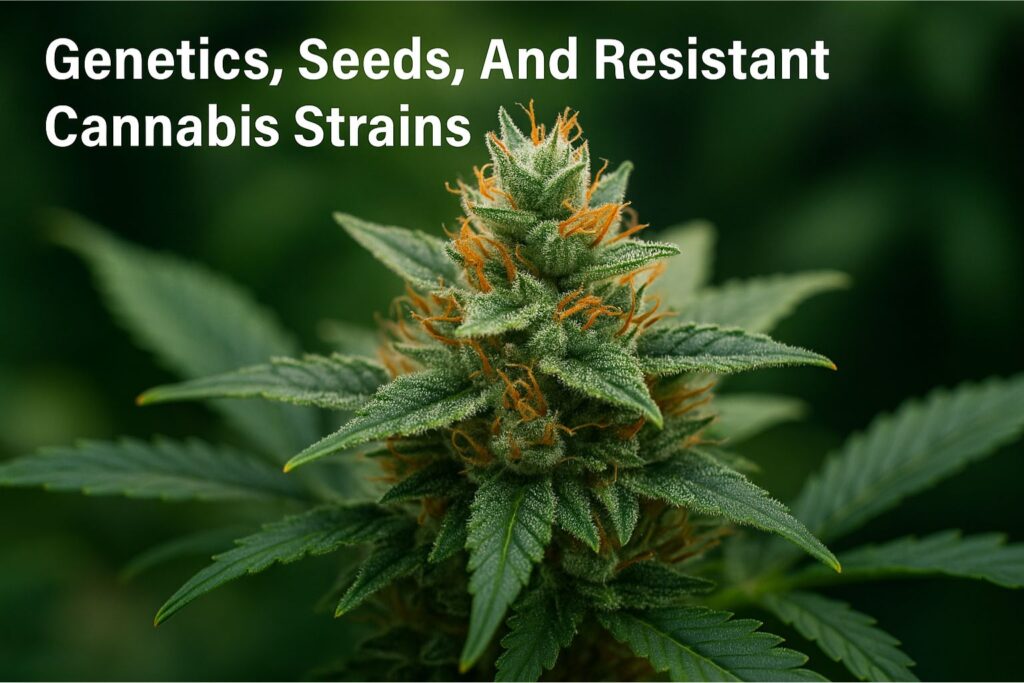
Environment is half the fight; genetics is the other half. Some resistant cannabis strains will shrug off conditions that would wreck a sensitive phenotype. The difference really shows up in late flower, when buds are dense and conditions are harder to control.
When I am shopping for seeds from a trusted cannabis seed bank, I pay attention to breeder notes and community grow reports that mention mold resistance, outdoor performance, or suitability for humid climates. While no strain is immune, there are lines that consistently handle pressure better than others. Over several runs, I have built a short list of resistant cannabis strains that I feel comfortable running even in borderline conditions.
At the same time, I think about what structure I want. Sativa-leaning hybrids with looser flower structure generally have better airflow through the buds than rock-hard indica doms. When I choose feminized seeds or autoflowers from a cannabis seed bank, I try to balance potency and yield with realistic expectations about my environment, including how well I can maintain cannabis humidity control at different times of year.
Germination matters too. I prefer to germinate seeds in a mild, lightly fertilized medium rather than in a heavy, cold soil that can invite damping-off and early cannabis plant diseases. Whether I am starting in rockwool, coco, or a soil mix, I keep the medium warm and only lightly moist to avoid fungal problems before the plant even has a chance to establish.
I also select for strong root systems and vigor. Plants that grow fast, respond well to training, and resist stress seem less prone to opportunistic cannabis plant diseases. Over time, you can keep clones from the mothers that thrive in your specific setup and effectively build your own library of resistant cannabis strains.
Cultural Practices That Reduce Cannabis Plant Diseases
Even with good genetics and environment, your daily habits matter. A big part of cannabis mold prevention is simply not giving spores an easy foothold.
Here are some cultural practices that have made a huge difference in my rooms:
- Start with clean equipment, pots, and tools every run.
- Never bring in outdoor plants, unwashed clothes, or pets into the grow space.
- Remove dead leaves and plant material promptly instead of letting them pile up.
- Avoid overcrowding; give each plant room for light and airflow.
- Defoliate strategically to open up the canopy, especially in dense indica-leaning hybrids.
Medium choice plays a role as well. In soil, overwatering is one of the fastest paths to root-related cannabis plant diseases. In hydroponic systems, poor oxygenation and dirty reservoirs can create a similar problem. Whether you grow in soil or hydro, clean water, balanced nutrients, and a well-aerated root zone are essential parts of cannabis mold prevention.
When I skip these basics, I start seeing small problems: a bit of powdery mildew on cannabis in a corner, yellowing leaves inviting pests, or droopy, overwatered plants that later show signs of root trouble. When I stick to the routine, I rarely see any cannabis plant diseases beyond the occasional minor issue I can catch early.
Nutrition, watering, and stress management
Overfeeding, underwatering, and constant stress create weak plants that cannot defend themselves. In my own gardens, most disease outbreaks traced back to me chasing numbers instead of listening to the plants.
A few rules I live by now:
- Keep EC and PPM appropriate for the growth stage and medium.
- Let the root zone breathe; in soil and coco, I prefer a wet–dry cycle rather than constantly soaked pots.
- Keep root-zone temperatures in a comfortable range, usually 18–22°C (64–72°F).
- Avoid extreme pH swings that lock out nutrients and stress the plant.
- Match nutrient strength and watering to your lighting intensity so plants are not stretched or starved under high PPFD.
When roots are healthy and the plant is transpiring properly, you are already applying cannabis mold prevention at the physiological level. Healthy plants are simply less inviting to cannabis plant diseases, even when spores are present.
Integrated Tools: Filters, Sprays, And Organic Fungicides For Marijuana
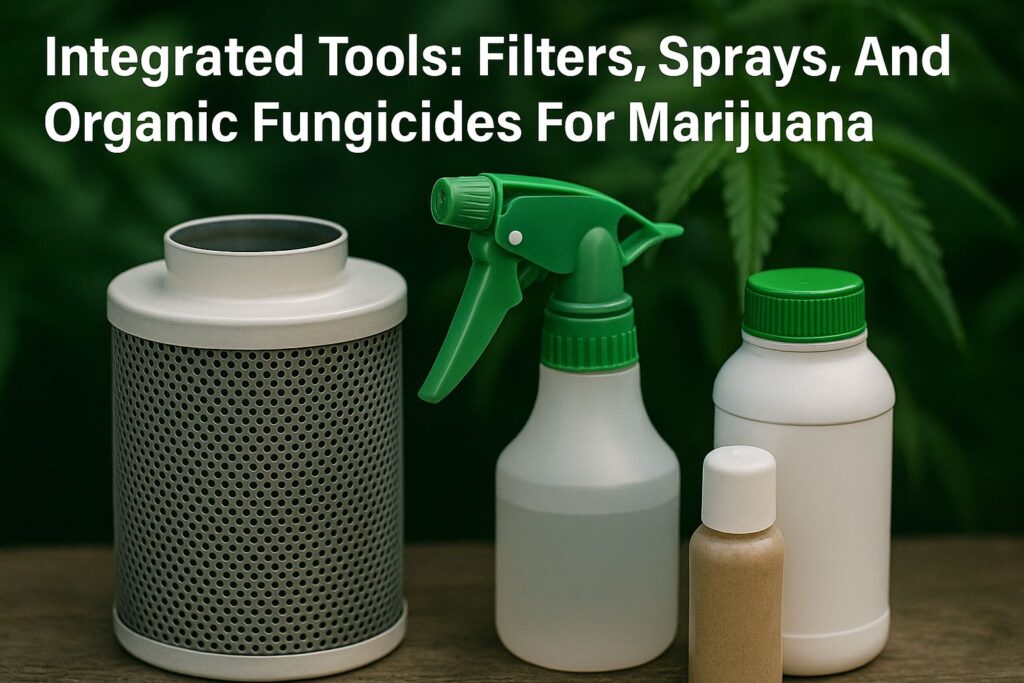
There is no magic bottle that will save a badly managed grow, but the right tools can tip the balance in your favor. I use mechanical, biological, and chemical (usually organic) tools in a layered way.
HEPA filters in the lung room and sticky traps near the intake help reduce airborne spores and pests. In veg, I sometimes rotate mild organic fungicides for marijuana such as potassium bicarbonate, sulfur-based products, or biological preventatives, always following label directions and never spraying anything late in flower.
The key with organic fungicides for marijuana is timing and moderation. I treat them as a safety net, not a permission slip to ignore environment. When combined with strong airflow for indoor cannabis and tight cannabis humidity control, these tools can help keep powdery mildew on cannabis and some other issues in check.
Occasionally, if I see early signs of bud rot in weed on a plant in late flower, I will remove the affected branch plus a safety margin, increase airflow, and drop humidity even further. That sort of decisive action is part of real-world cannabis mold prevention, even though it hurts to lose any part of a plant.
Drying And Curing Cannabis Buds Without Mold
Many growers win the battle in the grow room and lose it in the dry room. Drying and curing cannabis buds is where all your hard work can be either preserved or quietly ruined.
My target conditions for drying and curing cannabis buds are:
- Temperature around 18–21°C (65–70°F)
- Relative humidity around 55–60 percent
- Gentle, indirect airflow in the room but not blowing directly on hanging branches
When I first started drying and curing cannabis buds, I rushed everything. I dried too fast, overstuffed jars, and barely checked humidity. That is how I discovered that bud rot in weed can continue spreading after harvest if conditions are too wet. Now I use small hygrometers in curing jars and leave extra space around hanging branches so air can move freely.
This phase is also where your earlier cannabis mold prevention steps pay off. Clean buds from healthy, resistant cannabis strains dry more evenly and are less likely to develop problems in the jar.
Step-By-Step Cannabis Mold Prevention Checklist
Here is the simple checklist I run through each cycle to stay ahead of mold and other cannabis plant diseases:
- Choose genetics: Select feminized seeds or autoflowers from a trusted cannabis seed bank, giving preference to resistant cannabis strains and realistic flowering times for your climate.
- Design the space: Size your exhaust, intake, and circulation fans for strong but gentle airflow for indoor cannabis, with extra attention to preventing mold in grow tent setups.
- Dial in the environment: Set targets for temperature, VPD, and cannabis humidity control for each growth stage; verify them with multiple sensors.
- Keep it clean: Sterilize tools, wipe down surfaces, and remove dead plant material promptly so mold and other cannabis plant diseases have nowhere to gain a foothold.
- Water and feed wisely: Maintain stable EC/PPM, avoid overwatering, and keep the root zone in a comfortable temperature and pH range.
- Monitor and scout: Inspect leaves and buds regularly for powdery mildew on cannabis, off smells, and any signs of bud rot in weed, especially in dense colas late in flower.
- Use backups, not crutches: Deploy organic fungicides for marijuana as preventatives in veg only as needed, never as an excuse to ignore airflow or humidity.
- Nail the finish: During drying and curing cannabis buds, control temperature and humidity just as carefully as you did in late flower.
If I follow this checklist honestly, I rarely see more than minor spot issues. When I cut corners, it shows up quickly.
FAQ: Mold And Disease In Cannabis
How can I tell if mold is starting on my cannabis buds?
Early bud rot in weed can be sneaky. I gently squeeze large colas and look for spots that feel softer than the rest or do not bounce back. I also look deep inside any unusually brown or gray patches. If it crumbles instead of feeling sticky and fragrant, I remove that part immediately. Over time you will develop an eye for early signs, which is one of the most valuable skills in cannabis mold prevention.
What is the best way to start preventing mold in grow tent setups?
For growers in small indoor spaces, preventing mold in grow tent environments starts with exhaust and dehumidification. Make sure you can fully exchange the tent’s air every one to three minutes, and pair that with oscillating fans inside. Combine this with strict cannabis humidity control and you have already solved most of the environmental side of the problem. After that, good housekeeping and careful watering fill in the gaps.
Do I really need organic fungicides for marijuana, or can I just rely on environment?
If your airflow for indoor cannabis is excellent, your humidity is stable, and you are running resistant cannabis strains from a reliable cannabis seed bank, you may get by with little or no spraying. I still like to keep organic fungicides for marijuana on hand for veg as a preventative against powdery mildew on cannabis, especially if I am working in a humid region. But I consider them optional backup tools, not the foundation of cannabis mold prevention.
Are there special considerations for outdoor cannabis plant diseases?
Outdoors, you cannot control rain and dew, so strain selection and timing are huge. I choose resistant cannabis strains and plan my planting so flowering finishes before the wettest part of the season. I also focus on spacing, pruning for airflow, and never letting plants sit in tall, wet grass. Many of the same cannabis mold prevention principles apply outdoors, but you lean more heavily on genetics and plant structure.
How does the law where I live affect how I plan my grow?
Laws around cannabis, marijuana, and weed cultivation vary a lot by region and change over time. Plant limits, outdoor vs. indoor rules, shipping rules from any cannabis seed bank you buy from, and where you can source seeds are all regulated differently depending on where you live. I always check my local regulations before I order from any cannabis seed bank or plan a new grow space, and I update my approach as rules evolve. Staying compliant is part of running a safe, trustworthy grow, but you should always verify current requirements for your area.
Bringing It All Together
Mold feels like a mysterious enemy when you first encounter it, but once you understand the patterns, cannabis mold prevention becomes a practical, repeatable system. For me, it starts with realistic strain selection from a trusted cannabis seed bank, continues with disciplined cannabis humidity control and airflow for indoor cannabis, and ends with careful drying and curing cannabis buds.
You will still face challenges, especially in small spaces or humid climates, and you may lose a branch or even a plant along the way. That is part of learning to grow cannabis, marijuana, and weed at a high level. The goal is not perfection; it is steady improvement. Each cycle you run with a conscious focus on preventing mold in grow tent or room environments makes the next one smoother.
If you build your own checklist, stay honest about where your weak points are, and keep refining your environment, genetics, and daily habits, you will find that cannabis plant diseases show up less often and with less force. That is when you know your cannabis mold prevention plan has truly become part of how you grow.
