Table of Contents
Mint Chocolate Chip is an evenly balanced hybrid strain (50% Indica / 50% Sativa) created through a potent cross of SinMint Cookies and Green Ribbon BX. This strain is known for its unique blend of mint, chocolate, and earthy flavors, alongside its potent, long-lasting effects. With THC levels ranging between 18% and 26%, Mint Chocolate Chip is revered for its ability to provide both cerebral stimulation and full-body relaxation, making it suitable for both medical and recreational users.
This detailed guide will explore every aspect of the Mint Chocolate Chip strain, including its lineage, effects, medical applications, scientific composition, and cultivation.
Genetic Lineage and Profile
Mint Chocolate Chip is the result of crossing:
- SinMint Cookies – A hybrid strain with a minty aroma and a relaxing yet uplifting high.
- Green Ribbon BX – A strain known for its balanced effects, mental clarity, and mild euphoria.
Cannabinoid Profile:
| Cannabinoid | Percentage |
|---|---|
| THC | 18-26% |
| CBD | 0.1-1% |
| CBG | 0.5-1% |
| CBC | 0.1-0.5% |
Terpene Profile:
| Terpene | Effects |
| Caryophyllene | Anti-inflammatory, stress relief |
| Myrcene | Sedative, muscle relaxant, pain relief |
| Limonene | Uplifting, anti-anxiety, anti-depressant |
| Linalool | Calming, sleep-inducing, anti-seizure |
| Humulene | Appetite suppressant, anti-inflammatory |
Appearance, Aroma, and Flavor
Appearance:
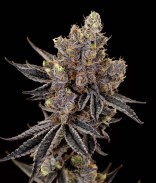
- Mint Chocolate Chip’s dense, medium-to-large-sized buds covered in a heavy layer of frosty white trichomes.
- Mint Chocolate Chip bright orange pistils contrast against deep green and purple hues.
Aroma:
- A strong minty, sweet chocolate scent.
- Hints of earthy, herbal undertones.
- Some users detect a spicy, nutty aroma upon grinding.
Flavor:
- A cool minty inhale followed by rich chocolate and vanilla.
- The exhale leaves a nutty, slightly skunky aftertaste.
- Subtle spice and creaminess add to its complexity.
Medical Uses of Mint Chocolate Chip Cannabis Strain
Mental Health Benefits:
1. Anxiety & Stress
- Caryophyllene interacts with CB2 receptors, helping reduce stress.
- Limonene boosts serotonin levels, providing anti-anxiety effects.
2. Depression
- Increases dopamine production, leading to improved mood.
- Helps combat lethargy and low motivation.
3. ADHD and Focus Disorders
- Mint Chocolate Chip enhances mental clarity and focus on low doses.
- Mint Chocolate Chip reduces hyperactivity and impulsiveness.
Pain Management:
4. Chronic Pain & Inflammation
- Myrcene and caryophyllene provide analgesic and anti-inflammatory effects.
- Effective for arthritis, migraines, and fibromyalgia.
5. Muscle Spasms & Multiple Sclerosis
- Helps with muscle tightness and nerve pain.
- Offers spasm relief for MS patients.
Sleep and Relaxation:
6. Insomnia
- Mint Chocolate Chip promotes relaxation and sleep in higher doses.
- Linalool in Mint Chocolate Chip contributes to muscle relaxation.
Gastrointestinal Disorders:
7. Nausea and Appetite Stimulation
- Mint Chocolate Chip useful for chemotherapy patients and individuals with appetite loss.
- Enhances appetite due to CB1 activation.
Recreational Uses of Mint Chocolate Chip Strain
1. Social and Creative Activities
- Mint Chocolate Chip enhances social interactions, creativity, and artistic inspiration.
2. Gaming and Movies
- Mint Chocolate Chip provides an immersive gaming and movie-watching experience.
3. Outdoor Activities and Exercise
- Can be used for light exercise, hiking, and yoga.
4. Evening Wind-Down
- Mint Chocolate Chip is popular strain for relaxing after work.
Scientific Breakdown and Pharmacology
Cannabinoid Interaction:
- THC activates CB1 receptors, leading to euphoria, relaxation, and pain relief.
- CBD modulates THC effects, reducing paranoia and increasing relaxation.
- Terpenes enhance the entourage effect, amplifying benefits.
Metabolism and Duration:
- Onset: 5-15 minutes (smoked), 30-60 minutes (edibles)
- Peak Effects: 30-90 minutes
- Duration: 2-4 hours (smoked), 4-6 hours (edibles)
- Half-Life: 1-2 hours
Cultivation Information
Optimal Growing Conditions
A. Climate and Environment
- Temperature Range: 22-28°C (70-82°F)
- Humidity Levels:
- Vegetative Stage: 50-60% RH (Relative Humidity)
- Flowering Stage: 40-50% RH
- Late Flowering (Last 2 Weeks): 30-40% RH to prevent bud rot and mold.
- Light Requirements:
- Indoor: 600W-1000W HPS, LED, or CMH grow lights
- Outdoor: Warm, semi-humid Mediterranean-like climates
- Light Cycle: 18/6 for veg, 12/12 for flowering
Growing Medium Selection
Mint Chocolate Chip grows well in both soil and hydroponic setups, but each has specific benefits:
A. Soil Cultivation (Organic Growing)
- Best Soil Type: Loamy soil with high aeration and organic compost.
- pH Level: 6.0 – 6.8
- Nutrient Requirements:
- Vegetative: Higher Nitrogen (N)
- Flowering: Higher Phosphorus (P) and Potassium (K)
- Organic Supplements:
- Bat guano, worm castings, bone meal, kelp meal for natural nutrient release.
- Mycorrhizal fungi to improve root absorption.
B. Hydroponic Growing (Controlled Precision)
- Types of Hydroponic Systems:
- Deep Water Culture (DWC)
- Ebb & Flow
- Nutrient Film Technique (NFT)
- pH Level: 5.5 – 6.2
- EC (Electrical Conductivity) Levels: 1.2 – 2.0 mS/cm
- Nutrient Formula:
- Veg Stage: High N (4:2:3)
- Flower Stage: High P & K (2:4:6)
Growth Stages and Training Techniques
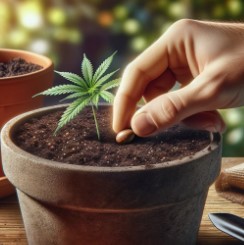
A. Seed Germination
- Method: Soak Mint Chocolate Chip seeds in water for 12-24 hours, then transfer to moist paper towel.
- Ideal Germination Temperature: 25°C (77°F)
- Time to Sprout: 24-72 hours
B. Vegetative Growth (Week 2-6)
- Light Cycle: 18 hours of light, 6 hours of darkness
- Optimal Temperature: 22-28°C (70-82°F)
- Feeding:
- Increase Nitrogen to promote vigorous growth.
- Introduce Calcium (Ca) and Magnesium (Mg) to prevent deficiencies.
- Training Techniques:
- Low-Stress Training (LST): Bending branches for light exposure.
- Topping/Fimming: Cutting tops to promote bushy growth.
- SCROG (Screen of Green): Maximizes light exposure and yield.
C. Flowering Stage (Week 7-9)
- Light Cycle: 12/12 (12 hours of light, 12 hours of darkness)
- Temperature: 20-26°C (68-78°F)
- Humidity: 40-50% RH
- Nutrient Adjustments:
- Reduce Nitrogen and increase Phosphorus & Potassium.
- Silica supplements for stronger stems.
- Defoliation: Removing lower fan leaves for better airflow and light penetration.
- CO₂ Enrichment: Raising CO₂ levels to 1200-1500 ppm can increase yield by 20-30%.
D. Late Flowering & Harvest Preparation (Week 8-9)
- Flush Plants: Use only pH-balanced water (no nutrients) for 10-14 days before harvest.
- Trichome Inspection:
- Milky Trichomes: Peak THC levels, best for euphoria and focus.
- Amber Trichomes: More sedative, best for pain relief and sleep.
- Temperature Drop Strategy: Lowering night temps to 16-18°C (60-64°F) enhances purple hues and terpene production.
Pest and Disease Management
Common Issues and Scientific Prevention Methods
| Pest/Disease | Symptoms | Treatment & Prevention |
|---|---|---|
| Spider Mites | Tiny yellow spots, webbing | Neem oil, predatory mites (Phytoseiulus persimilis) |
| Powdery Mildew | White powder on leaves | Maintain low humidity, apply sulfur spray |
| Bud Rot (Botrytis) | Gray mold, rotting buds | Increase airflow, 30-40% humidity in late flower |
| Root Rot | Wilting, dark mushy roots | Hydroguard bacteria in hydroponics, proper drainage in soil |
Harvesting, Curing, and Storage
A. Harvesting Process
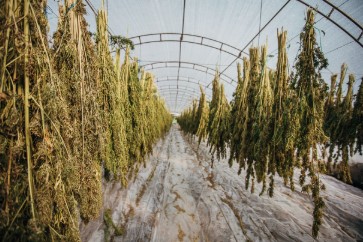
- Ideal Harvest Time: When trichomes of Mint Chocolate Chip turn milky white with some amber.
- Drying Conditions:
- Temperature: 18-22°C (65-72°F)
- Humidity: 45-55%
- Duration: 7-14 days (slow drying enhances terpene preservation).
B. Curing for Optimal Flavor and Potency
- Jars: Store dried buds in glass jars with airtight seals.
- Burping Process: Open jars for 15-30 minutes daily for the first 2 weeks.
- Final Curing Time: 3-6 weeks for optimal smoothness and flavor.
C. Long-Term Storage
- Ideal Conditions:
- Temperature: 15-18°C (60-65°F)
- Humidity: 55-62%
- Light Exposure: Keep in a dark place to prevent THC degradation.
Advanced Scientific Enhancements
A. CO₂ Supplementation for Higher Yields
- Scientific Basis: Higher CO₂ levels improve photosynthesis efficiency.
- Optimal CO₂ Level: 1200-1500 ppm during vegetative and early flowering stages.
- Application Methods: CO₂ burners, compressed CO₂ tanks.
B. Beneficial Microorganisms for Root Health
- Mycorrhizal Fungi: Increases root absorption of phosphorus and nutrients.
- Rhizobacteria (e.g., Bacillus subtilis): Protects against root diseases.
C. LED vs. HPS Lighting for Potency
- HPS (High-Pressure Sodium):
- Pros: High intensity, great for flowering phase.
- Cons: More heat production, requires strong ventilation.
- LED (Light Emitting Diodes):
- Pros: Higher efficiency, UV spectrum increases trichome production.
- Cons: Higher initial cost.
Final Thoughts on Scientific Cultivation
- Hydroponics offers faster growth and higher yields but requires more technical knowledge.
- Soil growing preserves terpene richness and natural flavors.
- CO₂ supplementation, LED lighting, and microbial inoculants can significantly improve growth rate, cannabinoid levels, and yield.
- Proper drying, curing, and storage ensure potency preservation and optimal terpene expression.
Methods of Ingestion & Their Pharmacokinetics
Each consumption method affects the onset time, bioavailability, metabolism, and duration of effects.
| Ingestion Method | Onset Time | Peak Effects | Total Duration | Bioavailability |
|---|---|---|---|---|
| Smoking (Combustion) | 2-5 minutes | 15-45 minutes | 2-4 hours | 25-30% |
| Vaporization | 1-3 minutes | 15-30 minutes | 2-3 hours | 40-50% |
| Edibles (Oral Consumption) | 30-90 minutes | 2-3 hours | 6-8 hours | 4-20% |
| Sublingual (Tinctures, Sprays) | 10-30 minutes | 30-60 minutes | 4-6 hours | 20-35% |
| Topical (Creams, Lotions) | 10-60 minutes | N/A (Localized effects) | 2-6 hours | N/A (Does not enter bloodstream) |
| Transdermal Patches | 15-30 minutes | Continuous release | 8-12 hours | 40-60% |
2. Smoking vs. Vaping vs. Oral Consumption: A Scientific Comparison
A. Smoking (Combustion)
Process:
- Heat cannabis to ≥900°C (1652°F) → decarboxylates THCA into THC.
- THC is absorbed via pulmonary alveoli and reaches the brain within minutes.
Pros:
- Fastest onset (2-5 minutes)
- High bioavailability (25-30%)
- Easy to dose gradually
Cons:
- Combustion produces carcinogens (e.g., benzene, toluene, polycyclic aromatic hydrocarbons).
- Shorter duration (2-4 hours)
- Higher irritation to the lungs and throat
B. Vaporization (Vaping)
Process:
- Heats cannabis to 160-230°C (320-446°F) without combustion.
- Releases cannabinoids without producing harmful byproducts.
Pros:
- Higher bioavailability (40-50%) than smoking.
- Less lung irritation due to absence of combustion.
- Faster onset (1-3 minutes) than edibles.
Cons:
- Shorter duration (2-3 hours)
- Requires a vaporizer (initial investment).
- THC degradation can occur with excessive heat.
C. Edibles (Oral Consumption)
Process:
- THC must pass through the digestive system.
- Metabolized in the liver → converted to 11-hydroxy-THC (11-OH-THC).
- 11-OH-THC is 2-3× more psychoactive than THC → produces a stronger and longer high.
Pros:
- Longest duration (6-8 hours)
- More potent psychoactive effects due to 11-OH-THC conversion.
- Best for chronic pain relief and sleep disorders.
Cons:
- Slow onset (30-90 minutes)
- Difficult to dose precisely due to delayed effects.
- Lower bioavailability (4-20%) due to first-pass metabolism in the liver.
D. Sublingual Administration (Tinctures, Sprays)
Process:
- THC is absorbed directly into the bloodstream via the mucous membranes under the tongue.
Pros:
- Faster onset (10-30 minutes)
- Higher bioavailability (20-35%)
- Avoids first-pass metabolism → more THC reaches circulation.
Cons:
- Shorter duration (4-6 hours)
- Bitter taste of some tinctures.
E. Topical Application (Creams, Lotions)
Process:
- Cannabinoids bind to CB2 receptors in the skin, providing localized relief without entering the bloodstream.
Pros:
- Non-psychoactive (does not enter circulation).
- Beneficial for skin disorders, inflammation, and localized pain.
Cons:
- No cerebral effects.
- Slower absorption (10-60 minutes).
- Limited to surface-level relief.
F. Transdermal Patches
Process:
- THC or CBD is slowly released through the skin into the bloodstream.
- Avoids first-pass metabolism → higher bioavailability (40-60%).
Pros:
- Long duration (8-12 hours)
- Steady, controlled release of cannabinoids.
- No lung irritation or digestive issues.
Cons:
- Expensive.
- Slower onset (15-30 minutes) than smoking or vaping.
3. Onset, Peak Effects, and Duration
A. How Cannabinoids Enter the Body
- Inhalation (Smoking/Vaping): THC reaches the bloodstream via lung alveoli → peaks in 15-45 minutes.
- Edibles: THC is processed by liver enzymes (CYP2C9, CYP3A4) → converted to 11-OH-THC → peaks in 2-3 hours.
- Topicals: Cannabinoids interact with CB2 receptors in the skin → localized effects without systemic absorption.
B. Onset and Duration by Method
| Method | Onset Time | Peak Effects | Total Duration |
|---|---|---|---|
| Smoking | 2-5 min | 15-45 min | 2-4 hours |
| Vaping | 1-3 min | 15-30 min | 2-3 hours |
| Edibles | 30-90 min | 2-3 hours | 6-8 hours |
| Sublingual | 10-30 min | 30-60 min | 4-6 hours |
| Topicals | 10-60 min | N/A | 2-6 hours |
| Transdermal | 15-30 min | Continuous | 8-12 hours |
4. Factors Affecting Duration & Effects
A. Metabolism & Enzyme Activity
- THC is metabolized by CYP2C9 and CYP3A4 enzymes in the liver.
- Fast metabolizers (CYP2C9*1 carriers) experience shorter, less intense effects.
- Slow metabolizers (CYP2C9*3 carriers) have prolonged, stronger highs.
B. Individual Factors
- Body Fat Percentage: THC is fat-soluble, meaning higher body fat leads to longer retention.
- Tolerance Levels: Regular users require higher doses for the same effects.
- Diet and Hydration: A high-fat meal increases absorption of edibles.
For a complete directory of cultivars, visit our Cannabis Strain Reviews.
