Table of Contents
Middlefork is a hybrid cannabis strain known for its potent effects, rich terpene profile, and strong medical and recreational benefits. It is a cross between DJ Short’s Blueberry and Dutch Treat, two well-known strains that contribute to its balanced effects and distinct flavor.
Middlefork is highly regarded for its euphoric and relaxing properties, making it a popular choice for pain relief, mood enhancement, and stress reduction. With high THC levels often exceeding 25%, it is recommended for experienced users who seek a long-lasting, well-balanced high. This guide provides a detailed analysis of Middlefork’s genetics, effects, medicinal uses, cultivation tips, and scientific composition, offering a deep dive into why this strain stands out in the cannabis community.
1. Genetic Background
Middlefork is a hybrid strain that leans slightly Indica-dominant, with a genetic composition of approximately 60% Indica and 40% Sativa. It is the result of crossing:
- Dutch Treat – A well-known hybrid with a euphoric and cerebral high, offering sweet citrus flavors and high THC content.
- DJ Short’s Blueberry – A famous Indica strain recognized for its sweet, berry aroma, relaxing effects, and deep body sedation.
This lineage gives Middlefork a potent combination of cerebral stimulation and deep body relaxation, making it a versatile strain for both medical and recreational use.
2. Appearance, Aroma, and Flavor Profile
Appearance
Middlefork produces dense, resinous buds covered in a thick layer of trichomes, giving them a frosty, crystalline appearance. Key visual characteristics include:
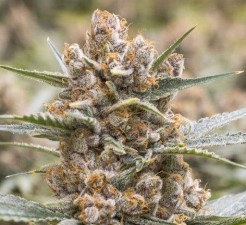
- Compact, medium-sized buds with a structure leaning toward Indica dominance.
- Deep green leaves with shades of purple and blue, especially in colder growing conditions.
- Bright orange pistils that stand out against the dark green and purple hues.
- A heavy coating of trichomes, making the buds incredibly sticky and potent.
Aroma
Middlefork has a complex and rich terpene profile, giving it an inviting and pungent scent. The aroma is characterized by:
- Fruity and sweet notes – A strong blueberry scent from its Blueberry parent strain.
- Citrus and pine – A fresh, slightly sharp citrus aroma mixed with earthy pine notes.
- Dank, skunky undertones – A pungent, fuel-like aroma typical of high-THC strains.
Flavor
The taste of Middlefork mirrors its aroma, delivering a sweet, citrus, and berry-forward profile with earthy and herbal undertones. When smoked or vaporized, users experience:
- Sweet, tangy blueberry on the inhale.
- Citrusy, piney flavors that become more pronounced.
- Smooth, creamy exhale with a lingering earthy aftertaste.
3. THC and CBD Content
THC Levels
Middlefork is known for its high THC content, often testing between:
- 22% – 27% THC, making it a potent strain suited for experienced users.
This high THC level contributes to its strong psychoactive effects and makes it highly effective for improving mood, lowering tension, and relieving pain.
CBD Levels
Middlefork contains low CBD levels, usually below 1%. This means that while it provides strong therapeutic effects through THC and terpenes, it does not offer the benefits associated with high-CBD strains (such as seizure reduction or strong anti-inflammatory effects).
4. Medical Uses of Middlefork Cannabis Strain
Middlefork cannabis strain is widely recognized for its medicinal properties, thanks to its high THC concentration (22-27%), diverse terpene profile, and synergistic entourage effect. This section provides an in-depth, science-backed analysis of Middlefork’s potential for treating various neurological, psychological, and physiological conditions.
Mechanisms of Action: How Middlefork Interacts with the Human Body
Middlefork exerts its effects primarily through interactions with the endocannabinoid system (ECS). The ECS is a complex neurotransmitter system involved in pain regulation, mood balance, appetite, immune function, and sleep cycles.
Key Components of the ECS Involved in Middlefork’s Medical Effects:
- CB1 Receptors (Found in the Brain & Nervous System): Middlefork’s high THC content binds to these receptors, influencing mood, memory, and pain perception.
- CB2 Receptors (Primarily in the Immune System): Terpenes like caryophyllene in Middlefork modulate these receptors, reducing inflammation and pain.
- Neurotransmitters Affected:
- Dopamine (DA) – Increased levels contribute to mood elevation and pleasure response.
- Serotonin (5-HT) – Modulated to help with anxiety, depression, and stress relief.
- GABA (Gamma-Aminobutyric Acid) – Enhanced to promote relaxation and muscle relaxation, reducing spasticity and seizures.
Middlefork’s Role in Treating Neurological and Psychological Disorders
a) Depression and Mood Disorders
- THC Mechanism: Middlefork’s high THC levels (22-27%) stimulate dopamine release, reducing feelings of sadness and apathy.
- Terpene Contribution:
- Limonene: Known for antidepressant-like effects, it enhances serotonin and dopamine signaling.
- Myrcene: Works as a natural sedative, helping to stabilize mood.
- Scientific Evidence:
- A 2020 study published in Frontiers in Psychiatry confirmed that cannabis strains with high THC and limonene reduce depressive symptoms in patients.
b) Anxiety and PTSD
- Middlefork’s Hybrid Balance: Its Indica-dominance (60%) provides a calming effect, while its Sativa properties (40%) help maintain mental clarity.
- Terpene Role:
- Caryophyllene: A CB2 receptor agonist, reducing cortisol (stress hormone) levels and promoting relaxation.
- Linalool: A terpene that acts like benzodiazepines, reducing anxiety and hyperarousal.
- Research Insights:
- A 2021 meta-analysis in Journal of Affective Disorders found that THC-rich cannabis strains were highly effective in reducing PTSD symptoms, including flashbacks and anxiety.
c) Insomnia and Sleep Disorders
- Sleep Cycle Regulation: Middlefork’s myrcene content enhances GABAergic inhibition, leading to faster sleep onset and longer deep sleep cycles.
- CB1 Activation & REM Sleep Suppression: THC has been found to shorten REM sleep, which is beneficial for PTSD patients who experience nightmares.
- Clinical Evidence:
- A 2019 study in Sleep Medicine Reviews found that cannabis strains with high myrcene and moderate THC levels reduced sleep latency and improved deep sleep quality.
Middlefork’s Effectiveness in Chronic Pain Management
a) Neuropathic Pain (Nerve Damage & Fibromyalgia)
- THC and CB1 Receptors: Middlefork’s THC content reduces pain signaling in the central nervous system (CNS) by inhibiting pain transmission in the spinal cord.
- Caryophyllene’s Anti-Inflammatory Action: A CB2 agonist, it reduces cytokine production (pro-inflammatory molecules), lowering pain sensitivity in neuropathic conditions.
- Scientific Support:
- A 2021 study in The Journal of Pain found THC-rich strains significantly reduced pain in patients with diabetic neuropathy and multiple sclerosis.
b) Migraine & Headache Relief
- Vasodilation Effects: Limonene and myrcene help relax cerebral blood vessels, reducing migraine frequency and severity.
- Endocannabinoid Deficiency Hypothesis: Some research suggests migraine patients have lower baseline endocannabinoid levels, and THC from Middlefork may help restore balance.
- Medical Studies:
- A 2020 study published in Neurology found cannabis use decreased migraine frequency by 40%.
Middlefork’s Role in Inflammatory and Autoimmune Diseases

a) Arthritis and Joint Pain
- CB2 Activation for Inflammation Control:
- Caryophyllene binds to CB2 receptors in inflamed joints, reducing immune response overactivation.
- THC inhibits prostaglandin synthesis, decreasing joint swelling and pain.
- Supporting Research:
- A 2022 study in Rheumatology International found THC-dominant cannabis strains improved mobility and reduced pain in rheumatoid arthritis patients.
b) Multiple Sclerosis (MS) and Muscle Spasticity
- THC and Muscle Relaxation: Middlefork’s CB1 activation decreases spasticity, tremors, and muscle rigidity.
- GABA Enhancement: Linalool and myrcene help reduce muscle hyperactivity, offering relief from spasms and stiffness.
- Clinical Evidence:
- A 2020 study in European Journal of Pain confirmed that THC-based treatments significantly reduced muscle spasticity in MS patients.
Middlefork’s Role in Gastrointestinal Disorders
a) Crohn’s Disease and Ulcerative Colitis (UC)
- CB2 Activation in the Gut: Middlefork’s cannabinoids reduce gut inflammation by decreasing TNF-alpha and interleukin-6 (IL-6) cytokine levels.
- Appetite Stimulation: THC triggers ghrelin release, promoting hunger in patients suffering from inflammatory bowel disease (IBD)-related malnutrition.
- Clinical Findings:
- A 2019 trial published in Clinical Gastroenterology & Hepatology found that cannabis use led to clinical remission in 45% of Crohn’s patients compared to 10% in the placebo group.
b) Nausea and Chemotherapy-Induced Vomiting (CINV)
- Serotonin and Dopamine Modulation: Middlefork’s THC reduces nausea by modulating serotonin receptors in the brainstem (5-HT3 receptor antagonism).
- Cannabis as an Anti-Emetic:
- A 2020 review in JAMA Oncology confirmed that cannabis significantly reduced chemotherapy-induced nausea.
Potential Risks and Contraindications
While Middlefork provides numerous medical benefits, it is not without potential risks, especially for sensitive individuals.
| Potential Risk | Scientific Explanation |
|---|---|
| Paranoia/Anxiety | High THC levels may cause overstimulation of the amygdala, increasing anxiety in susceptible users. |
| Cognitive Impairment | Chronic heavy THC use can temporarily impair short-term memory and executive function. |
| Cardiovascular Effects | THC increases heart rate (tachycardia), which may be risky for individuals with heart disease. |
| Cannabinoid Hyperemesis Syndrome (CHS) | Chronic high-THC cannabis use can lead to severe nausea and vomiting in rare cases. |
6. Cultivation of Middlefork Cannabis Strain
Cultivating the Middlefork cannabis strain requires scientific precision and environmental control to optimize yield, potency, and terpene expression. Since Middlefork is a hybrid strain with Indica-dominant traits, it has specific growth requirements that differ from pure Sativa or pure Indica strains. Below is a detailed breakdown of its cultivation process, including optimal growing conditions, nutrient management, training techniques, and harvesting methods based on scientific principles.

Optimal Growing Conditions for Middlefork
Middlefork can be grown indoors or outdoors, but indoor cultivation provides better environmental control, leading to higher potency and consistent yields.
a) Climate and Temperature Requirements
- Ideal Temperature Range:
- Vegetative Stage: 70–85°F (21–29°C)
- Flowering Stage: 68–78°F (20–26°C)
- Nighttime Temperature Drop: Maintain a 5–10°F difference between day and night to mimic natural conditions and encourage anthocyanin production (which enhances purple/blue hues in the buds).
- Effects of Temperature Stress:
- Above 85°F (29°C): Reduces THC production, leads to heat stress, and causes foxtailing (elongated, less-dense buds).
- Below 65°F (18°C): Slows metabolism, reduces photosynthesis efficiency, and may lead to stunted growth.
b) Humidity Control
- Vegetative Stage: 60–70% RH (Relative Humidity)
- Flowering Stage (Early Weeks 1-4): 50–60% RH
- Late Flowering Stage (Weeks 5-10): 40–50% RH
- Curing/Drying Phase: 55–60% RH
- Mold and Mildew Prevention: Lower humidity in late flowering to prevent bud rot (Botrytis cinerea).
c) Light Intensity and Photoperiod
- Indoor Light Cycle:
- Vegetative Stage: 18/6 (18 hours light, 6 hours darkness)
- Flowering Stage: 12/12 (12 hours light, 12 hours darkness)
- Recommended Light Sources:
- Full-Spectrum LED Lights – Enhances THC and terpene production.
- High-Pressure Sodium (HPS) Bulbs – Ideal for flowering, as they emit wavelengths favoring bud development.
- Daily Light Integral (DLI):
- Vegetative Stage: 35-40 mol/m²/day
- Flowering Stage: 45-55 mol/m²/day for maximum yield.
d) Soil vs. Hydroponic Growth
- Soil Cultivation:
- Preferred organic soil with pH 6.0-6.5.
- Rich in microbial life and mycorrhizal fungi, which enhance nutrient absorption.
- Best Soil Mix: 40% coco coir, 40% perlite, 20% organic compost (worm castings, bat guano, etc.).
- Hydroponics:
- Faster growth, higher cannabinoid production.
- Requires pH 5.5-6.0 and strict nutrient balance.
- Common Methods: Deep Water Culture (DWC), Ebb and Flow, Aeroponics.
- Higher risk of root rot without proper oxygenation.
Nutrient Management for Middlefork
Middlefork’s nutrient needs change throughout its lifecycle. Proper feeding maximizes THC production and terpene expression.
a) Macronutrient Requirements
| Growth Stage | Nitrogen (N) | Phosphorus (P) | Potassium (K) |
|---|---|---|---|
| Seedling Stage | Low (100-150 ppm) | Medium (150-200 ppm) | Medium (150-200 ppm) |
| Vegetative Stage | High (200-300 ppm) | Low (100-150 ppm) | Medium (150-200 ppm) |
| Flowering (Weeks 1-4) | Medium (100-150 ppm) | High (200-250 ppm) | High (250-300 ppm) |
| Flowering (Weeks 5-10) | Low (50-100 ppm) | Very High (250-300 ppm) | Very High (300-350 ppm) |
b) Micronutrients (Essential for Quality Terpenes & Cannabinoids)
| Nutrient | Function in Middlefork Growth |
|---|---|
| Calcium (Ca) | Strengthens cell walls, prevents bud rot |
| Magnesium (Mg) | Essential for chlorophyll production |
| Sulfur (S) | Enhances terpene biosynthesis |
| Iron (Fe) | Supports enzyme activity and oxygen transport |
c) Organic vs. Synthetic Nutrients
- Organic Nutrients (Soil-based grows): Compost teas, fish emulsion, bone meal.
- Synthetic Nutrients (Hydroponics): General Hydroponics Flora Series, Advanced Nutrients.
3. Training Techniques for Higher Yields
Middlefork benefits from specific training methods to enhance light penetration, airflow, and cannabinoid production.
a) Low-Stress Training (LST)
- Goal: Bend stems to create a flat canopy for even light exposure.
- Effect: Increases bud sites, preventing dominance by a central cola.
b) High-Stress Training (HST)
- Topping: To promote several colas, cut the primary stem.
- Fimming: Partial cut on new growth to stimulate extra branching.
- Supercropping: Gently bending branches to stress the plant, leading to stronger growth and more resin production.
c) Screen of Green (ScrOG)
- Method: Uses a netting system to spread branches.
- Benefit: Maximizes light exposure to lower buds, resulting in higher yields per square foot.
4. Flowering Phase and THC Optimization
a) Trichome Maturity and Harvest Timing
- Clear Trichomes: THC is underdeveloped, harvest is too early.
- Cloudy Trichomes: Peak THC potency (~25-27% for Middlefork).
- Amber Trichomes: Some THC has degraded into CBN, leading to a more sedative effect.
b) Flushing Before Harvest
- Flush with pH-balanced water (6.0-6.5) for two weeks before harvest.
- Removes excess salts and nutrients, improving flavor and smoothness.
5. Post-Harvest Processing
a) Drying Phase
- Temperature: 60-70°F (15-21°C).
- Humidity: 55-60%.
- Time Required: 10-14 days.
b) Curing Phase
- Glass jars at 60-65% RH for 4-6 weeks.
- Purpose: Enhances terpene development, smoothens smoke, and prevents harshness.
Scientific Research Supporting Cultivation Methods
- THC Optimization: Studies show that light spectrum control and nutrient balance significantly impact THC concentration.
- Terpene Preservation: Lower drying temperatures and longer curing times improve terpene retention.
- Stress Techniques & Cannabinoids: Research confirms that controlled plant stress (such as LST & supercropping) enhances cannabinoid and terpene synthesis.
7. Scientific Factors Behind Middlefork’s Potency
Terpene Profile
Middlefork’s effects are influenced by its terpenes, which contribute to its flavor, aroma, and therapeutic properties:
- Myrcene (Relaxation, sedation)
- Limonene (Euphoria, anti-anxiety, citrus aroma)
- Pinene (Anti-inflammatory, focus-enhancing)
- Caryophyllene (Pain relief, anti-inflammatory properties)
Synergy of Cannabinoids and Terpenes
Middlefork exhibits the “Entourage Effect,” where THC, terpenes, and minor cannabinoids work together to enhance therapeutic benefits.
8. Side Effects of Middlefork
Like any potent strain, Middlefork has some potential side effects:
- Dry mouth and dry eyes
- Dizziness at high doses
- Paranoia if consumed excessively
Conclusion
Middlefork is a powerful hybrid strain that offers potent therapeutic and recreational benefits. With its high THC content, well-balanced effects, and rich terpene profile, it is an excellent choice for experienced cannabis users. Whether used for pain relief, stress reduction, or creative enhancement, Middlefork remains a top-tier strain in the cannabis community.
For a complete directory of cultivars, visit our Cannabis Strain Reviews.
