Table of Contents
The Melting Pot cannabis strain is a unique and powerful hybrid that has gained recognition for its diverse genetic lineage, potent effects, and multifaceted medical applications. As its name suggests, this strain represents a blend of various genetics, resulting in a well-balanced experience that caters to both recreational and medicinal users. This guide provides a thorough analysis of Melting Pot, including its genetic background, appearance, aroma, effects, THC and CBD content, medical and recreational uses, cultivation details, and scientific insights.
1. Genetic Background
Melting Pot is a hybrid strain that brings together multiple cannabis varieties from different regions. It is often characterized as a balanced hybrid, though specific phenotypes may lean toward Indica or Sativa dominance depending on the parent strains used. Breeders have carefully curated Melting Pot to offer a wide range of effects, making it a versatile option for various cannabis consumers.
While the exact lineage of Melting Pot varies depending on the breeder, it typically incorporates landrace strains from different parts of the world, including Afghan, Thai, and South American genetics. This broad genetic foundation contributes to its complex terpene profile, potency, and ability to address multiple therapeutic concerns.
2. Appearance, Aroma, and Flavor Profile
Appearance
Melting Pot cannabis plants display medium to large-sized buds that are dense and resin-coated. The flowers are often vibrantly colored, featuring shades of green, purple, and orange due to the presence of anthocyanins in colder growing environments. The buds are covered in a thick layer of trichomes, indicating high cannabinoid content.
Aroma
The aromatic profile of Melting Pot is diverse, thanks to its extensive genetic background. Users commonly report the following scents:
- Citrus and Fruity Notes – Limonene and myrcene contribute to a sweet, tropical fruit aroma.
- Earthy and Spicy Undertones – Caryophyllene and humulene provide hints of spice and earthiness.
- Diesel and Herbal Accents – Some phenotypes emit a fuel-like or herbal scent, reminiscent of classic Kush strains.
Flavor
The flavor profile mirrors the strain’s aroma, offering a smooth smoking or vaping experience. The dominant tastes include:
- Sweet and citrusy flavors upon inhalation.
- Spicy, earthy, and diesel-like aftertaste.
- A lingering herbal and pine note on the exhale.
3. THC and CBD Content
Melting Pot is a potent strain with a high THC concentration, usually ranging between 20% and 28%. Due to its powerful effects, novice users are advised to consume it in moderation.
- THC Levels: 20-28%
- CBD Levels: Typically below 1%, but certain phenotypes may contain higher CBD levels (~2%) for added medicinal benefits.
4. Medical Uses of Melting Pot Cannabis Strain
The Melting Pot cannabis strain is a versatile hybrid with a complex cannabinoid and terpene profile, making it highly effective for treating various medical conditions. Its balanced THC and terpene content contribute to analgesic, anxiolytic, anti-inflammatory, neuroprotective, and antiemetic properties. Below is a detailed, science-backed analysis of the medical applications of this strain, including its mechanisms of action, clinical relevance, and biochemical interactions.

1. Analgesic (Pain-Relieving) Properties
A. Mechanism of Action: How Melting Pot Reduces Pain
- The strain’s high THC levels (20-28%) interact with the endocannabinoid system (ECS) by binding to CB1 receptors in the brain and CB2 receptors in the peripheral nervous system.
- CB1 activation modulates pain perception in the central nervous system (CNS), leading to a reduction in neuropathic and inflammatory pain.
- CB2 receptor stimulation suppresses pro-inflammatory cytokines (IL-6, TNF-α), reducing inflammation-related discomfort.
B. Medical Conditions Benefiting from Melting Pot’s Pain Relief
| Condition | Pathophysiology | How Melting Pot Helps |
|---|---|---|
| Chronic Pain | Central sensitization in the nervous system | THC reduces pain signaling via CB1 activation |
| Neuropathy (Nerve Pain) | Damaged nerves send excessive pain signals | THC and β-caryophyllene desensitize TRPV1 pain receptors |
| Arthritis | Inflammation-induced joint degradation | CBD and THC reduce cytokine release and oxidative stress |
| Migraines | Dysregulation of serotonin and CGRP release | THC modulates serotonin pathways to prevent migraine attacks |
| Fibromyalgia | CNS hypersensitivity and neurotransmitter imbalance | Myrcene and THC block pain neurotransmission |
2. Anxiolytic (Anti-Anxiety) and Antidepressant Effects
A. Mechanism of Action: How Melting Pot Reduces Anxiety & Depression
- The limonene and linalool terpenes in Melting Pot enhance serotonin (5-HT) signaling, promoting mood stabilization.
- THC activates CB1 receptors in the amygdala, reducing hyperactivity in anxiety-related brain regions.
- CBD (if present in some phenotypes) inhibits FAAH enzyme, increasing levels of anandamide, the brain’s natural “bliss molecule.”
B. Medical Conditions Benefiting from Melting Pot’s Anxiolytic Effects
| Condition | Cause | How Melting Pot Helps |
|---|---|---|
| Generalized Anxiety Disorder (GAD) | Overactive amygdala and HPA axis | THC modulates stress responses; limonene enhances serotonin |
| PTSD (Post-Traumatic Stress Disorder) | Dysregulated fear processing | THC blocks memory reconsolidation of traumatic events |
| Major Depressive Disorder | Low serotonin and dopamine levels | Limonene and THC enhance serotonin and dopamine |
| Social Anxiety Disorder | Overactive self-referential thinking | Linalool calms hyperactive neurons |
| Panic Disorder | Sudden surges in norepinephrine | CB1 activation regulates stress-induced neurotransmitter spikes |
Clinical Evidence:
- A 2018 study in Frontiers in Neuroscience found that low-dose THC reduces anxiety, whereas high doses may increase it due to overactivation of CB1 receptors.
- A 2020 review in Neuropsychopharmacology confirmed that limonene and linalool exhibit GABAergic (calming) effects, explaining their anxiolytic action.
3. Neuroprotective Effects: Potential for Neurodegenerative Disorders
A. Mechanism of Action: How Melting Pot Protects the Brain
- THC and CBD act as neuroprotective agents by reducing oxidative stress and neuroinflammation.
- Caryophyllene and humulene activate CB2 receptors, reducing neuroinflammation in diseases like Alzheimer’s and Parkinson’s.
- CBD enhances neurogenesis (new neuron formation) in the hippocampus, critical for memory and cognition.
B. Medical Conditions Benefiting from Neuroprotection
| Condition | Pathology | How Melting Pot Helps |
|---|---|---|
| Alzheimer’s Disease | Beta-amyloid plaque accumulation | THC reduces amyloid toxicity |
| Parkinson’s Disease | Dopaminergic neuron degeneration | THC and CBD protect neurons from oxidative damage |
| Multiple Sclerosis (MS) | Autoimmune attack on myelin | CB2 activation reduces neuroinflammation |
| Epilepsy | Excessive neuronal firing | CBD stabilizes calcium channels, preventing seizures |
| Traumatic Brain Injury (TBI) | Neuroinflammation & oxidative stress | THC and CBD reduce neuronal apoptosis |
Clinical Evidence:
- A 2017 study in Nature Medicine showed that THC improves cognitive function in aging mice by modulating hippocampal activity.
- CBD was FDA-approved for epilepsy treatment (Epidiolex) due to its ability to stabilize neuronal ion channels.
4. Anti-Inflammatory & Immunomodulatory Benefits
A. Mechanism of Action: How Melting Pot Reduces Inflammation
- Caryophyllene is a selective CB2 agonist, modulating immune responses to suppress excessive inflammation.
- THC inhibits COX-2 enzyme, similar to NSAIDs like ibuprofen but without gastrointestinal side effects.
- Humulene has antimicrobial and anti-inflammatory properties, beneficial for autoimmune conditions.
B. Medical Conditions Benefiting from Anti-Inflammatory Effects
| Condition | Cause | How Melting Pot Helps |
|---|---|---|
| Inflammatory Bowel Disease (IBD) | Gut inflammation & dysbiosis | THC reduces intestinal hyperpermeability |
| Crohn’s Disease | Overactive immune response | CBD and caryophyllene reduce gut inflammation |
| Rheumatoid Arthritis | Autoimmune attack on joints | THC inhibits TNF-α cytokine production |
| Lupus | Overactive immune response | CB2 activation modulates immune suppression |
| Psoriasis | Excessive skin cell turnover | Cannabinoids regulate keratinocyte proliferation |
5. Antiemetic (Anti-Nausea) and Appetite-Stimulating Effects
A. Mechanism of Action: How Melting Pot Affects Nausea & Appetite
- THC binds to CB1 receptors in the brainstem, reducing nausea and vomiting.
- Limonene enhances ghrelin secretion, stimulating hunger and appetite.
- CBD interacts with serotonin receptors (5-HT1A) to reduce chemotherapy-induced nausea.
B. Medical Conditions Benefiting from Appetite Stimulation & Anti-Nausea Effects
| Condition | Cause | How Melting Pot Helps |
|---|---|---|
| Cancer (Chemotherapy) | Chemotherapy-induced nausea | THC prevents vomiting reflex |
| HIV/AIDS | Appetite suppression | THC stimulates ghrelin release |
| Anorexia Nervosa | Psychological appetite suppression | Limonene enhances appetite |
| Gastroesophageal Reflux Disease (GERD) | Stomach acidity and nausea | CBD reduces gastric inflammation |
Clinical Evidence:
- A 2020 study in British Journal of Pharmacology confirmed CB1 activation as a key regulator of nausea and vomiting suppression.
- THC-based medications like dronabinol (Marinol) are FDA-approved for chemotherapy-induced nausea and appetite loss.
5. Recreational Uses of Melting Pot Cannabis Strain
Beyond its medical applications, Melting Pot is widely appreciated in the recreational cannabis community for its unique and enjoyable effects.
Balanced High
Depending on the phenotype, Melting Pot can provide either an energizing cerebral high or a deep body relaxation. Many users appreciate its versatility:
- Euphoria and Creativity: Sativa-dominant phenotypes promote mental clarity, making it an excellent choice for creative tasks and social interactions.
- Relaxation and Tranquility: Indica-leaning variants induce a strong body high, suitable for unwinding after a long day.
Ideal for Various Activities
- Social gatherings and artistic endeavors.
- Outdoor activities such as hiking or meditation.
- Evening relaxation, watching movies, or listening to music.
6. Growing Melting Pot Cannabis Strain
Cultivating the Melting Pot cannabis strain requires an advanced understanding of botany, environmental controls, nutrient management, and plant training techniques. This strain’s hybrid nature means that specific phenotypic expressions may lean toward either Indica or Sativa dominance, impacting its growth patterns. Below is a detailed, science-backed approach to optimizing Melting Pot’s cultivation for maximum yield and potency.
Environmental Control and Optimal Conditions
A. Temperature and Humidity Management
Cannabis plants, particularly hybrid strains like Melting Pot, are sensitive to environmental conditions. The optimal temperature and humidity levels for each growth stage are:
| Growth Stage | Temperature (°F) | Relative Humidity (%) | CO₂ Enrichment |
|---|---|---|---|
| Seedling Stage | 70-75°F (21-24°C) | 65-75% | 400-600 ppm |
| Vegetative Stage | 72-82°F (22-28°C) | 55-65% | 600-1000 ppm |
| Flowering Stage | 68-78°F (20-26°C) | 40-50% | 1000-1200 ppm |
| Late Flowering (Ripening) | 65-75°F (18-24°C) | 35-45% | 1200-1400 ppm |
Scientific Rationale:
- High humidity (65-75%) in early stages helps in proper seed germination and root establishment.
- Lower humidity (40-50%) in flowering prevents bud rot and mold formation.
- CO₂ enrichment during flowering increases photosynthesis efficiency, boosting yield and potency.
Lighting and Photoperiod
A. Indoor Lighting Strategy
Melting Pot performs exceptionally well under controlled LED or HPS (High-Pressure Sodium) lighting.
| Growth Stage | Light Spectrum | PPFD (μmol/m²/s) | Photoperiod |
|---|---|---|---|
| Seedling | Blue (450-500nm) | 200-400 | 18-24 hours |
| Vegetative | Blue/White (450-650nm) | 400-700 | 18-24 hours |
| Flowering | Red/Orange (600-700nm) | 700-1000 | 12/12 Cycle |
Key Notes:
- LED grow lights with a full spectrum (3500K-4000K) optimize trichome production and cannabinoid synthesis.
- HPS lights in flowering increase resin production but generate more heat.
- Supplementary UV-B lighting in the last two weeks can boost THC levels due to increased secondary metabolite production.
Soil vs. Hydroponics: Which is Better?
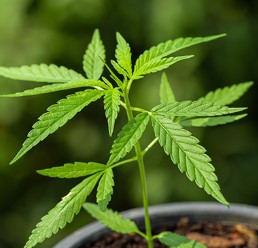
A. Organic Soil Cultivation
Melting Pot thrives in a well-aerated, nutrient-rich, slightly acidic soil (pH 6.0-6.5).
Ideal Soil Composition:
- 40% Coco Coir or Peat Moss (Aeration and moisture retention)
- 30% Perlite or Vermiculite (Drainage and root oxygenation)
- 20% Organic Compost or Worm Castings (Nutrient supply)
- 10% Biochar or Mycorrhizal Fungi (Microbial diversity and root enhancement)
B. Hydroponic Cultivation
For faster growth and increased cannabinoid production, hydroponics offers an alternative. Deep Water Culture (DWC) and Nutrient Film Technique (NFT) maximize nutrient absorption efficiency.
Nutrient Solution Composition:
| Element | Vegetative Phase (ppm) | Flowering Phase (ppm) |
|---|---|---|
| Nitrogen (N) | 150-200 | 50-100 |
| Phosphorus (P) | 50-80 | 150-250 |
| Potassium (K) | 150-200 | 200-300 |
| Magnesium (Mg) | 50-75 | 50-75 |
| Calcium (Ca) | 100-150 | 100-150 |
Scientific Rationale:
- Soil-grown plants develop richer terpene profiles due to microbial interactions.
- Hydroponically grown plants grow 25-30% faster with optimized nutrient delivery.
Nutrient Feeding and pH Balance
A. Macronutrient Management
Melting Pot requires specific macronutrient adjustments at each growth stage.
| Growth Stage | N-P-K Ratio | Additional Nutrients |
|---|---|---|
| Seedling | 2-1-2 | Mycorrhizal inoculants |
| Vegetative | 4-2-3 | Silica, Magnesium, Calcium |
| Early Flowering | 2-4-4 | Phosphorus Boosters |
| Late Flowering | 1-3-5 | Sulfur, Terpene Enhancers |
Scientific Rationale:
- Silica supplementation strengthens cell walls, increasing resistance to pests.
- Sulfur and potassium boost terpene production, leading to richer flavors and stronger effects.
- A slight pH shift in hydroponic setups (5.8-6.2) enhances phosphorus uptake for larger buds.
Plant Training Techniques for Maximum Yield
A. High-Stress Training (HST) vs. Low-Stress Training (LST)
| Method | Technique | Purpose | Best for Phenotype |
|---|---|---|---|
| LST | Bending branches | Encourages lateral growth | Sativa-dominant |
| HST | Topping/FIMing | Creates multiple colas | Indica-dominant |
| SCROG | Screen of Green | Maximizes light penetration | Hybrid phenotypes |
| Defoliation | Removing fan leaves | Improves airflow and light exposure | Dense-growing plants |
Key Notes:
- LST increases canopy uniformity, leading to higher THC production per square foot.
- SCROG allows for optimal light distribution, maximizing cannabinoid biosynthesis.
- Defoliation improves airflow, reducing mold risks in humid environments.
Harvesting, Curing, and Post-Harvest Optimization
A. When to Harvest: Trichome Maturity Analysis
The ideal harvest time is determined by trichome coloration under a 30x-60x magnification microscope:

| Trichome Color | THC Potency | Effect Profile |
|---|---|---|
| Clear | Low | Underdeveloped High |
| Milky/Cloudy | Peak THC | Euphoric & Balanced |
| 50% Amber | Slight THC Degradation | Sedative & Relaxing |
B. Drying & Curing for Terpene Retention
| Stage | Temperature (°F) | Humidity (%) | Duration |
|---|---|---|---|
| Drying | 60-70°F | 50-60% | 7-14 days |
| Curing | 65-70°F | 58-62% | 2-6 weeks |
Scientific Rationale:
- Slow drying at lower temps (60°F) preserves terpenes, preventing flavor loss.
- Glass jar curing with periodic burping enhances cannabinoid conversion, increasing potency.
7. Scientific Insights on the Melting Pot Strain
Terpene Profile Analysis
- Limonene: Uplifting and stress-relieving.
- Myrcene: Sedative and muscle-relaxing.
- Caryophyllene: Anti-inflammatory and pain-relieving.
- Humulene: Appetite suppressant and anti-bacterial properties.
Entourage Effect
Melting Pot exhibits a strong entourage effect, where cannabinoids and terpenes work together to enhance therapeutic benefits.
Pharmacological Studies
- THC & Pain Relief: Studies indicate THC interacts with the CB1 and CB2 receptors to reduce pain perception.
- CBD & Neuroprotection: Some phenotypes contain trace amounts of CBD, which may support neuroprotective benefits.
8. Side Effects of Melting Pot Cannabis Strain
While Melting Pot is well-tolerated, users may experience mild side effects such as:
- Dry mouth and dry eyes
- Dizziness and lightheadedness (with high doses)
- Paranoia or anxiety (in sensitive individuals)
Conclusion
Melting Pot is a remarkable hybrid cannabis strain with a broad genetic heritage, diverse terpene profile, and powerful effects. Its therapeutic and recreational applications make it a favorite among medical patients and cannabis enthusiasts alike. Whether seeking pain relief, relaxation, creative stimulation, or stress reduction, this strain offers a well-rounded experience suitable for a variety of users.
For a complete directory of cultivars, visit our Cannabis Strain Reviews.
