Table of Contents
I’ve grown cannabis in small indoor tents, spare-room closets, and one overly-ambitious corner of a garage that taught me how fast humidity can ruin a harvest. Through all of it, I’ve come to a simple conclusion: “medicinal” is mostly a consistency problem. People can debate strain names, indica versus sativa, or whether a specific terpene is the magic ingredient, but none of that matters if the crop comes out different every time.
That’s why I treat medicinal cannabis seeds as a system, not a purchase. Genetics set the range of what’s possible. Your environment and your habits decide whether you land in the part of that range you’re actually aiming for.
This article is written for adult consumers and cultivators where cannabis or marijuana is legal. It is not medical advice, and I’m not claiming weed will treat or cure any condition. What I can do is share exactly how I select seed stock, run a controlled grow with measurable targets, and keep records tight enough that I can recreate results instead of guessing.
If you’re shopping for seeds and you want a practical, grower-first approach, this is my playbook.
What “medicinal” means in my grow room
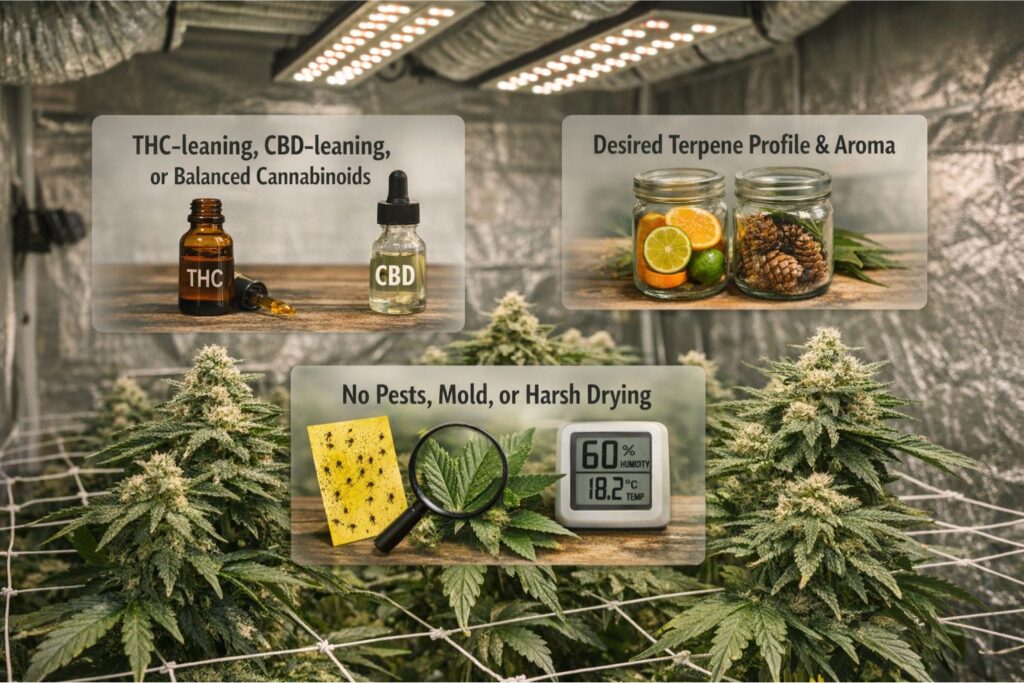
When someone asks me for a therapeutic-leaning cultivar, I translate “medicinal” into three measurable priorities:
- A predictable cannabinoid direction (THC-leaning, CBD-leaning, or balanced)
- A terpene direction that matches the type of experience they’re looking for (aroma is a useful compass, even though it isn’t a guarantee)
- A clean, enjoyable finish (no pests, no mold, no harshness from sloppy drying)
Cannabis chemistry is complex. The plant contains hundreds of compounds, including many cannabinoids and a wide range of aromatic terpenes. That’s one reason different harvests can feel different even when you think you “grew the same strain.”
I also keep the endocannabinoid system (ECS) in mind as general context. It’s often described as including cannabinoid receptors (notably CB1 and CB2), endogenous ligands such as anandamide and 2-AG, and enzymes that synthesize and break down those ligands. I’m not using that to make health claims. I’m using it to explain why people often care about cannabinoid balance and repeatability.
So, my goal with medicinal cannabis seeds is not hype. It’s repeatable chemistry and clean cultivation.
My seed-selection decision tree
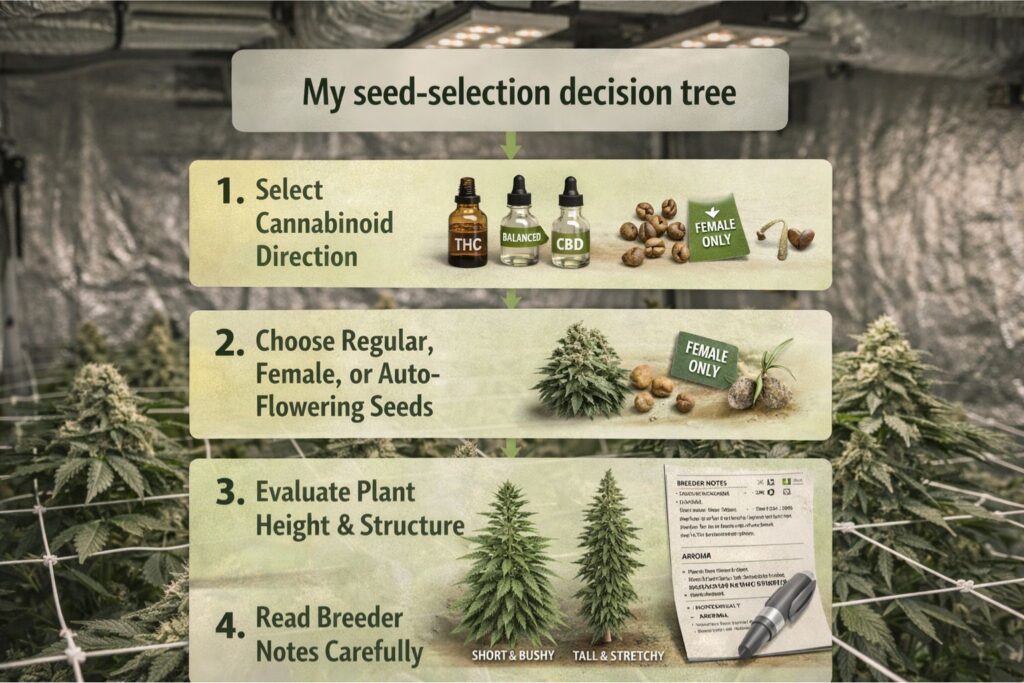
I follow the same order every time. It keeps me from buying pretty pictures instead of good genetics.
Step 1: Start with cannabinoid profile hunting, not a strain name
I begin with cannabinoid profile hunting by choosing the broad direction first:
- CBD-forward seed lines when I want a lighter psychoactive profile or a more functional “daytime” feel for experienced adult users
- THC-dominant seed lots when the goal is a stronger, more intoxicating experience
- Balanced types when I want a middle lane that can work across more situations
In practice, medicinal cannabis seeds are easiest to manage when the breeder provides realistic lab ranges, not just marketing language. Even then, seeds are variable. You can get two plants from the same pack that finish with different density, different aroma, and a noticeably different effect.
That variability is not a failure. It’s biology. My job is to identify it early and manage it.
Step 2: Choose the right seed type for your goal
When people search “buy cannabis seeds online,” they’ll see regular seeds, female-only lines, and auto-flowering options. I won’t tell you what to buy, but I will tell you what each choice changes in the grow.
- Regular seeds: male or female plants. Great for breeding projects or phenotype hunts if you have space.
- Female-only lines: ideal when you want to fill a canopy efficiently without dedicating time to sexing plants.
- Auto-flowering genetics: day-neutral flowering. Useful for speed and simplicity, but they offer less control over vegetative time.
For medicinal cannabis seeds, I typically run female-only lines for production grows, and regular seeds when I’m intentionally doing cannabinoid profile hunting to find a mother plant or a special phenotype.
Step 3: Let your environment pick the plant structure
A lot of shoppers filter by “indica” or “sativa.” In my grow room, structure matters more than labels:
- Stretch after the flip (1.5x, 2x, 3x)
- Internode spacing
- Leaf density (dense canopies demand stronger airflow)
- Flower density (tight colas increase mold risk)
- Sensitivity to heat or dry air
If you run a small tent, a plant that doubles in height after the flip can be fine. A plant that triples can turn into a lighting and airflow problem fast. This is where terpene-led strain selection becomes practical: some lines keep their aroma even when you’re not perfect, while others lose character quickly if the environment swings.
Step 4: Read breeder notes like cultivation notes
Here’s what I trust in a description:
- A flowering window with a realistic range
- Notes on stretch, feeding sensitivity, and humidity tolerance
- Acknowledgement that phenotypes vary
Here’s what I ignore:
- Claims that the cultivar is “perfect for everything”
- Overconfident potency promises
- Vague talk without grow details
I want medicinal cannabis seeds that behave predictably in real conditions, not just in marketing copy.
How I run a phenotype test for consistency
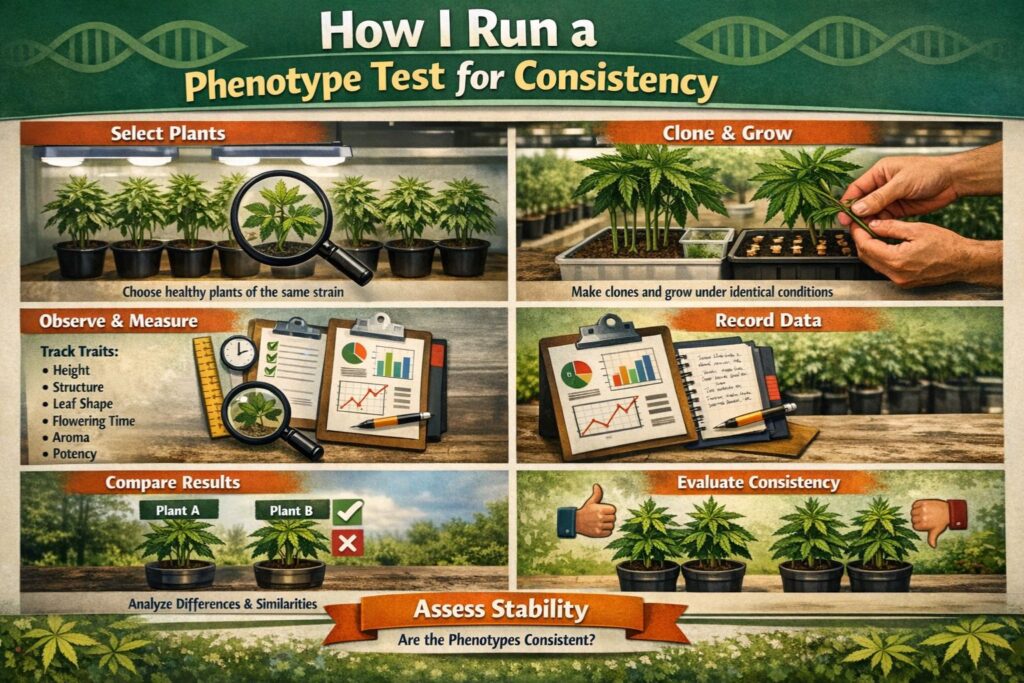
Seeds are for discovery. Clones are for repeatability. When I’m serious about consistent outcomes, I do a small pheno run and take notes like it’s a job.
My baseline pheno process
- Germinate 6–10 seeds from the same pack
- Label each plant from day one
- Keep conditions consistent so differences are genetic, not environmental
- Photograph weekly and note feeding, irrigation, and climate
- Harvest, dry, cure, and evaluate each plant separately
That is cannabinoid profile hunting done the practical way. If local rules and access allow, lab testing is the fastest way to confirm what you’re seeing. If lab testing is not available, consistency still improves when you standardize the grow and compare each phenotype against the same baseline.
In other words: medicinal cannabis seeds become more predictable when you treat the first run as a selection run, not a final answer.
Germination and early growth settings I use
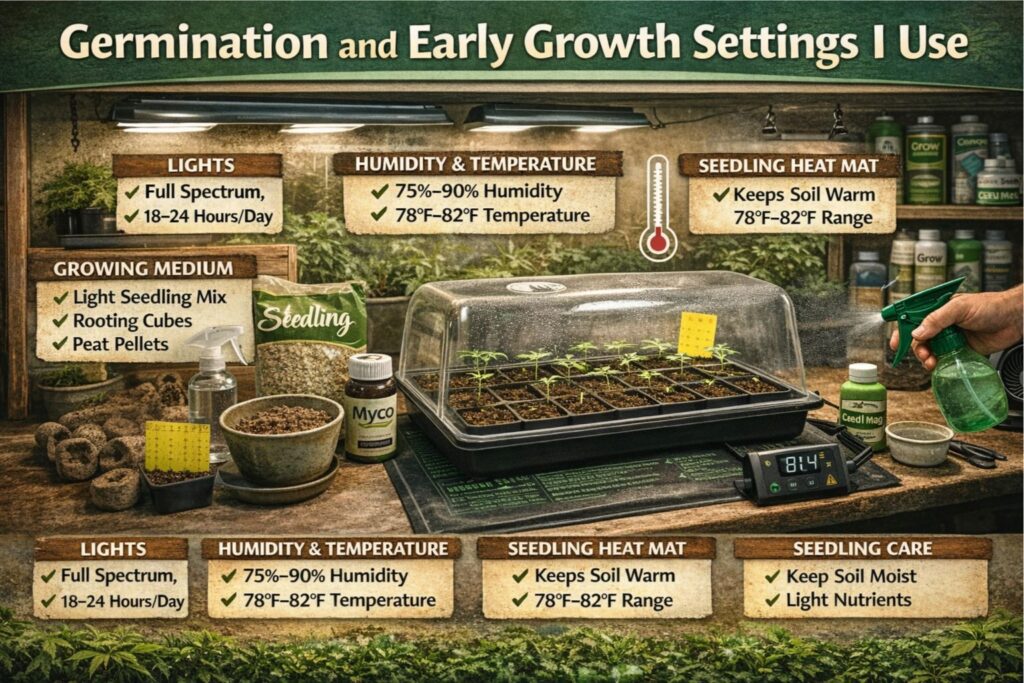
Early mistakes can echo through the whole cycle. When someone asks “how do I germinate marijuana seeds,” I try to keep the answer simple and repeatable.
My no-drama start:
- Stable warmth (around 24–26°C)
- Even moisture without waterlogging
- A gentle seedling medium with good drainage
- Low light intensity until roots establish
I avoid stacking stress. If I transplant, I don’t crank light the same day. If I top, I don’t change feeding the same week. This is the first part of building consistency from medicinal cannabis seeds.
Light: PPFD targets and indoor LED canopy mapping
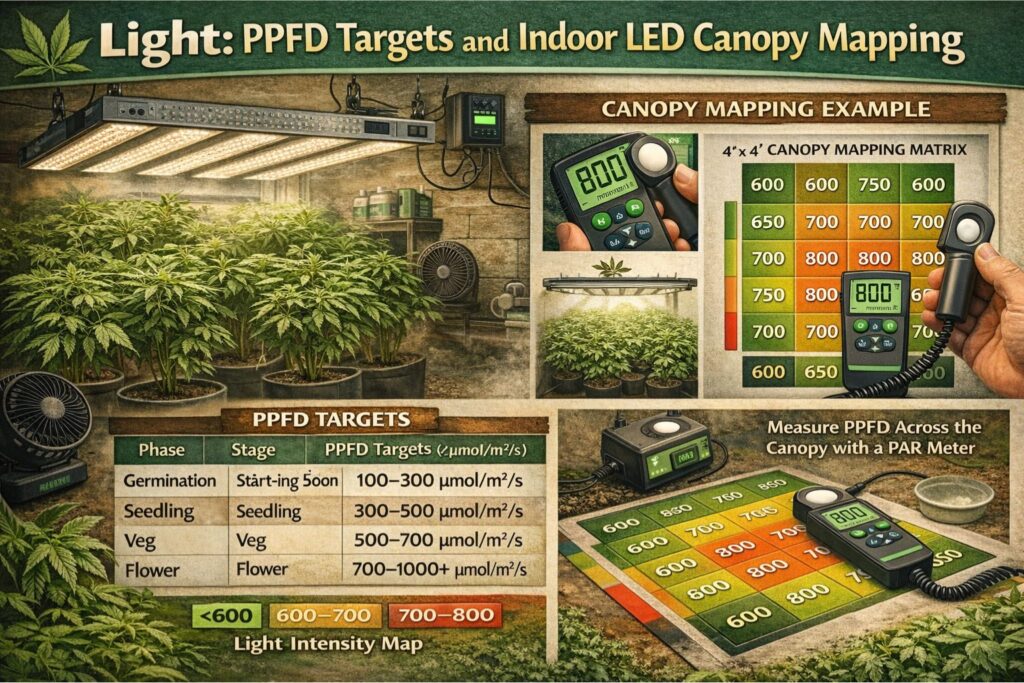
Lighting is where a lot of home growers accidentally introduce variability. If the canopy is uneven, the light is uneven. That’s why indoor LED canopy mapping is a habit I recommend to anyone running modern LEDs.
I’ve used these PPFD targets as a starting point:
- Seedlings/cuttings: 100–300 µmol/m²/s
- Vegetative: 400–600 µmol/m²/s
- Flowering: 700–900 µmol/m²/s (without added CO2)
In early flower, I often start closer to the lower end and ramp up over 7–10 days. When I push too hard too fast, I see bleaching, leaf tacoing, or stalled tops. Those symptoms are not “strong plants.” They’re signs my environment isn’t supporting the intensity.
Practical indoor LED canopy mapping tips I use:
- Measure or estimate PPFD at multiple canopy points, not just the center
- Train plants to a similar height before the flip
- Use a trellis early so tops don’t surge above the rest
- Keep leaf temperature in mind; too much light plus high heat equals stress
I mention indoor LED canopy mapping again because it connects directly to repeatability. The more uniform your canopy, the more uniform your flowers, and the less you rely on luck.
Climate: VPD and transpiration control in plain language
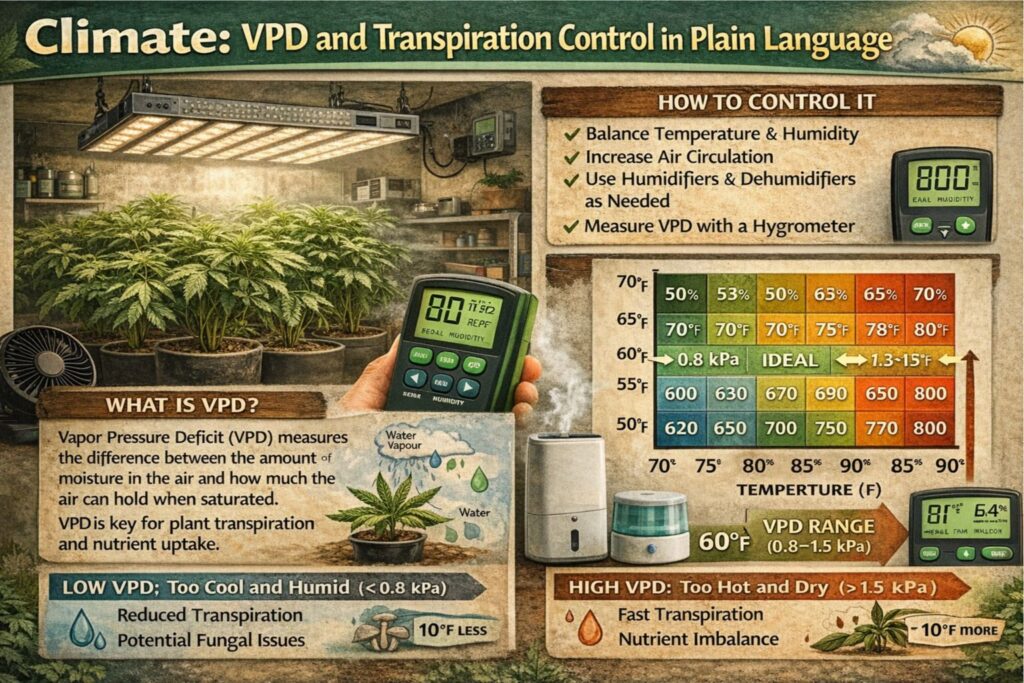
If I had to pick one “advanced” concept that improved my consistency, it’s VPD and transpiration control. VPD is the relationship between temperature and humidity that influences how hard a plant has to work to move water.
A common stage-based target approach looks like this:
- Vegetative: 0.8–1.2 kPa
- Flower: 1.2–1.6 kPa
In my tents, I translate VPD and transpiration control into bands that are easy to execute:
- Veg: 24–27°C with 55–70% RH (more airflow lets you run the higher end)
- Early flower: 24–26°C with 45–55% RH
- Late flower: 22–25°C with 40–50% RH
Trade-offs I’ve learned the hard way:
- Too dry: plants drink irregularly, calcium issues appear, and growth slows
- Too humid: mold pressure rises, especially with dense flowers and weak airflow
- Big lights-off drops: condensation risk goes up, and pests love unstable rooms
If you want repeatability from medicinal cannabis seeds, stable climate is a bigger deal than fancy additives.
Nutrition: EC steering in coco coir and a soil alternative
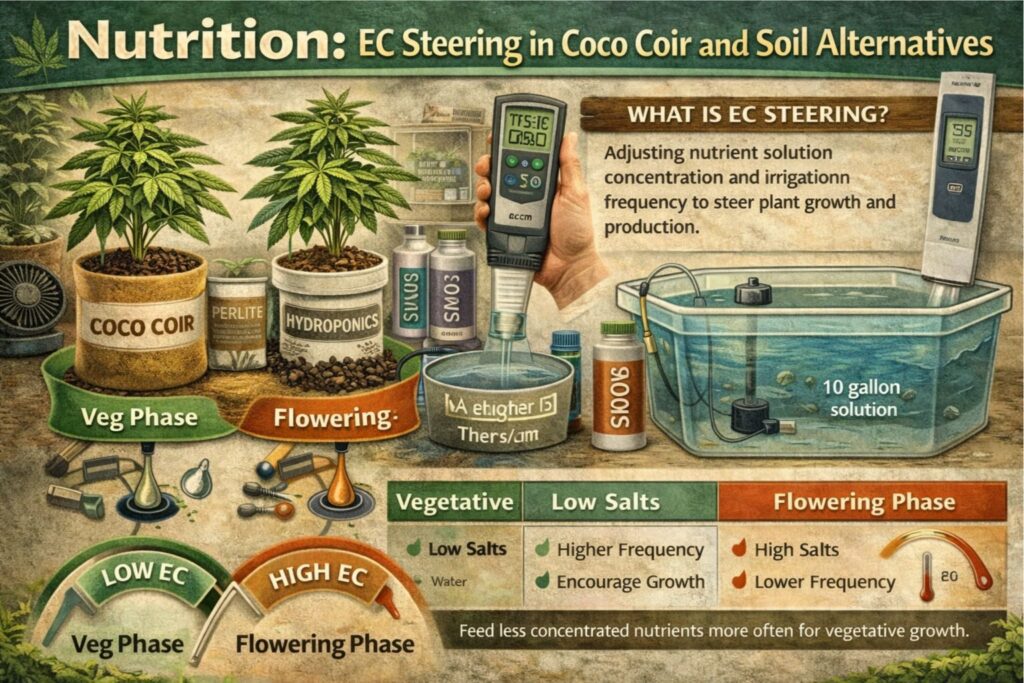
I grow in both soil and coco. Soil is forgiving. Coco is precise. The method you choose should match your habits.
Coco or hydro: my EC steering in coco coir approach
EC steering in coco coir is not about chasing the highest number. It’s about using EC as a guardrail so you don’t drift into deficiency or burn.
Here are ranges I’ve used successfully as starting points (adjust to cultivar and water quality):
- Early veg: EC 1.0–1.4
- Mid veg: EC 1.4–1.8
- Early flower: EC 1.6–2.0
- Mid flower: EC 1.8–2.2 (only if the cultivar clearly wants it)
When I see early tip burn, I back off and check runoff. When I see pale new growth and aggressive drinking, I adjust upward slowly.
Common problems EC steering in coco coir helps me avoid:
- Nutrient burn from overfeeding
- Lockout from salt buildup
- Calcium and magnesium issues caused by inconsistent watering
Soil: keep it steady
In soil, I focus on:
- A well-aerated base mix
- Steady irrigation (overwatering is the quiet crop killer)
- Top-dressing based on plant response, not a calendar
- Avoiding salt buildup if using bottled nutrients
I’ve grown excellent weed in soil when my climate was stable and my watering was disciplined. If you’re new and asking “soil vs hydro for cannabis,” soil is often simpler to keep consistent.
Training: consistency beats chaos
Training is where I see growers create variability by doing too much, too late, or too often.
My standard approach for photoperiod plants:
- Top once after the 5th or 6th node
- Low-stress training to spread the canopy
- Light cleanup before the flip
- A second cleanup around day 21 of flower if airflow needs it
This supports indoor LED canopy mapping because it keeps tops in a similar intensity range. It also keeps bud sites from hiding in shade, which helps quality stay consistent from top to bottom.
With autos, I’m gentler. I still train, but I avoid heavy stress events. Autos can be great medicinal cannabis seeds candidates when you want speed, but they’re less forgiving if you stall them early.
IPM: integrated pest scouting that actually fits real life
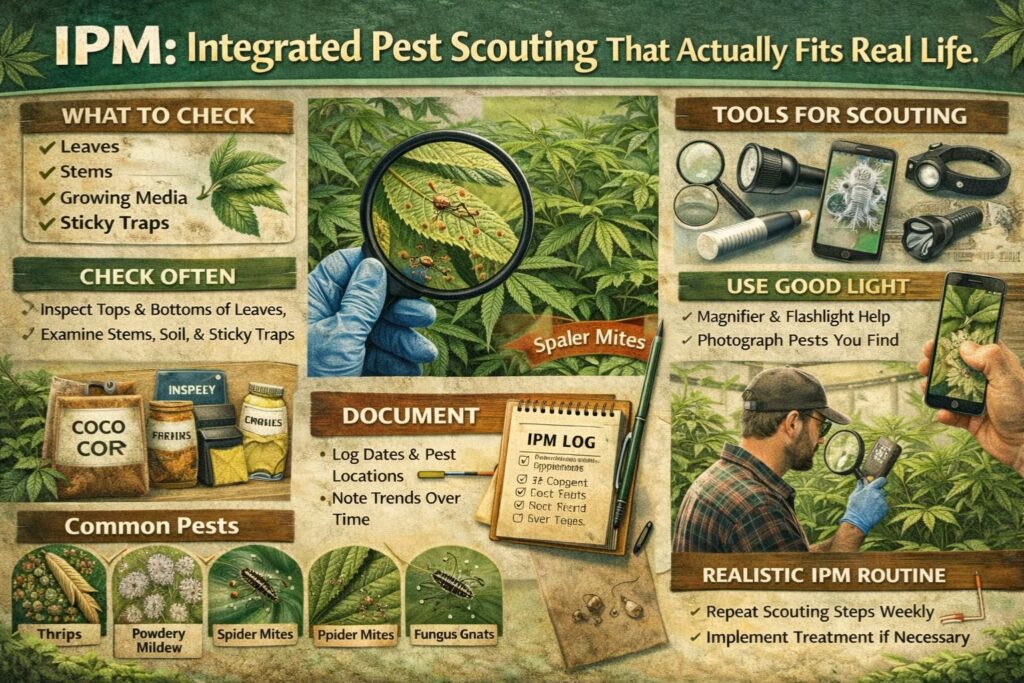
If you only adopt one habit from this article, make it integrated pest scouting. It is the difference between a clean harvest and a salvage operation.
My weekly integrated pest scouting routine:
- Sticky traps at canopy level and near the floor
- Leaf inspections with a loupe, especially undersides
- Clean floors and corners (debris becomes habitat)
- Quarantine any new plants
- Keep humidity spikes under control at lights-off
I don’t wait for a full infestation. If I see early signs, I act early. Any intervention in flower has trade-offs, including potential aroma impact. That’s why integrated pest scouting is so effective: it reduces how often you need reactive treatments.
Discretion and odor: what I do when it needs to stay quiet
People search “how to keep a weed grow discreet” for good reason. Odor control is mostly airflow and filtration, and harvest is when smell spikes the most.
My practical steps:
- Correctly sized carbon filter and a fan strong enough to maintain negative pressure
- Sealed duct connections so air goes through the filter, not around it
- Contain trimming and drying in the same filtered air path
- Keep a clean space; old plant material smells
This section ties into discreet seed shipping questions too. I can’t give legal advice, and rules vary by region. But as a customer, my discreet seed shipping questions are simple:
- Is packaging discreet and reliably tracked where available?
- Does the vendor communicate clearly about shipping timelines?
- Is customer support reachable if an order is delayed?
- Are policies clear, not hidden?
If your goal is consistency and privacy, choose vendors and methods that prioritize clarity over hype.
Harvest timing for repeatable outcomes
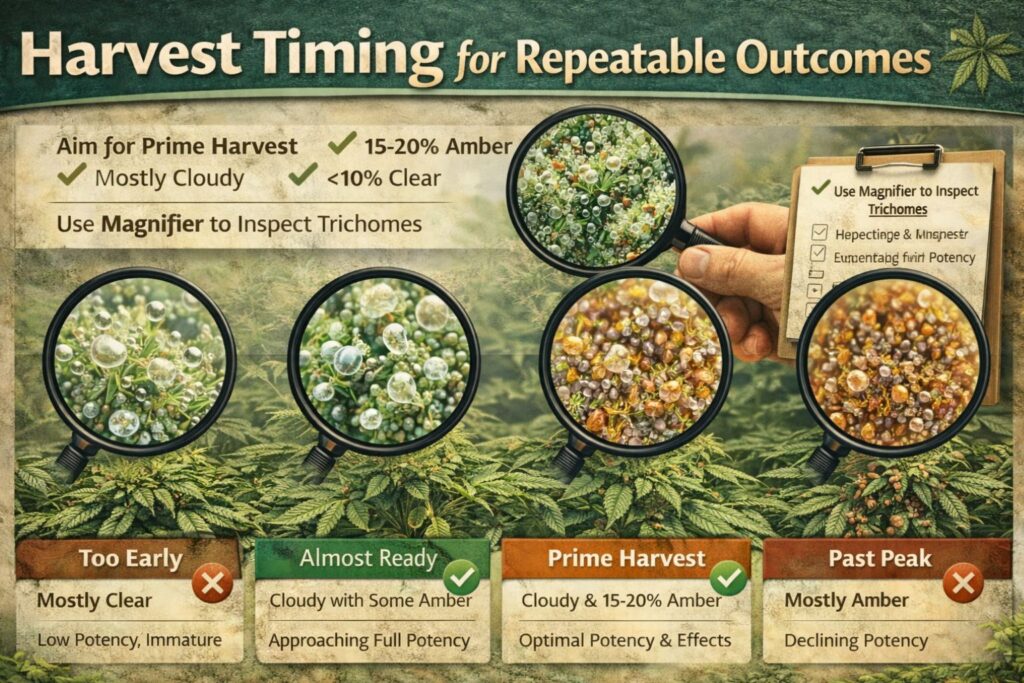
I don’t chase a single trichome color rule. Instead, I combine several signals:
- Overall plant maturity and natural fade
- Aroma shift from green to cultivar-specific
- Trichome condition across top and mid buds (not just the crown)
- How the plant handled late flower stress
Two phenotypes from the same pack can want different windows, even when they came from the same medicinal cannabis seeds. That is normal. The fix is not guessing. The fix is labeling, notes, and repeating what worked.
Drying and curing: my clean-room drying routine for terpene hold
I’ve lost great aroma to rushed drying. If you care about seed-to-jar consistency, a clean-room drying routine matters more than most people want to admit.
My clean-room drying routine targets:
- 16–19°C
- 55–60% RH
- Gentle air movement, never blasting flowers directly
- Darkness
I aim for 7–14 days depending on flower density and room stability. Then I trim and jar.
Curing habits that improved my repeatability:
- Jar when flower stabilizes around 58–62% internal humidity
- Briefly vent early if humidity climbs, then reduce venting as it stabilizes
- Store cool and dark
Drying is also where terpene-led strain selection shows up again. Some cultivars hold aroma through imperfect conditions. Some lose top notes quickly if the dry is warm or fast. If you’re selecting medicinal cannabis seeds for reliable flavor and smell, evaluate the cured flower, not just the fresh plant.
A seed-shopping checklist I’d actually use
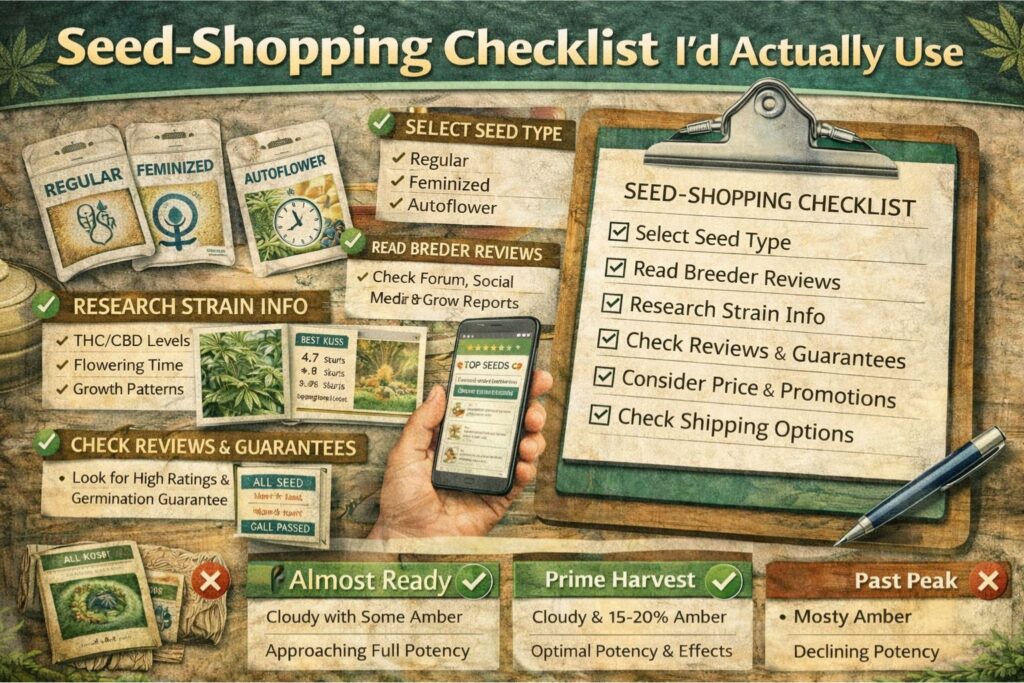
If you’re on a seed bank page and overwhelmed, here’s the checklist I’d want someone to hand me:
- Define your goal with cannabinoid profile hunting (CBD-forward seed lines, THC-dominant seed lots, or balanced)
- Match plant structure to your tent size and climate control
- Pick the seed type that matches your workflow
- Plan indoor LED canopy mapping so light is uniform
- Decide whether you’ll run EC steering in coco coir or a simpler soil approach
- Commit to integrated pest scouting from week one
- Plan the dry in advance and stick to a clean-room drying routine
- Write down your discreet seed shipping questions before you order so you compare vendors fairly
Consistency is built by planning the whole cycle before you plant the first seed.
FAQ: long-tail questions I hear constantly
Are medicinal cannabis seeds different from other seeds?
In my experience, “medicinal” is more about intent and selection than a special seed category. What matters is genetic potential and how consistently you grow it. Medicinal cannabis seeds become predictable when you standardize the environment and evaluate phenotypes carefully.
Should I choose CBD-forward seed lines for daytime use?
CBD-forward seed lines are often chosen by people who want a lighter psychoactive profile. The best approach is to run a small test and keep notes. CBD-forward seed lines can still vary by phenotype and by how the crop is grown.
Why do THC-dominant seed lots feel different from one harvest to the next?
THC-dominant seed lots can produce multiple phenotypes, and environment affects the final profile. Light, heat, and drying speed all influence the finished experience. This is why I pair THC-dominant seed lots with stable VPD and transpiration control and a slow cure.
What PPFD should I aim for when flowering without CO2?
A practical flowering range without added CO2 is often 600–900 µmol/m²/s, with seedlings and veg lower. I usually run 700–900 when the canopy and climate are stable, and I lean on indoor LED canopy mapping to keep it even.
What is a good VPD range for cannabis in flower?
A common stage-based approach targets around 1.2–1.6 kPa during flowering, with veg lower. VPD and transpiration control becomes easier when you set a temperature target first and then adjust humidity to match.
Is EC steering in coco coir necessary?
No, but it’s helpful if you like precise control. EC steering in coco coir gives you a measurable way to avoid overfeeding and salt buildup. If you prefer simplicity, soil can still produce excellent results when watering and climate are steady.
How do I stop pests before they start?
Integrated pest scouting is the real answer: traps, inspections, cleanliness, and quarantine. Integrated pest scouting reduces how often you need sprays, especially in flower when interventions can affect aroma.
What’s the biggest mistake after harvest?
Rushing the dry. A clean-room drying routine with stable temperature and humidity protects aroma and reduces harshness. I treat the clean-room drying routine as part of cultivation, not an afterthought.
How do I compare seed banks and shipping options?
Write down your discreet seed shipping questions and compare vendors on policies, communication, and reliability. Avoid choosing purely on marketing. Discreet seed shipping questions should be answered clearly before you buy.
If you want a single takeaway: medicinal cannabis seeds give you potential, but repeatability comes from controlling light, climate, feeding, and the dry with the same discipline every run.
