Table of Contents
Origins and Genetic Background
Mean Misty is a balanced hybrid strain, typically classified as having a 50% indica and 50% sativa genetic composition. Its lineage stems from the crossbreeding of two renowned strains: Blue Mist and Mean Green.
- Blue Mist contributes to Mean Misty’s relaxing and mildly sedative properties, as well as its sweet and earthy aroma.
- Mean Green, on the other hand, brings energizing and uplifting effects, paired with citrusy and spicy notes in the flavor profile.
The result is a hybrid that delivers the best of both worlds: a strain capable of providing a gentle cerebral buzz alongside a relaxing body high. Growers admire Mean Misty for its resilience, moderate difficulty in cultivation, and above-average yield.
Appearance, Aroma, and Flavor
Appearance
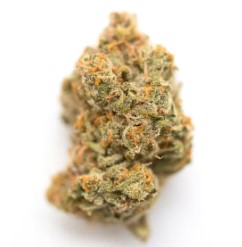
Mean Misty buds are medium-sized, dense, and coated with a generous layer of resinous trichomes. The buds exhibit shades of lime green interspersed with orange pistils, and hints of purple may appear under cooler growing conditions. The trichome coating is so pronounced that the buds almost seem frosted, signaling a high cannabinoid content.
Aroma
Mean Misty has a complex aroma that combines earthy, sweet, and citrus notes. Upon breaking the buds, a more pungent, spicy scent with hints of pine emerges, attributed to its dominant terpenes.
Flavor
When smoked or vaporized, Mean Misty offers a rich and layered flavor experience. The initial inhale brings sweet and citrusy notes reminiscent of ripe oranges and lemons. On the exhale, earthy and herbal undertones come forward, leaving a pleasant, spicy aftertaste.
Cannabinoid Profile
Mean Misty is known for its balanced cannabinoid content, typically featuring:
- THC (Tetrahydrocannabinol): 18-22%
- CBD (Cannabidiol): 0.5-1.5%
- CBG (Cannabigerol): 0.2-0.5%
- CBC (Cannabichromene): Trace amounts
The high THC content makes it potent enough for experienced users, while the presence of minor cannabinoids like CBD and CBG contributes to a more balanced and nuanced effect profile.
Terpene Profile
Terpenes are aromatic compounds that contribute to Mean Misty’s distinctive flavor and effects. This strain’s principal terpenes are:
- Myrcene (Earthy and Herbal): Known for its sedative and relaxing properties, myrcene is the most abundant terpene in Mean Misty.
- Limonene (Citrusy): This terpene is responsible for the uplifting and mood-enhancing effects.
- Caryophyllene (Spicy and Peppery): Known for its anti-inflammatory and pain-relieving properties, caryophyllene interacts with CB2 receptors in the body.
- Pinene (Piney): Pinene enhances focus and memory while providing a fresh, pine-like aroma.
- Linalool (Floral): This terpene adds a subtle lavender-like aroma and has calming, anti-anxiety effects.
Effects and Potency
Mean Misty’s balanced hybrid nature ensures a diverse range of effects, making it suitable for a variety of users and situations. The effects can be categorized into three main stages:
- Initial Onset: Within minutes of consumption, users report an uplifting and euphoric cerebral buzz. The mental clarity and sense of happiness are attributed to the sativa lineage from Mean Green.
- Peak Effects: As the high progresses, a soothing wave of relaxation washes over the body. This stage is characterized by physical ease without being overly sedating, making it perfect for social settings or creative activities.
- Aftereffects: The comedown is smooth and leaves users feeling calm and content. The presence of myrcene and linalool ensures that any residual anxiety is alleviated.
Potency
With THC levels averaging 18-22%, Mean Misty is potent but not overwhelmingly so. It’s suitable for intermediate to advanced users, while novices should approach with caution and start with smaller doses.
Medical Uses
Mean Misty’s balanced effects and diverse chemical profile make it a versatile option for medical cannabis patients. Below are its key therapeutic benefits:
1. Stress and Anxiety Relief
The uplifting effects of limonene and the calming properties of myrcene and linalool work together to reduce stress and anxiety. Users often report feeling more at ease and less burdened by intrusive thoughts.
2. Pain Management
The high THC content, combined with the anti-inflammatory effects of caryophyllene, makes Mean Misty effective for chronic pain conditions, including:
- Arthritis
- Fibromyalgia
- Muscle spasms
- Migraines
3. Depression
Mean Misty’s ability to elevate mood and promote a sense of well-being is particularly beneficial for individuals suffering from mild to moderate depression.
4. Sleep Disorders
While not as sedative as pure indica strains, Mean Misty can help with sleep disorders like insomnia, especially when consumed in higher doses.
5. Appetite Stimulation
The strain’s THC content can effectively combat loss of appetite, making it helpful for patients battling eating issues or going through therapies like chemotherapy.
6. Focus and Creativity
The presence of pinene and limonene can improve focus and creativity, which is particularly helpful for individuals with ADHD or those needing a mental boost for work or creative projects.
Recreational Uses
Recreational users appreciate Mean Misty for its versatility and well-rounded effects. Here are some common scenarios where this strain excels:

1. Social Gatherings
Mean Misty’s euphoric and uplifting effects make it a great choice for parties or social events. It encourages laughter, conversation, and a relaxed vibe without inducing couch-lock.
2. Outdoor Activities
Whether hiking, camping, or simply enjoying a day at the beach, Mean Misty enhances sensory experiences and fosters a connection with nature.
3. Creative Endeavors
Artists, writers, and musicians often turn to Mean Misty for its ability to inspire creativity and out-of-the-box thinking.
4. Relaxation
For those looking to unwind after a long day, this strain provides a perfect balance of mental clarity and physical relaxation.
5. Gaming and Movies
The strain’s cerebral effects heighten focus and engagement, making it a favorite for gaming sessions or immersive movie nights.
Cultivation Information
1. Understanding Mean Misty’s Growth Traits

- Hybrid Nature: With a 50/50 indica-sativa balance, Mean Misty grows with moderate height and displays characteristics like dense indica-style buds and sativa-like lateral branching.
- Resilience: The strain is moderately resistant to pests and mold but thrives when environmental variables are tightly controlled.
- Optimal Climate: Mean Misty prefers a Mediterranean-like climate, with consistent sunshine, warm temperatures, and low humidity levels.
2. Lighting Conditions
Mean Misty responds well to both natural sunlight and artificial lighting setups:
- Indoor Cultivation:
- Use Full-Spectrum LED Grow Lights or High-Pressure Sodium (HPS) lights for optimal growth.
- Maintain a light cycle of six hours of darkness and eighteen hours of light throughout, shifting to 12/12 during the flowering phase.
- Outdoor Cultivation:
- Ensure the plant receives 8+ hours of direct sunlight daily.
- Monitor for seasonal changes; cooler nights in late flowering enhance purple hues in the buds.
Scientific Insight:
The blue and red wavelengths of light play a critical role in plant growth:
- Blue light (400-500 nm) encourages robust vegetative growth.
- Red light (600-700 nm) enhances flowering and bud development.
3. Temperature and Humidity Management
Proper temperature and humidity control are essential to prevent mold and ensure vigorous growth:
- Vegetative Stage:
- Temperature: 70-80°F (21-27°C)
- Humidity: 50-70%
- Flowering Stage:
- Temperature: 65-75°F (18-24°C)
- Humidity: 40-50%
- Late Flowering (Ripening Stage):
- Lower humidity to 30-40% to avoid bud rot and enhance trichome production.
Scientific Insight:
- Mean Misty benefits from VPD (Vapor Pressure Deficit) control, which optimizes transpiration and nutrient uptake. For this strain, maintaining a VPD of 0.8-1.2 kPa during vegetative growth and 1.2-1.6 kPa during flowering is ideal.
4. Nutrient Requirements
Mean Misty demands a balanced nutrient regime to support its vigorous growth and resin production:
- Vegetative Stage:
- Higher nitrogen (N) levels are needed to support leaf and stem development.
- A nutrient ratio of 3:1:2 (N-P-K) works well during this stage.
- Flowering Stage:
- Transition to higher phosphorus (P) and potassium (K) levels for flower and trichome production.
- Use a ratio like 1:3:3 (N-P-K) during peak flowering.
Micronutrients:
- Calcium and Magnesium (Cal-Mag): Crucial for cell wall structure and photosynthesis.
- Silica: Enhances stem strength and pest resistance.
Scientific Insight:
Using chelated micronutrients ensures efficient nutrient uptake, especially in hydroponic systems, as these molecules are more bioavailable to the plant.
5. Soil and Growing Medium
Mean Misty performs well in both soil and hydroponic setups, but the choice of medium impacts its terpene and cannabinoid profile:
- Soil: Organic soil enriched with compost or worm castings enhances the terpene profile, making the buds more aromatic and flavorful.
- Soilless Mixes (Coco Coir/Perlite): Provide better oxygenation to roots and faster growth rates.
- Hydroponics: Yields higher cannabinoid and terpene levels due to precise control over nutrient delivery and pH levels.
pH Levels:
- Soil: 6.0-6.5
- Hydroponics: 5.5-6.0
Scientific Insight:
The microbial life in organic soil plays a key role in terpene biosynthesis. For example, specific fungi and bacteria in soil enhance myrcene and limonene production.
6. Training Techniques
Mean Misty responds well to low-stress and high-stress training methods to optimize canopy light distribution and increase yields:
- Topping: Encourages lateral growth by removing the main apical shoot, resulting in multiple colas.
- Low-Stress Training (LST): Involves bending and tying branches to expose lower nodes to light, increasing bud production.
- Screen of Green (ScrOG): Uses a horizontal net to train the plant canopy, maximizing light penetration and airflow.
Scientific Insight:
Training techniques work by manipulating the plant hormone auxin, which regulates apical dominance. Reducing auxin concentration in the main stem encourages lateral growth, leading to a bushier plant with more flowering sites.
7. Watering Practices
- Frequency: Allow the top 1-2 inches of the soil to dry out between waterings, keep in mind that excessive watering can cause root rot.
- Hydroponics: Use aerated reservoirs to maintain oxygen-rich water for root health.
Scientific Insight:
Mean Misty water uptake is influenced by transpiration rates, which are controlled by environmental factors like temperature, humidity, and light intensity. Installing soil moisture sensors ensures precise irrigation.
8. Pest and Disease Management
Although moderately resistant, Mean Misty is susceptible to common cannabis pests and diseases:
- Common Pests: Aphids, whiteflies, and spider mites.
- Prevention: Use companion planting with marigold or basil to repel pests naturally.
- Fungal Diseases: Bud rot and powdery mildew are concerns during late flowering.
Scientific Insight:
Introducing beneficial insects like ladybugs or predatory mites can control pest populations without the need for chemical pesticides, which can affect the final product purity.
9. Enhancing Cannabinoid and Terpene Production
Maximizing the resin and terpene content of Mean Misty requires careful attention during the flowering phase:
- Use UV-B supplemental lighting during flowering to increase trichome production.
- Introduce stress techniques like controlled drought or lowering nighttime temperatures slightly to encourage terpene biosynthesis.
Scientific Insight:
Studies show that UV-B light stimulates the plant natural defense mechanisms, leading to increased trichome density and higher cannabinoid levels. Additionally, temperature fluctuations between day and night enhance anthocyanin and terpene production.
10. Harvesting and Curing
- Harvest Timing: Use a microscope or magnifying glass to keep an eye on trichomes. Regarding Mean Misty:
- Clear trichomes: Not ready.
- Cloudy trichomes: Peak THC levels.
- Amber trichomes: More sedative effects.
- Drying: Maintain 60-70°F (15-21°C) and 50-60% humidity for 7-10 days.
- Curing: Store buds in airtight glass jars, opening them daily for the first two weeks to release moisture and prevent mold.
Scientific Insight:
Proper curing allows chlorophyll breakdown and enhances terpene preservation, resulting in smoother smoke and more potent effects.
Scientific Insights
Cannabinoid Synergy
Mean Misty exemplifies the concept of the “entourage effect,” where cannabinoids and terpenes work synergistically to enhance therapeutic benefits. For example:
- THC and CBD combine to provide pain relief and reduce inflammation.
- Caryophyllene’s interaction with CB2 receptors complements THC’s psychoactive effects by adding anti-inflammatory benefits.
Terpene Interactions
The interplay of terpenes in Mean Misty’s profile contributes significantly to its effects:
- Myrcene facilitates the absorption of THC, enhancing its potency.
- Limonene’s uplifting effects counterbalance the sedative properties of myrcene and linalool, creating a balanced experience.
Pharmacological Research
Preliminary studies suggest that strains like Mean Misty, with moderate THC and diverse terpenes, may be effective for conditions like:
- Neuropathic pain
- Anxiety disorders
- Chemotherapy-induced nausea
- PTSD
Consumption Methods
The way you consume Mean Misty affects its onset, duration, and overall intensity of effects. Here are the most common methods, paired with their scientific mechanisms:
A. Smoking
- Mechanism: When cannabis is smoked, cannabinoids like THC and CBD are delivered directly to the lungs, where they are absorbed into the bloodstream through the alveoli. The compounds quickly cross the blood-brain barrier, binding to CB1 receptors in the brain.
- Onset Time: 2-5 minutes.
- Peak Effects: Within 15-30 minutes.
- Duration: 2-3 hours.
- Pros: Immediate effects and easy to control dosage. Smoking preserves much of the terpene profile, offering the full flavor and entourage effect of Mean Misty.
- Cons: Potential irritation to the respiratory system due to combustion.
B. Vaporization
- Mechanism: Vaporizing involves heating cannabis to a temperature where cannabinoids and terpenes become vaporized but without combustion. This preserves more of the strain’s delicate terpenes, like myrcene, limonene, and caryophyllene.
- Onset Time: 2-5 minutes (similar to smoking).
- Peak Effects: 15-30 minutes.
- Duration: 2-3 hours.
- Pros: Smoother than smoking, with less risk of respiratory irritation. Maximizes terpene and cannabinoid preservation.
- Cons: Requires specialized equipment like vaporizers.
C. Edibles
- Mechanism: When consumed as an edible, THC and other cannabinoids are processed by the liver, where THC is metabolized into 11-hydroxy-THC, a more potent and longer-lasting metabolite. This results in stronger and longer-lasting effects compared to smoking or vaporization.
- Onset Time: 30-90 minutes, depending on metabolism and stomach contents.
- Peak Effects: 2-3 hours after ingestion.
- Duration: 6-8 hours (longer in some cases).
- Pros: Longer-lasting effects, discreet consumption, no harm to lungs.
- Cons: Delayed onset can make dosing tricky, potentially leading to overconsumption.
D. Tinctures (Sublingual)
- Mechanism: Tinctures are cannabis extracts dissolved in alcohol or oil and administered under the tongue. Sublingual absorption allows cannabinoids to bypass the digestive system and enter the bloodstream directly through the mucous membranes.
- Onset Time: 15-30 minutes.
- Peak Effects: 30-60 minutes.
- Duration: 4-6 hours.
- Pros: Faster onset compared to edibles, precise dosing, and discreet usage.
- Cons: The taste of tinctures is disliked by certain consumers.
E. Topicals
- Mechanism: Topicals are applied to the skin and provide localized relief by interacting with CB2 receptors in the skin and peripheral tissues. They do not enter the bloodstream in significant amounts, so they don’t produce psychoactive effects.
- Onset Time: 15-20 minutes for localized effects.
- Duration: 2-4 hours.
- Pros: Effective for localized pain and inflammation, non-psychoactive.
- Cons: Limited to specific uses and won’t produce systemic effects.
F. Dabbing (Concentrates)
- Mechanism: Dabbing involves vaporizing concentrated cannabis extracts at high temperatures. The cannabinoids and terpenes are absorbed rapidly into the bloodstream, leading to an almost instantaneous effect.
- Onset Time: 1-3 minutes.
- Peak Effects: 15-30 minutes.
- Duration: 2-3 hours.
- Pros: Extremely potent and fast-acting. Maximizes terpenes and cannabinoids in a single hit.
- Cons: Not beginner-friendly; the high concentration of THC may overwhelm inexperienced users.
2. Onset Time
The onset of Mean Misty’s effects depends on the method of ingestion, as outlined above. Scientifically, this is influenced by the bioavailability of cannabinoids:
- Smoking/Vaping: Has the highest bioavailability, ranging from 20-56%, leading to rapid onset.
- Edibles: Have a lower bioavailability (4-20%) due to the first-pass metabolism in the liver, which explains the delayed onset but prolonged effects.
- Sublingual: Offers moderate bioavailability (15-35%) with a relatively quick onset.
Factors Affecting Onset:
- Metabolism: Cannabinoids are processed more rapidly by metabolisms that are faster.
- Empty vs. Full Stomach: Edibles take longer to onset when consumed with food.
- Tolerance Levels: Frequent cannabis users may experience delayed or reduced onset due to desensitization of cannabinoid receptors.
3. Duration of Effects
The duration of Mean Misty’s effects is determined by how cannabinoids are absorbed and metabolized:
- Smoking/Vaping: 2-3 hours for the average user. Effects taper off relatively quickly due to the rapid decline in plasma THC levels.
- Edibles: 6-8 hours, with a slow taper as 11-hydroxy-THC is metabolized.
- Sublingual: 4-6 hours, as cannabinoids bypass the liver but remain active in the bloodstream longer than smoked THC.
- Dabbing: 2-3 hours due to the high concentration and rapid metabolism.
4. Cannabinoid-Terpene Interactions (Entourage Effect)
Mean Misty’s effects are significantly influenced by the entourage effect, which highlights how cannabinoids like THC, CBD, and CBG interact with terpenes. Here’s how this affects onset and duration:
- Myrcene: Enhances THC absorption, potentially shortening the onset time.
- Caryophyllene: Interacts with CB2 receptors to amplify pain-relieving effects.
- Limonene: Boosts mood-enhancing effects, noticeable soon after onset.
- Linalool: Contributes to relaxation and sedation, especially noticeable during the later stages of Mean Misty’s effects.
5. Dose-Response Curve
Mean Misty exhibits a dose-dependent response, where low, moderate, and high doses produce distinct effects:
- Low Dose (1-5 mg THC): Subtle relaxation, mild euphoria, and heightened focus.
- Moderate Dose (5-20 mg THC): Noticeable cerebral and physical effects, including euphoria, relaxation, and enhanced sensory perception.
- High Dose (>20 mg THC): Profound sedation, altered perception of time, and possible couch-lock in sensitive users.
Scientific Insight:
The biphasic effects of THC mean that low doses can be stimulating, while higher doses may be sedative. Mean Misty’s balanced cannabinoid profile makes it ideal for tailoring doses based on individual tolerance and desired effects.
6. THC Metabolism and Elimination
- Primary Metabolite: Delta-9-THC is converted to 11-hydroxy-THC in the liver (in edibles) or remains largely unmetabolized in inhalation methods.
- Elimination Half-Life: THC has a half-life of approximately 1.5-2 days in infrequent users but can extend to 5-13 days in frequent users due to storage in fat tissues.
Summary of Ingestion Methods:
| Method | Onset | Peak | Duration | Best For |
|---|---|---|---|---|
| Smoking | 2-5 min | 15-30 min | 2-3 hours | Fast relief, full flavor experience |
| Vaporization | 2-5 min | 15-30 min | 2-3 hours | Terpene preservation, reduced lung irritation |
| Edibles | 30-90 min | 2-3 hours | 6-8 hours | Long-lasting effects, chronic pain, insomnia |
| Sublingual | 15-30 min | 30-60 min | 4-6 hours | Precise dosing, faster onset than edibles |
| Topicals | 15-20 min | Local relief | 2-4 hours | Localized pain or inflammation relief |
| Dabbing | 1-3 min | 15-30 min | 2-3 hours | Experienced users seeking potent effects |
Potential Side Effects
Like any cannabis strain, Mean Misty may cause side effects, particularly when consumed in large quantities:
- Dry Mouth and Eyes: Stay hydrated to mitigate these effects.
- Paranoia or Anxiety: More likely in users sensitive to THC or those who overconsume.
- Drowsiness: Higher doses may lead to sedation, especially in novice users.
Conclusion
Mean Misty is a versatile and well-balanced hybrid that caters to a wide range of users, from medical patients seeking relief from chronic conditions to recreational enthusiasts looking for a strain that offers both relaxation and euphoria. Its complex flavor profile, manageable cultivation requirements, and nuanced effects make it a standout choice in the ever-expanding world of cannabis. Whether you’re a seasoned connoisseur or a curious newcomer, Mean Misty promises an experience that is both enjoyable and therapeutic.
For a complete directory of cultivars, visit our Cannabis Strain Reviews.
