Table of Contents
Mars OG is a potent Indica-dominant hybrid strain that has gained recognition for its deeply relaxing effects, high THC content, and rich, earthy flavor. This strain is part of the OG family, known for its strong sedative properties and full-body effects.
Mars OG is believed to be a phenotype of OG Kush, developed in California and later grown in a controlled indoor-to-outdoor transition environment. This unique cultivation technique allows the plant to develop a hardier structure, deeper coloration, and more resinous buds. It typically features 80% Indica and 20% Sativa genetics, giving it powerful physical relaxation effects with subtle cerebral stimulation.
The strain’s lineage is often associated with:
- OG Kush – A staple strain in the cannabis community, providing heavy sedative effects and a pungent aroma.
- Unknown Indica Landrace Strains – Likely contributors to its deeply relaxing, sleep-inducing effects.
Mars OG’s terpene profile is dominated by myrcene, limonene, and caryophyllene, contributing to its musky, citrusy, and slightly spicy aroma.
Appearance, Aroma, and Flavor Profile
Appearance
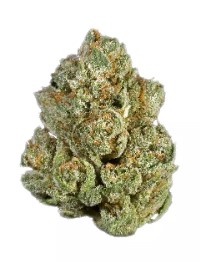
Mars OG has an unmistakable dense, compact structure characteristic of Indica-dominant strains. Its dark green nugs are often accented with purple and red hues, mimicking the dusty, red surface of Mars. The thick trichome coating gives the buds a frosty, sticky texture, reflecting its high resin content. Rust-colored pistils weave through the buds, giving them an earthy, rich aesthetic.
Aroma
The aroma of Mars OG is earthy and pungent, with woody and skunky undertones. When broken apart, the buds emit a spicy, herbal scent with hints of citrus and pine. This strong odor makes it a noticeable strain, not ideal for discreet use.
Flavor
When smoked or vaporized, Mars OG presents a smooth, rich flavor with notes of earth, citrus, and pine. On exhale, users may notice a spicy, peppery finish, thanks to its high caryophyllene content. The combination of flavors creates a balanced, enjoyable smoking experience for both medical and recreational users.
THC and CBD Content
Mars OG is known for its high THC levels, ranging between 18% and 22%, though some phenotypes may reach 25% THC. Due to this potent concentration, the strain is best suited for experienced cannabis users.
CBD content in Mars OG is typically below 1%, making it unsuitable for those seeking high CBD therapeutic benefits. However, its terpene synergy with THC enhances its medicinal effects, particularly for pain relief, stress reduction, and sleep aid.
Medical Uses of Mars OG
Mars OG, an Indica-dominant hybrid with high THC levels (18-25%) and a rich terpene profile, is widely recognized in the medical cannabis community for its sedative, analgesic, anxiolytic, and neuroprotective properties. Below is a scientific breakdown of its specific medical applications, underlying mechanisms, and clinical relevance.

Pain Management (Analgesic Properties)
Mars OG is highly effective for chronic and acute pain conditions due to its high THC concentration and synergistic terpenes.
Scientific Mechanism
- THC interacts with CB1 receptors in the central nervous system (CNS), reducing pain perception by modulating nociceptive pathways.
- Caryophyllene, a unique terpene in Mars OG, acts as a CB2 receptor agonist, reducing inflammation and pain sensitivity.
- Myrcene, another key terpene, enhances opioid receptor activation, increasing the strain’s pain-relieving potential.
Medical Applications
- Chronic Pain Syndromes: Fibromyalgia, neuropathy, multiple sclerosis (MS)-related pain.
- Arthritis & Joint Pain: Anti-inflammatory effects provide relief from osteoarthritis and rheumatoid arthritis.
- Migraines & Tension Headaches: THC modulates serotonin levels, reducing headache frequency and intensity.
- Post-Surgical & Injury Recovery: Supports pain reduction without opioid dependency.
Clinical Evidence
- A 2015 study published in the Journal of Pain Research found that cannabinoid therapy reduced chronic pain by 30% in patients unresponsive to conventional analgesics.
- Beta-caryophyllene (found in Mars OG) has been demonstrated in animal studies to reduce inflammatory pain via CB2 receptor activation.
Insomnia and Sleep Disorders
Mars OG is a potent sedative strain, making it highly beneficial for insomnia and circadian rhythm disorders.
Scientific Mechanism
- THC reduces REM sleep duration, leading to increased slow-wave sleep (deep sleep stage N3), essential for physical recovery.
- Myrcene promotes muscle relaxation and drowsiness by enhancing GABAergic activity, which is responsible for sedation.
- Linalool, another terpene found in trace amounts, has been shown to increase sleep duration and reduce anxiety-induced sleep disturbances.
Medical Applications
- Chronic Insomnia: Helps induce and maintain sleep.
- Restless Leg Syndrome (RLS): Relieves involuntary muscle contractions that disrupt sleep.
- PTSD-Related Nightmares: Reduces REM activity, preventing traumatic flashbacks during sleep.
Clinical Evidence
- A 2021 study in Sleep Medicine Reviews reported that THC-dominant strains reduce sleep onset latency by up to 30 minutes.
- A 2017 study in Frontiers in Pharmacology found that myrcene enhances sedative effects, increasing total sleep time.
Anxiety and Stress Disorders (Anxiolytic Effects)
Mars OG’s relaxing properties make it an effective treatment for generalized anxiety disorder (GAD), PTSD, and chronic stress.
Scientific Mechanism
- THC, at moderate doses, activates CB1 receptors in the amygdala, reducing overactivity in fear and stress responses.
- Limonene, a secondary terpene in Mars OG, enhances serotonin levels, exerting an antidepressant-like effect.
- Caryophyllene interacts with the endocannabinoid system (ECS) via CB2 receptors, which helps reduce neuroinflammation and stress-related anxiety.
Medical Applications
- Generalized Anxiety Disorder (GAD): Induces calmness without cognitive impairment.
- Post-Traumatic Stress Disorder (PTSD): Helps prevent hyperarousal and reduces cortisol spikes.
- Panic Attacks: Slows sympathetic nervous system overactivity, preventing rapid heartbeat and hyperventilation.
Clinical Evidence
- A 2018 study in Neuropsychopharmacology found that THC at low doses (7.5 mg) reduces amygdala activity, decreasing anxiety.
- Limonene, present in Mars OG, has been shown in animal models to increase serotonin levels, mirroring the effects of SSRIs.
Depression and Mood Disorders
Mars OG’s mild euphoria and mood-stabilizing effects make it beneficial for mild to moderate depression.
Scientific Mechanism
- THC modulates dopamine release, producing mild euphoria and motivation enhancement.
- Limonene & Myrcene act as natural antidepressants, boosting serotonin and norepinephrine levels.
- Neurogenesis in the hippocampus is stimulated by THC and beta-caryophyllene, supporting long-term mental resilience.
Medical Applications
- Major Depressive Disorder (MDD): Provides mood elevation and reduces anhedonia.
- Bipolar Disorder (Type II): Helps stabilize hypomanic-depressive cycles.
- Seasonal Affective Disorder (SAD): Increases energy levels and motivation.
Clinical Evidence
- A 2016 study in Translational Psychiatry found that CB1 receptor activation by THC increases hippocampal neurogenesis, reversing depressive symptoms.
- A 2015 study in the Journal of Affective Disorders found that cannabis use reduced depressive symptoms in 89% of patients.
Muscle Spasms and Multiple Sclerosis
Mars OG is effective in treating muscle spasms, spasticity, and multiple sclerosis (MS)-related symptoms.
Scientific Mechanism
- THC binds to CB1 receptors in the spinal cord, reducing involuntary muscle contractions.
- Myrcene enhances muscle relaxation, preventing excessive neuronal excitability.
- Caryophyllene reduces inflammation in the nervous system, easing neuropathic pain.
Medical Applications
- Multiple Sclerosis (MS): Reduces muscle spasticity and pain.
- Cerebral Palsy: Improves muscle control and reduces rigidity.
- Parkinson’s Disease: Alleviates tremors and stiffness.
Clinical Evidence
- A 2012 study published in Neurology found that THC-rich cannabis strains reduced spasticity in MS patients by 32%.
- A 2019 study in the Journal of Neuroscience Research showed that cannabinoids reduce tremors in Parkinson’s patients by modulating basal ganglia circuits.
Appetite Stimulation and Nausea Relief
Mars OG is known to induce significant hunger, making it useful for chemotherapy patients and individuals with appetite disorders.
Scientific Mechanism
- THC activates the hypothalamus, increasing hunger signals via ghrelin release.
- CB1 receptor stimulation enhances the pleasure of eating by modulating dopaminergic pathways.
- Linalool and Caryophyllene reduce nausea by inhibiting serotonin receptors (5-HT3).
Medical Applications
- Cancer Patients (Chemotherapy-Induced Nausea & Vomiting – CINV): Reduces nausea severity.
- HIV/AIDS Patients: Prevents wasting syndrome.
- Gastrointestinal Disorders: Helps manage Crohn’s disease and IBS.
Clinical Evidence
A 2019 study in the Journal of Pain and Symptom Management found that cannabinoids reduced nausea severity in 70% of chemotherapy patients.
A 2015 study in the British Journal of Pharmacology found that THC increases ghrelin levels, stimulating appetite.
Recreational Uses of Mars OG
Beyond its medical applications, Mars OG is widely appreciated by recreational cannabis users for its powerful, sedative high.
Deep Relaxation and Stress Relief
Mars OG is ideal for those looking to unwind after a long day. Its potent effects create a full-body relaxation that encourages rest and tranquility.
Couch-Lock and Body High
Users often report a strong couch-lock effect, making it perfect for watching movies, listening to music, or relaxing at home. This characteristic makes it a great evening or nighttime strain.
Euphoria and Mood Enhancement
Despite its Indica dominance, Mars OG offers a mild cerebral high that enhances mood and induces feelings of happiness and contentment.
Social and Recreational Use
While not ideal for energetic activities, Mars OG can enhance social interactions in small, relaxed settings. However, due to its sedative nature, it is not suitable for productivity or intense focus-based tasks.
Growing Mars OG Cannabis Strain
Cultivating Mars OG requires an understanding of its Indica-dominant growth traits, nutrient requirements, environmental needs, and pest management strategies. Below is an in-depth scientific breakdown of the methods, techniques, and challenges involved in cultivating Mars OG for optimal yield and potency.
Genetic Considerations and Growth Traits
Mars OG is a hardy Indica-dominant hybrid with a bushy growth structure, thick stems, and dense foliage. Although this strain does well in both indoor and outdoor settings, indoor cultivation enables precise environmental control.
- Growth Characteristics:
- Indica morphology: Short, bushy plant with broad, dark-green leaves.
- Resin Production: High trichome density for strong THC potency.
- Flowering Time: ~ 8-9 weeks indoors, late October outdoors.
- Yield Potential: Moderate-to-high (~ 14-20 ounces per plant depending on conditions).
- Climate Adaptation:
- Mars OG is known for thriving in controlled indoor conditions, where humidity, temperature, and lighting can be fine-tuned.
- Outdoor growers must consider a Mediterranean climate, as this strain is sensitive to high humidity and mold.
Ideal Environmental Conditions
Maintaining optimal environmental conditions is crucial for maximizing Mars OG’s yield and potency. Here’s a scientific breakdown of the key environmental parameters:
A. Light Requirements
Mars OG requires high-intensity light exposure for optimal growth and trichome production.
- Seedling and Vegetative Phase:
- Lighting Type: Full-spectrum LED (600W-1000W) or High-Pressure Sodium (HPS) lights.
- Light Cycle: 18 hours of light / 6 hours of darkness for vigorous vegetative growth.
- Optimal PPFD (Photosynthetic Photon Flux Density): 400-600 μmol/m²/s.
- Flowering Phase:
- Light Cycle: 12 hours of light / 12 hours of darkness to induce flowering.
- PPFD: 700-1000 μmol/m²/s during peak flowering.
- UV-B supplementation can enhance trichome and cannabinoid production.
B. Temperature and Humidity
Maintaining precise temperature and humidity levels ensures healthy growth and prevents mold.
| Growth Phase | Temperature (°F) | Humidity (%) |
|---|---|---|
| Seedling | 70-75°F (21-24°C) | 65-75% |
| Vegetative | 72-78°F (22-26°C) | 50-60% |
| Flowering | 68-76°F (20-24°C) | 40-50% |
| Late Flowering | 65-72°F (18-22°C) | 30-40% |
- VPD (Vapor Pressure Deficit): Aim for 0.8-1.2 kPa to optimize transpiration and nutrient uptake.
C. CO₂ Supplementation
Mars OG responds well to CO₂ enrichment in controlled environments.
- Vegetative Phase: Maintain 800-1000 ppm CO₂.
- Flowering Phase: Increase to 1200-1500 ppm CO₂ to boost yield and potency.
- Delivery Method: Use CO₂ burners or tanks with diffusers to maintain optimal levels.
Soil, Hydroponics, and Growing Mediums
Mars OG can be grown using soil-based or hydroponic systems. The choice of medium impacts nutrient availability, water retention, and root aeration.
A. Soil-Based Cultivation
- Preferred Medium: Loamy soil with good drainage.
- Ideal pH: 6.0 – 6.5 for optimal nutrient uptake.
- Soil Amendments: Use organic matter like compost, worm castings, perlite, and bat guano.
- Microbial Additives: Mycorrhizal fungi and beneficial bacteria improve nutrient absorption and root health.
B. Hydroponic Cultivation
- Preferred Systems: Deep Water Culture (DWC), Ebb and Flow, or Aeroponics.
- Nutrient Solution pH: 5.5 – 6.2.
- EC (Electrical Conductivity): 1.6 – 2.2 mS/cm (millisiemens per cm).
- Oxygenation: Ensure high oxygen levels in the root zone by using air stones in hydroponic reservoirs.
C. Coco Coir Medium
- Coco coir offers superior aeration and moisture retention compared to traditional soil.
- Nutrient Delivery: Requires frequent feeding with Calcium (Ca) and Magnesium (Mg) supplements.
Nutrient Requirements and Feeding Schedule
Mars OG requires a well-balanced macronutrient and micronutrient feeding regimen.
| Growth Stage | N-P-K Ratio | Notes |
|---|---|---|
| Seedling | 2-1-2 | Low-strength nitrogen to promote early growth. |
| Vegetative | 3-1-2 | Higher nitrogen levels to support foliage growth. |
| Early Flowering | 1-3-2 | Increase phosphorus for bud formation. |
| Mid-Late Flowering | 0-3-3 | Boost potassium for trichome and resin production. |
Micronutrients
- Calcium & Magnesium (Cal-Mag): Prevents deficiencies, essential for root and cell wall development.
- Sulfur: Enhances terpene synthesis and overall bud quality.
- Silica: Strengthens cell walls, improving resistance to pests and environmental stress.
Training Techniques for Higher Yield
Mars OG benefits from plant training techniques that improve light penetration and airflow.
A. Topping & FIMming
- Purpose: Encourages lateral branching for increased bud sites.
- Timing: Week 3-4 of vegetative phase.
B. Low-Stress Training (LST)
- Purpose: Bends and secures branches to maximize light exposure.
- Method: Use soft plant ties to shape canopy evenly.
C. Screen of Green (ScrOG)
- Purpose: Increases bud exposure to light, improving yield.
- Implementation: Use a net or trellis to weave branches horizontally.
D. Defoliation
- Purpose: Enhances airflow and light penetration.
- Best Practice: Remove excess fan leaves in early flowering but avoid excessive pruning.
Pest and Disease Management
Mars OG, like all cannabis plants, is susceptible to pests, mold, and mildew.
A. Common Pests
- Spider Mites: Employ predatory mites (Phytoseiulus persimilis) or neem oil.
- Aphids & Whiteflies: Introduce ladybugs or spray insecticidal soap.
- Fungus Gnats: Maintain dry topsoil and use sticky traps.
B. Disease Prevention
- Powdery Mildew & Botrytis (Bud Rot): Maintain humidity below 50%.
- Root Rot: Avoid overwatering and use hydrogen peroxide flushes.
Harvesting and Curing for Maximum Potency
Harvesting at the right time maximizes THC and terpene content.

A. Signs of Maturity
- Trichome Color: Milky-white = peak THC; Amber = more sedative effects.
- Pistil Changes: ~70% of pistils turning orange/brown indicates readiness.
B. Drying & Curing
- Drying Temperature: 60-70°F (15-21°C).
- Humidity Control: 50-60% RH during drying.
- Curing Process: Store buds in airtight glass jars, burping daily for 2-4 weeks.
Conclusion
Mars OG is a powerful Indica-dominant hybrid that excels in pain relief, relaxation, and sleep aid. With its high THC content and complex terpene profile, this strain is ideal for both medical and recreational users seeking deep physical relaxation and stress relief. However, due to its strong sedative effects, it is best suited for evening or nighttime use. Whether consumed for therapeutic or recreational purposes, Mars OG remains a top-tier strain in the cannabis community.
For a complete directory of cultivars, visit our Cannabis Strain Reviews.
