What Is Main-Lining Cannabis And Why I Keep Coming Back To It
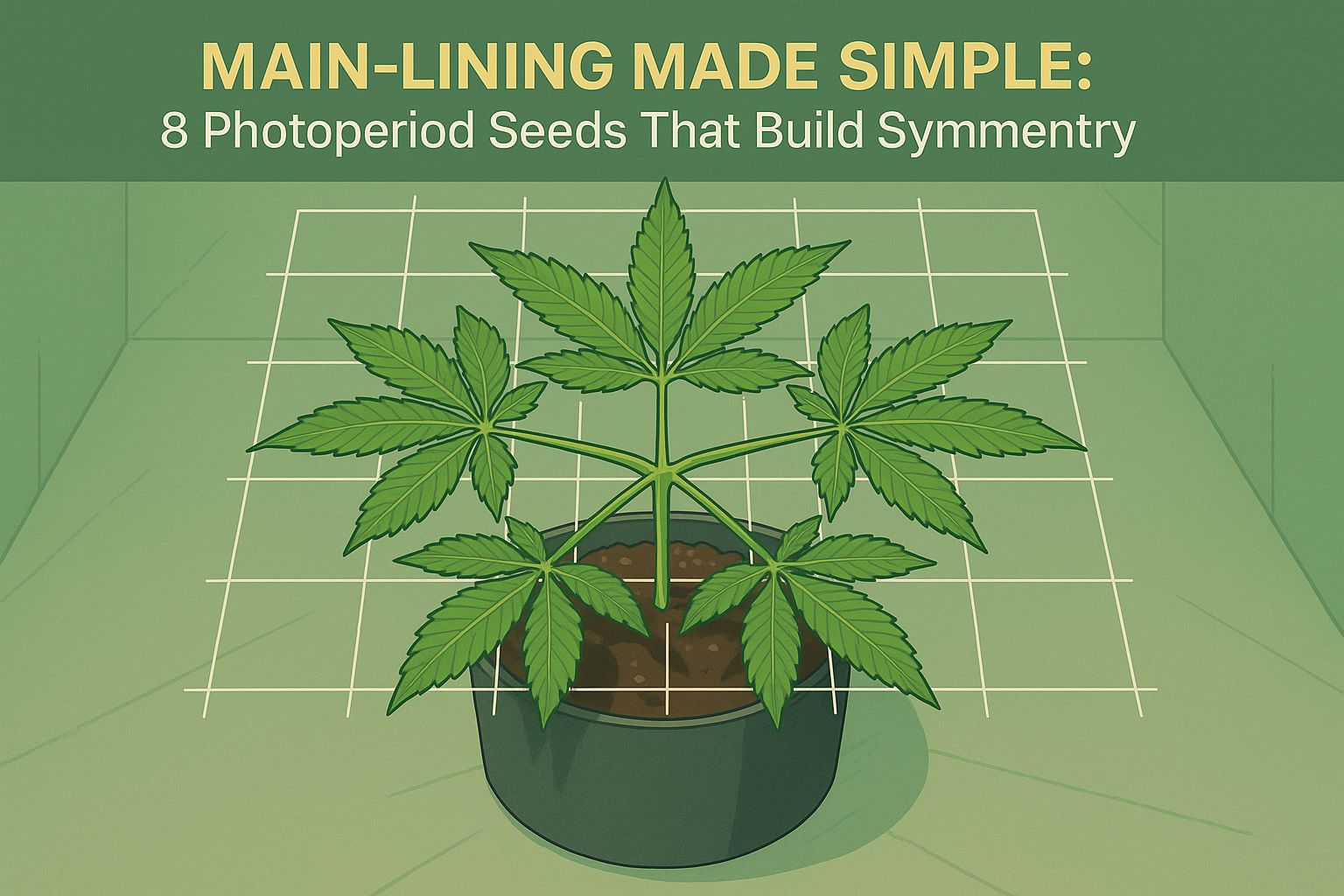
When I talk about main-lining cannabis, I am referring to the combination of cannabis main stem pruning and structured training that creates a central “hub” where all major branches originate at the same node. The idea is to build a plant that sends nutrients and energy evenly to a set number of colas.
Instead of letting the plant decide where to put its energy, main-lining cannabis allows me to enforce symmetry. Done properly, the result is a symmetrical cannabis canopy where every top gets similar light, airflow, and support. When I combine this with light SCROG training, the canopy becomes almost grid-perfect, with each cola occupying its own square.
From a grower’s perspective, there are several reasons I prefer this style:
- It simplifies canopy management in a tight indoor weed grow setup.
- It makes it easier to hit consistent PPFD across all tops, which in turn supports high-yield marijuana plants.
- It reduces hidden larf and shaded popcorn buds that are common when plants grow wild.
- It works especially well with feminized seeds for training, since I can commit time to veg without worrying about males.
Main-lining is not a magic bullet. It adds veg time, it requires careful cannabis topping and training, and mistakes early on can cost you a week or more. But once you get used to the rhythm, the control and repeatability are worth it.
Why Photoperiod Cannabis Seeds Are Ideal For Main-Lining
I have experimented with both autos and photoperiod cannabis seeds. I always end up coming back to photoperiods for main-lining cannabis because of one key word: control.
With photoperiod cannabis seeds, I decide when to flip from veg to flower. That lets me:
- Extend cannabis veg time if a plant needs to recover from pruning.
- Keep multiple phenotypes in sync so the entire room can flip together.
- Build up enough structure to support SCROG training and a dense, symmetrical cannabis canopy.
Autoflowers can work with gentler low-stress training techniques, but they dislike heavy cannabis main stem pruning. By the time they recover from aggressive cannabis topping and training, they are already deep into their flowering window. Photoperiods absorb more shaping and still give me the flexibility to extend veg by a week or two if needed.
I also prefer feminized seeds for training when I’m main-lining. Regular seeds have their place, especially for breeding, but nothing hurts more than putting six weeks into a beautifully symmetrical plant only to discover it is male. Running feminized seeds for training saves time, space, and nutrients.
Building The Right Indoor Weed Grow Setup For Main-Lining
Any training-heavy approach puts extra pressure on environment. Here is how I tune my indoor weed grow setup when I know I will be main-lining cannabis.
Lighting And PPFD
For main-lined plants, I aim for consistent PPFD across the entire canopy. A symmetrical cannabis canopy gives me the perfect platform for this. Some general ranges that have worked well in my tents:
- Late veg: 400–600 µmol/m²/s at the canopy
- Early flower: 600–800 µmol/m²/s
- Peak flower: 800–1,000 µmol/m²/s, only if plants are fully dialed
Because each cola is at roughly the same height, I’m not constantly raising and lowering the light for apical tops that outrun the rest. SCROG training helps too, by keeping the canopy in a flat plane.
Temperature, Humidity, And VPD
When I am doing heavier cannabis topping and training, I try to keep the environment slightly on the forgiving side to reduce stress. In veg, I aim for:
- 24–27°C in the canopy during lights on
- Relative humidity between 55–65 percent
- A VPD zone that sits in the middle of standard veg charts
After flip, I gradually lower humidity toward 45–50 percent to reduce the risk of bud rot, especially once that symmetrical cannabis canopy fills out and airflow becomes more important.
Medium And Nutrients
Main-lining cannabis adds a little time to veg, so I like media that buffer well and let me pivot EC and pH without drama. I have used:
- Soilless coco with daily feeds
- Lightly amended soil mixes with around 30 percent perlite
- Simple recirculating hydro systems
The key for me is consistency. When I am cutting and bending, I want plants sitting in a predictable nutrient zone, not hovering near deficiency or toxicity. For hydro and coco, a moderate EC with plenty of calcium and magnesium has kept new growth healthy after major cannabis main stem pruning.
My Practical Workflow For Main-Lining Cannabis
There are many ways to approach main-lining cannabis, but over the last few years I have settled into a repeatable routine that works for most photoperiod cannabis seeds I run.
This is not a rigid calendar, because different genetics handle cannabis veg time differently. Think of this as a framework you can adjust to your own environment and cultivars.
Early Seedling Stage
From germination until the plant has 4–5 nodes, I keep things simple. My only job here is establishing a robust root system and thick main stem that will later tolerate cannabis topping and training.
I avoid any cannabis main stem pruning during this period. Instead, I focus on:
- Stable environment and gentle airflow
- Moderately strong light to prevent stretch
- Early integrated pest management (IPM) so I never fight mites or thrips later on
First Topping And Manifold Creation
Once the plant has around 5–6 nodes and a sturdy base, I begin main-lining cannabis by performing the first major cut.
I top down to the third node and remove all lower growth below it. This is the foundational cannabis main stem pruning that will define the manifold. The two branches at node three become the primary arms.
At this stage, low-stress training techniques start to complement the high-stress cuts. I gently tie those two new mains out horizontally so they form a T shape. This combination of cannabis topping and training puts all future energy into symmetrical arms.
Secondary Toppings And Branch Balancing
After recovery, each arm grows several new nodes. I let each one reach 3–4 nodes and then repeat the topping process to create four, six, or eight final colas, depending on the strain and my space.
Again, I use low-stress training techniques to guide each branch into its position. In a smaller indoor weed grow setup, I often stop at eight arms, since they fit nicely into my SCROG training grid.
During this whole phase, I’m always watching:
- How fast each cultivar recovers from pruning
- Whether any branch is dominating and needs extra bending
- Root zone health, because stressed roots plus aggressive training is a bad mix
Because I control cannabis veg time with photoperiod cannabis seeds, I never flip to 12/12 until the plant has recovered and is pushing strong, even new growth at every tip.
8 Photoperiod Seeds That Respond Beautifully To Main-Lining
Over dozens of runs, certain cultivars have become favorites when I am main-lining cannabis. The following eight photoperiod cannabis seeds (ideally run as feminized seeds for training) have consistently built balanced frames, handled cannabis main stem pruning well, and filled out my SCROG training grids with minimal drama.
Lemon OG Kush (Hybrid)
Lemon OG Kush has that classic OG hybrid frame: sturdy lateral branches, strong apical dominance, and a medium-tall profile that loves structured training. From photoperiod feminized seeds, it naturally builds thick, well-spaced internodes that make it ideal for a clean manifold.
Under main-lining cannabis, Lemon OG Kush:
- Tracks beautifully into an 8-top manifold with minimal knuckling
- Handles moderate cannabis topping and light defoliation without noticeable stall
- Packs on dense, citrus-scented flowers when PPFD lives in the 800–900 µmol/m²/s range during peak bloom
In my tents, Lemon OG Kush has become one of my favorite “demo strains” when I want to show new growers what a tidy, symmetrical cannabis canopy looks like after a couple of disciplined training passes.
-
Lemon OG Kush Cannabis Seeds
Lemon OG Kush cannabis seeds yield plants with a vibrant …From: $23 BUY NOW This product has multiple variants. The options may be chosen on the product page
Gelato Cake (Dessert Hybrid)
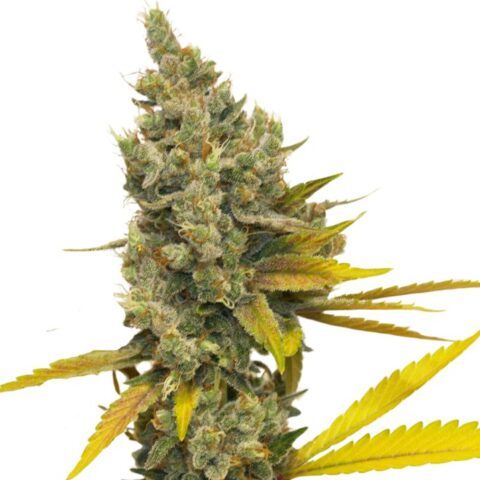
Gelato Cake is a dessert-style hybrid with dense buds, high resin production, and strong lateral branching that wants to fill space fast. Because the side branches are so assertive, it benefits from decisive cannabis main stem pruning early in veg to keep the structure under control.
When main-lining cannabis with this cultivar:
- I take the first topping as soon as the 5th node is fully formed, before the plant turns into a thicket
- Running feminized seeds for training lets me hunt for phenotypes with naturally even branch spacing and tight node stacking
- It responds incredibly well to gentle low-stress training techniques and a light SCROG overlay to keep dessert-weight colas from collapsing late in flower
In a dialed indoor weed grow setup, Gelato Cake has no trouble competing for “top jar” status in both yield and bag appeal.
-
Gelato Cake Cannabis Seeds
Gelato Cake Cannabis Seeds combine sweet bakery flavors with the …From: $25 BUY NOW This product has multiple variants. The options may be chosen on the product page
NYC Sour Diesel (Sativa-Leaning Hybrid)
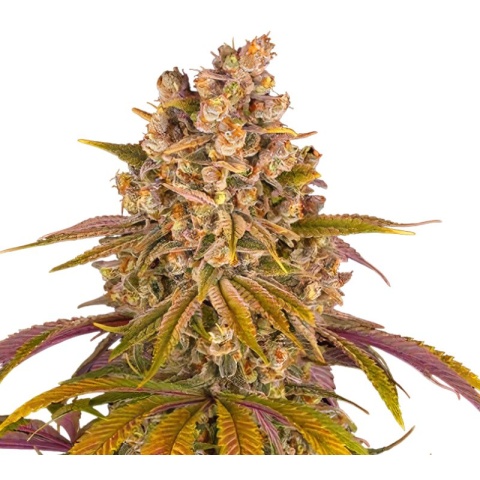
NYC Sour Diesel is classic stretch city. From flip to week three of flower, it can nearly double height, which intimidates newer growers until they see what main-lining cannabis can do to tame that vertical sprint.
With this cultivar, I:
- Keep cannabis veg time on the shorter side, knowing the stretch will easily finish filling the grid
- Rely heavily on SCROG training to anchor those long arms and prevent sway under heavy colas
- Use repeated low-stress training techniques through early flower, bending and re-tucking rather than forcing hard bends that can snap mature branches
The payoff is a canopy of spearlike, fuel-scented tops and some of the most vigorous high-yield marijuana plants you can run under modern LEDs, as long as you stay on top of that early structure.
-
NYC Sour Diesel Cannabis Seeds
NYC Sour Diesel cannabis seeds capture the dynamic essence of …From: $25 BUY NOW This product has multiple variants. The options may be chosen on the product page
Granddaddy Purple (Heavy Indica)
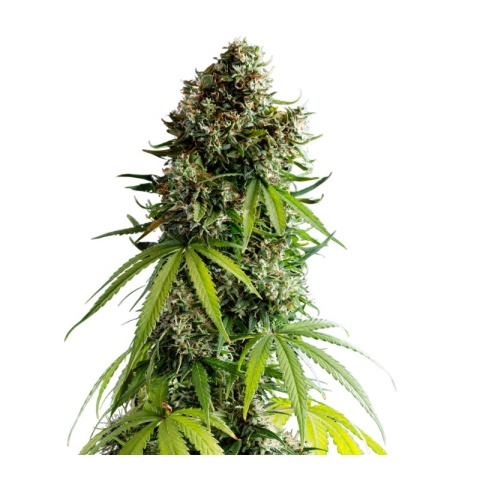
Granddaddy Purple grows exactly how you would expect a classic indica photoperiod to behave: stout frame, broad leaves, and short internodes that naturally stack into dense bud sites. That architecture makes it an excellent candidate for compact, main-lined shrubs in smaller tents.
Under main-lining cannabis:
- An 8-top manifold fits perfectly into a 2×4 or 3×3 tent, with almost no need for aggressive vertical control
- It responds well to a slightly longer cannabis veg time so those tight nodes can fully stack along each arm before flip
- Running feminized seeds for training keeps the pheno hunt simple, and nearly every Granddaddy Purple plant I have grown behaves predictably under SCROG training
If you are chasing dense, grape-colored nuggets on every branch, Granddaddy Purple is one of the first photoperiod cannabis seeds I recommend for a manicure-friendly, symmetrical canopy.
-
Granddaddy Purple Cannabis Seeds
Granddaddy Purple cannabis seeds, akin to mystical treasures from the …From: $24.99 BUY NOW This product has multiple variants. The options may be chosen on the product page
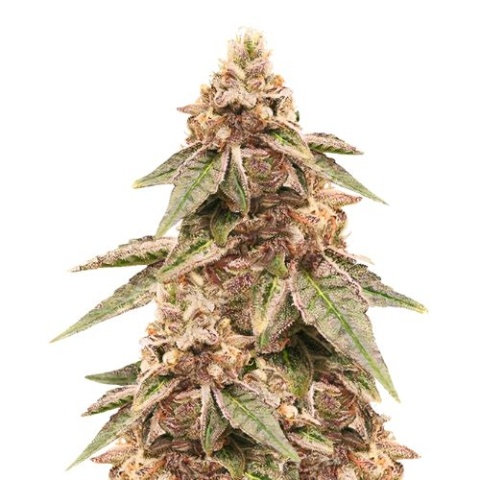
Wedding Cake (Balanced Hybrid)
Wedding Cake is all about balance: indica-leaning weight with hybrid vigor. Even without training it tends to produce a reasonably level set of tops, but with cannabis topping and training it becomes almost unnervingly uniform—perfect for main-lining.
In my experience:
- It snaps back quickly from initial cannabis main stem pruning, especially when root zone EC is kept steady rather than spiked
- It thrives when PPFD is pushed toward 850–900 µmol/m²/s in late flower, provided VPD stays in the 1.1–1.3 kPa range
- Its growth pattern makes it one of the easiest dessert-style cultivars for newer growers to main-line without surprise stretch or wild branching
Run from feminized seeds for training, a full tent of Wedding Cake looks like a tray of clones—even when every plant started from seed. It is one of the most photogenic canopies I pull out for content.
-
Wedding Cake Cannabis Seeds
Bursting with rich, sweet flavors and a complex terpene profile, …From: $24.99 BUY NOW This product has multiple variants. The options may be chosen on the product page
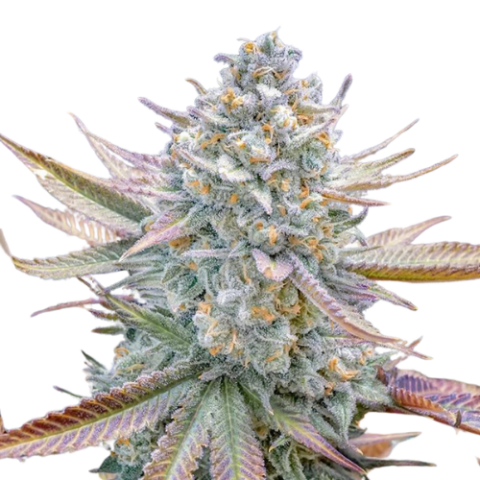
Super Blue Dream (Blue Hybrid)
Super Blue Dream keeps the classic Blue Dream branchy, sativa-leaning frame but adds a bit more potency and resin density. It likes to stretch, but not uncontrollably, and it throws plenty of side shoots that happily plug into an even manifold.
When I am main-lining cannabis with this cultivar:
- I start low-stress training techniques early, guiding young branches outward before the stems fully lignify
- I combine the manifold with a light SCROG training net to support those long, frosty colas in weeks seven and eight
- I watch VPD carefully during the stretch—Super Blue Dream appreciates a smooth glide from about 0.9–1.0 kPa in late veg up to 1.2–1.3 kPa mid-flower to avoid minor stress responses
The result is a blue-hued forest of high-yield marijuana plants that reward attention to detail with long, shimmering tops and very efficient light use across the canopy.
-
Super Blue Dream Cannabis Seeds
Super Blue Dream cannabis seeds offer a dreamy and elevated …From: $24.99 BUY NOW This product has multiple variants. The options may be chosen on the product page
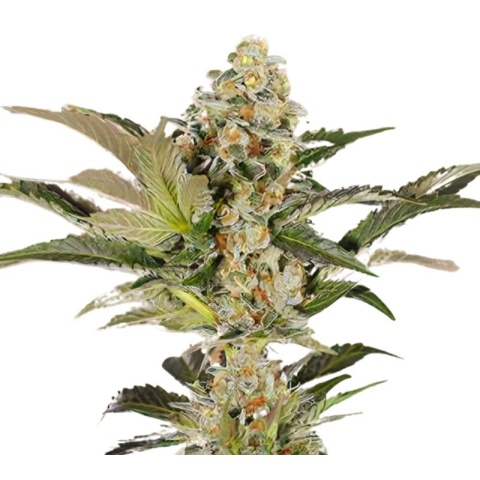
Strawberry Gorilla (Hybrid)
Strawberry Gorilla feels like it was built for cannabis topping and training. In veg it throws side branches aggressively, and if you let it run untamed it will turn into a strawberry-scented jungle. Main-lining cannabis is how I focus that energy into organized production.
Key observations from my runs:
- It tolerates repeated cannabis main stem pruning without losing momentum, especially when nitrogen is tapered a bit before each topping
- A moderate cannabis veg time is plenty—this cultivar packs on biomass quickly and will fill a 3×3 SCROG training net corner to corner
- Under 800–900 µmol/m²/s and consistent airflow above and below the screen, it stacks surprisingly dense buds with minimal larf
Strawberry Gorilla has become one of my favorite photoperiod cannabis seeds for testing new environment tweaks—CO₂ adjustments, small VPD experiments, or different media—because it is so forgiving while still clearly showing the impact of each change in structure and yield.
-
Strawberry Gorilla Cannabis Seeds
“Strawberry Gorilla” stands out as a distinct cannabis strain, likely …From: $26 BUY NOW This product has multiple variants. The options may be chosen on the product page
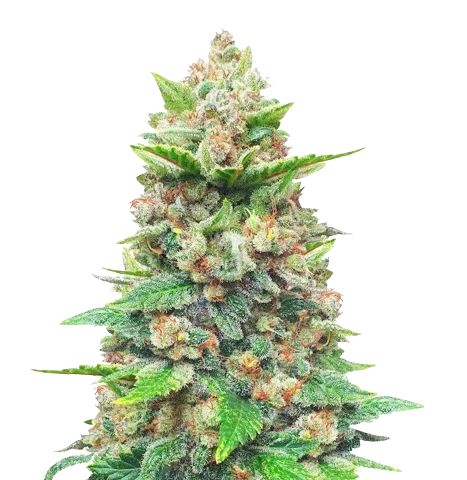
God’s Gift (Indica-Leaning Hybrid)
God’s Gift is a hybrid of Granddaddy Purple and OG Kush, and it grows exactly like that sounds: compact, bushy, and naturally inclined to build heavy, resin-soaked colas on a relatively short frame. That makes it a prime candidate for neat, low-profile manifolds in low-ceiling spaces.
Under a manifold:
- It builds thick, candle-like colas on every arm without needing extreme veg times
- It rarely over-stretches, so I can keep lights closer and maintain excellent PPFD uniformity across the tops
- It pairs well with other photoperiod cannabis seeds in mixed runs when I want consistent canopy height but varied flavor profiles
For growers new to main-lining cannabis who still want that “purple Kush” flavor lane, God’s Gift is one of the most cooperative photoperiod strains in the Royal King Seeds catalog—and a smart way to end a symmetrical, high-performing training lineup.
-
God’s Gift Cannabis Seeds
Emerging within the world of cannabis like a radiant beacon …From: $24.99 BUY NOW This product has multiple variants. The options may be chosen on the product page
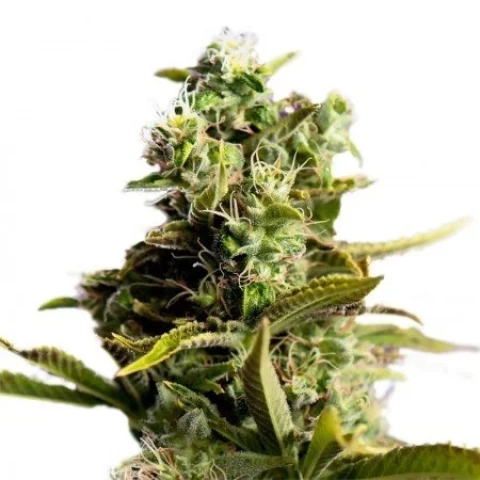
Balancing Veg Time, Pot Size, And Yield
One of the main trade-offs with main-lining cannabis is extended veg. When you invest in cannabis main stem pruning and a careful cannabis topping and training plan, you add at least one to two weeks before flip.
I handle this by matching cannabis veg time to pot size and desired plant count:
- Small pots (3–5 gallons): Shorter veg, 4–6 tops per plant
- Medium pots (7 gallons): Moderate veg, 6–8 tops per plant
- Large pots (10+ gallons): Longer veg, 8+ tops per plant, more suited to larger rooms
Because photoperiod cannabis seeds give me flexibility, I can decide late in the game whether to extend veg to fill the SCROG training net or flip early to keep plants more compact.
The payoff is seen at harvest. High-yield marijuana plants grown under a disciplined manifold tend to produce more usable flower and less scraggly popcorn. The more uniform the symmetrical cannabis canopy, the more predictable the final weight.
Common Problems When Main-Lining Cannabis (And How I Respond)
Main-lining cannabis is not risk-free. Here are a few issues I see often in my own tents or in other growers’ photos, plus how I approach them.
Snapped Branches
Heavy-handed cannabis topping and training or late adjustments in a tight SCROG training net can snap branches.
How I respond:
- Immediately support the break with plant tape or a soft tie if the branch is still partially attached
- Stabilize the branch so it does not move while healing
- Reduce light intensity slightly and maintain ideal VPD to lower overall stress
Low-stress training techniques, applied early, prevent most of these breaks.
Uneven Arms In The Manifold
Sometimes one side of the plant races ahead. To prevent a lopsided result, I:
- Use low-stress training techniques to pull the stronger branch lower and let the weaker one catch up
- Top the more vigorous side one node earlier than the other
- Adjust cannabis veg time slightly to allow the plant to rebalance before flip
This is another reason photoperiod cannabis seeds are so valuable for main-lining cannabis. I’m not forced into flowering before the plant is structurally ready.
Slow Recovery After Pruning
If a plant stalls after cannabis main stem pruning, I check:
- Root zone temperature and moisture
- Nutrient levels (especially nitrogen, calcium, and magnesium)
- Overall environment, particularly VPD swings
I also avoid stacking multiple stressors. I do not combine hard cannabis topping and training with drastic defoliation or major environmental changes in the same week.
Post-Harvest Observations From Main-Lined Plants
After running main-lining cannabis across many cycles, I have noticed consistent post-harvest advantages:
- Trimming goes faster because bud size and shape are more uniform.
- Branches dry at a similar rate, making it easier to schedule the dry and cure.
- Jars are more consistent from top to bottom, especially in high-yield marijuana plants grown under a tight SCROG training net.
It is important not to interpret these observations as guarantees. Genetics, environment, and grower decisions still matter. But a well-built symmetrical cannabis canopy stacks the odds in your favor.
FAQ: Main-Lining Cannabis With Photoperiod Seeds
How many toppings should I do when main-lining cannabis?
For most photoperiod cannabis seeds, I find that two to three rounds of cannabis topping and training are enough. The first creates the basic manifold, the second doubles the arms, and an optional third can expand to 8 or more tops. Watch how each strain responds before pushing further.
Can I main-line autoflowers, or should I stick to photoperiod cannabis seeds?
You can apply very light low-stress training techniques to autos, but I strongly prefer photoperiod cannabis seeds when main-lining cannabis. Photoperiods let you extend cannabis veg time, recover from cannabis main stem pruning, and time the flip more precisely. Autos simply do not give the same control.
Do I have to use a SCROG training net with main-lining?
A SCROG training net is not mandatory, but it pairs extremely well with main-lining cannabis. Once the manifold is built, weaving each cola into a square keeps the symmetrical cannabis canopy rigid and evenly lit. In a crowded indoor weed grow setup, SCROG training also prevents branches from collapsing under weight.
Are feminized seeds for training always better for main-lining?
For most home growers, yes. Feminized seeds for training reduce the risk of losing weeks of cannabis veg time to male plants. Regular seeds still have a place for breeding projects or hunting rare phenotypes, but main-lining cannabis is time-intensive, so I prefer the certainty feminized seeds provide.
How big should my pots be for high-yield marijuana plants under a manifold?
That depends on your available space and cannabis veg time. In my own indoor weed grow setup, 5–7 gallon pots are a sweet spot for 4–8 tops per plant. Larger pots can support even more colas, but only if you are prepared for a longer veg and a more extensive SCROG training layout.
Final Thoughts
Main-lining cannabis is one of the most satisfying ways to sculpt plants into living architecture. When combined with carefully chosen photoperiod cannabis seeds, a tuned indoor weed grow setup, and a balanced approach to cannabis topping and training, it can transform chaotic bushes into predictable, high-yield marijuana plants.
The eight photoperiod cannabis seeds I highlighted here are not the only cultivars that work with this method, but they have proven themselves in my tents time and time again. If you are ready to build a truly symmetrical cannabis canopy, start with genetics that respond well to structure, lean on feminized seeds for training when you can, and always give yourself enough cannabis veg time to let plants recover.
Main-lining rewards patience and precision. Treat every cut and bend as part of a bigger design, and your next run could be the most organized, productive garden you have ever grown.
