Table of Contents
M-39 is a legendary Indica-dominant hybrid that has made a lasting impression on the cannabis industry due to its balanced effects, high yield, and strong resilience. Originally bred for commercial cultivation, M-39 remains popular among growers and users alike for its potency, skunky aroma, and therapeutic benefits. While often overshadowed by newer, more exotic strains, M-39 continues to be a staple for people looking for a trustworthy and potent cannabis experience. This guide provides an in-depth look at M-39’s genetic lineage, physical attributes, cannabinoid profile, medical applications, recreational benefits, and cultivation details.
Genetic Background
M-39 is a hybrid strain created by crossing Northern Lights #5 and Skunk #1, two powerhouse strains known for their distinct effects and resilience.
- Northern Lights #5: A legendary Indica known for its deeply relaxing effects, pain relief properties, and ability to induce a tranquil body high.
- Skunk #1: A classic hybrid that brings a pungent, skunky aroma and a balanced mix of cerebral stimulation and bodily relaxation.
M-39 maintains an Indica-dominant profile, typically comprising 60-70% Indica and 30-40% Sativa genetics. This composition results in a strain that delivers a mix of mental euphoria and deep body relaxation, making it an excellent choice for both medical and recreational users.
Appearance, Aroma, and Flavor Profile
Appearance
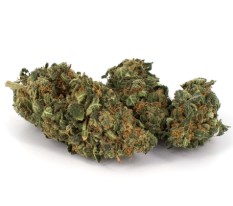
M-39 plants are medium in height with a bushy, compact structure, indicative of its Indica dominance. The buds are covered in a thick layer of frost and are dense and closely packed white trichomes, giving them a sticky texture. The coloration of the buds is usually a mix of vibrant green with hints of orange pistils weaving throughout.
Aroma
The aroma of M-39 is one of its most defining characteristics. Users describe it as a pungent mix of skunk, earth, and sweet citrus undertones. The dominant terpenes responsible for its unique scent include:
- Myrcene – Earthy, musky, and herbal notes with sedative effects.
- Caryophyllene – Spicy and peppery undertones with anti-inflammatory benefits.
- Limonene – Citrusy aroma with uplifting and stress-relieving properties.
Flavor
When smoked or vaporized, M-39 offers a smooth and skunky flavor, with sweet and citrusy undertones. The earthy taste lingers on the tongue, making it a well-rounded strain for those who appreciate classic cannabis flavors.
THC and CBD Content
- THC Levels: Ranges between 16-22%, making it moderately potent but still suitable for both novice and experienced users.
- CBD Levels: Generally low, usually under 1%, meaning M-39 is more geared towards THC-driven effects rather than high-CBD therapeutic applications.
Medical Uses of M-39 Cannabis Strain
The M-39 cannabis strain has been widely recognized for its therapeutic properties, offering relief for a variety of medical conditions. Due to its Indica-dominant genetics, moderate-to-high THC content (16-22%), and terpene-rich profile, M-39 exhibits potent analgesic, anxiolytic, anti-inflammatory, sedative, and appetite-stimulating properties. Below is a scientific breakdown of how M-39 interacts with the human body to provide medical benefits.

Mechanisms of Action in the Human Body
M-39 exerts its therapeutic effects through its interaction with the endocannabinoid system (ECS), which regulates homeostasis in the body. The ECS consists of:
- CB1 Receptors (primarily in the brain and central nervous system)
- CB2 Receptors (mostly found in the immune system and peripheral tissues)
The primary cannabinoids in M-39—THC (tetrahydrocannabinol) and minor levels of CBD (cannabidiol)—bind to these receptors to produce neurological and physiological effects.
Key Cannabinoids in M-39 and Their Medical Impact
| Cannabinoid | Medical Effects | Primary Mechanism |
|---|---|---|
| THC (Tetrahydrocannabinol) 16-22% | Pain relief, appetite stimulation, mood enhancement, sleep aid | Binds to CB1 receptors, modulates neurotransmitter release (dopamine, serotonin) |
| CBD (<1%) | Anti-inflammatory, neuroprotective, anxiety reduction | Interacts with CB2 receptors, reduces cytokine production |
| CBN (Cannabinol) ~1% | Sedation, muscle relaxation | Binds weakly to CB1 receptors, enhances GABAergic activity |
Medical Applications of M-39
A. Pain Management
M-39 is particularly effective for treating chronic and neuropathic pain due to its THC-rich profile and terpene synergy.
1. Chronic Pain Conditions Treated by M-39
- Arthritis & Joint Pain: THC activates CB1 receptors, reducing pain perception and inflammation in the joints.
- Neuropathic Pain: Helps manage nerve pain by modulating neuronal excitability.
- Migraines & Headaches: THC inhibits serotonin release, reducing migraine frequency and intensity.
- Muscle Spasms & Fibromyalgia: Works as a muscle relaxant by interacting with GABA (gamma-aminobutyric acid) receptors, decreasing muscle hyperactivity.
2. Scientific Mechanism of Pain Relief
- THC interacts with vanilloid receptors (TRPV1), which regulate pain perception and inflammation.
- β-Caryophyllene (a major terpene in M-39) binds to CB2 receptors, producing anti-inflammatory effects without psychoactivity.
B. Anxiety, Stress, and Mood Disorders
M-39 has notable anxiolytic and antidepressant properties due to its balance of THC, limonene, and myrcene.
1. Conditions Treated
- Generalized Anxiety Disorder (GAD)
- Post-Traumatic Stress Disorder (PTSD)
- Social Anxiety Disorder
- Depression & Mood Imbalances
2. Scientific Mechanism of Anxiety Reduction
- THC stimulates CB1 receptors in the amygdala, regulating fear responses.
- Limonene modulates serotonin (5-HT1A) receptors, promoting mood stabilization.
- Myrcene’s sedative effects promote relaxation by enhancing GABAergic transmission.
Caution: High doses of THC may trigger anxiety or paranoia in individuals with THC sensitivity. Microdosing is recommended.
C. Insomnia & Sleep Disorders
M-39’s sedative properties make it an excellent choice for treating insomnia and sleep disturbances.
1. Conditions Treated
- Primary Insomnia
- Sleep Apnea
- Restless Leg Syndrome
- Chronic Fatigue Syndrome (CFS)
2. Scientific Mechanism of Sleep Induction
- High myrcene levels act as a natural sedative, increasing sleep duration.
- CBN (cannabinol) enhances GABAergic signaling, promoting deeper REM sleep.
- Linalool (if present in specific phenotypes) has anxiolytic properties, reducing pre-sleep stress.
D. Appetite Stimulation (Cancer & Eating Disorders)
M-39 is effective in stimulating appetite, making it beneficial for patients undergoing chemotherapy or those with eating disorders.
1. Conditions Treated
- Cancer-related cachexia (wasting syndrome)
- HIV/AIDS-related appetite suppression
- Anorexia Nervosa
- Gastrointestinal Disorders (IBS, Crohn’s Disease)
2. Scientific Mechanism of Appetite Stimulation
- THC activates CB1 receptors in the hypothalamus, increasing ghrelin production (hunger hormone).
- Dopamine release enhances pleasure perception, making food more enjoyable.
- Anti-nausea effects make it easier for chemotherapy patients to retain food.
E. Anti-Inflammatory and Autoimmune Benefits
M-39 may provide relief for patients with autoimmune disorders due to its immunomodulating effects.
1. Conditions Treated
- Multiple Sclerosis (MS): Reduces muscle spasms, neuroinflammation.
- Rheumatoid Arthritis (RA): Alleviates joint inflammation and pain.
- Lupus: Modulates immune overactivity.
- Inflammatory Bowel Disease (IBD): Reduces gut inflammation.
2. Scientific Mechanism of Anti-Inflammation
- CB2 receptor activation suppresses pro-inflammatory cytokines (IL-6, TNF-α).
- β-Caryophyllene and humulene exhibit anti-inflammatory properties similar to NSAIDs.
Neuroprotective and Cognitive Benefits
A. Treatment for Neurodegenerative Disorders
M-39 may have neuroprotective effects, beneficial for conditions such as:
- Alzheimer’s Disease: Reduces beta-amyloid plaque accumulation.
- Parkinson’s Disease: Decreases dopamine neuron degeneration.
- Epilepsy: THC modulates glutamate transmission, reducing seizure frequency.
B. Cognitive Function and Memory
- Low-to-moderate doses of THC improve neurogenesis in the hippocampus.
- CBD (though low in M-39) counteracts THC-induced short-term memory impairment.
Potential Risks & Side Effects
While M-39 has numerous therapeutic benefits, it may also pose risks, particularly for individuals sensitive to THC.
Common Side Effects
| Side Effect | Cause | Mitigation Strategy |
|---|---|---|
| Dry Mouth (Cottonmouth) | THC interaction with salivary glands | Increase hydration |
| Dry Eyes | Reduced tear production | Use artificial tears |
| Dizziness | Sudden blood pressure drop | Consume in a seated position |
| Increased Heart Rate (Tachycardia) | THC-induced vasodilation | Avoid high doses |
| Paranoia/Anxiety | Overactivation of CB1 receptors | Use low-THC microdoses |
Long-Term Considerations
Addiction Potential: M-39 has a low-moderate risk of dependence.
Cognitive Impact: Chronic high-THC use may reduce short-term memory retention.
Tolerance Development: Frequent use leads to desensitization of CB1 receptors, reducing effectiveness.
Recreational Uses of M-39 Cannabis Strain
Beyond its medicinal applications, M-39 is popular among recreational users for various reasons.
Relaxation and Stress Reduction
- Perfect for relaxing after a hectic day
- Reduces mental clutter and promotes tranquility
Euphoria and Mood Boost
- Creates a light, happy euphoria without overwhelming psychoactive effects
- Enhances social interactions and conversations
Creative Stimulation
- Some users report mild creativity boosts, making it a great strain for light artistic activities
Evening and Nighttime Use
- Best suited for late afternoon or evening use due to its relaxing and slightly sedative effects
- Not ideal for tasks requiring focus or high energy
Growing M-39 Cannabis Strain
Cultivating M-39 cannabis requires an in-depth understanding of plant biology, environmental control, nutrient management, and advanced growing techniques to optimize its yield and potency. Below is a detailed guide on the best scientific methods for cultivating M-39, covering aspects such as genetic optimization, environmental parameters, nutrient management, pest control, and post-harvest processing.
Genetic Optimization and Selection
Before starting cultivation, choosing the right phenotype of M-39 is critical. The plant’s genetics directly influence its growth characteristics, yield potential, and resistance to pests.
- Genotype vs. Phenotype: M-39, like any cannabis strain, displays phenotypic variations based on environmental factors. Selecting a phenotype with high trichome production, dense bud structure, and optimal cannabinoid profile ensures the best results.
- Seed vs. Clones:
- Seeds: Offer genetic variability but require phenotype selection.
- Clones: Ensure genetic consistency but may carry inherited weaknesses or disease susceptibility.
Cultivation Environment: Indoor vs. Outdoor
M-39 is known for its adaptability to both indoor and outdoor environments, but each method requires different scientific approaches.
A. Indoor Cultivation
Indoor cultivation provides greater control over environmental variables, leading to higher-quality yields.
Lighting Requirements
- Vegetative Stage: 18-24 hours of light per day.
- Recommended Lights: Full-spectrum LEDs (600-1000W), Metal Halide (MH) lamps
- PPFD (Photosynthetic Photon Flux Density): 400-700 µmol/m²/s
- Flowering Stage: 12 hours of light / 12 hours of darkness.
- Recommended Lights: HPS (High-Pressure Sodium) or Full-Spectrum LED
- PPFD: 700-1200 µmol/m²/s for maximum trichome production.
Temperature & Humidity Control
- Vegetative Stage: 70-80°F (21-27°C), Humidity: 60-70%
- Flowering Stage: 65-75°F (18-24°C), Humidity: 40-50%
- Late Flowering: Humidity should drop to 30-40% to prevent mold.
Air Circulation & CO₂ Enhancement
- Ventilation: Maintain air exchange with exhaust fans and intake fans.
- CO₂ Enrichment: Increasing CO₂ levels to 1000-1500 ppm improves photosynthesis, resulting in larger yields and higher cannabinoid production.
B. Outdoor Cultivation
M-39 is well-suited for outdoor environments but thrives best in temperate to Mediterranean climates.
Climate Considerations
- Temperature: 65-85°F (18-29°C) for optimal growth.
- Humidity: 45-55% is ideal to prevent mold.
- Sunlight: Requires 10-12 hours of direct sunlight for maximum bud production.
Soil Composition & pH Balance
- Soil pH: 6.0-6.5 for optimal nutrient absorption.
- Ideal Soil Composition:
- 40% Loam: Provides aeration and root stability.
- 30% Compost: Supplies organic nutrients.
- 20% Perlite: Enhances drainage.
- 10% Sand: Prevents water retention and root rot.
Nutrient Management & Fertilization
Providing the right nutrients at different stages of growth maximizes yield and cannabinoid content.
Nutrient Requirements by Growth Stage
| Growth Stage | Nitrogen (N) | Phosphorus (P) | Potassium (K) | Additional Supplements |
|---|---|---|---|---|
| Seedling | Low | Low | Low | Mycorrhizae for root development |
| Vegetative | High | Medium | Medium | Silica for strong stems |
| Pre-Flowering | Medium | High | High | Magnesium, Calcium |
| Flowering | Low | High | High | Sulfur for terpene production |
| Late Flowering | Low | Very High | Very High | Flushing with pure water |
Organic vs. Synthetic Fertilizers
- Organic Fertilizers: Bat guano, worm castings, fish emulsion.
- Synthetic Fertilizers: N-P-K balanced formulas (e.g., 10-5-7 for vegetative, 5-15-10 for flowering).
Growth Optimization Techniques
To maximize M-39’s yield and resin production, scientific training techniques are used.
Low-Stress Training (LST)
- Goal: Encourages horizontal growth for even light exposure.
- Method: Tie branches down carefully without breaking stems.
High-Stress Training (HST)
- Topping: Cutting the main stem to encourage multiple colas.
- Fimming: Partial cutting to create bushier plants.
Screen of Green (ScrOG)
- Method: Uses a net to evenly spread out branches, improving light penetration and bud development.
Sea of Green (SOG)
- Best for indoor growing with many small plants.
- Encourages rapid flowering, increasing overall yield.
Pest & Disease Management
Preventative measures are key to maintaining a healthy crop.
Common Pests
| Pest | Symptoms | Prevention & Treatment |
|---|---|---|
| Spider Mites | Yellow specks, webbing | Neem oil, ladybugs, predatory mites |
| Aphids | Sap-sucking, leaf curling | Neem oil, insecticidal soap |
| Fungus Gnats | Larvae in soil | Dry topsoil, hydrogen peroxide solution |
| Caterpillars | Holes in leaves, bud rot | Bacillus thuringiensis (Bt) spray |
Common Diseases
| Disease | Cause | Prevention |
|---|---|---|
| Powdery Mildew | High humidity | Air circulation, sulfur treatment |
| Bud Rot (Botrytis) | High moisture, poor airflow | Lower humidity, remove infected buds |
| Root Rot | Overwatering | Well-draining soil, hydrogen peroxide solution |
Harvesting & Post-Harvest Processing
When to Harvest
M-39 typically flowers in 6-8 weeks indoors, with outdoor harvests ready in September to October.
- Trichome Color Test:
- Clear trichomes: Too early.
- Milky trichomes: Peak THC potency.
- Amber trichomes: More sedative, CBN-rich effect.

Drying & Curing Process
- Drying: Hang buds upside down in 60-70°F (15-21°C) with 50% humidity for 7-10 days.
- Curing: Store in glass jars at 62% humidity, burping daily for the first two weeks.
- Long-Term Storage: Keep in an airtight jar in a cool, dark place to preserve terpenes and cannabinoids.
Scientific Enhancements for Higher Yield & Potency
1. CO₂ Supplementation
- Increased CO₂ levels to 1000-1500 ppm during flowering can boost photosynthesis, leading to 20-30% higher yields.
2. Light Spectrum Optimization
- Blue Light (450nm-500nm): Enhances vegetative growth.
- Red Light (620nm-700nm): Stimulates flowering and resin production.
3. Terpene Maximization Techniques
- Flushing (Final 2 weeks): Watering with pure water enhances the natural flavor profile.
- Cold-Shocking: Lowering temperatures in late flowering to 60°F (15°C) may increase anthocyanin production, giving buds a purple hue.
Conclusion
M-39 remains one of the most well-rounded cannabis strains, offering a blend of relaxation, euphoria, and therapeutic benefits. Its strong pain-relieving and sedative effects make it an excellent choice for medical users, while its smooth flavor, balanced high, and stress-relieving properties appeal to recreational consumers. Whether cultivated for personal use or commercial production, M-39 stands as a reliable, potent, and high-yielding strain that continues to be a staple in the cannabis community.
For a complete directory of cultivars, visit our Cannabis Strain Reviews.
