Table of Contents
Lemon Skunk is a highly regarded hybrid cannabis strain known for its citrusy aroma, uplifting effects, and well-balanced genetic composition. This strain has gained popularity among medical and recreational users for its ability to boost mood, enhance focus, and alleviate various ailments. Lemon Skunk is a cross between two Skunk phenotypes selected for their distinct lemony scent and high potency. This guide delves into its genetic makeup, medical applications, recreational benefits, and scientific properties that make it one of the most sought-after strains in the cannabis community.
1. Genetic Background
Lemon Skunk is a sativa-dominant hybrid with a genetic composition of approximately 60% Sativa and 40% Indica. It was bred by DNA Genetics, one of the most reputable seed banks in the world, by crossing two Skunk phenotypes that exhibited intense lemon aromas and flavors.
- Parent Strains:
- Skunk #1 (Lemon Phenotype) – A legendary strain known for its potent, euphoric effects and strong, pungent aroma.
- Skunk #1 (Another Lemon Phenotype) – A carefully selected variation of Skunk #1 that carried an even more pronounced lemon profile.
The combination of these two phenotypes resulted in a unique hybrid that expresses the best of both worlds—the euphoria and mental clarity of a sativa, combined with the relaxation and body-high of an indica.
Lemon Skunk’s THC levels range between 16% and 22%, making it a potent strain suitable for a variety of users, from casual consumers to those seeking therapeutic benefits.
2. Appearance, Aroma, and Flavor Profile
Appearance
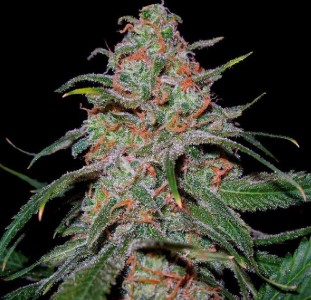
Lemon Skunk plants exhibit classic hybrid traits, with medium to tall height, elongated colas, and vibrant green leaves. The thick, resinous buds frequently display:
- Bright green hues with hints of yellow and orange pistils.
- A generous coating of trichomes, making them appear frosty and sticky.
- Occasionally, the buds may have slight purple undertones when grown in cooler temperatures.
Aroma
Lemon Skunk has an unmistakable citrusy and skunky aroma. The dominant terpenes responsible for this fragrance include:
- Limonene – Contributes to the strong lemon scent, adding a fresh and zesty character.
- Myrcene – Adds an earthy and musky undertone, enhancing its relaxing effects.
- Caryophyllene – Provides spicy and peppery notes, adding depth to its profile.
The pungency of its skunky aroma means it can be quite noticeable when consumed, making discretion difficult in public settings.
Flavor
Lemon Skunk’s flavor is refreshing and citrus-forward, offering:
- A tangy lemon taste on the inhale.
- Hints of sweet citrus, earthy undertones, and slight skunkiness on the exhale.
- A smooth smoke or vapor, making it enjoyable for users who prefer flavorful strains.
Its long-lasting taste makes it a favorite for cannabis connoisseurs who appreciate complex terpene profiles.
3. THC and CBD Content
- THC Levels: 16% to 22% (varies based on phenotype and cultivation methods).
- CBD Content: Typically low, around 0.1% to 1%, meaning it is not considered a high-CBD strain.
The high THC content contributes to strong psychoactive effects, making it ideal for both recreational enjoyment and therapeutic use.
4. Medical Uses of Lemon Skunk Cannabis Strain
Lemon Skunk is a sativa-dominant hybrid (60% Sativa, 40% Indica) with THC levels ranging from 16% to 22%. Its therapeutic effects are largely attributed to cannabinoids, terpenes, and flavonoids, which interact with the endocannabinoid system (ECS) to produce various physiological and psychological benefits. Below is a detailed scientific breakdown of Lemon Skunk’s medical applications, mechanisms of action, and research-backed therapeutic effects.

Mechanism of Action: How Lemon Skunk Interacts with the Endocannabinoid System (ECS)
The ECS is responsible for homeostasis (internal balance) in the human body and is composed of:
- CB1 Receptors: Primarily found in the brain and central nervous system (CNS).
- CB2 Receptors: Mostly located in the immune system and peripheral organs.
Key Compounds in Lemon Skunk and Their Effects on the ECS
| Compound | Interaction with ECS | Medical Benefits |
|---|---|---|
| THC (Tetrahydrocannabinol) | Binds to CB1 receptors in the brain, creating psychoactive effects | Pain relief, mood enhancement, appetite stimulation |
| CBD (Cannabidiol) (<1%) | Modulates CB1 and CB2 receptors indirectly | Anti-inflammatory, neuroprotective, anxiety relief |
| Limonene (Dominant Terpene) | Enhances serotonin and dopamine activity | Antidepressant, stress relief, antimicrobial |
| Myrcene | Enhances GABAergic activity, promoting relaxation | Muscle relaxation, sleep aid, anti-inflammatory |
| Caryophyllene | Binds to CB2 receptors, reducing inflammation | Pain relief, immune system support |
Medical Applications of Lemon Skunk Cannabis Strain
Mood Disorders: Depression, Anxiety, and Stress
Lemon Skunk is commonly used to alleviate symptoms of mood disorders, particularly:
- Depression (Major Depressive Disorder, MDD)
- Anxiety (Generalized Anxiety Disorder, GAD)
- Chronic Stress
Scientific Basis
- Limonene (dominant terpene) has been shown to increase serotonin and dopamine levels in the brain, similar to how SSRIs (Selective Serotonin Reuptake Inhibitors) work.
- THC’s activation of CB1 receptors triggers dopamine release, leading to an elevated mood and stress relief.
Clinical Studies
- A 2018 study published in the Journal of Affective Disorders found that cannabis users reported a 50% reduction in depression symptoms after consuming high-limonene strains.
- A 2021 study from Frontiers in Psychiatry suggested that low doses of THC reduce anxiety, while high doses may exacerbate it.
Best Medical Use Case for Lemon Skunk
- Low to moderate doses (THC < 18%) for mood elevation without paranoia.
- Microdosing (2-5mg THC) has been effective for patients sensitive to THC.
Pain Management and Anti-Inflammatory Effects
Lemon Skunk has analgesic (pain-relieving) and anti-inflammatory properties, making it useful for:
- Chronic pain (fibromyalgia, arthritis, neuropathy)
- Migraine relief
- Menstrual cramps and muscle spasms
Scientific Basis
- THC binds to CB1 receptors, modulating pain perception.
- Caryophyllene acts on CB2 receptors, reducing inflammation.
- Myrcene enhances GABA activity, reducing muscle spasms and pain sensitivity.
Clinical Studies
- A 2019 study from the European Journal of Pain found that cannabinoids effectively reduce pain sensitivity in neuropathic pain patients.
- A 2020 study published in the Journal of Experimental Medicine concluded that β-Caryophyllene reduces inflammatory pain via the CB2 receptor pathway.
Best Medical Use Case for Lemon Skunk
- Chronic pain management with daytime functionality (without sedation).
- Mild-to-moderate inflammation conditions (arthritis, migraines).
- THC-rich strains like Lemon Skunk may be more effective than CBD alone for severe pain cases.
Fatigue and Cognitive Performance Enhancement
Lemon Skunk is often prescribed for fatigue, ADHD, and cognitive enhancement.
Scientific Basis
- THC and Limonene increase dopamine levels, which enhances alertness, motivation, and executive function.
- Sativa-dominant effects prevent sedation, making it suitable for daytime use.
Clinical Studies
- A 2020 study in Neuropsychopharmacology showed that low-to-moderate doses of THC enhance focus and working memory, particularly in ADHD patients.
- Limonene’s neuroprotective properties were studied in a 2018 Journal of Neuroscience report, showing improvement in cognitive flexibility.
Best Medical Use Case for Lemon Skunk
- ADHD symptom management (focus, energy boost, dopamine regulation).
- Chronic fatigue syndrome (CFS) patients needing an energy boost without jitters.
- Improved motivation and productivity in neurodivergent individuals.
Gastrointestinal Disorders and Appetite Stimulation
- Nausea and vomiting (from chemotherapy, Crohn’s disease, IBS)
- Loss of appetite (cachexia, anorexia, HIV/AIDS-related weight loss)
Scientific Basis
- THC binds to CB1 receptors in the gut, modulating nausea and gastric motility.
- Limonene and Myrcene have gastroprotective effects, reducing acid reflux and nausea.
Clinical Studies
- A 2017 study in the British Journal of Pharmacology found that cannabinoids significantly reduce chemotherapy-induced nausea.
- THC has been shown to stimulate appetite in HIV/AIDS and cancer patients (JAMA, 2018).
Best Medical Use Case for Lemon Skunk
- Cancer patients undergoing chemotherapy (to reduce nausea and vomiting).
- Appetite stimulation in HIV/AIDS patients or those recovering from eating disorders.
PTSD and Trauma-Related Disorders
- Hyperarousal symptoms (flashbacks, insomnia, anxiety)
- Emotional dysregulation and intrusive thoughts
Scientific Basis
- THC reduces hyperactivity in the amygdala, the brain region responsible for fear responses.
- CBD (even in low amounts) balances excessive THC-induced anxiety, preventing paranoia.
- Limonene acts as an anxiolytic, reducing cortisol levels in stress-induced conditions.
Clinical Studies
- A 2019 study from the Journal of Psychopharmacology reported that cannabis reduced PTSD symptoms by 60% in military veterans.
- A 2021 study in Frontiers in Neuroscience showed that cannabinoid therapy helps modulate traumatic memory reconsolidation.
Best Medical Use Case for Lemon Skunk
- Mild-to-moderate PTSD symptoms (mood enhancement, relaxation).
- Daytime anxiety reduction without cognitive impairment.
3. Conclusion: Scientific Evaluation of Lemon Skunk’s Medical Benefits
| Medical Use | Scientific Effectiveness | Best Use Case |
|---|---|---|
| Depression & Anxiety | High | Daytime stress relief |
| Pain & Inflammation | Moderate-High | Chronic pain, migraines, arthritis |
| Fatigue & ADHD | High | Cognitive function improvement |
| Gastrointestinal Issues | High | Nausea, appetite stimulation |
| PTSD & Stress | Moderate-High | Emotional regulation |
5. Recreational Uses of Lemon Skunk Cannabis Strain
1. Mood Elevation and Social Enjoyment
- Produces a happy and giggly high, making it great for social gatherings.
- Encourages conversations and creativity, making it ideal for artistic pursuits.
2. Energy Boost for Daytime Activities
- Unlike heavy indica strains, Lemon Skunk is energizing, making it suitable for:
- Outdoor activities
- Workouts
- Social outings
3. Sensory Enhancement
- Enhances music appreciation, food flavors, and creative thinking.
4. Mild Relaxation Without Couch-Lock
- Provides physical relaxation without excessive sedation.
- Suitable for light evening relaxation.
6. Cultivation Information
Cultivating Lemon Skunk at an optimal level requires a scientific approach to maximize yield, potency, and terpene production. This guide covers genetic optimization, environmental control, hydroponic vs. soil methods, advanced training techniques, nutrient management, stress induction, and post-harvest processing to produce the highest quality cannabis.

Genetic Optimization for Maximum Yield and Potency
Selecting Phenotypes for Breeding
- Fastest-growing plants with strong lateral branching are preferred.
- High trichome density indicates high cannabinoid potential.
- Plants with intense limonene concentration provide stronger citrus aroma.
- Selecting mold-resistant phenotypes ensures better survivability in humid conditions.
Scientific Insight: Studies show that terpene biosynthesis pathways in cannabis are influenced by both genetics and environmental factors. Controlled stress techniques can increase limonene production in Lemon Skunk.
Optimizing Environmental Conditions
Lemon Skunk thrives in a controlled indoor environment but can also perform well outdoors under Mediterranean-like conditions. Fine-tuning temperature, humidity, and CO₂ levels is essential for enhancing THC synthesis and terpene production.
Temperature and Humidity Control
| Growth Stage | Temperature (Day/Night) | Humidity (%) |
|---|---|---|
| Seedling | 70-75°F (21-24°C) | 65-75% |
| Vegetative | 72-85°F (22-29°C) | 55-65% |
| Early Flowering | 70-80°F (21-27°C) | 40-50% |
| Late Flowering | 65-75°F (18-24°C) | 30-40% |
- Cooler nighttime temperatures (60-65°F) in late flowering can boost anthocyanin production, resulting in slight purple hues in the buds.
- Reducing humidity in flowering prevents mold and enhances resin production.
Scientific Insight: Lower humidity in the final 2 weeks of flowering increases osmotic stress, leading to higher cannabinoid and terpene accumulation.
CO₂ Enrichment for Higher Yields
- CO₂ levels of 1000-1500 ppm during vegetation and early flowering can increase yield by 20-30%.
- Excessive CO₂ (>1800 ppm) can cause stunted growth and reduced potency.
Scientific Insight: Increased CO₂ enhances photosynthesis efficiency, leading to higher biomass production and THC yield.
Soil vs. Hydroponic Cultivation: Scientific Comparison
Soil Cultivation for Flavor Enhancement
Lemon Skunk performs well in a well-aerated, organic soil medium with a pH of 6.0-6.5.
Best Soil Composition:
- 40% Coco Coir – Improves moisture retention and aeration.
- 30% Perlite – Enhances oxygenation and drainage.
- 20% Worm Castings – Provides slow-release nitrogen.
- 10% Bat Guano – High phosphorus content boosts flowering.
Scientific Insight: Organically grown cannabis in living soil produces higher terpene concentrations compared to synthetic fertilizers.
Hydroponic Systems for Faster Growth
| Hydroponic Method | Advantages | Disadvantages |
|---|---|---|
| Deep Water Culture (DWC) | Fast growth, direct nutrient uptake | High risk of root rot |
| Ebb & Flow | Efficient water/nutrient use | Complex system setup |
| Aeroponics | Maximum oxygen to roots, rapid growth | High maintenance |
Scientific Insight: Studies show hydroponic systems result in 30% faster vegetative growth and higher cannabinoid concentration, but terpene production is superior in soil-grown plants.
Advanced Training Techniques for Yield Maximization
Lemon Skunk responds well to both high-stress (HST) and low-stress (LST) training. These methods increase light penetration, bud development, and cannabinoid biosynthesis.
High-Stress Training (HST)
| Technique | Effect on Plant | Application Stage |
|---|---|---|
| Topping | Creates multiple colas, increases yield | Early vegetative (4th-6th node) |
| Supercropping | Boosts trichome production due to stress response | Late vegetative |
| Mainlining | Even canopy growth, maximized bud exposure | Early vegetative |
Scientific Insight: Topping at least twice increases auxin redistribution, leading to bushier plants and higher THC content.
Low-Stress Training (LST)
| Technique | Effect | Application Stage |
|---|---|---|
| LST (Bending branches) | Improves light exposure | Early vegetative |
| ScrOG (Screen of Green) | Maximizes space efficiency | Early flowering |
Scientific Insight: Studies show that LST methods can increase yield by 20-25% due to enhanced light distribution and CO₂ absorption.
Nutrient Optimization for Maximum Cannabinoid Production
Macronutrient Ratios per Growth Stage
| Growth Stage | N | P | K |
|---|---|---|---|
| Seedling | Low | Low | Low |
| Vegetative | High | Medium | Medium |
| Early Flowering | Medium | High | High |
| Late Flowering | Low | Very High | Very High |
- Nitrogen (N): Supports vegetative growth but should be reduced during flowering.
- Phosphorus (P): Essential for bud formation and resin production.
- Potassium (K): Regulates water uptake and enzyme activation.
Scientific Insight: Slight potassium stress in late flowering enhances resin production and trichome density.
Essential Micronutrients
| Micronutrient | Role |
|---|---|
| Calcium (Ca) | Strengthens cell walls, prevents bud rot |
| Magnesium (Mg) | Essential for chlorophyll synthesis |
| Sulfur (S) | Enhances terpene biosynthesis |
Scientific Insight: Increased sulfur supplementation in late flowering boosts limonene levels, leading to stronger lemon aroma.
Harvesting, Drying, and Curing for Maximum Potency
Optimal Harvest Timing
| Trichome Color | Harvest Effect |
|---|---|
| Clear | Low potency |
| Milky White | Highest THC content |
| Amber | More sedative, higher CBN |
Scientific Insight: Harvesting when 70% of trichomes are milky produces peak THC levels.
Drying Process
- Temperature: 60-70°F (15-21°C).
- Humidity: 50-60%.
- Duration: 7-14 days.
Scientific Insight: Slow drying at low humidity preserves up to 60% more terpenes compared to high-heat drying.
Curing Process
- Store buds in glass jars at 60-65% humidity.
- Open jars daily for the first two weeks.
- Curing Time: 4-6 weeks (enhances flavor and potency).
Scientific Insight: Proper curing prevents THC degradation into CBN, maintaining psychoactive potency.
7. Side Effects of Lemon Skunk Cannabis Strain
- Dry mouth and dry eyes (common with most cannabis strains).
- Dizziness or paranoia in high doses, especially for THC-sensitive users.
8. Conclusion
Lemon Skunk is a well-balanced hybrid strain with uplifting and relaxing effects, making it a favorite among medical and recreational users. With its refreshing citrus flavor, energetic high, and therapeutic benefits, this strain remains a staple in the cannabis community. Whether you need pain relief, mood enhancement, or an energy boost, Lemon Skunk delivers a versatile experience.
For a complete directory of cultivars, visit our Cannabis Strain Reviews.
