When I talk with growers across the continent, I notice the same pattern: people treat the legal status of cannabis in europe like a headline that can be memorized once. In real life, it behaves more like a moving grow variable. It shifts with elections, court decisions, pilot programs, local enforcement priorities, and even how a country defines “cannabis,” “marijuana,” or “weed” in its statutes.
I’m writing this from the perspective of a hands-on cultivator who cares about doing things carefully. This is not legal advice. My goal is to show you a practical system for understanding the legal status of cannabis in europe, so you can make smarter decisions about seeds, home setups, and travel. If you build a repeatable method, you won’t be stuck chasing rumors every time someone says, “It’s legal now,” or “Nothing is allowed.”
Along the way, I’ll share how I connect policy questions to real cultivation choices: genetics, lighting, odor control, harvest timing, and storage. Those details matter because the fastest way to get into trouble is to let a grow become chaotic. Calm, well-managed cultivation supports growing weed legally, especially in places with strict home grow limits.
What “legal” means in Europe: getting clear on categories
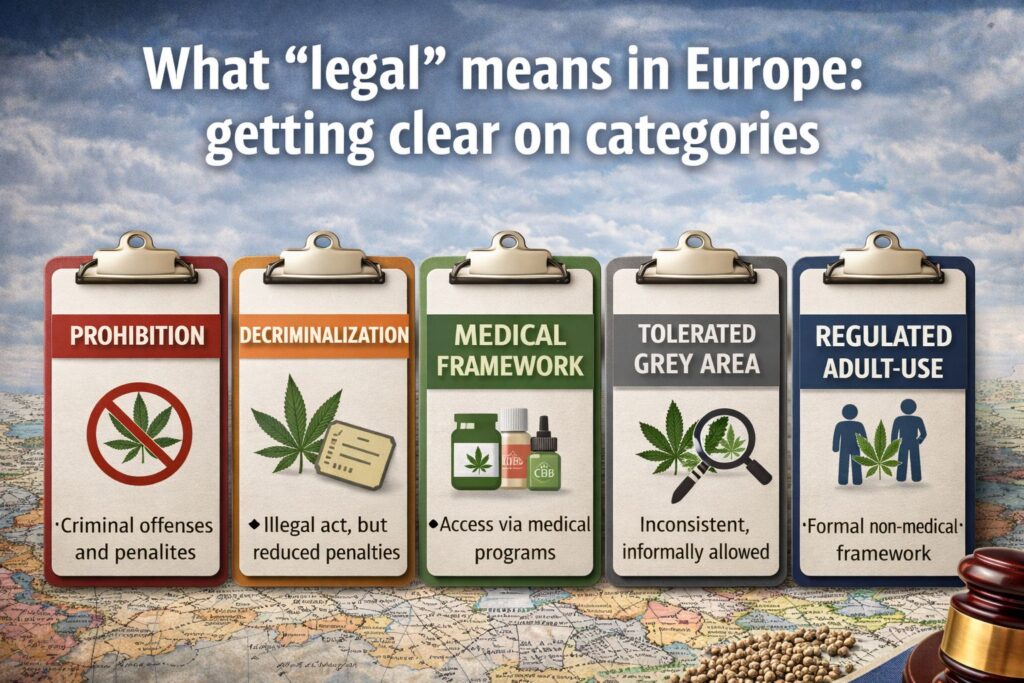
If you search the legal status of cannabis in europe, you’ll see the same terms over and over. I use one phrase as the anchor: decriminalization vs legalization. If you keep that distinction straight, most of the confusion clears up.
Decriminalization vs legalization in plain language
Here’s how I define decriminalization vs legalization when I’m building my notes:
- Prohibition: possession, cultivation, and supply are criminal offenses with meaningful penalties.
- Decriminalization: an act can remain illegal, but penalties are reduced or shifted to administrative fines. Some places decriminalize possession but keep cultivation as a more serious offense. This is why decriminalization vs legalization matters for home growers.
- Medical framework: access exists through medical cannabis programs, typically with prescriptions, registries, and regulated products.
- Tolerated grey area: enforcement may be inconsistent, or certain activities may be informally tolerated without clear legal protection.
- Regulated adult-use: a formal framework exists for non-medical use, often with explicit rules for possession and sometimes cultivation.
These categories are not perfect, but they are useful. They help you ask better questions, especially about home grow limits and seed import regulations.
Seeds, plants, and flower are not treated the same
A major trap for new growers is assuming that seeds are legally the same as harvested marijuana. In many places, the line is germination: possession of seeds might be treated differently than growing weed legally from those seeds.
That’s why my research always separates:
- Seed shipping rules (how orders move through postal systems and couriers)
- Seed import regulations (what customs may flag at borders)
- Home grow limits (what you can legally germinate and maintain)
- Storage and possession rules (how dried cannabis or weed is treated)
If you only read one section of this article, read this: the legal status of cannabis in europe is not one rule. It is a stack of rules that apply differently at each step.
My method: building a Europe cannabis law map that stays useful
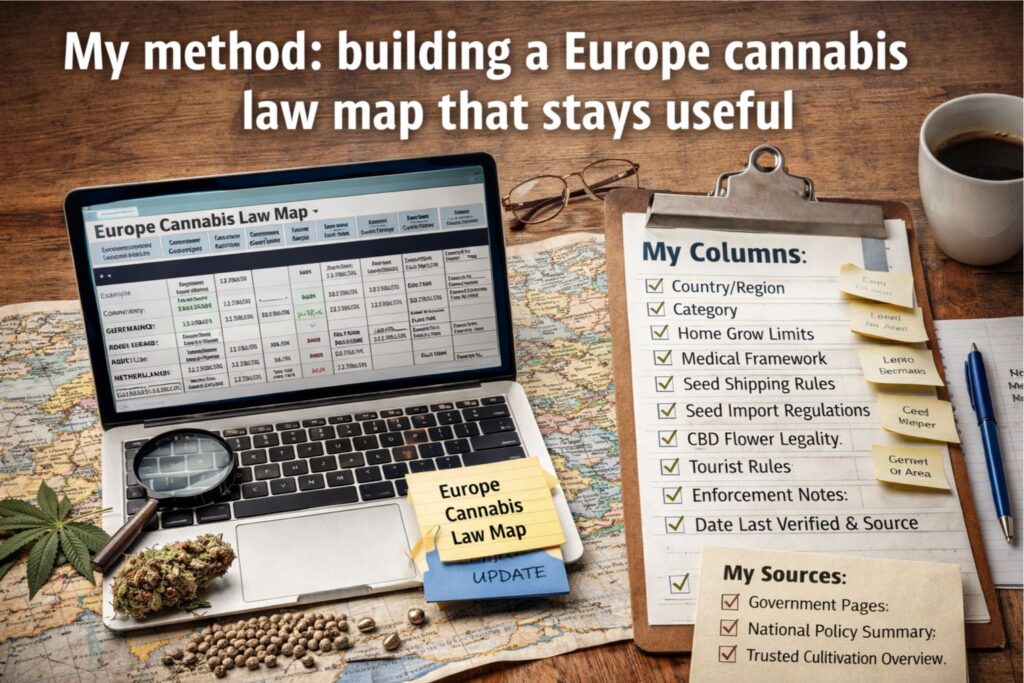
I keep a simple spreadsheet I call my europe cannabis law map. It’s not a public “map” with colors and flags. It’s a grower’s worksheet that I update whenever I’m planning a seed purchase or a trip.
What I track in my europe cannabis law map
These are the columns that actually affect a cultivator:
- Country and region (because local practice can differ)
- Category (prohibition, decriminalization, medical framework, tolerated grey area, regulated adult-use)
- Home grow limits (plant counts, household rules, flowering vs non-flowering)
- Medical cannabis programs (who qualifies and how access works)
- Seed shipping rules (domestic vs cross-border, postal vs courier)
- Seed import regulations (customs risks, documentation expectations, prohibited items)
- CBD flower legality (whether low-THC flower is treated as a controlled cannabis product)
- Tourist cannabis rules (public consumption, transport, hotel policies, and border realities)
- Notes on enforcement culture (my own observations and trusted local reports)
- Date last verified (because the legal status of cannabis in europe changes)
You’ll notice the same keywords coming up. That’s intentional. If your europe cannabis law map doesn’t include home grow limits, cbd flower legality, and seed shipping rules, it won’t answer the questions growers actually have.
The three-source rule I follow
Before I act on anything related to the legal status of cannabis in europe, I verify with three sources:
- A government ministry or national agency page when possible
- A legal text summary from a reputable national source
- A cultivation or harm-reduction organization that explains policy in practical terms
If I can’t confirm the basics, I treat the information as uncertain and I do not change my behavior based on it. That habit is boring, but it’s how you avoid expensive mistakes.
Seed shopping with fewer surprises: seed shipping rules and seed import regulations
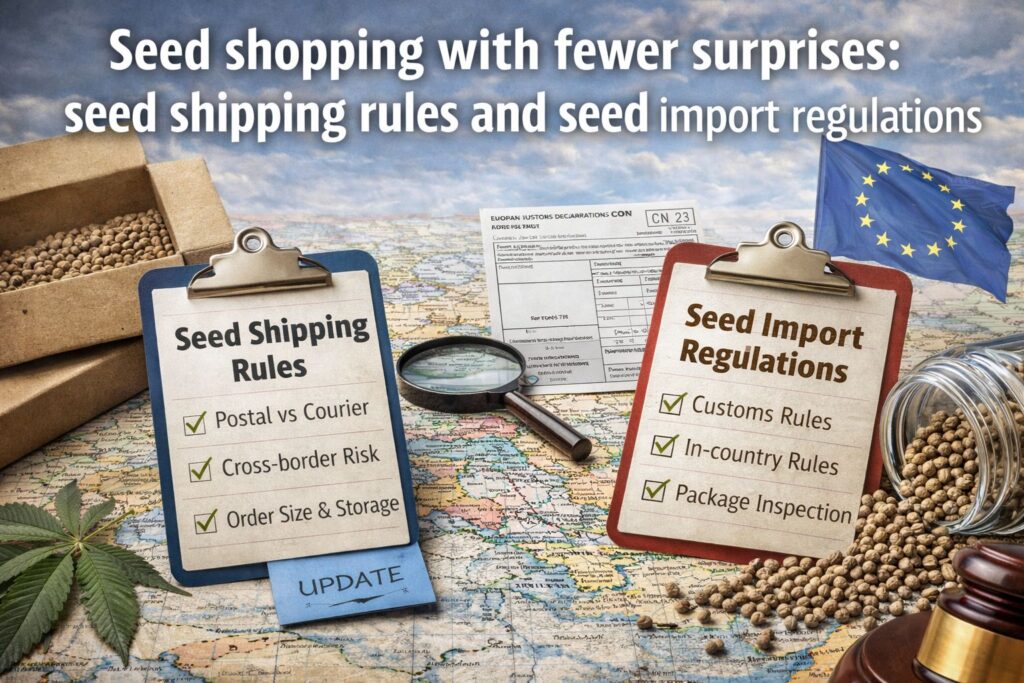
Even experienced growers underestimate seed shipping rules. In Europe, crossing a border can change the situation quickly, even when you’re within the EU. Seed import regulations also vary in how they’re enforced. Sometimes the written rule is one thing, and customs practice is another.
My seed-order checklist
This checklist helps me decide whether ordering is worth it:
- Confirm whether seeds are explicitly addressed in your local rules. Don’t assume “seeds are legal” just because someone said it on a forum.
- Read seed import regulations for your destination country, not just the origin country.
- Compare seed shipping rules for postal services and couriers. Different carriers can mean different screening practices.
- Prefer smaller test orders until you understand reliability and risk.
- Make sure your order size matches your home grow limits. If you can only legally maintain a small number of plants, ordering hundreds of seeds makes no sense.
- Keep documentation organized. It won’t magically legalize anything, but it can reduce confusion if you need to explain what you purchased.
I repeat this because it matters: seed shipping rules and seed import regulations are where “seed buying” becomes real-world logistics.
Questions I ask any seed seller
If you’re trying to expand your keyword footprint and still help readers, these are natural-language queries people actually type:
- “What seed shipping rules apply when I order across Europe?”
- “Do seed import regulations treat cannabis seeds differently than hemp seeds?”
- “Can I buy feminized seeds if my country has strict home grow limits?”
- “Will a seed bank ship to my country, and what happens if customs stops it?”
I don’t expect any seller to guarantee outcomes. What I look for is transparency. A reputable seller should acknowledge that the legal status of cannabis in europe varies and encourage customers to check local rules.
Designing a small, compliant grow: home grow limits and growing weed legally
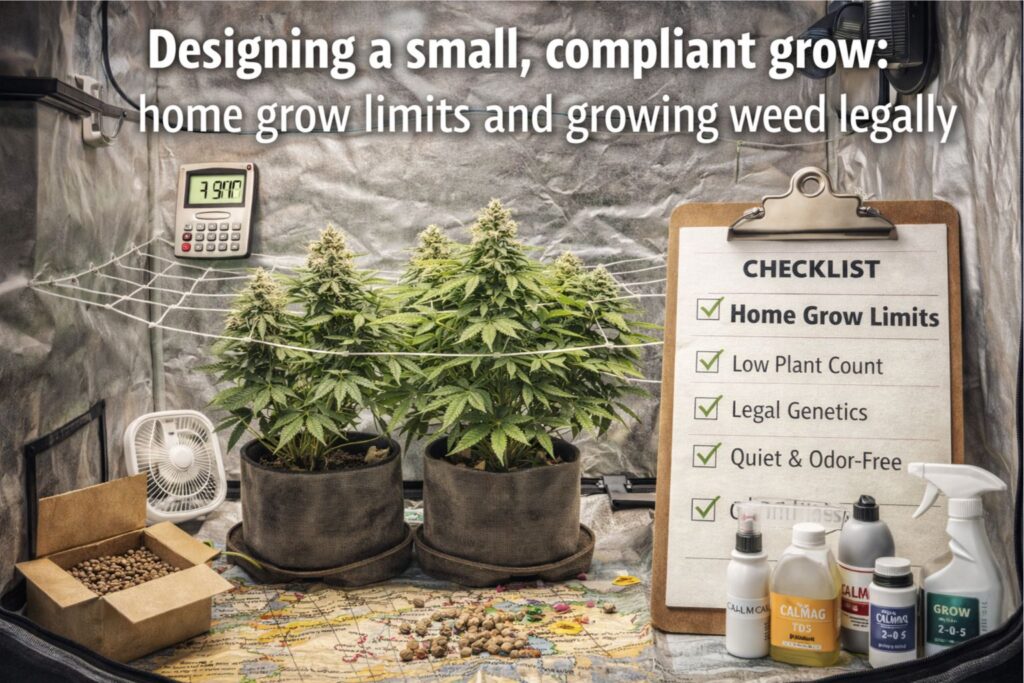
When your goal is growing weed legally, you design backwards from home grow limits. You don’t build a dream setup and then hope it fits the rules. I’ve done both approaches, and only one is sustainable.
Choosing genetics that fit home grow limits
If plant counts are restricted, genetics matter more than marketing. In my own grows, two choices reduce wasted time:
- Feminized seeds: When home grow limits are low, I want to avoid running multiple regular seeds just to remove males later. Feminized seeds help me use my limited plant count efficiently.
- Autoflowers: If timing matters, autoflowers can finish faster and reduce the risk of having a grow “in progress” during a move, inspection, or long trip. This ties directly into autoflower compliance, because autos demand consistent conditions.
That doesn’t mean autoflowers are automatically “better.” They’re simply easier to schedule within real life, and real life is part of growing weed legally.
My baseline indoor environment targets
Small grows still need professional fundamentals. These are the ranges I use as a starting point, adjusting based on cultivar response:
- Photoperiod: 18/6 in veg, 12/12 in flower
- Autoflowers: 18/6 or 20/4 from seed to harvest
- PPFD: 400–600 in veg, 700–900 in flower (measured at canopy)
- Temperature: 24–27°C lights on; 19–22°C lights off
- Humidity: 60–70% early veg; 50–60% late veg; 40–50% in flower
- VPD: roughly 0.8–1.2 kPa in veg; 1.2–1.5 kPa in flower
If you’re working under home grow limits, losing a plant hurts more. I recommend investing in a basic PPFD meter or using a reliable app with a known light. Stable environment control is one of the best “compliance” tools you can buy.
Nutrients and medium: soil vs coco vs hydro
To keep things simple, I choose the medium based on how often I can check the plants:
- Soil: forgiving, buffered, and good for beginners
- Coco: fast growth and steering, but requires consistent irrigation and EC monitoring
- Hydro: excellent performance but higher monitoring burden
In coco, I typically run 1.2–1.8 EC depending on cultivar, with consistent runoff and careful pH control. In soil, I feed lighter and watch leaf tips and color. None of this changes the legal status of cannabis in europe, but it changes how “quiet” and predictable your grow will be, which matters when your goal is growing weed legally.
Keeping the grow low-profile: odor, noise, and routine
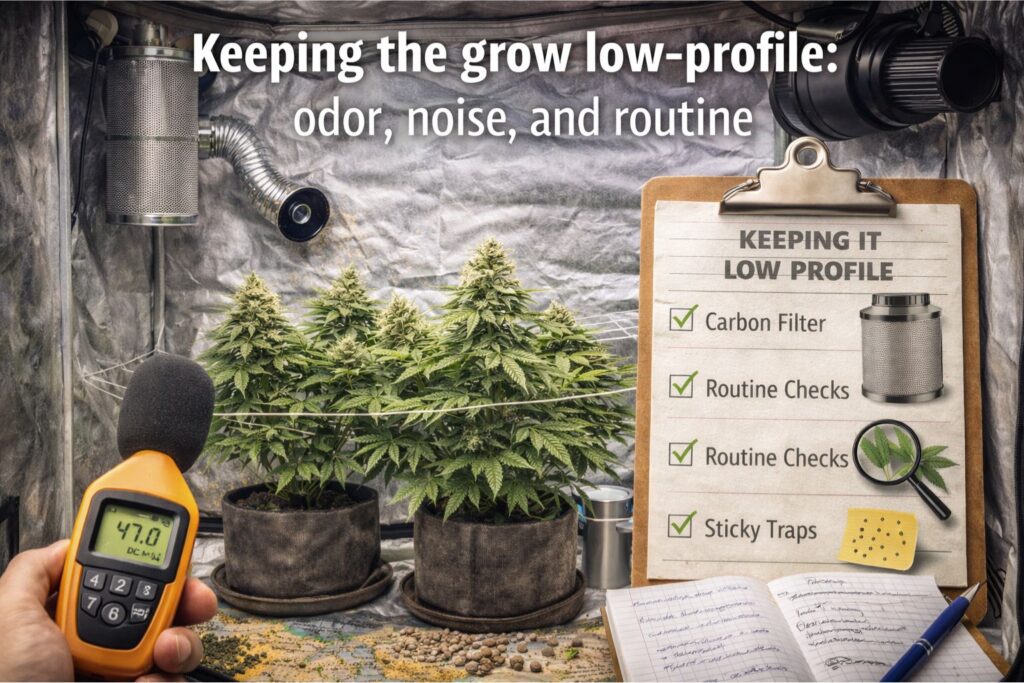
If you’ve ever harvested a loud cultivar, you know how quickly a space can smell like weed. Odor control is not about hiding; it’s about being responsible and avoiding unwanted attention.
Odor control basics
- A carbon filter sized to the fan, not the marketing label
- Negative pressure inside the tent so air doesn’t leak out
- Ducting checks, especially late flower when terpene output peaks
For me, this is part of growing weed legally. If you’re inside home grow limits but the whole stairwell smells like marijuana, you’ve created a social problem that can become a legal one.
Pest control without drama
I use an integrated routine:
- Quarantine new plants away from the grow area
- Sticky traps at soil level and canopy level
- Weekly leaf underside checks with a bright light
- In flower, avoid oily sprays; use mechanical removal and targeted biological controls if needed
Pest outbreaks push growers into rushed decisions. Calm routines keep your grow boring, and boring is good.
Medical cannabis programs and the bigger picture
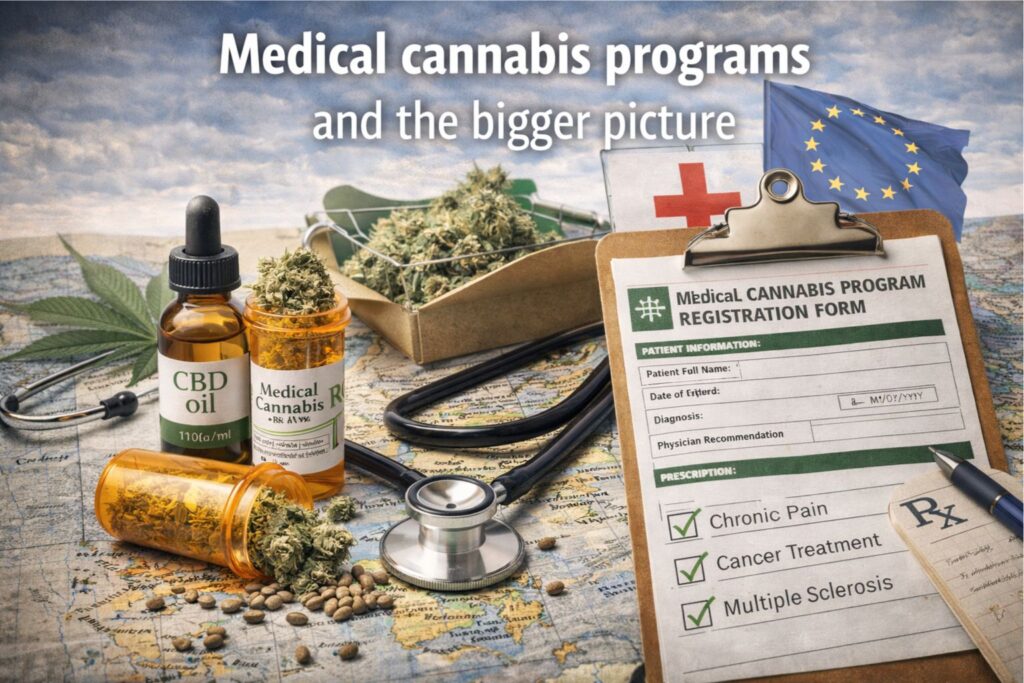
Even if you’re not a patient, medical cannabis programs shape the legal status of cannabis in europe. Countries with established medical cannabis programs often have clearer guidance on products, possession, and supply chains.
What I look for in medical cannabis programs
When I research medical cannabis programs, I look for:
- Who can prescribe and for what conditions
- Which products are recognized (flower, oils, capsules)
- Whether there is domestic production or only imports
- How patients handle travel documentation
Medical cannabis programs can also influence local attitudes toward cannabis and marijuana. When policy is more formal, guidance tends to improve.
CBD flower legality: why it’s a separate research item

CBD flower legality is confusing because it sits between hemp regulation, consumer product rules, and narcotics enforcement. In some places, CBD is broadly available, but flower is treated differently because it looks like weed and can be hard to distinguish without testing.
I track cbd flower legality separately in my europe cannabis law map for every country I care about. If you do the same, you’ll avoid a lot of misunderstandings.
Travel realities: tourist cannabis rules and border risk
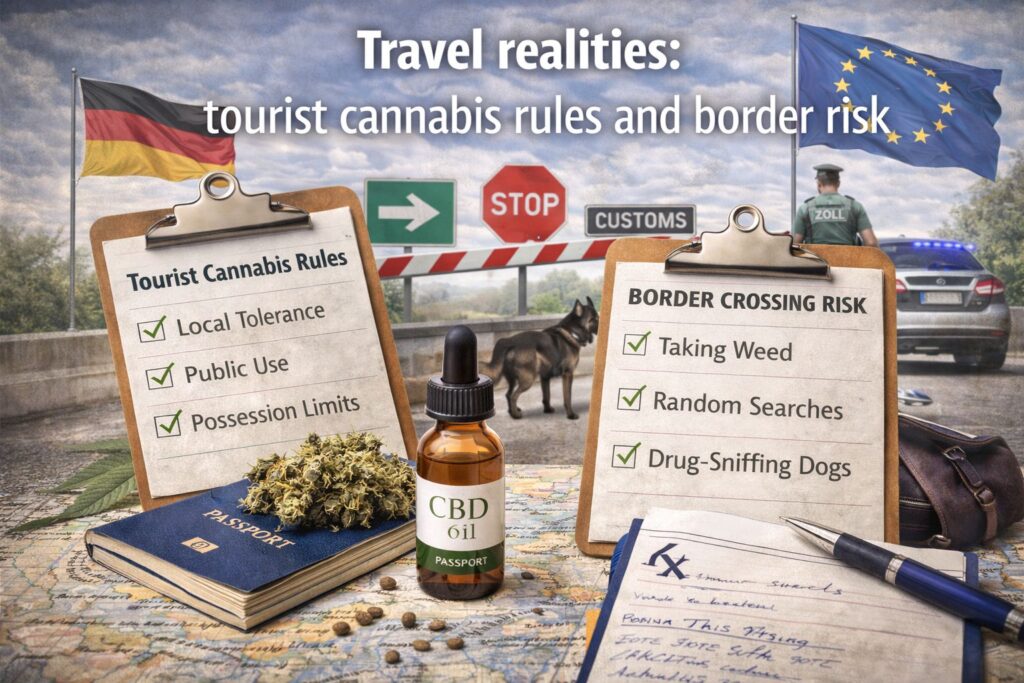
Tourist cannabis rules are where people get complacent. A relaxed city vibe can make it feel like the rules are the same everywhere, but borders are still borders.
Three travel principles I stick to
- I don’t carry cannabis, marijuana, or weed across borders. Ever.
- I assume tourist cannabis rules are stricter than what locals say is “normal,” especially around public consumption.
- I plan my grows around travel. That includes harvest timing, drying space, and storage.
Tourist cannabis rules intersect with seed import regulations too. Even if seeds are tolerated in one place, crossing into another country can change the situation.
A practical decision flow for growers
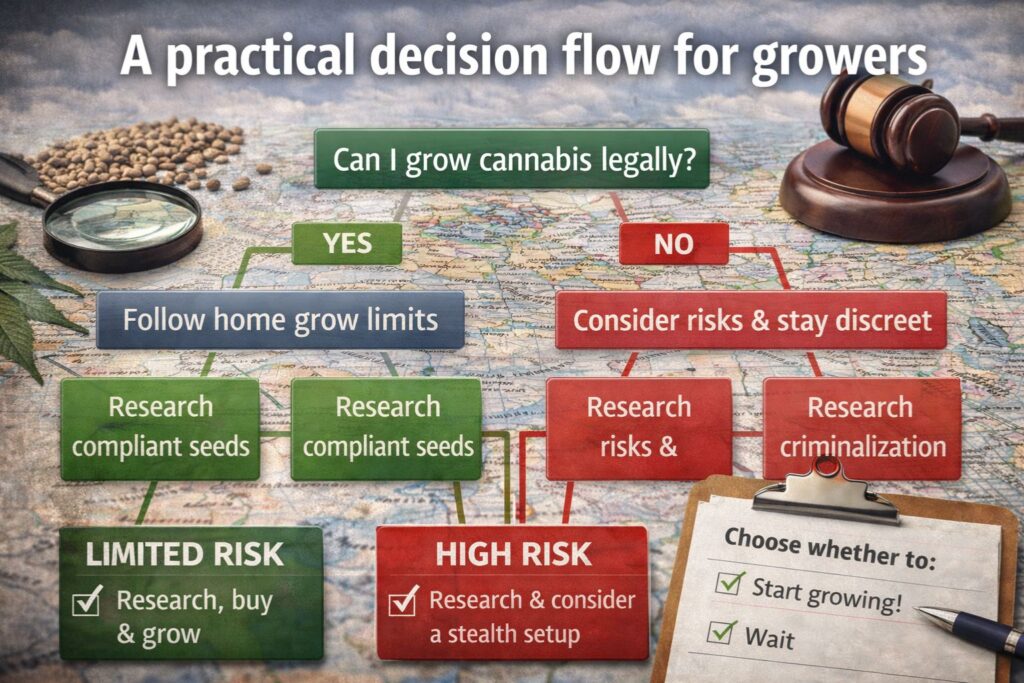
If you want a single process you can repeat, here’s mine:
- Define your goal: curiosity, home cultivation, medical access, or travel.
- Check the legal status of cannabis in europe for your country using primary sources when possible.
- Categorize your country using decriminalization vs legalization language.
- Confirm home grow limits and how they count plants.
- Review seed shipping rules and seed import regulations before ordering.
- Decide whether autoflower compliance makes sense for your schedule.
- Build a small, controlled setup with stable environment targets.
- Keep your grow boring: odor control, clean routines, and minimal drama.
I return to this flow every time I plan a new run. It keeps me from making decisions based on hype.
FAQ
Is the legal status of cannabis in Europe the same across the EU?
No. The legal status of cannabis in europe varies by country, and enforcement culture can vary by region. Use a europe cannabis law map approach so you’re not relying on assumptions.
What’s the difference between decriminalization vs legalization for a home grower?
Decriminalization vs legalization determines how authorities treat possession and cultivation. In some places, possession is decriminalized but growing weed legally is still not possible because cultivation remains a criminal offense. Always check home grow limits and cultivation-specific rules.
Do seed shipping rules matter if I’m ordering within Europe?
Yes. Seed shipping rules can vary by carrier and destination, and seed import regulations may still matter at borders. Treat seed shipping rules as a logistics question, not a rumor.
How do I decide between feminized seeds and autoflowers under home grow limits?
If home grow limits are tight, feminized seeds reduce the risk of “wasting” plant count on males. Autoflowers can support autoflower compliance if you need a shorter timeline. Both can work for growing weed legally when paired with stable environment control.
Why does cbd flower legality feel inconsistent?
Because cbd flower legality depends on how flower is classified and enforced. CBD oils and isolates may be treated differently than flower. Track cbd flower legality separately in your europe cannabis law map.
What should tourists know before visiting a European country?
Tourist cannabis rules can be stricter than you expect, especially around public consumption and transport. Don’t cross borders with cannabis, marijuana, or weed, and re-check tourist cannabis rules close to your travel date.
