Table of Contents
Kryptonite is a popular cannabis strain known for its potent effects, unique aroma, and versatility in both medical and recreational settings. Its origins, chemical composition, and applications make it a favorite among cannabis enthusiasts and medical users alike. This article provides a detailed look into the Kryptonite strain, including its genetics, characteristics, medical applications, recreational benefits, and scientific insights.
Origins and Genetics of Kryptonite
Kryptonite is a hybrid strain with a slight indica dominance, usually featuring an indica-to-sativa ratio of approximately 75:25. This strain is believed to be a cross between the well-known Mendocino Purps and Killer Queen strains, both of which contribute to Kryptonite’s unique properties.
- Mendocino Purps: This strain is a classic indica-leaning hybrid known for its relaxing effects and earthy, sweet flavors. It brings a calming quality to Kryptonite, along with a deep purple hue in some phenotypes.
- Killer Queen: A sativa-dominant strain, Killer Queen adds a cerebral and uplifting aspect to Kryptonite. It also contributes fruity and tropical flavor notes.
The combination of these two parent strains results in a potent hybrid that appeals to a wide range of users.
Physical Characteristics
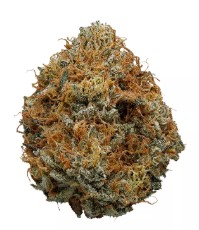
Kryptonite is visually striking, with dense, cone-shaped buds. The flowers are typically bright green, interspersed with orange pistils and a generous coating of trichomes, giving the buds a frosty appearance. Some phenotypes may exhibit purple hues, particularly when grown in cooler temperatures.
- Aroma: The aroma of Kryptonite is a blend of earthiness, pine, and sweet undertones, often accompanied by hints of citrus or berry.
- Flavor: The flavor profile mirrors its aroma, with earthy, piney notes dominating, complemented by subtle sweetness and a smooth, fruity finish.
Cannabinoid Profile
Kryptonite is known for its high THC content, which typically ranges from 18% to 25%, depending on cultivation and curing practices. Its CBD levels are usually low, often below 1%, making it more suitable for those seeking THC-driven effects.
- THC (Tetrahydrocannabinol): The primary psychoactive compound, responsible for the strain’s euphoric and relaxing effects.
- CBD (Cannabidiol): Minimal levels of CBD contribute to the strain’s therapeutic potential but do not counterbalance the psychoactive effects of THC significantly.
- Terpenes: The dominant terpenes in Kryptonite include myrcene, pinene, and limonene, which contribute to its effects and flavor profile.
Terpene Profile and Effects
The terpene profile of Kryptonite plays a significant role in its effects and medicinal benefits:
- Myrcene: Known for its sedative and relaxing properties, myrcene is the dominant terpene in Kryptonite. It enhances the strain’s calming effects and contributes to its earthy aroma.
- Pinene: This terpene adds a refreshing pine scent and may promote focus and mental clarity, balancing the sedative effects of myrcene.
- Limonene: With a citrusy aroma, limonene contributes uplifting and mood-enhancing properties, making Kryptonite a versatile strain.
Recreational Uses
Kryptonite is a favorite among recreational users due to its balanced effects that cater to various experiences. Its initial cerebral high transitions into a relaxing body buzz, making it suitable for depending on dosage, both during the day and at night.
- Euphoria and Mood Elevation
- Kryptonite provides an initial euphoric rush that uplifts the mood and promotes feelings of happiness. This makes it a great option for creative projects or social events.
- Relaxation and Stress Relief
- The indica-dominant genetics take over after the initial high, leading to deep relaxation. This effect is ideal for unwinding after a long day or enjoying a calm evening.
- Enhanced Creativity
- Many users report increased creativity and focus during the strain’s early effects, making it a good option for artistic activities or problem-solving tasks.
- Mild Sedation
- At higher doses, Kryptonite’s indica characteristics become more pronounced, leading to a sedative effect that can promote sleep.
Medical Applications
Kryptonite’s potency and terpene profile make it highly effective for managing various medical conditions. Here’s a detailed look at its therapeutic potential:
1. Pain Management
- Kryptonite’s high THC content and myrcene levels provide significant pain-relieving properties. It is commonly used to treat chronic pain, migraines, and muscle spasms.
- The relaxing body buzz helps alleviate tension, making it suitable for conditions like fibromyalgia and arthritis.
2. Anxiety and Stress Relief
- The strain’s euphoric and calming effects are beneficial for reducing symptoms of anxiety, stress, and depression.
- The presence of limonene adds an uplifting element that can improve mood and reduce feelings of worry.
3. Insomnia
- At higher doses, Kryptonite’s sedative properties make it effective for treating insomnia. Its ability to relax both mind and body helps users fall asleep faster and enjoy a deeper rest.
4. Appetite Stimulation
- Like many THC-rich strains, Kryptonite can stimulate appetite, making it helpful for individuals undergoing treatments like chemotherapy or managing diseases like anorexia.
5. Nausea and Gastrointestinal Issues
- Kryptonite’s anti-nausea properties make it suitable for individuals experiencing nausea or vomiting, whether due to medical treatments or gastrointestinal disorders.
6. Neurological Disorders
- While low in CBD, Kryptonite’s high THC content can still provide relief for certain neurological conditions, such as multiple sclerosis and epilepsy. However, it may not be the first choice for conditions requiring high CBD levels.
Potential Side Effects
Like any cannabis strain, Kryptonite can cause side effects, particularly when consumed in high doses. Common side effects include:
- Dry Mouth and Eyes
- These are the most frequent adverse effects, which can be controlled with eye drops and proper hydration.
- Dizziness and Paranoia
- Inexperienced users or those sensitive to THC may experience dizziness or feelings of paranoia, especially at higher doses.
- Sedation
- While beneficial for insomnia, excessive sedation can be a drawback for users seeking daytime use.
Cultivation Information
1. Ideal Growing Environment
Kryptonite is a strain that thrives under specific environmental conditions. Its genetic lineage favors slightly warm and controlled climates. To maximize yield and potency, understanding the microenvironmental factors is crucial:
- Temperature Range: 68-80°F (20-27°C) during the vegetative stage, with slightly cooler temperatures (65-75°F or 18-24°C) during the flowering stage. Cooler nights in the flowering stage can enhance purple hues in the buds due to anthocyanin production.
- Humidity Levels:
- Vegetative Stage: 55%-65% relative humidity (RH) promotes healthy leaf development.
- Flowering Stage: Lower RH of 40%-50% prevents mold and mildew while encouraging resin production.
2. Lighting Requirements
Kryptonite benefits significantly from high intensity lighting due to its hybrid genetics. Light impacts its photosynthesis rate, terpene production, and overall yield:
- Vegetative Stage: 18-24 hours of light per day using LEDs or high-intensity discharge (HID) lights. Full-spectrum LED lights are ideal for energy efficiency and uniform growth.
- Flowering Stage: A 12/12 light cycle is standard, with red-spectrum lights enhancing bud formation and resin production.
3. Soil vs. Hydroponics
The choice of growing medium has a significant impact on Kryptonite’s chemical composition:
- Soil Cultivation:
- Rich organic soil with added compost or amendments (e.g., bat guano, worm castings) enhances terpene expression, improving flavor and aroma.
- Soil retains beneficial microbes that can naturally protect the plant and improve nutrient uptake.
- Hydroponics:
- Faster growth and higher yields due to direct nutrient absorption.
- Precise control over nutrient levels allows for targeted feeding of nitrogen, phosphorus, potassium (NPK), and trace minerals.
- Common hydroponic systems: Deep Water Culture (DWC), drip systems, or ebb and flow systems.
4. Nutrient Management
Kryptonite nutrient requirements change across its growth cycle:
- Vegetative Stage: High nitrogen (N) levels are crucial for vigorous leaf and stem growth.
- Recommended NPK ratio: 3-1-2.
- Flowering Stage: Increased phosphorus (P) and potassium (K) levels encourage bud development and resin production.
- Recommended NPK ratio: 1-3-3.
- Micronutrients: Magnesium (Mg) and calcium (Ca) are essential to prevent deficiencies that could impair photosynthesis or bud quality.
5. CO₂ Enrichment
Elevating carbon dioxide (CO₂) levels in the grow space can significantly enhance Kryptonite’s yield and potency. Studies suggest that CO₂ levels between 1200-1500 ppm increase photosynthesis and bud density, especially when paired with high-intensity lighting.
6. Pruning and Training Techniques
Proper plant training techniques improve airflow, light penetration, and yield:
- Topping: Removing the central growth tip early in the vegetative stage encourages lateral growth and increases bud sites.
- Low-Stress Training (LST): Bending and securing branches create an even canopy, ensuring uniform light distribution.
- Defoliation: Strategic removal of lower and inner leaves promotes airflow and reduces the risk of mold during flowering.
7. Pest and Disease Management
Kryptonite is moderately resistant to pests and mold, but proactive measures are essential to maintain plant health:
- Integrated Pest Management (IPM): Use of beneficial insects (e.g., ladybugs, predatory mites) to control common pests like spider mites and aphids.
- Biological Controls: Bacillus thuringiensis (Bt) for caterpillars or neem oil for general pest prevention.
- Mold Prevention: Regularly monitor humidity levels and ensure proper airflow using oscillating fans.
8. Flowering and Harvest Timing
Kryptonite flowering stage typically lasts 8-10 weeks, depending on environmental factors and grower techniques:
- Trichome Observation: Use a magnifying glass or microscope to inspect trichomes. Harvest when trichomes turn from clear to milky, with some amber tones, for peak potency.
- Flush Period: A 1-2 week flush with pure water before harvest removes residual nutrients, improving the finished product’s flavor and smoothness.
9. Post-Harvest Techniques
The post-harvest process has a profound effect on Kryptonite’s flavor, potency, and shelf life:
- Drying:
- Hang buds upside down in a dark, ventilated space at 60°F (15-18°C) with 50%-60% RH.
- Drying typically takes 7-10 days.
- Curing:
- Place dried buds in airtight glass jars, opening them daily to release moisture (burping) during the first two weeks.
- Proper curing enhances terpene preservation and reduces chlorophyll content, leading to smoother smoke.
10. Enhancing Terpene Profile
To maximize the strain’s terpene richness, which impacts aroma, flavor, and therapeutic effects:
- Low-Stress Techniques: Avoid excessive pruning or overfeeding, as stress can hinder terpene production.
- Optimal Temperatures: Keep flowering-stage temperatures below 80°F to preserve volatile terpenes like myrcene and limonene.
- Use of UV Light: Supplemental UVB light during the flowering stage may increase resin and terpene production by stimulating the plant’s defense mechanisms.
Scientific Insights
The effects and medical applications of Kryptonite can be attributed to its cannabinoid and terpene profile. Scientific research provides insights into how these compounds interact with the body’s endocannabinoid system (ECS).
1. THC and the Endocannabinoid System
- THC binds to CB1 receptors in the brain, producing euphoric and psychoactive effects. It also interacts with CB2 receptors in the immune system, contributing to its anti-inflammatory and pain-relieving properties.
2. Terpenes and the Entourage Effect
- Myrcene, pinene, and limonene work synergistically with THC to enhance Kryptonite’s effects. This phenomenon, known as the entourage effect, highlights the importance of the strain’s full chemical profile.
3. Potential for Personalized Medicine
- Advances in cannabis research suggest that strains like Kryptonite could be tailored to individual needs. For instance, adjusting terpene levels or combining it with high-CBD strains may enhance its therapeutic potential for specific conditions.
Consumption Methods
The way you consume Kryptonite cannabis significantly impacts the onset time, duration of effects, and bioavailability. Below is a breakdown of each method:
1. Smoking (Combustion)
- Description: Involves burning dried flower and inhaling the smoke through a joint, pipe, or bong.
- Onset Time: 1–3 minutes.
- Duration: 1.5–3 hours.
- Bioavailability: ~20–30% (due to combustion losses).
- Mechanism: THC is decarboxylated and absorbed through the lungs, delivering cannabinoids quickly to the bloodstream.
- Advantages:
- Immediate effects, easy to titrate.
- Retains flavor from terpenes.
- Disadvantages:
- Combustion byproducts can irritate the lungs.
- Potential terpene loss at high combustion temperatures (~700°C).
2. Vaporization
- Description: Heating cannabis flower or concentrates to vaporize cannabinoids and terpenes without combustion.
- Onset Time: 1–3 minutes.
- Duration: 1.5–3 hours.
- Bioavailability: ~40–60% (higher due to reduced losses).
- Mechanism: Cannabinoids and terpenes vaporize between 180–220°C, preserving compounds better than smoking.
- Advantages:
- Healthier alternative to smoking.
- Enhanced flavor retention.
- Higher cannabinoid efficiency.
- Disadvantages:
- Requires vaporization equipment.
- Rapid onset can overwhelm inexperienced users.
3. Edibles (Oral Consumption)
- Description: Consuming cannabis-infused products such as gummies, baked goods, or capsules.
- Onset Time: 30 minutes to 2 hours.
- Duration: 4–8 hours (up to 12 hours in sensitive users).
- Bioavailability: ~4–20% (due to liver metabolism).
- Mechanism: THC is metabolized into 11-hydroxy-THC in the liver, a more potent psychoactive compound with a longer half-life.
- Advantages:
- Long-lasting effects suitable for chronic conditions.
- Discreet consumption.
- Disadvantages:
- Delayed onset makes dosing harder for new users.
- Overconsumption risks due to slow activation.
4. Tinctures and Sublingual Administration
- Description: Liquid cannabis extracts placed under the tongue for absorption through the mucosal lining.
- Onset Time: 15–45 minutes.
- Duration: 2–6 hours.
- Bioavailability: ~13–35% (avoids first-pass metabolism).
- Mechanism: Cannabinoids are absorbed directly into the bloodstream through sublingual glands.
- Advantages:
- Faster onset compared to edibles.
- Precise dosing via droppers.
- Disadvantages:
- Effects are less immediate than inhalation.
- Some may dislike the bitter taste.
5. Topicals (Localized Application)
- Description: Creams, balms, or lotions infused with cannabis applied to the skin.
- Onset Time: 15–30 minutes.
- Duration: 2–4 hours (localized effects only).
- Bioavailability: Minimal systemic absorption (localized interaction with CB2 receptors in the skin).
- Mechanism: Cannabinoids interact with CB2 receptors to reduce inflammation and pain at the application site.
- Advantages:
- Non-psychoactive, safe for targeted pain relief.
- Ideal for conditions like arthritis or muscle soreness.
- Disadvantages:
- Does not provide systemic effects.
- Limited to localized relief.
6. Transdermal Patches
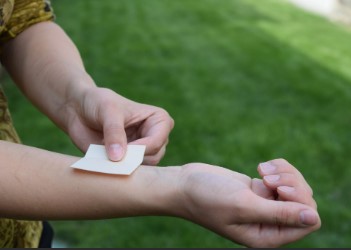
- Description: Adhesive patches delivering cannabinoids through the skin into the bloodstream.
- Onset Time: 30 minutes to 2 hours.
- Duration: 6–12 hours (sustained release).
- Bioavailability: ~50% (higher systemic absorption).
- Mechanism: Cannabinoids penetrate skin layers and enter the bloodstream for systemic effects.
- Advantages:
- Long-lasting, discreet, and consistent dosing.
- Suitable for medical users requiring prolonged relief.
- Disadvantages:
- Limited to low-to-moderate THC doses.
- May not deliver sufficient psychoactive effects for recreational users.
7. Dabbing (Concentrates)
- Description: Vaporizing cannabis concentrates like wax, shatter, or live resin using a dab rig.
- Onset Time: Almost immediate (~1 minute).
- Duration: 1–3 hours.
- Bioavailability: ~50–75% (high efficiency due to concentrated cannabinoids).
- Mechanism: Rapid vaporization of high-potency concentrates delivers intense doses of THC and terpenes.
- Advantages:
- Intense and fast-acting effects.
- Maximum flavor and potency retention.
- Disadvantages:
- Requires advanced equipment and expertise.
- Effects can overwhelm novice users.
Comparison Table of Ingestion Methods
| Method | Onset Time | Duration | Bioavailability | Best For |
|---|---|---|---|---|
| Smoking | 1–3 minutes | 1.5–3 hours | ~20–30% | Quick relief, social use |
| Vaporization | 1–3 minutes | 1.5–3 hours | ~40–60% | Health-conscious, flavor enthusiasts |
| Edibles | 30 min–2 hours | 4–8 hours | ~4–20% | Chronic conditions, long-lasting relief |
| Tinctures | 15–45 minutes | 2–6 hours | ~13–35% | Precise dosing, discreet medical use |
| Topicals | 15–30 minutes | 2–4 hours | Minimal (localized) | Localized pain/inflammation |
| Transdermal Patches | 30 min–2 hours | 6–12 hours | ~50% | Sustained systemic relief |
| Dabbing | ~1 minute | 1–3 hours | ~50–75% | Experienced users, intense effects |
Scientific Insights into Onset and Duration
- Inhalation Methods (Smoking, Vaporization, Dabbing):
- Rapid onset occurs due to THC absorption through alveoli in the lungs, delivering cannabinoids directly into the bloodstream and brain.
- Effects peak within 10–30 minutes due to immediate distribution to the central nervous system.
- Oral Methods (Edibles):
- First-pass metabolism in the liver converts THC to 11-hydroxy-THC, which is more potent and long-lasting.
- Delayed onset occurs because cannabinoids must pass through the digestive system.
- Sublingual Administration:
- Bypasses the digestive system and liver, providing a faster onset compared to edibles but slower than inhalation.
- Topicals and Transdermals:
- Topicals interact locally with CB2 receptors, while transdermal patches penetrate the skin to deliver cannabinoids into the bloodstream for systemic effects.
Conclusion
Kryptonite is a versatile and potent cannabis strain that offers a range of benefits for both recreational and medical users. Its balanced effects, high THC content, and unique terpene profile make it a standout choice for managing stress, pain, and insomnia, as well as for enhancing creativity and relaxation.
Whether you are a seasoned cannabis connoisseur or a medical patient seeking relief, Kryptonite’s diverse applications and powerful effects make it a strain worth exploring. As with any cannabis product, it is important to start with a low dose, especially for novice users, and consult a healthcare professional if using it for medical purposes.
For a complete directory of cultivars, visit our Cannabis Strain Reviews.
