Table of Contents
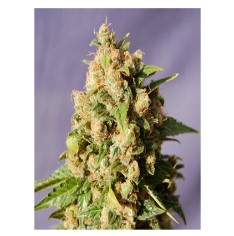
Kiss is a relatively rare and boutique cannabis strain that has gained popularity in niche markets for its balanced hybrid effects, aromatic terpene profile, and therapeutic potential. The name “Kiss” might suggest gentleness, but this strain often offers surprisingly potent cerebral and body effects—a kiss with a punch, if you will.
Genetic Lineage and Origins
Kiss is considered a balanced hybrid, typically expressing a 50/50 indica-sativa phenotype, though some cuts lean slightly indica-dominant depending on growing conditions and phenotypic expression.
Parent Strains
While the exact lineage of Kiss is not always transparently disclosed by breeders (especially in small-batch or artisanal seed circles), available data and lab analyses suggest Kiss is a cross between a sweet-scented indica strain (likely a descendant of Blueberry or Bubblegum) and a high-terpene sativa strain like Haze or Durban Poison.
This results in a genetic structure that is:
- Moderately high in THC (typically 18–24%)
- Low in CBD (<1%), but with a robust entourage of minor cannabinoids
- Rich in fruity, floral, and slightly earthy terpenes
Cannabinoid Profile
| Cannabinoid | Average Concentration (%) | Primary Effects |
|---|---|---|
| THC | 18–24% | Euphoria, pain relief, appetite stimulation |
| CBD | <1% | Anxiolytic, anti-inflammatory |
| CBG | 0.5–1.5% | Neuroprotective, gut health, mood balance |
| CBC | 0.3–0.8% | Anti-inflammatory, analgesic |
| THCV | 0.2–0.5% | Appetite regulation, energizing |
While low in CBD, the presence of CBG and CBC gives Kiss unique therapeutic qualities, particularly in neurological and inflammatory conditions.
Terpene Profile
Terpenes are aromatic compounds responsible for flavor, scent, and many modulatory effects of cannabis. Kiss is highly aromatic and flavorful, typically featuring a sweet, floral bouquet with notes of fruit, vanilla, and a slight herbal finish.
| Terpene | Aroma/Flavor | Potential Medical Effects |
|---|---|---|
| Myrcene | Earthy, musky, fruity | Sedative, muscle relaxant |
| Limonene | Citrus, sweet | Anti-anxiety, mood enhancer |
| Linalool | Floral, lavender | Anti-inflammatory, calming |
| Caryophyllene | Peppery, woody | Analgesic, anti-inflammatory |
| Humulene | Herbal, hoppy | Appetite suppressant, anti-inflammatory |
The interplay of limonene and linalool gives Kiss a distinctive anxiolytic and euphoric quality, while myrcene and caryophyllene lend physical relaxation and pain modulation.
Recreational Effects
Kiss provides a well-rounded, euphoric high that evolves gradually, beginning with cerebral elevation and transitioning into a mellow body state. This makes it suitable for both daytime and evening use, depending on dose.
Immediate Onset (0–30 minutes)
- Euphoric uplift
- Enhanced sensory perception
- Heightened mood
- Creative flow
Peak Effects (30–90 minutes)
- Balanced cerebral and physical relaxation
- Calm focus or introspection
- Soft, full-body tingles or light couch-lock (at higher doses)
Come-down (90–180+ minutes)
- Sustained relaxation
- Appetite stimulation
- Gentle sedation or sleepiness in sensitive users
Recreational Use Cases
- Enhancing music, film, and art appreciation
- Creative brainstorming
- Social bonding and laughter
- Relaxed gaming or meditative activities
- Sexual enhancement (reported by some users)
Possible Adverse Effects
- Dry mouth, dry eyes
- Mild anxiety or paranoia in high doses
- Short-term memory lapses
- Fatigue if overused
Medical Uses of Kiss Cannabis Strain
I. Phytochemical Overview of Kiss: A Therapeutic Lens
Kiss is a balanced hybrid strain, generally containing 18–24% THC, low (<1%) CBD, and relevant levels of minor cannabinoids like CBG, CBC, and trace THCV. Its terpene profile includes limonene, linalool, myrcene, caryophyllene, and humulene, each contributing to its therapeutic effects.
Cannabinoid Actions (Pharmacodynamics)
| Cannabinoid | Receptor Interaction | Therapeutic Role |
|---|---|---|
| THC | Partial agonist at CB1/CB2 | Analgesic, antiemetic, appetite stimulant, mood modulator |
| CBD | Indirect CB1/CB2 modulator, 5-HT1A agonist | Anxiolytic, anti-inflammatory, antiepileptic |
| CBG | α2-adrenergic agonist, CB1 antagonist | Neuroprotective, antidepressant, antibacterial |
| CBC | TRPV1/ANKT1 activation | Anti-inflammatory, neurogenic |
| THCV | CB1 antagonist at low doses | Appetite suppressant, antiepileptic |
Entourage Effect
- The synergy between THC + CBG + caryophyllene + limonene is particularly effective in mood disorders, inflammation, and neuropathic pain, making Kiss a strain with polyvalent medical potential.
II. Targeted Medical Applications of Kiss Cannabis Strain
1. Chronic and Neuropathic Pain
Mechanisms
- THC activates CB1 receptors in the CNS, dampening pain perception in the thalamus and periaqueductal gray (PAG).
- Caryophyllene, a terpene in Kiss, activates CB2 receptors—modulating immune response and peripheral inflammation.
- Myrcene enhances GABAergic transmission, promoting muscle relaxation and analgesia.
Relevant Research
- NASEM 2017 (National Academies): Conclusive evidence that cannabis is effective for chronic pain in adults.
- Russo (2008): Myrcene and THC together create a sedative, anti-inflammatory synergy effective for fibromyalgia and migraine.
Indications
- Arthritis
- Neuropathy (diabetic, sciatic)
- Fibromyalgia
- Menstrual and pelvic pain
- Cancer-related pain
2. Anxiety, Stress, and PTSD
Mechanisms
- Limonene modulates the hypothalamic-pituitary-adrenal (HPA) axis, reducing cortisol.
- Linalool, a major terpene in Kiss, mimics the effects of benzodiazepines by acting on GABA-A receptors.
- Low-dose THC promotes anxiolysis by increasing dopamine and serotonin in the prefrontal cortex.
Scientific Evidence
- Blessing et al. (2015): Limonene has significant anti-anxiety effects in preclinical models via serotonin regulation.
- Linalool demonstrated anxiolytic properties in Phytomedicine journal (Linck et al., 2010).
- Journal of Affective Disorders (2020): High-THC, terpene-rich strains associated with self-reported PTSD symptom reduction.
Indications
- Generalized Anxiety Disorder (GAD)
- Social anxiety
- Post-traumatic stress disorder (PTSD)
- Stress-related insomnia
3. Depression and Mood Disorders
Mechanisms
- THC increases dopamine in the mesolimbic system (VTA → nucleus accumbens).
- CBG and CBC stimulate neurogenesis and brain-derived neurotrophic factor (BDNF), supporting long-term mood balance.
- Limonene and caryophyllene modulate monoamine transmission (dopamine, serotonin).
Scientific Literature
- El-Alfy et al. (2010): CBC demonstrated antidepressant-like effects in animal models via hippocampal neurogenesis.
- Bambico et al. (2007): THC and endocannabinoid signaling are directly linked to improved mood and hedonic tone.
- Anecdotal and clinical feedback suggests Kiss provides a bright, emotionally warm high beneficial for mild-to-moderate depression.
Clinical Targets
- Major Depressive Disorder (MDD)
- Dysthymia
- Seasonal Affective Disorder (SAD)
- Mood dysregulation secondary to chronic illness
4. Insomnia and Sleep Disorders
Mechanisms
- Myrcene and linalool act as natural sedatives, reducing sleep latency and increasing total sleep time.
- THC reduces REM sleep, which is useful for people with PTSD-related nightmares.
- Caryophyllene’s anti-inflammatory effect reduces pain-related sleep disruption.
Research Support
- Sleep Medicine Reviews (2021): Cannabis, particularly high-myrcene/THC strains, improved sleep onset and duration.
- Schierenbeck et al. (2008): THC shows dose-dependent sedation and prolonged slow-wave sleep.
Indications
- Primary insomnia
- Sleep maintenance disorders
- PTSD nightmares
- Restless leg syndrome
- Pain-related sleep disruption
5. Appetite Stimulation and Gastrointestinal Relief
Mechanisms
- THC stimulates the lateral hypothalamus, increasing ghrelin secretion (hunger hormone).
- CBG supports gastrointestinal motility and reduces inflammation in the gut lining.
- Limonene and humulene aid in digestion and relieve nausea.
Supporting Data
- Mechoulam et al. (2002): THC increases ghrelin, enhancing appetite in cancer and HIV patients.
- Borrelli et al. (2013): CBG reduced inflammatory bowel disease symptoms in mice by suppressing nitric oxide synthesis.
Indications
- Cancer or AIDS-related cachexia
- Chemotherapy-induced nausea and vomiting (CINV)
- Irritable Bowel Syndrome (IBS)
- Crohn’s disease and ulcerative colitis
6. Neuroprotection and Cognitive Disorders
Mechanisms
- CBG protects neurons against oxidative stress and excitotoxicity.
- THC reduces beta-amyloid accumulation, implicated in Alzheimer’s disease.
- Linalool has demonstrated anti-epileptic and anti-convulsant properties.
Emerging Research
- Salk Institute (2016): THC reduced beta-amyloid in lab-grown neurons.
- Valdeolivas et al. (2015): CBG has neuroprotective effects in Parkinson’s models.
- J. Nat. Prod. (2014): Linalool improved seizure thresholds in mouse models.
Potential Use Cases
- Parkinson’s disease (muscle stiffness, anxiety)
- Alzheimer’s disease (behavioral symptoms)
- Mild Cognitive Impairment (MCI)
- Seizure disorders (adjunct to traditional AEDs)
7. Inflammation and Autoimmune Disorders
Mechanisms
- Caryophyllene binds to CB2 receptors, reducing pro-inflammatory cytokines like IL-1β and TNF-α.
- CBC modulates TRPV1 and TRPA1 channels, affecting pain and inflammatory signaling.
- THC indirectly reduces mast cell degranulation, relevant to allergic inflammation.
Clinical and Preclinical Research
- Gallily et al. (2003): THC and CBD reduced inflammatory markers in rodent models.
- Gertsch et al. (2008): Caryophyllene as a dietary cannabinoid targets CB2, showing promise in treating arthritis and colitis.
Use Cases
- Rheumatoid arthritis
- Psoriasis and eczema
- Systemic lupus erythematosus (SLE)
- Chronic fatigue syndrome (inflammatory component)
8. Women’s Health and Hormonal Balance
Kiss’s calming, euphoric, and analgesic properties make it particularly well-suited for certain female-specific health issues:
Menstrual Disorders
- Relieves cramps, mood swings, nausea
- Reduces uterine inflammation via CB1/CB2 activity
Perimenopause & Menopause
- Helps with:
- Sleep disturbances
- Mood instability
- Anxiety and night sweats
Endometriosis
- THC and caryophyllene modulate uterine pain
- Kiss can be used as an adjunct to hormonal therapy
III. Clinical Considerations for Medical Use
1. Dosing Strategy
| Condition | Suggested Route | Dose (THC) | Notes |
|---|---|---|---|
| Chronic Pain | Inhalation / Edible | 5–10 mg/dose | Titrate upward slowly |
| Anxiety/PTSD | Vapor / Sublingual | 2.5–5 mg low-THC | Avoid high doses due to anxiety potential |
| Insomnia | Inhalation / Tincture | 10–15 mg THC | Administer 1–2 hours before bed |
| GI Issues | Inhalation / Oral | 5–10 mg + limonene | Split doses across day |
| Depression | Vapor | 2.5–7.5 mg/day | Morning/afternoon use to avoid sedation |
2. Administration Routes
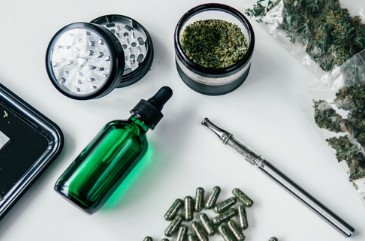
- Inhalation (Vaporization): Fast-acting, ideal for acute symptoms (pain, nausea, panic)
- Edibles/Tinctures: Longer duration, suited for sustained symptom control
- Topical (for pain): Less relevant for Kiss, but useful when blended with other oils
- Suppositories (experimental): For pelvic pain, especially in gynecologic conditions
IV. Safety, Contraindications, and Drug Interactions
Adverse Effects
- Dry mouth, dizziness
- Sedation (high dose)
- Tachycardia or mild anxiety (in THC-sensitive individuals)
Contraindications
- History of psychosis
- Severe cardiovascular disease
- Pregnancy/breastfeeding (due to lack of safety data)
Interactions
- SSRIs: Potential synergy or serotonin syndrome in rare cases
- Warfarin: Cannabinoids may increase INR
- CNS depressants: Additive sedation with benzos or opioids
Cultivation Science of Kiss
Kiss is a balanced hybrid strain, displaying medium-to-high vigor, dense internodal spacing, and a rich terpene profile that requires controlled environmental conditions to fully express. It is suitable for both indoor and outdoor cultivation, but performs best in controlled indoor or greenhouse settings where light, humidity, and airflow can be fine-tuned.

Phenotype Summary
- Growth Pattern: Moderate height (~90–140 cm indoors), bushy with lateral branching
- Flowering Time: 8–10 weeks (indoor); mid-October harvest (outdoor)
- Yield Potential:
- Indoor: 400–500g/m²
- Outdoor: 500–700g/plant
- Resin Production: High (ideal for extraction)
- Resistance: Moderate resistance to mold and pests
2. Environmental Conditions for Optimal Growth
A scientific cultivation program for Kiss should emphasize microclimate management to optimize photosynthesis, minimize pathogen risk, and support full expression of cannabinoids and terpenes.
2.1 Temperature and Humidity
| Growth Stage | Temperature (Day/Night) | Relative Humidity (RH) |
|---|---|---|
| Seedling | 20–25°C / 18–22°C | 65–70% |
| Vegetative | 22–28°C / 18–24°C | 55–65% |
| Flowering | 20–26°C / 16–22°C | 40–50% |
| Late Flowering | 18–24°C / 15–20°C | 30–40% |
- Vapor Pressure Deficit (VPD) should be maintained in the range of 0.8–1.2 kPa for optimal transpiration and nutrient uptake.
- Cooler nighttime temperatures in flowering enhance anthocyanin (color) expression, especially in purple phenotypes.
3. Light Science and Photobiology
3.1 Light Spectrum
- Vegetative Phase: Emphasize blue light (400–500 nm) for compact internodes and healthy foliage.
- Flowering Phase: Shift to red and far-red light (600–740 nm) to stimulate flower and trichome development.
3.2 Light Intensity
| Stage | PPFD (Photosynthetic Photon Flux Density) |
|---|---|
| Seedling | 200–300 µmol/m²/s |
| Vegetative | 400–600 µmol/m²/s |
| Flowering | 600–1000 µmol/m²/s |
- Supplemental UV-B radiation during weeks 5–8 of flowering may enhance trichome density and THC production (based on trichome stress response research).
3.3 Photoperiod
- Vegetative: 18/6 or 20/4 (light/dark)
- Flowering: 12/12 strict light/dark cycle
4. Nutrient Science
Kiss responds well to a balanced macronutrient ratio, with microelements fine-tuned during flowering to promote resin production and aromatic terpene output.
4.1 Nutrient Schedule by Phase
| Nutrient | Veg | Flower (Early) | Flower (Late) |
|---|---|---|---|
| Nitrogen (N) | High | Moderate | Low |
| Phosphorus (P) | Moderate | High | Very High |
| Potassium (K) | High | Very High | Very High |
| Calcium (Ca) | Consistent | High | High |
| Magnesium (Mg) | Moderate | High | Moderate |
| Sulfur (S) | Low–moderate | Moderate | High |
Micronutrients (iron, zinc, boron, manganese) must be monitored via EC and pH regulation:
- Ideal pH range:
- Soil: 6.0–6.5
- Hydro/Coco: 5.8–6.2
- Electrical Conductivity (EC) range:
- Veg: 1.2–1.8 mS/cm
- Flower: 1.8–2.3 mS/cm
5. Cultivation Techniques
5.1 Soil-Based Organic Cultivation
Kiss thrives in biologically active, living soil when managed correctly.
- Use a soil mix containing:
- Coco coir + peat moss + worm castings + compost
- Amend with kelp meal, bat guano, bone meal, and mycorrhizal fungi
- Mulching and cover cropping with clover or vetch improves nitrogen cycling and microbiome diversity.
Organic teas (compost tea, alfalfa tea) improve terpene content and resilience.
5.2 Hydroponics and Soilless Media
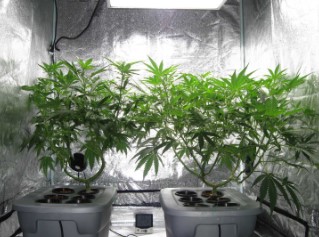
Hydroponic systems allow for precise nutrient delivery and faster vegetative growth, ideal for commercial Kiss production.
Recommended Systems
- Deep Water Culture (DWC) for rapid vegetative growth
- Coco coir drip systems for better root-zone oxygenation
- Ebb & Flow with inert media like hydroton
Pros:
- Better control over EC and pH
- Faster growth and bigger yields
Cons:
- Less terpene complexity than organic methods
- Requires real-time monitoring systems
5.3 Training and Canopy Optimization
Kiss develops dense buds and benefits from even canopy structure and air circulation.
- Low-Stress Training (LST) to flatten canopy
- Topping/FIMing to promote multiple colas
- Screen of Green (ScrOG) for light penetration and bud uniformity
- Defoliation in late veg/early flower to enhance airflow and light delivery
6. Watering and Irrigation Science
6.1 Water Quality
- Use RO (Reverse Osmosis) water with a cal-mag supplement to avoid over-salination.
- Maintain water temperature at 18–21°C to prevent root pathogens.
6.2 Irrigation Timing
- Kiss prefers wet/dry cycles in soil, but frequent micro-irrigation in coco/hydro.
6.3 Root Zone Monitoring
- Use root zone sensors (EC, pH, moisture) to avoid:
- Root rot
- Salt buildup
- Anaerobic conditions
7. Pest and Pathogen Management
Kiss is moderately resistant but benefits from integrated pest management (IPM).
7.1 Common Threats
| Pest | Management |
|---|---|
| Spider mites | Neem oil, predatory mites, silica foliar |
| Fungus gnats | BTi (Bacillus thuringiensis israelensis), sand top layer |
| Powdery mildew | Lactobacillus foliar spray, low humidity |
| Aphids | Insecticidal soap, neem |
- Avoid synthetic pesticides to preserve terpene integrity.
- UV-C sterilization and HEPA filtration are useful in indoor facilities.
8. Harvest Timing and Post-Harvest Science
8.1 Harvest Indicators
- Trichomes: 10–20% amber for a calming effect; mostly cloudy for balanced use
- Pistils: 75–90% darkened
- Aroma peak: Kiss develops strong floral-fruit scent near maturity—use scent to gauge ripeness
8.2 Drying
- Conditions: 60–65°F (15–18°C), 50–60% RH
- Timeframe: 10–14 days
- Use slow drying to preserve terpene volatility.
8.3 Curing
- Cure in glass jars or stainless steel containers at 60–65% RH.
- Burp daily for the first 2 weeks.
- Cure time: 3–6 weeks, longer for maximum terpene maturation.
8.4 Storage
- Store at cool temps (15–18°C), in the dark, in airtight containers.
- Avoid plastic bags or high heat, which degrade THC to CBN and destroy delicate terpenes like linalool.
9. Cultivation Outcome Optimization
9.1 Terpene Expression Enhancement
- Avoid nutrient excess (especially nitrogen in late flower)
- Use organic amendments like:
- Molasses (feeds microbes)
- Kelp (boosts stress response and resin)
- Induce mild water stress in the final week for resin boost (only for experienced growers)
9.2 Cannabinoid Maxing
- UV-B exposure (280–315 nm) in late flowering may boost THC via trichome proliferation
- Maintain VPD and avoid high CO₂ during final weeks (to prevent flavor loss)
Scientific Research and Pharmacological Foundations
While strain-specific studies on Kiss are limited, its cannabinoid-terpene profile closely mirrors strains used in research studies. Below are selected studies relevant to Kiss’s profile:
1. THC and Pain Relief
- “Cannabinoids for Neuropathic Pain” (NASEM, 2017): Strong evidence supports THC’s analgesic effects in chronic pain and MS-related spasticity.
2. Terpenes as Modulators
- Russo EB (2011) introduced the “Entourage Effect,” showing how myrcene, limonene, and caryophyllene enhance THC/CBD therapeutic effects.
3. CBG and Neuroprotection
- Valdeolivas et al. (2015): CBG showed anti-inflammatory and antioxidant effects in Parkinson’s models.
4. CBC and Depression
- El-Alfy et al. (2010): CBC demonstrated antidepressant-like effects in rodent models by increasing neurogenesis.
Comparative Strain Analysis
| Strain | THC % | Dominant Terpenes | Medical Focus |
|---|---|---|---|
| Kiss | 18–24 | Limonene, Linalool, Caryophyllene | Pain, mood, anxiety, sleep |
| Blue Dream | 17–25 | Myrcene, Pinene | Pain, depression, fatigue |
| Girl Scout Cookies | 19–28 | Caryophyllene, Limonene | Appetite, anxiety, inflammation |
| Harlequin | 4–10 (THC), high CBD | Myrcene, Pinene | Anxiety, inflammation, seizures |
Kiss is stronger than Harlequin, but more calming than GSC, and less racy than Haze-based strains.
Conclusion
The Kiss cannabis strain embodies a near-perfect equilibrium of recreational pleasure and medical functionality. With its rich terpene palette and robust THC presence, it offers euphoria, relaxation, creativity, and significant symptom relief across a wide range of conditions.
Its unique phytochemical signature—marked by limonene, linalool, caryophyllene, and CBG—gives it a diverse pharmacological profile suitable for managing pain, mood disorders, sleep disturbances, neurological symptoms, and inflammation.
Whether used for medical therapy or mindful recreation, Kiss proves to be more than a name—it’s an experience that lingers gently, yet powerfully.
For a complete directory of cultivars, visit our Cannabis Strain Reviews.
