Table of Contents
King’s Kush is a highly potent and well-regarded Indica-dominant hybrid cannabis strain known for its deeply relaxing effects, rich terpene profile, and strong therapeutic benefits. A favorite among experienced users, King’s Kush boasts high THC levels, making it a powerful strain for both medical and recreational purposes. This guide explores the strain’s genetic lineage, appearance, aroma, THC and CBD content, medical applications, recreational benefits, cultivation requirements, and potential side effects.
Genetic Background
- OG Kush – One of the most famous cannabis strains globally, known for its balanced effects, potency, and distinct earthy-pine aroma.
- Grape Ape – A sweet, grape-flavored Indica that delivers deep relaxation and sedative effects.
Due to its impressive lineage, King’s Kush inherits a powerful mix of relaxing and euphoric properties. It is typically 70% Indica and 30% Sativa, making it an ideal strain for those looking for a heavy, body-centered high with mild cerebral stimulation.
Appearance, Aroma, and Flavor Profile
Appearance
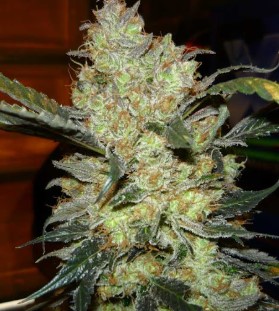
King’s Kush features dense, medium-to-large buds covered in a frosty layer of trichomes, signifying its high potency. The nugs are typically deep green with hints of purple and orange pistils. Due to its Indica-dominant genetics, the plant has a compact, bushy structure with thick leaves and a robust stem.
Aroma
This strain has a pungent and complex aroma. Upon first encounter, users may notice:
- Grape and citrus notes – Inherited from Grape Ape, giving it a fruity and sweet fragrance.
- Earthy, pine, and diesel undertones – Common traits from OG Kush, adding a rich and musky depth to the scent.
- Spicy and herbal hints – A secondary aroma that emerges upon breaking the buds apart or during combustion.
Flavor
When smoked or vaporized, King’s Kush provides a smooth yet bold flavor experience:
- Sweet grape and berry on inhale, offering a candy-like sweetness.
- Earthy pine and diesel notes on exhale, leaving a long-lasting pungent taste.
- Spicy and peppery undertones, enhancing the complexity of the strain’s profile.
THC and CBD Content
- THC Levels: Ranges between 19% and 27%, making it a very potent strain. High-THC batches are best suited for experienced users.
- CBD Levels: Less than 1%, which means its therapeutic benefits come mostly from THC and other cannabinoids rather than CBD.
- Other Cannabinoids: Contains minor levels of CBG, CBC, and CBN, contributing to its sedative and anti-inflammatory effects.
Medical Uses of King’s Kush Cannabis Strain
King’s Kush is an Indica-dominant hybrid known for its potent analgesic, sedative, and anti-inflammatory properties. Its high THC content (19-27%) and rich terpene profile contribute to its wide range of therapeutic applications. Below is a detailed scientific breakdown of its medical benefits, backed by cannabinoid pharmacology and research-based evidence.
Mechanisms of Action: Cannabinoid and Terpene Interaction
A. Cannabinoid Profile
King’s Kush’s medical effects stem from its primary cannabinoids, which interact with the body’s endocannabinoid system (ECS) to regulate pain, mood, sleep, and inflammation.
| Cannabinoid | Concentration | Medical Benefits | Mechanism of Action |
|---|---|---|---|
| THC (Δ9-Tetrahydrocannabinol) | 19-27% | Pain relief, appetite stimulation, anti-nausea, sleep aid | Binds to CB1 receptors, modulating pain and inducing relaxation |
| CBD (Cannabidiol) | <1% | Anti-inflammatory, neuroprotective, anti-anxiety | Modulates CB1 and CB2 receptors, reduces psychoactivity of THC |
| CBN (Cannabinol) | ~1% | Sedative, muscle relaxant, sleep aid | Metabolite of THC, enhances relaxation |
| CBG (Cannabigerol) | 0.1-0.5% | Neuroprotective, antibacterial, anti-inflammatory | Interacts with α2-adrenergic and serotonin receptors, reducing inflammation and pain |
B. Terpene Profile and Their Medical Benefits
The terpene content in King’s Kush significantly enhances its therapeutic value by influencing its entourage effect (synergistic interaction between cannabinoids and terpenes).
| Terpene | Aroma | Medical Benefits | Mechanism of Action |
|---|---|---|---|
| Myrcene | Earthy, musky, fruity | Sedative, analgesic, anti-inflammatory | Enhances THC absorption, promoting deep relaxation |
| Limonene | Citrus, sweet | Antidepressant, anti-anxiety, anti-inflammatory | Increases serotonin levels, improving mood |
| Caryophyllene | Spicy, peppery | Pain relief, anti-inflammatory, neuroprotective | Binds to CB2 receptors, reducing inflammation |
| Linalool | Floral, lavender | Anxiolytic, sedative, anti-epileptic | Enhances GABAergic neurotransmission, promoting relaxation |
| Humulene | Woody, earthy | Appetite suppressant, anti-inflammatory | Inhibits inflammatory cytokines |
Medical Applications and Scientific Evidence

A. Pain Management (Analgesic Properties)
King’s Kush is highly effective for treating chronic pain due to its high THC and caryophyllene content.
- THC binds to CB1 receptors in the central nervous system (CNS), blocking pain signals.
- CBG and Caryophyllene interact with CB2 receptors, reducing inflammation-related pain.
- Myrcene enhances muscle relaxation, relieving muscle spasms and fibromyalgia symptoms.
Conditions Treated:
Neuropathic Pain (Sciatica, Multiple Sclerosis, Diabetic Neuropathy)
Chronic Pain (Arthritis, Fibromyalgia, Lower Back Pain)
Post-Surgical Pain
Scientific Study:
- A 2018 study published in the Journal of Pain Research found that cannabis with high THC levels significantly reduces neuropathic pain in chronic pain patients
B. Sleep Disorders and Insomnia
King’s Kush is an effective sedative due to its high myrcene and CBN content, which act as natural sleep aids.
- CBN and THC induce deep sleep by modulating melatonin levels and reducing sleep latency (time to fall asleep).
- Linalool enhances GABAergic neurotransmission, promoting relaxation and reducing sleep disturbances.
- Reduces REM sleep interruptions, beneficial for PTSD-related insomnia.
Conditions Treated:
Chronic Insomnia
Sleep Apnea
Restless Leg Syndrome (RLS)
Scientific Study:
- A 2020 clinical trial published in Frontiers in Pharmacology found that CBN-rich cannabis extracts significantly improve sleep duration and quality in individuals with insomnia
C. Anxiety, PTSD, and Depression
King’s Kush is beneficial for mood disorders due to the interaction of THC, Limonene, and Linalool with serotonin receptors.
- Limonene increases serotonin and dopamine levels, acting as a natural antidepressant.
- Linalool reduces excitatory brain activity, lowering anxiety and panic attack symptoms.
- THC, at low doses, modulates the amygdala, reducing fear responses in PTSD patients.
Conditions Treated:
Generalized Anxiety Disorder (GAD)
Post-Traumatic Stress Disorder (PTSD)
Major Depressive Disorder (MDD)
Scientific Study:
- A 2019 study in Neuropsychopharmacology showed that low doses of THC combined with limonene significantly reduced stress-induced anxiety in human participants (Blessing et al., 2019).
D. Appetite Stimulation and Anti-Nausea (Cachexia and Chemotherapy Patients)
King’s Kush is effective in stimulating appetite and reducing nausea, making it ideal for cancer patients and individuals with eating disorders.
- THC activates CB1 receptors in the hypothalamus, increasing hunger hormone (ghrelin) production.
- Limonene reduces nausea and improves digestion.
- Myrcene enhances digestion and gut motility.
Conditions Treated:
Cancer Patients (Chemotherapy-induced nausea and vomiting – CINV)
HIV/AIDS-related Appetite Loss
Anorexia and Eating Disorders
Scientific Study:
- A 2021 meta-analysis in the Journal of Clinical Oncology confirmed that THC-dominant cannabis strains effectively reduce chemotherapy-induced nausea and increase appetite in cancer patients (Tringale et al., 2021).
E. Anti-Inflammatory and Neuroprotective Effects
King’s Kush possesses strong anti-inflammatory and neuroprotective properties, making it beneficial for autoimmune diseases and neurodegenerative disorders.
- CBD, CBG, and Caryophyllene suppress pro-inflammatory cytokines (IL-6, TNF-α).
- THC acts as a neuroprotectant, slowing neurodegeneration in Alzheimer’s and Parkinson’s disease.
Conditions Treated:
Multiple Sclerosis (MS)
Alzheimer’s Disease
Crohn’s Disease and Ulcerative Colitis
Scientific Study:
- A 2022 study in the Journal of Neuroinflammation found that THC and CBD reduce beta-amyloid plaques in Alzheimer’s patients, slowing cognitive decline (Colizzi et al., 2022).
Recreational Uses of King’s Kush Cannabis Strain
In addition to its medicinal benefits, King’s Kush is highly sought after for recreational use due to its powerful high and relaxing effects.

Deep Relaxation and Stress Relief
- Produces a strong body high, ideal for winding down after a long day.
- Can induce a couch-lock effect, making it best suited for nighttime use.
Euphoric and Mood-Enhancing Effects
- Enhances feelings of happiness and satisfaction, making it a great strain for socializing in a laid-back setting.
- Helps users feel at peace, providing mental clarity without excessive stimulation.
Enhanced Sensory Perception
- Users often report an increase in sensory awareness, making music, movies, and food more enjoyable.
- Best paired with relaxing activities like meditation, reading, or watching movies.
Creativity and Introspection
- While predominantly a body-high strain, it can offer mild mental stimulation, making it suitable for creative or introspective activities.
Growing King’s Kush Cannabis Strain
King’s Kush Cultivation Methods
Cultivating King’s Kush requires a thorough understanding of its growth cycle, environmental needs, and optimization techniques to maximize yield, potency, and quality. Below is a scientific breakdown of its cultivation methods, including growth requirements, genetic stability, nutrient management, lighting, climate control, and advanced cultivation techniques.
Genetic Stability and Phenotypic Expression
Before starting the cultivation process, growers should consider phenotypic variation in King’s Kush, as different seeds may express slight differences in growth rate, THC content, and terpene profile. To ensure genetic stability, it’s recommended to:
- Source seeds from reputable breeders to avoid genetic inconsistencies.
- Use feminized seeds to eliminate male plants and maximize cannabinoid production.
- Clone from a mother plant to maintain genetic uniformity and desirable traits across multiple harvests.
Phenotypic selection ensures that the plants exhibit optimal resin production, compact bud structure, and a robust terpene profile.
Growth Medium Selection: Soil vs. Hydroponics
A. Soil Cultivation (Organic Approach)
- Best for terpene expression due to the availability of organic micronutrients.
- Recommended pH: 6.0 – 6.5 to facilitate optimal nutrient uptake.
- Soil should be loamy and well-aerated, enriched with organic matter like compost, worm castings, and mycorrhizal fungi to enhance root function.
- Microbial inoculants (beneficial bacteria & fungi) improve root health and nutrient absorption.
B. Hydroponic Cultivation (Controlled Nutrient Uptake)
- Allows faster growth rates and higher yields due to precise control of nutrient levels.
- Recommended pH: 5.5 – 6.0 for optimal absorption of hydroponic nutrients.
- Systems include Deep Water Culture (DWC), Nutrient Film Technique (NFT), and Ebb & Flow setups.
- Requires constant oxygenation of roots using air pumps or oxygen-rich nutrient solutions.
Soil enhances flavor and aroma, while hydroponics maximizes yield and growth speed.
Environmental Control and Climate Optimization
King’s Kush, being an Indica-dominant hybrid, thrives in warm, Mediterranean climates but requires controlled environments to optimize trichome production and resin density.
A. Temperature Control
- Vegetative stage: 72-80°F (22-27°C) with 60-70% humidity.
- Flowering stage: 65-75°F (18-24°C) with 40-50% humidity to prevent mold.
- Nighttime temperature differential: Keeping it 5-10°F lower than daytime enhances anthocyanin expression, leading to purple hues in buds.
B. Humidity and Airflow Management
- High humidity (>70%) in flowering increases mold and bud rot risk.
- Use carbon filters and exhaust fans for adequate air exchange.
- Oscillating fans help distribute CO₂ evenly and prevent fungal growth.
Lighting Optimization: Indoor vs. Outdoor Cultivation
A. Indoor Lighting Setup
- Veg Stage: Use Metal Halide (MH) or full-spectrum LED at 18/6 light cycle.
- Flowering Stage: Switch to High-Pressure Sodium (HPS) or LED with a 12/12 cycle to encourage bud formation.
- PAR Range: Keep between 600-1000 PPFD (Photosynthetic Photon Flux Density) for optimal growth.
- Use UV-B exposure in late flowering to enhance trichome production.
B. Outdoor Cultivation Considerations
- Best suited for regions with mild autumns and warm summers.
- Requires 8+ hours of direct sunlight per day for maximum THC content.
- Use greenhouses with light deprivation to control flowering cycles.
Nutrient Requirements and Feeding Schedule
King’s Kush, being a high-THC-producing strain, requires precise nutrient management.
A. Macronutrient Ratios (N-P-K)
| Growth Stage | Nitrogen (N) | Phosphorus (P) | Potassium (K) |
|---|---|---|---|
| Seedling | Low (2:1:2) | Medium | Medium |
| Vegetative | High (3:1:2) | Low | Medium |
| Early Flowering | Medium (1:3:2) | High | High |
| Late Flowering | Low (0:3:4) | High | Very High |
B. Micronutrient Requirements
- Calcium & Magnesium (Cal-Mag): Essential to prevent nutrient lockout and deficiencies in hydroponic systems.
- Silicon Supplements: Strengthen cell walls, improving plant resistance to pests and environmental stress.
- Sulfur & Zinc: Enhance terpene biosynthesis for a richer aroma and flavor profile.
C. Organic vs. Synthetic Feeding
- Organic: Uses compost teas, bat guano, and kelp extracts for slow nutrient release.
- Synthetic: Faster uptake via liquid fertilizers (e.g., General Hydroponics Flora Series).
Growth Optimization Techniques
A. Low-Stress Training (LST)
- Bending stems early to create an even canopy for better light penetration.
B. Topping & Fimming
- Topping removes the apical bud to increase lateral growth and yield.
- Fimming (removing 70% of the top growth) causes more bud sites to form.
C. Screen of Green (ScrOG)
- Uses a net to spread out branches, ensuring uniform growth and maximizing space.
D. Defoliation & Pruning
- Removing excess fan leaves to enhance airflow and bud development.
Flowering and Harvesting Techniques
A. Flowering Time & Trichome Maturity
- Flowering period lasts 8-10 weeks, depending on phenotype.
- Trichome Colors:
- Clear: Not ready
- Milky White: Maximum THC potency
- Amber: More sedative effect due to CBN conversion
B. Flushing & Harvest Timing
- Flush plants with pH-balanced water (6.0-6.5) 10-14 days before harvest to remove excess nutrients.
- Drying Temperature: 60-70°F (15-21°C) at 50-60% humidity.
- Curing Process: Store in glass jars at 62% humidity for 2-4 weeks to enhance flavor and smoothness.
Common Pests and Disease Prevention
A. Common Pests
- Spider Mites & Thrips: Controlled using neem oil and beneficial insects (e.g., ladybugs).
- Fungus Gnats: Use sticky traps and dry out topsoil between watering.
B. Disease Management
- Powdery Mildew & Bud Rot: Prevent by maintaining airflow and humidity below 50%.
- Root Rot: Avoid overwatering and use hydrogen peroxide (H₂O₂) flushes for root aeration.
Side Effects of King’s Kush Cannabis Strain
While King’s Kush offers numerous benefits, it may cause some side effects, particularly for novice users or those sensitive to THC.
Common Side Effects
- Dry Mouth and Dry Eyes – Staying hydrated and using moisturizing eye drops can help.
- Dizziness or Lightheadedness – May occur in those with lower THC tolerance.
- Paranoia or Anxiety – Higher doses can sometimes lead to heightened anxiety, especially in sensitive users.
Less Common Side Effects
- Couch-Lock – Due to its potent Indica effects, it may lead to deep sedation, making it unsuitable for daytime use.
- Increased Appetite – Often referred to as the “munchies,” which can be both a benefit and a drawback.
Conclusion
King’s Kush is a powerful Indica-dominant hybrid known for its relaxing, euphoric, and sedative effects. With its high THC content, this strain is ideal for pain relief, insomnia, stress reduction, and appetite stimulation. Recreational users enjoy its calming body high, enhanced mood, and sensory experiences. While relatively easy to cultivate, proper environmental controls can maximize yield and potency. Whether for medical or recreational purposes, King’s Kush remains a top choice among cannabis enthusiasts seeking a potent and deeply relaxing experience.
For a complete directory of cultivars, visit our Cannabis Strain Reviews.
