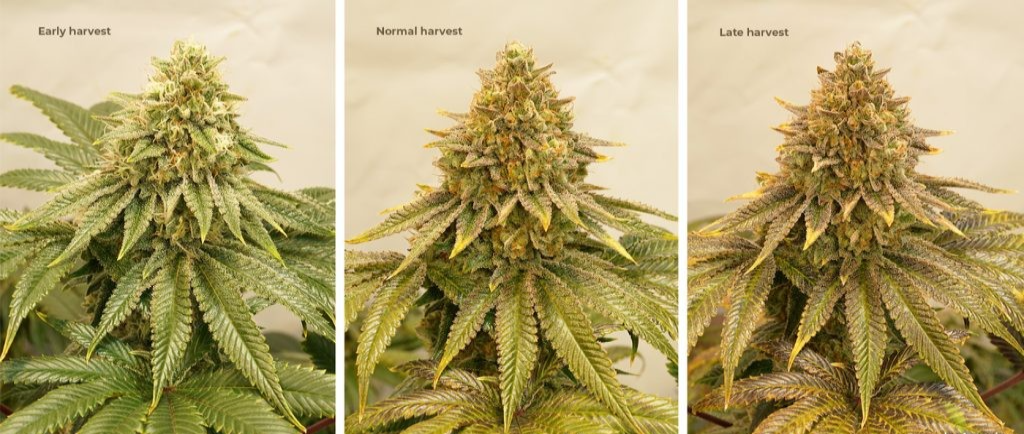
Early Harvest
Harvesting cannabis early for medical purposes involves picking the plants before they reach full maturity. This practice can produce a cannabinoid and terpene profile that is more suitable for certain medical conditions. Here is a detailed look at early harvesting for medical purposes:
Cannabinoid Profile
- Higher THC Levels: Early-harvested cannabis generally has higher levels of THC (tetrahydrocannabinol). Although THC is well recognized for its intoxicating properties, it also has medicinal advantages include reducing pain, preventing nausea, and promoting hunger.
- Lower CBN Levels: CBN (cannabinol) is a product of THC degradation. Since early-harvested cannabis has not had time to develop significant levels of CBN, its sedative effects are less pronounced.
Terpene Profile
- Terpene Retention: Terpenes, which contribute to the aroma and therapeutic effects of cannabis, can be more pronounced in early-harvested cannabis. Terpenes like limonene (uplifting) and pinene (alertness) may be more prevalent, enhancing the stimulating effects.
Medical Conditions Benefited by Early Harvest
- Depression: The uplifting and mood-enhancing properties of THC can be beneficial for patients with depression. Early-harvested cannabis can provide a more stimulating and euphoric effect, helping to improve mood and outlook.
- Fatigue and Chronic Fatigue Syndrome: The energizing effects of higher THC levels can help combat fatigue, providing patients with more energy and motivation.
- Attention Deficit Disorder (ADD) and Attention Deficit Hyperactivity Disorder (ADHD): Some patients find that the stimulating effects of early-harvested cannabis can help with focus and concentration, making it easier to manage symptoms of ADD/ADHD.
- Lack of Appetite: THC is known for its appetite-stimulating effects. Early-harvested cannabis can be particularly effective for patients dealing with appetite loss due to medical treatments or conditions such as cancer or HIV/AIDS.
- Mild Pain and Inflammation: While not as effective for severe pain, early-harvested cannabis can provide relief for mild to moderate pain and inflammation, making it suitable for conditions like mild arthritis or muscle aches.
Pros of Early Harvest for Medical Purposes
- Stimulating Effects: Ideal for conditions where increased energy, focus, and mood enhancement are desired.
- Immediate Relief: The effects of early-harvested cannabis can be more immediate due to higher THC levels.
- Reduced Risk of Mold: Harvesting early can prevent issues related to mold and bud rot, especially in humid environments.
Cons of Early Harvest for Medical Purposes
- Potential for Anxiety: Higher THC levels without the balancing effects of CBN can sometimes lead to anxiety or paranoia, particularly in patients sensitive to THC.
- Less Dense Buds: The buds may be less dense and smaller compared to those harvested at full maturity, potentially reducing the overall yield.
- Shorter-Lasting Effects: The stimulating effects may be shorter in duration compared to the sedative effects of late-harvested cannabis.
Best Practices for Early Harvest
- Monitor Trichomes: Use a magnifying tool to observe the trichomes. Harvest when they are mostly clear to milky. Clear trichomes indicate the plant is not fully mature, while milky trichomes indicate peak THC levels.
- Avoid Overripe Buds: Early harvests should be timed to avoid trichomes turning amber, as this indicates the THC is degrading into CBN.
- Environmental Considerations: In humid climates, early harvesting can prevent mold and bud rot. Ensure proper ventilation and drying conditions post-harvest.
- Strain Selection: Choose strains known for their uplifting and energetic effects. Sativa-dominant strains are often preferred for early harvesting due to their natural stimulating properties.
Post-Harvest Handling
- Drying: Hang the branches or place the buds on drying racks in a dark, well-ventilated room with controlled humidity (45-55%) and temperature (60-70°F or 15-21°C). Drying takes seven to fourteen days on average.
- Curing: Once dried, place the buds in airtight containers and store them in a cool, dark place. To release moisture (burping), open the jars everyday throughout the first week. Cure for at least 2-4 weeks to enhance flavor, aroma, and overall quality.
- Storage: To keep the cured cannabis fresh and potent, store it in sealed containers in a cold, dark environment.
Late Harvest
Harvesting cannabis late involves picking the plants after they have reached full maturity. This approach can yield a cannabinoid and terpene profile that is more suited for certain medical conditions. Here is a detailed look at late harvesting for medical purposes:
Cannabinoid Profile
- Higher CBN Levels: CBN (cannabinol) is a breakdown product of THC (tetrahydrocannabinol). In late-harvested cannabis, the THC has started to degrade into CBN, which has sedative and relaxing effects.
- Balanced Cannabinoid Profile: The plant has had more time to develop a balanced profile of cannabinoids, which can include higher levels of CBD (cannabidiol), CBG (cannabigerol), and other minor cannabinoids.
- Terpene Profile: Terpenes, which contribute to the aroma and therapeutic effects of cannabis, are fully developed in late-harvested cannabis. These terpenes can enhance the overall medicinal benefits of the plant.
Medical Conditions Benefited by Late Harvest
- Chronic Pain: The increased CBN levels, along with other cannabinoids and terpenes, provide enhanced pain relief, making late-harvested cannabis suitable for chronic pain conditions such as arthritis, fibromyalgia, and neuropathy.
- Insomnia: The sedative effects of higher CBN levels are beneficial for patients with sleep disorders, helping to promote restful sleep.
- Anxiety: Late-harvested cannabis can have a calming effect, reducing anxiety and promoting relaxation. This can be particularly helpful for patients with generalized anxiety disorder (GAD) or post-traumatic stress disorder (PTSD).
- Muscle Spasms and Tension: The relaxing properties can help alleviate muscle spasms and tension, benefiting conditions such as multiple sclerosis (MS) and muscle injuries.
- Appetite Stimulation: While THC is known for stimulating appetite, the balanced profile in late-harvested cannabis can still effectively promote hunger, which is useful for patients undergoing chemotherapy or suffering from wasting syndromes.
Pros of Late Harvest for Medical Purposes
- Sedative and Relaxing Effects: Ideal for conditions requiring relaxation, pain relief, and sleep aid.
- Full Bud Development: The buds are denser and larger, maximizing the yield and potency.
- Enhanced Flavor and Aroma: The fully developed terpene profile enhances the taste and smell of the cannabis.
Cons of Late Harvest for Medical Purposes
- Increased Risk of Mold and Bud Rot: The denser buds and longer time on the plant increase the risk of mold and bud rot, especially in humid environments.
- Potential THC Degradation: As THC degrades into CBN, the psychoactive potency may decrease, which might not be desirable for all patients.
- Longer Growth Cycle: Late harvesting requires a longer growth cycle, which may not be feasible for all growers.
Best Practices for Late Harvest
- Monitor Trichomes: Use a magnifying tool to observe the trichomes. Harvest when the trichomes are mostly milky with a significant number turning amber. Amber trichomes indicate higher CBN levels.
- Environmental Control: Maintain optimal growing conditions to minimize the risk of mold and bud rot. Maintain enough ventilation and regulate relative humidity.
- Strain Selection: Choose strains known for their relaxing and sedative effects. Indica-dominant strains are often preferred for late harvesting due to their natural calming properties.
- Patience and Timing: Be patient and monitor the plants closely during the final stages of flowering. Harvesting too late can lead to excessive THC degradation.
Post-Harvest Handling
- Drying: Hang the branches or place the buds on drying racks in a dark, well-ventilated room with controlled humidity (45-55%) and temperature (60-70°F or 15-21°C). The drying process usually takes 7-14 days.
- Curing: Once dried, place the buds in airtight containers and store them in a cool, dark place. Open the jars daily for the first week to release moisture (burping). Cure for at least 2-4 weeks to enhance flavor, aroma, and overall quality.
- Storage: Store the cured cannabis in airtight containers in a cool, dark place to maintain potency and freshness.
General Recommendations for Medical Harvest
Here are detailed general recommendations for harvesting cannabis specifically for medical purposes:
1. Understand the Medical Conditions and Desired Effects
- Identify Patient Needs: Determine the specific medical conditions being treated and the desired effects of the cannabis. This could include pain relief, anti-inflammatory effects, anxiety reduction, sleep aid, appetite stimulation, or energy boost.
- Consultation: If possible, consult with a medical professional who is knowledgeable about cannabis to tailor the harvest timing to the patient’s specific needs.
2. Monitor Trichomes Closely
- Trichome Stages:
- Clear Trichomes: Indicates the plant is not fully mature. Harvesting at this stage may result in less potent cannabis.
- Milky/Cloudy Trichomes: Signifies peak THC levels. Ideal for a strong psychoactive effect.
- Amber Trichomes: THC is degrading into CBN, which has sedative effects. Ideal for a more relaxing and body-focused high.
- Tools for Observation: Use a jeweler’s loupe, magnifying glass, or digital microscope to closely observe the trichomes. A magnification of 30x to 100x is generally sufficient.
3. Timing Based on Medical Needs
- For Uplifting and Energetic Effects:
- Conditions: Depression, fatigue, ADD/ADHD.
- Harvest: When trichomes are mostly milky with some clear. This ensures higher THC levels with minimal CBN.
- For Relaxing and Sedative Effects:
- Conditions: Chronic pain, insomnia, anxiety, muscle spasms.
- Harvest: When trichomes are mostly milky with a significant number turning amber. This increases CBN levels for sedative effects.
4. Consider Environmental Conditions
- Humidity and Mold Prevention: In humid climates, there’s a higher risk of mold and bud rot as the plant matures. Consider harvesting slightly earlier to avoid these issues.
- Temperature Control: Maintain optimal temperatures to ensure plant health and prevent stress that could affect cannabinoid production.
- Pest and Disease Management: Monitor for pests and diseases, especially in the later stages of flowering. Harvesting slightly earlier can sometimes prevent infestations.
5. Strain Selection
- Strain-Specific Characteristics: Different strains have varying maturation times and cannabinoid profiles. Indica strains typically mature faster and are more sedative, while sativa strains take longer and are more uplifting.
- Medical Strains: Choose strains known for their medical benefits and specific effects. For instance, high-CBD strains may be preferred for anti-inflammatory and anti-anxiety effects.
6. Harvesting Techniques
- Preparation: Ensure you have clean, sterilized tools for harvesting. This includes pruning shears and gloves to handle the plants.
- Cutting the Plants: Cut the branches or the entire plant, depending on your drying space and method. Handle the plants gently to avoid knocking off trichomes.
- Trimming: Trim away the large fan leaves immediately. You can decide to trim the smaller sugar leaves now (wet trimming) or after drying (dry trimming) based on your preferred method.
7. Post-Harvest Handling
- Drying: Hang the branches or place the buds on drying racks in a dark, well-ventilated room with controlled humidity (45-55%) and temperature (60-70°F or 15-21°C). The drying process usually takes 7-14 days.
- Curing: Once dried, place the buds in airtight containers and store them in a cool, dark place. Open the jars daily for the first week to release moisture (burping). Cure for at least 2-4 weeks to enhance flavor, aroma, and overall quality.
- Storage: To preserve potency and freshness, store the cured cannabis in sealed containers in a cold, dark environment. Avoid exposure to light, heat, and moisture to prevent degradation.
8. Quality Control and Testing
- Lab Testing: If possible, have the harvested cannabis tested in a lab for cannabinoid and terpene profiles. This ensures that the medicine meets the desired specifications and is free from contaminants.
- Consistency: Maintain consistent growing, harvesting, and processing methods to ensure reliable and repeatable results for medical patients.
9. Legal and Safety Considerations
- Legal Compliance: Ensure that your cultivation and harvesting activities comply with local laws and regulations regarding cannabis.
- Safety Protocols: Follow safety protocols when handling sharp tools and heavy plants. If using any chemicals or pesticides, ensure they are safe for use on consumable plants and follow proper application guidelines.
10. Documentation and Record-Keeping
- Record Details: Keep detailed records of the growing conditions, strain information, harvest times, and any observations about the plant’s development. This information can be invaluable for refining your techniques and ensuring consistent results.
- Patient Feedback: Gather feedback from patients regarding the effectiveness and side effects of the cannabis. Use this information to adjust future growing and harvesting practices.
Conclusion
Harvesting cannabis for medical purposes requires careful consideration of the patient’s needs, environmental conditions, and the plant’s development stage. By monitoring trichomes, selecting appropriate strains, and employing proper harvesting and post-harvest techniques, you can optimize the therapeutic benefits of your cannabis crop. Maintaining quality control, legal compliance, and thorough documentation will help ensure that patients receive consistent and effective medicine.
