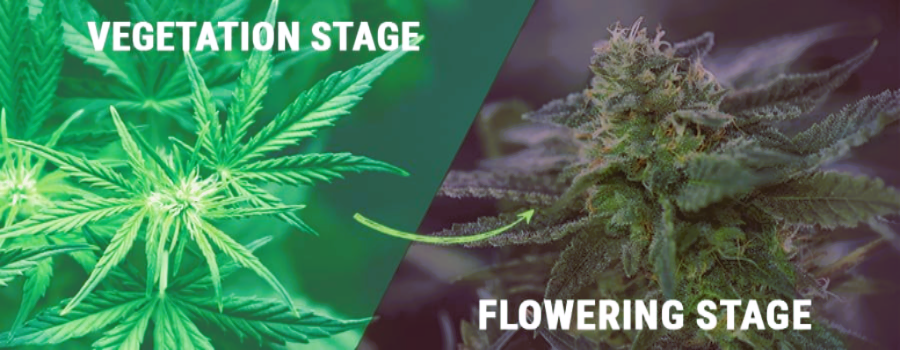
Switching cannabis plants from the vegetative stage to the flowering stage involves changing the light cycle to mimic the shorter days of autumn. Here’s a general guide on how to do it:
- Adjust Light Cycle: Cannabis plants typically begin flowering when they receive 12 hours of uninterrupted darkness each day. So, if you’ve been giving them 18 hours of light during the vegetative stage, you’ll need to reduce this to 12 hours. Use a timer to automate this process for consistency.
- Maintain Darkness: Once you’ve adjusted the light cycle, it’s crucial to ensure that the plants receive complete darkness during their 12-hour dark period. Even a brief exposure to light during this time can disrupt the flowering process.
- Monitor Environment: Check the temperature and humidity levels in your grow space. Flowering cannabis plants often prefer slightly cooler temperatures and lower humidity compared to the vegetative stage. Aim for temperatures between 68-78°F (20-25°C) and humidity levels around 40-50%.
- Nutrient Adjustments: During the flowering stage, cannabis plants have different nutritional needs compared to the vegetative stage. Switch to a flowering nutrient formula that is higher in phosphorus and potassium and lower in nitrogen. This will support flower development.
- Pruning and Training: Before transitioning to the flowering stage, consider pruning and training your plants to promote even canopy development and maximize light penetration. However, be cautious not to stress the plants too much during this transition period.
- Patience and Observation: Once you’ve made the switch to the flowering light cycle, be patient and monitor your plants closely. It usually takes a week or two for them to show signs of flowering. Keep an eye out for the development of pre-flowers, which indicate that flowering has begun.
By following these methods, you may properly transition your cannabis plants from the vegetative to the flowering stage, putting them on track to produce buds. Keep in mind that different strains may have slightly varied requirements, so tailor your technique to your plants’ individual demands.
Adjusting the light cycle is a crucial step in transitioning cannabis plants from the vegetative stage to the flowering stage. Here’s a detailed explanation of how to do it effectively:
- Understanding Light Requirements:
- Cannabis plants require specific light conditions to trigger different stages of growth. During the vegetative stage, they typically need longer periods of light to encourage vegetative growth and development.
- In contrast, the flowering stage is initiated by a change in the light cycle to mimic the shorter days of autumn, signaling to the plants that it’s time to start producing flowers.
- Selecting the Right Timing:
- Before adjusting the light cycle, consider the age and size of your cannabis plants, as well as your cultivation goals.
- Most growers choose to transition their plants to the flowering stage after they have reached a certain size or age, usually around 4-6 weeks from germination.
- Some growers may opt to keep their plants in the vegetative stage for longer to allow for more significant growth before flowering.
- Transitioning to 12/12 Light Cycle:
- In the vegetative stage, cannabis plants are typically exposed to a light cycle of 18 hours of light and 6 hours of uninterrupted darkness per day.
- To induce flowering, switch the light cycle to a 12-hour light period followed by 12 hours of uninterrupted darkness per day. This 12/12 light cycle simulates the shorter days of autumn, triggering the plants to begin flowering.
- To guarantee consistency and automate the light cycle, use a timer. Set the timer to illuminate and offlight the lights for twelve hours every day.
- Ensuring Complete Darkness:
- During the 12-hour dark period, it’s essential to maintain complete darkness to prevent any light interruptions that could disrupt the flowering process.
- Seal off your grow space as much as possible to prevent any light leaks. Use light-proof materials such as blackout curtains, reflective film, or duct tape to cover windows, doors, vents, and other openings where light may enter.
- Inspect your grow space regularly for any potential sources of light leaks and address them promptly to maintain complete darkness during the dark period.
- Consistency and Monitoring:
- Once you’ve adjusted the light cycle, maintain it consistently throughout the flowering stage.
- During this period of transition, keep a watchful eye out for any signs of stress or nutritional deficits in your plants and make any necessary adjustments to your cultivation procedures.
- Be patient, as it may take a week or two for the plants to show visible signs of flowering after switching to the 12/12 light cycle.
By following these detailed steps and maintaining a strict 12/12 light cycle, you can effectively induce flowering in your cannabis plants and set them on the path to producing high-quality buds.
Maintaining darkness during the transition from the vegetative stage to the flowering stage is crucial for inducing flowering in cannabis plants. Here’s a detailed explanation of how to maintain darkness effectively:
- Understanding the Importance of Darkness:
- Cannabis plants, like many other flowering plants, rely on changes in the duration of light and darkness (photoperiod) to trigger physiological responses, including the transition from vegetative growth to flowering.
- During the flowering stage, cannabis plants require a consistent and uninterrupted dark period to initiate and maintain flower development.
- The dark period signals to the plants that autumn has arrived, prompting them to shift from vegetative growth to reproductive growth.
- Sealing Off the Grow Space:
- To maintain darkness, seal off your grow space as much as possible to prevent any light leaks. Light leaks during the dark period can disrupt the flowering process and cause stress to cannabis plants.
- Use light-proof materials such as blackout curtains, reflective film, or duct tape to cover windows, doors, vents, and other openings where light may enter.
- Inspect your grow space regularly for any potential sources of light leaks, such as cracks or gaps, and address them promptly.
- Using Light-Proof Containers:
- If you’re growing cannabis plants in containers, ensure that the containers are light-proof to prevent light from penetrating the soil and reaching the roots during the dark period.
- Consider using opaque containers or wrapping them with dark materials to block out light.
- Minimizing Disturbances:
- Minimize disturbances in your grow space during the dark period to reduce the risk of accidental light exposure.
- Avoid entering the grow space or turning on any lights during the 12-hour dark period. If you need to work in the grow room, use a red or far-red light, as these wavelengths are less likely to disrupt the flowering process.
- Maintaining Consistency:
- Once you’ve established a 12/12 light cycle for flowering, maintain it consistently throughout the flowering stage.
- Use a timer to automate the light cycle and ensure that the plants receive 12 hours of uninterrupted darkness each day.
- Consistency is key to successfully inducing and maintaining flowering in cannabis plants.
- Monitoring and Adjustments:
- Monitor your plants closely for any signs of stress or light damage during the flowering stage, and adjust your cultivation practices as needed.
- Check for signs of flowering, such as the development of pre-flowers, to ensure that the transition from vegetative growth to flowering is progressing as expected.
By diligently maintaining darkness during the dark period, you can effectively induce flowering in your cannabis plants and promote healthy flower development.
Monitoring the environment is essential when transitioning cannabis plants from the vegetative stage to the flowering stage. Here’s how to do it effectively:
- Temperature Control:
- Cannabis plants have specific temperature preferences during the flowering stage. Aim to maintain temperatures between 68-78°F (20-25°C) to ensure optimal growth and development.
- Use a thermometer to monitor temperatures regularly in your grow space. Adjust heating, ventilation, and air conditioning systems as needed to keep temperatures within the desired range.
- Be cautious of temperature fluctuations, as extreme heat or cold can stress the plants and affect flower development.
- Humidity Regulation:
- Humidity levels play a crucial role in the health and growth of cannabis plants, especially during the flowering stage. Aim for humidity levels around 40-50% to prevent mold and bud rot.
- Use a hygrometer to measure humidity levels in your grow space regularly. Adjust humidity levels using humidifiers or dehumidifiers as needed to maintain the desired range.
- Be mindful of humidity spikes, especially in enclosed grow spaces, as they can create conditions conducive to mold growth.
- Air Circulation and Ventilation:
- Cannabis plants require proper ventilation and air movement to flourish in a healthy environment.
- Use fans to promote air circulation within the grow space, ensuring that air reaches all parts of the plants.
- Install exhaust fans and intake vents to provide fresh air exchange and prevent the buildup of heat, humidity, and stale air.
- Monitor airflow patterns to ensure that plants receive adequate ventilation without experiencing excessive wind stress.
- CO2 Levels:
- Carbon dioxide (CO2) is essential for photosynthesis and plant growth. While ambient CO2 levels are usually sufficient for cannabis plants, some growers may choose to supplement CO2 levels during the flowering stage to enhance growth and yield.
- Use a CO2 monitor to measure CO2 levels in your grow space. Aim for CO2 levels between 800-1200 parts per million (ppm) for optimal growth.
- If supplementing CO2, use a CO2 generator or compressed CO2 tank to maintain consistent levels throughout the flowering stage.
- Light Intensity and Spectrum:
- While adjusting the light cycle is essential for inducing flowering, it’s also crucial to monitor light intensity and spectrum during the flowering stage.
- Ensure that cannabis plants receive adequate light intensity (measured in foot-candles or lux) to support flower development. Adjust the distance between grow lights and plants as needed to prevent light burn or bleaching.
- Consider using full-spectrum LED grow lights designed for flowering stages to provide the appropriate wavelengths of light for optimal flower production.
- pH and Nutrient Levels:
- While not directly related to environmental monitoring, it’s essential to maintain proper pH and nutrient levels in the growing medium during the flowering stage.
- Monitor pH levels in the soil or hydroponic solution regularly using a pH meter and adjust pH as needed to ensure optimal nutrient uptake.
- Monitor nutrient levels using a TDS/EC meter and adjust nutrient solutions accordingly to prevent nutrient deficiencies or excesses.
By monitoring these environmental factors closely and making necessary adjustments, you can create an optimal growing environment for cannabis plants during the flowering stage, leading to healthy growth and abundant flower production.
Adjusting nutrients is crucial when transitioning cannabis plants from the vegetative stage to the flowering stage. Here’s how to consider and implement nutrient adjustments effectively:
- Understanding Nutrient Requirements:
- Different nutrients are required by cannabis plants in their vegetative and blooming phases. In the vegetative stage, plants require higher levels of nitrogen (N) to support rapid vegetative growth and development of leaves and stems.
- During the flowering period, cannabis plants require less nitrogen and more phosphorus (P) and potassium (K) to promote flower development, bud production, and general plant health.
- Transitioning Nutrient Formulas:
- Before transitioning to the flowering stage, switch from a vegetative nutrient formula to a flowering-specific formula designed to meet the needs of flowering cannabis plants.
- Flowering nutrient formulas are typically higher in phosphorus and potassium and lower in nitrogen compared to vegetative formulas.
- Look for commercial nutrient products specifically labeled for the flowering or bloom stage. These products often have formulations tailored to the needs of flowering plants.
- Adjusting Nutrient Ratios:
- Pay attention to the nutrient ratios in your flowering nutrient formula. A common ratio used during the flowering stage is N-P-K (nitrogen-phosphorus-potassium) of around 1:2:3 or 1:3:2.
- Ensure that phosphorus and potassium levels are elevated compared to nitrogen levels in the nutrient solution to promote robust flower development.
- Some nutrient formulas may also contain micronutrients and supplements that support flower production, such as calcium, magnesium, and trace minerals. Check the nutrient label for additional ingredients and adjust accordingly.
- Monitoring and pH Adjustment:
- Regularly monitor nutrient levels in your growing medium using a TDS/EC meter to ensure that plants receive the appropriate nutrient concentrations.
- Maintain proper pH levels in the nutrient solution or growing medium using a pH meter. During the flowering stage, aim for a pH range of 6.0-6.5 in soil or 5.5-6.5 in hydroponic systems to facilitate nutrient uptake.
- Adjust pH as needed using pH-up or pH-down solutions to keep it within the optimal range for nutrient absorption.
- Feeding Schedule:
- Follow the feeding schedule recommended by the manufacturer for your chosen flowering nutrient formula. Start with a lower concentration of nutrients and gradually increase the strength as the plants progress through the flowering stage.
- Pay attention to any signs of nutrient deficiencies or excesses, such as yellowing leaves, leaf curling, or nutrient burn. Adjust nutrient concentrations or pH accordingly to address any issues.
- Organic Options:
- If you prefer organic cultivation methods, there are organic nutrient options available specifically formulated for the flowering stage. These products use natural ingredients and microbial additives to promote healthy flower development without synthetic chemicals.
- Follow the manufacturer’s instructions for organic nutrient application and adjust nutrient concentrations as needed based on plant response and nutrient uptake.
By considering these factors and making appropriate nutrient adjustments, you can effectively support cannabis plants during the flowering stage and maximize flower production and quality.
Pruning and training cannabis plants during the transition from the vegetative stage to the flowering stage can help optimize canopy structure, light penetration, and bud development. Here’s how to consider and implement pruning and training techniques effectively:
- Understanding the Goals:
- Pruning and training techniques aim to manipulate the shape and structure of cannabis plants to maximize light exposure to lower bud sites, improve airflow, and promote even canopy development.
- The main goals of pruning and training during the transition to flowering are to manage plant height, increase bud sites, and enhance overall flower production.
- Choosing the Right Techniques:
- There are several pruning and training techniques that growers can use during the flowering stage, including topping, low-stress training (LST), defoliation, and super cropping.
- Topping involves removing the apical meristem (main stem tip) to encourage bushier growth and the development of multiple main colas.
- LST involves gently bending and securing branches to expose lower bud sites to more light, promote horizontal growth, and create a more even canopy.
- Defoliation entails removing selected fan leaves to increase light penetration and airflow within the canopy, which can reduce the risk of mold and improve bud development.
- Super cropping involves gently bending and pinching stems to create knuckles or nodes, which can increase stem strength and support heavy bud development.
- Timing of Pruning and Training:
- It’s essential to consider the timing of pruning and training techniques to minimize stress and maximize recovery before the onset of flowering.
- Perform any major pruning or training techniques during the late vegetative stage or early flowering stage, ideally before the plants have entered the stretch phase.
- Avoid performing drastic pruning or training techniques during the early flowering stage, as this can delay flower development and reduce yield potential.
- Pruning and Training Methods:
- When topping, make clean cuts just above the node where new growth is desired. This will encourage lateral branching and the development of multiple main colas.
- When performing LST, use soft ties or plant training clips to gently bend and secure branches in the desired position. Avoid applying too much pressure to prevent stem damage.
- When defoliating, selectively remove large fan leaves that are blocking light or air circulation within the canopy. Focus on removing leaves from the lower and inner portions of the plant.
- When super cropping, gently squeeze and bend stems between your fingers until they become pliable, then carefully bend them to the desired angle. Use caution to avoid snapping or damaging the stems.
- Monitoring and Maintenance:
- Monitor your plants closely after pruning and training to assess their response and ensure that they recover quickly.
- Provide adequate support for branches that have been manipulated to prevent them from breaking under the weight of developing buds.
- Continue to monitor plant growth and adjust pruning and training techniques as needed throughout the flowering stage to maintain an even canopy and maximize flower production.
By carefully considering pruning and training techniques and implementing them at the appropriate time, you can optimize the growth and development of cannabis plants during the transition from vegetative to flowering stage, leading to healthier plants and higher yields.
Practicing patience and observation is essential when transitioning cannabis plants from the vegetative stage to the flowering stage. Here’s how to consider and apply these principles effectively:
- Understanding the Importance of Patience:
- Transitioning cannabis plants from vegetative growth to flowering is a natural process that takes time. It’s essential to be patient and allow the plants to progress through this transition at their own pace.
- Rushing the transition or making abrupt changes to the growing environment can stress the plants and negatively impact flower development and overall yield.
- Observing Plant Development:
- Regular observation of your cannabis plants is crucial during the transition to flowering. Pay attention to changes in growth patterns, leaf color, and overall plant health.
- Look for signs of pre-flowers, which are small structures that indicate the onset of flowering. Pre-flowers typically appear at the nodes where branches meet the main stem and can help you determine when the plants have entered the flowering stage.
- Monitoring Environmental Conditions:
- Continuously monitor environmental conditions in your grow space, including temperature, humidity, light intensity, and airflow.
- Ensure that environmental conditions remain stable and within optimal ranges for cannabis cultivation to support healthy growth and development during the flowering stage.
- Make any necessary adjustments to environmental parameters gradually to avoid shocking the plants and disrupting their transition to flowering.
- Adjusting Cultivation Practices:
- Based on your observations, adjust cultivation practices as needed to optimize plant health and flower production.
- If you notice signs of nutrient deficiencies or excesses, adjust nutrient concentrations in the growing medium or hydroponic solution accordingly.
- If plants are exhibiting signs of stress or nutrient imbalances, consider supplementing with additional nutrients, adjusting pH levels, or improving environmental conditions to support recovery and healthy growth.
- Practicing Patience:
- Remember that the transition to flowering is a gradual process that can take several days to weeks, depending on various factors such as genetics, growing conditions, and cultivation practices.
- Avoid making drastic changes to your growing setup or cultivation practices out of impatience. Allow the plants to acclimate to their new environment and progress through the flowering stage naturally.
- Trust in the resilience and adaptability of cannabis plants and have faith that they will ultimately thrive with proper care and patience.
By practicing patience and keen observation, you can effectively guide your cannabis plants through the transition from vegetative growth to flowering, ensuring optimal growth and flower development.
Conclusion
In conclusion, transitioning cannabis plants from vegetative to flowering stages requires adjusting the light cycle, maintaining darkness, monitoring the environment, adjusting nutrients, and employing pruning/training techniques. Patience and observation are crucial throughout this process to ensure optimal growth and flower development.
