Table of Contents
How to sex marijuana plants
Sexing marijuana (Cannabis sativa and Cannabis indica) plants is a critical process for growers aiming to cultivate either high-quality sinsemilla (seedless) buds or produce seeds for future harvests. Understanding how to distinguish male from female cannabis plants allows cultivators to tailor their approach for either medical/recreational bud production or breeding purposes. This guide provides a comprehensive breakdown of how to sex marijuana plants, including biological differences, timing, methods, signs, and troubleshooting tips.
1. Biology of Cannabis Sexuality
Cannabis is a dioecious species, meaning individual plants are typically either male or female. Some plants can be hermaphroditic, containing both male and female reproductive organs, particularly under environmental stress.
- Male Plants produce pollen sacs used to fertilize female plants.
- Female Plants develop calyxes with pistils, which when unfertilized form the resinous flowers (buds) valued for THC/CBD content.
- Hermaphrodites have both male and female reproductive traits and can self-pollinate, which is typically undesirable in controlled grows.
2. Why Sexing Cannabis Matters
Knowing a plant’s sex is essential for multiple reasons:
- Sinsemilla Production: Removing males prevents pollination, leading to potent, seedless flowers.
- Controlled Breeding: Selecting specific males and females helps preserve or develop desirable traits.
- Yield Optimization: Male plants do not produce buds, so early removal maximizes light and nutrient resources for females.
- Preventing Hermaphroditism: Early identification and removal of stress-prone or mixed-sex plants maintains crop quality.
3. When to Determine Sex
Cannabis plants can reveal their sex in two major ways:
A. Pre-Flowering Stage (Week 3–6 from Germination)
This typically occurs during the vegetative stage, around 4–6 weeks after germination under 18+ hours of light per day.
- Pre-flowers emerge at the nodes (junctions between branches and main stem).
- Early sexing is less obvious but very helpful for preemptive decisions.
B. Flowering Stage (Week 1–3 of 12/12 Light Cycle)
If pre-flowering signs were unclear, switching the plant to a 12/12 light cycle (12 hours of light, 12 hours of darkness) initiates flowering, during which sex becomes unmistakable.
4. How to Sex Marijuana Plants: Step-by-Step
Step 1: Inspect the Nodes

Use a magnifying glass or macro lens to closely observe where branches meet the main stalk. Early sexual characteristics appear here.
Step 2: Identify Male vs Female Pre-Flowers
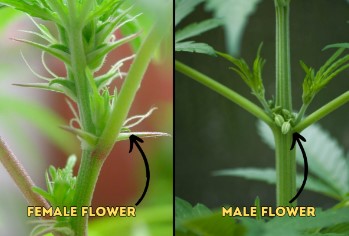
A. Male Pre-Flowers
- Appear as tiny balls or sacs (pollen sacs).
- Resemble small grapes or bananas in early development.
- Usually form in clusters.
- Develop slightly earlier than female pre-flowers.
- No pistils are present.
B. Female Pre-Flowers
- Small pear-shaped calyxes with two white hairs (pistils) protruding.
- Typically singular in early stages.
- Found on upper nodes first, then lower.
- Sticky and resinous as flowering progresses.
Step 3: Observe Daily for Changes
Monitor daily as changes can develop quickly. Male plants tend to mature faster, often within 1–2 weeks of the flowering cycle.
Step 4: Separate or Cull Males
Once identified, either:
- Cull males entirely (if growing for sinsemilla buds).
- Isolate males in separate grow spaces (if breeding is the goal).
- Be prompt: once pollen sacs open, they can pollinate females within hours via air.
5. Identifying Hermaphrodite Plants
Some plants develop both male and female features, especially under:
- Light interruptions
- Excessive heat or cold
- Nutrient toxicity
- Physical trauma or pruning stress
- Genetics predisposition
Traits of Hermaphrodites:
- Male banana-shaped sacs (staminate flowers) growing in the middle of female buds.
- Pistils and pollen sacs on the same node.
- Risk of self-pollination, leading to seeded buds.
Action:
- If a plant displays limited male traits, carefully remove sacs.
- If traits are extensive, it’s best to remove the plant entirely.
6. Techniques to Sex Plants Early
For those who cannot wait until natural sexing, several early identification techniques exist:
A. Cloning Method
- Take a cutting from each plant.
- Label the clone with the corresponding parent plant.
- Place clones under 12/12 light cycle to induce flowering.
- Observe which clones develop male/female traits.
- Apply the results to parent plants (which remain in vegetative stage).
Pros: Accurate
Cons: Takes extra time and space
B. DNA Testing
Some companies offer early genetic sex testing kits using a leaf sample.

Pros: Fast (results in ~7–10 days), highly accurate
Cons: Costly, not ideal for casual growers
C. Stress-Induced Sexing
Advanced growers may trigger early flowering on a plant or a branch by manipulating the light schedule. This is risky and can stress plants into hermaphroditism.
7. Lighting and Environment Considerations
Proper environmental conditions reduce the chance of false sex expression or hermaphroditism:
- Temperature: Maintain within 70–85°F (21–29°C)
- Humidity: 40–60% in vegetative, 30–50% in flowering
- Lighting: Avoid light leaks during the 12-hour dark period
- Stress: Avoid overfeeding, overwatering, or excessive pruning during early development
8. Common Sexing Mistakes and Tips
- Mistaking stipules for pre-flowers: Stipules are small leaf-like projections at nodes that are not indicators of sex.
- Removing males too late: Waiting too long risks pollination of female flowers.
- Incorrectly identifying early female flowers: Pistils must be clearly visible to confirm.
- Ignoring lower nodes: Sometimes lower growth reveals sex earlier than upper parts.
- Expect variation: Not all plants show sex traits at the same pace; some may take longer.
9. Visual Summary: Key Differences
| Trait | Male Plant | Female Plant |
|---|---|---|
| Appearance | Round balls, clusters | Calyxes with white hairs (pistils) |
| Timing | Appears earlier | Appears later |
| Purpose | Pollen production | Bud (resin) production |
| Structure | Taller, fewer leaves | Bushier, more foliage |
| Action to take | Remove or isolate | Keep for bud production |
10. Conclusion
Successfully sexing cannabis plants is foundational for optimizing yield, potency, and quality in both small and commercial grows. By closely observing nodes during the vegetative and early flowering stages, growers can reliably identify male, female, and hermaphroditic plants. Whether the goal is to cultivate dense, resinous sinsemilla buds or to perform controlled breeding, understanding plant sex is essential.
Advanced tools such as genetic testing or clone sexing can enhance early detection, while environmental control reduces the risk of unwanted hermaphroditism. Regular monitoring, patience, and experience ultimately lead to confident and precise sex identification.
If you’re growing cannabis for flower production, always prioritize removing males as early as possible—and if you’re breeding, isolate them to preserve genetics without sacrificing your bud crop.
