Table of Contents
How to harvest marijuana plants
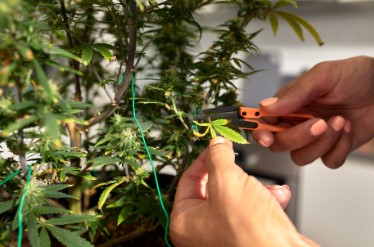
Harvesting marijuana is a critical phase in the cultivation process, influencing potency, flavor, yield, and overall experience. Proper harvesting ensures maximum cannabinoid and terpene preservation, setting the foundation for effective drying, curing, and consumption. This guide explores the process in detail—focusing on readiness indicators, tools, methods, and post-harvest handling—to help cultivators harvest cannabis at peak quality.
1. Determining When to Harvest
Timing is everything in cannabis harvesting. Harvest too early, and you sacrifice potency and yield; too late, and the cannabinoids degrade into less desirable compounds.
A. Trichome Development
Trichomes are the tiny resin glands that produce cannabinoids (THC, CBD) and terpenes. Monitoring them under a jeweler’s loupe or microscope gives the most accurate read:
- Clear trichomes: The plant is not yet fully grown.
- Milky/cloudy trichomes: Peak THC levels—ideal for a strong, euphoric high.
- Amber trichomes: THC begins to degrade into CBN (cannabinol), producing a more sedative effect. A mix of cloudy and amber trichomes is ideal for balanced effects.
B. Pistil Color
Pistils (the hair-like structures on the buds) also provide clues:
- White and upright pistils: The plant is still developing.
- 50–70% brown or red pistils: Signifies the plant is reaching maturity.
- More than 70% dark pistils: Indicates late harvest, usually suitable for a more sedative product.
C. Strain-Specific Timing
- Indicas often mature faster and are typically harvested earlier for heavier, relaxing effects.
- Sativas require a longer flowering period and may be harvested later for cerebral and energizing effects.
- Hybrids vary depending on dominant genetics.
2. Pre-Harvest Preparations
A. Flushing
Two weeks before harvest, stop feeding nutrients and begin flushing with plain water. This removes excess salts and minerals from the plant tissue, improving the flavor and smoke quality.
- Organic grows may require less flushing.
- Hydroponic systems benefit greatly from flushing, as mineral buildup is more pronounced.
B. Environmental Adjustments
In the last week of flowering, lower humidity to 40–50% and maintain temperatures between 65–75°F (18–24°C) to:
- Enhance trichome preservation
- Prevent mold and bud rot
- Improve aroma
Some growers also use a 48-hour dark period before harvesting, thought to boost resin production, although evidence remains anecdotal.
3. Tools and Equipment Needed
- Sharp trimming scissors or pruning shears
- Gloves (preferably non-powdered nitrile)
- Clean workspace with a flat surface
- Drying rack or lines
- Magnifying tool (jeweler’s loupe or digital microscope)
- Collection trays
- Labeling materials (strain name, harvest date)
Sanitization is crucial. Wash all tools and surfaces with isopropyl alcohol before use to prevent contamination.
4. The Harvesting Process
A. Choosing Between Wet and Dry Trimming
- Wet trimming: entails removing the sugar and fan leaves as soon as the plant is chopped down.
- Pros: Easier to trim when leaves are firm; faster drying
- Cons: May dry too quickly, reducing terpene retention
- Dry trimming involves cutting down whole branches or plants and drying them first, then trimming.
- Pros: Slower drying preserves terpenes and smoothness
- Cons: Leaves wilt and curl, making trimming more labor-intensive
Choose based on environmental conditions and personal preference.
B. Cutting the Plant
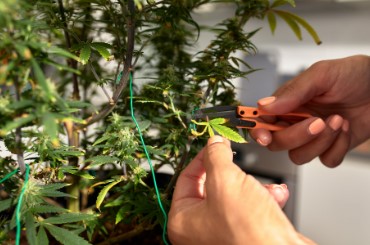
Depending on plant size and your space:
- Cut the entire plant at the base
- Or harvest in sections—branches or colas—especially if buds mature unevenly
Gently remove large fan leaves first if you choose wet trimming.
5. Trimming the Buds
A. Trimming Fan and Sugar Leaves
- Fan leaves (large leaves without trichomes): Remove completely
- Sugar leaves (smaller leaves with visible trichomes): Optional to trim closely or keep, depending on aesthetics and resin value
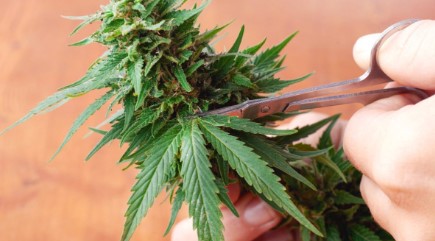
Use a circular motion with scissors to shape the buds into compact, consistent nugs. Save trimmings for extracts or edibles—they contain usable resin.
B. Work in Sessions
Trimming is laborious. Take breaks to avoid fatigue and preserve quality. Sticky scissors can be cleaned with rubbing alcohol or frozen to collect hash later.
6. Drying Cannabis Properly
A. Environment
Ideal conditions:
- Temperature: 60–70°F (15–21°C)
- Humidity: 50–60%
- Dark space with minimal airflow (gentle circulation only)
Too warm or dry, and terpenes evaporate. Too damp, and mold can form.
B. Methods
- Hang drying: Most common. Hang branches or colas upside down.
- Drying racks: Useful for small, trimmed buds.
Drying usually takes 7–14 days. Stems should snap (not bend) when dry.
7. Curing: The Post-Harvest Gold Standard
Curing enhances potency, flavor, and smoothness by allowing chlorophyll to degrade slowly and terpenes to stabilize.
A. Jar Curing
- Place dried buds in airtight glass jars (don’t overpack)
- Store in a cool, dark place
- Open (burp) the jars daily for 5–15 minutes for the first 2 weeks to release moisture and refresh air
B. Curing Timeline
- 2–3 weeks: Good results
- 4–8 weeks: Optimal curing
- 6+ months: Maximum terpene maturity for connoisseurs
Humidity packs (e.g., Boveda 62%) can help stabilize humidity at ideal levels (58–62%).
8. Harvest Timing for Specific Goals
Different harvest windows influence the final effect of cannabis:
| Harvest Stage | Trichome State | Effect | Target Audience |
|---|---|---|---|
| Early | Mostly clear | Mild, energetic, short-lived | Microdosing, anxiety-prone users |
| Peak THC | Mostly cloudy | Potent, euphoric, balanced | Recreational users |
| Late | 20–30% amber | Sedative, body-heavy | Medical, insomnia, chronic pain |
Tailor harvest timing to match desired cannabinoid profile and consumer use-case.
9. Common Mistakes to Avoid
- Harvesting too early or late: Reduces potency or results in degraded cannabinoids
- Poor flushing: Causes harsh taste
- Trimming aggressively: Can remove valuable trichomes
- High drying temps: Evaporates terpenes
- Skipping curing: Wastes potential—bud may taste grassy and harsh
10. Storage After Curing
Store cured buds in airtight containers in a cool, dark location. Avoid:
- Excessive heat
- Light exposure
- Oxygen (use vacuum seals or nitrogen flushes if storing long-term)
Ideal storage temperature is around 60–65°F (15–18°C). Properly stored, cannabis can retain its quality for 6–12 months or more.
Conclusion
Harvesting marijuana is not just the act of cutting plants—it’s a craft. Timing, technique, and post-harvest care play a critical role in final product quality. Whether you’re seeking maximum THC, a mellow CBD-rich profile, or simply smooth, flavorful smoke, mastering the harvest process is essential. With patience, precision, and attention to detail, growers can elevate their cannabis from good to great.
