How Tall do Autoflower Cannabis Strains Get?
Autoflowering cannabis strains are a popular choice among growers due to their ease of cultivation, rapid growth cycle, and ability to flower independently of light cycles. One common question among both novice and experienced growers is, “How tall do autoflower cannabis strains get?” In this comprehensive guide, we will explore the various factors that influence the height of autoflowering cannabis plants, provide an overview of typical height ranges for different strains, and offer tips on managing plant height to optimize growth and yields.
Understanding Autoflowering Cannabis
Because of their special qualities and benefits, autoflowering cannabis strains are becoming more and more popular among growers. Autoflowering strains flower according to age, which is a major distinction from traditional photoperiod strains, which flower according to certain light cycles. This makes autoflowering strains particularly appealing for both new and seasoned growers. In this section, we will examine the history, traits, and benefits of autoflowering cannabis.
Origins of Autoflowering Cannabis
The concept of autoflowering cannabis originates from the Cannabis ruderalis subspecies. Cannabis ruderalis is native to regions with short growing seasons, such as Central and Eastern Europe, and parts of Asia. Unlike the more familiar Cannabis sativa and Cannabis indica subspecies, which rely on changes in light cycles to trigger flowering, Cannabis ruderalis evolved to flower automatically based on age. This adaptation allowed it to complete its lifecycle quickly and reproduce before the onset of harsh weather conditions.
Breeders recognized the potential of this trait and began crossbreeding Cannabis ruderalis with sativa and indica strains. The result was the creation of autoflowering hybrids that combined the desirable traits of sativa and indica (such as high THC content and rich flavors) with the automatic flowering trait of ruderalis.
Key Characteristics of Autoflowering Cannabis
Autoflowering cannabis strains possess several distinct characteristics that set them apart from photoperiod strains:
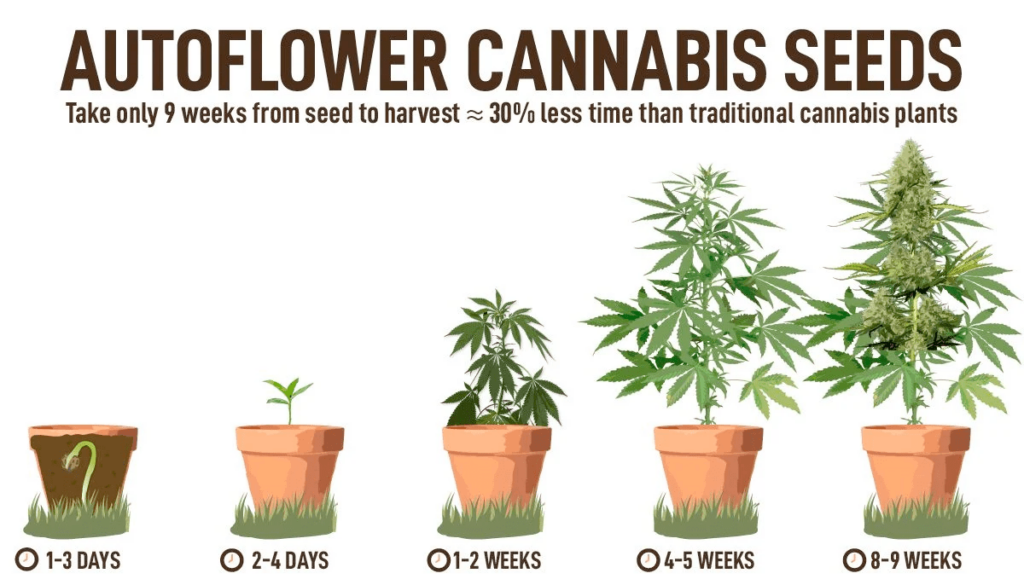
- Automatic Flowering: The most defining characteristic of autoflowering cannabis is its ability to flower automatically based on age, rather than light cycles. Typically, autoflowering strains begin to flower around 2-4 weeks after germination.
- Rapid Growth Cycle: Autoflowering strains have a shorter lifecycle compared to photoperiod strains. Most autoflowering strains can go from seed to harvest in as little as 8-12 weeks.
- Compact Size: Autoflowering plants are generally smaller and more compact than photoperiod strains. This makes them ideal for indoor growing, small spaces, and stealth growing operations.
- Resilience: Thanks to their ruderalis genetics, autoflowering strains tend to be more resilient to harsh growing conditions, pests, and diseases. They are therefore an excellent option for novice growers or those growing in difficult conditions.
- Light Independence: Unlike photoperiod strains that require specific light schedules (e.g., 12 hours of light and 12 hours of darkness) to flower, autoflowering strains can flower under a wide range of light conditions. Most growers provide 18-24 hours of light per day to maximize growth and yields.
Factors Influencing the Height of Autoflowering Cannabis
The height of autoflowering cannabis plants is influenced by a variety of factors, ranging from genetics to environmental conditions. Understanding these factors is crucial for growers who wish to optimize plant height and overall growth.In this section, we’ll examine the main variables that influence autoflowering cannabis plants’ height and offer management tips.
1. Genetics
Genetics is the primary factor determining the height of autoflowering cannabis plants.The genetic profiles of different strains differ, which affects how they grow, including how tall they get. In order to produce strains with desired qualities like height, yield, and potency, breeders choose particular traits.
Examples of Short Autoflowering Strains:
- Lowryder: One of the original autoflowering strains, Lowryder typically grows to a height of 12-16 inches (30-40 cm). It was bred for its compact size and rapid growth.
- Royal Dwarf: Known for its compact stature, Royal Dwarf usually reaches heights of 16-24 inches (40-60 cm). Growers that don’t have a lot of area should choose this strain.
Examples of Taller Autoflowering Strains:
- Amnesia Haze Automatic: This strain can grow up to 35-50 inches (90-125 cm) in height, thanks to its sativa-dominant genetics.
- Sour Diesel Automatic: Known for its vigorous growth, this strain can reach heights of 30-50 inches (75-125 cm).
2. Growing Environment
The environment in which autoflowering cannabis is grown significantly impacts plant height. Key environmental factors include light, temperature, humidity, and growing medium.
Light:
- Intensity: More intense light can encourage taller growth. High-quality LED or HID lights provide the necessary light intensity for optimal growth.
- Duration: Autoflowering plants benefit from consistent light exposure, ideally 18-24 hours per day. This extended light period supports vigorous growth and development.
Temperature and Humidity:
- Temperature: Optimal temperature ranges for autoflowering cannabis are between 70-85°F (21-29°C) during the day and slightly cooler at night. Extreme temperatures can stunt growth or cause stretching.
- Humidity: Maintain humidity levels at 40-60% during the vegetative stage and 30-50% during flowering. Proper humidity levels prevent stress and promote healthy growth.
Growing Medium:
- Soil: Soil is a popular growing medium for autoflowering cannabis. It provides a natural environment that supports healthy root development.
- Coco Coir: Coco coir is a soilless medium that retains moisture well and provides excellent aeration. It can lead to faster growth compared to soil.
- Hydroponics: Hydroponic systems can result in faster growth and taller plants due to the direct delivery of nutrients to the roots.
3. Nutrient Availability
Proper nutrition is essential for the healthy growth of autoflowering cannabis plants. The availability and balance of nutrients play a critical role in determining plant height.
Nutrient Regimen:
- Vegetative Stage: During the vegetative stage, autoflowering plants require higher levels of nitrogen to support leaf and stem growth.
- Blooming Stage: To encourage bud development, transition to nutrients that have greater phosphorus and potassium levels during the blooming stage.
- Balanced Nutrition: Over-fertilization can lead to nutrient burn, while deficiencies can stunt growth.Give your autoflowering cannabis a balanced nutrient schedule that is specific to its requirements.
4. Pot Size
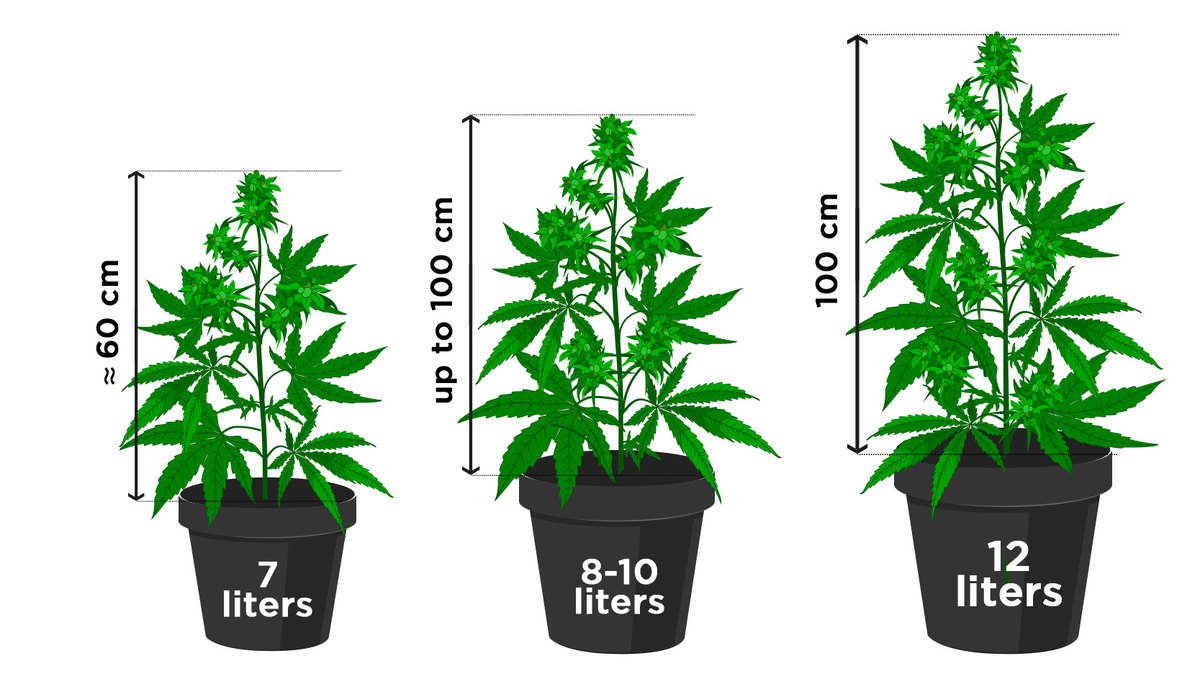
The size of the container in which autoflowering cannabis is grown can influence plant height. Larger pots provide more space for root development, which can support taller growth. However, excessively large pots are unnecessary for autoflowering strains due to their compact nature.
Pot Size Recommendations:
- For most autoflowering strains, 2-3 gallon (7.5-11 liter) pots are sufficient. This size provides ample space for root growth without being overly large.
- Using larger pots can result in taller plants, but it is important to balance pot size with the overall space available for growing.
5. Training Techniques
Growers can employ various training techniques to manage the height and shape of their autoflowering cannabis plants. These techniques include Low-Stress Training (LST), Screen of Green (ScrOG), and topping.
Low-Stress Training (LST):
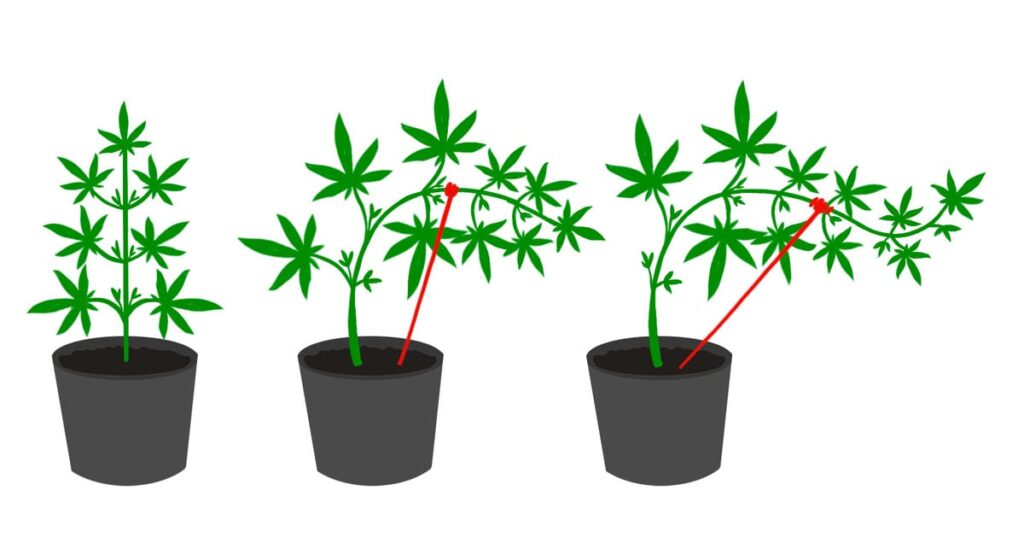
- Technique: Gently bending and tying down branches to create an even canopy and promote horizontal growth.
- Benefits: LST encourages the growth of multiple colas and prevents the plant from becoming too tall.
Screen of Green (ScrOG):
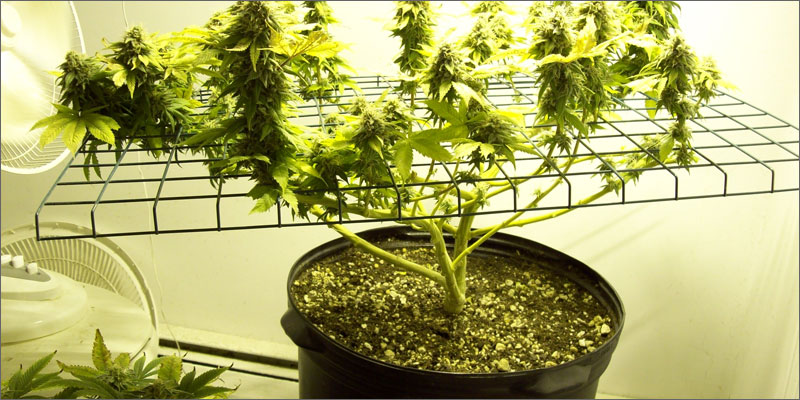
- Technique: Using a screen to train plants to grow horizontally, maximizing light exposure and yield.
- Benefits: ScrOG creates an even canopy, allowing for better light penetration and airflow.
Topping and FIMing:
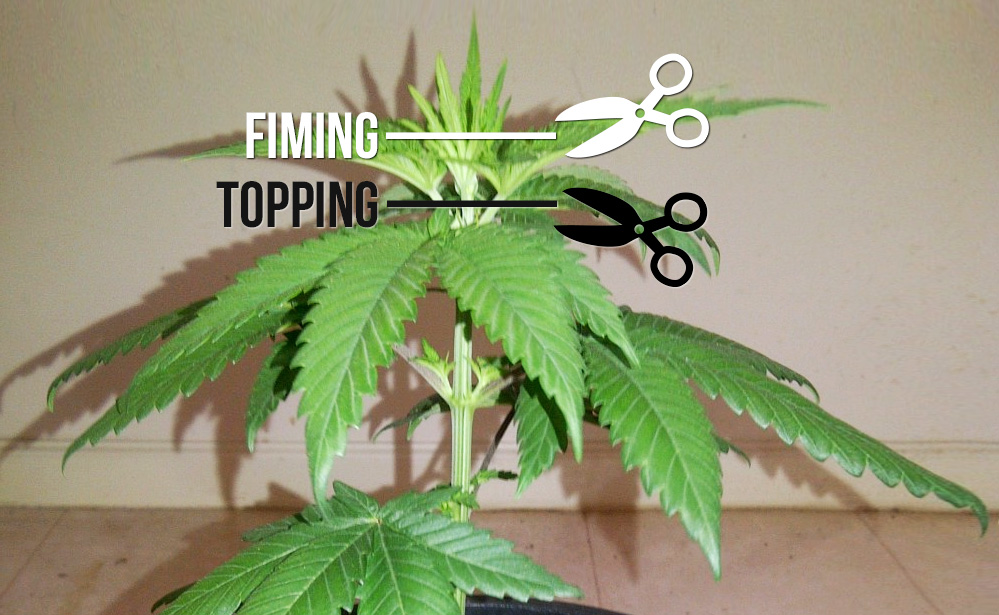
- Topping: Cutting the main stem above a node to encourage the growth of multiple colas. This results in shorter, bushier plants.
- FIMing: Similar to topping, but involves pinching or cutting part of the new growth. This technique encourages the development of multiple branches.
6. Watering Practices
Watering practices can also impact the height and overall health of autoflowering cannabis plants. Plants that are properly watered get the moisture they need to flourish without being stressed.
Watering Guidelines:
- Frequency: Water plants regularly but avoid overwatering. Allow the top inch of the growing medium to dry out between waterings.
- Drainage: Ensure that pots have adequate drainage to prevent waterlogged roots, which can stunt growth and lead to root rot.
7. pH Levels
For optimal plant health and nutrient uptake, the growth medium’s pH values must be maintained. Imbalanced pH levels can lead to nutrient lockout, affecting growth and height.
pH Recommendations:
- Soil: Maintain pH levels between 6.0 and 7.0.
- Coco Coir and Hydroponics: Maintain pH levels between 5.5 and 6.5.
8. Airflow and Ventilation
Enough airflow and ventilation are necessary to keep out mold, mildew, and other problems that might hinder the growth of plants. Good airflow promotes strong stems and healthy growth.
Airflow and Ventilation Tips:
- Fans: Use oscillating fans to provide consistent airflow around the plants.
- Ventilation: Ensure that the growing area has adequate ventilation to remove excess heat and humidity.
Typical Height Ranges for Autoflowering Cannabis Strains
While the height of autoflowering cannabis plants can vary widely depending on the factors mentioned above, there are general height ranges that growers can expect for different types of strains.
Short Autoflowering Strains (10-24 inches / 25-60 cm)
These strains are ideal for growers with limited space or those seeking discretion. They are also well-suited for indoor growing and small-scale operations.
Examples:
- Lowryder: 12-16 inches (30-40 cm)
- Royal Dwarf: 16-24 inches (40-60 cm)
- Quick One: 16-24 inches (40-60 cm)
Medium Autoflowering Strains (24-35 inches / 60-90 cm)
These strains strike a balance between size and yield, making them popular among indoor and outdoor growers alike. They offer a manageable height while still providing substantial yields.
Examples:
- Blueberry Automatic: 24-32 inches (60-80 cm)
- Northern Light Automatic: 24-32 inches (60-80 cm)
- AK-47 Automatic: 24-35 inches (60-90 cm)
Tall Autoflowering Strains (35-50 inches / 90-125 cm)
These strains are known for their vigorous growth and larger stature. They are best suited for outdoor growing or indoor setups with ample vertical space. Taller autoflowering strains can produce higher yields due to their increased size.
Examples:
- Amnesia Haze Automatic: 35-50 inches (90-125 cm)
- Sour Diesel Automatic: 30-50 inches (75-125 cm)
- Super Skunk Automatic: 35-45 inches (90-115 cm)
Managing Plant Height
For growers looking to optimize their autoflowering cannabis plants’ growth and yields, managing plant height is essential. Here are some tips and techniques to help control the height of your plants:
1. Choose the Right Strain
Selecting a strain that suits your growing space and goals is the first step in managing plant height. If space is limited, opt for shorter strains. For outdoor grows or larger indoor setups, taller strains may be more appropriate.
2. Optimize Light Conditions
Providing consistent and adequate light is crucial for healthy plant growth. Autoflowering strains require 18 to 24 hours of light every day to thrive. Using high-quality LED or HID lights can ensure your plants receive the necessary light intensity.
3. Use Appropriate Pot Sizes
Choose pot sizes that match the expected height of your plants. For most autoflowering strains, 2-3 gallon (7.5-11 liter) pots are sufficient. Larger pots can support taller growth, but excessively large pots may not be necessary.
4. Employ Training Techniques
Plant height and form can be controlled with the use of training methods such as topping, Screen of Green (ScrOG), and Low-Stress Training (LST). These methods encourage horizontal growth, resulting in bushier plants with even canopies.
Low-Stress Training (LST):
- Begin LST early in the vegetative stage when stems are flexible.
- To establish a uniform canopy, gently bend and fasten branches.
- Continue adjusting ties as the plant grows to maintain a horizontal growth pattern.
Screen of Green (ScrOG):
- Install a screen above your plants to train branches horizontally.
- As branches grow through the screen, gently guide them to create an even canopy.
- This technique maximizes light exposure and can increase yields.
Topping and FIMing:
- In order to promote the growth of several colas, topping entails chopping the primary stem above a node.
- FIMing (F**k I Missed) is similar but involves pinching or cutting part of the new growth, resulting in multiple branches.
- These techniques should be done early in the vegetative stage for best results.
5. Maintain Optimal Environmental Conditions
Ensure your growing environment provides the right temperature, humidity, and airflow. Consistent conditions promote healthy growth and prevent issues like stretching or stunted growth.
Temperature and Humidity:
- Keep the temperature at 21–29°C (70–85°F) during the day and a few degrees lower at night.
- Keep humidity levels at 40-60% during the vegetative stage and 30-50% during flowering.
Airflow and Ventilation:
- Provide adequate airflow to prevent mold and mildew.
- Use fans to promote strong stems and even growth.
6. Nutrient Management
Adapt a balanced nutrient schedule to the requirements of autoflowering cannabis. Over-fertilization can lead to nutrient burn, while deficiencies can stunt growth.
Nutrient Regimen:
- Use nutrients formulated for cannabis, with a focus on balanced N-P-K ratios.
- During the vegetative stage, provide higher nitrogen levels.
- During flowering, switch to nutrients with higher phosphorus and potassium levels.
Case Studies: Autoflowering Strains and Their Heights
To provide a practical perspective, let’s examine the height characteristics of some popular autoflowering strains through real-world case studies.
1. Lowryder
Overview: Lowryder is one of the original autoflowering strains and is known for its compact size and rapid growth. It was developed by crossing Cannabis ruderalis with a Northern Lights and William’s Wonder hybrid.
Height Characteristics:
- Typical Height: 12-16 inches (30-40 cm)
- Development Cycle: 8–9 Weeks from Sowing to Harvesting
- Ideal for: Indoor growing, stealth growing, and limited spaces
Case Study: A grower in a small indoor setup reported that their Lowryder plants consistently reached a height of 14 inches (35 cm). The compact size allowed for discreet cultivation, and the plants produced dense, resinous buds with minimal training.
2. Amnesia Haze Automatic
Overview: Amnesia Haze Automatic is a popular sativa-dominant autoflowering strain known for its energetic high and robust growth. It combines the genetics of Amnesia Haze with a ruderalis variety.
Height Characteristics:
- Typical Height: 35-50 inches (90-125 cm)
- Growth Cycle: 12–14 weeks from planting to harvesting
- Ideal for: Outdoor growing, indoor setups with ample vertical space
Case Study: An outdoor grower in a Mediterranean climate reported that their Amnesia Haze Automatic plants reached a height of 48 inches (120 cm). The plants thrived in the sunny environment, producing large colas and impressive yields.
3. Northern Light Automatic
Overview: Northern Light Automatic is an indica-dominant autoflowering strain derived from the classic Northern Light genetics. It is known for its resinous buds and relaxing effects.
Height Characteristics:
- Typical Height: 24-32 inches (60-80 cm)
- Growth Cycle:9–10 weeks from planting to harvesting
- Ideal for: Indoor and outdoor growing, medium-sized setups
Case Study: A grower using a medium-sized indoor tent reported that their Northern Light Automatic plants reached a height of 30 inches (75 cm). The plants responded well to Low-Stress Training (LST), resulting in an even canopy and a generous harvest.
Conclusion
Numerous factors affect autoflowering cannabis plants’ height, and each one is vital in deciding the plants’ ultimate height. Growers that want to maximize their farming techniques and attain the greatest outcomes must comprehend these elements.
Genetics are the primary determinant, with different strains inherently possessing distinct growth patterns and height potentials. Shorter strains like Lowryder and Royal Dwarf are ideal for those with limited space, while taller strains such as Amnesia Haze Automatic and Sour Diesel Automatic cater to growers looking for larger plants.
Environmental conditions significantly impact plant height. Factors like light intensity and duration, temperature, humidity, and the type of growing medium all contribute to how tall autoflowering cannabis plants can grow. Consistent light exposure, optimal temperature ranges, and proper humidity levels are essential for promoting healthy growth.
Nutrient availability is another critical factor. Providing a balanced nutrient regimen tailored to the specific needs of autoflowering plants ensures they receive the necessary elements for robust growth. Over-fertilization and nutrient deficiencies must be avoided to prevent stunted growth or other health issues.
Pot size directly influences root development and, consequently, plant height. While larger pots can support taller growth, they must be balanced with the available growing space to prevent overcrowding.
Training techniques such as Low-Stress Training (LST), Screen of Green (ScrOG), and topping can effectively manage plant height and shape. These methods encourage horizontal growth, resulting in shorter, bushier plants with multiple colas and improved light exposure.
Watering practices, maintaining proper pH levels, and ensuring adequate airflow and ventilation are also crucial for healthy plant development. Regular watering, appropriate drainage, balanced pH, and good airflow all contribute to the overall growth and height of autoflowering cannabis plants.
By carefully managing these factors, growers can achieve the desired height and optimize the health and yield of their autoflowering cannabis crops. Whether growing indoors or outdoors, understanding and controlling the elements that influence plant height is essential for successful cannabis cultivation. With the right approach and attention to detail, autoflowering cannabis plants can provide a rewarding and efficient growing experience, offering high-quality results in a shorter timeframe compared to traditional photoperiod strains.
