Table of Contents
Why I Care About How Cannabis Works in the Body
I have spent years growing cannabis, hunting phenotypes, and testing my own harvests. Over time, I learned that understanding how cannabis works in the body is just as important as knowing how to read a nutrient chart or dial in a lighting schedule.
When I walk into the grow room, I am not just looking at trichome color or plant structure. I am thinking about how this particular plant will feel in someone’s body:
- How fast it will come on
- How long the effects will last
- Which parts of the brain it will hit the hardest
- Whether it is more likely to relax, energize, or fog the mind
If you are a grower, consumer, or both, having how cannabis works in the body clearly in mind helps you choose strains, plan your sessions, and use the plant more responsibly. In this article I will talk through what happens inside the body, sharing what I have learned both from research and from hands-on growing and consuming.
How Cannabis Enters the Body
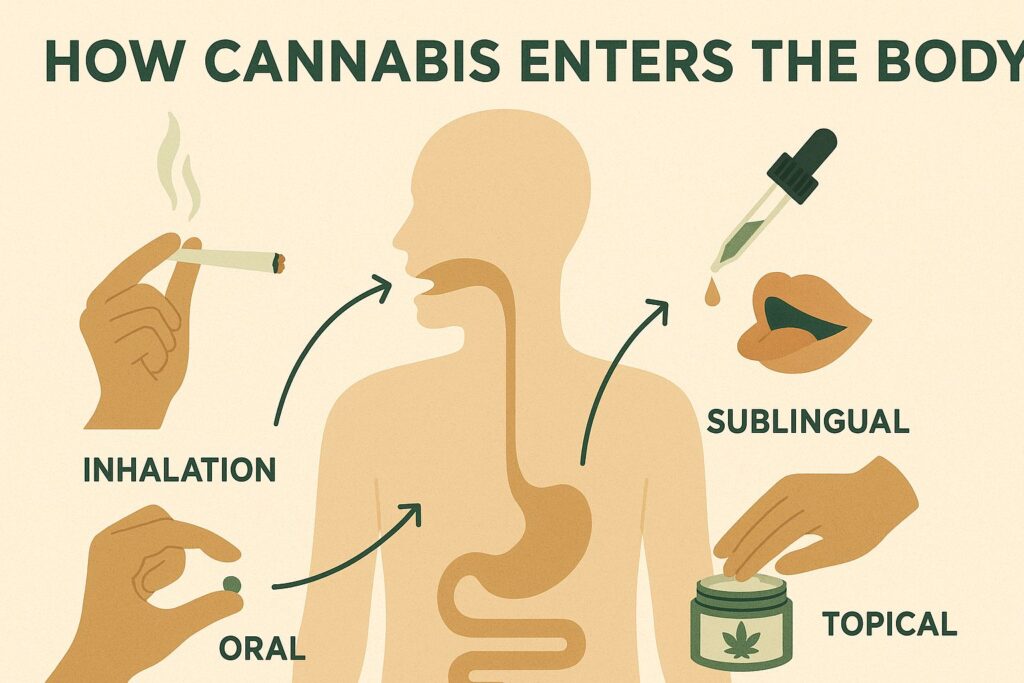
Different consumption methods send cannabinoids into your system in different ways. That is the starting point for understanding how cannabis works in the body and why the same strain can feel completely different as a joint, an edible, or a tincture.
What Happens When You Smoke Weed or Vape
When people ask me what happens when you smoke weed, I start with the basics. When you light a joint or use a vaporizer, heat turns cannabinoids and terpenes into an inhalable aerosol. You breathe this aerosol into your lungs, where tiny air sacs called alveoli absorb the compounds into your bloodstream within seconds.
From there, THC, CBD, and other cannabinoids travel straight to the brain and throughout the body. This is why what happens when you smoke weed feels so fast compared with eating a gummy. You usually notice the first wave of effects within 30 seconds to a couple of minutes.
In my own use and in what I see from other growers:
- First noticeable effects: 0.5–2 minutes after inhalation
- Peak effects: 10–30 minutes
- Total duration: roughly 1.5–3 hours for most people
Because the response is fast, inhalation lets you “sip” your dose: take one or two small puffs, pause, and see how your body responds. For anyone unsure what happens when you smoke weed the first time, this slow, measured approach is far safer than trying to keep up with more experienced friends.
Smoking vs Edibles Onset
When people compare smoking vs edibles onset, they are really comparing two different routes through the body.
With smoking vs edibles onset:
- Smoking or vaping: cannabinoids go from lungs to blood to brain in minutes.
- Edibles: cannabinoids go from stomach to intestines to liver, then into the bloodstream.
Because of this, smoking vs edibles onset feels completely different. Smoking or vaping lets you feel your way into the experience quickly, while edibles demand patience and planning. When I test a new batch of edibles, I treat smoking vs edibles onset as two separate tools: one for immediate feedback, one for deeper, longer sessions.
Edibles, Capsules, and Beverages
With edibles, you swallow a product that contains THC and other cannabinoids—gummies, brownies, chocolates, drinks, or capsules. The cannabinoids travel through your digestive tract and are processed by the liver before entering the bloodstream in full force.
Typical patterns I see and hear from other cultivators and testers:
- Onset: 30–120 minutes after eating
- Peak: often 2–4 hours after ingestion
- Duration: commonly 4–8 hours, sometimes more at high doses
This is why you cannot treat edibles like a joint. The delayed onset leads many people to redose too early. Understanding smoking vs edibles onset helps prevent one of the most common mistakes: deciding “it is not working” at the 45-minute mark and then doubling up.
Factors that influence edibles:
- Whether you ate recently and what you ate
- Body weight and body-fat percentage
- Cannabis tolerance and metabolism
- Product type (fat-rich brownie vs water-based beverage)
- Individual sensitivity to THC
I often recommend new users start with a very low edible dose and treat how long does a weed high last as a serious question, not a casual one, because the answer can run into many hours with edibles.
Sublinguals and Topicals
Sublingual tinctures sit in between smoking vs edibles onset. You place drops under your tongue and hold them for 30–60 seconds. Some cannabinoids absorb through the tissues directly into the bloodstream, which speeds things up.
- Onset: roughly 15–45 minutes
- Duration: often 3–5 hours
Topicals, such as creams and balms, tend to act locally on the skin and muscles. They usually do not produce strong head effects because they are not delivering high levels of THC to the brain.
The Endocannabinoid System Explained
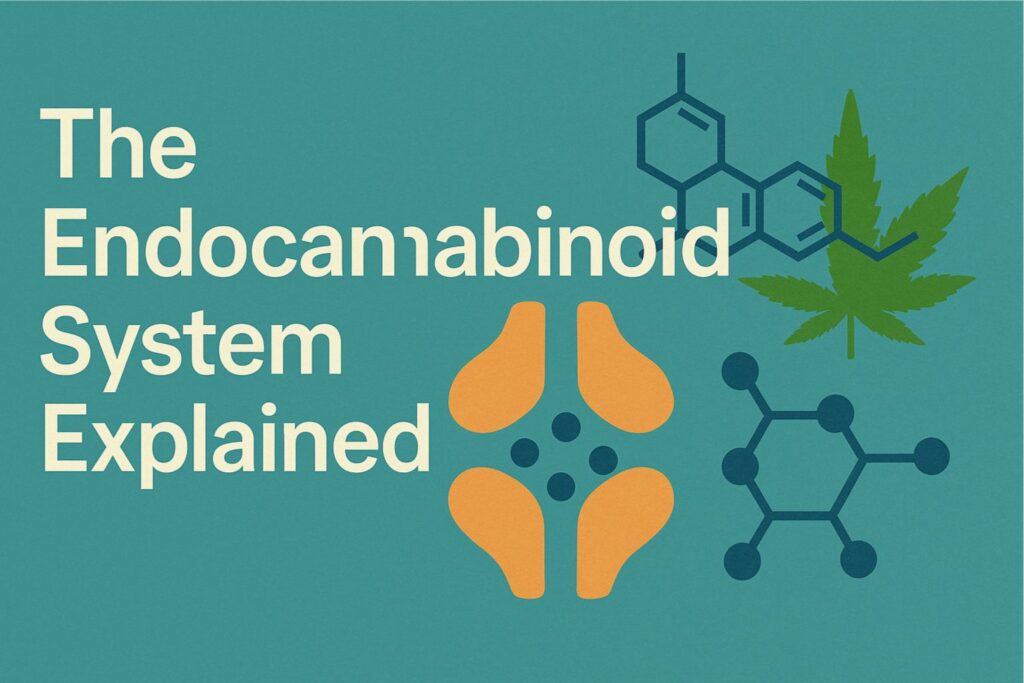
To truly know how cannabis works in the body, you need the endocannabinoid system explained in simple terms. When I first started reading about it, the science felt intimidating. Over time I found a way to think about it that makes sense as a grower and as a consumer.
The endocannabinoid system (ECS) is a network of:
- Endocannabinoids: molecules your body produces on its own
- Receptors: proteins on cells that receive those molecules
- Enzymes: substances that build and break down endocannabinoids
This system helps regulate mood, appetite, pain perception, immune responses, sleep, and more. When you use cannabis, plant cannabinoids like THC and CBD interact with this same network.
In other words, if you want the endocannabinoid system explained quickly: it is your body’s own built-in cannabis-like signaling system that keeps many processes in balance. Cannabis works because its compounds fit into that system like alternative keys.
When friends ask for the endocannabinoid system explained without jargon, I often say: think of it as your internal “balance manager.” Cannabis can nudge that manager in helpful directions—or push it too far—depending on dose, strain, and method.
CB1 and CB2 Receptors
Within the ECS, CB1 and CB2 receptors are the main “locks” that cannabinoids interact with. Knowing about CB1 and CB2 receptors makes the rest of the story easier to follow.
- CB1 receptors are mostly found in the brain and central nervous system, especially in areas linked to movement, memory, mood, and perception.
- CB2 receptors are more common in immune cells and peripheral tissues, playing a role in immune responses and inflammation.
THC has a strong effect on CB1 and CB2 receptors, particularly CB1 in the brain. That is why THC effects on the brain are so obvious. CBD interacts more subtly, influencing how CB1 and CB2 receptors behave and also acting on other systems.
Whenever I think about breeding or selecting new lines, I picture CB1 and CB2 receptors as the landing pads for each plant’s unique chemical profile. Different strains send different messages to these receptors and create different experiences in the body.
THC Effects on the Brain
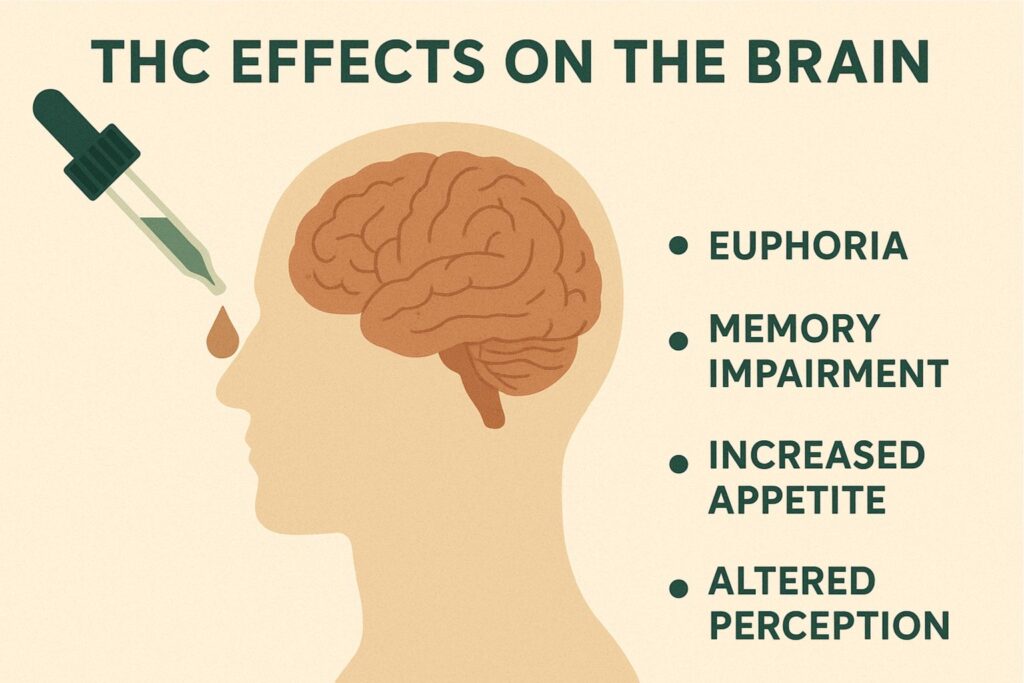
From a user’s point of view, THC effects on the brain define a large part of the cannabis experience. From a grower’s point of view, THC effects on the brain are the expression of the plant’s chemistry meeting the ECS.
Here is what is going on in simple terms:
- THC resembles anandamide, one of the body’s own endocannabinoids.
- When THC enters the brain, it binds to CB1 receptors in various regions.
- This changes how those regions communicate and process incoming signals.
Common THC effects on the brain include:
- Changes in time perception (minutes can feel like hours)
- Enhanced or altered sensory perception (music, flavors, colors)
- Shifts in mood, from relaxed and happy to anxious or uncomfortable
- Disrupted short-term memory and focus at higher doses
I have tested strains where THC effects on the brain feel clean, bright, and creative at low doses. The same strains, at higher doses, can cause racing thoughts or confusion. For growers, it is a reminder that potency labels are only part of the story. Terpenes, minor cannabinoids, and personal tolerance all combine with THC in complex ways.
CBD and Endocannabinoid System Interactions
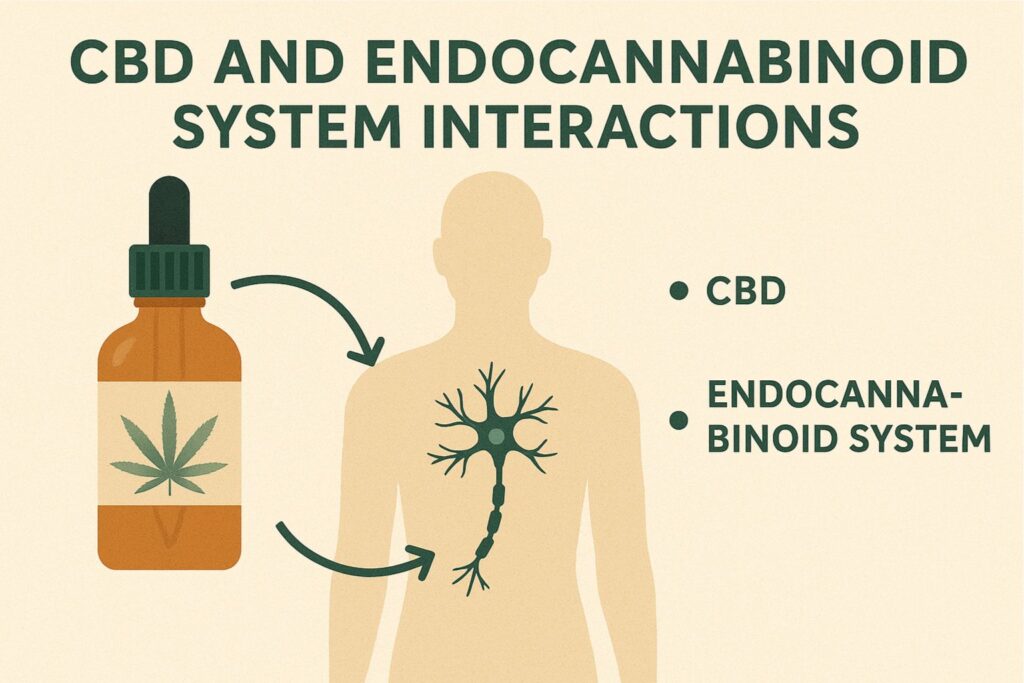
CBD plays its own important role. Many people want CBD and endocannabinoid system information because they are interested in gentler experiences or in balancing out high-THC products.
CBD and endocannabinoid system interactions are different from THC:
- CBD does not bind strongly to CB1 receptors like THC does.
- Instead, CBD influences how much of your own endocannabinoids are available.
- CBD may also change how easily THC can bind to CB1 receptors.
- CBD interacts with several other receptors unrelated to CB1 and CB2.
In practice, I often notice:
- Balanced THC:CBD strains feel more grounded.
- Adding CBD can soften an overly intense high for some people.
- CBD and endocannabinoid system dynamics are subtle but noticeable over time.
If someone wants a smoother introduction to the plant, I often recommend looking for cultivars where CBD and endocannabinoid system effects share the stage with THC rather than letting THC dominate entirely.
How Long Does a Weed High Last?
“How long does a weed high last?” is one of the most frequent questions I hear. There is no single answer, but we can outline typical ranges.
From what I see across many users:
- Smoking or vaping:
- Onset: within minutes
- Main effects: 1.5–3 hours
- Edibles:
- Onset: 30–120 minutes
- Main effects: 4–8 hours, sometimes more
- Sublinguals:
- Onset: 15–45 minutes
- Main effects: around 3–5 hours
When someone asks me how long does a weed high last, I always ask how they are consuming it. Method is the first piece of the puzzle. The second piece is cannabis tolerance and metabolism. A daily user with high tolerance can come back down more quickly than an occasional user on the same dose.
If you are unsure how long does a weed high last for you personally, start with a low dose, stick to one method at a time, and keep notes. Over a few sessions you will see patterns.
Body Effects – Heart, Mouth, Appetite, and Sleep
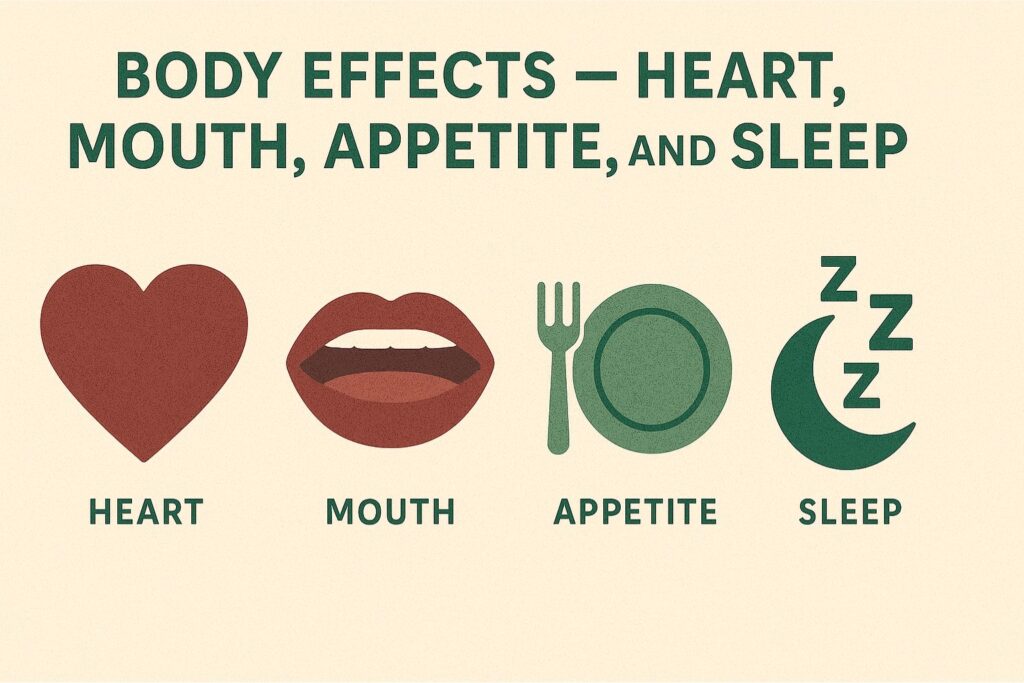
Many of the classic “body effects” begin in the brain but show up throughout the body. These sensations are another part of how cannabis works in the body and can be pleasant, neutral, or uncomfortable depending on dose and setting.
Heart Rate and Circulation
Shortly after consumption, many people notice an increase in heart rate. This is common after inhalation and moderate or higher oral doses. For most healthy adults, it is temporary and manageable, but it can feel intense if you are not expecting it.
If you have any heart condition, you should speak to a medical professional before using cannabis. As a grower and consumer, I do not give medical advice, but I do encourage people to treat their cardiovascular health as a serious factor in their decisions.
Dry Mouth
Dry mouth, often called “cotton mouth,” is another familiar effect. THC can interact with receptors in the salivary glands, reducing saliva production. It is not harmful in itself, but it is uncomfortable.
My own habits around this:
- I drink water before and during a session.
- I avoid overly salty snacks which can make dryness worse.
- I keep sugar-free lozenges around for long tasting days.
Why Does Weed Give You the Munchies?
At some point almost every user asks: why does weed give you the munchies?
The answer lies in how THC interacts with brain regions that regulate appetite, especially the hypothalamus. THC can enhance hunger signals and make food more appealing—both taste and smell.
Why does weed give you the munchies can be viewed in two ways:
- It can be helpful for people who struggle with appetite.
- It can encourage overeating if you keep junk food nearby.
When I know a certain strain triggers strong munchies, I prepare ahead of time. I keep healthier foods ready and try not to rely on willpower once the munchies hit. That way, why does weed give you the munchies becomes a manageable side effect rather than a problem.
Marijuana Effects on Memory
Short-term marijuana effects on memory are one of the clearest examples of THC influencing brain function. When THC binds to CB1 receptors in memory-related areas like the hippocampus, forming new memories can become more difficult.
In daily life, marijuana effects on memory show up as:
- Forgetting parts of conversations
- Losing track of tasks
- Struggling to recall what you were about to do
At moderate doses, many people can still function with mild marijuana effects on memory. At higher doses, the impact grows. Long-term effects are still being researched, but starting heavy use at a young age appears riskier than beginning in adulthood. If you notice continuing issues with memory, cutting back or taking a break is a sensible step.
Growing Choices and How Cannabis Works in the Body
As a cultivator, I see every plant as a future experience in someone’s body. The way I grow, harvest, dry, and cure will influence how cannabis works in the body for the end user.
Genetics and Phenotype Variation
When you buy cannabis seeds online, you are buying potential. Feminized seeds, autoflowering seeds, indica-leaning, sativa-leaning, or hybrids—all come with a genetic blueprint.
Within that blueprint, individual phenotypes can:
- Produce different ratios of THC, CBD, and minor cannabinoids.
- Express different terpene profiles.
- Deliver very different THC effects on the brain.
This is why it pays to pop multiple seeds from a line, label them carefully, and test each phenotype. The plant that delivers the most enjoyable, controllable body and mind effect is not always the biggest yielder.
Environment, Medium, and Lighting
Environment affects chemistry. To support healthy plants and solid cannabinoid expression, I usually aim for:
- Vegetative stage:
- 24–28°C air temperature
- 60–70 percent relative humidity
- VPD around 0.8–1.2 kPa
- Flowering stage:
- 23–27°C air temperature
- 45–60 percent RH
- VPD around 1.1–1.5 kPa
- Light:
- 400–600 µmol/m²/s PPFD in veg
- 700–900 µmol/m²/s PPFD in mid-to-late flower for most photoperiod cultivars
Balanced feeding helps too. In coco or hydro-style systems, I commonly run:
- EC 1.2–1.6 in early veg
- EC 1.8–2.2 in mid flower, adjusted by what the plants show
Stress from overfeeding or poor environment can produce harsh smoke or unbalanced effects. Healthy plants tend to give you smoother, more predictable experiences when you finally see how cannabis works in the body after consumption.
Post-Harvest: Drying, Curing, and Effects
Drying and curing are where many grows lose quality. I aim for:
- 18–21°C in the dry room
- 55–62 percent RH
- 7–14 days of slow drying
- A careful cure at 58–62 percent RH in sealed containers
Well-cured flower keeps its terpenes and feels smoother on the lungs. Since terpenes also influence mood and perception, good curing connects directly to how cannabis works in the body and brain.
Responsible Use, Cannabis Tolerance and Metabolism
Even the best-grown cannabis can be unpleasant if you ignore your own limits. Two big factors here are cannabis tolerance and metabolism.
Cannabis tolerance and metabolism describe:
- How quickly your body responds to cannabinoids
- How efficiently your body breaks them down
- How much you need to feel a given effect
Over time, frequent use can increase tolerance. You might find that the same dose feels weaker. Cannabis tolerance and metabolism are not fixed; they shift as you change your patterns.
To manage cannabis tolerance and metabolism:
- Take occasional tolerance breaks of several days or weeks.
- Rotate strains with different cannabinoid and terpene profiles.
- Use lower-THC or CBD-rich options for daily use.
- Track your doses and how they feel over time.
Basic Safety Guidelines
A few safety points I always keep in mind:
- Know your local laws before you grow or consume.
- Do not drive or operate dangerous equipment while under the influence.
- If you are pregnant, breastfeeding, have heart issues, mental health conditions, or take regular medications, talk with a healthcare professional before using cannabis.
- Store cannabis securely away from children and pets.
FAQ – Common Questions About How Cannabis Works in the Body
Can you give me the endocannabinoid system explained in one paragraph?
Yes. If you want the endocannabinoid system explained simply: it is a built-in signaling network made of endocannabinoids, receptors, and enzymes. It helps regulate mood, appetite, pain, sleep, and immune responses. Plant cannabinoids from cannabis interact with this system, especially CB1 and CB2 receptors, which is why cannabis has such wide-ranging effects.
What happens when you smoke weed for the first time?
When you smoke for the first time, THC and other cannabinoids enter your lungs, move quickly into your bloodstream, and reach your brain in minutes. That is what happens when you smoke weed at a basic level. You may feel relaxation, euphoria, altered senses, and changed time perception. Start with very small puffs, wait 15–20 minutes, and remember that everyone’s response is different.
How long does a weed high last with different methods?
For inhalation, how long does a weed high last is usually around 1.5–3 hours for most people. With edibles, how long does a weed high last can extend to 4–8 hours or more, especially at higher doses. Sublingual products commonly sit in the middle. Your own cannabis tolerance and metabolism can shorten or lengthen these ranges.
Why does weed give you the munchies?
Why does weed give you the munchies is mostly about THC acting on appetite-related areas in the brain and amplifying hunger signals. Food can seem more appealing and taste better. If you find why does weed give you the munchies leads to overeating, plan snacks in advance so you are not at the mercy of impulse.
Are marijuana effects on memory permanent?
Short-term marijuana effects on memory are common while high, especially at higher doses. You may forget conversations or misplace items. Long-term effects depend on how early you start, how heavily you use, and your overall health. If marijuana effects on memory seem to persist even when you are sober, it is worth cutting back and speaking with a healthcare professional.
How do CB1 and CB2 receptors shape the experience?
CB1 and CB2 receptors are the main docking sites for cannabinoids. CB1 receptors in the brain are closely tied to THC effects on the brain, like euphoria, time distortion, and altered perception. CB2 receptors in immune and peripheral tissues play a different role, more related to immune signaling. The balance of activity at CB1 and CB2 receptors helps define how cannabis works in the body for you.
How can I manage cannabis tolerance and metabolism over time?
To manage cannabis tolerance and metabolism, take breaks, reduce daily doses, and switch to lower-THC or more balanced strains. Tracking your use in a simple journal helps you see how cannabis tolerance and metabolism change. If you find that you constantly chase stronger products, that is a sign to pause and reset.
Does CBD change THC effects on the brain?
Yes, CBD and endocannabinoid system interactions can influence THC effects on the brain. Many people find that adding CBD or using balanced strains makes the high feel smoother and less anxious. CBD does not simply “turn off” THC but adjusts how the whole system behaves.
How can growers use this knowledge?
As a grower, knowing how cannabis works in the body guides your choices:
- Selecting genetics for specific types of experiences
- Managing environment and nutrients for clean, potent flower
- Drying and curing to preserve terpenes and smoothness
Whether you are buying cannabis seeds online or refining your favorite mother plants, thinking about the end user’s body and mind will help you grow more thoughtfully and responsibly.
