Table of Contents
How Breeders Stabilize Cannabis Seeds Over Generations
Stabilizing cannabis seeds is a meticulous, multigenerational process aimed at ensuring genetic consistency and predictability in plant characteristics such as growth structure, cannabinoid content, terpene profile, and yield. Whether the end goal is a stable hybrid strain for commercial sale or preservation of a landrace variety, breeders use scientific principles of inheritance, selective breeding, and environmental control to produce seeds that reliably express the desired traits. This guide explores the step-by-step methodology, scientific rationale, and practical strategies involved in cannabis seed stabilization.
1. Understanding Genetic Stability in Cannabis
What is Stability?
A “stable” cannabis strain reliably produces uniform offspring that exhibit consistent traits, such as:
- Similar morphology (height, leaf shape, internodal spacing)
- Predictable flowering time
- Reproducible cannabinoid and terpene profiles
- Resistance to pests or diseases
Genotype vs. Phenotype
- Genotype refers to the inherited genetic makeup.
- Phenotype is the observable expression of the genotype, shaped by both genetics and environment.
Breeders aim to ensure that the phenotype accurately reflects the selected genotype with minimal environmental variation.
2. Breeding Approaches for Stabilization
There are several breeding strategies used to stabilize cannabis genetics. The method chosen depends on the goals—whether developing an F1 hybrid, a stabilized IBL (inbred line), or preserving rare traits.
A. Inbreeding (Selfing and Backcrossing)
Inbreeding is the most common strategy to stabilize desirable traits by reducing genetic variability.
- Selfing (S1 seeds): A female plant is pollinated with its own pollen (induced via colloidal silver or STS for feminized pollen). This reveals recessive traits and is effective for feminized seed production.
- Backcrossing (Bx): Offspring are crossed back to one of the parent strains (often the mother) to reinforce her traits. Repeating this (e.g., Bx2, Bx3) increases trait fixation.
- Sibling Crossing (F2, F3, etc.): Crossing male and female siblings from the same generation increases homozygosity.
B. Open Pollination (for Landraces and Genetic Preservation)
Used mainly for maintaining landraces, open pollination involves allowing multiple males and females to breed naturally, preserving broad genetic diversity rather than narrowing it.
C. Outcrossing and F1 Hybrids
- An F1 hybrid is the first-generation offspring of two genetically distinct, usually homozygous parents. These show hybrid vigor increased strength, yield, or resilience.
- However, F1s are not stable. Only after multiple generations of selective breeding (F2 to F6 or beyond) does stability begin to emerge.
3. The Stabilization Process: Step-by-Step
Step 1: Initial Parent Selection
The breeder starts with two genetically stable parents with complementary traits. Often, these are landraces, elite clones, or IBLs.
Key traits considered:
- Cannabinoid profile (e.g., high THC, balanced CBD)
- Flavor/aroma (dominant terpenes like limonene, myrcene)
- Plant structure (sativa/indica expression)
- Yield potential
- Resistance (mold, pests)
- Flowering time and photoperiod
Step 2: First Cross (F1 Generation)
The male and female are crossed to produce F1 seeds. These usually display heterozygosity showing dominant traits and sometimes hybrid vigor.
Step 3: F2 Generation (Segregation Phase)
F1 plants are interbred (F1 × F1) to produce F2 seeds. This is the segregation phase, where wide phenotypic variability appears due to recombination of dominant and recessive alleles.
The breeder carefully phenohunts (evaluates) the F2 generation to identify the best individuals that express the desired combination of traits.
Step 4: Selective Breeding from F2 to F6 or F7
From F2 onwards, breeders selectively breed the most promising male and female plants. Each generation narrows the genetic pool, increasing homozygosity.
By F5 to F7, breeders aim to achieve:
- Uniformity in appearance and effect
- Stability under various growing conditions
- Reliable cannabinoid/terpene expression
At this stage, the strain can be considered genetically stable.
4. Tools and Techniques Used in Stabilization
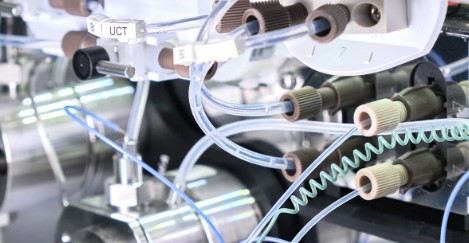
A. Stress Testing
Plants are exposed to varying conditions (humidity, drought, irregular light cycles) to identify those that are resilient and express stable traits under stress.
B. Analytical Testing
Breeders use gas chromatography (GC) or high-performance liquid chromatography (HPLC) to test cannabinoid and terpene concentrations.
This ensures that offspring not only look similar but chemically perform to expectations (e.g., consistent THC/CBD levels).
C. Genetic Marker Analysis (Modern Breeding)
Advanced breeders may use molecular marker-assisted selection (MAS) to map desirable genes and select for specific alleles (e.g., for mold resistance, chemotype).
5. Addressing Common Challenges
A. Hermaphroditism
Hermaphroditic traits can emerge under stress or poor selection. Breeders rigorously remove intersex individuals from breeding programs to reduce this risk.
B. Genetic Bottlenecking
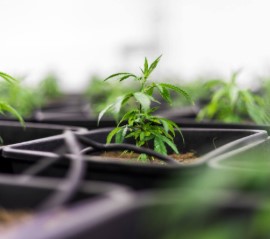
Excessive inbreeding can lead to weak plants or loss of vigor. To avoid this:
- Outcrossing may be done after several inbred generations.
- Maintaining multiple breeding lines in parallel can help retain genetic diversity.
C. Trait Linkage
Some traits may be genetically linked (e.g., flavor with flowering time), making it difficult to isolate one without affecting another. Breeders must balance trade-offs.
6. Stabilization Timelines
Stabilizing a new cannabis cultivar typically takes 4 to 7 generations, which corresponds to 2–4 years, depending on:
- Breeding method
- Growing cycles (indoor vs. outdoor)
- Selection pressure
- Resources available
Generation timelines:
- F1 to F2: 3–6 months
- F2 to F3: 3–6 months (depending on flowering times)
- Continued selection to F6+: 12–24 months
7. Feminized Seed Stabilization
Feminized seeds are produced by forcing a female to express male pollen (via STS or colloidal silver), then using that to fertilize another female.
To stabilize feminized strains:
- Start with elite female clones with no hermaphroditic tendencies.
- Self-pollinate or use another reversed female.
- Multiple generations of selection are still required to maintain chemical and morphological uniformity.
8. Stabilization in Autoflowering Varieties
Autoflowering strains carry the ruderalis gene for day-neutral flowering. Stabilizing these adds complexity:
- Ruderalis often contributes weaker potency and structure.
- Breeders must backcross and selectively breed multiple generations to retain autoflowering while improving potency and yield.
9. Release and Maintenance of Stable Cultivars
Once stabilized, breeders often:
- Produce foundation seed stock to preserve original genetics.
- Perform regular quality control through test grows.
- Maintain mother plants or tissue cultures as a genetic backup.
For commercial release, consistent lab testing, cultivation trials, and sometimes trademark registration follow.
10. Conclusion
Stabilizing cannabis seeds is a labor-intensive yet crucial aspect of professional breeding. Through careful selection, inbreeding, testing, and multi-generational work, breeders ensure that each seed reliably produces a plant that meets its genetic promise. This not only supports a dependable cultivation process but also builds trust in the strain’s name, chemical profile, and medicinal or recreational effects.
As cannabis genetics become more refined and scientific tools evolve, breeders are increasingly integrating molecular techniques with traditional methods ensuring the future of cannabis cultivation is as consistent as it is diverse.
