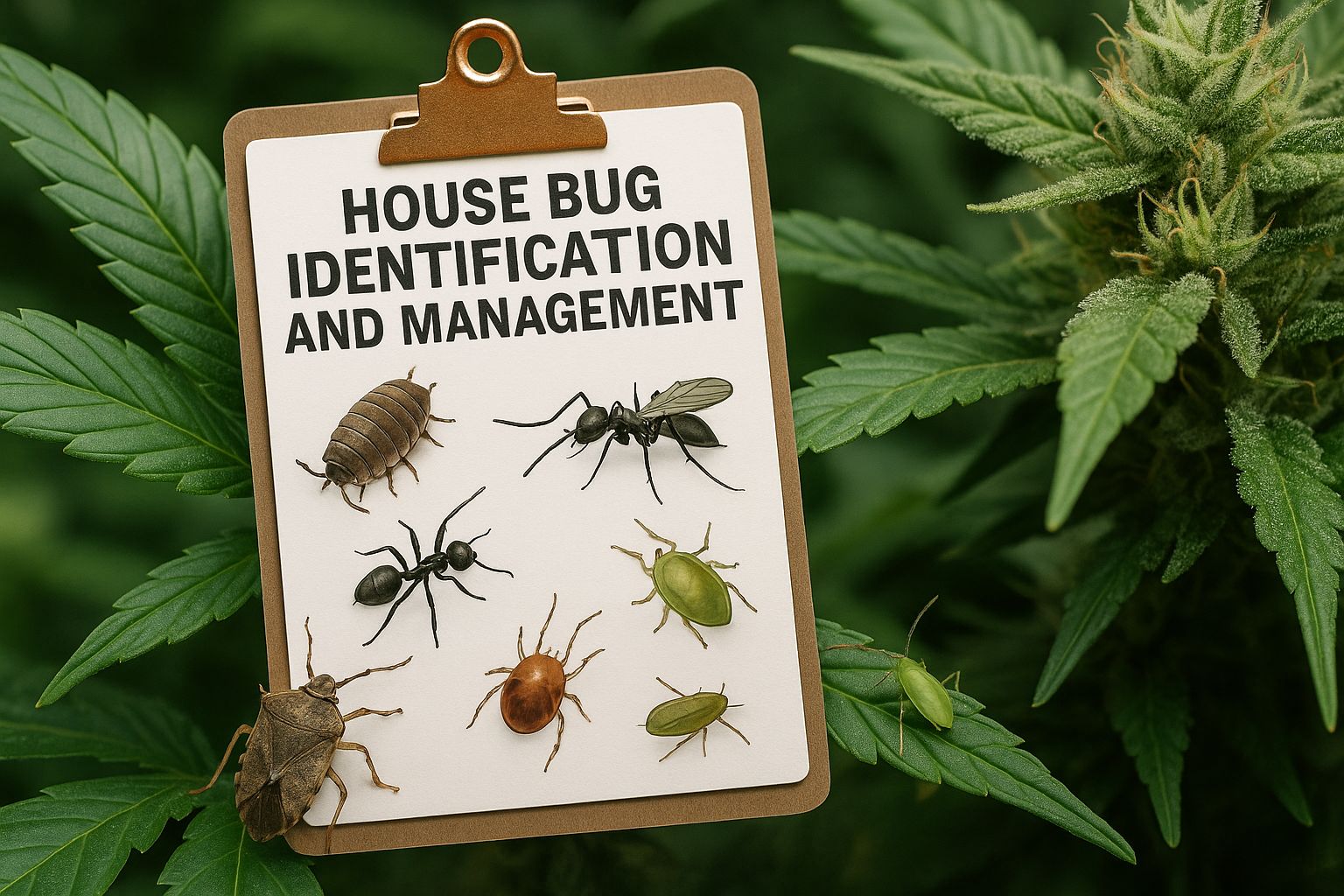
Why I Wrote This
In my first apartment grow, I blamed a nutrient line for leaf stippling that had nothing to do with EC. The real culprit was a hitchhiking thrips population I had invited in on a basil plant from the kitchen window. Since then I’ve kept a detailed log on House Bug Identification and Management across tents, garages, and small greenhouses. This guide shares what actually works inside living spaces—tight quarters where cannabis, houseplants, pets, and people all intersect.
Nothing here is medical or legal advice. I focus on practical, experience-based indoor pest control with safe, targeted methods and honest trade-offs. When I say “spray,” I mean labeled, household-safe options used correctly, or I mean biologicals and mechanical tools I’ve proven over many cycles.
The Mindset: IPM First, Chemicals Last
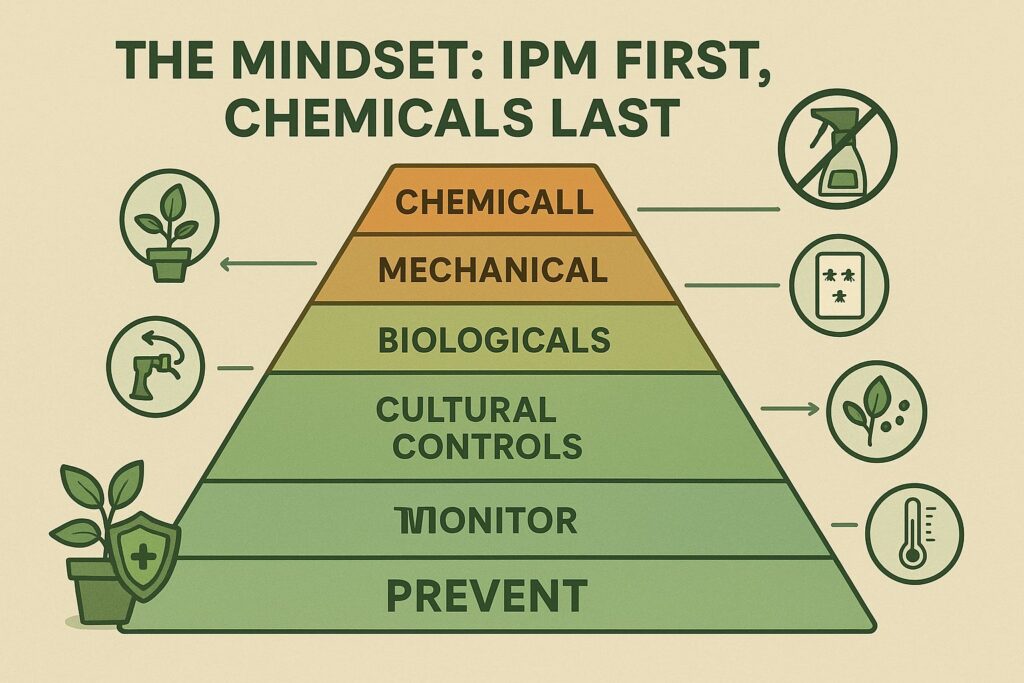
House Bug Identification and Management starts with prevention. When your cannabis space lives inside your home, reactionary spraying is the last tool, not the first.
- Quarantine new plants for seven days with separate sticky trap monitoring.
- Keep RH and temperature in a band that favors plants over pests: veg 60–65% RH at 24–26°C; flower 45–55% RH at 23–25°C; VPD 0.9–1.1 kPa in veg, 1.2–1.4 kPa in flower.
- Maintain airflow: two opposing clip fans per 4×4 tent to break leaf boundary layers without windburn.
- Water precisely; saturated media plus warm temps equals fungus gnat hotels.
- Build a weekly sanitation checklist and actually follow it.
I still run strong PPFD—350–500 µmol/m²/s in veg and 800–900 µmol/m²/s in late flower—because sturdy plants resist pests better than weak ones.
Fast ID: What I Look For During Daily Walkthroughs
House Bug Identification and Management depends on catching pests at low numbers. Here’s how I scout in two minutes:
- Flip the leaf and inspect veins with a headlamp.
- Check sticky cards at canopy height and at soil line.
- Shake a branch over white paper to spot mites or thrips nymphs.
- Scan the top of the medium for gnats taking off when disturbed.
- Log counts: number of catches per trap, per zone.
Common house bugs I see around marijuana plants are fungus gnats, spider mites, thrips, springtails (mostly harmless), and occasional aphids or mealybugs from nearby houseplants. I’ll cover each and how I make the call.
Fungus Gnats: The Most Common House Guest
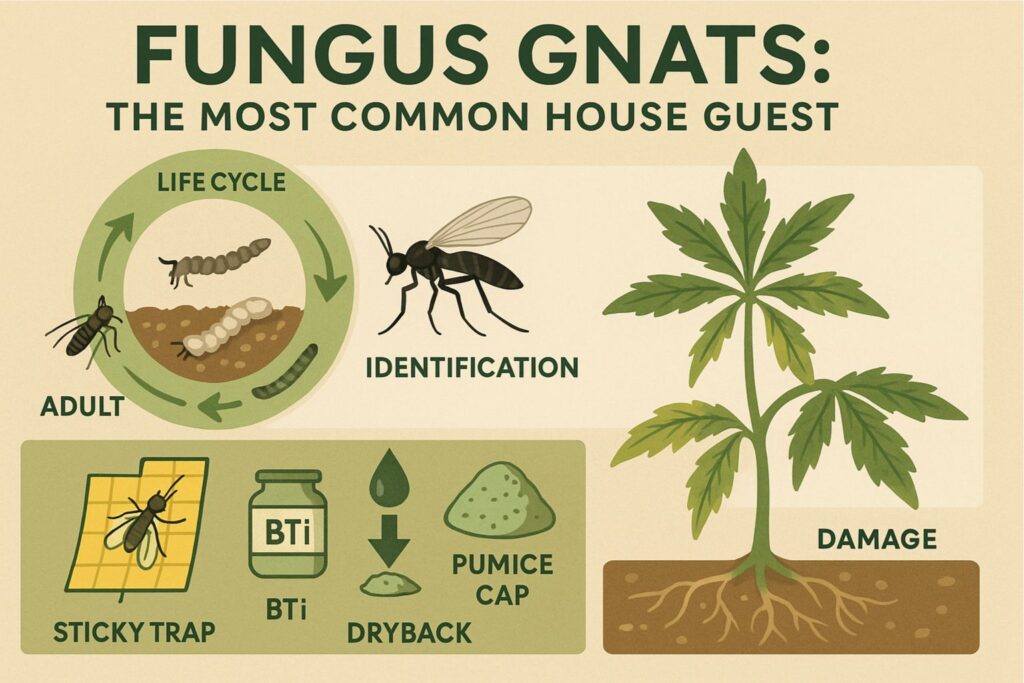
Identification
- Tiny black flies that hover at soil level.
- Larvae are translucent, threadlike, and live in moist media.
Damage
Adults are annoying; larvae chew at fine roots and open doors for disease. Seedlings and autoflowers in small pots suffer first.
What Works For Me
- Dryback discipline. I aim for moisture curves that hit 10–15% runoff in coco but still allow the top centimeter to dry between irrigations.
- Topdress cap: 5–10 mm of pumice or hydroton on the medium surface.
- Sticky trap monitoring: one blue or yellow card cut into thirds, placed at soil line.
- Biologicals: Bacillus thuringiensis israelensis (BTi) drenches at label rate every 7–10 days until cards read near zero.
In House Bug Identification and Management, fungus gnat control is 80% irrigation habits, 20% biologicals. Overwatering is the usual villain.
Spider Mites: The Leaf-Stippling Classic
Identification
- Sand-grain dots and silk on undersides; tap-test reveals moving specks.
- Stippling starts at leaf edges and moves inward. Under bright light, you’ll see a light-salt pattern.
Damage
They puncture leaf cells, reducing photosynthesis. Under high PPFD, damaged leaves fail fast.
What Works For Me
- Hard reset on sanitation: wipe tent poles and trays with 70% isopropyl or hydrogen peroxide solution; launder pre-filters.
- Beneficial insects: I introduce Phytoseiulus persimilis at first sign; they hunt spider mites aggressively.
- Oil rotation in veg only: light-rate horticultural oil one week, insecticidal soap the next, with a plain-water rinse 48 hours later.
- Flower caution: I avoid oils late flower; instead I increase predator releases and leaf-pluck heavily affected fans.
Spider mite treatment is a marathon. If numbers spike during flower, I prioritize harvest quality and remove the most damaged leaves rather than flooding the room with sprays.
Thrips: Silver Streaks And Tiny Torpedoes
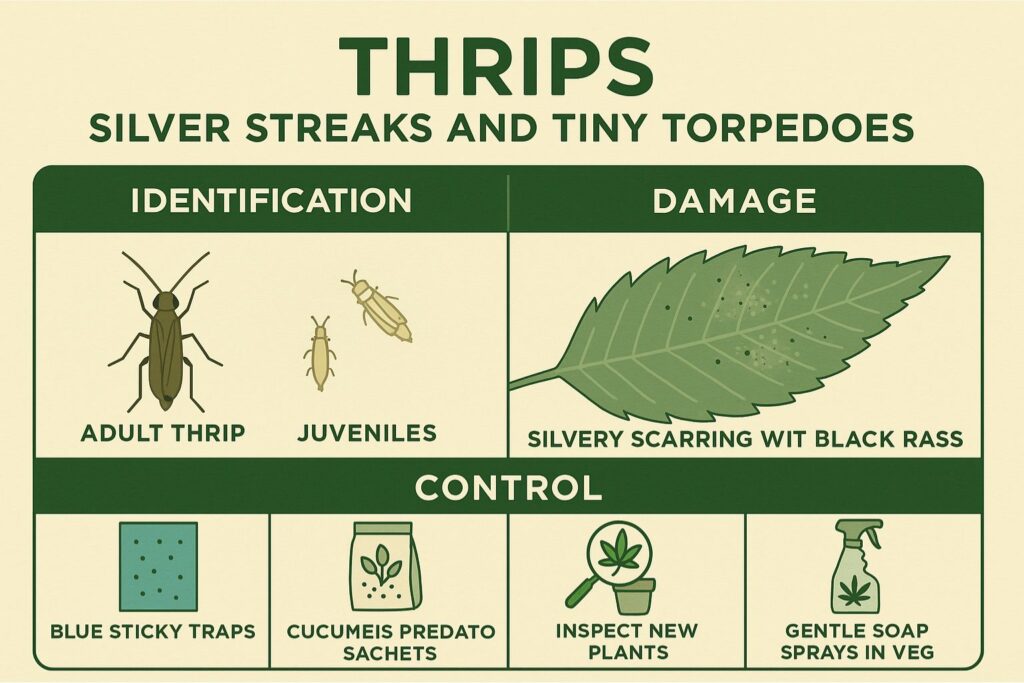
Identification
- Silvery streaks on leaves; black specks (frass) nearby.
- Nymphs look like tiny yellow torpedoes; adults sometimes fly when disturbed.
Damage
Scarring on leaves; twisted new growth on sensitive phenotypes. Buds generally survive if you respond early.
What Works For Me
- Blue sticky trap monitoring at canopy height—thrips prefer blue.
- Beneficial insects: Orius insidiosus in larger spaces; Amblyseius cucumeris sachets hung at transplant in tents.
- Spot-spray in veg: insecticidal soap with thorough underside coverage; repeat in 3–4 days.
For House Bug Identification and Management, thrips on leaves are easier than mites if you catch the first generation. I always check herbs and ornamentals near the grow; thrips love them.
Aphids and Mealybugs: The Honeydew Crew
Identification
- Soft-bodied clusters at stems and petioles; mealybugs have white cottony masses.
- Look for ants; they farm honeydew producers.
Damage
Sapping and sooty mold on leaves. Buds can get sticky with residue if you ignore them.
What Works For Me
- Mechanical first: alcohol-dipped cotton swabs to remove colonies on stems.
- Release lacewings; they’ll patrol for weeks.
- Neem or light horticultural oil in veg; never late flower.
- Ant control around the house foundation; if ants stop, aphids often crash.
Common house bugs wander in from windows and patio planters; isolate and inspect new houseplants as if they were clones.
Harmless or Helpful: Springtails and Predatory Mites
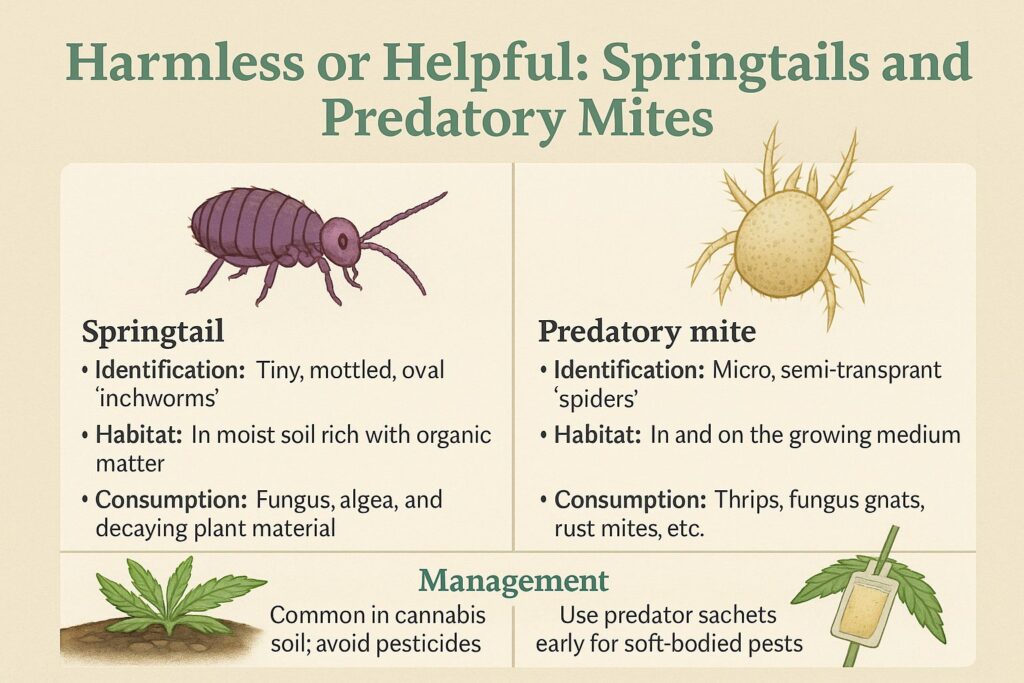
Springtails jump when watered; they feed on decaying matter, not live roots. Predatory mites move faster than plant-eaters and lack the stippling trail. I leave both alone. House Bug Identification and Management gets easier when you learn who not to kill.
Sanitation Checklist I Actually Use
The backbone of indoor pest control is boredom—small tasks on repeat. Here’s my weekly loop for House Bug Identification and Management:
- Empty and wipe saucers and trays; no standing water.
- Vacuum tent floor and wipe zipper seams.
- Swap or rinse pre-filters; clean intake grills.
- Disinfect shears between plants with 70% isopropyl.
- Replace sticky cards and label the date.
- Bag leaf waste; don’t compost inside.
- Wash humidifier reservoirs with citric acid.
- Wipe walls and poles monthly; reset the whole tent between runs.
Beneficial Insects Indoors: What Fits A Tent
Not every predator thrives indoors, but a few are rock solid for marijuana grows.
- Phytoseiulus persimilis: spider mites specialist; needs higher humidity.
- Amblyseius cucumeris: thrips nymphs; hangs out in sachets for slow release.
- Hypoaspis miles/Stratiolaelaps: soil-dwelling predators for fungus gnat larvae.
- Green lacewings: broad generalists in larger rooms.
Release rates matter. I buy fresh and deploy within 24 hours. For small tents, sachets at each plant provide a steady trickle. Beneficial insects pair perfectly with sticky trap monitoring and organic IPM.
Household-Safe Sprays And When I Use Them
I keep a minimal cabinet for House Bug Identification and Management in living spaces:
- Insecticidal soap: contact-kill soft-bodied pests; best in veg; rinse after 24–48 hours.
- Light horticultural oil: smothers eggs and adults; never under high light or late flower.
- Isopropyl alcohol 50% spot swab: mealybug clusters on stems.
- BTi for fungus gnat control: soil drench on schedule.
- Hydrogen peroxide 3% for tray sanitation, not as a foliar.
If I spray, lights dim to 50% and fans run gently to dry leaves without drift. I always test a small lower branch first; some phenotypes dislike soaps or oils.
Room Design That Beats Pests
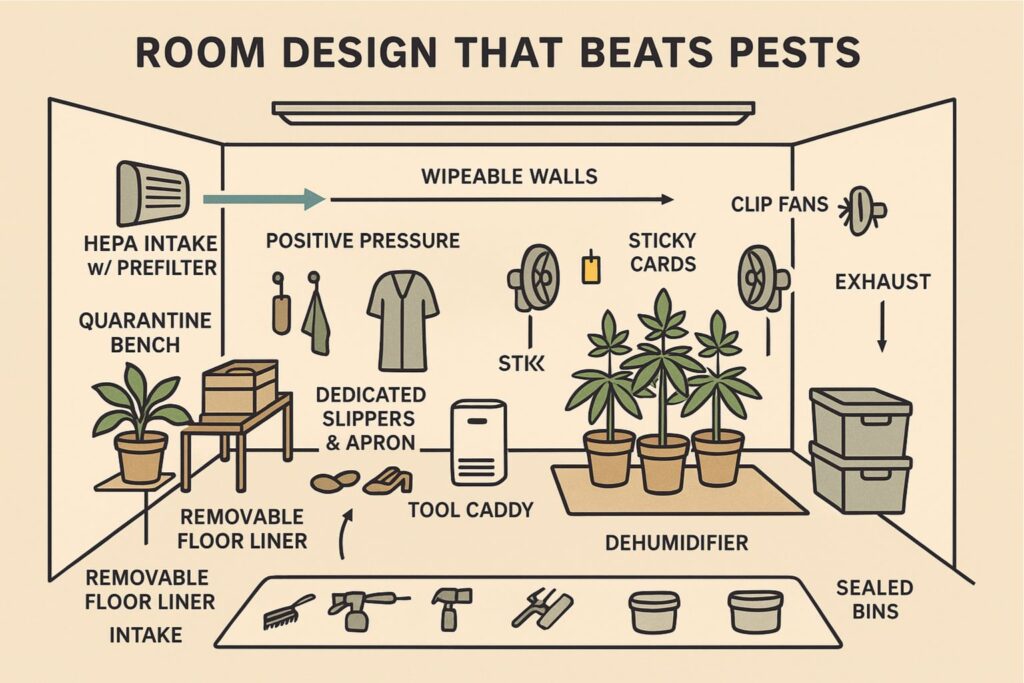
Management is easier when your space is built for it.
- Smooth, wipeable walls and removable floor liners.
- Dedicated slippers and apron for the grow; street clothes stay out.
- HEPA intake pre-filter; positive pressure when possible.
- Separate “dirty bench” for incoming plants and gear.
- Tool caddy with alcohol, wipes, spare sticky cards, and a hand lens.
When I moved to this setup, my House Bug Identification and Management time dropped to a few minutes a day.
Seed Shopping And Genetics With IPM In Mind
Pest tolerance is a trait. In my notes, certain indica-leaning hybrids with thick leaf cuticles shrug off minor thrips better than narrow-leaf sativas. When choosing feminized seeds or autoflowers from seed banks, I look for breeder comments about vigor, leaf thickness, and mold resistance. Autoflowers finish fast—great when you’re rebuilding a room after a pest setback. For photoperiods, healthy vegetative growth under steady PPFD produces leaves that physically resist feeding damage.
If you’re in a region with strict home cultivation rules, plan shipping and packaging so new genetics arrive when your quarantine corner is ready. The first seven days after delivery is where you win or lose.
Nutrients, Media, And Watering Habits That Influence Pests
- Coco with frequent, measured irrigation reduces gnat hotspots versus overwatered soil.
- Topdress blends rich in uncomposted organics invite gnats; I keep them covered with a mineral cap.
- Real-time EC and pH checks prevent overfeeding; lush, overly soft growth attracts aphids and mites.
- Silica supplements during veg thicken cell walls; I see fewer thrips scars on silica-fed runs.
Marijuana plants grown with balanced nutrition and proper VPD outpace pests. That’s the quiet truth behind House Bug Identification and Management.
Post-Harvest Practices: Don’t Carry Problems Forward
After harvest I do a deep reset before popping the next pack of seeds.
- Remove all plant matter; vacuum and wipe.
- Wash fabric pots or discard liners.
- Run the tent empty at 30–35% RH for 24 hours to desiccate stragglers.
- Replace sticky cards and scout for three days before new plants enter.
- Sanitize scissors, nets, and trellis clips in labeled bins.
A clean start gives feminized seeds and autoflowers the calm runway they deserve.
Troubleshooting Matrix
Use this quick reference when a symptom appears:
- Tiny flies at soil + algae crust = fungus gnats → adjust watering, BTi, mineral cap, sticky trap monitoring.
- Silver streaks + black specks = thrips on leaves → blue cards, cucumeris sachets, soap in veg.
- Webbing + stipple + fast decline under high PPFD = spider mite treatment → predators, sanitation, selective defoliation.
- Cottony clusters at joints = mealybugs → alcohol swabs, lacewings, repeated checks.
- Jumping flea-like specks in moist trays = springtails → harmless; reduce moisture if populations explode.
FAQ: Real Questions From New Indoor Growers
How often should I check traps?
I read traps twice weekly and log counts. In active outbreaks, I check daily. Sticky trap monitoring is your dashboard for House Bug Identification and Management.
Are beneficial insects messy in a small tent?
Sachets are tidy and slow-release. Predators like Stratiolaelaps stay in the media. I avoid large broadcast releases in tiny spaces; sachets at each pot are cleaner.
Can I spray during flower?
I avoid oils and soaps during late flower to protect quality. Instead, I lean on predators, lower RH, and leaf removal. If a severe outbreak hits mid flower, I prune damage and consider harvesting earlier on affected plants rather than drenching buds.
What’s the best first buy for indoor pest control?
A headlamp, a hand lens, a pack of sticky cards, BTi granules for fungus gnats, and a calendar to drive your sanitation checklist. Everything else builds from there.
How do pets influence indoor pest control?
Keep pet beds and food away from intake vents. Brush pets outside. Fleas and fur can transport common house bugs straight into the tent.
Checklist: Weekly IPM Loop For House Grows
- Quarantine any new plant, clone, or houseplant.
- Replace and date sticky cards; record catches.
- Inspect leaf undersides with a hand lens.
- Maintain RH/temperature/VPD; confirm fans are clean and running.
- Vacuum floors, empty saucers, wipe spills.
- Drench BTi if gnat counts rise; refresh mineral caps.
- Deploy or refresh beneficial insect sachets as scheduled.
- Clean tools; bag leaf waste; reset intake filters.
- Re-scout in 48 hours after any intervention.
- Update the log—patterns are your best teacher.
Final Thoughts From The Tent
I’ve learned that House Bug Identification and Management is not a single product or recipe. It’s a rhythm: quarantine, scout, record, prevent, and only then treat. Keep your cannabis environment stable—light, airflow, and moisture—and most common house bugs never get a foothold. When they do, act fast with targeted, household-safe tools, and support the plants with strong culture.
Healthy marijuana plants grown under steady PPFD and honest irrigation habits will outgrow small issues. Your IPM habits will carry across strains, whether you’re running a photoperiod hybrid from feminized seeds or a quick autoflower for a mid-winter harvest. Build the system once, follow the sanitation checklist, and your weed will reward you with clean leaves, clean buds, and clean jars.
