When people ask me about hotboxing, they usually expect a story about cramming into a car with friends, windows up, joints blazing, laughing until the smoke is thicker than the air. I have definitely been in those sessions. But as a longtime grower who thinks constantly about airflow, temperature, and plant health, I look at the hotboxing meaning a bit differently.
From a grower’s perspective, hotboxing is less about chasing an extreme high and more about understanding what is happening with the smoke, the space, and everyone’s lungs. Once you have spent years fine-tuning cannabis ventilation in a sealed tent, it is hard not to see the parallels when people deliberately do the opposite and trap every bit of smoke they can.
In this article, I will break down hotboxing and its meaning in clear language, walk through how it really works, and share why I personally treat it with a lot more caution today than I did when I first started hotboxing weed as a teenager.
What Is Hotboxing, Really?
If you strip away the slang, the basic hotboxing meaning is simple: smoking cannabis in a small, enclosed space with little or no ventilation so the smoke hangs in the air instead of escaping.
That space can be almost anything:
- A parked car with the windows rolled up
- A tiny bathroom with the fan off
- A grow-room closet between harvests
- A tent, shed, or even a homemade “smoke box”
The core idea behind hotboxing and its meaning is that both smokers and bystanders keep inhaling the same cloud over and over. Some people call it “getting high off the leftovers.” Others see it as a way to stretch their stash when they are hotboxing weed in a group and everyone is sharing.
When I first heard the phrase as a new grower, hotboxing and its meaning sounded like a fun challenge. How dense can we get the smoke? How long until we can barely see each other? Back then, I never thought about things like carbon dioxide buildup, tar, or the way secondhand weed smoke lingers in fabric, lungs, and even air filters.
Why Hotboxing Became A Thing In Cannabis Culture
Hotboxing is not new. Sources trace it back to older cannabis rituals and to decades of people passing joints in cars, basements, and dorm rooms.
It blends a few things cannabis lovers enjoy:
- Privacy in places where marijuana or weed is still stigmatized
- A social vibe where everyone shares the same thick haze
- The perception that hotboxing weed “gets you higher for less,” because the smoke is more concentrated
For young smokers especially, hotboxing a car or a bathroom can feel like a rite of passage. I remember the first time we tried hotboxing a car in a cold climate winter. The windows fogged up so fast that we ended up drawing smiley faces in the condensation, laughing at how “efficient” we thought we were being.
Only later did I learn that studies actually show non-smokers can feel significant effects just by sitting in a hotbox session, because the secondhand weed smoke in that small space contains enough THC to cause detectable blood levels. That is part of the hotboxing meaning you do not see in memes: people who did not even choose to smoke can still be pulled into the experience.
How Hotboxing Works From A Grower’s Point Of View
As someone who spends a lot of time on indoor cannabis growing, I think in terms of airflow and saturation. When you hotbox, you are essentially doing a few specific things to the environment.
1. Overloading The Air With Smoke
Every hit you or your friends exhale adds more particulates, hydrocarbons, and cannabinoids into the air. In a larger room with proper cannabis ventilation, that smoke disperses and gets diluted quickly. In a hotbox, every exhale stays in play.
The concentration of THC and other compounds builds with each joint or bowl. That is why people doing hotboxing weed talk about the moment the room “flips” from hazy to fully clouded. Scientifically, you are saturating a small air volume with combustion byproducts.
2. Reducing Oxygen, Increasing CO₂
The body needs oxygen; combustion needs oxygen too. As everyone keeps burning joints and breathing, oxygen is consumed and carbon dioxide levels go up. Articles on hotboxing risks highlight dizziness, headaches, and nausea as common side effects, partly because of this shift in air composition.
As a grower, I constantly balance CO₂ and fresh air for plants. When I see five people hotboxing a car, I cannot help visualizing the CO₂ ppm climbing while the oxygen supply drops, even before you account for thick secondhand weed smoke.
3. Maximizing Secondhand Weed Smoke Exposure
From a grow-room perspective, hotboxing is a bit like running your carbon filter backward. Instead of removing smoke and odor, you are trapping every molecule. Research shows that secondhand cannabis smoke can carry not only THC but also tar, carbon monoxide, and other irritants similar to tobacco smoke.
When you understand that, the hotboxing meaning shifts from “budget hack” to “heavy secondhand exposure session.”
Is Hotboxing Weed Really Stronger?
One of the most common questions I see typed into search bars is “does hotboxing get you higher?” or “hotboxing and its meaning and does it actually work?” The short answer is yes, it can feel stronger—but with strings attached.
Controlled studies have found that non-smokers in a sealed room with multiple joints can show measurable THC in their blood and can feel intoxicated, especially when ventilation is poor. If you are actively smoking as well, that re-breathed cloud adds to what you get from your own hits.
But in my experience, and in reports from other growers and consumers, the “extra high” from hotboxing weed is not free:
- You often feel more groggy and dehydrated afterward.
- The smell clings to clothing, hair, and car interiors.
- Headaches, scratchy throats, and coughing are more common.
So while hotboxing a car, tent, or bathroom might deliver a harder hit, you are also taking in more tar and irritants than you would in a well-ventilated session.
Where Hotboxing Shows Up Most: Cars, Bathrooms, And Tiny Rooms
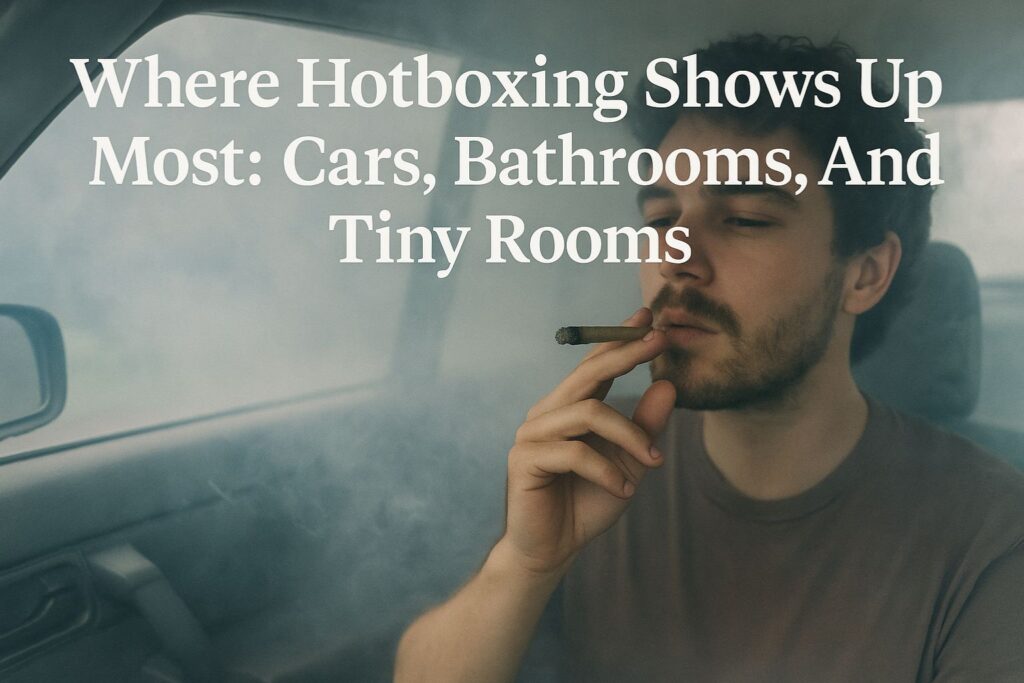
When people ask me what is hotboxing in practical terms, I picture three classic setups.
Hotboxing A Car
Hotboxing a car is probably the most iconic version. You park somewhere out of the way, roll up all the windows, and start passing joints. Some people even turn on the heater or AC to make it more comfortable as the smoke builds.
From a risk standpoint, hotboxing a car combines several issues:
- Impaired driving if anyone decides to move the vehicle afterward
- Poor cannabis ventilation, especially in smaller cars
- Residual odor in upholstery and vents
- Legal problems if local laws treat the vehicle as a public place
As a grower, I baby my harvests for months. Throwing away all that work by catching a charge after hotboxing a car feels like a bad trade.
Hotboxing Bathrooms And Closets
Bathrooms and closets are popular because they feel private and easy to seal. Some people run a “Hawaiian hotbox” by steaming up the room with a hot shower, then filling it with smoke.
If you are also into indoor cannabis growing, you can probably see the downside. Bathrooms are already humid. Add dense smoke and minimal airflow, and you have a recipe for irritation and lingering odor. If you use that same space to dry flower, you are now mixing terpene-rich buds with moisture and stale secondhand weed smoke, which is not ideal for quality.
Hotboxing Small Rooms And Tents
I have heard of growers hotboxing their own tents once a crop is harvested and the equipment is off. I understand the temptation, but remember: grow tents are designed to minimize leaks. That is great for controlling smell during indoor cannabis growing, but it also means poor air exchange when you deliberately flood the tent with combustion smoke.
If you are going to experiment, at least strip out your carbon filter and fans first and plan on a deep clean before your next run.
Health And Safety: What I Have Learned The Hard Way

I am not here to lecture anyone, but years of both hotboxing weed and reading about the side effects have changed my habits.
Articles from health and recovery organizations point out that hotboxing can increase respiratory irritation, raise carbon monoxide exposure, and amplify the impact of secondhand weed smoke on people who did not choose to consume.
Personally, I have noticed:
- More next-day cough and chest tightness after intense hotbox sessions
- Stronger “weed hangovers” when mixing hotboxing with heavy indica flower
- Friends getting uncomfortably high simply from sitting in the car with us
These days, if someone suggests hotboxing a car, I am more likely to offer a compromise: crack the windows, use a small fan, and treat cannabis ventilation as part of the session instead of the enemy.
How Growing Changed My View Of Hotboxing
Once you dive deep into indoor cannabis growing, you start to think like an HVAC tech. I obsess over:
- Intake and exhaust fans
- Negative pressure in the tent
- Ideal VPD for veg versus flower
- How PPFD and temperature balance each other
In that context, hotboxing meaning looks almost upside-down. I spend months keeping my room at 24–26°C in veg with 55–65 percent humidity, dialing PPFD to around 400–600 µmol/m²/s. In flower I push closer to 700–900 µmol/m²/s while holding humidity down around 45–55 percent and running strong exhaust.
If you build that kind of environment for your plants, but then choose to chill with friends in a sealed, smoke-saturated car, you are giving your lungs the opposite of what you give your garden. That realization hit me hard.
Now, when I invite people over to try a new strain grown from feminized cannabis seeds or autoflower marijuana seeds, I:
- Use a well-ventilated living room rather than a tiny enclosed bathroom
- Run an air purifier nearby
- Offer non-smokers edibles instead of forcing them into secondhand weed smoke
- Keep sessions moderate so the focus stays on flavor and effects, not how foggy we can get the room
Strains, Seeds, And How Potency Affects Hotboxing
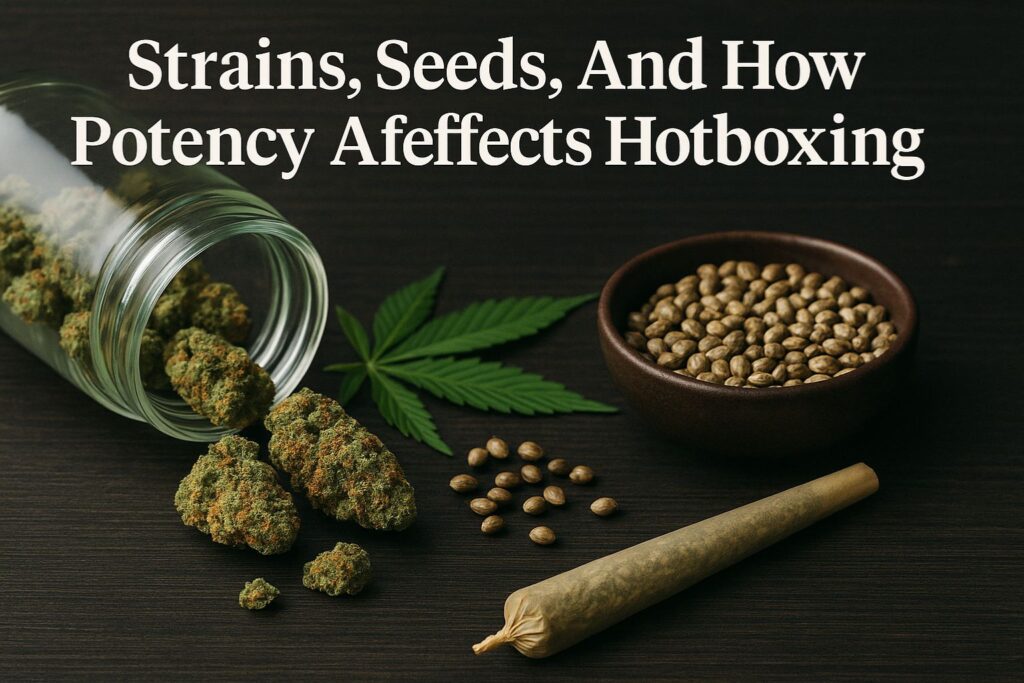
Another piece of the hotboxing meaning that does not get enough attention is potency. Today’s cannabis is not the same as the ditch-weed stories from the 1970s. Modern feminized cannabis seeds and carefully bred autoflower marijuana seeds can easily produce flower testing over 20 percent THC.
When someone is hotboxing weed grown from high-THC genetics, they are saturating that enclosed space with much stronger smoke than what older generations dealt with. That matters.
Choosing The Right Genetics
As a grower, I decide early whether a run is aimed at couch-locking potency or balanced, functional effects.
For social sessions, especially ones where hotboxing has ever been on the table, I lean toward:
- Hybrids with moderate THC and a noticeable CBD component
- Terpene profiles that emphasize clarity rather than sedation
- Lines known as some of the best indica strains for relaxing without flattening you
Running a few jars of the best indica strains for relaxing alongside lighter sativa-leaning jars gives guests options. If anyone insists on hotboxing a car or bathroom (against my advice), I will push them toward those more balanced jars instead of the face-melting phenos.
Seeds And Responsible Consumption
Part of buying cannabis seeds online responsibly is thinking about how you and your circle will actually consume what you grow.
When I am browsing catalogs and buying cannabis seeds online now, I ask:
- Is this strain so strong that hotboxing weed with it would be overwhelming?
- Would this work better as a gently rolled joint in a ventilated room?
- Do I want feminized cannabis seeds for maximum yield of a favorite strain, or smaller batches from autoflower marijuana seeds for more variety and milder sessions?
The same genetics that make for award-winning, resin-drenched buds can be a lot in a tight hotbox. Planning ahead keeps things enjoyable instead of chaotic.
Safer Alternatives To Traditional Hotboxing
I am not going to pretend people will stop asking what is hotboxing or trying it at least once. But there are ways to capture some of the social vibe without diving into the harshest version of the practice.
Here are approaches I use now:
- Ventilated circle
- Open windows or use a fan to keep air moving.
- Treat cannabis ventilation as part of the ritual: fresh air in, smoke out.
- Small joints, not blunt marathons
- Especially with flower from strong feminized cannabis seeds, smaller joints in rotation keep everyone comfortable.
- Vapor instead of combustion
- Tabletop or portable vaporizers dramatically cut down on tar and odor compared to hotboxing weed with joints.
- Hybrid sessions
- Mix inhaled cannabis with low-dose edibles so people are less tempted to “over-smoke” in an enclosed area.
- Respect non-smokers
- If someone does not want secondhand weed smoke, do not pressure them into any version of hotboxing, ever.
FAQ: Hotboxing And Modern Cannabis
Is hotboxing illegal?
The legal side depends on where you live, but hotboxing a car can create problems even in legal cannabis regions, especially if anyone is driving or the vehicle is in a public place. Laws may treat the inside of a car as a public area, or consider any impaired driver responsible regardless of how they consumed. Always check regional regulations and remember that “legal weed” does not mean “anything goes.”
Can secondhand weed smoke from a hotbox make you fail a drug test?
Research has shown that in unventilated spaces with lots of smoke, non-smokers can absorb enough THC to show low but measurable levels in blood or urine for a short time. Whether that translates into a positive test depends on test sensitivity and timing, but if your job or freedom depends on clean tests, avoiding hotboxing meaningfully lowers your risk.
Is there any situation where hotboxing is a good idea?
From a grower’s and health-conscious consumer’s point of view, I cannot give hotboxing my endorsement. At best, it is a high-impact, high-irritation way to consume; at worst, it adds legal and health risks you do not need. If you still decide to experiment after understanding what is hotboxing and how it works, at least:
- Keep the session short
- Avoid driving afterward
- Use lower-potency strains, such as some of the best indica strains for relaxing with moderate THC
- Make sure everyone consents to being in that environment
Final Thoughts From The Grow Room
When I look back at my early cannabis years, I remember hotboxing weed as a badge of honor. These days, after years of indoor cannabis growing, studying airflow, and caring a lot more about my lungs, the hotboxing meaning has changed for me.
Now I see it as a useful concept to understand rather than a goal to chase. Knowing what is hotboxing, how it concentrates smoke, and what secondhand weed smoke does in a sealed car or room helps me make smarter choices. It also shapes how I select genetics when I am buying cannabis seeds online, which seeds I run as feminized cannabis seeds for big harvests, and how I share my flower with friends.
If you are curious about hotboxing, take the time to understand both the culture and the consequences. There are plenty of ways to enjoy high-quality marijuana—from carefully bred autoflower marijuana seeds to hand-trimmed flower from your own tent—without sacrificing your lungs, your car, or your peace of mind to a room full of trapped smoke.
In the end, the best cannabis sessions I have these days are not the ones where I can barely see across the room. They are the ones where people can taste the terpenes, talk clearly, breathe easily, and leave with a deeper appreciation for the plant rather than just a memory of how thick the haze was. That is my personal update on the real hotboxing meaning.
