Why I Wrote This Guide
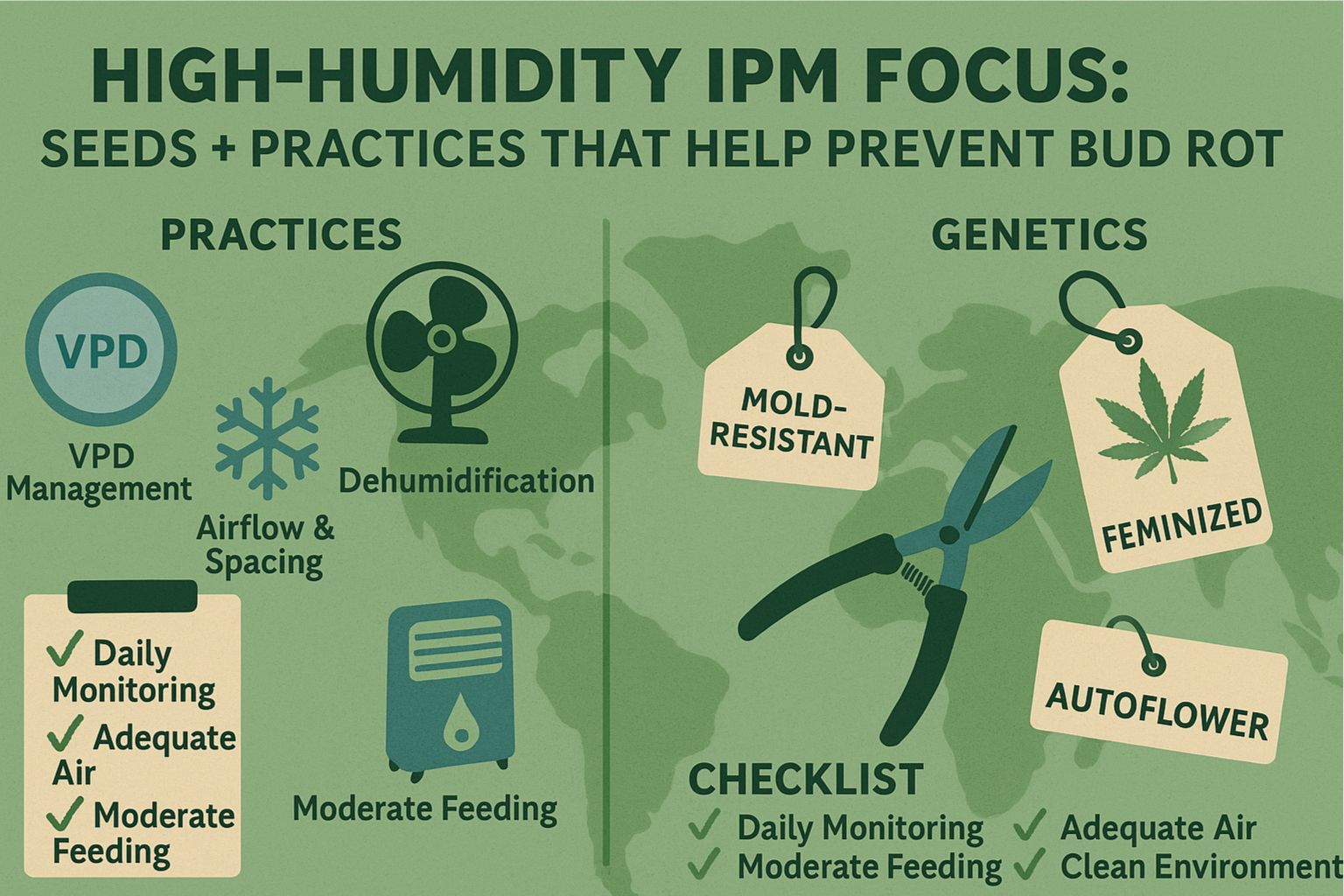
I have grown through more wet autumns than I can count, and every season reminds me that the number one goal is to prevent bud rot. When the air sits heavy and the forecast stacks three storms in a row, clean harvests come down to honest planning, the right genetics, disciplined climate control, and a calm harvesting routine. This is the playbook I use to prevent bud rot in greenhouses, small tents, and simple hoop houses.
My approach is grounded in field notes, not wishful thinking. I’ll explain how I choose seeds, how I stage plants through the risky weeks, and what I monitor day by day. If you work in a coastal belt or a valley where dew is a daily visitor, these methods will help you prevent bud rot without hype.
The Genetics Foundation: Start With Seeds That Help You Win

What I look for in mold resistant cannabis strains
There is no magic seed that can completely prevent bud rot, but choosing the right parents shifts the odds.
I look for mold resistant cannabis strains with these traits:
- Moderately open flower structure rather than rock-hard colas.
- Short to medium internodes that still allow airflow.
- Finishing windows that fit your local weather, ideally before the longest rain spells.
- Documented performance from growers in similar climates.
I re-test favorites every season because weather patterns shift. Lines that did well during a dry year may need more attention when high humidity cannabis conditions dominate. Recording which mold resistant cannabis strains actually finish clean in your environment is priceless.
Why I run both autoflower cannabis seeds and fast photo cultivars
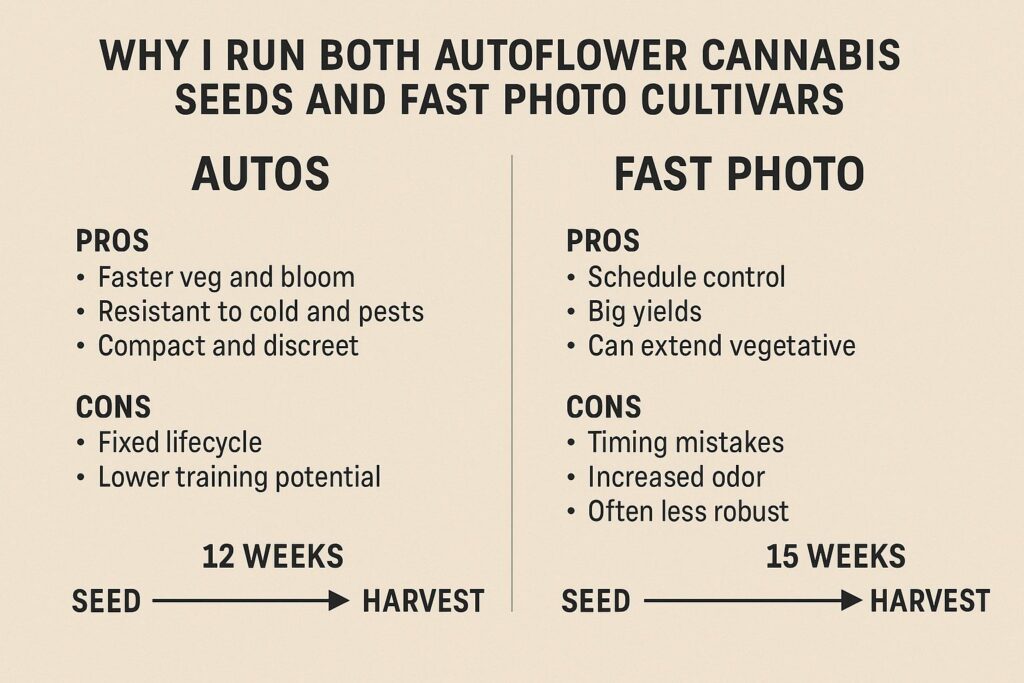
Autos reduce calendar risk. Autoflower cannabis seeds finish on a clock, usually 70–95 days from sprout, and give me at least one safe harvest window. I start a wave of autoflower cannabis seeds in late spring, a second wave in midsummer, and I almost always take them down before the worst storms.
At the same time, I keep a bench of fast photoperiods. These provide yield and variety when the season cooperates. Crossing notes between autoflower cannabis seeds and photos also tells me which families carry the most reliable resistance.
Feminized seeds for consistency
I prefer feminized seeds for weather-critical runs. Removing the sexing step saves two weeks of uncertainty and helps me prevent bud rot by getting plants into their final, well-spaced positions sooner. Feminized seeds also let me direct resources into the best-looking individuals. In my logs, feminized seeds reduce culling stress and make scheduling more predictable during high humidity cannabis weeks.
Building a mixed canopy: indica sativa hybrid thinking
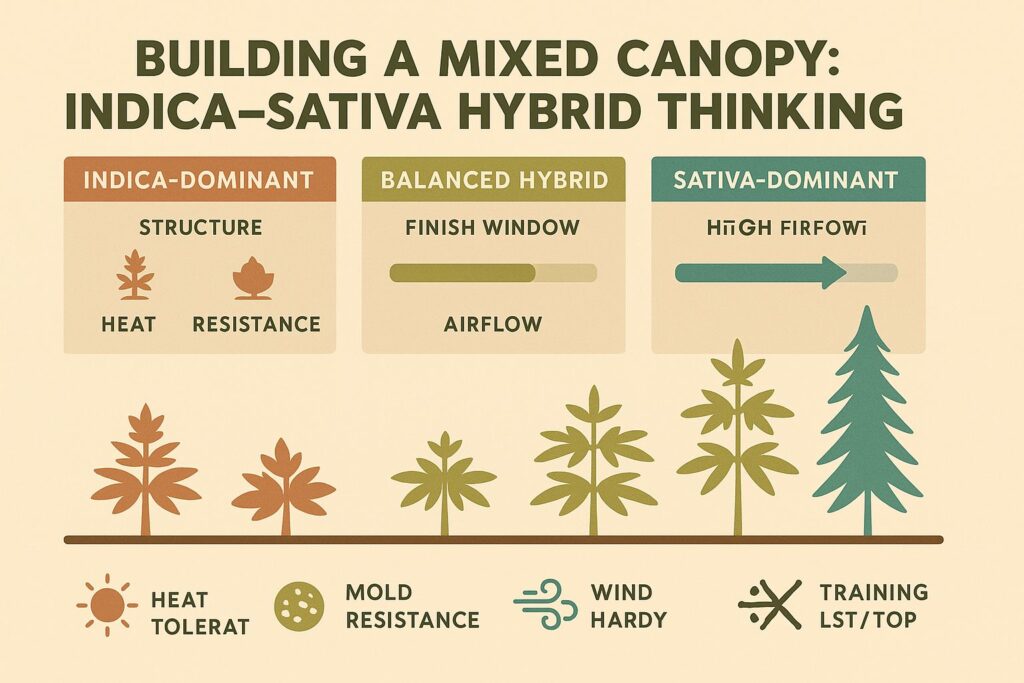
Pure types are rare in modern catalogs, so I plan with an indica sativa hybrid mindset.
I select:
- Shorter, broad-leaf dominant phenotypes for early finishing and easy covering.
- Leaner, narrow-leaf dominant phenotypes that keep buds a touch looser.
- A third lane of truly compact indica sativa hybrid autos that I can tuck into corners under a hoop.
I mention indica sativa hybrid three times here on purpose: diversify structure, diversify timelines, and diversify aroma. That diversity helps a garden prevent bud rot because no single plant architecture or finish date dominates the canopy.
Environment: The Daily Habits That Keep Flowers Dry
VPD cannabis range: the control dial
I manage climate by targeting a VPD cannabis range, indoors and outdoors. Instead of chasing humidity alone, I pair leaf temperature with room conditions to encourage steady transpiration.
- Veg: 0.9–1.1 kPa VPD cannabis range.
- Early flower: 1.1–1.3 kPa VPD cannabis range.
- Late flower: 1.3–1.5 kPa VPD cannabis range.
Working inside a correct VPD cannabis range keeps leaves breathing, limits condensation, and helps prevent bud rot even when ambient RH is high.
PPFD for cannabis and plant posture
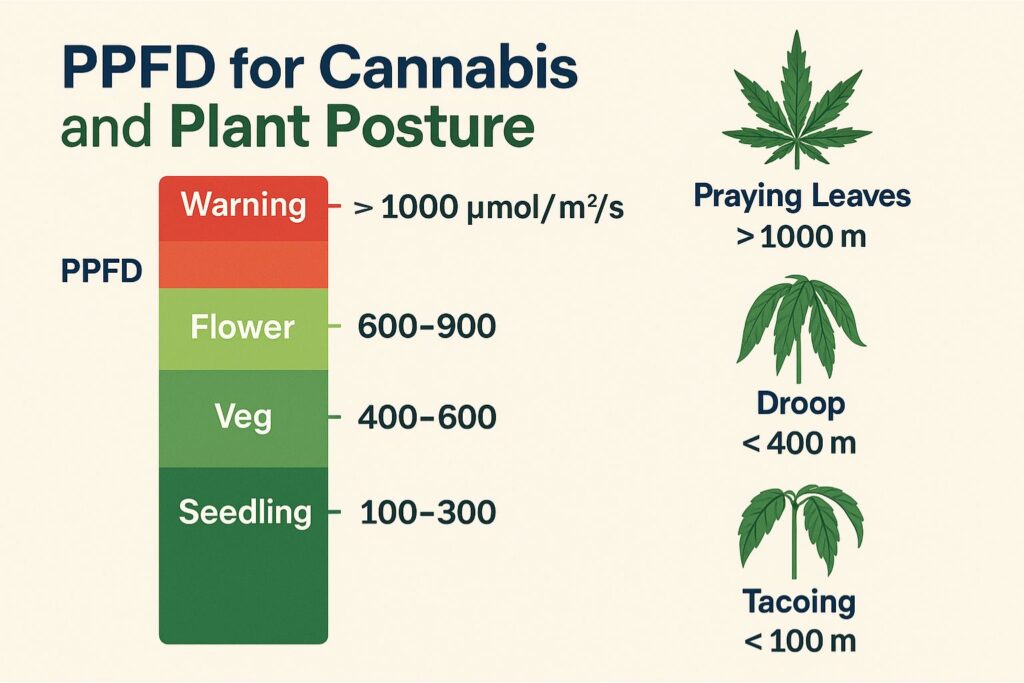
Light affects leaf temperature and posture. When I miss on PPFD for cannabis, plants droop and transpire poorly. When I hit the sweet spot, leaves pray, stay dry, and stack efficiently.
- Seedlings: 200–300 µmol/m²/s PPFD for cannabis.
- Veg: 450–650 µmol/m²/s PPFD for cannabis.
- Flower: 750–1,000 µmol/m²/s PPFD for cannabis as tolerated with CO₂ and temperature.
Keeping PPFD for cannabis aligned with feed and airflow reduces stretch that crowds buds, which helps prevent bud rot later.
Airflow and spacing
I never rely on one big fan. I use several small clip fans pointed across aisles, not directly at flowers. I keep 60–90 cm between pots and remove the lower third of foliage. Under a hoop house, I raise the sides whenever possible. These small habits matter more than any product claim when you are fighting high humidity cannabis seasons.
Media, Irrigation, and Nutrition
Soil vs hydro for weed in wet weather
In a rainy climate, soil vs hydro for weed is a question of forgiveness. Soil buffers mistakes and holds structure when the power goes out. Hydro and coco can be faster but ask for precision and reliable electricity. I often choose a hybrid approach—living soil amended for the season with 10–20% coco to improve drainage. This soil vs hydro for weed compromise gives me speed without giving up buffer. When storms threaten, a forgiving medium makes it easier to prevent bud rot.
Irrigation timing and dry-backs
I water early in the day so leaves are dry by nightfall. I track container weight and allow a measured dry-back. Constantly wet pots in high humidity cannabis conditions keep stomata sluggish and push moisture into the canopy. Controlled dry-backs reduce that risk and help prevent bud rot.
EC/PPM targets and minerals that matter
Healthy tissue is less susceptible. I feed at moderate strength and observe the plant:
- Seedling: 0.6–0.8 EC.
- Veg: 1.2–1.6 EC.
- Early flower: 1.6–1.8 EC.
- Late flower: 1.8–2.0 EC, only if leaves are still vigorous.
Calcium and magnesium stay steady in my program because they support cell walls and stomatal function. I avoid late heavy nitrogen; it keeps tissues soft when I’m trying to prevent bud rot.
Integrated Pest Management That Fits Wet Climates
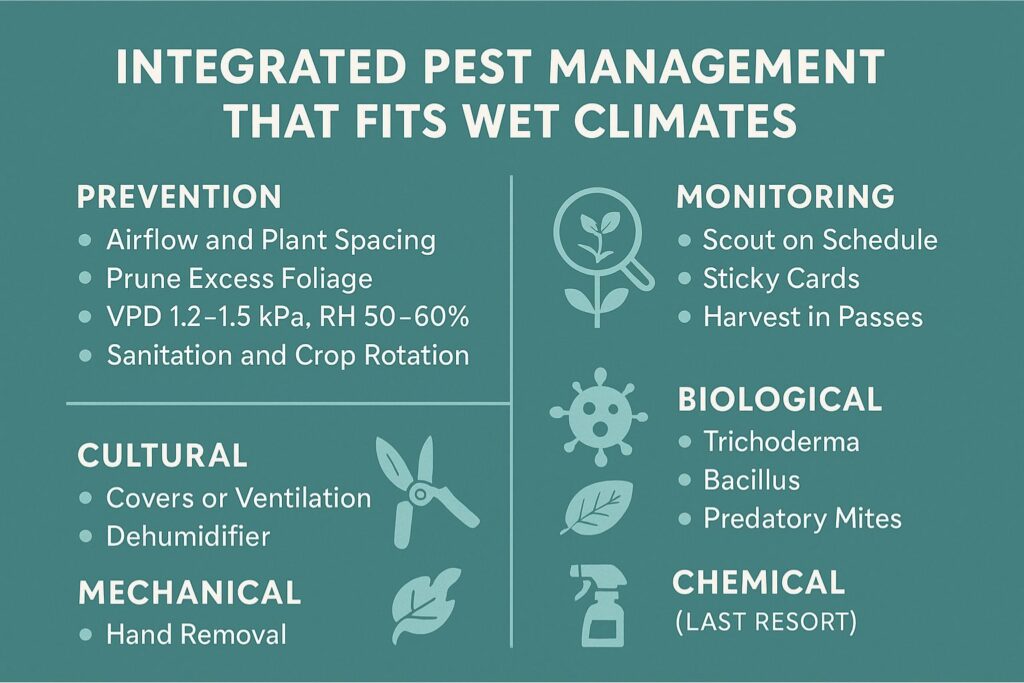
Integrated pest management as a rhythm, not a reaction
My integrated pest management plan is a weekly routine. I scout, I record, and I act before thresholds are broken. Integrated pest management for me includes sanitation, airflow, biologicals, and cultural controls. When integrated pest management is routine, fewer emergency sprays are needed during flower.
Clean starts and germination techniques
Pathogens often hitchhike into the garden during propagation. I use consistent germination techniques that favor strong starts and clean media:
- Pre-soak seeds for 12–18 hours in clean water with a touch of peroxide.
- Paper towel or plugs at 25°C with gentle airflow.
- Plant as soon as the radicle appears and avoid overwatering starters.
- Provide 200–250 PPFD and 70–75% RH for the first week.
Good germination techniques reduce damping-off and set the clock for autos. Clean, vigorous seedlings enter veg ready to handle high humidity cannabis swings.
Biological allies and mechanical sanitation
I introduce beneficial microbes to the root zone and release predatory mites in veg when needed. I rotate sticky traps and vacuum fungus gnats around drains. I sterilize shears between plants and keep floors dry. None of these steps alone will prevent bud rot, but together they keep pressure down so flowers don’t become triage units in late September.
Defoliation and training that aid airflow
I defoliate with intention. Autos get a light touch—removal of the lowest leaves and any fan leaves plastered against developing buds. Photoperiods get a heavier clean-up: lollipopping the bottom third and clearing large fans in the canopy’s heart. I combine this with low-stress training to widen tops. Wider, flatter plants dry faster and help prevent bud rot during high humidity cannabis nights.
Scheduling: Finishing Before The Worst Weather
The two-wave method
I run two waves every year:
- Wave 1: Autoflower cannabis seeds started in late spring, harvested in mid to late summer.
- Wave 2: Fast photoperiods vegged under controlled light and moved outdoors or under hoops to finish before the longest rains.
The mixed canopy of autos and fast photoperiods, selected from mold resistant cannabis strains and feminized seeds, is my strongest calendar defense. Each part of the plan exists to prevent bud rot by reducing time-in-risk.
Harvesting in passes
I harvest colas as soon as they are mature. Waiting for the lowest buds to catch up invites moisture into the densest flowers. Harvesting in passes is slower, but it helps prevent bud rot when storms stack up.
Post-Harvest: Where Many Good Grows Are Lost
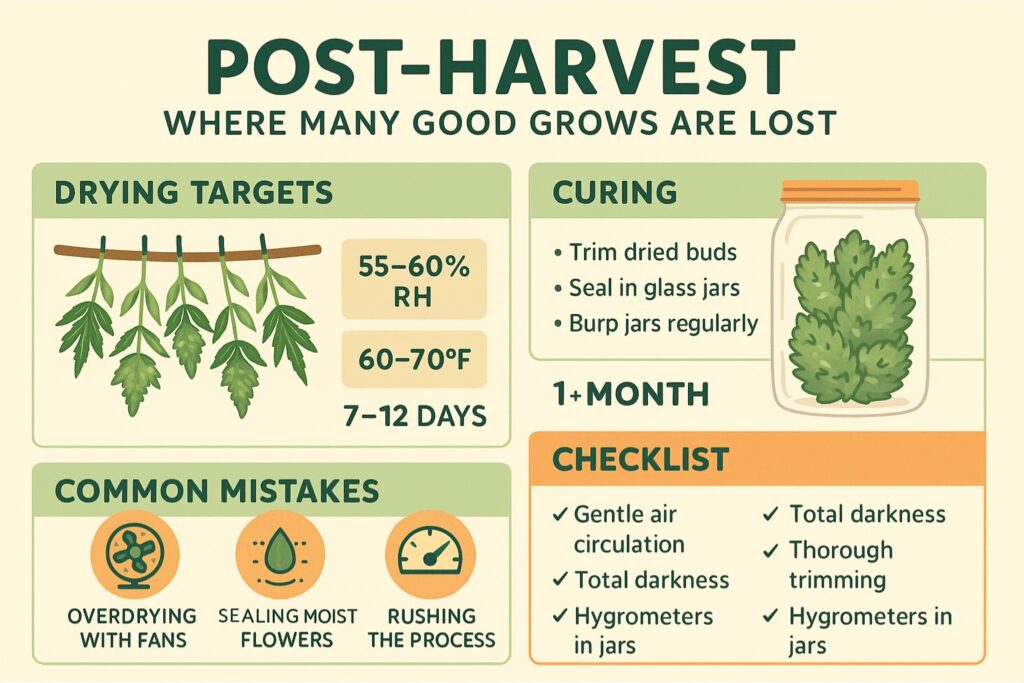
Drying parameters
I dry at 16–18°C and 55–60% RH with gentle cross-breeze. Darkness is non-negotiable. Dense branches are spaced so air can move freely. I know I’m winning when the room smells like fresh resin rather than wet hay. These steps mirror the same discipline I used in the garden and continue the mission to prevent bud rot.
Curing and storage
Once small stems snap but don’t shatter, I trim and jar at 58–62% RH. I burp daily for two weeks, then weekly for a month. I never store near damp basements or hot attics. Clean jars are the final proof that every previous choice served one purpose: prevent bud rot.
Buying Seeds and Planning Logistics
I purchase from reputable seed banks with clear lineage and honest descriptions. I plan shipping a month ahead so I can run my germination techniques on schedule. When choosing between autos and photos, I think in terms of structure, finish time, and how each line performed under high humidity cannabis conditions in prior seasons. I also check regional grow laws to make sure my plans align with local regulations.
Checklists You Can Print
Daily checklist during risky weeks
- Confirm VPD cannabis range is on target.
- Verify PPFD for cannabis at canopy height.
- Inspect fans and vents; clear any blockages.
- Scout for pests and lesions; log observations.
- Remove wet leaves and debris from the floor.
- Adjust irrigation timing to morning.
- Open hoop sides or greenhouse vents when safe.
Pre-harvest checklist
- Confirm trichome maturity and weather window.
- Stage racks, clean shears, and sanitize tables.
- Prepare the dry room: temp, RH, airflow.
- Plan for passes rather than a single harvest day.
These repeatable steps keep me calm and help me prevent bud rot when pressure is highest.
FAQ: Straight Answers For Wet Climates
How do I prevent bud rot if my region is always damp?
Run two waves of plants, choose mold resistant cannabis strains and feminized seeds, manage a tight VPD cannabis range, and harvest in passes. Covers and airflow matter more than any single spray.
Are autoflower cannabis seeds better than photos for rain belts?
Neither is universally better, but autoflower cannabis seeds create predictable finish dates that often sidestep storms. I combine autos with fast photos to diversify outcomes and prevent bud rot.
What PPFD for cannabis should I use indoors before moving outside?
Keep seedlings at 200–300 PPFD for cannabis, veg at 450–650 PPFD for cannabis, and push to 750–1,000 PPFD for cannabis in flower if heat and CO₂ allow. Strong, compact plants resist moisture better.
Do germination techniques really affect late-season mold?
Yes. Clean, vigorous starts from solid germination techniques develop thicker cuticles and stronger structure. Weak seedlings become crowded, shaded plants—conditions that do not prevent bud rot.
Soil vs hydro for weed: which is safer when electricity is unreliable?
Soil is safer due to its buffer, while hydro and heavy coco reward precision and stable power. I often choose a soil vs hydro for weed hybrid: living soil with coco for drainage.
Can I rely solely on integrated pest management to stop mold?
IPM is essential, but it’s one pillar. Integrated pest management lowers pest stress and keeps foliage healthy, which contributes to airflow and resilience. Combine IPM with climate control and genetics to truly prevent bud rot.
How often should I mention indica sativa hybrid when planning a garden?
Often enough to remember structure diversity. An indica sativa hybrid mix helps you spread risk across bud density, height, and finish time, all of which help prevent bud rot.
Closing Thoughts From A Damp-Sky Grower
Every technique in this article is built around a single goal: prevent bud rot. Start with seeds that tilt the field—feminized seeds from mold resistant cannabis strains and a mix of autoflower cannabis seeds and fast photos. Stage plants with the discipline of integrated pest management and the math of the VPD cannabis range. Feed moderately, light appropriately with verified PPFD for cannabis, and make honest decisions about soil vs hydro for weed. Keep your germination techniques clean, your canopy airy, and your harvest flexible.
High humidity cannabis seasons will always test us, but a thoughtful plan transforms that pressure into routine. With the right seeds and practices, you can prevent bud rot and bring home clean jars, year after year.
