Why Feeding Style Should Shape Your Seed Choice
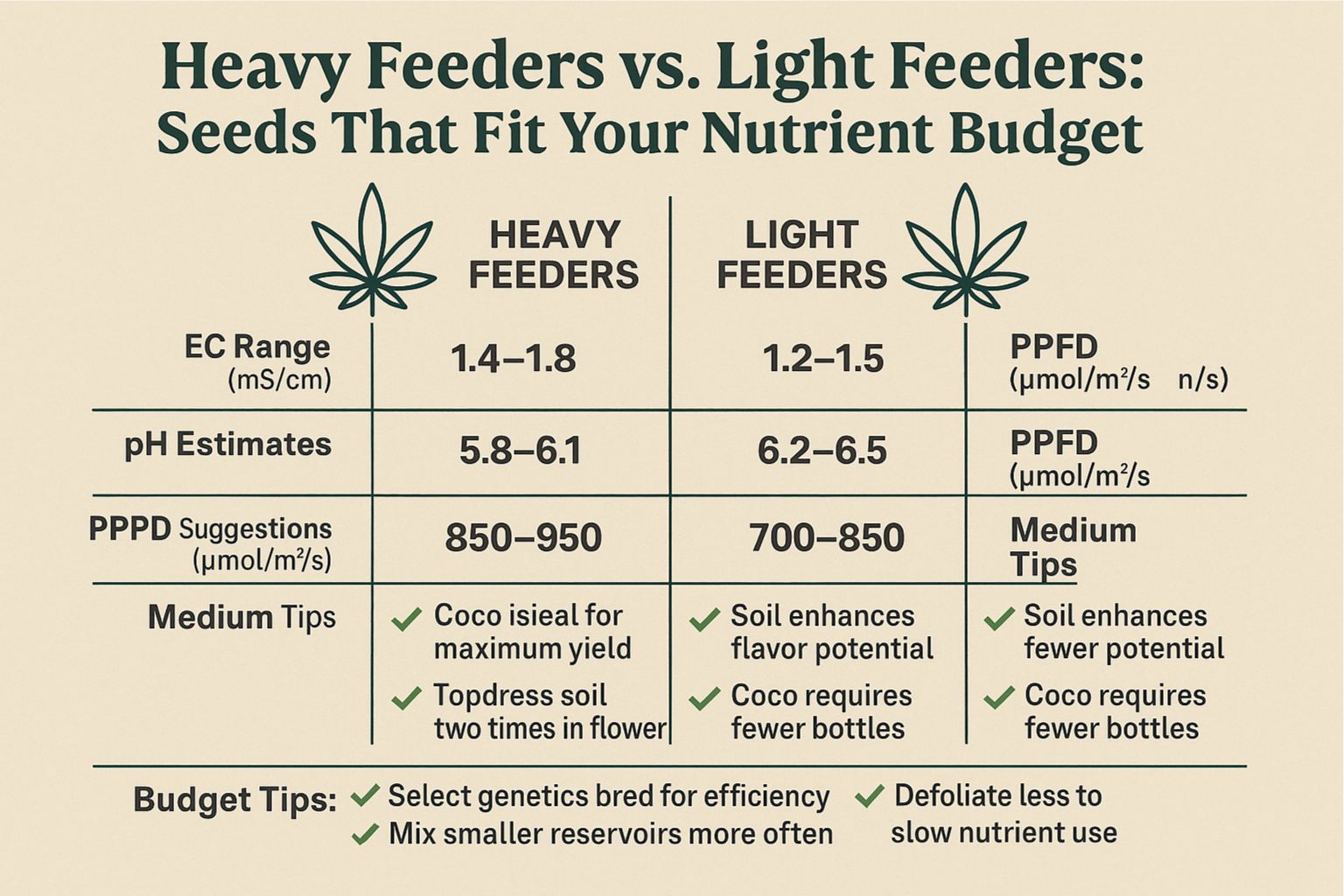
Across dozens of runs, the single decision that most influenced my costs wasn’t the light brand or the pot type—it was picking seeds that fit your nutrient budget. Some cultivars are true heavy feeders, hungry for higher EC and frequent irrigation. Others stay petite, stack resin without big bottles, and hardly nudge the PPM meter. When I matched genetics to my wallet and workflow, I cut waste, simplified mixing, and saw healthier canopies in every indoor grow tent I run.
This article breaks down how I classify heavy feeders vs. light feeders, the EC/PPM and pH windows I use, and specific cultivar families that consistently behave. I’ll share what worked in both organic soil vs coco, how I keep PPFD and VPD on target, and buying tips that protect germination rate and seed bank shipping quality. I’ll stay factual and avoid hype. Think of this as a cultivator’s field log cleaned up for publication.
How I Define Heavy vs. Light Feeding Behavior
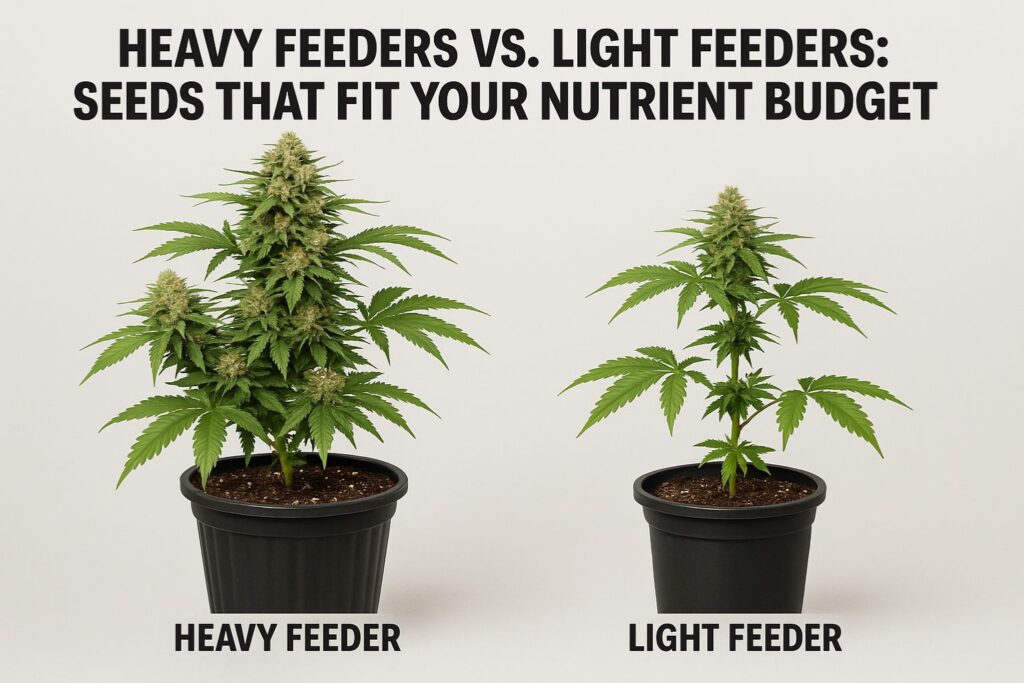
I evaluate feeding style using simple, repeatable observations:
- EC response
Heavy feeders keep leaves flat and praying at 1.6–1.9 mS/cm in bloom. Light feeders crisp at those numbers and look their best at 1.2–1.5 mS/cm. In veg, most heavy lines like 1.0–1.2; light lines prefer 0.7–0.9. - Runoff stability
If runoff EC stays within 0.2–0.4 of input for a week, I’m in range. If it rises fast, the plant isn’t using the salts—classic sign to back off. This is true in coco and, with some nuance, in living soil. - Leaf color and margins
Heavy feeders hold deep green longer without clawing. Light feeders show tip burn early, especially when PPFD is high. - Architecture and biomass
Big-framed cultivars with long petioles and thick stems often eat more. Compact cannabis plants are frequently modest eaters, though not always. - Dry-down speed
Heavy feeders in coco drain-to-waste often want daily irrigation; light feeders may prefer every 36–48 hours, especially in organic soil vs coco comparisons.
Environment Targets That Keep Both Types Honest
Lighting and DLI
- Veg PPFD: 300–450 µmol/m²/s
- Bloom PPFD: 800–950 µmol/m²/s for heavy feeders; 700–850 for light feeders
- DLI: 18–30 mol/day veg; 40–50 mol/day bloom
Climate and VPD
- Veg: 24–26°C, 58–65% RH, VPD 0.9–1.1 kPa
- Bloom: 24–26°C, 45–52% RH, VPD 1.2–1.5 kPa
Media and pH
- Coco DTW: pH 5.8–6.0, EC 0.8–1.1 veg, 1.4–1.8 bloom
- Living soil: irrigate at pH 6.2–6.6; topdress week three bloom; avoid bottled N late
These numbers apply in any indoor grow tent size. I’ve validated them with both feminized seeds and autoflower seeds, in quiet loft spaces and busier basements.
Heavy Feeders: Cultivar Families That Use What You Feed
I group heavy feeders by how they build canopies and how forgiving they are under higher EC. Each example is a genetic family you’ll find from multiple breeders. This is not medical or legal advice, and you should always respect regional grow laws where you live.
1) Cookies x Kush Hybrids
Why I classify them heavy
Thick midribs, medium internodes, eager lateral growth. They tolerate 1.7–1.8 EC in bloom in coco without tip burn if VPD stays on chart.
Lighting and training
They thrive at 850–950 PPFD under bar LEDs. I top once above node four and run a gentle SCROG or a tight stake ring in smaller pots. In my indoor grow tent notes, these hybrids repeatedly turned high PPFD into dense sites.
Medium notes
In organic soil vs coco, they’ll still eat: topdress a balanced bloom mix at week three, then add magnesium at week five. In coco I monitor runoff daily to keep salts from stacking.
Who should grow them
Intermediate cultivators chasing high THC strains and willing to mix feed every day. As feminized seeds they’re consistent; as autoflower seeds, keep EC lower and rely on LST.
-
Cookies Kush Cannabis Seeds
Cookies Kush Cannabis Seeds carry the secret to cultivating a …From: $24.99 BUY NOW This product has multiple variants. The options may be chosen on the product page
2) Wedding Cake Family
Why I classify them heavy
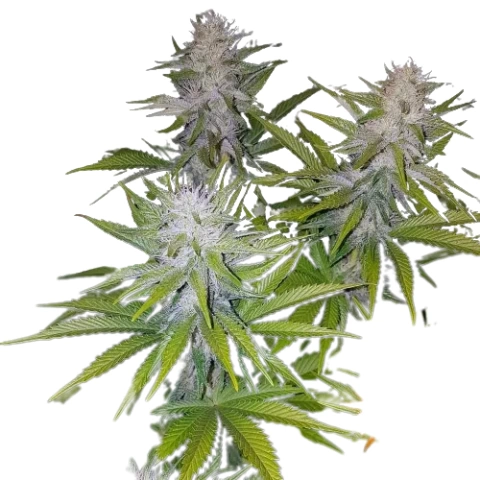
Sturdy stems and aggressive bulking from week four forward. They like calcium and can drink more than most lines at the same PPFD.
Lighting and training
Run 850–900 PPFD in bloom. Top once and remove only leaves shading major sites. In my data, they respond to consistent 1.6 EC with slow taper late.
Medium notes
They shine in coco where daily irrigation keeps cations mobile. In soil, maintain even moisture and avoid late nitrogen.
Who should grow them
Growers who want reliable high THC strains and don’t mind a little bottle math. Great for a 2×4 or 3×3 indoor grow tent.
-
Wedding Cake Cannabis Seeds
Bursting with rich, sweet flavors and a complex terpene profile, …From: $24.99 BUY NOW This product has multiple variants. The options may be chosen on the product page
3) Gorilla Glue Short-Frame Selections
Why I classify them heavy
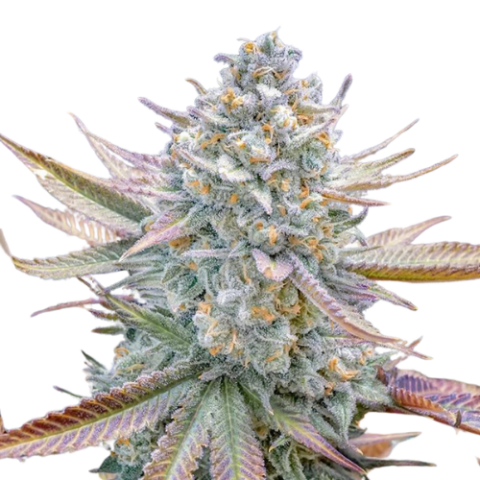
Even the compact selections stack resin and ask for more K late bloom. They’ll tolerate 1.7 EC but punish low RH with fox tails.
Lighting and training
Keep PPFD 800–900 and VPD 1.2–1.4 kPa. I use stakes instead of screens for easier harvest.
Medium notes
Coco does best with 15–20% runoff; in soil, reduce nitrogen after week four.
Who should grow them
Run them when you’re ready to dial airflow and humidity. Excellent yield potential per square foot.
-
Gorilla Glue Cannabis Seeds
Much like nature’s own adhesive masterpiece, Gorilla Glue cannabis seeds …From: $24.99 BUY NOW This product has multiple variants. The options may be chosen on the product page
Light Feeders: Cultivar Families That Respect Small Budgets
Light feeders aren’t weak—they’re efficient. They’re the seeds that fit your nutrient budget when money or time is tight, or when you like the simplicity of a mellow reservoir.
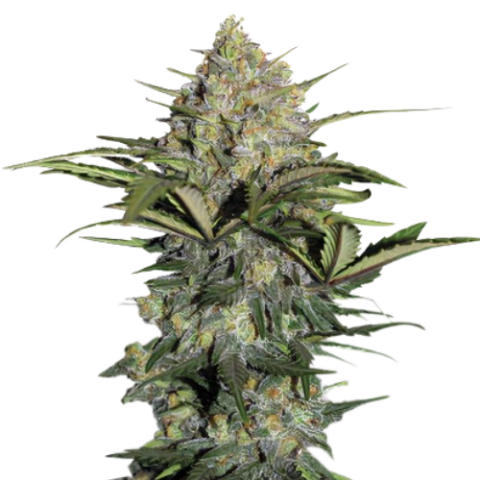
1) Northern Lights Short Stack
Why I classify it light
Compact cannabis plants with modest stretch and a calm appetite. Sweet spot in bloom is 1.3–1.5 EC in coco and a single topdress in soil.
Lighting and training
800–850 PPFD in bloom. Top once and tuck. This line is among the most beginner-friendly strains I’ve run. It’s also a great choice where regional grow laws limit plant counts and visibility.
Medium notes
In organic soil vs coco, both succeed. Soil delivers flavor; coco adds a touch of yield.
-
Northern Lights Cannabis Seeds
Northern Lights cannabis seeds, akin to tranquil celestial guides, harbor …From: $24.99 BUY NOW This product has multiple variants. The options may be chosen on the product page
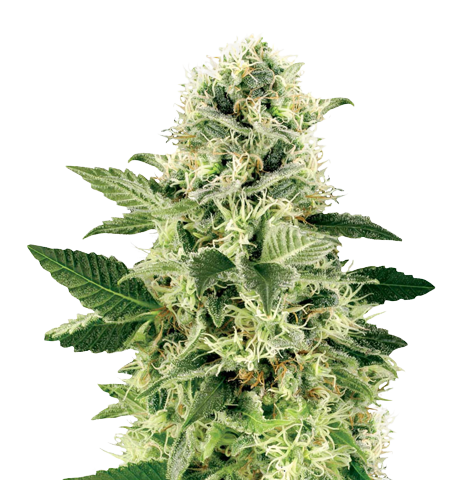
2) Skunk x Afghani Compact
Why I classify it light
Short nodes, symmetrical branching, and early ripening. It doesn’t need heavy EC to densify.
Lighting and training
750–850 PPFD. I keep the canopy flat with limited defoliation. As feminized seeds, they’re predictable in small tents.
Medium notes
Coco at 1.4–1.6 EC is plenty; in soil, topdress once mid-bloom.
-
Afghan Skunk Cannabis Seeds
Afghan Skunk cannabis seeds offer a harmonious blend of earthy …From: $24.99 BUY NOW This product has multiple variants. The options may be chosen on the product page
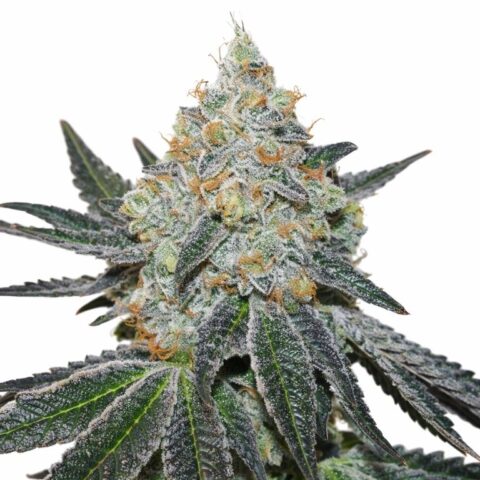
3) Blueberry Auto and Related Autos
Why I classify them light
Autoflower seeds like consistency, not high EC spikes. They shine at 1.2–1.4 EC and 700–800 PPFD in 20/4 light cycles.
Lighting and training
No topping. Gentle bends and soft ties only. Autos respond well to even, moderate intensity.
Medium notes
Coco gives more control; soil gives richer aroma with minimal bottle use.
-
Blueberry Cannabis Seeds
Blueberry cannabis seeds promise a journey into tranquility, producing plants …From: $24.99 BUY NOW This product has multiple variants. The options may be chosen on the product page
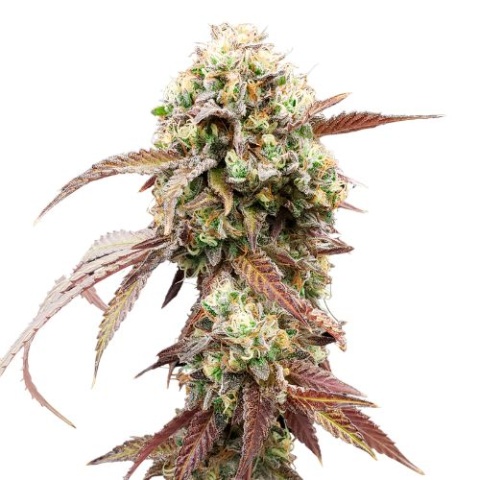
4) CBD-Forward Hybrids
Why I classify them light
CBD-dominant lines often eat modestly yet still produce clean, resinous flowers. They are the most polite options for shared buildings.
Lighting and training
700–850 PPFD, simple LST or a single top. Ideal for growers who want calm canopies and lower input costs.
Medium notes
Soil with mulch fits their temperament. Keep irrigation pH around 6.4.
-
CBD Haze Cannabis Seeds
CBD Haze Cannabis Seeds promise a harmonious fusion of therapeutic …From: $24.99 BUY NOW This product has multiple variants. The options may be chosen on the product page
Where Feeding Style Meets Media: Organic Soil vs Coco
I rotate between both systems to match my schedule and the seeds that fit your nutrient budget.
Organic soil
- Pros: buffers mild mistakes, excellent flavor, low daily workload
- Cons: slower corrections, EC tracking is more art than math
- Best for: light feeders, beginner-friendly strains, and patios or balconies
Coco drain-to-waste
- Pros: rapid correction, easy to quantify with EC/PPM, faster vegetative growth
- Cons: daily irrigation, salt management, more bottles
- Best for: heavy feeders, high THC strains, and precise indoor grow tent runs
My pH anchors
- Soil irrigations at 6.2–6.6, occasional 6.8 if calcium is lagging
- Coco irrigations at 5.8–6.0, rarely above 6.1 to avoid lockouts
Training Methods That Extend Your Budget
Training and canopy shape change how much feed gets used.
SCROG for heavy feeders
- Two to four plants per 3×3
- Screen 8–10 inches above pots
- Flip at 70–80% screen fill
- Even tops convert extra PPFD into bud mass efficiently—worth the extra nutrients
SOG for light feeders
- More plants, smaller pots, short veg
- One central cola per plant
- Less biomass means less fertilizer consumed per day
- Works well when regional grow laws allow adequate plant counts
Feeding Schedules I Actually Use
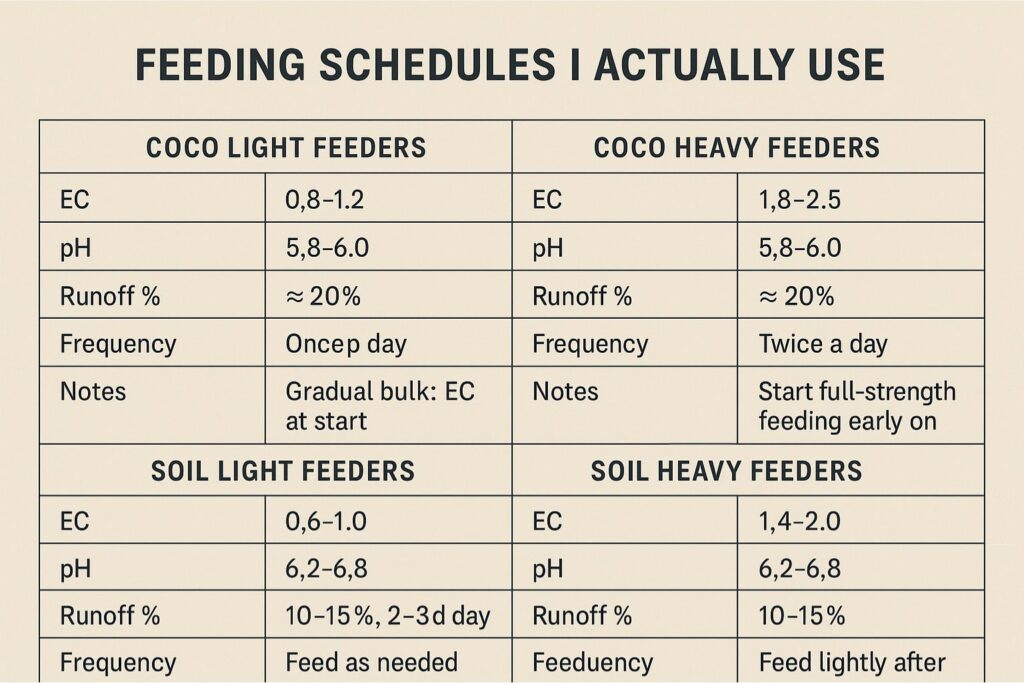
Light feeders in coco
- Veg EC 0.8–1.0, pH 5.8–6.0
- Bloom EC 1.3–1.5 with 10–15% runoff
- Magnesium boost only if leaf interveins pale
Heavy feeders in coco
- Veg EC 1.0–1.2
- Bloom EC 1.6–1.8 until week six, then taper 0.2 per week
- Maintain runoff within 0.3–0.4 of input
Light feeders in soil
- Water every 2–3 days, 6.3–6.6 pH
- One topdress at week three bloom
- Optional light compost tea early flower
Heavy feeders in soil
- Two topdresses (week three and week five)
- Maintain soil moisture evenly to prevent nutrient swings
- Avoid overdoing nitrogen late bloom—watch tips and aroma
Budget Math: How Feeding Style Affects Total Cost
When I ran side-by-side 3×3 tents for eight weeks of bloom, the heavy-feeding hybrid consumed roughly 35–45% more nutrients by bottle volume than the light-feeding Northern Lights line. The heavy tent yielded more, but the cost per gram was similar because the light feeders used fewer inputs. If electricity or nutrients are expensive where you live, choose seeds that fit your nutrient budget before chasing maximum yield.
Buying Seeds With Feeding Style In Mind
Checklist before checkout
- Scan product pages for height, stretch, and feeding notes. Lines flagged as “vigorous” or “commercial” are often heavy feeders.
- Look for grower reviews mentioning EC and PPM, not just flavor. Hands-on notes are most valuable.
- Verify germination rate guarantees and replacement policies. Document your process with photos.
- Time seed bank shipping for mild weather; heat waves and freezing delays hurt viability.
- Confirm compliance with regional grow laws on plant counts and visibility if you plan to run SOG.
Feminized seeds vs. autoflower seeds for budget control
- Feminized seeds allow longer veg and precise training; you can shape canopies that fully use the photons you pay for.
- Autoflower seeds lock the timeline and often favor light feeders, which reduces daily nutrient demand.
Both categories can be seeds that fit your nutrient budget if you plan around their strengths.
Real-World Examples From My Log
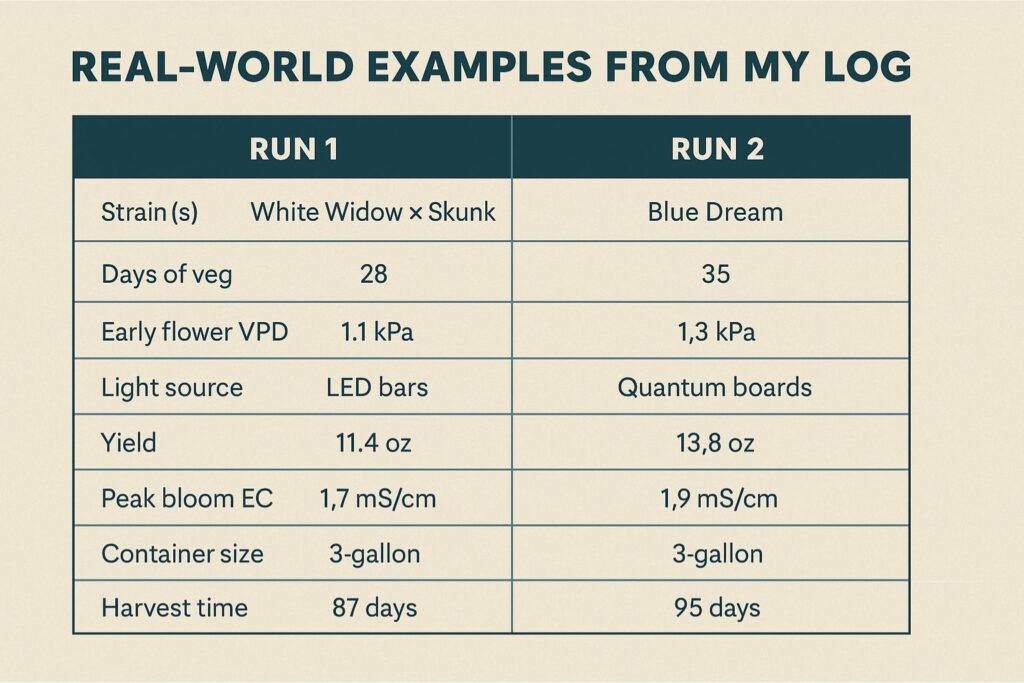
Example A: Heavy-feeding Cookies x Kush in coco
- Tent: 3×3 indoor grow tent under bar LEDs
- PPFD: 850–950; DLI 45–50
- EC: 1.6–1.7 bloom with 20% runoff
- Results: dense field of tops, strong aroma, more bottle use; excellent bag appeal
Example B: Light-feeding Northern Lights in living soil
- Tent: 2×4 with a dimmed quantum board
- PPFD: 750–825; DLI ~40
- Irrigation: pH 6.4 water, one mid-bloom topdress
- Results: calmer scent in small apartment, minimal cost, smooth cure
Frequently Asked Questions
What’s the quickest way to tell if a plant is a heavy or light feeder?
Watch runoff and tips. If input EC is 1.6 and runoff climbs past 2.0 within two days, you’re overfeeding. If tips stay pale at 1.4 and leaves don’t claw, you likely have a light feeder. Adjust in 0.2 EC steps.
Do high THC strains always mean heavy feeders?
No. Plenty of high THC strains perform at moderate EC when PPFD and VPD are on point. Feeding style is a trait, not a potency guarantee.
Are autos always light feeders?
Many autoflower seeds prefer lighter EC and consistent irrigation, but there are hungry autos. Start low and let the leaves tell the story.
How do I budget nutrients for a first run?
Select two beginner-friendly strains from the light-feeder list, buy small bottles, and track every mix volume. If the diary shows you used far less than expected, you picked seeds that fit your nutrient budget perfectly.
What if my tap water is hard?
Measure starting EC. If it’s above 0.4 mS/cm, consider filtration or nutrient lines designed for hard water. High calcium can skew pH stability in coco.
Can I switch a heavy feeder to a light regimen to save money?
You can, but be realistic. Hungry lines underfed in mid-bloom will stall and foxtail. If saving money is primary, start with genetics bred for efficiency.
Final Thoughts
Your best harvests won’t come from a generic chart—they come from aligning genetics with how much you want to mix, feed, and spend. Heavy feeders repay attention with bulky colas under strong light. Light feeders return quiet rooms, simple schedules, and lower costs. If you choose seeds that fit your nutrient budget, respect your indoor grow tent’s PPFD, and keep EC and pH within proven ranges in either organic soil vs coco, you’ll grow healthier marijuana with fewer surprises. Match traits to your reality, buy smart with germination rate and seed bank shipping in mind, respect regional grow laws, and let your plants show you that good weed doesn’t have to be expensive to raise.
