Table of Contents
Gupta Kush is a celebrated hybrid cannabis strain named after Dr. Sanjay Gupta, a renowned neurosurgeon and prominent advocate for cannabis research and reform. Known for its balanced effects and medicinal properties, Gupta Kush has gained recognition among both recreational and medical users. This document delves into the strain’s history, genetics, chemical composition, effects, medical applications, recreational uses, and scientific background.
Origins and Genetics
Gupta Kush is a hybrid strain that blends the genetics of two prominent cannabis varieties: Ghost OG and Blue Moonshine. A strain that combines the best qualities of its parent plants is the product of this combination, offering a balanced mix of indica and sativa effects. The exact ratio is typically 60% indica to 40% sativa, although this may vary slightly depending on the grower.
- Ghost OG: A classic indica-dominant strain known for its potent sedative effects and earthy, citrusy aroma. Ghost OG contributes to Gupta Kush’s relaxing properties and robust terpene profile.
- Blue Moonshine: A sativa-dominant strain recognized for its sweet, berry-like flavors and uplifting cerebral effects. It imparts a subtle euphoria and creativity to the hybrid.
Chemical Composition
Gupta Kush is noted for its complex cannabinoid and terpene profile, which contribute to its diverse effects.
- THC Content: Typically ranges from 18% to 24%, making it moderately potent and suitable for both novice and experienced users. The THC content ensures a balanced psychoactive experience.
- CBD Content: Generally low, around 0.1% to 1%. While not a significant source of CBD, it synergizes with THC to enhance therapeutic effects.
- Terpenes: The dominant terpenes in Gupta Kush include:
- Myrcene: Known for its sedative and relaxing properties.
- Limonene: Contributes to the strain’s uplifting and mood-enhancing effects.
- Caryophyllene: Offers anti-inflammatory benefits and interacts with the endocannabinoid system.
Appearance, Aroma, and Flavor
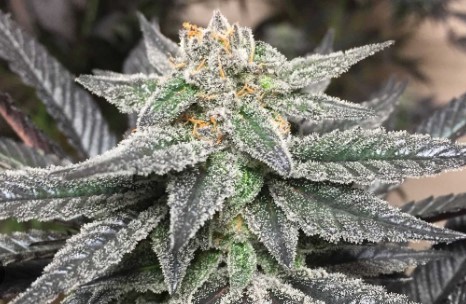
- Appearance: Gupta Kush buds are dense, medium to large in size, and feature a striking combination of green and purple hues. They are coated with a generous layer of trichomes, indicating high resin production, and accented by vibrant orange pistils.
- Aroma: The strain exudes a rich, earthy aroma with hints of citrus and pine. Notes of berry and sweetness from its Blue Moonshine lineage become more pronounced when the buds are broken apart.
- Flavor: When smoked or vaporized, Gupta Kush delivers a smooth, flavorful experience. Users report tastes of sweet berries, citrus, and a subtle pine undertone, making it a sensory delight.

Effects
Gupta Kush is revered for its balanced effects, making it versatile for different contexts and needs. Its onset is relatively fast, with effects that typically last 2 to 4 hours.

- Physical Effects:
- Deep relaxation and muscle relief.
- Mild sedation without overpowering drowsiness.
- Potential for easing tension and physical discomfort.
- Cerebral Effects:
- Uplifting and mood-enhancing properties.
- Increased focus and creativity.
- Mild euphoria that transitions smoothly into a calm state.
- Balanced Experience:
- Initial uplifting effects from its sativa lineage.
- Gradual transition to the calming and relaxing traits of its indica genetics.
Medical Applications
Gupta Kush’s therapeutic potential stems from its diverse cannabinoid and terpene profile, which interact with the body’s endocannabinoid system. Below are the key medical conditions for which Gupta Kush is commonly recommended:
- Chronic Pain Relief:
- Myrcene and caryophyllene contribute to its analgesic properties.
- Suitable for conditions like arthritis, fibromyalgia, and neuropathic pain.
- Stress and Anxiety Management:
- The calming effects of myrcene, combined with the mood-enhancing qualities of limonene, help reduce stress and anxiety levels.
- Provides a balanced experience without overwhelming sedation.
- Insomnia Treatment:
- Effective in promoting restful sleep, especially for individuals with difficulty falling or staying asleep.
- Best consumed in the evening for maximum efficacy.
- Appetite Stimulation:
- Useful for patients undergoing chemotherapy or suffering from conditions like anorexia and cachexia.
- Encourages healthy eating habits by increasing appetite.
- Mood Disorders:
- Helps alleviate symptoms of depression and dysthymia.
- Uplifting cerebral effects counteract negative thought patterns.
- Muscle Spasms and Cramps:
- Its anti-inflammatory and muscle-relaxant properties make it ideal for conditions like multiple sclerosis and restless leg syndrome.
Recreational Uses
Gupta Kush is equally popular among recreational users for its versatile effects and pleasant flavor profile. Common recreational uses include:
- Social Settings:
- The uplifting cerebral effects make it suitable for gatherings, fostering light-hearted conversation and laughter.
- Enhances sociability without causing paranoia.
- Creative Activities:
- Inspires creativity and focus, making it a favorite among artists, writers, and musicians.
- Relaxation:
- Perfect for relaxing after a demanding day.
- Offers a soothing experience without rendering the user completely couch-locked.
- Enhanced Experiences:
- Improves sensory perception, making activities like music listening, movie-watching, or nature walks more enjoyable.
Cultivation Information
Optimal Growing Environment

- Light Cycles:
- Vegetative Stage: Gupta Kush thrives under a light schedule of 18-24 hours of light per day. The blue spectrum of light (400-500 nm) encourages healthy leaf and stem development.
- Flowering Stage: Switch to a 12/12 light cycle (12 hours light, 12 hours dark). Red spectrum light (620-750 nm) promotes robust flowering and resin production.
- Temperature and Humidity:
- Temperature Range: Ideal temperatures are between 70-80°F (21-27°C) during the day and 65-70°F (18-21°C) at night.
- Humidity Levels:
- Vegetative stage: 50-70% relative humidity to support vigorous growth.
- Flowering stage: Gradually decrease to 40-50% to prevent mold and mildew on dense buds.
- Airflow:
- Proper ventilation and air circulation are crucial to prevent pests and mold. Oscillating fans and exhaust systems help maintain consistent air quality and temperature.
Nutritional Requirements
- Macronutrients:
- Nitrogen (N): Required in higher quantities during the vegetative stage for healthy foliage development.
- Phosphorus (P): Critical during the flowering stage to enhance bud growth and resin production.
- Potassium (K): Supports overall plant health and increases resistance to stress.
- Micronutrients:
- Calcium, Magnesium, and Iron: Essential for enzymatic functions and photosynthesis. Deficiencies can lead to yellowing leaves and poor bud development.
- pH Levels:
- Soil: Maintain a pH of 6.0-7.0 for optimal nutrient absorption.
- Hydroponic Systems: A slightly acidic pH of 5.5-6.5 is ideal.
Growth Mediums
- Soil Cultivation:
- Use nutrient-rich, well-aerated organic soil for easy nutrient management and a robust terpene profile.
- Amending with compost, worm castings, or bat guano enhances microbial activity and plant growth.
- Hydroponics:
- Ideal for growers seeking precise control over nutrient delivery.
- Gupta Kush responds well to Deep Water Culture (DWC) and nutrient film technique (NFT) systems, with faster growth rates and larger yields compared to soil.
- Coco Coir:
- A hybrid option offering the best of both soil and hydroponic systems. Its excellent drainage and aeration promote healthy root systems.
Pruning and Training Techniques
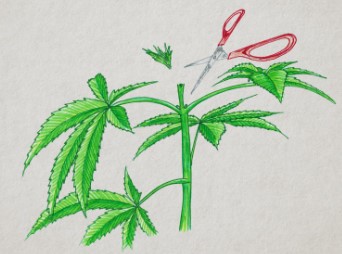
- Low-Stress Training (LST):
- To increase light exposure and produce an equal canopy, bend and tie down branches. This technique prevents tall, uneven growth and encourages lateral bud development.
- Screen of Green (ScrOG):
- A net or screen is used to spread out the plant canopy, optimizing light penetration and airflow for increased bud production.
- Defoliation:
- Removing excess fan leaves improves airflow and light distribution, especially in dense-growing plants like Gupta Kush.
Pest and Disease Management
- Common Pests:
- Spider Mites: Prevent infestations with neem oil or insecticidal soap.
- Fungus Gnats: Use sticky traps and maintain proper drainage to avoid overwatering.
- Mold and Mildew:
- Botrytis (Bud Rot): A significant risk due to Gupta Kush dense buds. Maintain low humidity and inspect regularly.
- Powdery Mildew: Prevent with sulfur-based sprays and ensure proper airflow.
- Integrated Pest Management (IPM):
- Beneficial insects like ladybugs and predatory mites can help control pests organically.
Harvesting and Post-Harvest Techniques
- Trichome Monitoring:
- Use a magnifying glass or microscope to check trichomes on buds. Harvest when most trichomes are cloudy with some amber-colored heads, indicating peak potency.
- Drying:
- Hang buds upside down in a dark room with 50% humidity and temperatures of 60-70°F (15-21°C). Slow drying preserves terpenes and cannabinoids.
- Curing:
- Place dried buds in airtight jars and open them daily to release excess moisture (burping). Proper curing enhances the strain flavor and potency.
Scientific Advances in Cultivation
- Tissue Culture Propagation:
- This advanced cloning method ensures genetic consistency and disease-free plants. Tissue culture is gaining popularity for preserving rare strains like Gupta Kush.
- LED Lighting:
- Modern full-spectrum LED lights provide precise wavelengths for each growth stage, improving energy efficiency and plant health.
- Microbial Inoculants:
- Beneficial bacteria and fungi, such as Trichoderma and mycorrhizal fungi, enhance nutrient uptake and root health.
- Precision Agriculture:
- Technologies like sensors and data analytics help monitor and optimize environmental conditions, ensuring consistent yields.
Scientific Insights
Gupta Kush’s effects are rooted in the interaction between its cannabinoids and terpenes and the body’s endocannabinoid system (ECS). The ECS plays a critical role in maintaining homeostasis, influencing functions such as mood, pain perception, appetite, and sleep.
- THC and CB1 Receptors:
- THC’s affinity for CB1 receptors in the brain contributes to its psychoactive effects and pain-relieving properties.
- Terpene Synergy:
- Myrcene enhances THC’s ability to cross the blood-brain barrier, amplifying its effects.
- Limonene interacts with serotonin receptors, promoting mood elevation.
- Caryophyllene’s unique ability to bind to CB2 receptors provides anti-inflammatory benefits without psychoactivity.
- Potential for Neuroprotection:
- Emerging research suggests that THC and other cannabinoids may have neuroprotective properties, which could make Gupta Kush a candidate for treating neurodegenerative conditions like Alzheimer’s and Parkinson’s.
Methods of Ingestion
- Inhalation (Smoking or Vaping):
- Mechanism: Through the lungs’ alveoli, THC and other cannabinoids are quickly absorbed and go straight into the bloodstream.
- Onset: Effects are felt within 1 to 5 minutes, as inhalation provides near-instant delivery to the brain.
- Duration: Effects last 2 to 4 hours, depending on dosage and individual metabolism.
- Advantages:
- Immediate relief, making it ideal for acute symptoms like pain or anxiety.
- Precise dosing by controlling the number of inhalations.
- Considerations:
- Combustion (smoking) produces harmful byproducts. Vaporizers, which heat cannabis without combustion, are a healthier alternative.
- Oral Consumption (Edibles and Capsules):
- Mechanism: Cannabinoids are metabolized in the liver, where delta-9-THC is converted into the more potent 11-hydroxy-THC.
- Onset: 30 minutes to 2 hours, as cannabinoids must pass through the digestive system.
- Duration: Effects last 6 to 8 hours, with a peak around 3 to 4 hours post-ingestion.
- Advantages:
- Long-lasting relief, beneficial for chronic conditions.
- Discreet and non-invasive consumption.
- Considerations:
- The chance of overconsumption rises with delayed commencement.
- Individual variability in liver metabolism (CYP2C9 enzyme activity) affects potency.
- Sublingual Administration (Tinctures, Oils, Sprays):
- Mechanism: Cannabinoids are absorbed through mucous membranes under the tongue, bypassing first-pass liver metabolism.
- Onset: 15 to 45 minutes.
- Duration: Effects last 3 to 6 hours.
- Advantages:
- Faster onset compared to edibles.
- Allows for precise dosing with a dropper or spray.
- Considerations:
- Might last a little less time than edibles.
- Topical Application:
- Mechanism: Cannabinoids interact with localized CB1 and CB2 receptors in the skin without entering the bloodstream.
- Onset: 15 to 30 minutes.
- Duration: Effects last 2 to 4 hours.
- Advantages:
- Non-psychoactive, as cannabinoids do not reach the brain.
- Ideal for localized relief from pain, inflammation, or skin conditions.
- Considerations:
- Limited to surface-level effects; not effective for systemic relief.
- Transdermal Patches:
- Mechanism: Cannabinoids penetrate the skin and enter the bloodstream for systemic effects.
- Onset: 30 minutes to 2 hours.
- Duration: Effects last 8 to 12 hours, depending on the patch design.
- Advantages:
- Consistent, controlled release over time.
- Convenient for sustained symptom management.
- Considerations:
- Patches are less common and may be costlier.
Factors Influencing Onset and Duration
- Bioavailability:
- Inhalation provides the highest bioavailability (~30%), followed by sublingual (~20-35%) and oral (~10-20%). Topicals have the lowest systemic bioavailability.
- Metabolism and Genetics:
- Genetic polymorphisms in the CYP450 enzyme family (notably CYP2C9) influence how THC is metabolized, leading to variability in onset and duration among individuals.
- Dosage and Potency:
- Higher THC content in Gupta Kush ensures stronger effects, but excessive doses can lead to prolonged and intense experiences, especially with oral ingestion.
- Individual Tolerance:
- Frequent cannabis users may experience a delayed onset and shorter duration due to receptor desensitization.
Scientific Explanation of Onset and Duration
- Inhalation Onset and Duration:
- Rapid onset occurs due to direct absorption into the bloodstream via the lungs.
- Shorter duration is caused by the quick redistribution of THC from the blood to fatty tissues.
- Oral Onset and Duration:
- The delayed onset is attributed to gastrointestinal absorption and first-pass liver metabolism.
- Prolonged duration results from the potent 11-hydroxy-THC metabolite, which has a longer half-life and increased blood-brain barrier permeability.
- Sublingual Onset and Duration:
- Faster onset is due to direct absorption into the systemic circulation, bypassing digestive metabolism.
- Duration is intermediate because some cannabinoids eventually undergo liver metabolism.
Recommendations for Use
- For Quick Relief:
- Inhalation methods (vaping or smoking) are most effective for rapid symptom management.
- Sublingual tinctures offer a compromise between speed and duration.
- For Long-Lasting Effects:
- Oral consumption (edibles or capsules) is ideal for conditions requiring extended relief, such as chronic pain or insomnia.
- Transdermal patches provide sustained and controlled delivery for systemic effects.
- For Localized Issues:
- Topicals are perfect for targeting specific areas without psychoactive effects.
Potential Side Effects by Ingestion Method
- Inhalation:
- Dry mouth, throat irritation, or coughing.
- Short-term dizziness or anxiety, particularly in THC-sensitive individuals.
- Oral:
- Overconsumption risk because of delayed onset.
- Longer psychoactive effects may interfere with daily activities if not dosed appropriately.
- Sublingual:
- Mild burning or irritation under the tongue in rare cases.
- Subtle taste, which may not appeal to all users.
- Topical/Transdermal:
- Minimal side effects, typically limited to localized skin irritation.
Potential Side Effects
While Gupta Kush is generally well-tolerated, some users may experience mild side effects, especially when consumed in high doses:
- Dry mouth and dry eyes.
- Dizziness or lightheadedness.
- Mild paranoia or anxiety (rare, usually in THC-sensitive individuals).
Proper dosing and hydration can mitigate most side effects.
Consumer Reviews and Feedback
Users often praise Gupta Kush for its balanced effects and versatility. Common themes in reviews include:
- “Perfect for unwinding after work without feeling overly sedated.”
- “Great for relieving chronic back pain while keeping my mind clear.”
- “The flavor profile is amazing—sweet, earthy, and citrusy.”
- “Ideal for a relaxed, creative evening.”
Conclusion
Gupta Kush stands out as a versatile hybrid strain that combines the best traits of its parent plants, Ghost OG and Blue Moonshine. Its balanced effects make it suitable for both medical and recreational use, offering relief from various conditions while enhancing creativity and relaxation. With its rich chemical profile and pleasant sensory attributes, Gupta Kush continues to be favored by both medical patients and cannabis aficionados. Whether you’re seeking therapeutic benefits or a flavorful recreational experience, Gupta Kush is a strain worth exploring.
For a complete directory of cultivars, visit our Cannabis Strain Reviews.
