Table of Contents
The Grape Kush cannabis strain is a hybrid that combines the renowned Kush genetics with a fruity, aromatic flavor profile that includes grape, berry, and earthy undertones. It is particularly favored by consumers who appreciate both potent effects and flavorful experiences. Known for its relaxing and soothing effects, Grape Kush has become a popular choice for both recreational and medical users. This detailed overview will provide an in-depth analysis of the Grape Kush cannabis strain, covering its genetics, effects, flavor profile, medical benefits, and recreational uses. Additionally, we will examine the scientific basis for these properties and provide some background information about the strain’s history.
Genetic Origins
Grape Kush is a hybrid strain, most commonly the result of crossing Purple Kush with OG Kush. Both of these parent strains are renowned for their high THC content and potent effects, which are passed down to their offspring in Grape Kush. The exact genetic lineage can vary depending on the breeder, but the strain typically has a roughly equal balance of Indica and Sativa characteristics.
- Purple Kush: An Indica-dominant strain, Purple Kush contributes its deeply relaxing and sedative properties to Grape Kush, along with a distinctly fruity and sweet flavor profile.
- OG Kush: OG Kush is a balanced hybrid that offers strong cerebral effects alongside a relaxing body high. The earthy, pine, and citrus flavors of OG Kush are often passed down to its offspring, contributing to the complex flavor profile of Grape Kush.
The combination of these two powerful strains results in Grape Kush’s signature effects, which are both calming and mood-enhancing.
Appearance
Grape Kush buds are typically medium to large in size and have a dense, compact structure characteristic of Kush strains. The buds are often a mixture of dark green and purple hues, with orange pistils weaving through the flowers. The trichome coverage is also impressive, giving the buds a frosty appearance, which indicates high THC levels. The purple coloring is most visible when the plant is exposed to cooler temperatures toward the end of its flowering cycle, making it visually striking.
Aroma and Flavor Profile
The aroma of Grape Kush is one of its standout features. Upon opening a jar of Grape Kush, consumers are greeted with a distinct sweet, fruity, and slightly tart grape scent, often accompanied by earthy and piney undertones. The sweetness and berry notes are prevalent, evoking the smell of fresh grapes or berry candy, with a subtle hint of diesel and skunk that hints at its Kush lineage.
When smoked or vaporized, Grape Kush has a smooth, rich flavor that mirrors its aroma. The grape flavor comes through strongly, balanced with earthy, herbal undertones and a slightly pungent aftertaste, reminiscent of OG Kush. The overall flavor experience is often described as sweet and relaxing, adding to its appeal among recreational users.
THC and CBD Content
Grape Kush is known for its relatively high THC content, typically ranging between 18% and 24%. This makes it a potent strain that delivers powerful effects, particularly in terms of relaxation and euphoria. Its CBD content is relatively low, generally between 0.1% and 1%, which means that while it may offer some medicinal benefits, its primary effects are driven by THC.

This THC-to-CBD ratio is what makes Grape Kush most appealing for recreational use, as well as for certain medical conditions where a higher THC content is desired. However, the strain’s low CBD content may make it less effective for patients who rely on CBD for conditions such as epilepsy or chronic pain management.
Effects
Recreational Effects
Grape Kush is best known for its relaxing and euphoric effects, which make it a favorite among recreational users. The strain offers a balanced high that combines mental stimulation with physical relaxation. The effects tend to be more pronounced in the body, with a deep, calming sensation that melts away tension and stress. At the same time, the cerebral effects provide a gentle uplift in mood, leading to feelings of happiness and well-being.
Common recreational effects include:
- Euphoria: Users often experience a strong sense of euphoria, leading to a mood boost and a sense of overall well-being.
- Relaxation: The deep body relaxation is one of the key effects of Grape Kush, making it ideal for unwinding after a long day.
- Mild sedation: While Grape Kush does not typically induce full-on couch-lock, it can lead to a state of sedation, particularly when consumed in larger doses.
- Increased creativity: Some users report feeling more creative or introspective while under the influence of Grape Kush, although this effect is less pronounced than with more Sativa-dominant strains.
- Hunger: As with many Kush strains, Grape Kush may cause an increase in appetite, making it suitable for those who are looking to alleviate nausea or stimulate their appetite.
The strain’s effects are usually felt within minutes of consumption, and the high typically lasts for several hours, depending on the dose.
Medical Effects
Grape Kush is used by many medical marijuana patients for its combination of relaxing and euphoric effects, making it suitable for a variety of conditions. Its high THC content is useful for those who need a potent strain to address specific symptoms, particularly pain and anxiety.

Medical benefits include:
- Chronic Pain Relief: The body relaxation induced by Grape Kush makes it effective for those suffering from chronic pain, muscle spasms, or inflammation. It can provide relief without being overly sedative.
- Stress and Anxiety Reduction: The euphoric, uplifting effects of Grape Kush can help alleviate symptoms of stress, anxiety, and mild depression. However, its potency should be considered, as it may induce paranoia or anxiety in sensitive individuals.
- Insomnia and Sleep Disorders: Due to its relaxing and sedative qualities, Grape Kush is an effective choice for those with insomnia or sleep-related issues. It can help users unwind and achieve restful sleep, especially when consumed in higher doses.
- Nausea and Appetite Loss: As with many other strains of cannabis, Grape Kush can stimulate appetite, making it beneficial for patients dealing with conditions that result in loss of appetite, such as cancer treatment or severe illness. Additionally, it can alleviate nausea and vomiting, particularly for those undergoing chemotherapy.
- Muscle Tension and Cramps: The muscle-relaxing properties of Grape Kush can help relieve muscle cramps, tension, and spasms, making it a useful strain for people with conditions such as fibromyalgia or multiple sclerosis.
While Grape Kush is effective for many medical conditions, it may not be suitable for patients with certain mental health conditions, particularly those who are prone to panic attacks or have a history of psychosis. The potency of the THC in Grape Kush can sometimes lead to heightened anxiety or paranoia in sensitive individuals.
Cultivation
The cultivation of cannabis, especially hybrid strains like Grape Kush, involves a complex interplay of genetics, environmental factors, and cultivation techniques. Understanding the scientific aspects of growing Grape Kush can help maximize yields, optimize cannabinoid production, and improve overall plant health. Below, we’ll explore the key scientific principles behind the cultivation of Grape Kush, with an emphasis on its genetics, growth requirements, and best practices for maximizing its potential.
Genetic Considerations in Cultivation
Grape Kush is a hybrid strain, generally formed by crossing Purple Kush with OG Kush, both of which have distinct genetic traits. These genetic characteristics impact its growth patterns, cannabinoid production, and disease resistance. When cultivating Grape Kush, understanding the genetic inheritance can help breeders and growers optimize yields and cannabinoid profiles.
- Indica-Dominant Hybrid: Grape Kush typically exhibits more Indica-dominant traits, leading to a more compact growth structure. Indica plants are generally shorter and bushier, with dense buds that require careful attention to light and airflow to avoid mold and mildew.
- Kush Lineage: The Kush genetics contribute to Grape Kush’s robust resilience against pests and environmental stressors. OG Kush also provides potent THC production, which, when combined with Purple Kush, helps create a strain with significant trichome density and cannabinoid content.
By selecting and crossbreeding plants with desirable traits (e.g., high THC, resistance to pests), growers can produce seeds or clones that maximize Grape Kush’s full potential. Understanding these inherited characteristics allows growers to fine-tune their cultivation methods.
Environmental Factors
Cannabis plants, including Grape Kush, are highly sensitive to environmental conditions, and optimizing these factors is crucial for healthy plant growth and high yields. The following are the critical environmental considerations for Grape Kush cultivation:
a. Temperature and Climate
- Indoor Cultivation: Grape Kush grows well indoors under controlled conditions, with temperatures maintained between 65-80°F (18-27°C) at night and a little colder throughout the day. Indoor growers can control temperature fluctuations, humidity, and light intensity, creating the ideal environment for the plant to thrive.
- Outdoor Cultivation: Grape Kush prefers a Mediterranean climate, with warm temperatures and a consistent photoperiod. Outdoor cultivation should occur in regions with temperatures ranging from 70-85°F (21-29°C) during the day. Extreme heat or cold can stress the plant, affecting cannabinoid production and overall plant health. If grown outdoors, it should be harvested before the onset of cold weather.
Temperature fluctuations outside the ideal range can lead to stress, which in turn may cause slower growth, lower yields, or reduced resin production (trichomes).
b. Lighting Requirements
Cannabis plants are photoperiod-sensitive, meaning they require a specific amount of light exposure to flower properly. Understanding the plant’s lighting needs is essential for optimizing growth during the vegetative and flowering stages.
- Vegetative Stage: During the vegetative phase, Grape Kush requires 18-24 hours of light per day to promote healthy, vigorous growth. This can be achieved using high-intensity discharge (HID) lights, LED lights, or fluorescent bulbs, with many growers preferring the energy efficiency of LED lights.
- Flowering Stage: As the plant enters the flowering stage, the light cycle should be adjusted to 12 hours of light and 12 hours of darkness to trigger the flowering process. The dark period must be uninterrupted for optimal flower development.
Light intensity plays a critical role in cannabinoid production, with adequate light contributing to higher THC and terpene levels. Too much or too little light can stunt growth or affect bud formation.
c. Humidity and Airflow
Grape Kush, like most cannabis strains, is sensitive to humidity levels, especially during the flowering phase. Maintaining proper humidity levels helps prevent mold and mildew growth and promotes healthy resin production.
- Vegetative Stage: During the vegetative stage, Grape Kush thrives in 40-60% humidity. This allows for efficient nutrient uptake and healthy root development.
- Flowering Stage: When the plant enters flowering, humidity should be reduced to 40-50% to avoid excess moisture that could lead to bud rot, a common problem in dense, Kush-dominant plants.
Proper airflow and ventilation are also essential to reduce the risk of mold and mildew. Using fans or ensuring proper circulation helps maintain a healthy growing environment. Air circulation also ensures that the plant’s leaves receive adequate CO2, which is essential for photosynthesis and growth.
Soil and Growing Medium
The choice of growing medium is another scientific factor that impacts the health and growth of Grape Kush. Cannabis plants can be grown in soil or hydroponic systems, each with its advantages and considerations.
a. Soil Cultivation
- Soil is the most natural medium for cultivating cannabis, and it provides a rich environment that supports microbial life, which is essential for nutrient cycling. Grape Kush grows well in slightly acidic soil with a pH range of 6.0-6.5.
- Organic soil or super soil mixtures are popular for organic cannabis cultivation, as they provide a natural nutrient balance. These soils may contain a mixture of compost, perlite, vermiculite, and organic amendments like bat guano and worm castings.
b. Hydroponic Cultivation
- In hydroponics, cannabis is grown without soil, with its roots submerged in nutrient-rich water. This method allows for faster growth and higher yields because nutrients are more directly available to the plant. However, hydroponic systems require careful monitoring of pH, nutrient concentrations, and water quality.
- Grape Kush can thrive in hydroponic setups, but growers must be diligent in managing the water pH (typically 5.5-6.5) and nutrient levels to avoid nutrient lockout or deficiencies.
The scientific advantage of using hydroponics is the potential for enhanced THC and terpene production. However, it requires more expertise and attention compared to soil-based cultivation.
Nutrients and Feeding
Cannabis plants require a range of macronutrients and micronutrients to grow and produce cannabinoids. During the vegetative phase, plants need higher amounts of nitrogen (N) to promote healthy foliage growth. During the flowering stage, phosphorus (P) and potassium (K) are critical for optimal flower development and resin production.
- Nitrogen (N): Essential for the formation of leaves and stems during the vegetative stage. Too much nitrogen during flowering can result in excess vegetative growth and fewer flowers.
- Phosphorus (P): Essential for energy transfer within the plant, promoting strong root systems and flower production. Phosphorus is particularly important during the flowering phase.
- Potassium (K): Helps with the plant’s overall growth and health, and is particularly important in the later stages of flowering to promote large, resinous buds.
Micronutrients such as calcium, magnesium, iron, and zinc are also necessary for overall plant health, though they are needed in smaller quantities.
Organic fertilizers, like those used in soil cultivation, contain a natural mix of these nutrients. In hydroponic systems, growers often use specially formulated nutrient solutions to ensure that the plant receives the correct balance of elements.
Pruning and Training Techniques
To maximize yields and promote better light penetration, growers can employ various pruning and training techniques. These techniques help shape the plant, promote lateral branching, and improve airflow to the lower parts of the plant.
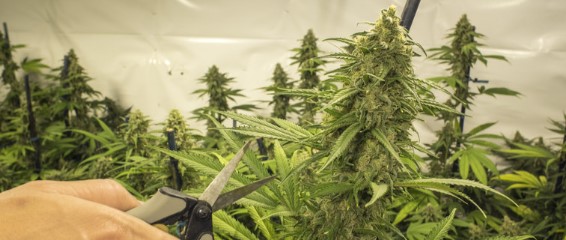
- Topping: Cutting off the top of the plant at an early stage to encourage side branching and bushier growth. This is especially useful for Grape Kush, which tends to grow dense, compact buds.
- Low-Stress Training (LST): Gently bending and tying down branches to allow more light to reach lower nodes. This results in a more even canopy and helps optimize bud development.
- Defoliation: The selective removal of large leaves that may block light from reaching bud sites, allowing more light penetration and airflow. However, excessive defoliation can stress the plant, so it should be done carefully.
Training methods, such as ScrOG (Screen of Green), are also effective for maximizing space and improving yields when cultivating indoors.
Harvesting and Post-Harvest Care
The timing of harvest is critical for obtaining the best quality buds with high THC levels. Trichomes (the resin glands on the buds) should be checked regularly. When most of the trichomes have turned from clear to milky, with some amber trichomes appearing, it’s generally the optimal time for harvest.
Drying and Curing: After harvesting, proper drying and curing are essential to preserve terpenes and cannabinoids. Hanging the buds upside down in a cold, dark, and well-ventilated place is recommended with a humidity of around 50-60% for 7-10 days. After drying, the buds should be cured in airtight jars, opened regularly to release excess moisture, and allow the buds to cure for several weeks to enhance flavor and potency.
Conclusion
Grape Kush is a versatile cannabis strain that offers a combination of relaxing and euphoric effects, making it suitable for both recreational and medical users. With its pleasant grape flavor, high THC content, and potent effects, it is widely appreciated by those seeking relief from chronic pain, insomnia, and anxiety. Its calming and sedative effects make it a popular choice for evening or nighttime use, and its ability to stimulate appetite makes it beneficial for patients dealing with nausea or loss of appetite.
While Grape Kush is a well-balanced hybrid, it is important to consider its potency, particularly for those who are sensitive to THC or new to cannabis. With proper cultivation and responsible use, Grape Kush can offer an enjoyable and therapeutic experience for both novice and experienced users.
For a complete directory of cultivars, visit our Cannabis Strain Reviews.
