Drying and Curing Your Cannabis Plants: A Comprehensive Guide
Introduction
The journey from seed to smokeable cannabis doesn’t end at harvest. Drying and curing are crucial post-harvest processes that determine the final quality, potency, and overall experience of your cannabis. These stages are often overlooked, but they are as important as growing and harvesting. Proper drying and curing preserve cannabinoids and terpenes, enhance flavor, and ensure a smooth, enjoyable smoke. This comprehensive guide will delve into the intricate details of drying and curing your cannabis plants to help you achieve the best possible results.
Harvesting Your Cannabis
Timing Your Harvest
The first step in the drying and curing process is harvesting your cannabis at the right time. This is determined by closely observing the trichomes on your plants. Trichomes are microscopic glandular structures that generate and accumulate terpenes and cannabinoids. They change color as the plant matures, providing a visual cue for the optimal harvest time.
- Clear Trichomes: At this stage, the trichomes are clear and indicate that the plant is still maturing. Harvesting now will result in less potent buds.
- Milky/Cloudy Trichomes: This stage indicates peak cannabinoid production. Most of the trichomes should be cloudy for the highest THC content.
- Amber Trichomes: As trichomes turn amber, THC degrades into CBN, which has a sedative effect. Harvesting at this stage can provide a more relaxing, body-heavy experience.
Harvesting Techniques
- Whole Plant Harvest: This involves cutting down the entire plant at the base. This method is straightforward and allows the plant to dry as a whole unit, which can slow down the drying process and help preserve terpenes.
- Branch-by-Branch Harvest: Cutting individual branches allows for more precise drying and better air circulation, reducing the risk of mold.
Drying Cannabis
Drying is the first post-harvest step, critical for reducing the moisture content of the buds to prevent mold and prepare them for curing. Proper drying preserves the integrity of cannabinoids and terpenes.
Setting Up the Drying Environment
Temperature and Humidity:
- Temperature: Maintain a temperature between 60-70°F (15-21°C). Too high, and you risk evaporating terpenes; too low, and drying will be too slow, increasing the risk of mold.
- Humidity: Aim for a relative humidity (RH) of 50-60%. This balance helps prevent over-drying and mold formation.
Airflow and Darkness:
- Airflow: Ensure good airflow using oscillating fans, but avoid direct airflow on the buds. Direct airflow can cause uneven drying and brittle buds.
- Darkness: Keep the drying area dark to protect the delicate terpenes and cannabinoids from degradation caused by light.
Hanging the Buds
- Hang Drying: Hang branches upside down on a line or hanger. Ensure there is enough space between branches for air circulation. Because of how easy and efficient this procedure is, it is recommended.
- Drying Racks: For smaller buds or if space is limited, use drying racks. Lay the buds out evenly, turning them occasionally to ensure even drying.
Monitoring the Drying Process
Drying typically takes 7-10 days, depending on environmental conditions and the size of the buds. Regularly check the buds for dryness. The outer leaves should feel dry to the touch, and smaller stems should snap rather than bend when the buds are ready for curing.
Trimming
After drying, it’s time to trim your buds. Trimming removes excess leaves, improving the appearance and quality of the final product.
Wet Trimming vs. Dry Trimming
- Wet Trimming: This involves trimming the sugar leaves immediately after harvest, before drying. Wet trimming can speed up the drying process and improve airflow around the buds. However, it can be more time-consuming and sticky.
- Dry Trimming: After the buds have dried, trim off the sugar leaves. Because the leaves shrivel and protrude less, this procedure may be simpler and less dirty. In addition, it delays the drying of the buds, protecting the terpenes.
Trimming Techniques
- Manual Trimming: Use sharp trimming scissors to carefully remove excess leaves. This method provides precision and preserves trichomes.
- Machine Trimming: For larger harvests, consider using a trimming machine. While faster, machine trimming can be less gentle on the buds, potentially knocking off trichomes.
Curing Cannabis
Curing is the final step that ensures the preservation of cannabinoids and terpenes, enhances flavor, and smooths the smoke. Properly cured cannabis can last for a year or more without significant loss of quality.
Selecting Containers
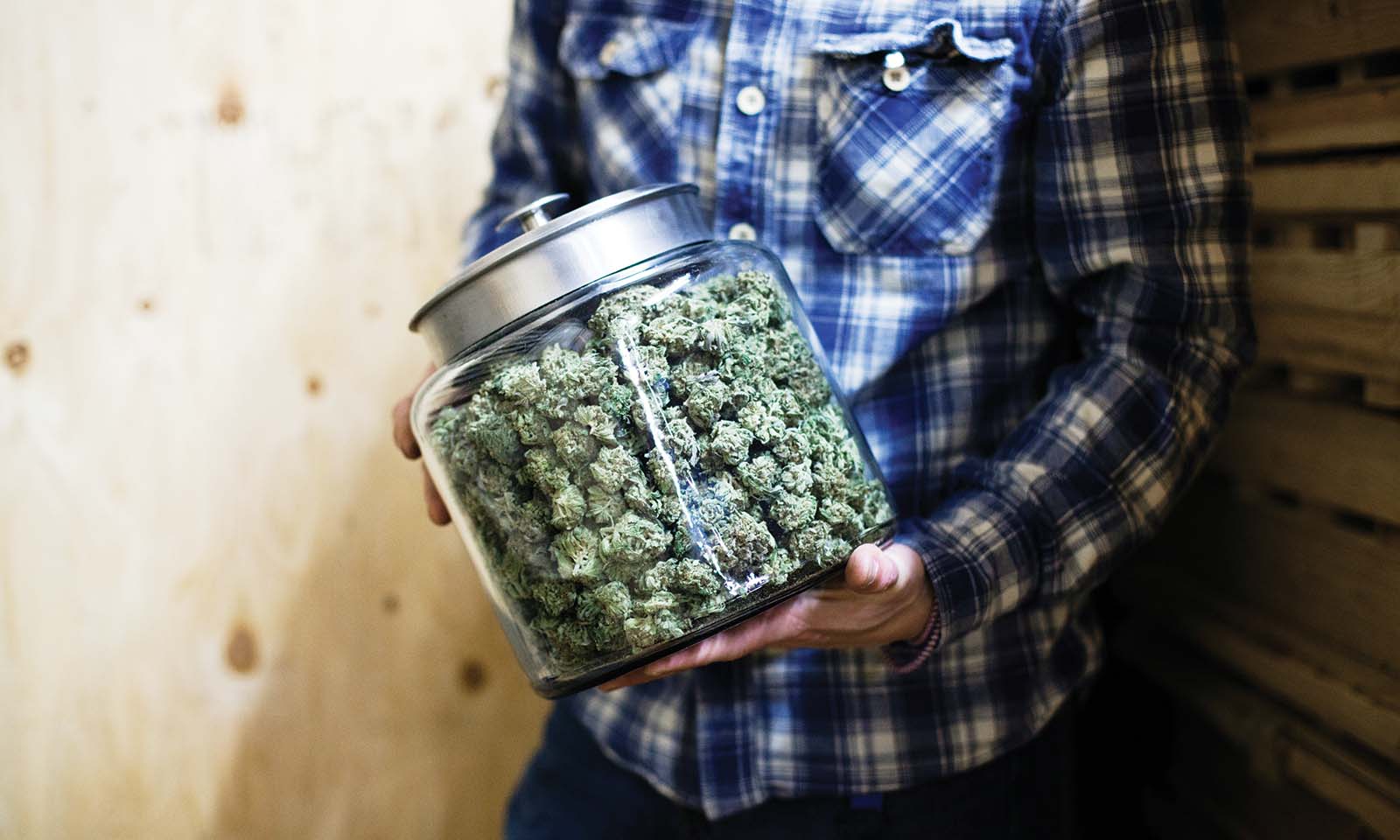
- Glass Jars: Use airtight glass jars, such as mason jars. Glass is non-reactive and won’t affect the flavor or potency of your cannabis. Avoid plastic containers, which can degrade the quality of your buds.
- Jar Size: Choose jar sizes appropriate for your yield. Filling jars about 3/4 full allows for some air circulation but avoids over-packing.
Initial Curing Process
Placement and Burping:
- Place jars in a cool, dark place. The ideal temperature is around 60-70°F (15-21°C) with humidity between 55-65%.
- For the first week, open (burp) the jars daily for a few minutes. This releases moisture and allows fresh air to enter, preventing mold and promoting even curing.
Monitoring:
- Regularly check for signs of mold or mildew. If detected, remove affected buds immediately and ensure the jars aren’t too moist.
- If buds feel too wet, leave the jars open for longer periods or reduce the amount of bud in each jar.
Long-Term Curing
Burping Frequency:
- Burping should be cut down to once every few days after the first week.
- Continue this process for a minimum of two weeks. For the best results, cure for 4-8 weeks. Some growers cure for several months to enhance the flavor and potency further.
Humidity Control:
- Use humidity packs (e.g., Boveda packs) to maintain consistent humidity levels inside the jars. These packs can help keep the RH around 62%, ideal for curing.
Final Storage
- Once curing is complete, store the jars in a cool, dark place.
- Cannabis that has been properly cured and preserved can keep its quality for up to a year.
Tips and Best Practices
- Patience is Key: Rushing the drying and curing process can lead to harsh smoke and less flavorful buds. Take your time to ensure the best quality.
- Consistent Environment: Maintain stable temperature and humidity levels to prevent mold and preserve terpenes and cannabinoids.
- Avoid Plastic: Long-term storage in plastic containers can degrade the quality of your cannabis. Stick to glass jars.
- Cleanliness: Keep your drying and curing environment clean to avoid contamination and mold growth.
Troubleshooting Common Issues
Drying and curing cannabis is a delicate process, and various issues can arise that may affect the quality of your final product. Here, we address some of the most common problems and provide solutions to ensure your cannabis is dried and cured to perfection.
Mold and Mildew
Problem:
- Mold and mildew are caused by high humidity and poor airflow during the drying and curing stages. They can ruin your entire harvest if not addressed promptly.
Prevention:
- Maintain a consistent humidity level of 50-60% during drying and 55-65% during curing.
- Ensure proper airflow in the drying area, but avoid direct airflow on the buds.
- Use dehumidifiers and fans to control humidity and improve air circulation.
- Regularly inspect your buds for signs of mold and mildew, especially during the first week of curing.
Solution:
- If mold is detected, immediately remove the affected buds to prevent it from spreading.
- Increase airflow and reduce humidity in the drying area.
- Consider using humidity packs to maintain optimal humidity levels in curing jars.
Over-Drying
Problem:
- Over-drying occurs when buds lose too much moisture, becoming brittle and harsh to smoke. This can happen if the drying environment is too warm, too dry, or if buds are left to dry for too long.
Prevention:
- Monitor the drying process closely and maintain a temperature of 60-70°F (15-21°C) and humidity of 50-60%.
- Avoid direct airflow on the buds, which can accelerate drying.
- Check buds daily to ensure they are drying evenly and not becoming overly dry.
Solution:
- Rehydrate over-dried buds by placing a small piece of citrus peel or a damp paper towel inside the jar for a few hours. Be careful not to leave it in for too long, as this can introduce mold.
- Use humidity packs to maintain consistent moisture levels in the curing jars.
Under-Drying
Problem:
- Under-drying happens when buds retain too much moisture, leading to a higher risk of mold and an uneven burn when smoked.
Prevention:
- Ensure buds are dried for an adequate amount of time (usually 7-10 days) and that smaller stems snap rather than bend.
- Maintain proper airflow and humidity levels in the drying area to facilitate even drying.
Solution:
- If buds are still too moist after the initial drying period, extend the drying time and continue monitoring them closely.
- If under-dried buds are already in curing jars, leave the jars open for longer periods to allow excess moisture to escape.
Uneven Drying
Problem:
- Uneven drying can result in some buds being over-dried while others remain too moist. This can be caused by inconsistent airflow, uneven distribution of buds, or varying bud sizes.
Prevention:
- Ensure even spacing between branches or buds in the drying area to promote uniform airflow.
- Rotate buds on drying racks periodically to ensure even drying.
- Trim larger buds into smaller pieces to allow for more consistent drying.
Solution:
- Identify and separate over-dried and under-dried buds. Adjust the drying environment as needed to address the specific issue.
- For under-dried buds, increase airflow or extend the drying time. For over-dried buds, consider rehydrating them as previously described.
Harsh Taste and Poor Aroma
Problem:
- A harsh taste and poor aroma in the final product can result from improper drying and curing. This is often due to rapid drying, inadequate curing, or storing buds in unsuitable containers.
Prevention:
- Dry buds slowly at the recommended temperature and humidity levels to preserve terpenes and cannabinoids.
- Cure buds for a minimum of two weeks, with optimal results achieved after 4-8 weeks or longer.
- Use airtight glass jars for curing and storage, and avoid plastic containers.
Solution:
- If buds have a harsh taste, they may benefit from an extended curing period. Continue to cure the buds, burping the jars regularly to release excess moisture and allow fresh air in.
- Ensure storage containers are airtight and kept in a cool, dark place to preserve flavor and potency.
Advanced Techniques
Controlled Environment Drying
Using a controlled environment for drying can provide even better results. This involves using a dedicated drying tent or room with precise control over temperature, humidity, and airflow.
Benefits:
- More consistent drying conditions.
- Reduced risk of mold and over-drying.
- Better preservation of terpenes and cannabinoids.
Cold Curing
Cold curing involves curing buds at lower temperatures (around 40-60°F or 4-15°C). This process can slow down the degradation of cannabinoids and terpenes, resulting in a smoother, more flavorful product.
Steps:
- Use a wine cooler or dedicated cold storage area.
- Follow the same burping schedule but monitor buds more closely for mold due to higher humidity levels.
Conclusion
Properly drying and curing your cannabis is essential for maximizing the quality and enjoyment of your harvest. These processes preserve the delicate cannabinoids and terpenes, enhance flavor, and ensure a smooth, enjoyable smoke. Here are the key takeaways:
- Harvesting: Timing is crucial. Harvest your plants when the trichomes are mostly cloudy with some amber for the best potency and effects.
- Drying: Set up an ideal drying environment with temperatures between 60-70°F (15-21°C) and humidity levels between 50-60%. Hang branches upside down in a dark, well-ventilated space for 7-10 days until the outer leaves are dry and stems snap rather than bend.
- Trimming: Trim the sugar leaves either before (wet trimming) or after (dry trimming) drying to improve the appearance and quality of your buds.
- Curing: Place dried buds in airtight glass jars, filling them about 3/4 full. Store the jars in a cool, dark place with temperatures around 60-70°F (15-21°C) and humidity between 55-65%. Burp the jars daily for the first week and then every few days for at least two weeks. Use humidity packs to maintain consistent levels inside the jars.
- Storage: Properly cured and stored cannabis can last for a year or more without significant loss of quality. Always use glass containers for long-term storage and keep them in a cool, dark place.
- Tips and Best Practices: Patience and consistency are key. Avoid rushing the drying and curing process, and maintain a clean environment to prevent mold and contamination.
- Troubleshooting: Be vigilant for mold and mildew, and take steps to prevent and address these issues promptly. Avoid over-drying by monitoring the drying process closely and using humidity packs to rehydrate if necessary.
By following these detailed steps and maintaining the right environmental conditions, you can ensure your cannabis is dried and cured to perfection. This will result in a high-quality product with enhanced flavor, potency, and overall smoking experience. Whether you’re a novice or experienced grower, mastering the art of drying and curing will elevate your cannabis cultivation and provide you with the best possible results.
