Dry Trim vs Wet Trim: Which Makes Better Cannabis?
Introduction
Cannabis cultivation involves several critical steps to ensure the quality and potency of the final product. Among these steps, trimming stands out as a significant process that can influence the appearance, aroma, and overall quality of cannabis. Trimming is the act of removing the excess leaves from the cannabis buds, a task that can be done either before or after drying. These two methods are referred to as wet trimming and dry trimming, respectively. Each method has its proponents and detractors, and the choice between the two often depends on personal preferences, environmental conditions, and the desired characteristics of the final product. This article will delve deeply into the dry trim versus wet trim debate, exploring their pros and cons, the impact on cannabis quality, and the best practices for each method.
Understanding Trimming in Cannabis Cultivation
Trimming is a crucial step in the post-harvest processing of cannabis plants. It involves the removal of excess leaves, stems, and other unwanted plant material from the buds to enhance their appearance, potency, and overall quality. Proper trimming ensures that the final product is more appealing to consumers and has a better flavor and aroma profile. There are two main methods of trimming cannabis: wet trimming and dry trimming. Each method has its unique processes and outcomes, influencing various aspects of the cannabis product.
Importance of Trimming
- Improves Aesthetic Appeal:
- Visual Appeal: Well-trimmed cannabis buds look more attractive and are more appealing to consumers. Removing the excess leaves exposes the dense, resin-covered flowers, making the buds look more uniform and visually pleasing.
- Marketability: The visual appeal of cannabis can significantly impact its marketability. Consumers are more likely to purchase well-manicured buds over those that appear unkempt or leafy.
- Enhances Flavor and Aroma:
- Terpene Concentration: Trimming helps to concentrate the terpenes, which are the aromatic compounds responsible for the distinctive smell and taste of cannabis. By removing excess leaves, which contain fewer terpenes, the flavor and aroma of the buds are enhanced.
- Chlorophyll Reduction: Excess leaves contain chlorophyll, which can impart a harsh, grassy taste to the buds. Trimming reduces the chlorophyll content.
- Prevents Mold and Mildew:
- Moisture Retention: Leaves can retain moisture, creating an environment conducive to mold and mildew growth. Trimming excess leaves helps to reduce moisture retention, minimizing the risk of mold during the drying and curing process.
- Airflow: Proper trimming allows for better airflow around the buds, which aids in the drying process and further reduces the risk of mold and mildew.
- Optimizes Potency:
- Cannabinoid Concentration: Leaves generally contain lower concentrations of cannabinoids (such as THC and CBD) compared to the buds. Trimming away the leaves ensures that the final product is more potent and contains a higher concentration of these desirable compounds.
- Trichome Preservation: Trimming can help preserve the trichomes, the resinous glands on the buds that contain the majority of the cannabinoids and terpenes. Careful trimming ensures that these trichomes are not unnecessarily damaged or lost.
Wet Trimming
Wet trimming involves trimming the cannabis plants immediately after harvesting, while the plant material is still fresh and moist. This method is favored by many growers for several reasons.
Advantages of Wet Trimming
- Ease of Trimming: Fresh, wet plant material is easier to handle and trim. The leaves are more rigid and easier to cut, which can speed up the trimming process.
- Mold Prevention: Trimming wet can help reduce the risk of mold. By removing excess leaves early, there’s less plant material to retain moisture, which can prevent mold during the drying process.
- Immediate Processing: Wet trimming allows for immediate processing of the buds, which can be advantageous for large-scale operations needing to process large quantities quickly.
- Cleaner Look: Wet trimming can result in a cleaner, more manicured appearance since the leaves are more pliable and easier to trim close to the buds.
Disadvantages of Wet Trimming
- Loss of Trichomes: Wet trimming can lead to a higher loss of trichomes, the resin glands that contain cannabinoids and terpenes. Trichomes are more fragile when wet and can easily break off during handling.
- Requires Quick Processing: Since wet plant material is prone to mold, the trimming process needs to be completed quickly, which can be challenging for large harvests.
- Aroma Loss: Wet trimming can result in a loss of aroma. The terpenes, which give cannabis its distinctive smell, can evaporate more quickly when the plant is wet.
Dry Trimming
Dry trimming is removing extra leaves from cannabis plants after they have been harvested by letting them dry. This method is often preferred by craft and small-scale growers who prioritize the quality and preservation of the cannabis.
Advantages of Dry Trimming
- Preservation of Trichomes: Dry trimming can help preserve trichomes, as they are less likely to break off once the plant material is dried and cured. This preservation can result in higher potency and better quality.
- Enhanced Aroma and Flavor: Dry trimming can enhance the aroma and flavor of the final product. The slow drying process allows for the gradual breakdown of chlorophyll and the terpenes to be better preserved.
- Flexibility in Timing: With dry trimming, growers have more flexibility in timing. The plants can be hung to dry and trimmed at a later time, which can be advantageous for managing workloads, especially during harvest season.
- Better Curing: Dry trimming often goes hand in hand with a longer curing process, which can improve the overall quality of the cannabis. Proper curing can enhance the smoothness, flavor, and potency of the buds.
Disadvantages of Dry Trimming
- More Labor-Intensive: Dry trimming can be more labor-intensive and time-consuming. The dried leaves are more brittle and can be harder to trim without damaging the buds.
- Potential for Mold: If not done correctly, the drying process can lead to mold and mildew. Proper environmental controls are necessary to ensure that the drying process is done safely.
- Aesthetic Considerations: Dry trimming can sometimes result in a less manicured appearance compared to wet trimming, as the dried leaves can curl around the buds, making them harder to remove cleanly.
Factors Influencing the Choice Between Dry and Wet Trimming
Several factors can influence a grower’s decision to choose between dry and wet trimming. These include:
- Scale of Operation: Large-scale commercial growers may prefer wet trimming due to the speed and efficiency it offers, while small-scale or craft growers may opt for dry trimming to maximize quality.
- Climate and Environment: The local climate and drying environment can play a significant role. In humid climates, wet trimming might be preferred to reduce mold risk, while in dry climates, dry trimming might be more feasible.
- Desired Final Product: The desired characteristics of the final product, such as potency, flavor, and appearance, can also influence the choice. Growers seeking the highest quality and best flavor may lean towards dry trimming.
- Labor and Resources: The availability of labor and resources can also be a deciding factor. Wet trimming can require more immediate labor, while dry trimming allows for spreading out the workload over time.
Best Practices for Wet Trimming
For those who choose wet trimming, several best practices can help ensure the best possible outcome:
- Cleanliness: Maintain a clean workspace to prevent contamination and mold. Use sanitized tools and wear gloves to handle the plants.
- Proper Tools: Use sharp trimming scissors or shears to ensure clean cuts and reduce trichome loss.
- Ventilation: Ensure proper ventilation in the trimming area to prevent mold and mildew.
- Speed: Work quickly to process the plants before they start to dry out and become more difficult to trim.
- Storage: Once trimmed, move the buds to the drying area immediately to begin the drying process.
Best Practices for Dry Trimming
For those who opt for dry trimming, the following practices can help achieve the best results:
- Controlled Drying Environment: Maintain a controlled drying environment with proper temperature (60-70°F) and humidity (45-55%) to prevent mold and ensure a slow, even drying process.
- Hang Drying: Hang the entire plant or branches upside down to dry. This helps the leaves wrap around the buds, protecting the trichomes.
- Patience: Allow the plants to dry slowly over 7-10 days.
- Gentle Handling: Handle the dried buds gently to avoid knocking off trichomes. Use clean, sharp scissors for trimming.
- Curing: After trimming, cure the buds in airtight containers for several weeks to develop the best flavor and potency.
Comparative Analysis: Dry Trim vs. Wet Trim
To understand the impact of dry and wet trimming on cannabis quality comprehensively, we need to analyze these methods based on key factors such as potency, flavor, aroma, appearance, and shelf life. This detailed comparative analysis will help highlight the strengths and weaknesses of each approach and provide insights into which method might be more suitable for specific goals and circumstances.
1. Potency
Wet Trimming:
- Trichome Loss: Wet trimming can lead to a higher loss of trichomes because the resin glands are more fragile when the plant material is wet. Handling the buds while they are still fresh can cause these delicate structures to break off, potentially reducing the overall potency of the final product.
- Quick Processing: On the other hand, quick processing can minimize the time that trichomes are exposed to environmental factors that could degrade them, such as light and oxygen. This can help maintain some level of potency, but it does not fully mitigate the risk of trichome loss.
Dry Trimming:
- Trichome Preservation: Dry trimming is generally better for preserving trichomes. Once the plant material is dried, the trichomes are more stable and less likely to break off during handling. This can result in a higher concentration of cannabinoids in the final product, enhancing its potency.
- Handling Care: Despite the increased stability of trichomes, it is still crucial to handle the dried buds gently to avoid knocking off these valuable resin glands.
Verdict: Dry trimming is generally superior for preserving trichomes and ensuring higher potency in the final product.
2. Flavor and Aroma
Wet Trimming:
- Terpene Loss: Terpenes, which contribute to the flavor and aroma of cannabis, are highly volatile compounds. Wet trimming can lead to terpene evaporation, as the fresh plant material releases moisture and volatile compounds into the air more readily. This can result in a less pronounced flavor and aroma profile.
- Immediate Processing: The need for quick processing to prevent mold can also mean less time for the plant to develop its full aromatic potential.
Dry Trimming:
- Terpene Preservation: Dry trimming allows for a slow drying process, which helps in the gradual breakdown of chlorophyll and the preservation of terpenes. This results in a richer and more complex aroma and flavor profile.
- Curing Process: The extended curing process often associated with dry trimming further enhances the development of terpenes, leading to a smoother and more flavorful final product.
Verdict: Dry trimming excels in preserving and enhancing the flavor and aroma of cannabis due to better terpene retention and the benefits of the curing process.
3. Appearance
Wet Trimming:
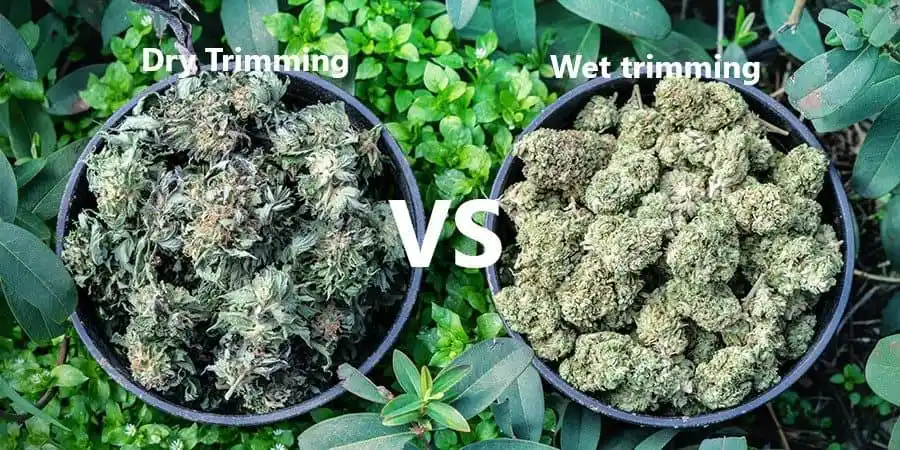
- Clean Look: Wet trimming typically results in a cleaner, more manicured appearance. The fresh leaves are more pliable and easier to trim close to the buds, providing a neat and attractive final product.
- Market Appeal: This aesthetic appeal can be particularly important for cannabis marketed in dispensaries, where visual presentation can influence consumer choice.
Dry Trimming:
- Rustic Look: Dry trimming can sometimes lead to a less uniform appearance. The dried leaves tend to curl around the buds, making them harder to trim cleanly. This can result in a more rustic look.
- Handling Difficulty: The brittle nature of dried leaves can make it challenging to achieve the same level of precision as wet trimming without damaging the buds.
Verdict: Wet trimming generally produces a more aesthetically pleasing and manicured product, which can be important for retail presentation.
4. Shelf Life
Wet Trimming:
- Moisture Risk: Wet-trimmed cannabis must be dried thoroughly after trimming to prevent mold and mildew. Any residual moisture in the buds can lead to microbial growth, compromising the shelf life of the product.
- Quick Drying: To prevent mold, the drying process must be managed carefully, which can sometimes be rushed, affecting the quality and longevity of the buds.
Dry Trimming:
- Controlled Drying: Dry trimming typically involves a slower and more controlled drying process, reducing the risk of mold and mildew. This method ensures that the buds are thoroughly dried before trimming, contributing to a longer shelf life.
- Stabilized Compounds: The extended drying and curing process helps stabilize cannabinoids and terpenes, further enhancing the shelf life of the cannabis.
Verdict: Dry trimming tends to result in a longer shelf life due to better moisture control and stabilization of the cannabis compounds.
Real-World Examples and Case Studies
To provide a comprehensive perspective, let’s look at some real-world examples and case studies that highlight the experiences of different growers with wet and dry trimming.
Case Study 1: Large-Scale Commercial Grower
A large-scale commercial grower in California prefers wet trimming due to the scale of their operation. With hundreds of plants to process, the speed and efficiency of wet trimming allow them to manage their harvest effectively. Despite the potential for trichome loss, they employ advanced drying techniques to minimize terpene evaporation and maintain quality. Their final product is clean, aesthetically pleasing, and suitable for the mass market.
Case Study 2: Craft Grower in Oregon
A small craft grower in Oregon opts for dry trimming to prioritize quality over quantity. By allowing the plants to hang dry slowly, they ensure maximum trichome preservation and terpene retention. Although the process is more labor-intensive, the resulting buds are highly potent, aromatic, and flavorful. Their product appeals to connoisseurs seeking the best quality cannabis.
Case Study 3: Hybrid Approach in Colorado
A mid-sized grower in Colorado uses a hybrid approach, employing both wet and dry trimming based on the specific strain and intended market. For strains known for their high terpene content, they prefer dry trimming to enhance aroma and flavor. For strains destined for the recreational market, where appearance is crucial, they opt for wet trimming. This flexibility allows them to cater to diverse consumer preferences.
Summary
The decision between dry trimming and wet trimming in cannabis cultivation is a critical one, as it significantly impacts the final product’s quality, potency, aroma, flavor, and appearance. Both methods have their unique advantages and drawbacks, making them suitable for different types of growers and cultivation goals.
Summary of Wet Trimming
Advantages:
- Ease of Trimming: Freshly harvested cannabis is easier to handle and trim, which can speed up the process, especially for large-scale operations.
- Mold Prevention: By removing excess leaves immediately, wet trimming can reduce the risk of mold and mildew during the drying phase.
- Cleaner Look: Wet trimming results in a more manicured appearance, as the pliable leaves can be trimmed closely to the buds.
Disadvantages:
- Loss of Trichomes: Trichomes are more fragile when wet and can easily break off during handling, potentially reducing the potency of the final product.
- Aroma Loss: Wet trimming can lead to terpene evaporation, resulting in a less pronounced aroma and flavor profile.
- Quick Processing Required: Wet trimming necessitates rapid processing to prevent the plant material from drying out and becoming more difficult to trim.
Summary of Dry Trimming
Advantages:
- Preservation of Trichomes: Dried plant material is less likely to suffer trichome loss, preserving the potency and quality of the cannabis.
- Enhanced Aroma and Flavor: Slow drying and curing processes help preserve terpenes, resulting in a richer aroma and better flavor.
- Flexible Timing: Growers have more flexibility in timing, allowing them to manage workloads more effectively during harvest season.
- Better Curing: Dry trimming often leads to a longer curing process, improving the overall quality, smoothness, and potency of the cannabis.
Disadvantages:
- More Labor-Intensive: Trimming dried leaves is more labor-intensive and time-consuming, as the brittle leaves can be harder to remove without damaging the buds.
- Potential for Mold: If the drying process is not properly controlled, there is a risk of mold and mildew.
- Aesthetic Considerations: Dry trimming can result in a less uniform appearance, as the dried leaves can curl around the buds, making them harder to remove cleanly.
Comparative Analysis
Potency:
- Wet trimming can lead to trichome loss, potentially reducing potency, while dry trimming better preserves trichomes, resulting in higher potency.
Flavor and Aroma:
- Wet trimming can cause terpene evaporation, reducing aroma and flavor. Dry trimming, with proper curing, enhances these characteristics.
Appearance:
- Wet trimming offers a cleaner, more manicured look. Dry trimming may result in a less uniform appearance but can still achieve high-quality aesthetics with careful handling.
Shelf Life:
- Wet-trimmed cannabis can be prone to mold if not dried properly. Dry trimming, with thorough drying and curing, generally results in a longer shelf life.
Real-World Examples
Large-Scale Commercial Grower:
- Prefers wet trimming for speed and efficiency, employs advanced drying techniques to mitigate terpene loss.
Craft Grower:
- Opts for dry trimming to prioritize quality, ensuring maximum trichome preservation and terpene retention, resulting in highly potent and aromatic buds.
Hybrid Approach:
- Uses both wet and dry trimming based on strain and market demands, balancing speed, appearance, aroma, and flavor.
Final Thoughts
The choice between dry trimming and wet trimming ultimately hinges on the grower’s specific goals, resources, and environmental conditions. Wet trimming is advantageous for large-scale operations requiring efficiency and speed, but it may compromise potency and aroma. Dry trimming, while more labor-intensive, prioritizes quality, preserving trichomes, and enhancing flavor and aroma through a meticulous drying and curing process.
For growers aiming for the highest quality product, particularly in small-scale or craft operations, dry trimming is often the preferred method. It allows for better preservation of the plant’s essential compounds, resulting in a superior final product. However, for those focused on speed and appearance, especially in large-scale commercial settings, wet trimming offers a viable and efficient alternative.
Growers may improve their cannabis cultivation process, regardless of their priorities—speed, efficiency, or the greatest quality product—by comprehending the advantages and disadvantages of each approach and putting best practices into effect. Both dry and wet trimming have their place in the industry, and the choice between them should be informed by the grower’s specific circumstances and goals.
