Introduction
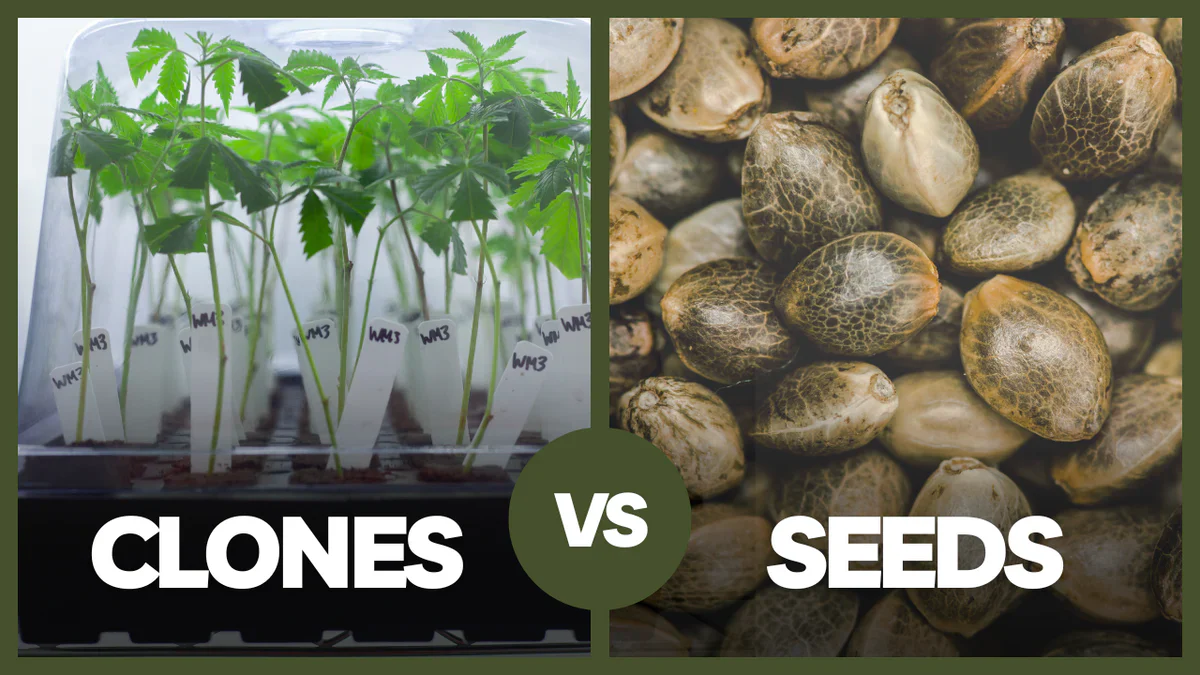
Cannabis cultivation has seen significant advancements over the years, providing growers with a variety of methods to propagate their plants. The two primary methods of propagation are through seeds and clones. Every technique has specific benefits and drawbacks that make it appropriate for a range of growers and agricultural objectives. The subtleties of cultivating cannabis from seeds versus clones will be thoroughly compared in this in-depth analysis, which will cover topics including genetics, growth traits, yield potential, and more.
Cannabis Seeds: A Comprehensive Guide
Cannabis seeds are the starting point for many growers and breeders, offering a wealth of genetic diversity and opportunities for developing new strains. This section delves into the details of cannabis seeds, covering their types, genetic diversity, phenotypic variation, growth characteristics, and practical considerations for growers.
Types of Cannabis Seeds
Cannabis seeds come in several types, each with its own set of characteristics and advantages:
- Regular Seeds: These seeds can produce either male or female plants. Regular seeds are commonly used by breeders because they provide a balanced mix of male and female plants necessary for producing new seeds.
- Feminized Seeds: These seeds are genetically modified to produce only female plants. Feminized seeds are popular among growers because only female plants produce the desired flowers (buds) rich in cannabinoids like THC and CBD.
- Autoflowering Seeds: These seeds are bred to flower automatically based on age rather than light cycle changes. Autoflowering seeds are ideal for growers looking for a faster harvest and those with less control over their light environment.
Genetic Diversity
Seeds offer unparalleled genetic diversity, which is a crucial aspect of cannabis cultivation. Each seed represents a unique combination of genes from its parent plants, resulting in a wide range of potential phenotypes. This genetic diversity is the foundation for breeding new strains and selecting desirable traits such as:
- Cannabinoid Profile: Different seeds can produce plants with varying levels of THC, CBD, and other cannabinoids. Breeders can select seeds with specific cannabinoid profiles to develop strains tailored for medical or recreational use.
- Terpene Profile: Terpenes are aromatic compounds that contribute to the flavor and aroma of cannabis. Seeds can produce plants with diverse terpene profiles, enhancing the sensory experience and potential therapeutic effects.
- Growth Characteristics: Traits such as plant height, leaf shape, and flowering time can vary widely among seeds. This variability allows growers to select plants that are best suited to their cultivation environment and goals.
Phenotypic Variation
The phenotypic variation among plants grown from seeds is a double-edged sword. On one hand, it provides opportunities for discovering unique and desirable traits. On the other hand, it can pose challenges for growers seeking uniformity in their crop. Phenotypic variation can manifest in several ways:
- Plant Structure: Seeds can produce plants with different structures, such as tall and lanky versus short and bushy. This variation affects how plants are managed in terms of spacing, pruning, and support.
- Flowering Time: Seeds from the same batch can have different flowering times, making it essential to monitor and manage each plant individually. This variation can be advantageous for staggered harvests but may complicate scheduling.
- Bud Quality: Differences in bud size, density, and resin production can occur among plants grown from seeds. Growers need to select and clone plants with the best bud quality to maintain consistency.
Seed Viability and Storage
To keep cannabis seeds viable, they must be stored properly. Seeds are relatively durable and can remain viable for several years if stored correctly. Key considerations for seed storage include:
- Temperature: Seeds should be stored in a cool environment, ideally between 6-8°C (42-46°F). Avoid temperature fluctuations, which can reduce seed viability.
- Humidity: Low humidity levels (below 10%) are essential to prevent mold and fungal growth. Using desiccants in the storage container can help maintain low humidity.
- Light: Seeds should be kept in a dark place to prevent premature germination. Light exposure can degrade the seeds over time.
- Containers: Airtight containers, such as sealed glass jars or vacuum-sealed bags, are ideal for storing seeds. These containers protect seeds from moisture and air, preserving their viability.
Germination and Early Growth
Germinating cannabis seeds is the first step in the cultivation process. Successful germination depends on providing the right conditions:
- Moisture: Seeds require a moist environment to germinate, but they should not be waterlogged. Soaking seeds in water for 12-24 hours before planting can improve germination rates.
- Temperature: The optimal temperature for germination is between 20-25°C (68-77°F). Consistent warmth encourages rapid sprouting.
- Medium: Seeds can be germinated in a variety of mediums, including soil, rock wool, or paper towels. Each medium has its pros and cons, but all must be kept consistently moist.
- Light: While seeds do not need light to germinate, they require light as soon as they sprout. Providing a gentle light source ensures healthy early growth.
After germination, seedlings need careful monitoring to ensure they establish successfully. Key considerations during this stage include:
- Light: Seedlings need adequate light to develop strong stems and leaves. Using a light source with the appropriate spectrum and intensity is crucial.
- Watering: While underwatering might impede growth, overwatering can cause root rot. It’s critical to keep the moisture content in check.
- Nutrition: Seedlings have limited nutrient needs initially but benefit from a light, balanced nutrient solution as they grow. Using a gentle fertilizer can support healthy development.
Root System Development
Plants grown from seeds typically develop a strong taproot, which is a primary advantage. The taproot can penetrate deep into the soil, providing several benefits:
- Water Absorption: A deep taproot allows the plant to access water from deeper soil layers, enhancing drought resistance.
- Nutrient Uptake: The extensive root system improves nutrient absorption, supporting robust growth and higher yields.
- Anchorage: A strong taproot provides better stability, reducing the risk of plants toppling over in windy conditions or under the weight of heavy buds.
Cost Considerations
The cost of seeds can vary widely based on factors such as strain, breeder reputation, and seed quality. However, seeds are generally more accessible and cost-effective for small-scale growers or those starting new strains. Key cost considerations include:
- Initial Investment: Seeds are often cheaper than clones, making them an economical option for new growers.
- Yield Potential: A single seed can produce a large plant capable of yielding significant quantities of cannabis, providing a good return on investment.
- Availability: Seeds are widely available from various suppliers, offering growers a broad selection to choose from.
Advantages of Growing from Seeds
- Genetic Diversity: Seeds offer a wide range of genetic traits, essential for breeding and strain development.
- Robust Root System: The development of a strong taproot enhances water and nutrient absorption, supporting healthy growth.
- Cost-Effective: Seeds are generally more affordable and accessible, especially for new growers or those with limited resources.
- Long-Term Storage: Properly stored seeds can remain viable for several years, providing flexibility for future planting.
Disadvantages of Growing from Seeds
- Phenotypic Variation: The genetic diversity of seeds can lead to variability in plant characteristics, posing challenges for uniform cultivation.
- Germination Uncertainty: Not all seeds will germinate successfully, and the process requires careful monitoring.
- Longer Growth Cycle: Seeds take longer to reach maturity due to the initial germination and seedling stages.
- Hermaphroditism Risk: There is a risk of plants turning hermaphroditic, particularly with feminized seeds, leading to potential pollination issues.
Cannabis Clones: A Comprehensive Guide
Cannabis cloning is a widely used propagation method that offers several advantages for growers seeking consistency and predictability in their crops. This section delves into the details of cannabis clones, covering their genetic uniformity, growth characteristics, cloning process, and practical considerations for growers.
Genetic Uniformity
Clones, also known as cuttings, are genetically identical to the mother plant from which they were taken. This genetic uniformity ensures that the cloned plants will exhibit the same traits as the mother, providing several benefits:
- Consistent Quality: Clones guarantee uniformity in cannabinoid content, terpene profiles, and overall plant structure. This consistency is crucial for commercial growers who need to produce standardized products.
- Predictable Growth: Clones grow and flower in a predictable manner, making it easier to manage cultivation schedules and harvest times.
- Stable Characteristics: Clones maintain the desirable traits of the mother plant, such as pest resistance, yield potential, and specific growth habits.
Phenotypic Stability
The lack of phenotypic variation among cloned plants is a significant advantage for growers who prioritize uniformity. Key benefits of phenotypic stability include:
- Uniform Canopy: Clones produce plants with similar heights and growth rates, resulting in a uniform canopy. This uniformity facilitates efficient light distribution and simplifies pruning and training practices.
- Consistent Harvests: With clones, growers can achieve consistent harvests in terms of quality and quantity. This predictability is essential for meeting market demands and maintaining product quality.
Cloning Process
The cloning process involves taking cuttings from a healthy mother plant and encouraging them to develop roots. The key steps in the cloning process are as follows:
- Selecting the Mother Plant: Pick a mother plant that is robust, healthy, and has the qualities you want. The mother plant should be in its vegetative state and devoid of diseases and pests..
- Taking Cuttings: Use sterilized scissors or a sharp blade to take cuttings from the mother plant. Cuttings from healthy branches should be 4–8 inches length. Just below a node—the point where leaves cling to stems—make a clean incision.
- Preparing the Cuttings: Remove the lower leaves from the cutting, leaving a few sets of leaves at the top. Optionally, dip the cut end in rooting hormone to promote root development.
- Planting the Cuttings: Insert the cut end of the cutting into a rooting medium, such as rock wool, perlite, or a soilless mix. Make sure the medium is damp but not soggy.
- Providing the Right Environment: Place the cuttings in a humidity dome or propagation tray to maintain high humidity levels. Keep the cuttings under gentle, indirect light and maintain a temperature of 20-25°C (68-77°F).
- Root Development: Monitor the cuttings for root development, which typically takes 1-2 weeks. Keep the rooting medium consistently moist and provide gentle airflow to prevent mold growth.
- Transplanting: The cuttings can be placed straight into the growing medium or into larger pots once they have established a strong root system. Gradually acclimate the young plants to the growing environment by reducing humidity and increasing light intensity.
Root System Development
Clones develop a fibrous root system, which differs from the taproot system of seed-grown plants. Key characteristics of the fibrous root system include:
- Surface Area: The fibrous root system has a larger surface area, allowing for efficient nutrient and water absorption.
- Anchorage: While not as deep as a taproot, the fibrous root system provides adequate support for the plant. However, clones may require more careful management of soil conditions and irrigation.
- Rooting Medium: The choice of rooting medium can influence the development of the fibrous root system. Using a well-aerated medium can promote healthy root growth.
Speed to Harvest
One of the primary advantages of using clones is the reduced time to harvest. Clones bypass the seedling stage, allowing them to establish more quickly and reach maturity faster. Key benefits of the accelerated growth cycle include:
- Quicker Turnarounds: Clones can shorten the overall growth cycle, enabling multiple harvests per year. This is particularly beneficial for commercial operations aiming to maximize production.
- Early Flowering: Clones taken from mature plants can be induced to flower earlier, reducing the time from planting to harvest. This can be advantageous for growers with limited growing seasons.
Pest and Disease Management
Managing pests and diseases in clones requires careful attention to the health of the mother plant and the cloning environment. Key considerations include:
- Selecting Healthy Mother Plants: Ensure that the mother plant is free from pests and diseases to prevent the transmission of pathogens to the clones.
- Sanitizing Tools and Equipment: Use sterilized tools and equipment to take cuttings and handle clones. This reduces the risk of introducing pathogens during the cloning process.
- Maintaining a Clean Environment: Keep the cloning environment clean and free from pests. Regularly inspect the clones for signs of pests or diseases and take prompt action if any issues are detected.
- Quarantining New Clones: If obtaining clones from an external source, quarantine them before introducing them to the main growing area. This helps prevent the spread of potential pests or diseases.
Cost Considerations
While clones provide numerous benefits, they may come with higher initial costs compared to seeds. Key cost considerations include:
- Initial Investment: Clones can be more expensive to acquire initially, especially if purchased from a reputable supplier.
- Maintaining Mother Plants: Keeping a mother plant requires space, resources, and ongoing maintenance to ensure it remains healthy and productive. This adds to the overall cost of cloning.
- Efficiency in Commercial Operations: For large-scale operations, the investment in clones can be justified by the uniformity and quality of the final product. Consistent yields and predictable harvests can lead to higher market value and customer satisfaction.
Advantages of Growing from Clones
- Genetic Uniformity: Clones ensure consistent quality and predictable growth, making them ideal for commercial growers.
- Reduced Growth Cycle: Clones bypass the seedling stage, allowing for quicker establishment and faster harvests.
- Stable Characteristics: Clones maintain the desirable traits of the mother plant, such as cannabinoid content, terpene profile, and pest resistance.
- Uniform Canopy: Clones produce plants with similar heights and growth rates, resulting in a uniform canopy and efficient light distribution.
Disadvantages of Growing from Clones
- Initial Cost: Clones can be more expensive to acquire and maintain, particularly for small-scale or new growers.
- Disease Transmission: Clones can carry pests and diseases from the mother plant, requiring careful selection and management.
- Limited Genetic Diversity: Clones do not introduce genetic variation, which can limit opportunities for strain development and adaptation to environmental changes.
- Root System: The fibrous root system of clones may not provide the same level of stability and nutrient uptake as the taproot of seed-grown plants.
Comparative Analysis: Cannabis Seeds vs. Clones
Genetic Diversity and Uniformity
Seeds:
- Genetic Diversity: Seeds offer a broad genetic pool, essential for breeding and developing new strains. Each seed represents a unique genetic combination, resulting in a wide range of phenotypes.
- Phenotypic Variation: High variation among plants grown from seeds can lead to different heights, flowering times, and cannabinoid profiles, providing opportunities for breeders to select and stabilize desirable traits.
Clones:
- Genetic Uniformity: Clones are genetically identical to the mother plant, ensuring uniformity in growth, cannabinoid content, and flowering time. This consistency is crucial for commercial growers who need predictable results.
- Phenotypic Stability: With clones, there is no phenotypic variation, which allows for uniformity in the crop, making it easier to manage and predict outcomes.
Growth Cycle and Root System Development
Seeds:
- Growth Cycle: Plants from seeds undergo a germination and seedling stage, which extends the overall growth cycle. However, once established, these plants tend to be vigorous and robust.
- Root System: Seeds develop a strong taproot that penetrates deep into the soil, enhancing water and nutrient absorption. This robust root system also provides better anchorage, beneficial for outdoor cultivation.
Clones:
- Growth Cycle: Clones bypass the seedling stage, leading to a shorter overall growth cycle. This allows for quicker turnarounds, particularly advantageous for commercial operations with tight schedules.
- Root System: Clones develop a fibrous root system from the stem cutting. While it does not penetrate as deeply as a taproot, it can still provide adequate support and nutrient uptake if managed properly.
Adaptability and Environmental Factors
Seeds:
- Adaptability: Plants grown from seeds have the potential to adapt to their environment over generations, developing traits that make them more resilient to local conditions. This evolutionary advantage is significant for outdoor growers facing variable conditions.
- Environmental Challenges: Seeds can be more resilient to environmental stressors due to their genetic diversity, potentially leading to plants that can better withstand pests, diseases, and climate variations.
Clones:
- Adaptability: Clones consistently exhibit the same traits as the mother plant, which can be advantageous if those traits are well-suited to the growing environment. However, they may not adapt as readily to different or changing conditions.
- Environmental Challenges: Clones may be more susceptible to environmental challenges if the mother plant’s traits are not ideally suited to the conditions they face. Careful selection of the mother plant is crucial to ensure clones perform well in the intended environment.
Pest and Disease Management
Seeds:
- Disease Resistance: The genetic diversity in seeds can contribute to greater overall resilience against pests and diseases. However, variability in resistance levels can exist among plants.
- Hermaphroditism Risk: There is a risk of plants turning hermaphroditic, especially with feminized seeds, leading to unwanted pollination and seedy buds.
Clones:
- Disease Transmission: Clones can carry pests and diseases from the mother plant. Selecting healthy, disease-free mother plants is essential to prevent the spread of pathogens.
- Hermaphroditism Risk: Clones taken from a stable, non-hermaphroditic mother plant will not exhibit hermaphroditism, reducing the risk of pollination issues.
Breeding and Strain Development
Seeds:
- Breeding: Seeds are vital for breeding and creating new strains. The genetic diversity they offer allows breeders to select and stabilize desirable traits, advancing the cannabis genome.
- Strain Development: Seeds provide the foundation for discovering and developing new strains, leading to innovation and improvement in cannabis cultivation.
Clones:
- Breeding: Clones are not suitable for breeding as they do not introduce genetic variation. However, they are ideal for preserving and propagating specific strains with known and desirable traits.
- Strain Preservation: Clones ensure the preservation of the exact genetic profile of popular and effective strains, maintaining their integrity across multiple generations.
Economic and Logistical Considerations
Seeds:
- Cost: Seeds are generally more accessible and cost-effective, especially for small-scale or home growers. They are easy to obtain, store, and transport.
- Investment Return: A single seed can produce a substantial plant, offering a significant return on investment.
Clones:
- Cost: Clones can be more expensive initially, requiring resources and expertise to take and root cuttings. Maintaining mother plants also adds to the overall cost.
- Commercial Value: For large-scale operations, the investment in clones can be justified by the uniformity and quality of the final product, leading to higher market value and customer satisfaction.
Conclusion
Balancing Genetic Diversity and Uniformity
Choosing between cannabis seeds and clones involves a strategic decision that balances the need for genetic diversity with the desire for uniformity. Seeds offer a diverse genetic pool, making them indispensable for breeders and experimental growers who aim to develop new strains or improve existing ones. The variability in seeds allows for the exploration of different phenotypes, which can result in unique and desirable traits. This genetic diversity is crucial for the long-term evolution and improvement of cannabis strains.
In contrast, clones provide a high degree of genetic uniformity. This consistency is particularly advantageous for commercial growers who need predictable outcomes in terms of plant characteristics, cannabinoid content, and flowering times. Clones ensure that the crop is uniform, which simplifies cultivation and quality control processes. For operations focused on producing standardized products, such as pharmaceutical-grade cannabis or consistent consumer products, clones offer a reliable solution.
Impact on Growth Cycle and Yield
The growth cycle and yield potential are critical factors that influence the decision between seeds and clones. Seeds undergo a germination and seedling stage, which extends the overall growth cycle. However, the resulting plants often develop robust taproots, enhancing their ability to absorb water and nutrients and potentially leading to larger yields. The strong root system also provides better stability for outdoor plants, making them more resilient to environmental stressors.
Clones, on the other hand, can significantly shorten the growth cycle by bypassing the seedling stage. This accelerated start can be particularly beneficial for growers aiming to maximize production within a limited timeframe, such as in commercial operations with tight schedules. Although clones do not develop taproots, their fibrous root systems can still support healthy growth if managed properly. The yield from clones is generally consistent with that of the mother plant, providing predictable harvests.
Breeding and Strain Development
For breeders, seeds are essential. The genetic diversity inherent in seeds is the foundation for developing new strains and selecting desirable traits. Each seed represents a unique combination of genetic material, providing a broad spectrum of phenotypes for breeders to work with. This diversity is key to advancing the cannabis genome and creating plants with improved characteristics, such as higher cannabinoid content, better pest resistance, or enhanced flavor profiles.
Clones are not suitable for breeding since they do not introduce genetic variation. However, they are invaluable for preserving and propagating specific strains with known and desirable traits. By cloning a mother plant, growers can ensure that the exact genetic profile is maintained across multiple generations. This preservation of genetic identity is crucial for maintaining the integrity of popular and effective strains.
Environmental Adaptability and Risk Management
Plants grown from seeds have the potential to adapt to their environment over generations. This adaptability can lead to the development of strains that are particularly well-suited to local growing conditions, whether it be resistance to specific pests, tolerance to local climate, or optimal nutrient uptake. This evolutionary advantage can be significant for outdoor growers dealing with variable conditions.
Clones, while genetically identical to the mother plant, may not adapt as readily to different environments. They will consistently exhibit the same traits, which can be beneficial if the mother plant’s characteristics are well-suited to the growing environment. However, this lack of genetic diversity can also be a disadvantage if the clones face environmental challenges that the mother plant was not exposed to.
Another aspect of risk management involves the potential for hermaphroditism. Seeds, particularly those from feminized batches, carry a risk of producing hermaphroditic plants, which can lead to unwanted pollination and seed production in buds. Clones, when taken from stable and non-hermaphroditic mother plants, eliminate this risk, ensuring a more consistent and reliable crop.
Economic and Logistical Considerations
Economically, seeds can be more accessible and cost-effective, especially for small-scale or home growers. They are easy to obtain, store, and transport, making them convenient for growers who may not have immediate planting plans. Additionally, a single seed can produce a substantial plant, offering a significant return on investment.
Clones, while providing numerous benefits, often come with higher initial costs. The process of cloning requires access to a healthy mother plant, the equipment and space to take and root cuttings, and the expertise to manage the process successfully. Maintaining mother plants also requires ongoing resources and space, which can add to the overall cost. However, for large-scale operations, the investment in clones can be justified by the uniformity and quality of the final product, ultimately leading to higher market value and customer satisfaction.
Final Thoughts
The choice between growing cannabis from seeds or clones is not a one-size-fits-all decision. It requires careful consideration of the grower’s goals, resources, and specific circumstances. Seeds offer the promise of genetic diversity, robust growth, and the potential for innovation in strain development. They are a cornerstone for breeders and those looking to explore the full spectrum of cannabis phenotypes.
Clones, on the other hand, provide unparalleled uniformity and predictability, essential for commercial operations and growers seeking consistent quality. They allow for faster production cycles and the preservation of desirable traits across multiple generations.
Ultimately, the decision may also depend on a hybrid approach, utilizing both seeds and clones to leverage the strengths of each method. Breeders might use seeds to develop and stabilize new strains and then propagate those strains through cloning to ensure consistency in commercial production. This integrated approach can offer the best of both worlds, combining innovation with reliability.
Understanding the differences between seeds and clones, along with their respective advantages and challenges, empowers growers to make informed decisions that align with their cultivation objectives and operational needs. Whether pursuing the path of genetic exploration or aiming for consistent, high-quality yields, the choice between seeds and clones plays a pivotal role in shaping the future of cannabis cultivation.
