Why this topic matters in a grower’s world
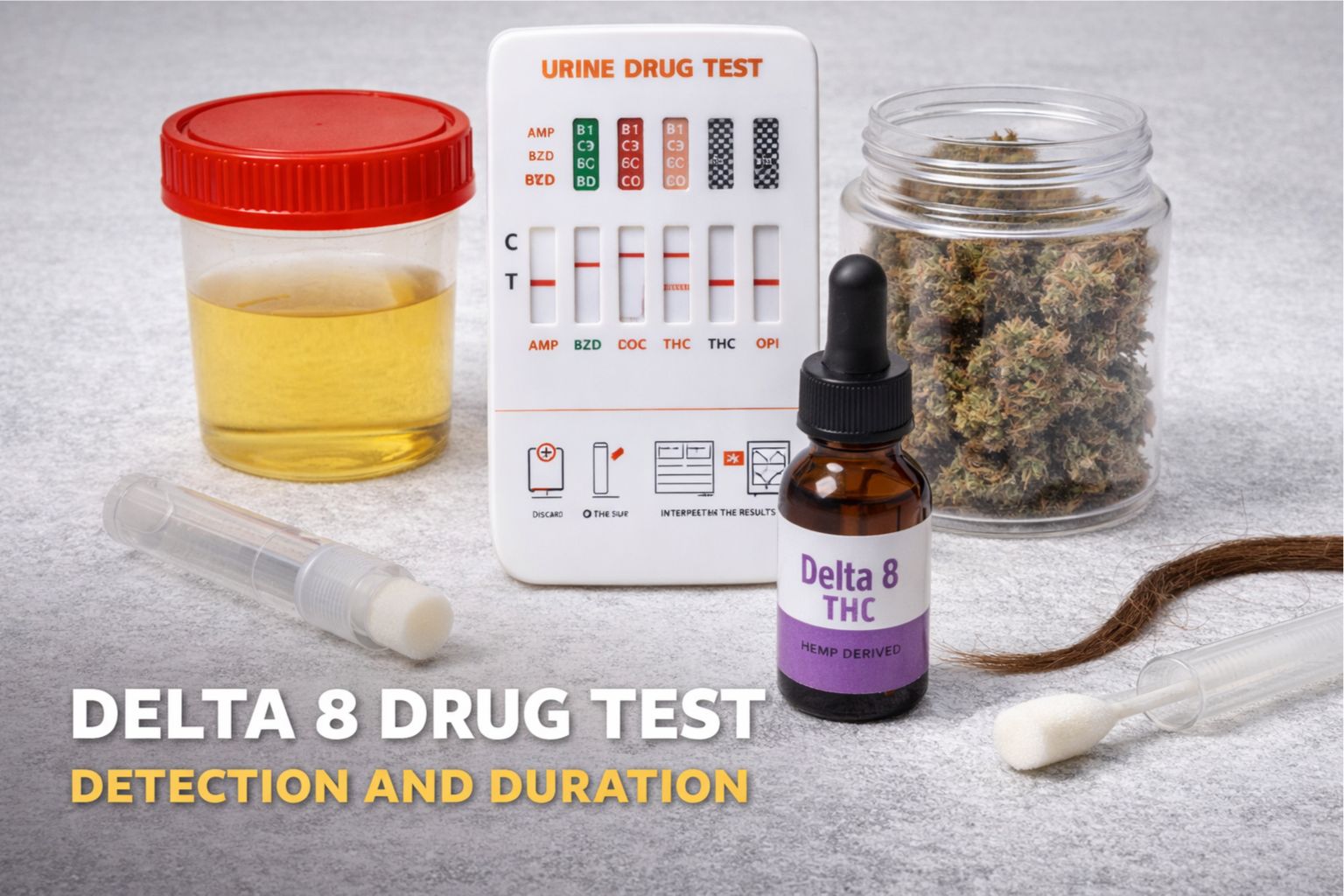
I have spent enough time around cannabis gardens to know that most “quick answers” do not survive contact with real plants. The same is true when the conversation shifts from soil mixes and PPFD to cannabinoids and testing. Over the last year, friends who grow marijuana and friends who only buy legal hemp products have asked me some version of the same question: will a Delta 8 Drug Test come back positive after using delta-8?
I get why people ask. Delta-8 products are sold in places where weed is still treated as a problem, and many shoppers assume “hemp-derived” means “test-proof.” In the cultivation community, there is also a second angle: growers and processors handle sticky plant material, kief, and concentrates, and they worry about exposure or about choosing products that could complicate a job screening.
This post is written from my hands-on perspective as someone who cultivates, reads lab paperwork, and tries to keep decisions grounded in what testing programs actually measure. It is educational content, not medical advice and not legal advice. If a test affects employment, licensing, or safety-sensitive work, the only responsible move is to follow the workplace drug testing policy that applies and, when needed, ask a qualified professional for guidance.
Delta-8 in plain language, without marketing gloss
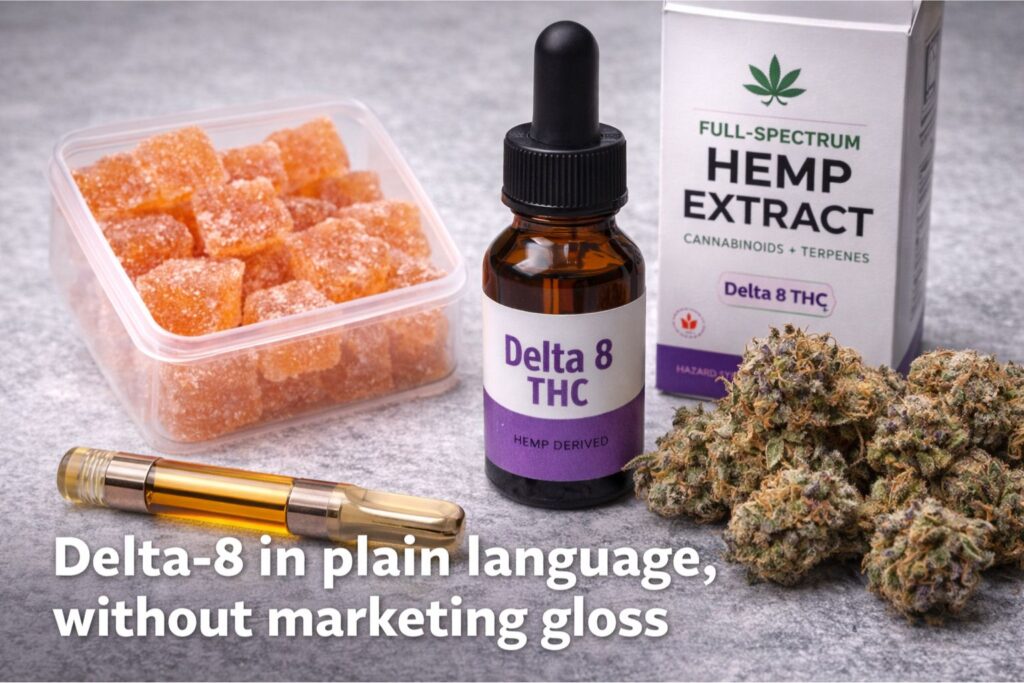
Delta-8 THC is an intoxicating cannabinoid that can appear naturally in cannabis at very low levels. In most retail products, delta-8 is produced through chemical conversion, commonly from CBD, and then formulated into edibles, vapes, or tinctures. From a practical standpoint, that means delta-8 products sit in the same processing ecosystem that produces other concentrated cannabinoid ingredients.
For shoppers, the confusing part is that product labels can sound reassuring while hiding meaningful details. A package might mention full-spectrum hemp extract and make it feel “gentler” than traditional marijuana. In reality, full-spectrum hemp extract can include a mix of cannabinoids and conversion byproducts depending on how it was made, stored, and tested. When someone is worried about a Delta 8 Drug Test, the label story matters less than the chemistry story.
How a typical workplace test is built
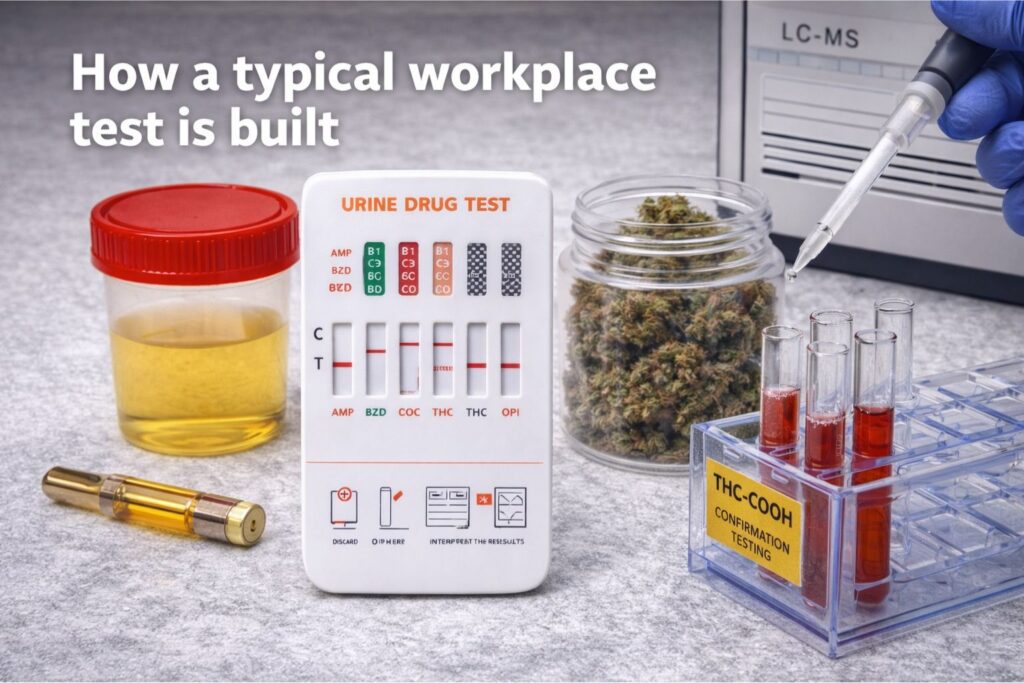
Most standard programs are two-step workflows. First comes a screen. If the screen is presumptively positive, a confirmatory method is used to identify specific analytes.
The screen is often an immunoassay. This is where immunoassay cross-reactivity becomes the most important phrase in the room. Immunoassays rely on antibodies that are designed to react to certain drug metabolites. Those antibodies are not tiny detectives that always separate delta-8 from delta-9; they are tools with known limits. immunoassay cross-reactivity is the reason a person can be surprised by a positive screen even when they believe they used a different compound.
When a screen is followed up, confirmation is typically done by a mass-spectrometry method that targets specific metabolites at specific cutoffs. In THC testing discussions, that tends to center on THC-COOH confirmation testing. A lot of people skip over the confirmation stage and argue about what the screen “really means,” but the confirmation stage is where analytical specificity is supposed to increase.
Metabolites: why delta-8 and delta-9 often collide on tests
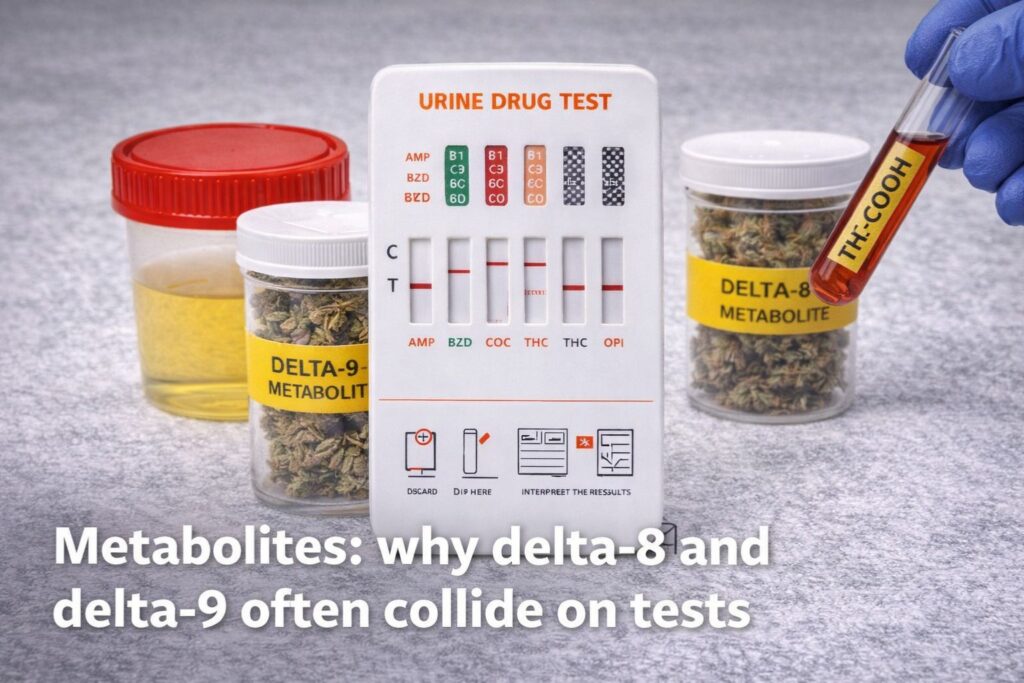
In the body, delta-8 and delta-9 are metabolized into compounds that can overlap in the way they are detected. Many programs are ultimately looking for THC-related metabolites rather than the original cannabinoid molecule. This is one reason delta-8 use can still become a problem in a Delta 8 Drug Test situation.
You will sometimes see the phrase delta-8 metabolite screening in more technical discussions. That phrase can be accurate in certain contexts, especially when labs build methods to differentiate metabolites associated with different cannabinoids. In some niche settings, delta-8 metabolite screening is used to answer research or compliance questions, but it is not the default approach in most employment programs. In everyday employment-style testing, though, the bigger reality is that delta-8 can still produce metabolites that fit under broad THC categories, and THC-COOH confirmation testing can still flag those metabolites depending on the lab’s method and targets.
To say it plainly: the more someone uses delta-8, the more they should assume a Delta 8 Drug Test could treat it similarly to other THC-like exposure, even if the product was purchased legally.
Detection windows by specimen type
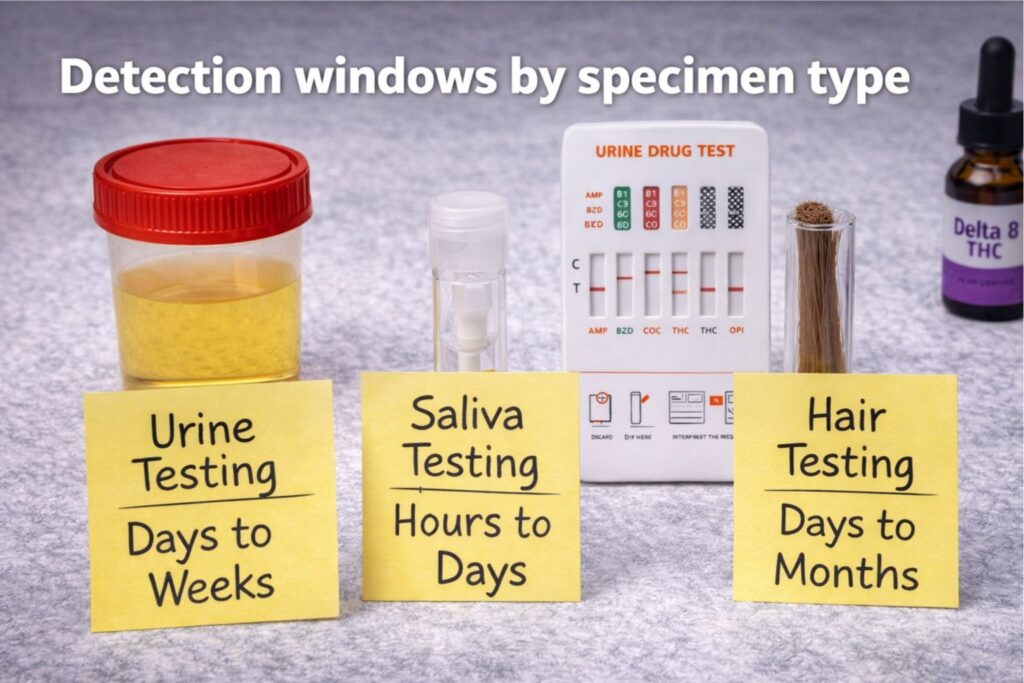
People love to ask for a single number, but detection is not a single-number problem. It is a range shaped by usage patterns, cutoffs, and the biology of how cannabinoids move through the body. Still, I can share how I frame the most common specimen types.
Urine tests: the most common screening setup
The urine drug test window is the one I hear about most because it is common in pre-employment and many routine programs. For one-time or occasional delta-8 users, the urine drug test window is often discussed in days. For frequent users, the urine drug test window can extend longer because THC-like metabolites are stored and released over time. That longer tail is why heavy, consistent use is harder to “predict” than someone who tried a product once.
A grower tip that translates here: consistency matters. If a person takes a delta-8 gummy every night, their body is dealing with repeat dosing, not an isolated event. That pattern changes the urine drug test window conversation.
Saliva swabs: shorter windows, different risks
saliva swab detection time is often shorter than urine in many programs, but it is not a free pass. saliva swab detection time can be strongly influenced by recent use and by contamination in the mouth. In my experience, people underestimate saliva swab detection time when they think a quick brush or rinse “solves it.” It does not. If delta-8 was used recently, saliva swab detection time can still be relevant.
Hair tests: longer lookback, complicated interpretation
hair follicle THC markers get treated like a permanent record, but hair testing depends on lab methods, sample handling, and how results are interpreted. hair follicle THC markers are generally used to evaluate longer-term patterns rather than last-night use, but they can be influenced by frequency, potency, and even certain environmental exposures. When people who work around cannabis ask me about hair testing, I tell them to avoid assumptions and to take the method seriously. hair follicle THC markers are not the place to gamble on incomplete information.
The variables that change detection duration
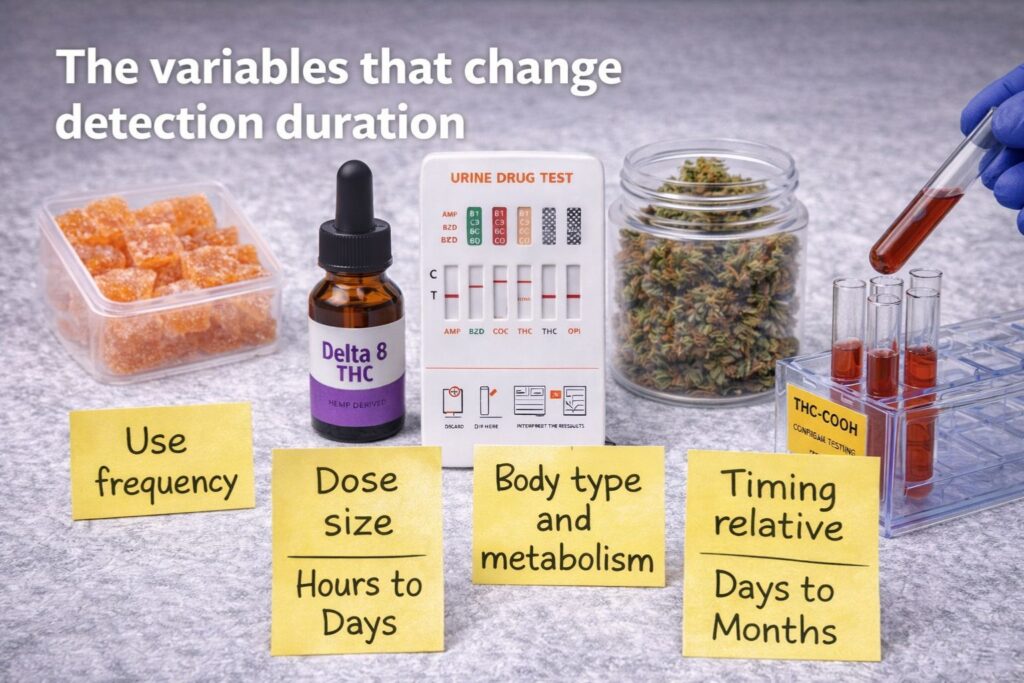
If I had to point to one reason this topic stays messy, it is variability. Here are the factors I have watched change outcomes in real life and in lab discussions:
- Use frequency and dose
Someone who takes small, consistent doses can build a longer tail than someone who used once. That shows up most clearly in the urine drug test window. - Product type and formulation
Edibles, vapes, tinctures, and drinks can deliver different exposure patterns. That matters for both saliva swab detection time and the urine drug test window. - Body composition and metabolism
THC-like compounds are lipophilic. People differ in how quickly they metabolize and clear cannabinoids. This is one reason two people can have different results after similar use. - Cutoff levels and lab method design
A program’s cutoff and whether it uses THC-COOH confirmation testing in a specific way matters. Two programs can treat the same person differently. - Timing relative to the test
This sounds obvious, but it is where people make the biggest mistakes with saliva swab detection time. Recent use is simply riskier for mouth-based sampling.
There is a sixth factor people ask about a lot: hydration and “detox.” I will be blunt. There is no reliable shortcut that works for everyone, and trying to manipulate a test is risky and unethical. Anyone searching for workarounds is better served by reading the workplace drug testing policy and deciding whether abstaining is the right call for their situation.
What I check before I trust a product: COAs and real transparency
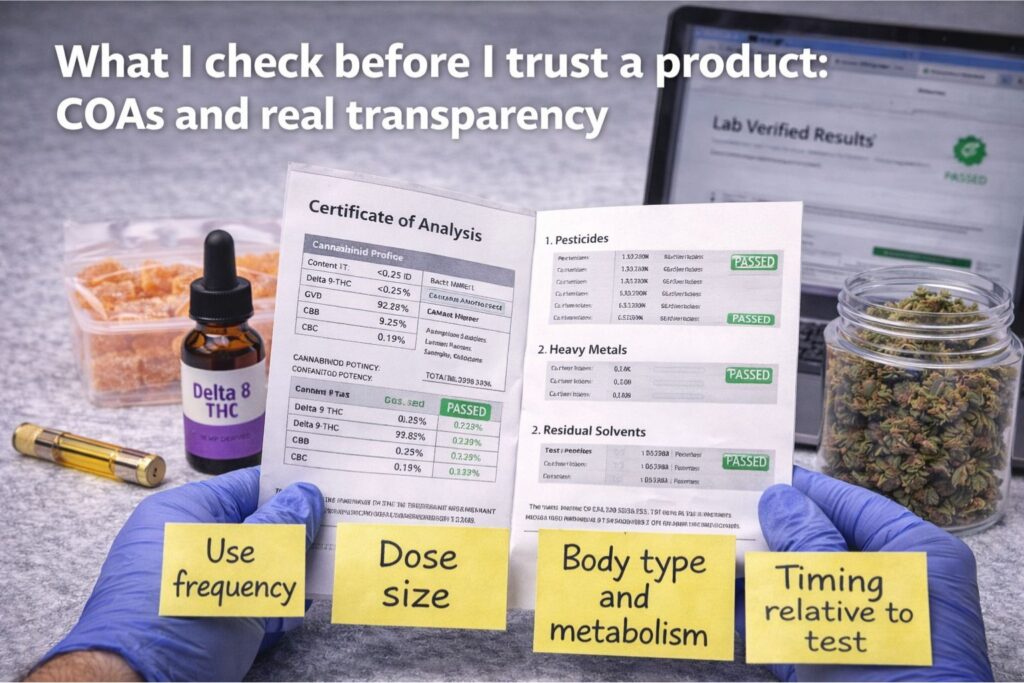
In a grow room, I do not “feel” my way through nutrient strength. I measure EC, watch runoff, and adjust. The same mindset applies to cannabinoids. certificate of analysis reading is not optional if someone cares about ingredients and risk.
When I do certificate of analysis reading, I look for:
- a batch identifier that matches the product in hand
- a recent test date and a lab name that can be verified
- a cannabinoid breakdown that lists more than one line item
- contaminant panels when available (residual solvents, pesticides, heavy metals)
I also pay attention to how the product is described. full-spectrum hemp extract sounds appealing because it suggests a more “complete” profile, but full-spectrum hemp extract can also increase uncertainty for testing because it may include small amounts of other cannabinoids. If someone’s job depends on a clean result, I do not recommend treating full-spectrum hemp extract as a safer option by default.
Finally, I keep one reality in view: hemp-derived cannabinoid legality and drug testing risk are not the same question. A product can be legal in a region and still produce a positive result on a THC panel. That is why hemp-derived cannabinoid legality needs to be discussed alongside the workplace drug testing policy at the workplace level.
The cultivation angle: exposure, concentrates, and hygiene
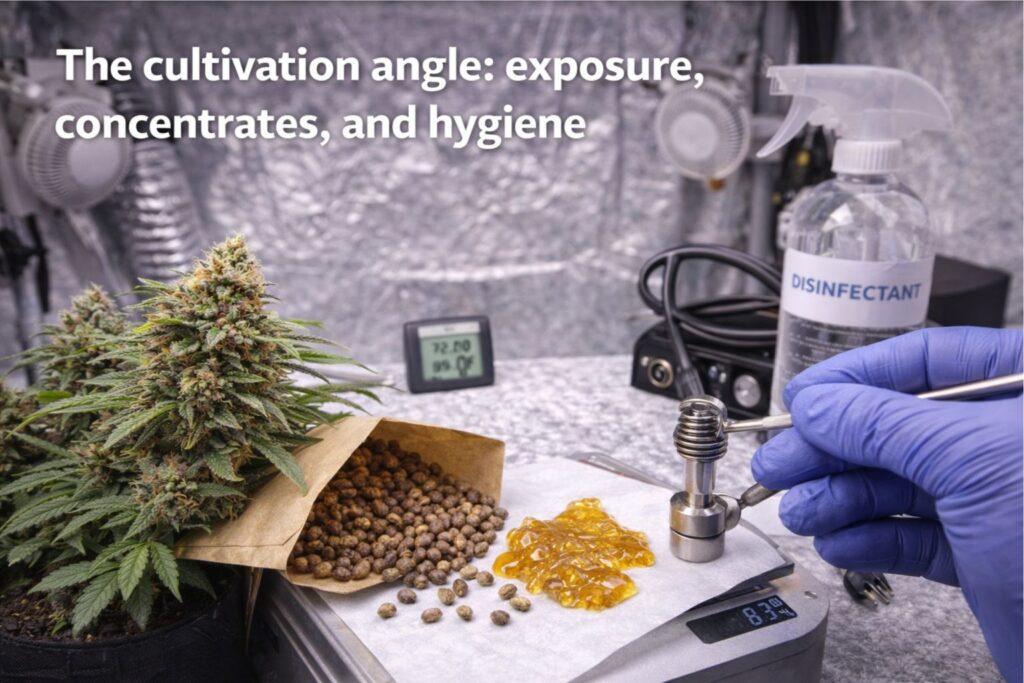
Growers often ask whether simply working with cannabis plants can cause a positive. In most normal gardening scenarios, touching a plant is not the same as consuming cannabinoids. That said, cultivation work can involve resin-heavy tasks where exposure is higher: bucking fresh flower, handling kief, trimming sticky tops, or working with concentrates.
In my own routines, I treat these tasks like lab work. I use gloves when handling resin-rich material, wash hands before eating, and keep break areas physically separated from processing areas. Those habits protect the crop and reduce needless exposure. They also fit the common-sense side of any workplace drug testing policy that expects employees to behave responsibly in safety-sensitive roles.
This is also where the cannabis, marijuana, and weed vocabulary matters. In a lot of places, marijuana is still the word used in policies and laws, while cannabis is used in science and industry, and weed is what people say casually. Testing programs do not care what word someone uses. They care what metabolites show up.
Seed buying, cultivation choices, and why they appear in this conversation
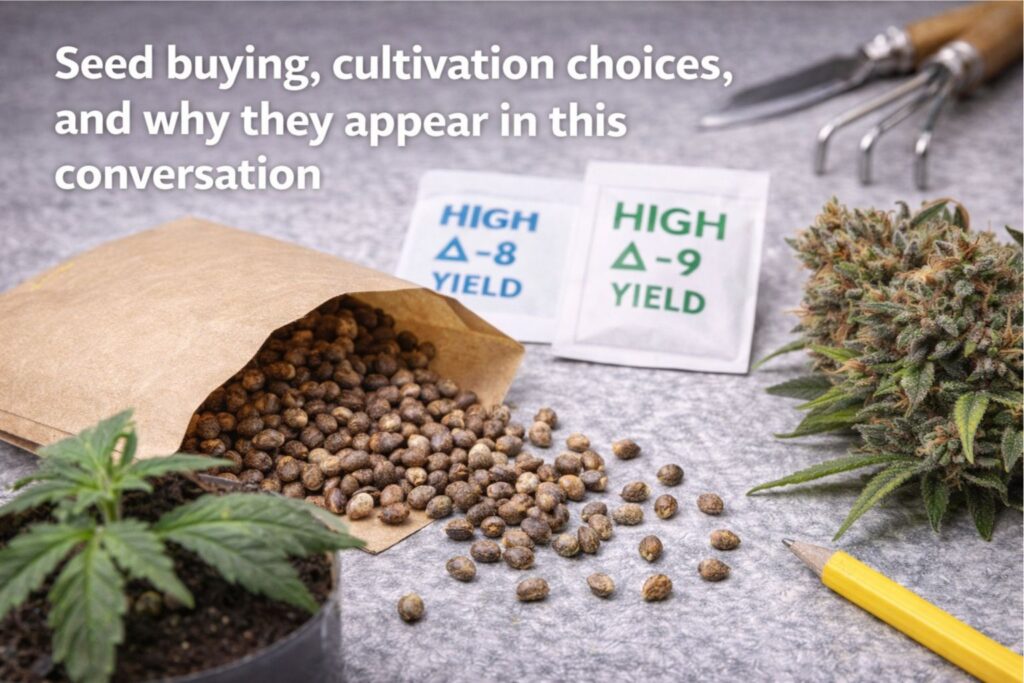
A surprising number of people who ask about delta-8 also ask about seeds in the same breath. They might be shopping for feminized lines, considering autoflower genetics for a small tent, or comparing soil versus hydroponics. Even when the topic is a Delta 8 Drug Test, the underlying question is often about risk and predictability.
From a cultivation standpoint, predictability comes from:
- consistent environment (temperature, humidity, airflow)
- stable lighting (known PPFD at canopy, sensible photoperiods)
- measured feeding (EC/PPM targets that match the stage)
- clean pest prevention rather than crisis spraying
When I set up an indoor room, I aim for a steady canopy PPFD appropriate to the stage, and I manage VPD so the plants transpire predictably. In veg, I keep the root zone well-oxygenated. In flower, I watch humidity to prevent mold pressure. Those are best practices whether someone grows cannabis for personal use or grows marijuana as a passion project where it is permitted.
On the seed side, I encourage people to choose a reputable supplier, store seeds cool and dry, and expect some phenotype variation even in stable lines. I also remind them that shipping rules and regional restrictions vary, and anyone ordering should check local requirements. That is part of being a responsible weed grower, and it ties back to the broader theme: compliance is personal and local, and it matters.
A practical checklist when testing is part of life
I cannot and will not offer tactics to “beat” a drug test. What I can offer is a risk-management checklist that matches reality.
- Read the workplace drug testing policy in full.
Do not rely on hearsay. Policies vary, and details matter. - Assume delta-8 can matter on a Delta 8 Drug Test.
If someone cannot afford a positive result, the conservative assumption is the safest. - Keep documentation for anything consumed.
If a person uses hemp products, keep receipts and do certificate of analysis reading on every batch. - Prefer transparency over vibes.
Avoid products without clear lab paperwork. Marketing is not evidence. - Be honest about frequency.
Daily use changes the urine drug test window and makes outcomes harder to predict. - If unsure, abstain and ask.
For safety-sensitive work, abstaining is often the cleanest way to reduce uncertainty, and asking a qualified professional can prevent costly mistakes.
FAQ: common long-tail questions from growers and shoppers
Can delta-8 make someone fail a standard THC panel?
Yes. immunoassay cross-reactivity can produce a presumptive positive on a screen, and THC-COOH confirmation testing can still detect relevant metabolites depending on method and cutoffs. This is why I treat delta-8 as a real factor in a Delta 8 Drug Test discussion.
How long does delta-8 stay detectable in urine?
Some labs may advertise delta-8 metabolite screening, but unless a program specifically states it uses that approach, it is safer to assume the test is looking for THC-related metabolites more broadly.
The urine drug test window depends on frequency, dose, and individual metabolism. Occasional use is typically discussed in days, while frequent use can last longer.
Is saliva testing different from urine testing?
Yes. saliva swab detection time often reflects recent use more strongly than urine, but it is still variable and not reliably predictable.
Do hair tests look back farther?
Often, yes. hair follicle THC markers are generally used for longer-term pattern detection, but interpretation depends on lab procedures and context.
Are full-spectrum products riskier for testing?
They can be. full-spectrum hemp extract may include additional cannabinoids that increase uncertainty. Even with careful certificate of analysis reading, a person cannot guarantee a negative outcome.
If a product is legal, does that mean it will not show up on a test?
No. hemp-derived cannabinoid legality does not prevent metabolites from being detected. The deciding factor is the workplace drug testing policy and the testing method, not the retail legality.
Closing: the most honest takeaway I can give
In the garden, the most reliable results come from controlling variables you can actually control. Drug testing is similar. If someone’s career depends on the outcome, the conservative approach is to treat delta-8 as a compound that can matter in a Delta 8 Drug Test. Learn how screens work, understand why immunoassay cross-reactivity exists, and remember that THC-COOH confirmation testing, delta-8 metabolite screening in specialized contexts, and metabolite targeting can collapse the “delta-8 versus delta-9” debate fast.
If someone still chooses to use delta-8, the responsible steps are transparent purchasing, consistent certificate of analysis reading, and a clear understanding of the workplace drug testing policy that governs their situation. That is not a flashy answer, but it is the one I have seen hold up when real consequences are on the line.
