Why I Wrote This
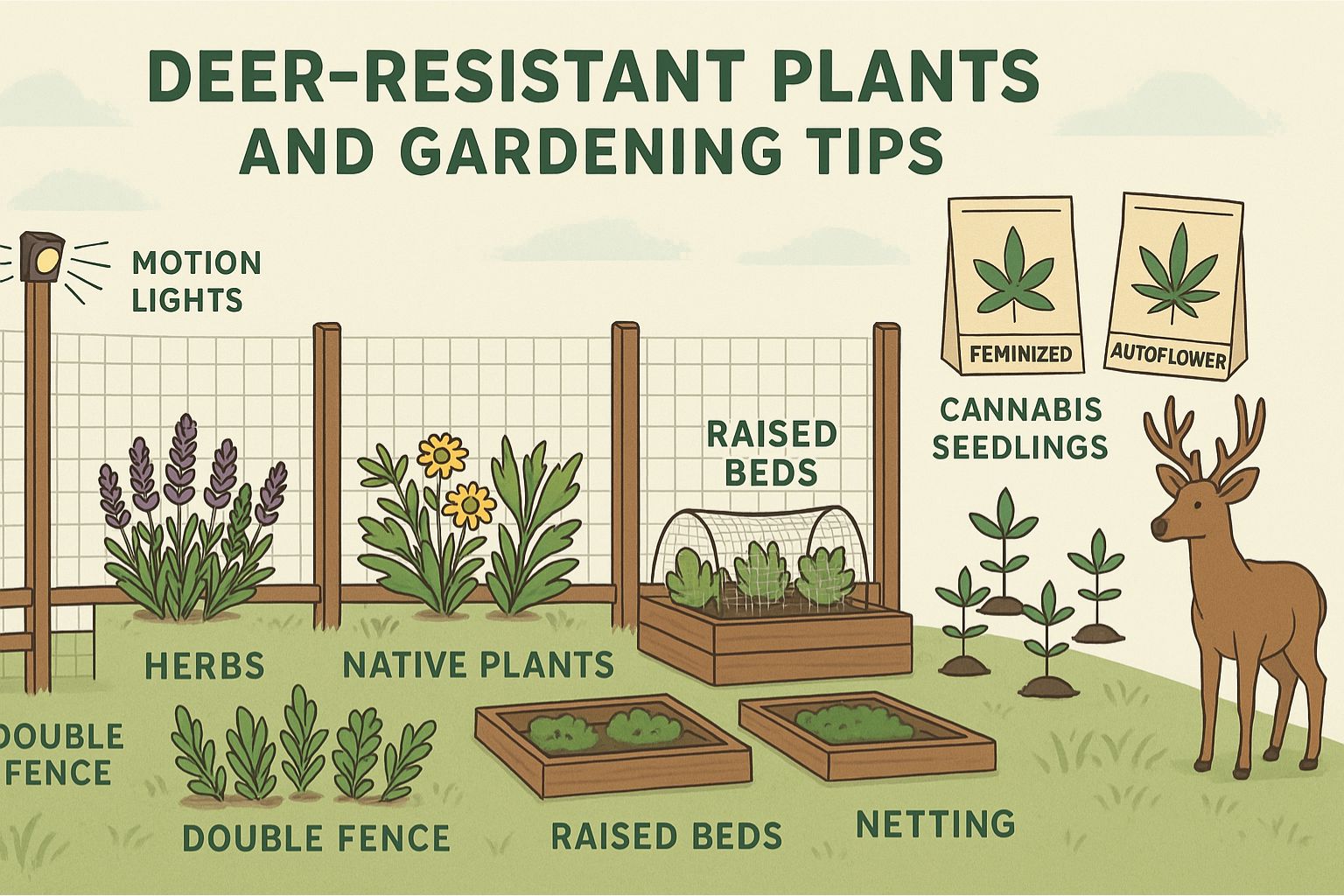
I grow year-round—photoperiod cannabis in a protected greenhouse, autoflowers along the fence line in summer, and food crops tucked between resistant perennials. My number one outdoor pressure isn’t wind, mold, or even irrigation. It’s deer. After too many stripped tops and nibbled nodes, I rebuilt the entire layout around Deer-Resistant Plants and Gardening Tips that actually work. This article is everything I use today: how I plan a deer resistant garden, the fencing for deer that finally stopped midnight raids, which aromatic herbs and native plants buy my cannabis time to grow, and how raised beds and better seed selection make the whole system easier to manage.
Nothing here is medical or legal advice. Follow regional grow laws, read product labels, and make the best choices for your site.
Start With A Plan: Map Browse Lines, Trails, And Water
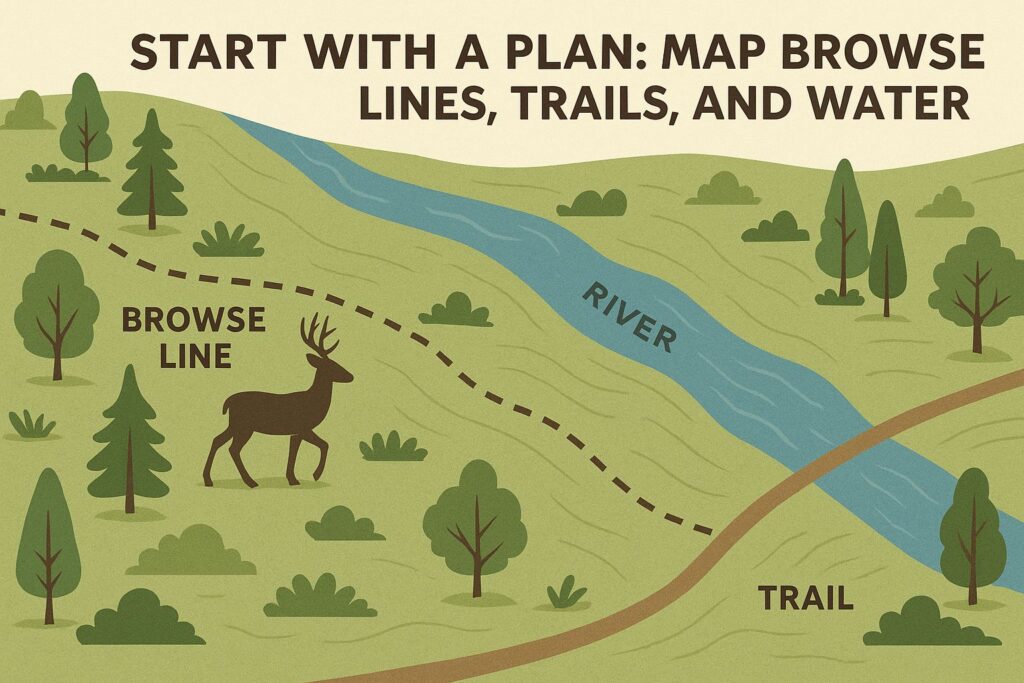
Before I picked plants, I walked the property at dawn and dusk for a week. I flagged trails, bedding areas, and browse lines. That map guided my Deer-Resistant Plants and Gardening Tips:
- Put the highest-value plants—marijuana, tomatoes, tender greens—closest to the house and the dog run.
- Use native plants and resistant perennials on the perimeter as the first line of defense.
- Stack aromatic herbs and companion planting around vulnerable beds.
- Build raised beds where soil is heavy and drainage slow; deer prefer soft soil edges for tracks.
By designing a deer resistant garden from the outside in, I reduced pressure before I hammered a single post.
Fencing For Deer: What Actually Works
I resisted fencing for deer for years. Everything else helped, but fencing for deer ended crop losses overnight. Here are my realities:
8-Foot Perimeter, 6-Foot Inner Veg Fence
- The outer perimeter is 8-foot woven wire with corners braced like a proper H-frame. It’s not pretty; it’s effective.
- Inside that, my vegetable and cannabis zone has a 6-foot welded wire fence with a 3-foot offset from the outer line. The double-depth confuses jumps—part of my Deer-Resistant Plants and Gardening Tips.
Gates And Ground
- I bury the bottom 10–15 cm with landscape staples where gaps appear. Deer will nose low spots.
- Gates are tight; I add a 1×6 board across the bottom so fawns can’t slip under.
Temporary Nets For Autoflowers
When I pop autoflowers in spring, I ring each raised bed with temporary plastic netting for the first four weeks. It’s quick, cheap, and buys time until aroma and companion planting kick in.
I’ve tried scare devices. They work for a week. Fencing for deer works all season.
Companion Planting That Buys My Cannabis Time
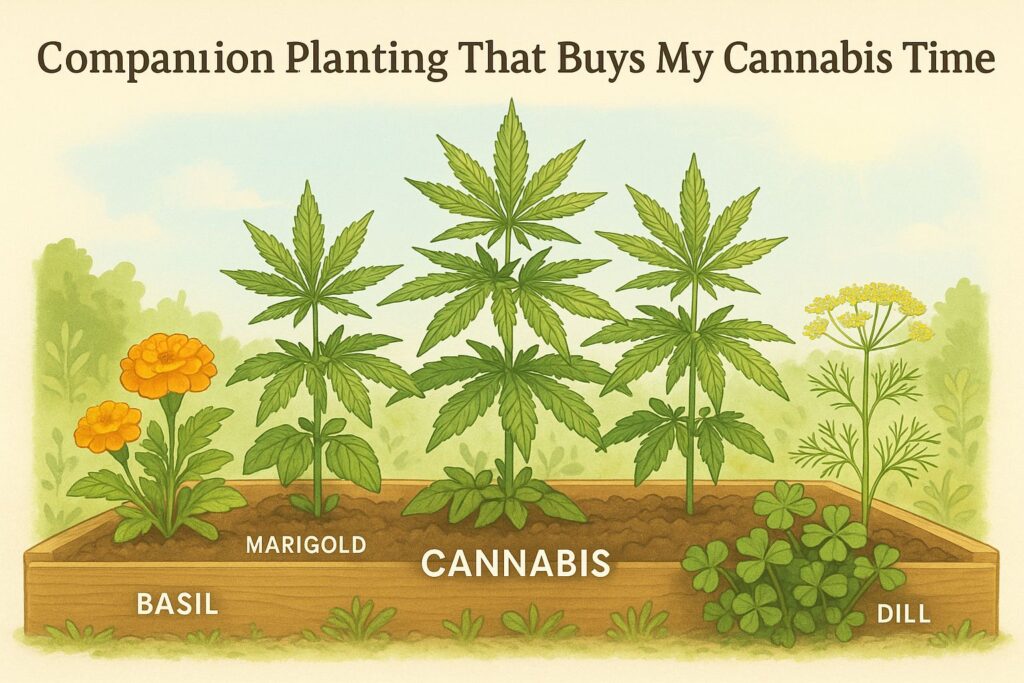
Companion planting is the backbone of my deer resistant garden. Deer learn what’s tasty. I surround the good stuff with scents and textures they don’t like.
Aromatic Herbs That Earn Their Keep
- Rosemary, thyme, oregano, sage, lavender, and basil go in every border. These aromatic herbs mask “green” smells and create a wall of fragrance.
- I plant densely: three herbs per linear foot for a thick edge. Aromatic herbs need sun and good drainage; raised beds make spacing clean.
Texture And Sap
- Yarrow, tansy, and lamb’s ear offer fuzzy or bitter foliage, classic Deer-Resistant Plants and Gardening Tips favorites. Deer touch and move on.
- Marigold lines the bed edges; while not a force field, the pungent smell helps, and it supports organic pest control for aphids and whiteflies.
Flower Power For Pollinators And Confusion
- Calendula, echinacea, and black-eyed Susan—native plants in my region—bring beneficials and visual noise. In a mixed deer resistant garden, movement and scent layers matter.
I still lose a few tips early season, but companion planting turns a buffet into “hmm… maybe later.”
Native Plants And Resistant Perennials For The Perimeter
I’ve learned the hard way that imported ornamentals can be dessert. I lean on native plants and resistant perennials because they evolved with local browsers.
- Native plants: coneflower, bee balm, goldenrod, serviceberry, and ninebark create a living fence line that feeds pollinators and asks little of me.
- Resistant perennials: Russian sage, catmint, salvia, sedum, and hellebore stand up after tasting. I repeat them in drifts—great structure, low browse.
Using native plants three ways—perimeter, pollinator strips, and windbreaks—keeps my Deer-Resistant Plants and Gardening Tips simple, drought-smart, and beautiful.
Raised Beds: Structure, Drainage, And Deer Behavior
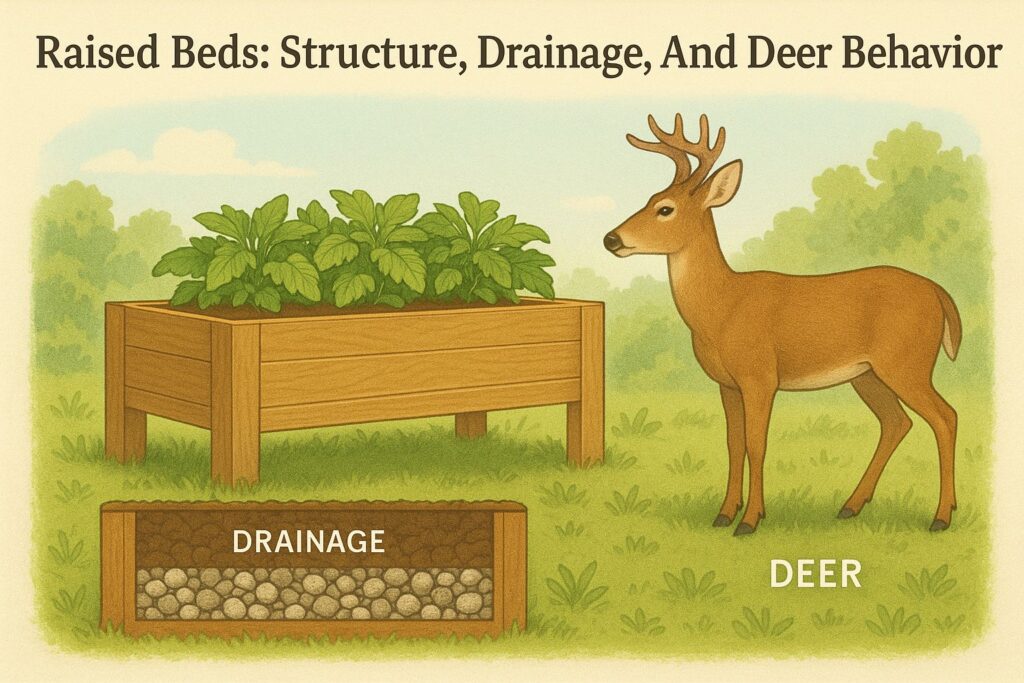
Raised beds changed everything. They:
- Dry faster in spring, which reduces slug and snail pressure and discourages hoof prints.
- Keep soil biologically active, so cannabis roots outrun early nibbling.
- Make draping netting or floating row cover easier during the most vulnerable weeks.
I build raised beds 30–40 cm high with 2×10 boards, 1.2 m wide for reach, and 2.4–3.6 m long for crop rotation. In my deer resistant garden, raised beds behind fencing for deer create layers: deer meet aroma, height, then wire.
Seed Selection: Choose Genetics That Can Handle Pressure
Not all plants respond the same to browsing or stress. My seed selection now considers vigor, stem thickness, and finish time.
Cannabis Notes From My Beds
- Feminized seeds with hybrid vigor (indica/sativa crosses) handle early-season cold and quick topping better than narrow-leaf sativas outdoors.
- Autoflowers let me sprint: I can plant a fast 75–85 day auto early, harvest before peak pressure in late summer, then re-seed. That’s seed selection with deer in mind.
- If I must restart after a browse, autos recover faster than photoperiods. I keep two extra transplants on the bench for insurance.
Ornamentals And Veg
- For tomatoes, I choose stout-stemmed determinates on the outer edge and indeterminates inside. For perennials, I pick thick, woody crowns. That’s resistant perennials thinking.
Good seed selection reduces rescue work later and keeps Deer-Resistant Plants and Gardening Tips from turning into Deer-Resistant Plants and Constant Replanting.
Environmental Control: Greenhouse And Hoop Tips
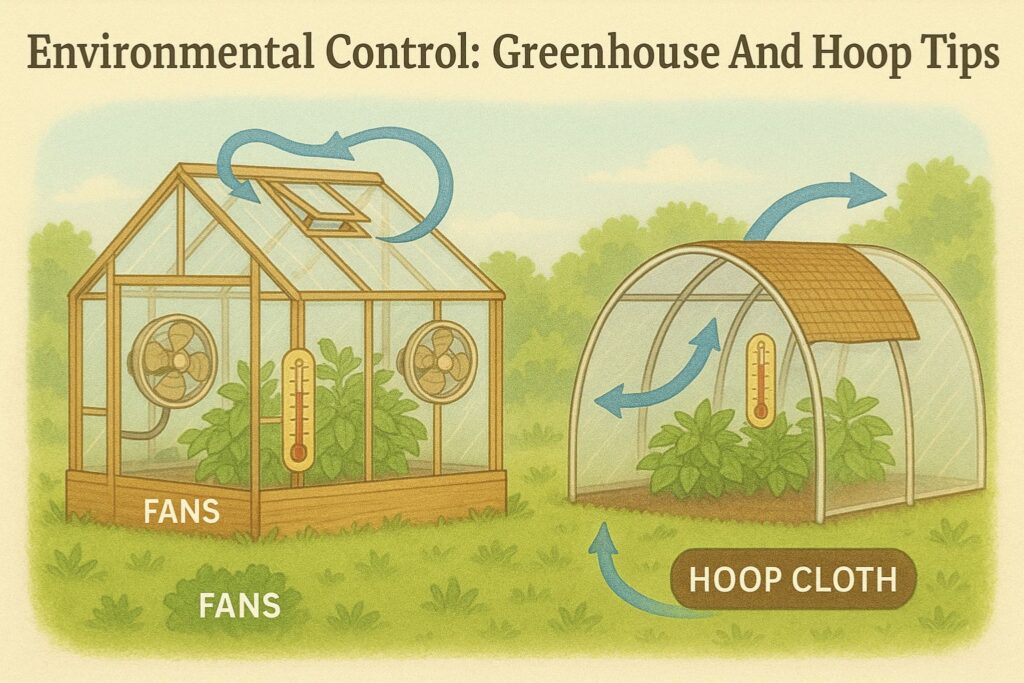
Outdoor weather swings can attract deer (lush regrowth after rain) and stress plants. I use microclimate tools that also support cannabis quality.
- In the greenhouse, PPFD hits 600–800 µmol/m²/s on sunny days; I use 30% shade cloth to keep canopy temps under 28°C and hold VPD 1.2–1.4 kPa in flower. Healthy marijuana plants bounce back from light browse better than weak ones.
- Fans create constant, gentle airflow. Deer don’t like flapping fabric near fences; I don’t mind the bonus.
- Drip lines with mulch keep foliage dry, which also supports organic pest control by discouraging mildew.
These are small things, but Deer-Resistant Plants and Gardening Tips aren’t only about deer—they’re about plant resilience.
Organic Pest Control That Won’t Invite Browsers
Deer prefer lush, soft growth. Overfeeding nitrogen makes a salad bar. I keep organic pest control and nutrition balanced so the weed (and vegetables) stay sturdy.
- Compost + mineral top-dress beats heavy liquid nitrogen. Flavor stays rich; leaves thicken.
- BT and beneficials (lady beetles, lacewings) handle caterpillars and aphids without scenting the garden like a buffet.
- I spray only at dusk, avoiding pollinators and keeping aromatic herbs fragrant. Organic pest control means results without turning deer curious.
Mentioning it three times isn’t a typo—organic pest control intersects with deer behavior: fewer pests, less sugary regrowth, fewer nighttime visits.
Irrigation And Fertility For Tough, Unappealing Growth
- Water deeply and less frequently; shallow, frequent watering keeps foliage tender.
- EC for outdoor coco/soilless mixes sits around 1.4–1.8 in peak veg; soil gets a gentle 0.8–1.2 EC through teas and top-dress. Pushing EC too high creates salt stress that browsers detect as weak growth.
- Mulch with shredded leaves and arbor chips to hide soil scent trails and protect moisture around raised beds.
Resilient plants taste worse to deer. That’s the quiet win behind Deer-Resistant Plants and Gardening Tips.
Layout Examples From My Yard
Front Hedge: Native Plants + Resistant Perennials
Ninebark (native plants) forms the backbone; Russian sage and catmint (resistant perennials) fill between. Aromatic herbs line the path. It’s my public-facing deer resistant garden—zero sprays, four seasons of interest.
Main Food/Cannabis Block: Double Fence + Companion Planting
Inside the 8-foot perimeter, four raised beds sit in a grid. Each edge has marigold, rosemary, and thyme. Autoflowers fill corner pockets; photoperiods stay inside with the tallest herbs. Fencing for deer outside, scents inside.
Orchard Strip: Trap Crop + Exit Lane
A row of clover and alfalfa grows 10 meters outside the fence. Deer stop there first and often stay there. It’s not a perfect solution, but along with fencing for deer it reduces pressure on my side.
Regional Grow Laws And Good Neighbor Notes
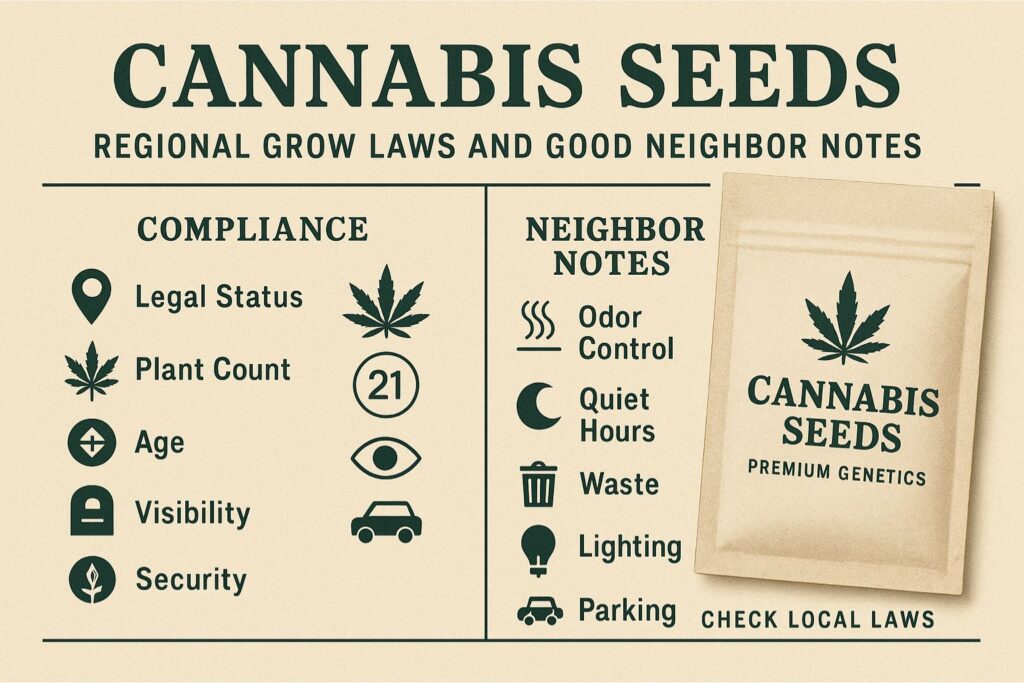
When I plan any deer resistant garden around cannabis, I study regional grow laws first: plant counts, setbacks from public ways, and fence height limits. I keep the highest fence lines within code and choose native plants as screens rather than tarps. It’s calmer for neighbors and better for pollinators. Whatever you plant, map regional grow laws into the plan early so you don’t rebuild later.
I’m repeating regional grow laws because the fastest way to ruin a great layout is to ignore them and redo posts mid-season.
Quick Lists You Can Use Today
Plants Deer Usually Leave Alone For Me
- Aromatic herbs: rosemary, thyme, sage, oregano, lavender, basil.
- Resistant perennials: Russian sage, catmint, salvia, sedum, hellebore, yarrow.
- Native plants: coneflower, bee balm, goldenrod, ninebark, serviceberry.
Use them to anchor companion planting, frame raised beds, and pad fence lines.
Plants Deer Target Here
- Young beans, peas, and tender lettuce.
- Sweet corn at silk stage.
- New cannabis tops during June flush, before aromatic herbs fully size up.
Place these inside the tightest protection and near pathways with motion lights.
Seasonal Calendar
- Late Winter: Set posts, check fencing for deer, repair gates, start aromatic herbs indoors. Review regional grow laws if you’re adding structures.
- Early Spring: Build/refresh raised beds, transplant herbs, sow native plants for edges. Begin companion planting and place sticky cards for early pests.
- Late Spring: Harden cannabis starts; deploy temporary netting around new autos. Continue organic pest control monitoring.
- Summer: Maintain mulch, deepen water schedule, prune herbs after first bloom to refresh scent. Rotate BT and beneficials as needed.
- Fall: Harvest, dry, and cure; then sow native plants and resistant perennials; repair fencing for deer before winter storms.
FAQ
What’s the single best investment for a deer resistant garden?
Fencing for deer. Companion planting and aromatic herbs help, but a good fence ends panic. Use 8-foot woven wire where allowed by regional grow laws, and secure the bottom.
Are any cannabis strains naturally deer-proof?
No strain is deer-proof, but vigorous hybrids with thick stems and fast recovery handle light browse better. Smart seed selection matters. Autoflowers let you re-start quickly if you lose an early plant.
Do predator urine and motion sprinklers work?
Briefly. In my experience, they fade after a week. I use them only as temporary layers while I finish fencing for deer and get aromatic herbs and native plants established.
Can I keep beds small and win without a fence?
You can stack raised beds, dense companion planting, and temporary netting to get decent success in small spaces. For larger plots, fencing for deer saves time and money long-term.
How do I protect seedlings in week one?
Cloches or small mesh covers over each transplant, with aromatic herbs on the bed corners. Keep soil firm around stems so there’s no wobble—deer test plants with a light tug.
Checklist: The 10 Rules That Saved My Harvests
- Map trails and browse lines before planting.
- Install fencing for deer where legal; double-depth if space allows.
- Build raised beds for drainage, structure, and easy netting.
- Plant aromatic herbs thickly as a living border.
- Use native plants and resistant perennials for the outer perimeter.
- Design companion planting around your highest-value crops.
- Make seed selection with vigor and recovery in mind; keep autoflowers as backups.
- Run organic pest control to avoid lush, overfed foliage that deer love.
- Deep, infrequent watering; balanced EC; mulch to hide scent trails.
- Re-check regional grow laws each season before upgrades or new structures.
Final Notes From The Yard
After a decade of trial and error, Deer-Resistant Plants and Gardening Tips for me are about layers: a strong fence, a wall of scent, smart seed selection, healthy soil, and a layout deer would rather walk around than through. My deer resistant garden isn’t a fortress—it’s a habitat where cannabis, vegetables, aromatic herbs, native plants, and resistant perennials play different defensive roles. When everything is in place, organic pest control gets easier, raised beds stay tidy, and I can walk out at dawn to find my marijuana untouched and humming with pollinators.
Build your plan once, match it to regional grow laws, and let the system work. The deer will still visit. They just won’t stay for dinner.
