Table of Contents
Deep Purple is a premium indica-dominant hybrid strain renowned for its deep purple hues, sweet grape-like aroma, and relaxing effects. Bred by TGA Subcool Seeds, this strain is a result of crossing Purple Urkle and Querkle, two well-known indica varieties recognized for their powerful sedative properties and sweet, fruity flavors.
Deep Purple is highly sought after for its ability to promote relaxation, alleviate stress, and provide pain relief, making it an ideal choice for both medical and recreational users.
Genetic Lineage and Background
- Parent Strains: Purple Urkle x Querkle
- Dominance: 80% Indica / 20% Sativa
- Breeder: TGA Subcool Seeds
- THC Content: Typically ranges between 17-22%
- CBD Content: Low (<1%)
- Terpene Profile: Myrcene, Pinene, Caryophyllene, Linalool
Deep Purple was bred with the goal of enhancing the rich purple coloration and sweet grape and berry flavors from its Purple Urkle parent while improving its structure and potency through Querkle’s genetics.
Appearance, Aroma, and Flavor
Appearance:
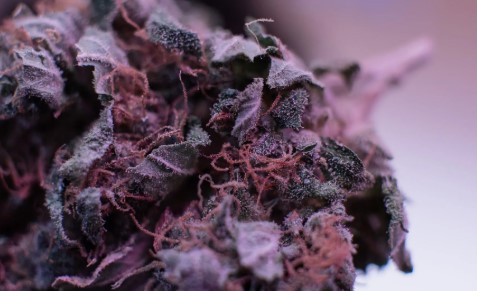
- Characterized by deep purple-colored buds with a dense and compact structure.
- The trichome coverage is heavy, giving the buds a frosty, resinous look.
- Orange pistils contrast beautifully with the dark purple and green tones.
Aroma:
- Deep Purple is strongly aromatic, with a sweet grape scent reminiscent of wine or berries.
- Earthy undertones combined with subtle spicy and piney notes due to its Pinene and Caryophyllene content.
- When broken apart, a pungent, skunky aroma is noticeable.
Flavor:
- The strain has a rich, grape-dominant flavor, much like its scent.
- Hints of earthiness, spice, and citrus can be detected.
- Smooth, slightly sweet smoke that leaves a lingering berry aftertaste.
Scientific Composition & Chemical Profile
Deep Purple’s effects are largely influenced by its cannabinoid and terpene profile.
Cannabinoid Content:
| Cannabinoid | Average Percentage |
|---|---|
| THC | 17-22% |
| CBD | <1% |
| CBN | 0.5-1.5% |
| CBG | 1-2% |
Terpene Profile:
| Terpene | Effects & Benefits |
| Myrcene | Sedation, relaxation, pain relief |
| Pinene | Anti-inflammatory, bronchodilation, mental clarity |
| Caryophyllene | Anti-anxiety, pain relief, anti-inflammatory |
| Linalool | Calming, anti-stress, muscle relaxation |
Deep Purple’s high myrcene concentration makes it a potent sedative strain, while Pinene and Caryophyllene provide a mild uplifting and anti-inflammatory effect, making it ideal for relaxation and pain management.
Medical Uses of Deep Purple
Deep Purple has a wide range of therapeutic applications due to its strong indica effects. Below are specific medical conditions it may help with:
1. Chronic Pain Relief
- The high THC and Myrcene content in Deep Purple provides analgesic properties, helping to relieve chronic pain, muscle spasms, and joint discomfort.
- Beneficial for conditions such as fibromyalgia, arthritis, and lower back pain.
2. Insomnia and Sleep Disorders
- Due to its sedative nature, Deep Purple is an effective remedy for insomnia.
- Enhances the quality of consumers’ sleep and helps them fall asleep more quickly.
3. Anxiety and Stress Relief
- The combination of Myrcene, Linalool, and Caryophyllene works to reduce anxiety levels and promote relaxation.
- Helpful for those suffering from generalized anxiety disorder (GAD) and PTSD.
4. Appetite Stimulation
- Deep Purple can stimulate appetite, making it a good choice for those dealing with loss of appetite due to chemotherapy, eating disorders, or other medical conditions.
5. Anti-Inflammatory Properties
- The Caryophyllene and Pinene content helps to reduce inflammation, making it beneficial for conditions like Crohn’s disease, multiple sclerosis, and lupus.
6. Migraine and Headache Relief
- Deep Purple’s pain-relieving and muscle-relaxing effects help alleviate tension headaches and migraines.
Recreational Uses of Deep Purple
1. Relaxation & Stress Reduction
- Provides full-body relaxation, making it a great strain for unwinding after a long day.
- Creates a calm and euphoric high that melts away tension and stress.
2. Social & Creative Enhancer
- Although mostly sedative, Deep Purple can enhance creativity and conversation in small doses.
- Ideal for listening to music, watching movies, or enjoying artistic activities.
3. Evening & Nighttime Use
- Not recommended for daytime use due to its heavy relaxation and couch-lock effects.
- Perfect for winding down at night or before bedtime.
4. Enhances Sensory Experience
- Heightens taste and smell perception, making food and drinks more enjoyable.
- Popular for use in romantic or intimate settings due to its euphoric and body-soothing effects.
Growing Information
Cultivation for Deep Purple Cannabis Strain
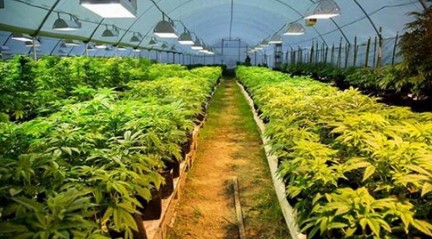
Cultivating Deep Purple requires careful environmental control, nutrient management, and plant training techniques to optimize yield, potency, and its signature purple coloration. Below is a scientific breakdown of the best cultivation methods to achieve high-quality results.
1. Optimal Growing Environment
A. Temperature and Humidity Control
- Vegetative Stage (Weeks 1-4):
- Temperature: 22-28°C (72-82°F)
- Humidity: 55-65%
- Light Cycle: 18/6 (18 hours light, 6 hours dark)
- CO₂ Enrichment: 800-1200 ppm (increases vegetative growth rate)
- Flowering Stage (Weeks 5-9):
- Temperature: 18-24°C (65-75°F) (Lowering temperatures helps express purple hues)
- Humidity: 40-50% (Prevent mold and bud rot)
- Light Cycle: 12/12 (12 hours light, 12 hours dark)
- CO₂ Enrichment: 1000-1200 ppm (improves bud development and THC production)
- Late Flowering (Final 2 Weeks)
- Temperature drop to 15-18°C (59-65°F) at night to encourage anthocyanin production, which enhances the deep purple hues.
- Reduce humidity to 35-40% to avoid mold issues.
2. Light Requirements
Deep Purple thrives under high-intensity light conditions for maximum yield and potency.
- Indoor Setup:
- Veg Stage: LED or MH (Metal Halide) lights at 400-600 PPFD (µmol/m²/s)
- Flowering Stage: LED or HPS (High-Pressure Sodium) lights at 700-1000 PPFD
- Outdoor Setup:
- Prefers a Mediterranean climate with full sun exposure (8-12 hours daily).
- Ensure plants receive direct sunlight for better terpene and cannabinoid development.
3. Soil vs. Hydroponics Cultivation
Deep Purple adapts well to both soil-based and hydroponic systems. However, specific techniques can improve plant health and yield.
A. Soil-Based Cultivation
- Best for organic growing and terpene development.
- Ideal Soil Mix:
- 40% Peat Moss or Coco Coir (retains moisture)
- 30% Perlite (improves aeration)
- 20% Organic Compost (nutrient-rich)
- 10% Worm Castings / Mycorrhizal Fungi (boosts root growth and nutrient uptake)
- pH Level: Maintain at 6.0-6.5
- Nutrient Feeding Schedule:
- Veg Stage: High in Nitrogen (N) (4-2-3 ratio)
- Flowering Stage: Shift to high Phosphorus (P) & Potassium (K) (2-4-6 ratio)
- Final 2 Weeks: Flush with pure water (pH 6.2) to remove excess nutrients.
B. Hydroponic Cultivation
- Provides faster growth, higher yield, and better control over nutrient absorption.
- Best Hydroponic Systems for Deep Purple:
- Deep Water Culture (DWC) – Fast root growth and high oxygenation.
- Nutrient Film Technique (NFT) – Continuous flow of nutrients enhances terpene production.
- Optimal Nutrient Solution pH: 5.5-6.0
- EC Levels (Electrical Conductivity) for Hydroponics:
- Veg Stage: 1.2-1.6 mS/cm
- Flowering Stage: 1.8-2.2 mS/cm
- Flush Period: 0.2-0.5 mS/cm (pure water)
4. Training Techniques to Maximize Yield
Training methods enhance light penetration, improve airflow, and increase bud sites.
A. Low-Stress Training (LST)
- Bend and tie branches outward to create an even canopy.
- Promotes better light exposure and airflow.
- Increases bud size and uniformity.
B. Topping (Apical Pruning)
- Cut the top growth tip at the 4th-5th node to encourage multiple colas instead of one main cola.
- Slows vertical growth but improves yield density.
C. Defoliation (Selective Leaf Removal)
- Remove lower fan leaves to increase light penetration and airflow.
- Prevents mold and pest infestations.
5. Flushing and Harvest Timing
- Flushing (Final 2 Weeks):
- Use pH-balanced pure water (6.2 for soil, 5.8 for hydro).
- Removes excess salts and nutrients, leading to a smoother smoke.
- Harvest Window:
- Optimal Trichome Coloration:
- Milky trichomes = Peak THC potency
- Amber trichomes = Higher sedative effect
- Ideal Time to Harvest:
- 70% Milky + 30% Amber for balanced effects
- 50% Milky + 50% Amber for stronger sedative effects
- Optimal Trichome Coloration:
- Post-Harvest Curing Process:
- Dry buds at 60-65°F, 50-55% humidity for 7-14 days.
- Cure in glass jars, burping daily for 2-4 weeks for full terpene development.
Methods of Ingestion, Onset, and Duration
Deep Purple, an indica-dominant hybrid, has varying onset times, peak effects, and duration depending on the method of ingestion. The bioavailability and effects can be influenced by metabolism, cannabinoid profile, and individual tolerance. Below is a comprehensive breakdown of ingestion methods and their scientific mechanisms.
1. Methods of Ingestion
A. Inhalation (Smoking & Vaporization)
Mechanism:
- When cannabis is inhaled, THC and other cannabinoids enter the bloodstream via pulmonary absorption in the lungs.
- The alveoli in the lungs allow for rapid diffusion, leading to fast onset of effects.
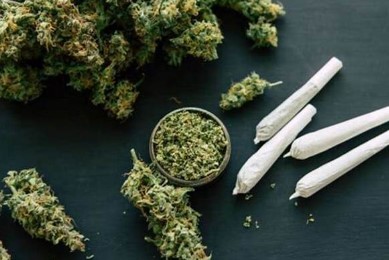
1. Smoking (Joints, Pipes, Bongs, Blunts)
- Bioavailability: ~ 25-30% THC absorption
- Onset: One to five minutes (rapid lung absorption)
- Peak Effects: 15-30 minutes post-inhalation
- Duration: 1.5-3 hours
2. Vaporization (Dry Herb or Concentrates)
- Bioavailability: Higher than smoking (~ 35-45% THC absorption)
- Onset: 1-3 minutes (More efficient THC delivery than combustion)
- Peak Effects: 10-20 minutes
- Duration: 1.5-4 hours
- Advantages: Less lung irritation, more pronounced terpene profile, and reduced exposure to combustion byproducts
B. Oral Ingestion (Edibles, Capsules, Tinctures)
Mechanism:
- When consumed orally, THC is metabolized by the liver (first-pass metabolism) and converted into 11-hydroxy-THC, which is more potent and longer-lasting than THC alone.
- Effects are delayed but more intense and longer in duration compared to inhalation.
1. Edibles (Gummies, Baked Goods, Infused Beverages)
- Bioavailability: ~ 4-12% THC absorption (Lower due to liver metabolism)
- Onset: 30-90 minutes
- Peak Effects: 2-3 hours after ingestion
- Duration: 4-8 hours (sometimes up to 10 hours depending on dose and metabolism)
- Effects: More sedative, body-heavy, long-lasting due to 11-hydroxy-THC production
2. Capsules and THC Pills
- Similar to edibles, but often more precisely dosed and encapsulated in a slow-release mechanism.
- Onset: 30-60 minutes
- Peak Effects: 2-3 hours
- Duration: 6-10 hours
3. Tinctures (Sublingual Administration)
- Tinctures (alcohol or oil-based cannabis extracts) are absorbed sublingually (under the tongue), bypassing the digestive system and entering the bloodstream directly through oral mucosa.
- Bioavailability: ~ 20-35%
- Onset: 15-45 minutes
- Peak Effects: 1-2 hours
- Duration: 3-6 hours
- Advantages: Faster onset than edibles, easier dosing, discreet consumption
C. Topical Application (Lotions, Creams, Transdermal Patches)
Mechanism:
- Topicals interact with cannabinoid receptors (CB1 & CB2) in the skin without entering the bloodstream, making them non-psychoactive.
- Transdermal patches, however, allow THC to enter the bloodstream, providing a sustained release.
1. Traditional Topicals (Creams, Lotions, Balms)
- Onset: 10-30 minutes
- Peak Effects: 30-90 minutes
- Duration: 2-6 hours
- Effects: Localized relief, anti-inflammatory benefits, no psychoactive effects
2. Transdermal Patches
- Bioavailability: ~ 50-80% (Much higher than traditional topicals)
- Onset: 15-45 minutes
- Peak Effects: 1-2 hours
- Duration: 4-12 hours (gradual release mechanism)
- Effects: Mild psychoactivity possible depending on THC content
2. Comparison of Onset, Peak, and Duration by Method
| Ingestion Method | Onset | Peak Effects | Duration | Psychoactive? |
|---|---|---|---|---|
| Smoking (Joint, Pipe, Bong) | 1-5 min | 15-30 min | 1.5-3 hrs | Yes |
| Vaping (Dry Herb/Concentrates) | 1-3 min | 10-20 min | 1.5-4 hrs | Yes |
| Edibles (Gummies, Brownies, Drinks) | 30-90 min | 2-3 hrs | 4-8 hrs | Yes |
| Capsules | 30-60 min | 2-3 hrs | 6-10 hrs | Yes |
| Tinctures (Sublingual) | 15-45 min | 1-2 hrs | 3-6 hrs | Yes |
| Topicals (Creams, Balms) | 10-30 min | 30-90 min | 2-6 hrs | No |
| Transdermal Patches | 15-45 min | 1-2 hrs | 4-12 hrs | Yes (Mild) |
3. Factors Influencing Onset and Duration
A. Individual Metabolism
- Faster metabolism = Shorter duration, quicker onset
- Slower metabolism = Longer-lasting effects
B. Dosage & Potency
- Higher THC concentrations increase intensity and duration.
- Lower doses produce shorter, milder effects.
C. Food Intake & Composition (For Edibles)
- Consuming fatty foods with edibles enhances THC absorption, increasing bioavailability.
- Eating on an empty stomach causes a shorter duration but a quicker onset.
D. Tolerance & Experience Level
- Frequent users develop tolerance, requiring higher doses for the same effects.
- First-time users may experience stronger, prolonged effects.
E. Cannabinoid & Terpene Interactions
- Myrcene (present in Deep Purple) increases THC absorption, leading to a faster onset and stronger sedative effects.
- Caryophyllene & Linalool contribute to anti-inflammatory and muscle-relaxing properties.
Potential Side Effects
Despite its many benefits, Deep Purple does have some side effects, particularly for novice users or those sensitive to THC:
- Dry Mouth & Dry Eyes –Typical of a lot of cannabis strains.
- Dizziness or Lightheadedness – May occur with high doses.
- Couch-lock – Overconsumption may lead to deep sedation.
- Mild Paranoia – Rare but possible in users with low THC tolerance.
Final Thoughts on Deep Purple
Deep Purple is an excellent choice for indica lovers seeking a relaxing, euphoric, and pain-relieving strain. Its sweet grape aroma, rich purple coloration, and potent sedative effects make it popular for both medical and recreational users.
If you’re looking for a flavorful, calming, and therapeutic cannabis experience, Deep Purple is a strain worth trying. However, due to its strong sedative properties, it’s best reserved for nighttime use or when deep relaxation is desired.
For a complete directory of cultivars, visit our Cannabis Strain Reviews.
