Table of Contents
Cuvee is an exceptional cannabis strain known for its unique combination of flavors, potent effects, and rich lineage. It is an indica-dominant hybrid created by TGA Subcool Seeds through a careful cross between Space Queen and Pinot Noir. With its remarkable terpene profile and balanced cannabinoid content, Cuvee has gained popularity among both recreational and medical cannabis users. This document explores the scientific, recreational, and medical aspects of Cuvee in depth.
Genetics and Lineage
Cuvee is a product of expert breeding by TGA Subcool Seeds, who combined the following parent strains:
- Space Queen: A hybrid strain known for its uplifting and euphoric effects. Space Queen is a cross between Romulan and Cinderella 99, contributing strong cerebral effects to Cuvee.
- Pinot Noir: A lesser-known but highly potent strain with indica-leaning genetics, offering a deep relaxation effect and a sweet, fruity aroma reminiscent of red wine and chocolate.
This genetic fusion results in an indica-dominant hybrid with approximately 70% indica and 30% sativa, offering a balanced yet potent experience.
Appearance, Aroma, and Flavor Profile
Appearance
Cuvee has visually striking buds that are dense and covered in a thick layer of trichomes, giving them a frosty appearance. The buds are typically dark green with purple hues, accentuated by orange pistils that add to their aesthetic appeal.
Aroma
Cuvee’s terpene profile is rich and complex, featuring notes of:
- Sweet chocolate
- Earthy undertones
- Berry and cherry-like fruitiness
- Hints of spice and citrus
Flavor
The flavor of Cuvee is one of its most celebrated aspects, often compared to a dessert-like experience. Users describe the taste as:
- Smooth and chocolatey with a sweet berry finish
- Hints of vanilla and caramel
- A little spiciness in the exhale
Cannabinoid and Terpene Profile
Cannabinoids
Cuvee typically contains a THC content ranging from 18% to 24%, making it a potent strain suitable for both experienced and moderate users. The CBD content is generally low (<1%), meaning that its effects are predominantly psychoactive rather than medicinal in the traditional CBD-related sense.
Common Cannabinoids Found in Cuvee:
- THC: 18-24%
- CBD: <1%
- CBG: 0.5-1%
- CBC: 0.1-0.3%
Terpenes
Terpenes play a crucial role in Cuvee’s effects, aroma, and medicinal benefits. The most dominant terpenes found in Cuvee include:
- Myrcene (Herbal, Earthy): Known for its sedative and anti-inflammatory properties.
- Caryophyllene (Peppery, Spicy): Provides pain relief and stress reduction while interacting with CB2 receptors in the endocannabinoid system.
- Limonene (Citrusy, Sweet): Enhances mood and provides anti-anxiety benefits.
- Linalool (Floral, Lavender-like): Contributes to relaxation and stress relief.
Recreational Uses and Effects
Cuvee’s balanced effects make it a versatile strain for recreational users. Its high THC levels lead to a strong but manageable psychoactive experience.

Effects
1. Euphoria and Happiness
The initial onset of Cuvee produces a wave of euphoria, uplifting the user’s mood. This makes it an excellent strain for social settings or creative activities.
2. Relaxation and Body High
As an indica-dominant strain, Cuvee transitions into a deep body relaxation phase, alleviating tension and stress. It’s great for unwinding after a long day.
3. Mild Cerebral Stimulation
While not overly energizing, Cuvee provides a gentle mental clarity that allows for focus and creative thinking without inducing couch-lock.
4. Sedation (Higher Doses)
In higher doses, Cuvee’s indica traits become more prominent, leading to deep relaxation and sedation, making it an excellent strain to utilize at night.
Best Times to Use
- Evening or nighttime
- Social gatherings (low to moderate doses)
- Creative activities like painting or writing
- Watching movies or listening to music
Medical Uses
Cuvee offers a range of therapeutic benefits, making it suitable for patients dealing with various medical conditions.
1. Pain Management
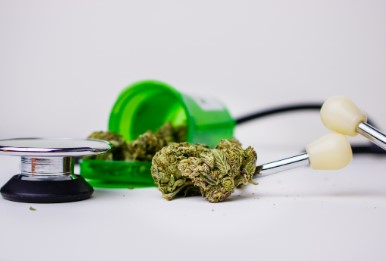
The combination of THC and caryophyllene makes Cuvee an effective analgesic. It is beneficial for conditions such as:
- Chronic pain
- Arthritis
- Muscle spasms
- Migraines and headaches
2. Anxiety and Stress Relief
Cuvee’s limonene and linalool content help reduce anxiety and stress. Its calming effects are particularly useful for individuals with generalized anxiety disorder (GAD) or panic attacks.
3. Insomnia Treatment
Due to its sedative properties, Cuvee is an excellent strain for those struggling with insomnia or other sleep disorders.
4. Appetite Stimulation
Patients undergoing chemotherapy or suffering from conditions like anorexia may benefit from Cuvee’s ability to enhance appetite.
5. Depression Management
The uplifting effects of Cuvee’s myrcene and limonene content help combat symptoms of depression and mood disorders.
6. Muscle Relaxation and Spasticity
Cuvee is effective for conditions such as multiple sclerosis (MS) and fibromyalgia, where muscle relaxation is crucial.
Scientific Perspective: How Cuvee Interacts with the Endocannabinoid System (ECS)
Mechanism of Action
Cuvee’s cannabinoids interact with the body’s endocannabinoid system (ECS) through the CB1 and CB2 receptors:
- THC activates CB1 receptors in the brain, producing euphoria and relaxation.
- Caryophyllene interacts with CB2 receptors, providing anti-inflammatory and pain-relieving benefits.
- Limonene and linalool influence neurotransmitters, promoting relaxation and mood enhancement.
Effects on Neurotransmitters
Cuvee influences several neurotransmitter systems:
- Increases dopamine levels, leading to enhanced mood and pleasure.
- Modulates serotonin, helping reduce stress and anxiety.
- Interacts with GABA receptors, promoting relaxation and sedation.
Methods of Ingestion, Onset, and Duration of Effects
The method of ingestion significantly influences the onset time, bioavailability, peak effects, and duration of Cuvee cannabis. Below is a scientific breakdown of the different methods of ingestion, including their impact on the body and the endocannabinoid system.
Methods of Ingestion
Cuvee can be consumed in several ways, each offering distinct pharmacokinetics (absorption, metabolism, and elimination).
Smoking (Combustion)
How It Works:
- Inhalation allows THC to rapidly enter the bloodstream through the lungs.
- Peak plasma concentration is reached within 5-10 minutes.
- Bioavailability: 25-30% (due to loss in combustion).
Onset & Duration:
- Onset: 1-5 minutes.
- Peak Effects: 20-30 minutes.
- Total Duration: 2-4 hours.
- Effects: Immediate euphoria, cerebral stimulation, followed by deep relaxation.
Pros & Cons:
Fast-acting
Easier dose control
Higher lung irritation
Loss of cannabinoids due to combustion
Vaping (Dry Herb or Concentrates)
How It Works:
- Vaporization heats the cannabis to precise temperatures (350-400°F / 175-205°C) without combustion.
- More THC is preserved, leading to higher bioavailability (~40-50%).
Onset & Duration:
- Onset: 1-5 minutes.
- Peak Effects: 20-40 minutes.
- Total Duration: 3-5 hours.
- Effects: Smoother, cleaner high with enhanced flavor and terpene profile.
Pros & Cons:
Higher potency compared to smoking
Reduced lung irritation
More efficient THC absorption
Requires a vaporizer
Can be expensive
Edibles (THC-Infused Foods & Beverages)
How It Works:
- THC is converted into 11-hydroxy-THC in the liver (a more potent and longer-lasting metabolite).
- Slower onset due to digestion and first-pass metabolism.
- Bioavailability: ~4-20% (affected by food presence and metabolism).
Onset & Duration:
- Onset: 30-90 minutes.
- Peak Effects: 2-3 hours.
- Total Duration: 6-12 hours (sometimes longer in sensitive individuals).
- Effects: More intense body high, deeper sedation, and stronger euphoria.
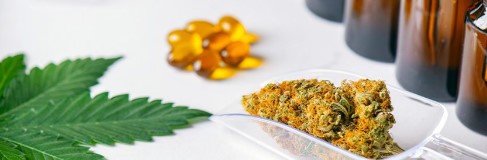
Pros & Cons:
Long-lasting effects
No lung irritation
Suitable for chronic pain and insomnia
Harder to dose accurately
Overconsumption risk because of delayed onset
Sublingual (Tinctures & Oils)
How It Works:
- Mucous membranes allow cannabinoids to enter the bloodstream directly.
- Avoids first-pass metabolism, leading to higher bioavailability (~35-50%).
Onset & Duration:
- Onset: 15-45 minutes.
- Peak Effects: 1-2 hours.
- Total Duration: 4-8 hours.
- Effects: Balanced body relaxation with mental clarity.
Pros & Cons:
Faster than edibles
More controlled dosing
Can be used discreetly
Some people dislike the taste of cannabis oils
Transdermal (Patches, Lotions, and Creams)
How It Works:
- THC and other cannabinoids penetrate the skin and enter the bloodstream slowly.
- Does NOT produce a psychoactive high unless formulated with specific enhancers.
Onset & Duration:
- Onset: 30-60 minutes.
- Peak Effects: 2-4 hours.
- Total Duration: 6-12 hours.
- Effects: Localized pain relief, anti-inflammatory benefits.
Pros & Cons:
No psychoactive effects (unless specified)
Long-lasting pain relief
Good for arthritis, chronic pain, and inflammation
Limited to localized relief
Some products contain penetration enhancers that may irritate skin
Dabbing (Concentrates & Extracts)
How It Works:
- Uses highly concentrated cannabis extracts (wax, shatter, live resin).
- THC levels range from 60-90%, making dabbing one of the most potent methods.
- Requires a dab rig or an electronic dab pen.
Onset & Duration:
- Onset: 1-3 minutes.
- Peak Effects: 10-20 minutes.
- Total Duration: 1-3 hours.
- Effects: Extreme potency, intense euphoria, cerebral stimulation, and deep relaxation.
Pros & Cons:
Extremely fast-acting
Highly efficient THC absorption
Can be overwhelming for novice users
Requires specialized equipment
Scientific Breakdown of Onset & Duration by Method
| Method | Onset Time | Peak Effects | Total Duration | Bioavailability |
|---|---|---|---|---|
| Smoking | 1-5 min | 20-30 min | 2-4 hrs | ~25-30% |
| Vaping | 1-5 min | 20-40 min | 3-5 hrs | ~40-50% |
| Edibles | 30-90 min | 2-3 hrs | 6-12 hrs | ~4-20% |
| Sublingual | 15-45 min | 1-2 hrs | 4-8 hrs | ~35-50% |
| Transdermal | 30-60 min | 2-4 hrs | 6-12 hrs | ~5-20% |
| Dabbing | 1-3 min | 10-20 min | 1-3 hrs | ~50-75% |
Factors Affecting Onset & Duration
Metabolism & Body Composition
- Faster metabolism = shorter length, faster onset.
- Higher body fat content = THC stored longer (especially with edibles).
Tolerance & Experience
- Regular users may experience a shorter duration and higher tolerance.
- First-time users may have longer-lasting and more intense effects.
Strain-Specific Factors
- Terpenes & cannabinoids influence the overall effect duration and onset speed.
- Cuvee’s myrcene content speeds up THC absorption.
Potential Side Effects
While Cuvee is generally well-tolerated, some users may experience mild side effects, especially at higher doses.
Common Side Effects
- Dry mouth (cottonmouth)
- Dry eyes
- Mild dizziness
- Increased appetite (munchies)
Rare Side Effects
- Paranoia or anxiety (in sensitive individuals)
- Sedation (when consumed in high doses)
Cultivation and Growing Information
Cultivating Cuvee Cannabis Strain
The cultivation of Cuvee cannabis requires a scientific and strategic approach to maximize yield, potency, and terpene expression. Below are key scientific methods and best practices for growing Cuvee effectively.
Optimal Growing Conditions
Climate and Environment
- Cuvee thrives in a Mediterranean-like climate with warm temperatures (70-85°F or 21-29°C).
- It prefers low to moderate humidity (50-60% in vegetative stage, 40-50% in flowering).
- Although it is possible to produce the strain both inside and outdoors, indoor culture offers superiorcontrol over environmental variables.
Soil vs. Hydroponics
- Soil-Based Cultivation:
- Using organic living soil enhances terpene profiles and cannabinoid content.
- Best pH range: 6.0-6.5 for nutrient absorption.
- Amended with compost teas, worm castings, and mycorrhizal fungi for improved root health.
- Hydroponics:
- Faster growth and higher yields, but requires precise nutrient management.
- Best pH range: 5.5-6.0.
- Use of Deep Water Culture (DWC) or Coco Coir with Drip Irrigation recommended.
Light Spectrum and Photoperiod Management
Vegetative Stage (18-6 Light Cycle)
- Best light spectrum: Blue light (400-500 nm) encourages vegetative growth.
- Recommended lights:
- LED grow lights (Full Spectrum, 4000K-6500K)
- Metal Halide (MH) bulbs (for compact, bushier growth).
- Light intensity: PPFD (Photosynthetic Photon Flux Density) of 400-600 µmol/m²/s.
Flowering Stage (12-12 Light Cycle)
- Best light spectrum: Red spectrum (600-700 nm) enhances bud development.
- Recommended lights:
- High-Pressure Sodium (HPS) bulbs (for dense flowers).
- LEDs with increased red/far-red output.
- Light intensity: PPFD of 700-1000 µmol/m²/s.
Nutrient Management and Feeding Schedule
Macronutrients
- Nitrogen (N): Essential in vegetative growth, but reduced in flowering.
- Phosphorus (P): Crucial for root growth and bud formation.
- Potassium (K): Improves water regulation and overall plant health.
Micronutrients
- Calcium (Ca): Prevents bud rot and improves cell wall strength.
- Magnesium (Mg): Essential for chlorophyll production.
- Sulfur (S): Aids in terpene synthesis.
Feeding Schedule
| Growth Stage | N-P-K Ratio | Feeding Frequency |
|---|---|---|
| Seedling | 2-1-2 | Light feeding every 3-4 days |
| Vegetative | 4-2-3 | Regular feeding every 2-3 days |
| Early Flower | 2-4-4 | Increase phosphorus & potassium |
| Late Flower | 0-5-5 | Reduce nitrogen, flush before harvest |
Advanced Cultivation Techniques
Low-Stress Training (LST)
- Encourages lateral growth, maximizing light penetration.
- Prevents apical dominance, leading to higher yields.
Screen of Green (ScrOG)
- Uses a net to train branches horizontally, ensuring uniform bud development.
- Improves airflow and light distribution.
Defoliation
- Strategic removal of lower fan leaves to enhance airflow and light penetration.
- Reduces risk of mold and pests.
CO₂ Enrichment
- Adding CO₂ (1000-1500 ppm) boosts photosynthesis.
- Requires proper ventilation and light intensity for maximum efficiency.
Pest and Disease Management
Common Pests
- Spider Mites – Use Neem oil, predatory mites (Phytoseiulus persimilis).
- Aphids – Introduce insecticidal soap or ladybugs.
- Fungus Gnats – Use sticky traps and dry topsoil.
Common Diseases
- Powdery Mildew – Prevent with adequate ventilation and humidity management.
- Bud Rot (Botrytis) – Maintain low humidity, remove infected buds immediately.
- Root Rot (Pythium) – Avoid overwatering and ensure well-draining soil.
Harvesting and Curing
Harvest Time
- Ideal harvest 8-9 weeks after flowering starts.
- Trichomes should appear milky-white with some amber (use a jewelers’ loupe).
Drying Process
- Temperature: 60-70°F (15-21°C).
- Humidity: 50-60%.
- Duration: 7-14 days, slow-dried in a dark, ventilated space.
Curing Process
Curing enhances flavor, potency, and smoothness.
Place buds in airtight glass jars.
Store at 65% RH (relative humidity), burping jars daily for 2-3 weeks.
Conclusion
Cuvee is a versatile and well-balanced indica-dominant hybrid, offering a unique combination of flavor, potency, and therapeutic benefits. Whether for relaxation, pain relief, or creative stimulation, Cuvee remains a highly sought-after strain among cannabis enthusiasts. Its complex terpene and cannabinoid profile ensures a pleasant experience with both recreational and medical applications, making it an excellent addition to any user’s strain collection.
For a complete directory of cultivars, visit our Cannabis Strain Reviews.
