Table of Contents
Cowboy Kush is a hybrid cannabis strain known for its well-balanced effects, offering both uplifting cerebral stimulation and deep physical relaxation. With a lineage tracing back to Hell’s Angel OG and Stardawg, Cowboy Kush combines the best traits of Kush genetics with Chemdawg-inspired potency. It is celebrated for its earthy, diesel-like aroma with spicy and citrus undertones, making it a favorite among cannabis connoisseurs.
Genetics and Lineage
Cowboy Kush is a balanced hybrid (approximately 50% Indica / 50% Sativa or slightly Indica-dominant, depending on the phenotype). It is bred by crossing:
- Hell’s Angel OG – A potent Indica-dominant strain known for its deep relaxation, body-heavy effects, and pain relief properties.
- Stardawg – A Sativa-leaning hybrid from the Chemdawg lineage, known for its pungent diesel scent, cerebral euphoria, and long-lasting effects.
Terpene Profile
Cowboy Kush has a diverse terpene profile, contributing to its unique aroma, taste, and effects:
- Myrcene – Provides sedative and relaxing effects, often associated with pain relief.
- Limonene – Offers citrusy notes and is linked to stress reduction and mood enhancement.
- Caryophyllene – A spicy, peppery terpene that interacts with the endocannabinoid system, helping with inflammation and pain.
- Pinene – Gives a piney aroma and enhances alertness and focus while counteracting some of the sedative effects.
- Linalool – Adds floral, lavender-like notes and promotes calmness and anti-anxiety properties.
Scientific Composition: Cannabinoids & Potency
Cowboy Kush typically contains a THC content ranging from 20% to 28%, making Cowboy Kush a strong strain suitable for experienced users.
Cannabinoid Breakdown:
- THC: 20-28% – Responsible for psychoactive effects, mood elevation, and pain relief.
- CBD: 0.1-1% – Provides mild therapeutic effects but is not dominant.
- CBG: 0.5-2% – Offers anti-inflammatory and neuroprotective benefits.
- CBN: <1% – Present in aged buds, contributing to sedative effects.
Aroma, Flavor, and Appearance
Aroma Profile:
- Earthy and diesel-like with strong spicy, herbal, and citrusy notes.
- Slight skunky and piney hints due to the Stardawg genetics.
Flavor Profile:
- Diesel and skunky base flavor.
- Citrus, pine, and peppery notes on exhale.
- Mild sweetness with an earthy Kush undertone.
Appearance:
- Dense, compact buds with a deep green hue and orange pistils.
- Thick trichome coating, giving it a frosty and sticky texture.
Medical Uses of Cowboy Kush
Cowboy Kush is popular in the medical cannabis community due to its balanced effects, offering both pain relief and mood enhancement.
Common Medical Applications
- Pain Management – The high THC content and caryophyllene work together to reduce chronic pain, migraines, arthritis, and muscle tension.
- Stress & Anxiety Relief – Limonene and linalool contribute to calmness, helping with generalized anxiety, PTSD, and panic attacks.
- Depression & Mood Disorders – The euphoric effects of THC and limonene boost dopamine levels, improving mood and motivation.
- Insomnia – At higher doses, Cowboy Kush provides sedative effects, helping with sleeplessness and restless nights.
- Appetite Stimulation – Helps patients undergoing chemotherapy or suffering from appetite loss by enhancing hunger.
- Inflammation & Autoimmune Disorders – Beneficial for conditions like Crohn’s disease, lupus, and fibromyalgia.

Who Should Use It Medically?
- Patients needing strong pain relief (chronic pain, arthritis).
- Individuals with stress, PTSD, or anxiety disorders.
- Those with appetite loss or nausea (cancer patients, eating disorders).
- People struggling with depression or mood imbalances.
- Users with muscle spasms or inflammation-related conditions.
Recreational Uses & Effects
Cowboy Kush provides a dynamic mix of cerebral stimulation and physical relaxation, making it ideal for various recreational activities.
Effects After Consumption
- Euphoria & Mood Lift – Users of Cowboy Kush feel happy, motivated, and creative.
- Deep Relaxation – Tension melts away without heavy sedation.
- Mental Clarity & Focus – Perfect for daytime productivity or socializing.
- Body High – Soothing muscle relaxation, useful after physical activities.
- Creativity Boost – Great for artists, musicians, and brainstorming sessions.
Best Recreational Uses
- Social Settings – Enhances conversations, laughter, and mood.
- Outdoor Activities – Ideal for hiking, beach trips, or mild exercise.
- Gaming & Movies – Increases engagement in entertainment.
- Creative Work – Helps artists, writers, and musicians.
- Evening Relaxation – Reduces stress after work.
Cultivation Information
Cultivation Methods for Cowboy Kush
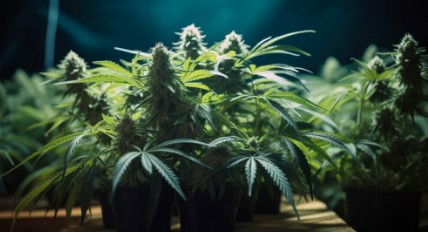
Cultivating Cowboy Kush successfully requires a scientific approach to light cycles, nutrients, pruning techniques, environmental control, and pest management. Below is a detailed examination of the most effective cultivation methods.
1. Growth Stages and Light Cycles
Cowboy Kush, like most cannabis strains, follows a four-stage growth cycle:
A. Germination (0-7 days)
- Temperature: 22-26°C (72-79°F)
- Humidity: 70-80%
- Light Cycle: 18/6 or 24/0 (18-24 hours of light, 0-6 hours of darkness)
- Best Medium: Rockwool, peat pellets, or soaked paper towels
- Key Factors: Maintain moisture but avoid waterlogging to prevent seed rot.
B. Seedling Stage (1-3 weeks)
- Temperature: 22-26°C (72-79°F)
- Humidity: 60-70%
- Light Cycle: 18/6
- Soil pH: 6.0-6.5
- Best Nutrients: Low-dose nitrogen (N) and phosphorus (P)
- Key Factors: Avoid overwatering, and ensure good airflow to prevent damping-off.
C. Vegetative Stage (4-8 weeks)
- Temperature: 22-28°C (72-82°F)
- Humidity: 50-60%
- Light Cycle: 18/6 (preferred) or 20/4
- Soil pH: 6.0-6.5
- Nutrients: High nitrogen (N), moderate phosphorus (P), moderate potassium (K)
- Best Training Techniques:
- Topping: In order to promote bushier growth, the main stem should be cut.
- LST (Low-Stress Training): Bending branches to expose more bud sites.
- SCROG (Screen of Green): Using a net to train branches for even canopy development.
D. Flowering Stage (8-10 weeks)
- Temperature: 18-26°C (64-79°F)
- Humidity: 40-50% (to prevent mold)
- Light Cycle: 12/12 (12 hours of light, 12 hours of darkness)
- Soil pH: 6.0-6.3
- Nutrients:
- Early Flowering (weeks 1-4): Higher phosphorus (P) and potassium (K), reduced nitrogen.
- Late Flowering (weeks 5-10): Increase potassium for bud density.
- Best Defoliation Practice:
- Remove lower leaves to focus energy on top colas.
- Avoid excessive pruning after week 4 of flowering.
E. Harvesting & Curing
- Trichome Maturity: Harvest when trichomes turn milky with 10-20% amber.
- Flushing: Use pure pH-balanced water for 1-2 weeks before harvest to remove nutrient buildup.
- Drying Process: Hang buds in a dark room at 18-22°C (65-72°F) and 50% humidity for 7-14 days.
- Curing Process: Store buds in glass jars, opening them daily for 2 weeks, then weekly for 4-6 weeks for best flavor.
2. Optimal Environmental Conditions
Cowboy Kush thrives in a controlled environment, whether indoors or outdoors.
Indoor Cultivation
Grow Mediums:
- Soil (Organic Super Soil) – Best for flavor and terpene production.
- Hydroponics (Deep Water Culture, Ebb & Flow) – Faster growth and higher yields.
- Coco Coir – Balanced growth with good aeration and water retention.
Light Requirements:
- Vegetative Stage: 400-600W LED or HID lights (PPFD 400-600 µmol/m²/s).
- Flowering Stage: 600-1000W HPS or LED (PPFD 800-1000 µmol/m²/s).
Air Circulation & Ventilation:
- To fortify stems and avoid mold, use oscillating fans.
- Carbon filters eliminate odors.
- Exhaust fans remove excess humidity.
CO₂ Supplementation:
- 1,000-1,500 ppm CO₂ can increase yield by 20-30%.
- Use CO₂ bags or tanks during lights-on periods.
Outdoor Cultivation
Climate Requirements:
- Optimal Temperature: 22-28°C (72-82°F)
- Humidity: 50-70% during veg, 40-50% during flowering
- Best Region: Mediterranean, California, Southern US
Soil Preparation:
- Use organic soil rich in compost, worm castings, and perlite.
- pH should be 6.0-6.5.
Best Time to Plant:
- Spring (April-May) for a harvest in September-October.
Pest & Mold Prevention:
- Neem oil & insecticidal soap for spider mites & aphids.
- Companion planting (e.g., basil, marigolds) deters pests.
- Milk spray (diluted 10%) for powdery mildew prevention.
3. Nutrient and pH Management
Cowboy Kush responds well to a balanced macronutrient and micronutrient diet.
Macronutrient Needs
| Growth Stage | Nitrogen (N) | Phosphorus (P) | Potassium (K) |
|---|---|---|---|
| Seedling | Low | Low | Low |
| Vegetative | High | Medium | Medium |
| Flowering | Low | High | High |
Micronutrient Requirements
- Calcium (Ca): Prevents bud rot and boosts cell structure.
- Magnesium (Mg): Enhances chlorophyll production.
- Sulfur (S): Improves terpene synthesis and aroma.
Best Fertilizer Schedule:
- Weeks 1-3: Use organic compost tea or mild veg nutrients.
- Weeks 4-6: Increase NPK ratio to 3:1:2 for growth.
- Weeks 7-8: Switch to 2:3:3 (higher phosphorus for flower formation).
- Final 2 weeks: Flush with pH-balanced water.
Best Organic Nutrient Sources:
- Nitrogen: Fish emulsion, bat guano, blood meal.
- Phosphorus: Bone meal, rock phosphate.
- Potassium: Kelp meal, banana compost.
4. Advanced Training Techniques for Higher Yields
1. Topping & Fimming
- Cutting Cowboy Kush main stem forces lateral growth, creating more bud sites.
2. SCROG (Screen of Green)
- Netting keeps branches even, maximizing light penetration.
3. Supercropping
- Bending stems gently increases nutrient flow and yields up to 20% more.
4. Defoliation
- Removing fan leaves increases airflow and reduces risk of mold.
5. Yield Expectations
- Indoor Grow: 450-550g/m²
- Outdoor Grow: 600-800g per plant (with ideal conditions)
Final Scientific Takeaways
Best Method for Max Yield: SCROG + CO₂ enrichment + LST.
Best Medium for Flavor: Living soil with organic nutrients.
Best pH for Hydroponics: 5.8-6.2
Best Light Intensity: PPFD 800-1000 µmol/m²/s during flowering.
Best Harvest Time: When trichomes turn 80% milky, 20% amber.
Ingestion Methods, Onset, and Duration
Cowboy Kush, like other high-THC cannabis strains, can be ingested in multiple ways, each affecting bioavailability, onset time, peak effects, and duration differently. Below is a comprehensive scientific breakdown of its ingestion methods.
1. Ingestion Methods and Their Pharmacokinetics
The method of ingestion plays a crucial role in how Cowboy Kush’s cannabinoids (THC, CBD, CBG, etc.) are absorbed, metabolized, and exert effects.
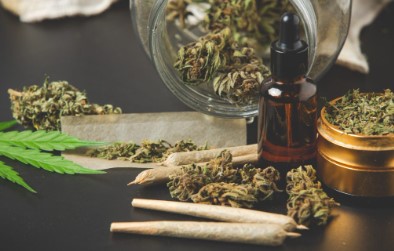
A. Smoking (Combustion)
Method:
- Direct combustion using joints, pipes, or bongs.
- Temperature: 600-900°F (315-482°C).
Scientific Breakdown:
- Bioavailability: ~25-30% THC absorption.
- Onset: 1-5 minutes (inhalation → lungs → bloodstream).
- Peak Effects: 10-30 minutes.
- Duration: 2-4 hours.
- Metabolism: THC enters the bloodstream via pulmonary circulation, reaching the brain almost immediately.
Pros:
Fastest onset; ideal for acute relief.
Easy to control dosage.
High bioavailability.
Cons:
Harsh on lungs due to combustion byproducts.
Shorter duration than edibles.
More waste of cannabinoids compared to vaporization.
B. Vaporization (Vaping)
Method:
- Dry herb vaporizers or vape cartridges heat cannabis at optimal temperatures (180-220°C / 356-428°F).
Scientific Breakdown:
- Bioavailability: 40-60% (higher than smoking).
- Onset: 2-5 minutes (similar to smoking but less lung irritation).
- Peak Effects: 15-45 minutes.
- Duration: 3-5 hours.
- Metabolism: THC enters bloodstream via lungs but with fewer toxic byproducts compared to combustion.
Pros:
Higher bioavailability than smoking.
Less harmful toxins due to lower temperatures.
More flavor preservation (terpenes remain intact).
Cons:
Requires a vaporizer.
Slight delay in onset compared to smoking.
THC cartridges may contain additives like propylene glycol, which may cause irritation.
C. Edibles (Oral Ingestion)
Method:
- Consumed via gummies, baked goods, capsules, or cannabis-infused foods.
- THC undergoes first-pass metabolism in the liver before entering the bloodstream.
Scientific Breakdown:
- Bioavailability: 4-20% (varies based on individual metabolism).
- Onset: 30-90 minutes (longest onset).
- Peak Effects: 2-4 hours after ingestion.
- Duration: 6-12 hours.
- Metabolism:
- THC is converted to 11-hydroxy-THC in the liver, which is 3-7x more potent than THC, leading to stronger, longer-lasting effects.
Pros:
Longest-lasting effects (ideal for chronic pain, insomnia, anxiety).
No lung damage (smokeless method).
Potent psychoactive effects due to 11-hydroxy-THC conversion.
Cons:
Delayed onset (risk of overconsumption).
Lower bioavailability due to digestive breakdown.
Harder to control dosage.
D. Sublingual (Tinctures & Sprays)
Method:
- Cannabis tinctures or oils placed under the tongue for direct absorption into the bloodstream via the sublingual mucosa.
Scientific Breakdown:
- Bioavailability: 20-35% (higher than edibles, lower than inhalation).
- Onset: 15-30 minutes.
- Peak Effects: 45-90 minutes.
- Duration: 4-6 hours.
- Metabolism: Absorbed directly into capillaries under the tongue, bypassing first-pass liver metabolism, leading to faster, more efficient THC absorption.
Pros:
Faster onset than edibles (no need for digestion).
Discreet and easy to dose.
Longer effects than smoking or vaping.
Less immediate than inhalation.
May have a bitter taste.
Not as potent as edibles for long-term effects.
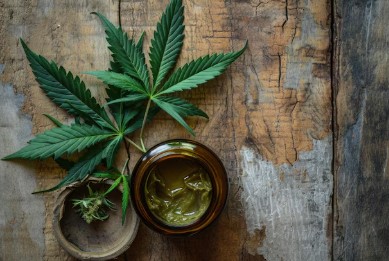
E. Topical Application (Creams, Patches, and Balms)
Method:
- Cannabis-infused lotions, creams, and transdermal patches applied to skin for localized effects.
- Used for pain, inflammation, arthritis, and skin conditions.
Scientific Breakdown:
- Bioavailability: Low (~5-10%) for regular topicals; higher for transdermal patches.
- Onset: 20-60 minutes.
- Duration: 4-8 hours.
- Metabolism:
- The skin’s CB1 and CB2 receptors are impacted by cannabinoids.
- Transdermal patches allow THC to enter the bloodstream, causing systemic effects, unlike creams.
Pros:
Non-psychoactive (for regular creams).
Localized pain relief without a high.
Long-lasting effects.
Cons:
Limited penetration into the bloodstream (except transdermals).
Less effective for mental effects.
Slow onset compared to other methods.
2. Comparative Analysis of Onset and Duration by Method
| Method | Onset Time | Peak Effects | Duration | Bioavailability |
|---|---|---|---|---|
| Smoking | 1-5 min | 10-30 min | 2-4 hours | 25-30% |
| Vaping | 2-5 min | 15-45 min | 3-5 hours | 40-60% |
| Edibles | 30-90 min | 2-4 hours | 6-12 hours | 4-20% |
| Sublingual | 15-30 min | 45-90 min | 4-6 hours | 20-35% |
| Topicals | 20-60 min | N/A | 4-8 hours | 5-10% |
| Transdermal | 15-45 min | 1-2 hours | 8-12 hours | High |
Final Scientific Takeaways
- Fastest Onset: Smoking/Vaping (1-5 min) – Best for immediate effects.
- Longest Duration: Edibles (6-12 hrs) – Best for chronic conditions.
- Best for Discretion: Tinctures & Transdermal Patches – No inhalation required.
- Best for Local Pain Relief: Topicals (4-8 hrs) – No psychoactive effects.
Potential Side Effects & Risks
While Cowboy Kush is a well-balanced strain, high doses can lead to adverse effects:
Common Side Effects:
- Dry Mouth & Dry Eyes – Manageable with hydration.
- Mild Dizziness – More common in beginners.
- Anxiety & Paranoia – Can occur at very high doses, especially in sensitive users.
- Couch-lock (At High Doses) – Stronger Indica effects can lead to deep relaxation.
Who Should Avoid It?
- Beginners who are sensitive to high THC.
- Individuals prone to THC-induced paranoia or anxiety.
- Those needing a strain for purely daytime use (as it can cause sedation in large amounts).
Final Verdict: Is Cowboy Kush Worth Trying?
Pros:
Balanced hybrid for both relaxation and stimulation.
High THC content with strong medical benefits.
Ideal for pain relief, stress reduction, and creative activities.
Rich terpene profile for a complex aroma and flavor.
Cowboy Kush is a Resilient strain with moderate cultivation difficulty.
Cons:
Can be too potent for beginners.
High doses may lead to sedation or couch-lock.
Prone to causing anxiety in THC-sensitive users.
Best For:
Medical users needing pain relief or stress reduction.
Creative minds looking for inspiration.
Social users wanting to uplift their mood.
Evening relaxation without heavy sedation.
For a complete directory of cultivars, visit our Cannabis Strain Reviews.
