I’m writing this as a cultivator, not a lawyer. When I’m deciding whether a run is worth it, I do the same thing every time: I map risk, I check constraints, and I build a plan I can actually follow. In Costa Rica, the climate rewards skill but punishes shortcuts, and the legal landscape rewards caution but punishes assumptions. If you want a realistic view of Costa Rica cannabis laws and crime, you need both parts: what the laws say on paper and what “crime” looks like in day-to-day enforcement.
Costa Rica has moved forward with a regulated framework for medical and therapeutic cannabis and for hemp, while recreational marijuana remains prohibited. The legal foundation is Law 10113, and the Ministry of Health has announced technical rules for medicinal products as part of implementation. At the same time, Costa Rica’s broader drug-control law (often referenced as Law 8204) still shapes policing and penalties around unauthorized activities.
When I say “crime” in this post, I’m not saying the whole country is unsafe. I’m describing the background pressure that can influence enforcement and public policy: Costa Rica has faced serious challenges from drug trafficking networks and related violence in recent years, and that shifts how authorities prioritize cases. Official analysis using OIJ data reported 879 intentional homicides in 2024. Reports and public statements have also highlighted a tougher-on-crime political climate, including proposals and announcements focused on prison and security reforms amid high homicide counts.
I’m going to focus on practical questions people actually type into Google, and the answers I’d want if I were planning a grow or even just traveling:
- What do Costa Rica cannabis laws and crime mean for personal behavior versus commercial activity?
- How do I think about the tourist marijuana arrest risk if I’m visiting?
- What does a seed shipping customs reality check look like in real life?
- If I do grow weed, what changes in the tropics, and how do I avoid mold?
What’s officially regulated and what’s still prohibited
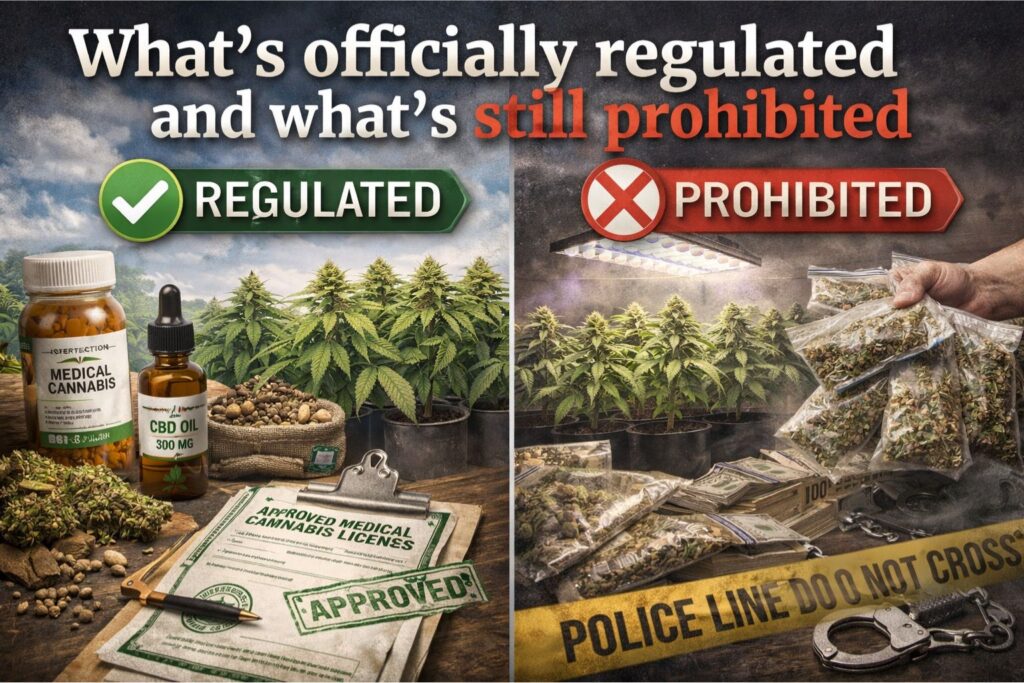
I’ll start with the cleanest line I can draw: Costa Rica has created legal channels for medical and therapeutic cannabis and for hemp, but not for adult recreational weed. Law 10113 lays out the basic permission structure for medicinal and therapeutic cannabis and for hemp used in food and industry.
If you’re a patient or a business, the key idea is that legal access is tied to licensing, prescriptions, and compliant products. In January 2025, the Ministry of Health described the development of a technical regulation (RTCR 515:2024) to facilitate the preparation and commercialization of medicinal cannabis products within the Law 10113 framework.
From a grower’s standpoint, the most important takeaway is this:
- A regulated medical market is not the same thing as permission for home growing.
- A hemp framework is not the same thing as “anything cannabis-related is fine.”
- Enforcement can still treat cultivation as production if it looks scaled, organized, or for sale.
This is where the costa rica medical cannabis licensing process becomes relevant. If you are thinking “maybe I’ll just grow a few plants and call it medical,” understand that the costa rica medical cannabis licensing process is not a casual label. It’s a structured pathway for authorized activity. The costa rica medical cannabis licensing process exists so that cultivation, manufacturing, and distribution can be controlled, tracked, and inspected as part of a regulated system.
How Law 8204 still frames risk
Even with Law 10113 in place, the older enforcement structure still matters. I bring this up because many growers assume newer medical rules “override” everything. In practice, unauthorized activity can still be interpreted through drug-control and anti-trafficking enforcement.
That’s why I pay attention to law 8204 enforcement patterns. I’m not claiming you can predict an officer’s decision, but law 8204 enforcement patterns tend to be shaped by what looks like trafficking: quantities, packaging, cash flow, transport, and intent. When your grow resembles a business, you invite a different level of scrutiny. The truth is that law 8204 enforcement patterns are often less forgiving when there’s evidence of distribution or a connection to larger networks. {index=7}
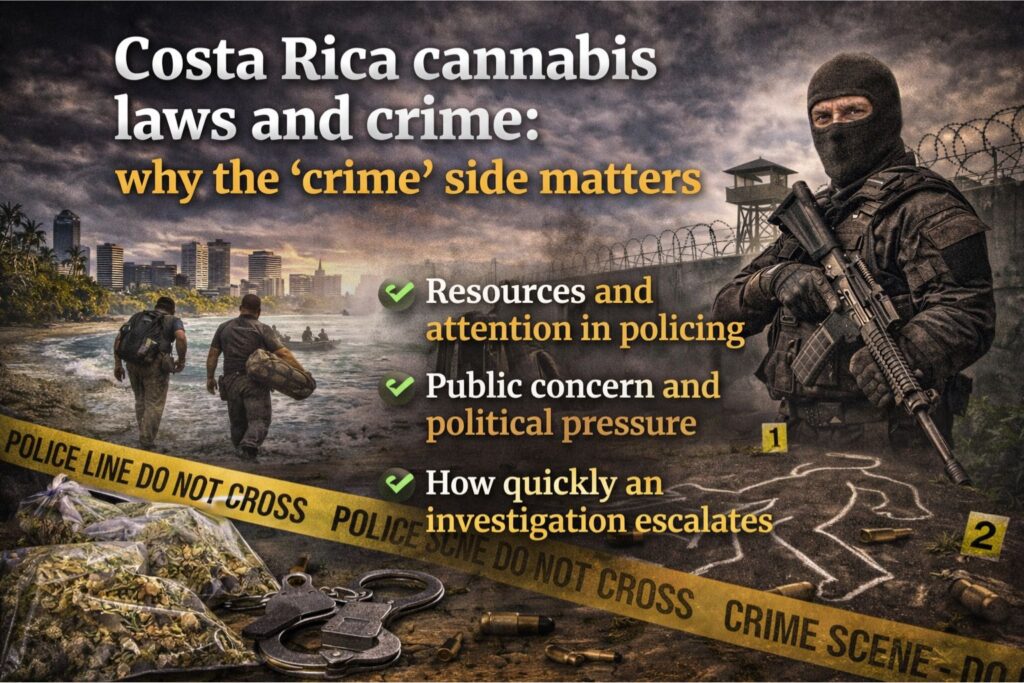
Costa Rica cannabis laws and crime: why the “crime” side matters
In cultivation circles, people sometimes talk about legality as if it’s a single switch. But in places where trafficking pressure is high, policing can be reactive, and “crime” becomes a lens that colors everything.
Costa Rica’s role as a transit route for international drug trafficking is discussed in the U.S. Department of State’s International Narcotics Control Strategy Report (INCSR). At the same time, Costa Rica’s own homicide trend analysis provides context on the country’s recent levels of lethal violence.
This matters to growers and weed hobbyists and marijuana users because it affects:
- Resources and attention in policing
- Public concern and political pressure
- How quickly an investigation escalates when a case looks “organized”
I’m not saying a small marijuana grow equals organized crime. I’m saying that in a country discussing crime and trafficking at the national level, the margin for error is smaller, especially if your choices look commercial.
Visiting the country: tourist marijuana arrest risk and common scenarios
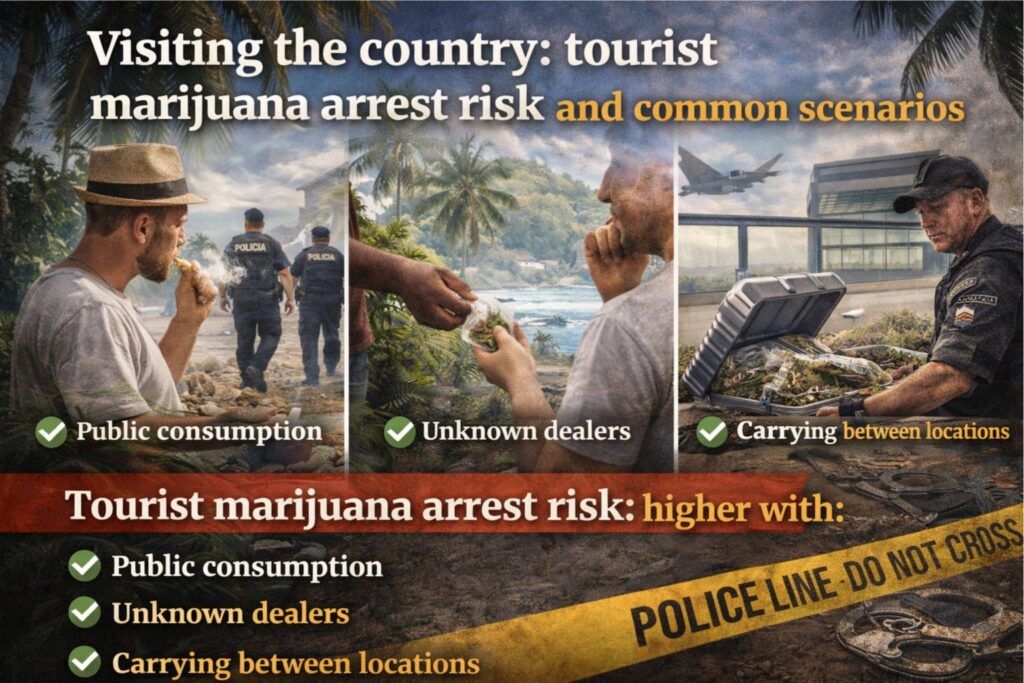
If you’re traveling, the tourist marijuana arrest risk is mostly about exposure to street-level sales and public consumption. Tourist zones are where solicitation happens, and public behavior is easier to spot. I’ve watched travelers assume that because weed culture is visible in some places, it must be tolerated. That assumption has burned people in many countries.
Here’s how I think about tourist marijuana arrest risk:
- Public consumption increases tourist marijuana arrest risk because it’s visible and easy to document.
- Buying from unknown sellers increases tourist marijuana arrest risk because it can involve scams, unwanted attention, or other substances.
- Carrying across borders is in a different category altogether.
If your goal is a calm trip, treat tourist marijuana arrest risk like you would treat traffic laws: even if “everyone does it,” the one time you get stopped is the only time that matters. Tourist marijuana arrest risk also increases when you’re loud, intoxicated in public, or in conflict with staff or neighbors.
Seed-shopping reality: what a seed shipping customs reality check looks like
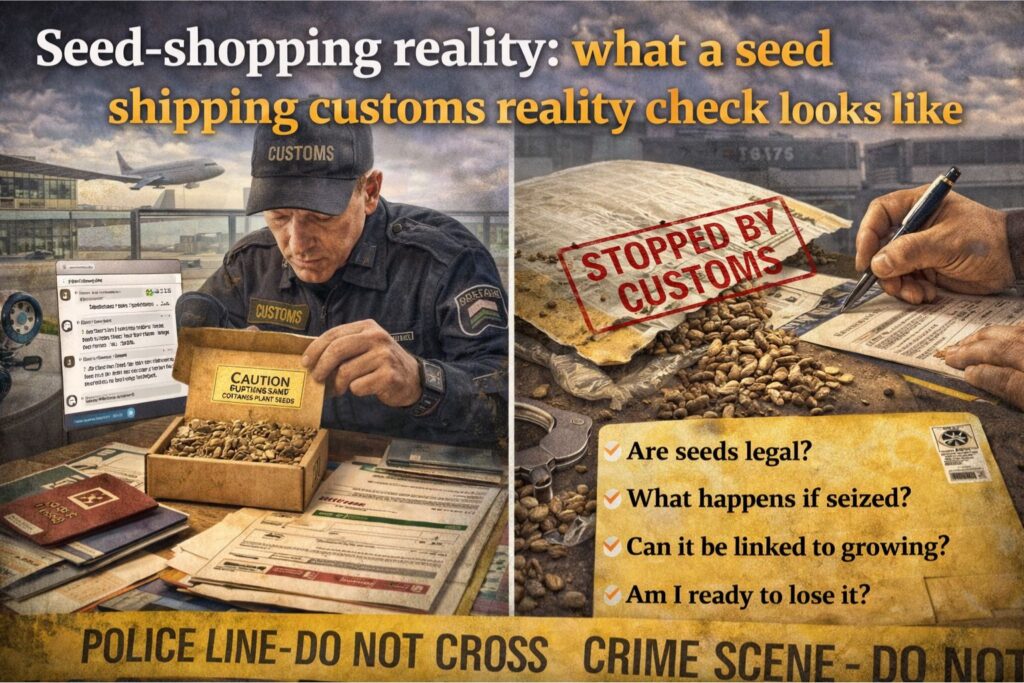
People ask me about ordering seeds all the time. My answer is never “yes, do it,” because I can’t evaluate your situation, your risk tolerance, or your local rules. But I can explain how I think about it as someone who has received genetics in multiple regions.
A seed shipping customs reality check starts with this: any shipment can be inspected. Even if many packages arrive, you only need one stop to create a problem. A seed shipping customs reality check also includes payment and digital footprint: records are real, and “nobody will notice” is not a plan. A seed shipping customs reality check also means you avoid talking casually about “starting a weed grow” in writing, because screenshots last forever.
When I run a seed shipping customs reality check, I use a simple checklist:
- Are seeds explicitly treated as legal goods under the receiving rules, or are they tied to controlled-plant enforcement?
- If seized, what happens next: a letter, a fine, an investigation, or nothing?
- Can the shipment be linked to cultivation intent (equipment orders, messages, social posts)?
- Am I prepared to lose the money and the package without escalating the situation?
If you’re determined to proceed, the safest mindset is to plan for loss. A seed shipping customs reality check should assume the package might never arrive, and you should never let one package push you into riskier behavior.
Cultivation realities in the tropics: what actually changes
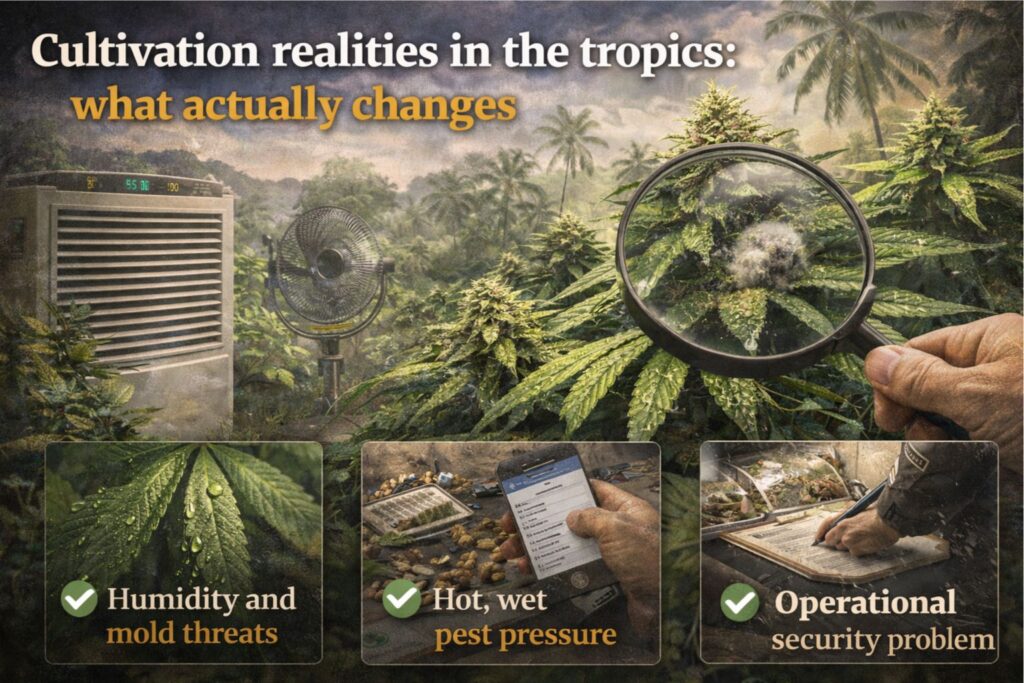
Now for the part I can speak about most confidently: growing weed in humidity. Costa Rica’s climate varies by elevation and coast, but in many areas, you’re dealing with high ambient moisture for long periods. If you’ve only grown in dry climates, your instincts can betray you.
Genetics and structure: choosing plants that can breathe
In high humidity, I favor plants with:
- More open branching and less dense flower stacking
- Stronger resistance to powdery mildew and botrytis
- Predictable flowering time so I can plan harvest windows
That’s not a guarantee. It’s a risk reduction. I also avoid pushing flower density too hard with aggressive bloom additives when humidity is already high, because the thicker the flower, the harder it is to keep air moving through it.
This is also where discreet cultivation operational security matters. When you need strong airflow, dehumidification, and odor control, you can’t pretend the grow is invisible. Discreet cultivation operational security is about controlling information: who knows, what can be seen, what can be heard, and what can be smelled. Discreet cultivation operational security is also about being realistic: if your setup draws attention, your legal risk grows with it.
Environment targets that work in real rooms
A lot of growers talk about “ideal” temperature and humidity ranges. In practice, I pick targets that my equipment can hold steady. Stability beats perfection.
Here are ranges I’ve used successfully indoors in warm climates:
- Veg: 26–28°C, 60–70% RH, with strong airflow
- Early flower: 25–27°C, 55–65% RH
- Late flower: 24–26°C, 45–55% RH if possible
The moment RH climbs above what your cultivar tolerates, you need to treat mold as an active threat, not a hypothetical.
This is where the vpd chart for 28°c rooms becomes my anchor. I keep a vpd chart for 28°c rooms on hand because many tropical indoor setups sit around that temperature when lights run. A vpd chart for 28°c rooms helps me decide whether to lower RH, adjust airflow, or reduce transpiration stress with gentler lighting.
Lighting and PPFD: avoiding stress that invites pests
In humid areas, pest pressure can be persistent. When plants are stressed, they emit cues that can make them more susceptible.
My practical PPFD approach:
- Veg: 350–550 PPFD once established
- Flower: 650–900 PPFD depending on cultivar and CO2 strategy
I’ve learned not to chase maximum intensity if I can’t also manage heat and humidity. Pushing extreme intensity in a room that can’t dehumidify often means wetter flowers and more rot risk, especially with dense weed cultivars.
Nutrients: EC discipline and the “too green” problem
In high humidity, plants can transpire differently. If transpiration slows, salts can accumulate. I keep my feed simple and watch runoff.
General approach (varies by medium):
- Soil: lighter feeding, focus on microbial health and drainage
- Coco: frequent, balanced feeds; monitor EC and runoff daily
- Hydro: stable reservoir temps and strict sanitation
I don’t want dark, clawed leaves in late flower. That “too green” look often correlates with slower ripening and denser, wetter flowers that are harder to dry safely.
The mold war: tropical humidity flower rot control that actually works
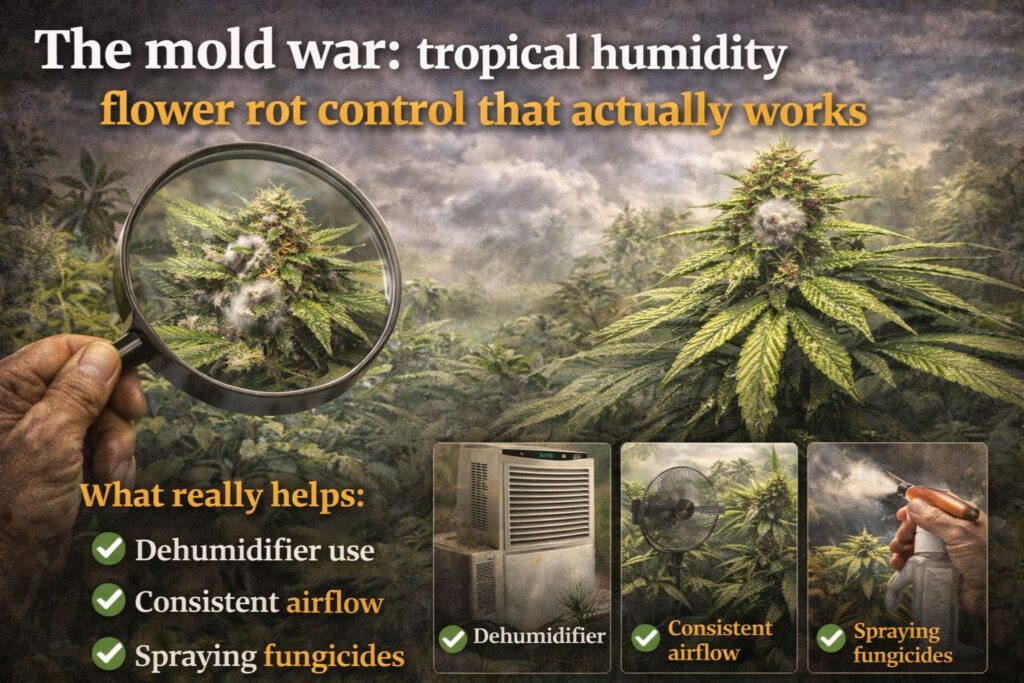
If there’s one reason tropical grows fail, it’s moisture management. Tropical humidity flower rot control starts long before harvest.
My tropical humidity flower rot control routine has three phases:
1) Prevention in veg and early flower
- Thin interior growth so air can move
- Keep leaves off wet surfaces and avoid standing water
- Run fans 24/7, not just when lights are on
2) Control in mid to late flower
- Defoliate strategically (not all at once)
- Increase airflow across and under the canopy
- Reduce late-flower nitrogen so flowers are less swollen and wet
3) Inspection and response
- Check the densest top colas daily
- If you smell ammonia or “sweet rot,” act immediately
- Remove infected material, bag it, and sanitize tools
Tropical humidity flower rot control also means you pick cultivars that you can actually finish in your conditions. If your room can’t stay below 60% RH in late flower, then a giant, dense phenotype is simply a bad match.
Equipment that matters most: indoor dehumidifier sizing for cannabis
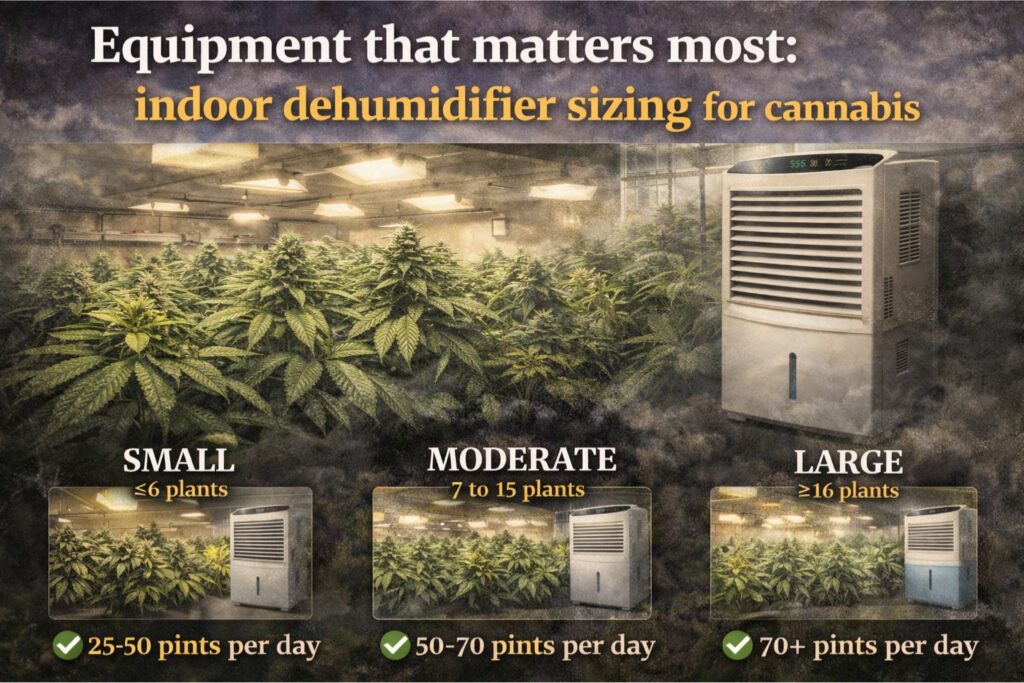
If you’re growing indoors in humid conditions, your dehumidifier is not optional. It’s the backbone of the whole operation.
Indoor dehumidifier sizing for cannabis is one of the most misunderstood topics I see. People buy a unit based on room size, not on plant load. Plant transpiration is what drives humidity, and that rises fast in mid flower.
Here’s a practical way I estimate:
- Start with the dehumidifier’s liters/day rating at realistic temps (manufacturers often quote at lab conditions).
- Consider that flowering plants can transpire several liters per day per square meter in warm rooms.
- Plan extra capacity for rainy weeks and for drying.
Indoor dehumidifier sizing for cannabis also ties into heat management. Many units dump heat back into the room. If you undersize cooling, you might solve humidity while raising temperature into the danger zone.
I’ve had the best results by treating indoor dehumidifier sizing for cannabis as a system design problem:
- Dehumidifier capacity
- Exhaust and intake
- Air circulation pattern
- Cooling capacity
- Sealed room strategy versus vented strategy
Harvest, dry, and cure: drying and curing in 70% RH without ruining flavor
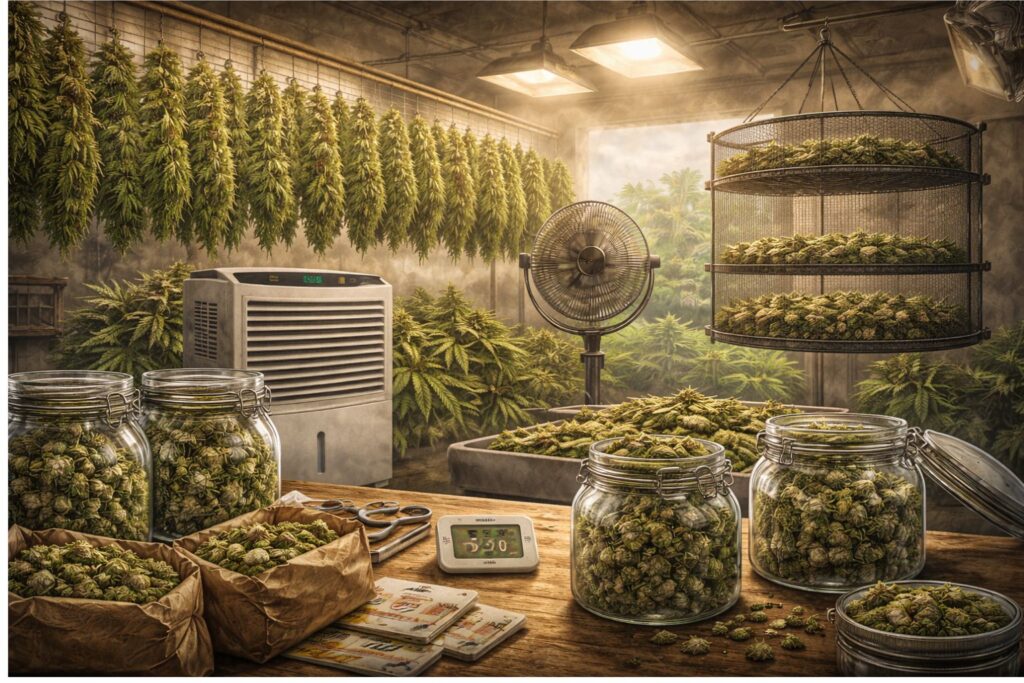
Drying is where a lot of “good grows” die. In wet climates, you can’t rely on ambient air. Drying and curing in 70% rh is risky, but sometimes it’s the reality if you don’t have enough dehumidification.
My rules for drying and curing in 70% rh:
- Do not dry in still air. Air exchange matters.
- Keep drying temps around 18–20°C if possible.
- Aim for 55–60% RH in the drying space; if you can’t, shorten hang time and use controlled containers carefully.
If I’m forced into drying and curing in 70% rh conditions, I split the harvest into smaller branches and increase air movement around the outer edges of the canopy, not blasting directly at flowers. I also monitor smell and texture twice a day. Drying and curing in 70% rh means you need to accept trade-offs: you might lose some terpene quality to protect against mold.
How to think about hemp and medical rules without mixing them up
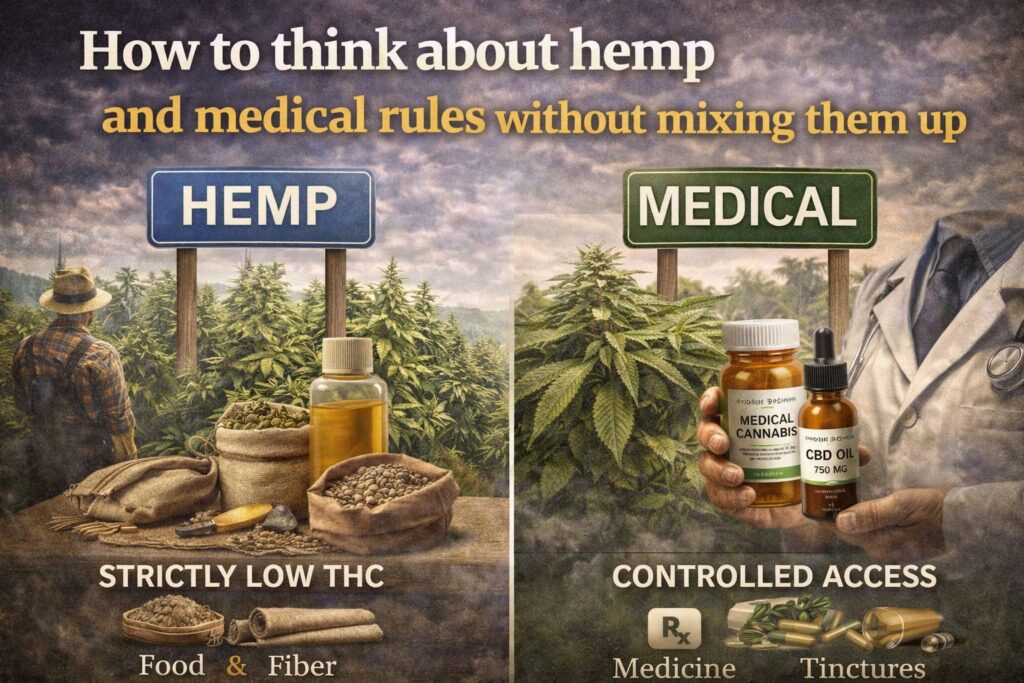
This is where costa rica hemp regulations for growers comes in. Hemp frameworks usually define allowable THC thresholds and licensing steps for cultivation and processing. Costa Rica’s hemp authorization sits inside the same broader law that permitted medical and therapeutic cannabis, but it does not automatically mean home growers have a safe harbor.
If you’re considering hemp, read the costa rica hemp regulations for growers carefully through official sources and local professionals. Costa rica hemp regulations for growers can still require registration, traceability, and approved handling. And costa rica hemp regulations for growers do not eliminate the risk of Law 8204 scrutiny if your operation appears non-compliant or commercial without authorization.
Practical risk habits I use anywhere laws are unclear
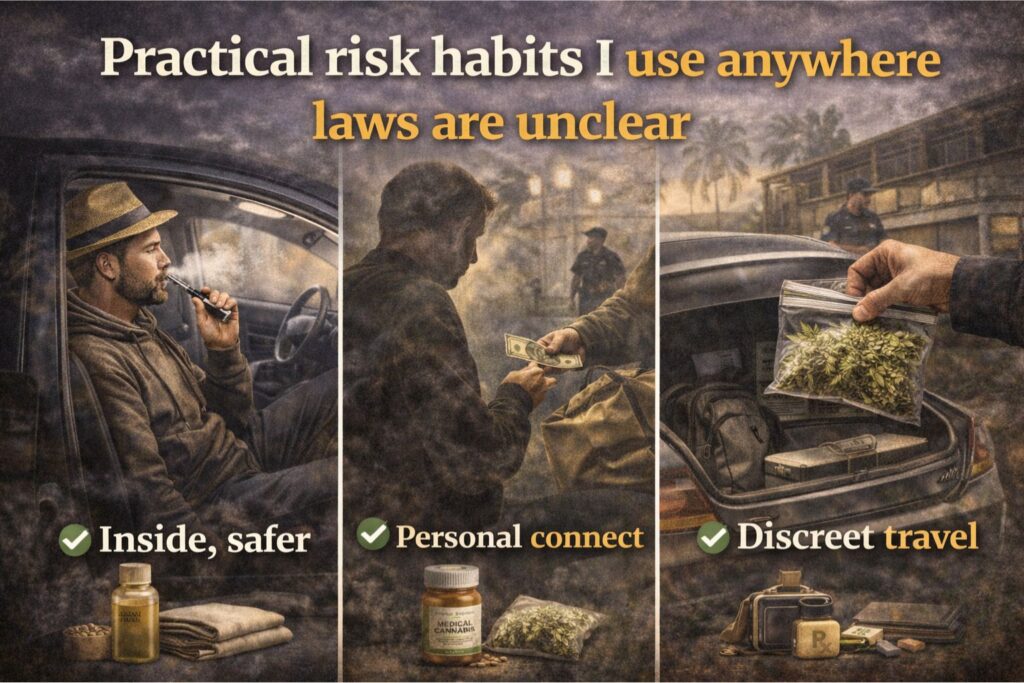
This is the part that has saved me stress in more than one country.
Discreet cultivation operational security checklist
I mentioned discreet cultivation operational security earlier, but here’s the checklist version. Discreet cultivation operational security is not paranoia. It’s basic risk management.
- Noise: keep fans and pumps quiet
- Light: no glow through windows, vents, or doors
- Smell: proper filtration and negative pressure
- Waste: don’t leave stems or used medium where others can see
- Conversation: do not brag, do not post, do not “hint”
- Scale: do not expand until you can control everything
Even if your neighbors don’t care, visitors, workers, and landlords change the equation fast. Discreet cultivation operational security is a daily practice, not a one-time decision.
Law awareness without turning into a courtroom hobby
I read laws to understand categories and risk, not to “win” arguments. It’s useful to know that Law 10113 created specific regulated channels for medical and therapeutic products, and it’s useful to know that Law 8204 governs unauthorized narcotics activity broadly. But it’s not useful to assume a technical interpretation will protect you in a real-world encounter.
FAQ: common Google-style questions I hear
Is cannabis legal in Costa Rica?
Medical and therapeutic cannabis and industrial hemp (not recreational weed) have a legal framework under Law 10113, but recreational marijuana is not legalized. Costa Rica cannabis laws and crime still matter because unauthorized cultivation and distribution can be handled under broader drug enforcement laws.
Can tourists buy weed in Costa Rica?
I can’t advise you to break local laws. The tourist marijuana arrest risk increases with public consumption, street purchases, and carrying product between locations. If you care about your trip, treat tourist marijuana arrest risk as something you can lower by avoiding public use and avoiding transactions with unknown sellers.
Can I order seeds to Costa Rica?
This is where the seed shipping customs reality check matters. Any package can be inspected, and outcomes vary. A seed shipping customs reality check should assume you could lose the shipment and should not escalate into risky behavior if that happens.
What’s the biggest cultivation mistake in the tropics?
Underestimating humidity. Tropical humidity flower rot control is the main job in late flower. If you can’t manage humidity, you need to choose different genetics, reduce density, or change your schedule.
What equipment matters most for indoor grows in humid areas?
Dehumidification. Indoor dehumidifier sizing for cannabis is often the difference between a clean harvest and a mold problem. Under-size it and you’ll be fighting constant moisture.
How do I use VPD in a warm room?
Keep a vpd chart for 28°c rooms and aim for stable, plant-appropriate ranges rather than chasing a single number. A vpd chart for 28°c rooms helps you decide whether RH is too high for the plant stage.
How do I dry without mold when the air is wet?
Drying and curing in 70% rh is a warning sign. You need airflow, lower RH if possible, smaller branches, and close monitoring. If you can’t control the dry, consider reducing harvest size so your drying space can keep up.
Final thoughts
Costa Rica cannabis laws and crime is not a headline I use to scare anyone. It’s a reminder that cultivation decisions are always a mix of plant science and human reality. The plant side is manageable: choose appropriate genetics, build a humidity-first environment, and run disciplined post-harvest practices. The human side is the hard part: understand that medical and hemp frameworks are regulated channels, not blanket permission, and that enforcement priorities exist inside a broader crime context.
If you take only one cultivation lesson from me, let it be this: in humid regions, prevention beats rescue. If you take only one legal-risk lesson, let it be this: keep your footprint small, your behavior quiet, and your assumptions even smaller. Costa Rica cannabis laws and crime is a topic that rewards careful reading and careful growing, whether you call it cannabis, marijuana, or weed.
