Table of Contents
Cornbread is a potent indica-dominant hybrid cannabis strain renowned for its relaxing effects and strong therapeutic benefits. It is a cross between Katsu Bubba Kush and Rare Dankness #2, bred by Rare Dankness Seeds. This strain features a sweet, earthy aroma with hints of lemon and spice, making it a well-liked option for both recreational and medical users.
Cornbread is known for its high THC content, which can range from 15% to 20% or more, and low CBD levels. It delivers a deep body relaxation with sedative effects, making it particularly beneficial for pain relief, insomnia, and stress management.
This article provides an in-depth look at Cornbread’s genetics, effects, terpene profile, cannabinoid composition, medical applications, recreational uses, and scientific insights.
Genetics and Origins of Cornbread
Cornbread is an indica-dominant hybrid (approximately 80% indica, 20% sativa) created by Rare Dankness Seeds, a breeder known for producing potent and flavorful strains.
- Parent Strains:
- Katsu Bubba Kush: A phenotype of Bubba Kush, famous for its heavy sedative effects and earthy, coffee-like aroma.
- Rare Dankness #2: A hybrid known for its strong cerebral euphoria and citrus-spiced aroma.
This genetic combination gives Cornbread a potent body-high with mild cerebral stimulation, making it an great strain to utilize at night or in the evening.
Appearance, Aroma, and Flavor Profile
Appearance
- Cornbread buds are dense and compact, typical of indica-dominant strains.
- The dark green leaves are accented by deep purple hues and bright orange pistils.
- A thick layer of trichomes covers the buds, giving them a frosty, sticky texture.
Aroma
Cornbread has a sweet and earthy aroma with hints of citrus, lemon zest, and pine. The scent intensifies when the buds are broken apart, releasing spicy, herbal, and woody notes.
Flavor Profile
- Inhalation: Sweet, lemony, and herbal notes.
- Exhalation: Earthy, woody, and slightly spicy.
- Aftertaste: A lingering sweet citrus and nutty flavor.
Cannabinoid Profile
Cornbread contains a high THC concentration and a low CBD percentage, making it a potent strain suitable for experienced users.
| Cannabinoid | Typical Percentage |
|---|---|
| THC | 15% – 20% (sometimes higher) |
| CBD | 0.1% – 1% |
| CBG | 0.5% – 1% |
| CBC | < 0.5% |
Effects of Cannabinoids in Cornbread
- THC: Responsible for the psychoactive effects, including euphoria, relaxation, and pain relief.
- CBD: Provides anti-inflammatory and anxiolytic properties (though in low amounts in Cornbread).
- CBG (Cannabigerol): May contribute to muscle relaxation and neuroprotective effects.
- CBC (Cannabichromene): Works synergistically with THC for pain relief and mood enhancement.
Terpene Profile
Terpenes contribute to Cornbread’s aroma, flavor, and therapeutic effects. The most dominant terpenes in this strain are:
| Terpene | Effects | Aroma/Flavor |
|---|---|---|
| Myrcene | Sedative, muscle relaxant, anti-inflammatory | Earthy, musky, herbal |
| Limonene | Mood booster, stress reliever, antifungal | Citrus, lemon, orange |
| Caryophyllene | Pain relief, anti-inflammatory, stress reduction | Spicy, peppery, woody |
| Pinene | Bronchodilator, anti-inflammatory, memory-enhancer | Pine, fresh, herbal |
Terpene Effects
- Myrcene & Caryophyllene: Enhance Cornbread’s relaxing and analgesic effects.
- Limonene: Balances out sedation by providing mild euphoria and stress relief.
- Pinene: Helps prevent cognitive fog while adding anti-inflammatory properties.
Effects and User Experience
Cornbread delivers a deeply relaxing body high with mild cerebral euphoria, making it a popular choice for evening or nighttime use.
Onset and Duration
- Onset: 10 – 15 minutes after consumption.
- Peak effects: Last 1.5 – 2 hours.
- Total duration: 3 – 5 hours.
Physical and Mental Effects
| Effect | Description |
|---|---|
| Relaxation | Deep body relaxation, tension relief |
| Euphoria | Uplifted mood, mild happiness |
| Sedation | Drowsiness, couch-lock effect |
| Pain Relief | Reduces chronic pain, muscle spasms |
| Anti-Anxiety | Calming, reduces stress and worry |
Potential Side Effects
- Dry mouth & dry eyes (common)
- Dizziness (at high doses)
- Paranoia (rare but possible for sensitive users)
Medical Benefits of Cornbread
Cornbread is widely used in the medical cannabis community for its strong therapeutic effects, particularly for conditions that require pain relief and relaxation.
Pain Management
- Effective for chronic pain, arthritis, muscle spasms, and migraines due to its high THC and caryophyllene content.
Insomnia and Sleep Disorders
- The sedative properties of myrcene and THC make Cornbread an excellent sleep aid.
Stress, Anxiety, and Depression
- Limonene and THC work together to uplift mood while reducing stress.
- It’s more suitable for anxiety relief in low doses, as high doses might cause paranoia.
Appetite Stimulation
- THC increases hunger, making it helpful for patients with appetite loss due to chemotherapy or eating disorders.
Anti-Inflammatory Benefits
- Caryophyllene & myrcene reduce inflammation, beneficial for conditions like fibromyalgia, arthritis, and IBS.
Recreational Uses
For recreational users, Cornbread offers a relaxing and enjoyable experience with the following benefits:
- Perfect for relaxing evenings: Unwinds the body and mind.
- Enhances sensory experiences: Music and movies feel more immersive.
- Ideal for stress relief: A great way to decompress after a long day.
- Social settings (low doses): Promotes mild euphoria without excessive sedation.
Due to its potency, Cornbread is best enjoyed in the evening or nighttime rather than during the day.
Scientific Insights and Research
Recent cannabis research highlights how Cornbread’s cannabinoids and terpenes contribute to its medical efficacy:
THC & Pain Management
- Studies show THC interacts with CB1 and CB2 receptors in the endocannabinoid system, modulating pain perception and inflammation.
Terpenes and Synergistic Effects
- Myrcene enhances THC’s sedative effects, helping with sleep disorders and chronic pain.
- Caryophyllene’s unique interaction with CB2 receptors may contribute to anti-inflammatory and analgesic effects.
Potential for Anxiety and PTSD
- Some research suggests that limonene-rich cannabis strains may help reduce anxiety and symptoms of PTSD.
Cultivating Cornbread Cannabis Strain
Cultivating Cornbread cannabis requires specific environmental conditions, nutrient management, and growing techniques to maximize its potency, yield, and terpene profile. Below is a detailed scientific breakdown of the cultivation process, including the best practices for indoor and outdoor growing.
1. Optimal Growing Conditions
Cornbread is an indica-dominant hybrid, meaning it prefers warm, slightly humid environments with moderate airflow. It grows bushy and compact, requiring techniques to improve light penetration and air circulation.
Ideal Environmental Conditions
| Factor | Optimal Range |
|---|---|
| Temperature (Vegetative) | 70-80°F (21-27°C) |
| Temperature (Flowering) | 65-75°F (18-24°C) |
| Humidity (Vegetative) | 50-60% RH |
| Humidity (Flowering) | 40-50% RH |
| CO₂ Levels | 1000-1500 ppm (for indoor grows) |
| Light Intensity | 600-1000 µmol/m²/s (PPFD) |
| Soil pH | 6.0-6.5 |
| Hydroponic pH | 5.5-6.0 |
- Why Lower Humidity in Flowering?
- Reduces the risk of mold and bud rot, especially since Cornbread produces dense, resinous buds.
- Encourages resin production, enhancing terpene and cannabinoid profiles.
- Why High CO₂ in Indoor Growing?
- Higher CO₂ levels increase photosynthesis efficiency, leading to faster growth and higher yields.
2. Soil vs. Hydroponics for Cornbread Cultivation
Cornbread can be grown in both soil-based and hydroponic systems, but each method affects terpene expression and yield differently.
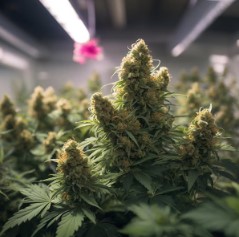
Soil Cultivation (Organic Approach)
- Enhances terpene expression, resulting in richer flavors and aromas.
- Requires soil that drains well and is high in organic materials.
- Recommended amendments:
- Mycorrhizal fungi & beneficial bacteria – Improve nutrient uptake.
- Compost, worm castings, and bat guano – Provide slow-release nutrients.
- Perlite and coco coir – Improve aeration and root health.
Hydroponic Cultivation (Higher Yield Approach)
- Increases growth speed and cannabinoid concentration.
- Requires strict pH and nutrient monitoring.
- Recommended hydroponic systems:
- Deep Water Culture (DWC) — Increases the amount of oxygen available for roots.
- Drip Irrigation – Provides consistent nutrient delivery.
- Aeroponics – Boosts oxygenation, potentially improving potency.
3. Lighting Requirements
Cornbread responds well to high-intensity light due to its indica-dominant nature, which leads to shorter internodal spacing and dense buds.
Recommended Light Setup
| Growth Stage | Light Type | Duration | PPFD (µmol/m²/s) |
|---|---|---|---|
| Seedling | CFL / LED | 18-24 hours | 200-300 |
| Vegetative | LED / MH | 18 hours | 400-600 |
| Flowering | LED / HPS | 12 hours | 600-1000 |
- LED vs. HPS for Flowering
- LED (Full Spectrum): Enhances terpene production and reduces heat stress.
- HPS (High-Pressure Sodium): Boosts bud density and yield, but produces more heat.
4. Nutrient Management
Cornbread requires a balanced nutrient regimen to support its vigorous growth and dense flowering.
Macronutrient Needs
| Nutrient | Vegetative Phase | Flowering Phase |
|---|---|---|
| Nitrogen (N) | High | Low |
| Phosphorus (P) | Medium | High |
| Potassium (K) | Medium | High |
| Calcium (Ca) | High | High |
| Magnesium (Mg) | Moderate | Moderate |
- Why Reduce Nitrogen in Flowering?
- Excess nitrogen during flowering inhibits bud development and reduces resin production.
Micronutrients for Cornbread
| Micronutrient | Benefit |
|---|---|
| Iron (Fe) | Helps chlorophyll production. |
| Boron (B) | Supports cell wall strength. |
| Zinc (Zn) | Enhances enzyme activity. |
| Molybdenum (Mo) | Essential for nitrogen metabolism. |
- Organic Nutrient Sources:
- Kelp extract (boosts terpene production).
- Bone meal (high phosphorus for flowering).
- Epsom salt (magnesium & sulfur for resin production).
5. Training Techniques for Higher Yield
Cornbread’s indica structure benefits from techniques that increase light exposure and airflow.
| Training Method | Benefits |
|---|---|
| Low-Stress Training (LST) | Enhances light penetration, increases yield. |
| Screen of Green (ScrOG) | Maximizes canopy exposure, controls height. |
| Topping | Encourages lateral growth, produces multiple colas. |
| Defoliation | Reduces humidity, improves airflow around buds. |
- Why ScrOG for Cornbread?
- Cornbread’s bushy growth makes it ideal for Screen of Green (ScrOG), where branches are trained horizontally to increase bud sites.
6. Flowering Time & Harvesting
Flowering Period
- Indoors: 8–9 weeks
- Outdoors: Late September to early October
Signs of Maturity
- Trichomes: Milky white with amber heads (optimal for potency).
- Pistils: 70-80% turn orange/red.
- Leaf Yellowing: Indicates nitrogen depletion before harvest.
Harvesting & Drying
- Ideal Harvest Time: When trichomes are mostly cloudy with 20-30% amber trichomes (best for sedative effects).
- Drying:
- Temperature: 60-70°F (15-21°C)
- Humidity: 50-60%
- Duration: 7-10 days
- Curing:
- Glass jars, burped daily for 2-3 weeks.
- Enhances terpene retention and smoothness.
7. Pest & Disease Management
Cornbread is relatively resilient to mold, but its dense buds can attract powdery mildew and bud rot.
Common Pests
| Pest | Control Method |
|---|---|
| Spider Mites | Neem oil, predatory mites. |
| Aphids | Insecticidal soap, ladybugs. |
| Fungus Gnats | Sticky traps, dry topsoil. |
Disease Prevention
- Good Air Circulation – Use oscillating fans.
- Avoid Overwatering – Prevents root rot.
- Silica Supplements – Strengthens plant cell walls.
Consumption Methods
Cornbread is a potent indica-dominant hybrid known for its deep relaxation, pain relief, and sedative effects. The way it is consumed affects the onset, duration, and bioavailability of cannabinoids, ultimately shaping the user’s experience.
This guide covers the scientific breakdown of Cornbread’s ingestion methods, their pharmacokinetics, onset, and duration.
1. Ingestion Methods and Their Scientific Mechanisms
Each method of consuming Cornbread affects the rate of THC absorption, metabolism, and duration of effects. Below is a scientific comparison of the different ingestion methods:
| Ingestion Method | Absorption Route | Onset Time | Duration | Bioavailability |
|---|---|---|---|---|
| Smoking (Combustion) | Pulmonary (lungs → bloodstream) | 1-5 minutes | 2-4 hours | 25-30% |
| Vaporization | Pulmonary (lungs → bloodstream) | 1-3 minutes | 2-4 hours | 40-50% |
| Edibles (Gastrointestinal) | Digestive tract → Liver → Bloodstream | 30-90 minutes | 4-8 hours | 4-20% |
| Tinctures (Sublingual) | Mucous membrane → Bloodstream | 15-45 minutes | 3-6 hours | 40-50% |
| Topicals (Localized Absorption) | Skin → Local CB2 receptors | No psychoactive effect | Varies | N/A |
| Transdermal Patches | Skin → Systemic absorption | 30-60 minutes | 8-12 hours | 50-70% |
2. Smoking vs. Vaping: Immediate Effects and Bioavailability
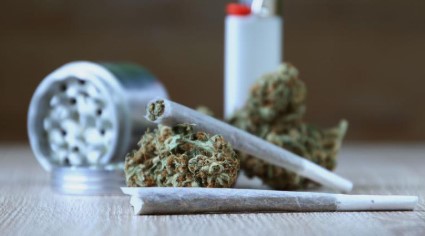
Smoking (Combustion)
- Mechanism: When cannabis is burned, THC decarboxylates at ~220°C, becoming psychoactive Δ9-THC.
- Bioavailability: ~25-30%, as some cannabinoids are lost to combustion.
- Onset: 1-5 minutes due to direct alveolar absorption in the lungs.
- Peak Effects: ~30 minutes.
- Duration: 2-4 hours.
Vaping (Convection or Conduction)
- Mechanism: Heat releases cannabinoids at lower temperatures (~180-220°C), preserving terpenes.
- Bioavailability: ~40-50%, as vaporization prevents cannabinoid degradation.
- Onset: 1-3 minutes (faster than smoking due to cleaner absorption).
- Peak Effects: 20-30 minutes.
- Duration: 2-4 hours.
Scientific Insight:
- Vaping produces fewer harmful byproducts than combustion, reducing the intake of benzene, tar, and carbon monoxide.
- Terpenes like myrcene and limonene are more preserved in vaporization, enhancing Cornbread’s sedative and mood-lifting effects.
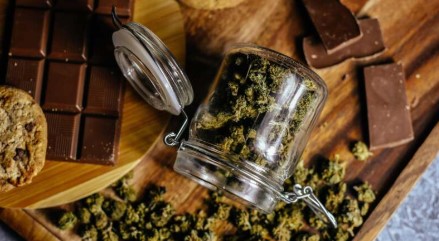
3. Edibles: Slow Onset but Prolonged Effects
Mechanism of THC Metabolism in Edibles
- THC undergoes first-pass metabolism in the liver, converting into 11-hydroxy-THC (11-OH-THC).
- 11-OH-THC is more potent and has a longer half-life than inhaled THC.
- This results in stronger psychoactive effects and a delayed onset.
Onset, Peak, and Duration
| Phase | Timeframe |
|---|---|
| Onset | 30-90 minutes |
| Peak Effects | 2-3 hours |
| Duration | 4-8 hours (sometimes up to 10 hours) |
Advantages & Risks of Edibles
Long-lasting effects, ideal for chronic pain and sleep disorders.
More discreet than smoking.
Higher risk of overconsumption due to delayed onset.
Edibles may cause stronger psychoactive effects due to 11-OH-THC.
Scientific Insight:
- Fat-soluble cannabinoids (like THC and CBD) are best absorbed when ingested with dietary fats (e.g., butter, coconut oil).
- Peak bioavailability of edibles is only 4-20%, meaning more THC is needed to achieve the same effect as inhalation.
4. Sublingual Tinctures: Fast Absorption Without Inhalation
How Sublingual Absorption Works
- Tinctures absorb through the mucous membranes under the tongue, bypassing digestion.
- Avoids first-pass liver metabolism, allowing faster absorption into the bloodstream.
| Phase | Timeframe |
|---|---|
| Onset | 15-45 minutes |
| Peak Effects | 45-90 minutes |
| Duration | 3-6 hours |
Onset, Peak, and Duration
Scientific Insight:
- Bioavailability of sublingual tinctures is 40-50%, much higher than edibles.
- Alcohol-based tinctures absorb faster than oil-based tinctures.
When to Use Tinctures?
- Faster onset than edibles but longer duration than smoking.
- Better control over dosing compared to smoking or vaping.
- Useful for patients with gastrointestinal conditions (as it bypasses the digestive system).
5. Topicals vs. Transdermal Patches: Local vs. Systemic Effects
Topicals (Creams, Balms, Lotions)
- Absorption: Through skin and localized CB2 receptors.
- Onset: 5-20 minutes.
- Duration: 2-6 hours.
- Best For: Localized pain, arthritis, and muscle soreness.
- No psychoactive effects, as cannabinoids do not reach the bloodstream.
Transdermal Patches
- Absorption: Directly into the bloodstream over time.
- Onset: 30-60 minutes.
- Duration: 8-12 hours.
- Best For: Long-lasting pain relief and anxiety reduction.
- Can produce psychoactive effects, unlike regular topicals.
Scientific Insight:
- Transdermal patches have a bioavailability of ~50-70%, meaning more cannabinoids enter circulation.
- Topicals do not produce a “high” because THC does not penetrate deeply enough to reach the bloodstream.
6. Factors Affecting Onset and Duration
The absorption, onset, and duration of Cornbread’s effects depend on several physiological and external factors:
| Factor | Impact |
|---|---|
| Metabolism | Faster metabolism = shorter duration. |
| Tolerance | Higher tolerance = reduced effects. |
| Body Fat Percentage | More fat = longer THC retention. |
| Food Intake | Taking edibles with fats enhances absorption. |
| Dose Strength | Higher doses = longer effects and stronger psychoactivity. |
7. Final Comparison Table: Onset & Duration by Method
| Method | Onset Time | Peak Effects | Total Duration |
|---|---|---|---|
| Smoking | 1-5 min | 30 min | 2-4 hours |
| Vaping | 1-3 min | 20-30 min | 2-4 hours |
| Edibles | 30-90 min | 2-3 hours | 4-8 hours |
| Tinctures | 15-45 min | 45-90 min | 3-6 hours |
| Topicals | 5-20 min | N/A (localized) | 2-6 hours |
| Transdermal Patches | 30-60 min | Ongoing release | 8-12 hours |
Final Thoughts
The best ingestion method for Cornbread depends on the desired effect, medical needs, and lifestyle preferences:
Smoking/vaping → Fast onset, short duration.
Edibles → Slow onset, long-lasting effects.
Tinctures → Fast absorption without inhalation.
Topicals → Non-psychoactive localized relief.
Transdermal patches → Long-lasting systemic effects.
Final Thoughts
Cornbread is a powerful indica-dominant hybrid with potent pain-relieving, anti-anxiety, and sedative properties. It’s best suited for nighttime use, offering deep relaxation and therapeutic relief for pain, insomnia, and stress.
With its strong THC levels, flavorful terpene profile, and medical benefits, Cornbread is a top choice for both medical and recreational users looking for a soothing and enjoyable cannabis experience.
For a complete directory of cultivars, visit our Cannabis Strain Reviews.
