Table of Contents
Cookies and Cream is a popular hybrid cannabis strain known for its balanced effects and dessert-like aroma. It offers both recreational and medicinal benefits, making it a sought-after choice among cannabis enthusiasts. Cookies and Cream was developed by Exotic Genetix and gained significant recognition after winning the 2014 High Times Cannabis Cup in the hybrid category. Its potency, complex terpene profile, and well-balanced high have made it a favorite in dispensaries worldwide.
Genetics and Lineage
Cookies and Cream is a hybrid cross between Starfighter (F2) and Girl Scout Cookies (GSC). The Starfighter lineage contributes to its relaxing and euphoric effects, while GSC brings in a sweet, earthy flavor with a hint of vanilla.
- Starfighter F2: Known for its potency and frosty trichome production, Starfighter delivers a strong body high and long-lasting euphoria.
- Girl Scout Cookies (GSC): A legendary strain famous for its dessert-like aroma, cerebral high, and full-body relaxation.
The result is a hybrid strain that typically has a balanced indica-to-sativa ratio of 50:50 or leans slightly indica-dominant, depending on the phenotype.
Appearance
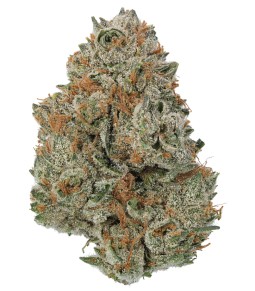
Cookies and Cream buds are visually striking, featuring dense, chunky nugs coated in a thick layer of crystalline trichomes. The coloration includes:
- Light and dark green hues
- Purple undertones (in colder growing conditions)
- Bright orange pistils
- Thick trichome coverage, giving the buds a frosty, sugar-coated look
Aroma and Flavor Profile
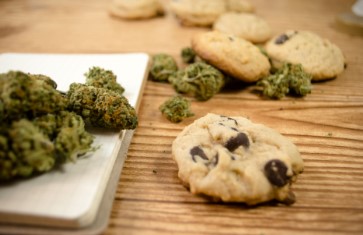
One of the most defining features of Cookies and Cream is its sweet and creamy aroma, reminiscent of vanilla ice cream and fresh cookies.
Aroma:
- Sweet vanilla
- Nutty undertones
- Earthy and woody notes
- Hints of spice
Flavor:
- Creamy, dessert-like taste
- Hints of vanilla and sugar
- Earthy and nutty exhale
- Smooth smoke with slight spice on the finish
Terpene Profile
Terpenes play a vital role in the aroma, flavor, and effects of cannabis strains. The primary terpenes in Cookies and Cream include:
- Caryophyllene – (Spicy, peppery)
- Provides anti-inflammatory and analgesic effects.
- Contributes to stress and pain relief.
- Limonene – (Citrusy, lemon-like)
- Enhances mood and reduces anxiety.
- May have antifungal and antibacterial properties.
- Myrcene – (Earthy, musky)
- Offers sedative and relaxing effects.
- Known for enhancing THC absorption, leading to a more potent high.
- Linalool – (Floral, lavender-like)
- Helps in relaxation, stress relief, and sleep improvement.
- May have antidepressant and anti-anxiety properties.
- Pinene – (Pine-scented)
- Enhances focus and alertness.
- Acts as a bronchodilator (helpful for asthma patients).
Cannabinoid Content
Cookies and Cream is a potent strain with a high THC content, typically ranging from 20% to 26%. Some phenotypes have been tested at up to 30% THC in optimal growing conditions.
- THC: 20-26% (some tests show up to 30%)
- CBD: 0.1-1% (low levels)
- CBG: 0.5-1%
- THCV & CBN: Trace amounts
The high THC levels in Cookies and Cream make it ideal for experienced users and those seeking a potent cerebral and body high.
Effects and Experience
Recreational Effects
Cookies and Cream offers a well-balanced high that evolves over time:
- Initial Effects (10-15 minutes):
- Euphoric and uplifting
- Enhanced creativity and focus
- Mental clarity and happiness
- Mid-Stage Effects (30-60 minutes):
- Increased relaxation
- Slight body buzz
- Mood elevation and giggles
- Late-Stage Effects (2-3 hours):
- Deep physical relaxation
- Potential couch-lock (in higher doses)
- Mild sedation and sleepiness
Due to its gradual onset and long-lasting high, Cookies and Cream is suitable for daytime or evening use, depending on dosage.
Medical Applications
Cookies and Cream’s balanced effects make it a great choice for treating various medical conditions. The high THC and terpene content provide a range of therapeutic benefits.

Pain Management:
- Effective for chronic pain, arthritis, and muscle spasms.
- Caryophyllene and myrcene work synergistically for pain relief.
Stress and Anxiety Relief:
- Reduces stress, anxiety, and PTSD symptoms.
- Limonene and linalool promote calmness and relaxation.
Depression and Mood Disorders:
- Uplifting cerebral effects combat depression and mood swings.
- Provides mental clarity and focus for ADHD patients.
Sleep Aid:
- In higher doses, it induces sedation and restful sleep.
- Ideal for insomnia patients when consumed in the evening.
Nausea and Appetite Stimulation:
- Helps combat nausea and loss of appetite (useful for chemotherapy patients).
- Increases hunger due to THC’s interaction with CB1 receptors.
Growing Information
Cookies and Cream is a moderately challenging strain to cultivate, but with scientific precision and optimized growing conditions, it can yield high-quality buds with exceptional potency. Below is a detailed scientific approach to cultivating this strain efficiently.
1. Germination Process
Optimal Germination Conditions:
- Medium: Use a sterile, well-aerated medium like a moist paper towel or root plug.
- Temperature: 70-80°F (21-27°C) to promote consistent sprouting.
- Humidity: Maintain a 65-75% relative humidity (RH) level.
- pH Level: Keep the medium slightly acidic (5.8-6.2 pH) for better nutrient uptake.
- Lighting: Keep in darkness until the taproot emerges (12-48 hours).
Advanced Germination Technique:
- Use gibberellic acid (GA3) (100-500 ppm) to stimulate faster germination.
- Hydrogen peroxide (H₂O₂, 1-3%) can be added to the water to increase oxygenation and prevent fungal contamination.
2. Vegetative Growth Optimization
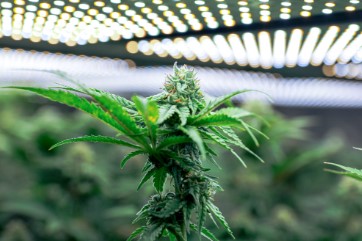
Once the Cookies and Cream seedlings have sprouted, they enter the vegetative stage. This is crucial for structural development.
Light Requirements:
- PPFD (Photosynthetic Photon Flux Density): 400-600 μmol/m²/s.
- Light Cycle: 18/6 (18 hours light, 6 hours dark).
- Spectrum: Blue light (400-500 nm) promotes strong, bushy growth.
Nutrient Needs:
- Nitrogen (N): High levels (N-P-K: 4-2-3) to support leafy growth.
- Phosphorus (P) & Potassium (K): Moderate levels to encourage root and stem development.
- Micronutrients: Calcium (Ca), Magnesium (Mg), and Iron (Fe) for enzyme activation and chlorophyll production.
Environmental Controls:
- Temperature: 70-80°F (21-27°C) with night temps 5°F lower.
- Humidity: 55-70% RH.
- CO₂ Supplementation: 800-1200 ppm CO₂ enhances photosynthesis and faster growth.
Advanced Vegetative Techniques:
- Low-Stress Training (LST): Bending stems carefully to maximize light exposure.
- Topping & FIMing: Cutting the top growth tip encourages bushier plants.
- Hydroponic Cultivation: Using a Deep Water Culture (DWC) or Nutrient Film Technique (NFT) ensures rapid vegetative growth.
3. Flowering Stage Optimization
Cookies and Cream requires 8-9 weeks to fully flower. This phase is where trichome production intensifies.
Light Cycle & Intensity:
- 12/12 cycle (12 hours light, 12 hours dark).
- PPFD: 600-900 μmol/m²/s for optimal flowering.
- Spectrum: Shift towards red and far-red wavelengths (600-700 nm) to enhance bud production.
Nutrient Requirements:
- Nitrogen Reduction: Lower N (N-P-K: 1-4-5) to prevent excessive leafy growth.
- Phosphorus & Potassium Increase: Essential for bud formation and resin production.
- Sulfur (S): Boosts terpene synthesis for improved flavor.
Humidity & Temperature Control:
- Humidity: Reduce to 45-55% RH to prevent mold.
- Temperature: Maintain 68-78°F (20-25°C).
- CO₂ Levels: Keep 1200-1500 ppm to maximize yields.
Trichome Development Enhancement:
- UVB Light Exposure: Adding UVB (280-320 nm) light in the final 2 weeks increases trichome density.
- Flushing: 10-14 days before harvest, flush the plant with pH-balanced water (5.8-6.2) to remove excess nutrients.
4. Harvesting & Curing for Maximum Potency
Harvesting Cookies and Cream at the right time is crucial for maximizing terpene and cannabinoid profiles.
Harvest Timing:
- Trichome Check: Harvest when 60-70% of trichomes turn milky and 15-20% turn amber.
- Pistil Check: 75-90% of pistils should be brown/reddish.
Drying & Curing:
- Drying Conditions: 60-70°F (15-21°C), 50-60% RH in a dark room for 7-10 days.
- Curing Conditions: Store buds in glass jars at 62% RH for 2-4 weeks to enhance flavor and potency.
5. Scientific Innovations for Yield Enhancement
To push the yield and quality of Cookies and Cream, cultivators use advanced cultivation methods:
Tissue Culture Propagation:
- Allows for genetic preservation and virus-free clones.
- Enhances plant resilience and uniformity.
Aeroponic & Hydroponic Systems:
- Aeroponics: Provides oxygen-rich environments for 40-60% faster growth.
- Hydroponics (DWC, NFT, or Ebb & Flow): Increases nutrient uptake for higher yields.
Biological Pest Control:
- Beneficial Bacteria & Fungi: Mycorrhizal fungi improve nutrient absorption.
- Predatory Insects: Ladybugs and lacewings control spider mites naturally.
The ingestion method of Cookies and Cream cannabis significantly influences the onset time, peak effects, duration, and bioavailability of cannabinoids such as THC, CBD, and terpenes. Understanding the scientific basis behind different methods can help consumers optimize their experience based on their needs—whether it’s fast relief, prolonged effects, or controlled dosing.
1. Methods of Ingestion
The primary methods of consuming Cookies and Cream include inhalation, oral ingestion, sublingual absorption, and topical application. Each method affects the pharmacokinetics (how THC and other cannabinoids are absorbed, metabolized, and excreted in the body).
A. Inhalation (Smoking & Vaping)
Bioavailability: ~30-50% THC absorption
Onset: 1-5 minutes
Peak Effects: 20-30 minutes
Duration: 2-4 hours
1. Smoking (Combustion)
- The most common method involves combusting dried Cookies and Cream and inhaling the smoke.
- High bioavailability (~30-50%) ensures rapid absorption through the lungs.
- THC reaches peak plasma levels within minutes via alveolar-capillary transfer.
- Downside: Produces carcinogenic byproducts from burning plant material.
2. Vaping (Convection or Conduction)
- Vaporizers heat cannabis below combustion temperature (~320-430°F), releasing active compounds without burning plant matter.
- Higher efficiency (40-50% bioavailability) compared to smoking.
- Lower risk of respiratory irritation as vaping reduces toxic byproducts.
- More terpene preservation, leading to a richer entourage effect.
B. Oral Consumption (Edibles, Capsules, Beverages)
Bioavailability: ~4-20% THC absorption
Onset: 30-90 minutes
Peak Effects: 2-3 hours
Duration: 4-8 hours (sometimes 12+ hours for high doses)
1. Edibles (THC-infused foods, Gummies, Chocolates)
- THC is metabolized by the liver (first-pass metabolism) into 11-hydroxy-THC, which is more potent and long-lasting than Δ9-THC.
- Slower onset but prolonged duration, ideal for chronic pain management and long-term symptom relief.
- Higher variability in absorption due to differences in digestion, metabolism, and individual gut microbiota.
2. Capsules & Pills
- Similar to edibles but offer precise dosing.
- Enteric-coated capsules can delay onset to 1.5-2 hours for prolonged effects.
- Lipid-based formulations (nano-emulsified THC) can increase absorption efficiency.
3. THC-infused Beverages
- Absorbed slightly faster than edibles due to partial sublingual absorption.
- Nano-emulsification technology allows for faster onset (~15-45 minutes).
- Effects are similar to edibles but slightly shorter in duration.
C. Sublingual Administration (Oral Sprays & Tinctures)
Bioavailability: ~15-35% THC absorption
Onset: 15-30 minutes
Peak Effects: 45 minutes – 1.5 hours
Duration: 2-6 hours
1. Tinctures (Alcohol-based or MCT oil-based extracts)
- THC and CBD are absorbed directly through mucous membranes, bypassing first-pass metabolism.
- Offers a faster onset than edibles but a longer-lasting effect than inhalation.
- Oil-based formulations (e.g., MCT oil) improve THC absorption and bioavailability.
2. Sublingual Sprays
- Faster absorption than tinctures due to finer droplet size.
- More controlled dosing compared to smoking or edibles.
- Used medicinally for rapid anxiety relief and pain management.
D. Topical & Transdermal Applications
Bioavailability: Varies (localized or systemic absorption)
Onset: Immediate – 30 minutes
Peak Effects: 1-2 hours
Duration: Up to 6-12 hours (transdermal patches)
1. Topical Creams & Lotions
- Primarily for localized relief (pain, inflammation, arthritis).
- THC binds to CB2 receptors in the skin but does not reach the bloodstream significantly (non-psychoactive).
- Ideal for muscle pain, skin conditions, and localized inflammation.
2. Transdermal Patches
- Steady, controlled release of cannabinoids into the bloodstream.
- Best for prolonged medical use (e.g., pain management without repeated dosing).
- Can bypass first-pass metabolism, making THC effects more systemic.
2. Onset Time & Duration Comparisons
Each method influences how quickly Cookies and Cream’s cannabinoids take effect and how long they last:
| Method | Onset Time | Peak Effects | Duration | Bioavailability |
|---|---|---|---|---|
| Smoking (joints, pipes, bongs) | 1-5 min | 20-30 min | 2-4 hours | 30-50% |
| Vaping (dry herb or oil) | 1-3 min | 15-30 min | 2-4 hours | 40-50% |
| Edibles (cookies, gummies) | 30-90 min | 2-3 hours | 4-8 hours (sometimes 12+) | 4-20% |
| Capsules | 45-90 min | 2-3 hours | 6-10 hours | 4-20% |
| Tinctures (sublingual) | 15-30 min | 45 min – 1.5 hours | 2-6 hours | 15-35% |
| Topicals (creams, balms) | Immediate – 30 min | 1-2 hours | 4-6 hours | Localized only |
| Transdermal Patches | 30-60 min | Continuous | 6-12 hours | Systemic absorption |
3. Factors Affecting Duration & Onset
A. Metabolic Rate
- Faster metabolism = shorter length, faster onset.
- Slower metabolism = delayed onset, prolonged high.
B. Empty vs. Full Stomach
- Edibles taken with fatty foods (avocado, coconut oil) increase THC absorption.
- Empty stomach ingestion leads to faster onset but less efficient absorption.
C. Tolerance & Dosage
- Frequent users metabolize THC faster, reducing onset time but shortening effects.
- High doses prolong both peak effects and overall duration.
D. Individual Endocannabinoid System (ECS) Sensitivity
- Differences in CB1 and CB2 receptor density influence how long effects last.
- More CB1 receptors = heightened psychoactive response.
Side Effects and Considerations
While Cookies and Cream is well-tolerated by most users, some may experience mild side effects, especially at higher doses:
- Dry Mouth & Dry Eyes: Common due to high THC levels.
- Paranoia & Anxiety: Can occur in sensitive users or if consumed in excess.
- Dizziness: Possible in novice users.
Comparison to Similar Strains
| Strain | THC % | Dominance | Effects | Flavor Profile |
|---|---|---|---|---|
| Cookies and Cream | 20-26% | Hybrid (50/50) | Uplifting, relaxing, euphoric | Sweet, vanilla, nutty |
| Gelato | 18-25% | Hybrid (55/45 Indica) | Relaxing, creative, euphoric | Sweet, berry, citrus |
| Wedding Cake | 22-28% | Indica-Dominant | Sedating, happy, relaxing | Vanilla, earthy, sweet |
| Thin Mint GSC | 20-26% | Hybrid (60/40 Sativa) | Energizing, cerebral, creative | Minty, sweet, spicy |
Conclusion
Cookies and Cream is a premium hybrid cannabis strain known for its potency, balanced effects, and dessert-like flavor. With its high THC levels, versatile medicinal applications, and enjoyable recreational experience, it remains a top-tier choice for both medical patients and casual users alike.
Whether you seek relief from pain, anxiety, depression, or insomnia, or simply want an enjoyable high, Cookies and Cream delivers a well-rounded experience that makes it a staple in dispensaries worldwide.
For a complete directory of cultivars, visit our Cannabis Strain Reviews.
