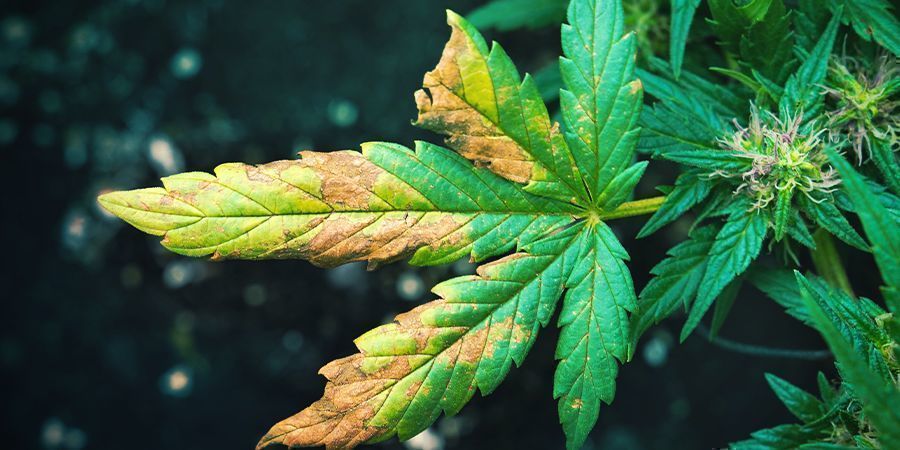
Cannabis plants can be susceptible to various diseases, just like any other plant. Some common diseases that affect cannabis plants include:
- Powdery Mildew: This is a fungal disease that shows up on the plant’s leaves, stems, and buds as a white, powdery substance. If left untreated, it can weaken the plant and lower production.
- Gray Mold (Botrytis): Botrytis cinerea is a fungal pathogen that causes gray mold. It thrives in high humidity conditions and can infect buds, leading to rot and loss of yield.
- Root Rot: This is usually caused by overwatering or inadequate drainage, which makes the roots soggy and vulnerable to fungal infections like Pythium and Fusarium.
- Bud Rot (Botrytis): Similar to gray mold, bud rot is caused by the fungus Botrytis cinerea, which can infect the buds, leading to decay and loss of quality.
- Leaf Septoria (Yellow Leaf Spot): This is a fungal disease characterized by brown or yellow spots on the leaves. It can weaken the plant and reduce yields if left untreated.
- Bacterial Wilt: This bacterial illness can cause the plant to wilt, become yellow, and eventually die. Once established, it can be challenging to control due to its quick spread.
- Spider Mites: While not a disease per se, spider mites are common pests that can infest cannabis plants, sucking the sap from the leaves and causing damage and reduced yields.
- Aphids: Another common pest, aphids feed on the sap of cannabis plants and can cause damage to the leaves, buds, and stems. They can also transmit viral diseases.
- Thrips: Thrips are small insects that feed on cannabis leaves, causing damage and discoloration. They can also transmit viral diseases.
- Fusarium Wilt: This fungal disease attacks the vascular system of the plant, causing wilting and death. It can be tough to eradicate once established in the soil.
Preventive measures such as proper sanitation, maintaining optimal growing conditions, and using disease-resistant varieties can help reduce the risk of these diseases affecting cannabis plants. Additionally, prompt identification and treatment of any issues that arise can help minimize damage and ensure healthy plant growth.
Powdery mildew is considered one of the common diseases that affect cannabis plants for several reasons:
- Prevalence: Powdery mildew is widespread and can affect cannabis plants in both indoor and outdoor growing environments. It thrives in conditions of high humidity and moderate temperatures, which are common in many regions where cannabis is cultivated.
- Visible Symptoms: The symptoms of powdery mildew are easily recognizable, appearing as a white powdery substance on the leaves, stems, and buds of the plant. This makes it relatively easy for growers to identify and diagnose.
- Impact on Yield and Quality: If left untreated, powdery mildew can significantly reduce the yield and quality of cannabis plants. It can inhibit photosynthesis, weaken the plant, and lead to premature leaf drop, affecting the overall health and vigor of the plant.
- Spread: Powdery mildew can spread rapidly, especially in crowded growing conditions or environments with poor air circulation. It can also be transmitted via spores carried by wind or insects, further contributing to its spread within a cultivation facility or outdoor grow area.
- Challenges in Control: While various fungicides and cultural practices can help manage powdery mildew, controlling it can be challenging, especially in large-scale cannabis cultivation operations. Additionally, some strains of powdery mildew have developed resistance to certain fungicides, making effective control more difficult.
Gray mold, caused by the fungus Botrytis cinerea, is considered one of the common diseases that affect cannabis plants for several reasons:
- Wide Host Range: Botrytis cinerea is a broad-spectrum pathogen known to infect over 200 plant species, including cannabis. This wide host range increases the likelihood of encountering the pathogen in cannabis cultivation settings.
- Ideal Growing Conditions: Gray mold thrives in conditions of high humidity and moderate temperatures, which are commonly found in indoor and outdoor cannabis cultivation environments. These conditions provide optimal conditions for the growth and spread of Botrytis spores.
- Impact on Yield and Quality: Gray mold can cause significant damage to cannabis plants, particularly during flowering when buds are more susceptible to infection. Infected buds can develop grayish-brown lesions, become mushy, and rot, leading to yield losses and reduced quality of the harvested product.
- Ease of Spread: Botrytis spores are easily spread through the air, water, and physical contact with infected plant material. This makes it challenging to prevent the spread of the disease within a cultivation facility or outdoor grow area.
- Difficulty in Control: Controlling gray mold can be challenging, especially in large-scale cannabis cultivation operations. The fungus produces resilient spores that can survive adverse environmental conditions and certain fungicidal treatments. Additionally, repeated use of fungicides can lead to the development of resistance in Botrytis populations, further complicating control efforts.
- Post-Harvest Concerns: Gray mold can continue to proliferate during the drying and curing stages of cannabis production, leading to further losses in quality and market value of the harvested product.
Root rot is considered one of the common diseases that affect cannabis plants due to several factors:
- Overwatering: Cannabis plants are often prone to root rot due to overwatering or poor drainage. When the roots sit in soggy soil or waterlogged conditions for an extended period, it creates an ideal environment for root rot pathogens to thrive.
- Fungal Pathogens: Root rot in cannabis is commonly caused by fungal pathogens such as Pythium, Fusarium, and Rhizoctonia. These pathogens infect the roots, causing them to rot and decay, which compromises the plant’s ability to uptake water and nutrients.
- Impact on Plant Health: Root rot affects the overall health and vigor of cannabis plants. As the roots decay, the plant’s ability to absorb water and nutrients is diminished, leading to stunted growth, yellowing of leaves, wilting, and eventual death if left untreated.
- Prevalence in Hydroponic Systems: Cannabis plants grown in hydroponic systems are particularly susceptible to root rot because the roots are constantly submerged in water. If proper oxygenation and sanitation measures are not in place, root rot pathogens can quickly colonize the root system.
- Challenges in Diagnosis: Root rot can be challenging to diagnose because the symptoms, such as wilting and yellowing of leaves, are similar to those of other stress-related issues. By the time symptoms become apparent, the disease may have already progressed significantly.
- Difficulty in Control: Once root rot has taken hold in a cannabis plant, it can be challenging to control and eradicate. Treatment options are limited, and prevention through proper watering practices, soil drainage, and sanitation is key to managing the disease.
Bud rot, caused by the fungus Botrytis cinerea, is considered one of the common diseases that affect cannabis plants for several reasons:
- Impact on Buds: Bud rot primarily affects the flowering stage of cannabis plants, particularly the dense buds. The fungus infects the buds, leading to rot, decay, and loss of quality. This can result in significant damage and loss of valuable harvestable material.
- Prevalence: Botrytis cinerea is widespread in nature and can infect a wide range of plant species, including cannabis. It is commonly found in outdoor cultivation environments but can also occur indoors, especially in high humidity conditions.
- Ideal Growing Conditions: Bud rot thrives in conditions of high humidity, moderate temperatures, and poor air circulation, which are often present in cannabis cultivation settings, particularly during the flowering stage when humidity levels can rise due to dense foliage and watering practices.
- Ease of Spread: Botrytis spores are easily spread through the air, water, and physical contact with infected plant material. Once established in a cannabis crop, the fungus can quickly spread to neighboring plants, leading to widespread infection and damage.
- Impact on Yield and Quality: Bud rot can cause significant damage to cannabis crops, leading to reduced yields and compromised quality of the harvested buds. Infected buds may develop grayish-brown lesions, become mushy, and emit a foul odor, rendering them unsuitable for consumption.
- Challenges in Control: Controlling bud rot can be challenging, especially in outdoor cultivation environments where environmental conditions are difficult to control. Fungicides may provide some control, but their effectiveness can be limited, particularly if applied late in the infection cycle.
- Post-Harvest Concerns: Bud rot can continue to proliferate during the drying and curing stages of cannabis production, leading to further losses in quality and market value of the harvested product. Infected buds may also pose health risks if consumed.
Leaf Septoria, also known as Yellow Leaf Spot, is considered one of the common diseases that affect cannabis plants for several reasons:
- Ubiquitous Nature: Leaf Septoria is caused by a fungal pathogen, Septoria spp., which is widespread and commonly found in many regions where cannabis is cultivated. This ubiquity increases the likelihood of encountering the disease in cannabis crops.
- Visible Symptoms: Leaf Septoria manifests as small, circular spots on the leaves that start as yellow or light green and eventually turn brown or necrotic. These symptoms are easily identifiable, making it relatively straightforward for growers to diagnose the disease.
- Favorable Conditions: Leaf Septoria thrives in warm and humid environments, which are often present in indoor and outdoor cannabis cultivation settings. These conditions provide optimal conditions for the growth and spread of the fungal pathogen.
- Impact on Plant Health: Although Leaf Septoria typically does not lead to plant death, it can weaken the affected plants by reducing photosynthesis and weakening the foliage. Severe infections can lead to defoliation, which can reduce yields and compromise plant health.
- Spread: Leaf Septoria spreads through spores, which can be carried by wind, water, or physical contact with infected plant material. Once established in a cannabis crop, the disease can quickly spread to neighboring plants, especially in crowded growing conditions.
- Challenges in Control: Controlling Leaf Septoria can be challenging, especially in outdoor cultivation environments where environmental conditions are difficult to control. Fungicides may provide some control, but preventive measures such as proper sanitation, spacing, and airflow management are often more effective.
- Recurring Problem: Leaf Septoria can persist from one growing season to the next, especially if infected plant debris is not properly removed and destroyed. This can lead to recurring outbreaks of the disease in subsequent crops.
Bacterial wilt is considered one of the common diseases that affect cannabis plants for several reasons:
- Widespread Distribution: Bacterial wilt is caused by various strains of bacteria, such as Ralstonia solanacearum, which are present in soil and water in many regions where cannabis is cultivated. This widespread distribution increases the likelihood of encountering the disease.
- Soilborne Pathogen: Bacterial wilt pathogens can persist in the soil for extended periods, even in the absence of host plants. This means that cannabis plants can become infected when planted in soil that is contaminated with the bacteria.
- Impact on Plant Health: Bacterial wilt can cause rapid wilting, yellowing, and death of cannabis plants. The bacteria infect the vascular system of the plant, blocking the flow of water and nutrients and causing wilting symptoms. Infected plants may collapse and die within a short period, leading to significant losses in yield and quality.
- Spread: Bacterial wilt can spread rapidly within a cannabis crop through contaminated soil, water, or infected plant material. Once established in a cultivation facility or outdoor grow area, the disease can quickly infect neighboring plants, leading to widespread damage.
- Challenges in Control: Controlling bacterial wilt can be challenging, especially once the disease has become established in a cannabis crop. There are limited chemical control options available, and preventive measures such as crop rotation, soil sterilization, and sanitation are often more effective but may not completely eradicate the bacteria.
- Persistent Problem: Bacterial wilt can persist in the soil for years, even in the absence of host plants. This means that cannabis growers may face recurring outbreaks of the disease, especially if proper sanitation and preventive measures are not implemented.
Spider mites are not diseases but rather pests that commonly affect cannabis plants. However, they are often grouped together with diseases because they can cause significant damage to cannabis crops. Here’s why spider mites are considered a common problem in cannabis cultivation:
- Widespread Distribution: Spider mites are found worldwide and can infest cannabis plants in both indoor and outdoor cultivation settings. They are highly adaptable and can thrive in various environmental conditions.
- Rapid Reproduction: Spider mites reproduce quickly, with females laying hundreds of eggs during their lifespan. This rapid reproduction allows populations to escalate rapidly, leading to widespread infestations if left unchecked.
- Damage to Plants: Spider mites feed on the sap of cannabis plants by piercing the plant tissue and sucking out the fluids. This feeding activity can cause stippling, yellowing, and drying of leaves, which can ultimately lead to reduced yields and compromised plant health.
- Webbing: Spider mites produce fine silk webbing on the surface of leaves, which can cover entire plants in severe infestations. This webbing not only affects the plant’s appearance but can also interfere with photosynthesis and further exacerbate damage.
- Difficult to Control: Spider mites can be challenging to control due to their small size, rapid reproduction, and ability to develop resistance to pesticides. Additionally, they often develop resistance to chemical control methods, making integrated pest management strategies essential for effective control.
- Spread: Spider mites can spread quickly from plant to plant, particularly in indoor cultivation environments where plants are grown in close proximity. They can also be transported between locations on clothing, equipment, or plant material.
- Damage to Reputation and Market Value: Severe spider mite infestations can result in significant crop losses and damage to the reputation and market value of the harvested product. Consumers typically prefer cannabis products that are free from pests and contaminants.
Aphids are not diseases but rather common pests that affect cannabis plants. However, they are often grouped together with diseases because they can cause significant damage to cannabis crops. Here’s why aphids are considered a common problem in cannabis cultivation:
- Wide Distribution: Aphids are found worldwide and can infest cannabis plants in both indoor and outdoor cultivation settings. They are highly adaptable pests that can thrive in various environmental conditions.
- Rapid Reproduction: Aphids reproduce quickly, with females capable of producing numerous offspring without mating. This rapid reproduction allows aphid populations to escalate rapidly, leading to widespread infestations if left unchecked.
- Feeding Damage: Aphids feed on the sap of cannabis plants by piercing the plant tissue and sucking out the fluids. Their feeding activity can cause curling, yellowing, and distortion of leaves, as well as stunted growth and reduced yields.
- Honeydew Production: Aphids excrete a sticky substance called honeydew, which can accumulate on leaves and stems. Honeydew serves as a substrate for the growth of sooty mold fungi, which can further damage the plant and reduce photosynthesis.
- Vector for Plant Diseases: Aphids can transmit viral diseases to cannabis plants through their feeding activity. This can further weaken the plants and lead to additional complications.
- Difficult to Control: Aphids can be challenging to control due to their rapid reproduction, ability to develop resistance to pesticides, and tendency to hide in protected areas of the plant, such as the undersides of leaves.
- Spread: Aphids can spread quickly from plant to plant, particularly in indoor cultivation environments where plants are grown in close proximity. They can also be transported between locations on clothing, equipment, or plant material.
- Damage to Reputation and Market Value: Severe aphid infestations can result in significant crop losses and damage to the reputation and market value of the harvested product. Consumers typically prefer cannabis products that are free from pests and contaminants.
Thrips are not diseases but rather common pests that affect cannabis plants. However, they are often grouped together with diseases because they can cause significant damage to cannabis crops. Here’s why thrips are considered a common problem in cannabis cultivation:
- Widespread Distribution: Thrips are found worldwide and can infest cannabis plants in both indoor and outdoor cultivation settings. They are highly adaptable pests that can thrive in various environmental conditions.
- Rapid Reproduction: Thrips reproduce quickly, with females laying numerous eggs during their lifespan. This rapid reproduction allows thrips populations to escalate rapidly, leading to widespread infestations if left unchecked.
- Feeding Damage: Thrips feed on the sap of cannabis plants by piercing the plant tissue and sucking out the fluids. Their feeding activity can cause stippling, silvering, and distortion of leaves, as well as stunted growth and reduced yields.
- Damage to Flowers: Thrips can also feed on cannabis flowers, causing cosmetic damage and reducing the quality and market value of the harvested product.
- Vector for Plant Diseases: Thrips can transmit viral diseases to cannabis plants through their feeding activity. This can further weaken the plants and lead to additional complications.
- Difficult to Control: Thrips can be challenging to control due to their small size, rapid reproduction, and ability to develop resistance to pesticides. Additionally, they often hide in protected areas of the plant, such as inside flowers or under leaf surfaces.
- Spread: Thrips can spread quickly from plant to plant, particularly in indoor cultivation environments where plants are grown in close proximity. They can also be transported between locations on clothing, equipment, or plant material.
- Damage to Reputation and Market Value: Severe thrips infestations can result in significant crop losses and damage to the reputation and market value of the harvested product. Consumers typically prefer cannabis products that are free from pests and contaminants.
Fusarium wilt is considered one of the common diseases that affect cannabis plants due to several factors:
- Wide Host Range: Fusarium wilt is caused by various Fusarium species, which are soilborne fungi known to infect a wide range of plant species, including cannabis. This broad host range increases the likelihood of encountering the disease in cannabis cultivation.
- Soilborne Pathogen: Fusarium wilt pathogens can persist in the soil for extended periods, even in the absence of host plants. Cannabis plants become infected when planted in soil that is contaminated with the fungi.
- Impact on Plant Health: Fusarium wilt can cause wilting, yellowing, and eventual death of cannabis plants. The fungi infect the vascular system of the plant, blocking the flow of water and nutrients and causing wilting symptoms. Infected plants may collapse and die within a short period, leading to significant losses in yield and quality.
- Prevalence: Fusarium wilt is commonly found in many regions where cannabis is cultivated, particularly in areas with warm temperatures and high humidity. These conditions provide optimal conditions for the growth and spread of Fusarium species.
- Challenges in Control: Controlling Fusarium wilt can be challenging, especially once the disease has become established in a cannabis crop. There are limited chemical control options available, and preventive measures such as crop rotation, soil sterilization, and sanitation are often more effective but may not completely eradicate the fungi.
- Persistence: Fusarium wilt can persist in the soil for years, even in the absence of host plants. This means that cannabis growers may face recurring outbreaks of the disease, especially if proper sanitation and preventive measures are not implemented.
Conclusion
In conclusion, cannabis plants are susceptible to a variety of diseases and pests that can impact their health, yield, and overall quality. Common diseases affecting cannabis include powdery mildew, gray mold (Botrytis), root rot, bud rot (Botrytis), leaf septoria (yellow leaf spot), bacterial wilt, and Fusarium wilt, each presenting unique challenges to growers.
Additionally, pests such as spider mites, aphids, and thrips can cause significant damage to cannabis crops, further complicating cultivation efforts. These pests feed on plant tissues, reproduce rapidly, and can transmit diseases, making them a constant concern for growers.
Preventative measures, proper sanitation, and integrated pest management strategies are essential for minimizing the risk of disease and pest infestations in cannabis cultivation. Timely identification, diagnosis, and treatment of issues that arise are crucial for maintaining healthy plants and maximizing yields.
Overall, understanding the common diseases and pests that affect cannabis plants, along with effective management strategies, is essential for successful cultivation and production in the cannabis industry.
